

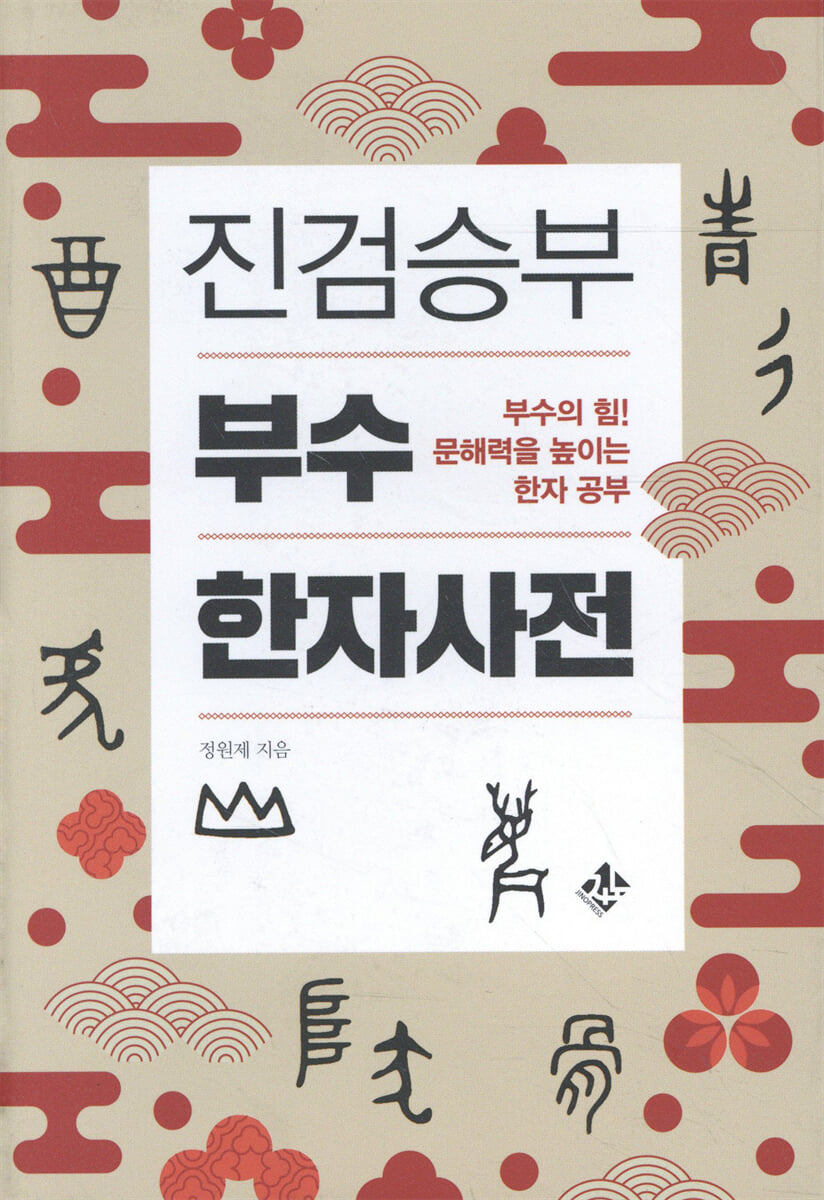
Jingeomseungbu subsidiary Chinese character dictionary
 |
Description
Book Introduction
Your Chinese character proficiency is your Korean language proficiency! This book is a fun and educational way to learn Chinese characters. It imagines the radical Chinese characters engaging in one-on-one duels like the generals of the Romance of the Three Kingdoms.
The author has been pondering how to learn Chinese characters more effectively, and found the answer in the 214-character radicals.
A radical is a common part of a character that serves as a guide for finding characters in a Chinese character dictionary. Just knowing the radicals well makes studying Chinese characters much easier and more fun.
The text contains everything from the composition principles of each radical Chinese character to the stories behind the various characters associated with them.
The competition between radicals is based on the results of an investigation within the 3,500 characters assigned to the Level 1 Chinese Character Proficiency Test, and characters that include the corresponding radical but are not radicals are displayed as reference characters.
Additionally, within the 4th grade (1,000 characters), the 1,169 characters belonging to each radical are explained one by one through examples and usage examples suitable for the Korean language so that they can be understood and learned.
I highly recommend it to those who are not yet confident in Chinese characters or are just starting to study them.
The author has been pondering how to learn Chinese characters more effectively, and found the answer in the 214-character radicals.
A radical is a common part of a character that serves as a guide for finding characters in a Chinese character dictionary. Just knowing the radicals well makes studying Chinese characters much easier and more fun.
The text contains everything from the composition principles of each radical Chinese character to the stories behind the various characters associated with them.
The competition between radicals is based on the results of an investigation within the 3,500 characters assigned to the Level 1 Chinese Character Proficiency Test, and characters that include the corresponding radical but are not radicals are displayed as reference characters.
Additionally, within the 4th grade (1,000 characters), the 1,169 characters belonging to each radical are explained one by one through examples and usage examples suitable for the Korean language so that they can be understood and learned.
I highly recommend it to those who are not yet confident in Chinese characters or are just starting to study them.
- You can preview some of the book's contents.
Preview
index
introduction
Note
Chapter 1.
The sure-to-win subordinates
001.
? The three-stroke siege of the large entrance is victory.
002.
? If you're sick, what's the use of anything else?
003.
酉 Chicken milk 7 strokes Alcohol is thicker than water
004.
鳥 bird 11 strokes When you spread your wings, there is nothing to disturb.
005.
? Two-stroke walk to the left
006.
? Minchaek support 3 strokes slow but strong
007.
走 Run 7 strokes Run looking only ahead
008.
Foot 足 7 strokes left foot master
009.
骨 10 strokes Strength comes from bones
010.
Land that accepts all three strokes of soil
011.
Stone 5 strokes, believe like iron
012.
山 When protecting the three strokes of Mesan, it is like a mountain
013.
言 7 strokes of word Should I trust words or people?
014.
? 6 strokes of real life thin thread
015.
There is no sea that cannot be sailed by a boat.
016.
穴 5 strokes of hole Even if the sky falls, there is a hole to rise from.
017.
Rain 8 strokes It's raining from the sky
018.
馬 10 strokes Be careful when handling horses
Chapter 2.
One or two defeats are the boss's fault
019.
Fish Fish 11 strokes Fish in water
020.
鹿 deer deer 11 strokes deer meeting the ground
021.
? Bug Bug 6 strokes Who said bugs were weak?
022.
Food 9 strokes Food Without even knowing that you are eating bugs
023.
金 8 strokes of iron melts in front of the one who admires
024.
辛 Spicy 7 strokes Don't taste spicy food carelessly
025.
玉(王) bead jade 5 strokes stain on jade
026.
方 imitation 4 strokes coexistence of plow and flag
027.
? Lee Su-byeon 2 strokes Ice melts and turns into saliva
028.
Even if you attack from both sides with the 6 strokes of "行", it is an iron fortress.
029.
?(?) Bookend 7 strokes Walking and splashing in the stream
030.
Bow 3 strokes Pull the bow with all your might
031.
?(?) Death 4 strokes to lose to a sword
032.
Bamboo 6 strokes: To weave bamboo with thread
033.
示(?) When you see the 5 strokes, God is invisible to the eyes
034.
老(?) 6 strokes of old age There is no parent who can beat their child
035.
? Min-gat-meori 2 strokes solid encirclement
036.
目(?) 5 strokes of eye, to cast a net with eyes
037.
?(?, ?) net 6 strokes To drag in wealth with a net
038.
皿 A vessel that receives from below 5 strokes
039.
巾 towel 3 strokes A towel hangs down
Chapter 3.
Transforming parts
040.
手(?) Hand/Jaebangbyeon 4 strokes Left hand iron wall defense
041.
犬(?) dog/dog deer ...
042.
心(?, ?) heart/heartbeat 4 strokes to subdue with the heart
043.
Fire(?) Fire/Lotus Foot 4 strokes Fireplace instead of Ondol
044.
阜(?) Hill/left side 8 strokes There is a hill
045.
邑(?) Goeul-eup/Ububang 7 strokes Listen to the public sentiment
046.
刀(?) sword/sword sword shop 2 strokes lose to people
047.
Meat (month) Meat/Yukdalwol 6 strokes Roast pork
048.
Water (?, ?) Water/Samsu-byeon 4 strokes If blocked, it turns around and flows
049.
衣(?) 6 strokes of clothes Even if it is sad at first
Chapter 4.
Often defeated but important side effects
050.
門 門 8 strokes A door that opens frequently
051.
耳 6 strokes Open your ears and win your heart
052.
? If you just come to your senses under the 6 strokes of Beomho, you will survive.
053.
? 3 strokes under the cover, flimsy roof
054.
The first 6 strokes of 艸(?) are visible even if covered with grass.
055.
夕 Evening stone 3 strokes Evening when the crescent moon rises
056.
月 月 4 strokes moon, meat, and boat
057.
頁 Head point 9 strokes Hitting a rock with the head
058.
? Beautifully decorate the three-stroke pattern of the truck
059.
?(?) 4 strokes of the moon and the moon (top)
060.
? Doing the 4-stroke action of the various types of moon and stars (Part 2)
061.
?(?) I matched the two strokes of the letter Byeongbujeolbang and it fits perfectly.
062.
戈 spear and 4-stroke curved spear
063.
乙(?) bird, one stroke, moving forward in a winding manner
064.
日 4 strokes When the sun is up, it is daytime
065.
He said, "Is it a year with four strokes that is distorted?"
066.
寸 3 strokes of a centimeter, working diligently with one's hands
067.
Shell 7 strokes In the old days, shells were money
068.
見 7 strokes of see If you open your eyes wide, you can see
Chapter 5.
Biting and biting each other's parts
069.
大 big 3 strokes sometimes small
070.
Sheep 6 strokes, pretty sheep head
071.
羽 (feather) 6 strokes light flapping of wings
072.
戶 jigeho 4 strokes A door is a door when it is closed
073.
斤 4 strokes sharp like an axe blade
074.
欠 yawning 4 strokes Things you can do with your mouth open
075.
車 7 strokes If you cut a cart with an axe
076.
Things that can be expressed in a square shape with three strokes at the entrance of the mouth
077.
Arrow 5 strokes slower than a bird
078.
? A bird that doesn't know where to fly
079.
田 Field 5 strokes Man is strength? Man is a field!
080.
力 2 strokes of strength Does strength make you good at sewing?
081.
? Small 3 strokes Small but strong
082.
又 2 strokes here, right hand there, right hand
083.
? Min Eom-ho 2 strokes A cliff that can be climbed with one hand
084.
木 木 4 strokes A tree weak to people
085.
子 Son, grow up strong and healthy
086.
? The 3 strokes of the hat are not as strong as you think.
087.
豕 Pig Poem 7 strokes Pig's rebellion
088.
牛 4 strokes Cow and pig battle
089.
匕 dagger defense 2 strokes man defeats man
090.
人(?) person/person change 2 strokes strong person from the left
091.
止 4 strokes Don't stop even if others don't know
092.
When covering a corpse with three strokes, a roof is hung, and a person is
093.
A woman holding a baby is strong.
094.
禾 rice flower 5 strokes humble rice
095.
? A good person, 2 strokes, a person who is not cruel
096.
斗 4 strokes It can be rice or rice
097.
米 Rice 6 strokes There is nothing worse than rice.
098.
鬼 Ghost 10 strokes The head is too big
Chapter 6.
The winning subordinates
099.
?(川) Ant waist 3 strokes flowing naturally
100.
小 Small 3 strokes Don't underestimate it because it's small
101.
自 (self) 6 strokes When pointing to one's own face
102.
臣 臣 6 strokes bow your head
103.
爪 (claw) 4 strokes, hand that lifts up
104.
? Rice bag 2 strokes, a loose encirclement
105.
毋 4 strokes mother breastfeeding a baby
106.
? 7 strokes of the word "discernment" - splitting of the toenails
107.
疋 pilpil 5 strokes counting silk and horses with feet
108.
音 sound sound 9 strokes sound stand
109.
立 Establishment 5 strokes Stand on the ground and flap your arms
110.
Black Black 12 strokes Soot was once fire
111.
豆 bean head 7 strokes large bowl
112.
臼 mortar 6 strokes to pound with both hands
113.
?(West) cover 6 strokes A cover that does not close well
114.
? 3 strokes of the main sword and stake
115.
Where will the six-stroke arrow reach?
116.
士 Confucian scholar 3 strokes A person who handles an axe
117.
聿 Brush rate 6 strokes Is the brush mightier than the sword?
118.
? Anseokgwi 2 strokes, lean firmly on the seat
119.
爻 divination 4 strokes, the hero Joro
120.
矛 5 strokes, a dull spear
121.
? Walk on the 3rd stroke of the back
122.
? Walk slowly, three strokes below
Chapter 7.
Radicals that make the pronunciation stand out more
123.
干 Shield Gan 3 strokes weak shield
124.
白 5 strokes, white shining object
125.
工 Craftsman 3 strokes What happens in a blacksmith shop
126.
There are only three strokes of the character 己, but the meaning is unknown.
127.
里 village 7 strokes place where people live
128.
生 生 5 strokes lively mood maker
129.
靑 8 strokes pure mood maker
130.
卜 divination 2 strokes the shell cracks
131.
風 9 strokes The wind blows and the dragon flies
132.
龍 Yongryong 16 strokes A dragon bigger than a house
133.
艮 stay 6 strokes stay kindly
134.
辰 Byeoljin 7 strokes The star is setting
135.
Long(?) 8 strokes, only the main character's part is long
136.
氏 4 strokes of Gaksi-ssi, a tree with deep roots
137.
甘 5 strokes of sweet persimmon Putting delicious food in your mouth
138.
Tongue 6 strokes Even losing to Dalgam
139.
Non-anilbi 8 strokes split and open
140.
文 文 4 strokes Speaking with patterns, not words
141.
支 To support, to split, to cut off branches
142.
黃 12 strokes, horizontally across the waist
143.
用 5 strokes What is this thing used for?
144.
? 4 strokes of energy Kim Morak Morak
145.
High is high, and if you go up 10 strokes, you will be lonely
146.
Father, 4 strokes, lonely father
147.
韋 9 strokes on leather The leather is split
148.
皮 skin 5 strokes unpeeled flesh
149.
牙 4 strokes, protruding teeth
150.
? Jangsujangbyeon 4 strokes Longer than normal
151.
Hemp, 11 strokes, hand and one win and one loss
152.
齊 tidy, 14 strokes, appearing neat
153.
瓜 Cucumber family 5 strokes cucumber, gourd and gourd bottle
154.
? Pot power 10 strokes Hit the pot hard
155.
Valley 7 strokes hide in a mountain valley
156.
玄 5 strokes of Geom-eul-hyeon, small but taut thread
Chapter 8.
I live almost alone
157.
鼻 Koby 14 strokes The nose is an air filter
158.
身 7 strokes of body bow is pregnant
159.
Blood 6 strokes: Put blood in a bowl
160.
面 9 strokes, the part surrounding the eyes
161.
首 9 strokes, the part where hair grows
162.
齒 15 strokes Once you bite, you won't let go
163.
? Fighting while grabbing the hair of the 10-stroke fighter
164.
And Maligaeul cuts his beard with six strokes
165.
毛 4 strokes to weave clothes with hair
166.
Color light color 6 strokes red light (top)
167.
赤 red 7 strokes red light (bottom)
168.
比 4 strokes: looking at the same place
169.
飛 (fly) 9 strokes, noisy flapping of wings
170.
香 fragrant fragrance 9 strokes fragrant grain
171.
黍 (millet) 12 strokes, grain for making alcohol
172.
鼎 cauldron 13 strokes A cauldron that turns into a clam
173.
13 strokes from rat, agile animals
174.
龜 turtle ears 16 strokes crawling turtle
175.
鼓 bukgo 13 strokes to hit a drum with a drumstick
Chapter 9.
Masters in the field
176.
? Hide in a box with two strokes of a burst entrance (top)
177.
? Hide in a box with two strokes of a bursting Eundam (Part 2)
178.
? 10 strokes under the feet of a turtle, long-haired Samson
179.
角 7 strokes Horn, to go alone like a rhinoceros horn
180.
General Can 6 strokes I don't know how to fight
181.
? 5 strokes of the hair, carefully with both feet
182.
舛 6 strokes of two feet moving separately
183.
?(兀, ?) Lame King 3 strokes Limping on one leg
184.
革 leather 9 strokes to suppress with a shackle
185.
片 片 4 strokes thin and flat
186.
? 7 strokes of the footless beetle, rough beasts
187.
麥 Barley 11 strokes Brewing alcohol and making noodles
188.
? 6 strokes of plowing: plowing a field with a plow
189.
瓦 Roof tiles and 5 strokes made by baking clay
190.
? 20 strokes, hold with both hands
Chapter 10.
Find the hidden parts
191.
? The two-stroke trap at the entrance to the waterway opens its mouth.
192.
? 2 strokes of far away, so it's blocked
193.
入 2 strokes to enter somewhere
194.
八 88 2 strokes It's not a number (上)
195.
十 is not a number with two strokes (lower)
196.
? Pig's head 2 strokes, not related to pigs
197.
? When it's cumbersome to write a square with two strokes of garlic
198.
One stroke of Korea and Japan, a distant horizon
199.
二 Two strokes one plus one
200.
? To pierce through with one stroke
201.
? Hook with a hook
202.
? Should I put a dot on the owner's first stroke?
203.
? A stroke of the beeping star slides down
Chapter 11.
rare parts
204.
无(?) No 4 strokes Turn your face away
205.
? Crazy 8 strokes, hand is crazy
206.
?(?) The three strokes of the bursting pig and hedgehog
207.
? The beast footprint is not a 5-stroke, 4-stroke character.
208.
? Frog 13 strokes A frog with a bulging belly
209.
? Left hand left 3 strokes Grass growing alone
210.
? Chives 9 strokes Grow thin
211.
? 10 strokes of wine glass, pouring wine into a glass
212.
鹵 Salt field 11 strokes Salt from the ground
213.
? Sewing 12 strokes to embroider with sewing
214.
? The closing pitcher with 17 strokes of the flute is coming on the mound.
Find radicals by stroke count
Find Chinese characters by pronunciation
Note
Chapter 1.
The sure-to-win subordinates
001.
? The three-stroke siege of the large entrance is victory.
002.
? If you're sick, what's the use of anything else?
003.
酉 Chicken milk 7 strokes Alcohol is thicker than water
004.
鳥 bird 11 strokes When you spread your wings, there is nothing to disturb.
005.
? Two-stroke walk to the left
006.
? Minchaek support 3 strokes slow but strong
007.
走 Run 7 strokes Run looking only ahead
008.
Foot 足 7 strokes left foot master
009.
骨 10 strokes Strength comes from bones
010.
Land that accepts all three strokes of soil
011.
Stone 5 strokes, believe like iron
012.
山 When protecting the three strokes of Mesan, it is like a mountain
013.
言 7 strokes of word Should I trust words or people?
014.
? 6 strokes of real life thin thread
015.
There is no sea that cannot be sailed by a boat.
016.
穴 5 strokes of hole Even if the sky falls, there is a hole to rise from.
017.
Rain 8 strokes It's raining from the sky
018.
馬 10 strokes Be careful when handling horses
Chapter 2.
One or two defeats are the boss's fault
019.
Fish Fish 11 strokes Fish in water
020.
鹿 deer deer 11 strokes deer meeting the ground
021.
? Bug Bug 6 strokes Who said bugs were weak?
022.
Food 9 strokes Food Without even knowing that you are eating bugs
023.
金 8 strokes of iron melts in front of the one who admires
024.
辛 Spicy 7 strokes Don't taste spicy food carelessly
025.
玉(王) bead jade 5 strokes stain on jade
026.
方 imitation 4 strokes coexistence of plow and flag
027.
? Lee Su-byeon 2 strokes Ice melts and turns into saliva
028.
Even if you attack from both sides with the 6 strokes of "行", it is an iron fortress.
029.
?(?) Bookend 7 strokes Walking and splashing in the stream
030.
Bow 3 strokes Pull the bow with all your might
031.
?(?) Death 4 strokes to lose to a sword
032.
Bamboo 6 strokes: To weave bamboo with thread
033.
示(?) When you see the 5 strokes, God is invisible to the eyes
034.
老(?) 6 strokes of old age There is no parent who can beat their child
035.
? Min-gat-meori 2 strokes solid encirclement
036.
目(?) 5 strokes of eye, to cast a net with eyes
037.
?(?, ?) net 6 strokes To drag in wealth with a net
038.
皿 A vessel that receives from below 5 strokes
039.
巾 towel 3 strokes A towel hangs down
Chapter 3.
Transforming parts
040.
手(?) Hand/Jaebangbyeon 4 strokes Left hand iron wall defense
041.
犬(?) dog/dog deer ...
042.
心(?, ?) heart/heartbeat 4 strokes to subdue with the heart
043.
Fire(?) Fire/Lotus Foot 4 strokes Fireplace instead of Ondol
044.
阜(?) Hill/left side 8 strokes There is a hill
045.
邑(?) Goeul-eup/Ububang 7 strokes Listen to the public sentiment
046.
刀(?) sword/sword sword shop 2 strokes lose to people
047.
Meat (month) Meat/Yukdalwol 6 strokes Roast pork
048.
Water (?, ?) Water/Samsu-byeon 4 strokes If blocked, it turns around and flows
049.
衣(?) 6 strokes of clothes Even if it is sad at first
Chapter 4.
Often defeated but important side effects
050.
門 門 8 strokes A door that opens frequently
051.
耳 6 strokes Open your ears and win your heart
052.
? If you just come to your senses under the 6 strokes of Beomho, you will survive.
053.
? 3 strokes under the cover, flimsy roof
054.
The first 6 strokes of 艸(?) are visible even if covered with grass.
055.
夕 Evening stone 3 strokes Evening when the crescent moon rises
056.
月 月 4 strokes moon, meat, and boat
057.
頁 Head point 9 strokes Hitting a rock with the head
058.
? Beautifully decorate the three-stroke pattern of the truck
059.
?(?) 4 strokes of the moon and the moon (top)
060.
? Doing the 4-stroke action of the various types of moon and stars (Part 2)
061.
?(?) I matched the two strokes of the letter Byeongbujeolbang and it fits perfectly.
062.
戈 spear and 4-stroke curved spear
063.
乙(?) bird, one stroke, moving forward in a winding manner
064.
日 4 strokes When the sun is up, it is daytime
065.
He said, "Is it a year with four strokes that is distorted?"
066.
寸 3 strokes of a centimeter, working diligently with one's hands
067.
Shell 7 strokes In the old days, shells were money
068.
見 7 strokes of see If you open your eyes wide, you can see
Chapter 5.
Biting and biting each other's parts
069.
大 big 3 strokes sometimes small
070.
Sheep 6 strokes, pretty sheep head
071.
羽 (feather) 6 strokes light flapping of wings
072.
戶 jigeho 4 strokes A door is a door when it is closed
073.
斤 4 strokes sharp like an axe blade
074.
欠 yawning 4 strokes Things you can do with your mouth open
075.
車 7 strokes If you cut a cart with an axe
076.
Things that can be expressed in a square shape with three strokes at the entrance of the mouth
077.
Arrow 5 strokes slower than a bird
078.
? A bird that doesn't know where to fly
079.
田 Field 5 strokes Man is strength? Man is a field!
080.
力 2 strokes of strength Does strength make you good at sewing?
081.
? Small 3 strokes Small but strong
082.
又 2 strokes here, right hand there, right hand
083.
? Min Eom-ho 2 strokes A cliff that can be climbed with one hand
084.
木 木 4 strokes A tree weak to people
085.
子 Son, grow up strong and healthy
086.
? The 3 strokes of the hat are not as strong as you think.
087.
豕 Pig Poem 7 strokes Pig's rebellion
088.
牛 4 strokes Cow and pig battle
089.
匕 dagger defense 2 strokes man defeats man
090.
人(?) person/person change 2 strokes strong person from the left
091.
止 4 strokes Don't stop even if others don't know
092.
When covering a corpse with three strokes, a roof is hung, and a person is
093.
A woman holding a baby is strong.
094.
禾 rice flower 5 strokes humble rice
095.
? A good person, 2 strokes, a person who is not cruel
096.
斗 4 strokes It can be rice or rice
097.
米 Rice 6 strokes There is nothing worse than rice.
098.
鬼 Ghost 10 strokes The head is too big
Chapter 6.
The winning subordinates
099.
?(川) Ant waist 3 strokes flowing naturally
100.
小 Small 3 strokes Don't underestimate it because it's small
101.
自 (self) 6 strokes When pointing to one's own face
102.
臣 臣 6 strokes bow your head
103.
爪 (claw) 4 strokes, hand that lifts up
104.
? Rice bag 2 strokes, a loose encirclement
105.
毋 4 strokes mother breastfeeding a baby
106.
? 7 strokes of the word "discernment" - splitting of the toenails
107.
疋 pilpil 5 strokes counting silk and horses with feet
108.
音 sound sound 9 strokes sound stand
109.
立 Establishment 5 strokes Stand on the ground and flap your arms
110.
Black Black 12 strokes Soot was once fire
111.
豆 bean head 7 strokes large bowl
112.
臼 mortar 6 strokes to pound with both hands
113.
?(West) cover 6 strokes A cover that does not close well
114.
? 3 strokes of the main sword and stake
115.
Where will the six-stroke arrow reach?
116.
士 Confucian scholar 3 strokes A person who handles an axe
117.
聿 Brush rate 6 strokes Is the brush mightier than the sword?
118.
? Anseokgwi 2 strokes, lean firmly on the seat
119.
爻 divination 4 strokes, the hero Joro
120.
矛 5 strokes, a dull spear
121.
? Walk on the 3rd stroke of the back
122.
? Walk slowly, three strokes below
Chapter 7.
Radicals that make the pronunciation stand out more
123.
干 Shield Gan 3 strokes weak shield
124.
白 5 strokes, white shining object
125.
工 Craftsman 3 strokes What happens in a blacksmith shop
126.
There are only three strokes of the character 己, but the meaning is unknown.
127.
里 village 7 strokes place where people live
128.
生 生 5 strokes lively mood maker
129.
靑 8 strokes pure mood maker
130.
卜 divination 2 strokes the shell cracks
131.
風 9 strokes The wind blows and the dragon flies
132.
龍 Yongryong 16 strokes A dragon bigger than a house
133.
艮 stay 6 strokes stay kindly
134.
辰 Byeoljin 7 strokes The star is setting
135.
Long(?) 8 strokes, only the main character's part is long
136.
氏 4 strokes of Gaksi-ssi, a tree with deep roots
137.
甘 5 strokes of sweet persimmon Putting delicious food in your mouth
138.
Tongue 6 strokes Even losing to Dalgam
139.
Non-anilbi 8 strokes split and open
140.
文 文 4 strokes Speaking with patterns, not words
141.
支 To support, to split, to cut off branches
142.
黃 12 strokes, horizontally across the waist
143.
用 5 strokes What is this thing used for?
144.
? 4 strokes of energy Kim Morak Morak
145.
High is high, and if you go up 10 strokes, you will be lonely
146.
Father, 4 strokes, lonely father
147.
韋 9 strokes on leather The leather is split
148.
皮 skin 5 strokes unpeeled flesh
149.
牙 4 strokes, protruding teeth
150.
? Jangsujangbyeon 4 strokes Longer than normal
151.
Hemp, 11 strokes, hand and one win and one loss
152.
齊 tidy, 14 strokes, appearing neat
153.
瓜 Cucumber family 5 strokes cucumber, gourd and gourd bottle
154.
? Pot power 10 strokes Hit the pot hard
155.
Valley 7 strokes hide in a mountain valley
156.
玄 5 strokes of Geom-eul-hyeon, small but taut thread
Chapter 8.
I live almost alone
157.
鼻 Koby 14 strokes The nose is an air filter
158.
身 7 strokes of body bow is pregnant
159.
Blood 6 strokes: Put blood in a bowl
160.
面 9 strokes, the part surrounding the eyes
161.
首 9 strokes, the part where hair grows
162.
齒 15 strokes Once you bite, you won't let go
163.
? Fighting while grabbing the hair of the 10-stroke fighter
164.
And Maligaeul cuts his beard with six strokes
165.
毛 4 strokes to weave clothes with hair
166.
Color light color 6 strokes red light (top)
167.
赤 red 7 strokes red light (bottom)
168.
比 4 strokes: looking at the same place
169.
飛 (fly) 9 strokes, noisy flapping of wings
170.
香 fragrant fragrance 9 strokes fragrant grain
171.
黍 (millet) 12 strokes, grain for making alcohol
172.
鼎 cauldron 13 strokes A cauldron that turns into a clam
173.
13 strokes from rat, agile animals
174.
龜 turtle ears 16 strokes crawling turtle
175.
鼓 bukgo 13 strokes to hit a drum with a drumstick
Chapter 9.
Masters in the field
176.
? Hide in a box with two strokes of a burst entrance (top)
177.
? Hide in a box with two strokes of a bursting Eundam (Part 2)
178.
? 10 strokes under the feet of a turtle, long-haired Samson
179.
角 7 strokes Horn, to go alone like a rhinoceros horn
180.
General Can 6 strokes I don't know how to fight
181.
? 5 strokes of the hair, carefully with both feet
182.
舛 6 strokes of two feet moving separately
183.
?(兀, ?) Lame King 3 strokes Limping on one leg
184.
革 leather 9 strokes to suppress with a shackle
185.
片 片 4 strokes thin and flat
186.
? 7 strokes of the footless beetle, rough beasts
187.
麥 Barley 11 strokes Brewing alcohol and making noodles
188.
? 6 strokes of plowing: plowing a field with a plow
189.
瓦 Roof tiles and 5 strokes made by baking clay
190.
? 20 strokes, hold with both hands
Chapter 10.
Find the hidden parts
191.
? The two-stroke trap at the entrance to the waterway opens its mouth.
192.
? 2 strokes of far away, so it's blocked
193.
入 2 strokes to enter somewhere
194.
八 88 2 strokes It's not a number (上)
195.
十 is not a number with two strokes (lower)
196.
? Pig's head 2 strokes, not related to pigs
197.
? When it's cumbersome to write a square with two strokes of garlic
198.
One stroke of Korea and Japan, a distant horizon
199.
二 Two strokes one plus one
200.
? To pierce through with one stroke
201.
? Hook with a hook
202.
? Should I put a dot on the owner's first stroke?
203.
? A stroke of the beeping star slides down
Chapter 11.
rare parts
204.
无(?) No 4 strokes Turn your face away
205.
? Crazy 8 strokes, hand is crazy
206.
?(?) The three strokes of the bursting pig and hedgehog
207.
? The beast footprint is not a 5-stroke, 4-stroke character.
208.
? Frog 13 strokes A frog with a bulging belly
209.
? Left hand left 3 strokes Grass growing alone
210.
? Chives 9 strokes Grow thin
211.
? 10 strokes of wine glass, pouring wine into a glass
212.
鹵 Salt field 11 strokes Salt from the ground
213.
? Sewing 12 strokes to embroider with sewing
214.
? The closing pitcher with 17 strokes of the flute is coming on the mound.
Find radicals by stroke count
Find Chinese characters by pronunciation
Into the book
“Just imagine.
The two generals engage in a one-on-one duel like the generals of the Romance of the Three Kingdoms.
This book started from the imagination of a battle between two different parts.
Let's consider a case where there are two radicals in one letter.
In this case, it is difficult to quickly determine what the radical of the letter is.
For example, in the case of the character 字 (자), it can be seen as a confrontational structure like ? (head) vs. 子 (son).
The winning side here has a relative advantage.
Perhaps, we could try to rank the subordinates in this way. Wouldn't it be possible to rank them, like ranking the military power of generals? Each chapter in this text is about a single subordinate.
It contains various stories related to the piece and the stories of the various letters associated with it.
Perhaps you could think of it as being similar to the biographies of the characters in the Romance of the Three Kingdoms, which record their lives and battles.”
“In the current Okpyeon, 方 (mo bang) and ? (flag eon) are gathered together.
In fact, this is often the case among the 214 radicals we currently use.
For reference, about 2,000 years ago, there were a whopping 540 radicals.
At that time, 方 (mo bang) and ? (flag eon) were separate radicals, but later they were combined like this.
As I always say, the breaking point has changed over time.
So, there is no need to think too hard or think of it as something great.
Once you become familiar with it, it becomes a very valuable friend to those who study Chinese characters.
Don't you think that even strangers are awkward at first, but as you get closer, you start having fun together and even call them by nicknames instead of their names?
I hope you think that the Chinese character radicals are the same as that friend.”
The two generals engage in a one-on-one duel like the generals of the Romance of the Three Kingdoms.
This book started from the imagination of a battle between two different parts.
Let's consider a case where there are two radicals in one letter.
In this case, it is difficult to quickly determine what the radical of the letter is.
For example, in the case of the character 字 (자), it can be seen as a confrontational structure like ? (head) vs. 子 (son).
The winning side here has a relative advantage.
Perhaps, we could try to rank the subordinates in this way. Wouldn't it be possible to rank them, like ranking the military power of generals? Each chapter in this text is about a single subordinate.
It contains various stories related to the piece and the stories of the various letters associated with it.
Perhaps you could think of it as being similar to the biographies of the characters in the Romance of the Three Kingdoms, which record their lives and battles.”
“In the current Okpyeon, 方 (mo bang) and ? (flag eon) are gathered together.
In fact, this is often the case among the 214 radicals we currently use.
For reference, about 2,000 years ago, there were a whopping 540 radicals.
At that time, 方 (mo bang) and ? (flag eon) were separate radicals, but later they were combined like this.
As I always say, the breaking point has changed over time.
So, there is no need to think too hard or think of it as something great.
Once you become familiar with it, it becomes a very valuable friend to those who study Chinese characters.
Don't you think that even strangers are awkward at first, but as you get closer, you start having fun together and even call them by nicknames instead of their names?
I hope you think that the Chinese character radicals are the same as that friend.”
--- From the text
Publisher's Review
What if the radicals of Chinese characters engaged in one-on-one battles like the generals of the Three Kingdoms?
The exciting and fun world of Chinese characters, guided by Korean medicine doctor Jeong Won-je!
Have fun learning Chinese characters by playing with radicals and improving your literacy!
Chinese characters occupy a large portion of the Korean vocabulary, that is, each and every word in our language.
As a result, knowing Chinese characters well is quite helpful in understanding the gist and context of speech and writing in everyday life and in communicating accurately.
This is the same for both children who have just entered school and adults who are living in society. By properly learning the sounds and meanings of Chinese characters, vocabulary and Korean language skills can be improved, and literacy skills can be naturally enhanced.
So, how can we study Chinese characters well?
The author of Jeongwonje has been pondering whether there is a more fun and effective way to learn the sounds and meanings of Chinese characters, and he found the answer in the 214 radicals.
A radical is a common part of a character that serves as a guide to finding characters in a Chinese character dictionary, and the author says that just knowing the radicals well makes studying Chinese characters much easier and more fun.
“Once you become somewhat familiar with the radicals, studying Chinese characters becomes much easier and more fun.
Even if you see an unfamiliar letter, it doesn't feel completely unfamiliar because there are familiar radicals in it.
There's a difference between going to a gathering with only strangers and seeing at least one familiar face.
And it is also convenient when looking up letters in Okpyeon.
In other words, once you have some confidence in your radicals, you can study Chinese characters on your own as if you were having fun.
“It can be a toy to play with, rather than a difficult or challenging Chinese character.”
Here, the author came up with a mysterious idea: 'What if the radicals of Chinese characters engaged in one-on-one battles like the generals of the Romance of the Three Kingdoms?' This book began with this imagination of radicals fighting each other.
For example, let's consider a case where there are two radicals in one Chinese character.
In this case, it is difficult to quickly determine what the radical of the letter is.
For example, in the case of the character 字 (character Ja), it can be seen as a confrontational structure like ? (head) vs 子 (son).
The winning side here has a relative advantage.
Or, how about trying to rank the radicals in this way? If you can learn the joy of studying Chinese characters in a fun way, like playing a game by ranking the radicals as if you were rating the military power of generals!
“Studying Chinese characters is the foundation of studying Korean. Your Chinese character skills are your Korean skills!”
From the composition principle of radical Chinese characters to 1,169 letters belonging to radicals
Reference Chinese characters for comparison, and examples and sentences appropriate for Korean,
Learn Chinese characters through exciting battles between 214 characters!
The text is composed of a total of 11 chapters according to the nature of the secondary confrontation.
Chapter 1 is about 'Definitely Winning Subsidiaries', which gathers together invincible subs in head-to-head battles between subs.
Chapter 2 is a collection of moves that are very strong but sometimes lose, called 'One or Two Losses is the Boss of Sick Leave'.
Chapter 3 is 'The Transforming Sides', which contains 10 notable side-parts that sometimes change shape, and Chapter 4 is 'The Often Losing but Important Side-parts', which contains side-parts that are dominant in the battle between side-parts, but not overwhelming.
Chapter 5 is about 'partials that bite and bite each other', and it is difficult to determine which part is superior because the parts bite and bite each other.
Chapter 6, titled 'The Sides That Win Sometimes', contains the side stories that occasionally win in side-by-side battles.
Chapter 7 is about ‘radicals whose pronunciation is more prominent’, which are radicals that are weak as radicals but have a strong influence on the pronunciation of the corresponding letter.
Chapter 8 is about 'I live almost alone', and it is a radical that is familiar as an independent letter but is not often encountered as a radical.
Chapter 9 is about 'Masters in the Wild', and although they are of little use as sidekicks, they are powerful when a showdown between sidekicks unfolds.
Chapter 10 is about finding hidden radicals, which are included as if hidden in the letters and are difficult to recognize.
Finally, Chapter 11, “Rarely Seen Radicals,” contains radicals that are rarely used independently and are not often encountered as radicals.
In this way, the 214-character appendices tell their own stories in each chapter of the text.
It shows the exciting power struggle of radicals by containing everything from the principles of how radical Chinese characters are composed to the stories of the various letters involved.
The competition between radicals is based on the results of an investigation within the 3,500 characters assigned to the Level 1 Chinese Character Proficiency Test, and characters that include the corresponding radical but are not radicals are displayed as reference characters.
Additionally, within the 4th grade (1,000 characters), the 1,169 characters belonging to each radical are explained one by one through examples and examples that are in accordance with Korean language law so that they can be understood and learned.
“It helps a lot in understanding broken Chinese characters.
This is because it was originally established to classify and organize countless Chinese characters.
Also, studying Chinese characters is a basic part of studying the Korean language.
It helps me understand the meaning of the words I use all the time, and my literacy skills are bound to improve.
For those who are not yet confident in their Chinese characters or are just beginning to learn them, this book will truly give them confidence.
“I hope that through this book, we can get one step closer to learning Chinese characters and Korean.” - From the author’s words
The exciting and fun world of Chinese characters, guided by Korean medicine doctor Jeong Won-je!
Have fun learning Chinese characters by playing with radicals and improving your literacy!
Chinese characters occupy a large portion of the Korean vocabulary, that is, each and every word in our language.
As a result, knowing Chinese characters well is quite helpful in understanding the gist and context of speech and writing in everyday life and in communicating accurately.
This is the same for both children who have just entered school and adults who are living in society. By properly learning the sounds and meanings of Chinese characters, vocabulary and Korean language skills can be improved, and literacy skills can be naturally enhanced.
So, how can we study Chinese characters well?
The author of Jeongwonje has been pondering whether there is a more fun and effective way to learn the sounds and meanings of Chinese characters, and he found the answer in the 214 radicals.
A radical is a common part of a character that serves as a guide to finding characters in a Chinese character dictionary, and the author says that just knowing the radicals well makes studying Chinese characters much easier and more fun.
“Once you become somewhat familiar with the radicals, studying Chinese characters becomes much easier and more fun.
Even if you see an unfamiliar letter, it doesn't feel completely unfamiliar because there are familiar radicals in it.
There's a difference between going to a gathering with only strangers and seeing at least one familiar face.
And it is also convenient when looking up letters in Okpyeon.
In other words, once you have some confidence in your radicals, you can study Chinese characters on your own as if you were having fun.
“It can be a toy to play with, rather than a difficult or challenging Chinese character.”
Here, the author came up with a mysterious idea: 'What if the radicals of Chinese characters engaged in one-on-one battles like the generals of the Romance of the Three Kingdoms?' This book began with this imagination of radicals fighting each other.
For example, let's consider a case where there are two radicals in one Chinese character.
In this case, it is difficult to quickly determine what the radical of the letter is.
For example, in the case of the character 字 (character Ja), it can be seen as a confrontational structure like ? (head) vs 子 (son).
The winning side here has a relative advantage.
Or, how about trying to rank the radicals in this way? If you can learn the joy of studying Chinese characters in a fun way, like playing a game by ranking the radicals as if you were rating the military power of generals!
“Studying Chinese characters is the foundation of studying Korean. Your Chinese character skills are your Korean skills!”
From the composition principle of radical Chinese characters to 1,169 letters belonging to radicals
Reference Chinese characters for comparison, and examples and sentences appropriate for Korean,
Learn Chinese characters through exciting battles between 214 characters!
The text is composed of a total of 11 chapters according to the nature of the secondary confrontation.
Chapter 1 is about 'Definitely Winning Subsidiaries', which gathers together invincible subs in head-to-head battles between subs.
Chapter 2 is a collection of moves that are very strong but sometimes lose, called 'One or Two Losses is the Boss of Sick Leave'.
Chapter 3 is 'The Transforming Sides', which contains 10 notable side-parts that sometimes change shape, and Chapter 4 is 'The Often Losing but Important Side-parts', which contains side-parts that are dominant in the battle between side-parts, but not overwhelming.
Chapter 5 is about 'partials that bite and bite each other', and it is difficult to determine which part is superior because the parts bite and bite each other.
Chapter 6, titled 'The Sides That Win Sometimes', contains the side stories that occasionally win in side-by-side battles.
Chapter 7 is about ‘radicals whose pronunciation is more prominent’, which are radicals that are weak as radicals but have a strong influence on the pronunciation of the corresponding letter.
Chapter 8 is about 'I live almost alone', and it is a radical that is familiar as an independent letter but is not often encountered as a radical.
Chapter 9 is about 'Masters in the Wild', and although they are of little use as sidekicks, they are powerful when a showdown between sidekicks unfolds.
Chapter 10 is about finding hidden radicals, which are included as if hidden in the letters and are difficult to recognize.
Finally, Chapter 11, “Rarely Seen Radicals,” contains radicals that are rarely used independently and are not often encountered as radicals.
In this way, the 214-character appendices tell their own stories in each chapter of the text.
It shows the exciting power struggle of radicals by containing everything from the principles of how radical Chinese characters are composed to the stories of the various letters involved.
The competition between radicals is based on the results of an investigation within the 3,500 characters assigned to the Level 1 Chinese Character Proficiency Test, and characters that include the corresponding radical but are not radicals are displayed as reference characters.
Additionally, within the 4th grade (1,000 characters), the 1,169 characters belonging to each radical are explained one by one through examples and examples that are in accordance with Korean language law so that they can be understood and learned.
“It helps a lot in understanding broken Chinese characters.
This is because it was originally established to classify and organize countless Chinese characters.
Also, studying Chinese characters is a basic part of studying the Korean language.
It helps me understand the meaning of the words I use all the time, and my literacy skills are bound to improve.
For those who are not yet confident in their Chinese characters or are just beginning to learn them, this book will truly give them confidence.
“I hope that through this book, we can get one step closer to learning Chinese characters and Korean.” - From the author’s words
GOODS SPECIFICS
- Publication date: February 14, 2022
- Page count, weight, size: 608 pages | 728g | 128*188*35mm
- ISBN13: 9791190282383
- ISBN10: 1190282380
You may also like
카테고리
korean


korean

![GQ KOREA Mark (Monthly): December [2025]](http://librairie.coreenne.fr/cdn/shop/files/8ef265dbbfbf186523ed75ba7319009d.jpg?v=1765340328&width=3840)


