

Daechi-dong story
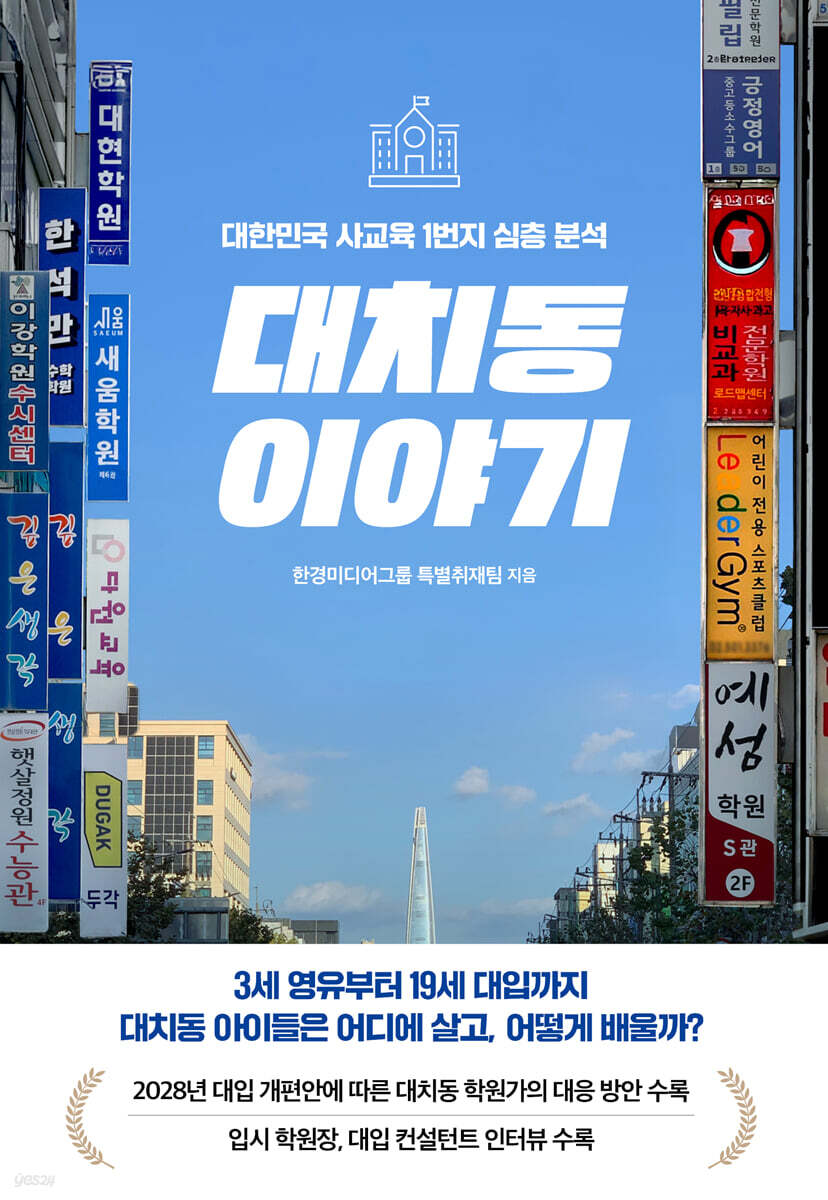 |
Description
Book Introduction
Daechi-dong, documenting the private education ecosystem!
From 3 years old to 19 years old,
Where do Daechi-dong children live and how do they learn?
27 trillion 114.4 billion won.
The total amount of private education expenses in our country is a scale that exceeds the operating profits of Hyundai Motor Company and Kia Motors, two of our country's leading companies (as of 2023).
One in four students admitted to medical school is from the three districts of Gangnam (Gangnam-gu, Seocho-gu, and Songpa-gu), and 20% of all students admitted to medical school come from Gangnam-gu alone.
In effect, it has become a board for children who have received 'Daechi-dong education'.
Where does Daechi-dong's competitiveness, which dominates Korea's private education market, come from?
Needless to say, it is 'competition'.
Daechi-dong is not just a center of education.
This is a microcosm of Korean education, where countless parents and students chart their course in life and test themselves in fierce competition.
Tuition fees of millions of won per month, a college entrance exam roadmap that begins at a young age, parents' financial and informational power, students who must overcome limitations, and fierce competition in the academy world.
All of this is a dramatic drama unfolding under the name of Daechi-dong.
This book provides an unvarnished look into Daechi-dong's private education market and educational ecosystem, vividly illuminating the opportunities, hopes, and limitations hidden beneath the surface.
Beyond simple criticism or praise, the question Daechi-dong poses to us is clear.
"What is study? And why do we study?" This book tells the story of Daechi-dong, but also of education in South Korea. It explores the strategies of Daechi-dong parents, the struggles of students, the changing hagwon district, school district analysis, and the reality of the educational gap, reconsidering the future of Korean education.
And based on a deep understanding of the current education system, it provides an opportunity to deeply analyze and illuminate the reality of private education in general and to contemplate the essence of education.
It also contains methods for preparing for the major wave of college entrance reform in 2028.
From 3 years old to 19 years old,
Where do Daechi-dong children live and how do they learn?
27 trillion 114.4 billion won.
The total amount of private education expenses in our country is a scale that exceeds the operating profits of Hyundai Motor Company and Kia Motors, two of our country's leading companies (as of 2023).
One in four students admitted to medical school is from the three districts of Gangnam (Gangnam-gu, Seocho-gu, and Songpa-gu), and 20% of all students admitted to medical school come from Gangnam-gu alone.
In effect, it has become a board for children who have received 'Daechi-dong education'.
Where does Daechi-dong's competitiveness, which dominates Korea's private education market, come from?
Needless to say, it is 'competition'.
Daechi-dong is not just a center of education.
This is a microcosm of Korean education, where countless parents and students chart their course in life and test themselves in fierce competition.
Tuition fees of millions of won per month, a college entrance exam roadmap that begins at a young age, parents' financial and informational power, students who must overcome limitations, and fierce competition in the academy world.
All of this is a dramatic drama unfolding under the name of Daechi-dong.
This book provides an unvarnished look into Daechi-dong's private education market and educational ecosystem, vividly illuminating the opportunities, hopes, and limitations hidden beneath the surface.
Beyond simple criticism or praise, the question Daechi-dong poses to us is clear.
"What is study? And why do we study?" This book tells the story of Daechi-dong, but also of education in South Korea. It explores the strategies of Daechi-dong parents, the struggles of students, the changing hagwon district, school district analysis, and the reality of the educational gap, reconsidering the future of Korean education.
And based on a deep understanding of the current education system, it provides an opportunity to deeply analyze and illuminate the reality of private education in general and to contemplate the essence of education.
It also contains methods for preparing for the major wave of college entrance reform in 2028.
- You can preview some of the book's contents.
Preview
index
prolog
Appendix 1: Summary of the 2028 College Admissions Reform Plan
Appendix 2: 2028 College Entrance Reform Plan, Daechi-dong Academy District's Response
Chapter 1: What's Different About the Children of Daechi-dong?
1.
24 hours is not enough
2.
Elementary school students must move around busily for 6 years to achieve average
3.
Grades are basic, prerequisites are essential.
4.
The subject that Daechi-dong high school students risk their lives for
5.
Art School, a place that selects hexagonal talents
6.
Daechi-dong's fortune of spending 100 million won in a year
7.
Is the choice of the student to study abroad in the United States?
8.
Children suffering from burnout amid fierce competition
9.
Students who have secured admission to SKY universities
Chapter 2: Competition in the private academy market is as fierce as the college entrance exam.
1.
The life of a Daechi-dong academy instructor
2.
Daechi-dong academy district targeting 4-year-olds
3.
Elementary schools that claim to provide advanced education
4.
What Successful Middle Schools Have in Common
5.
The shocking situation at an academy with annual sales of 360 billion won
6.
The Daechi-dong art academy is a battlefield
7.
Apgujeong, the mecca of study abroad programs
Chapter 3: Analysis of Daechi-dong School District
1.
Who lives in Daechi-dong Academy District?
2.
Daechi-dong's 'cost-effective' apartments
3.
An apartment that exploded in popularity after a short stay
4.
Lease in Jamsil and Mokdong and move to Gaepo-dong
5.
Dogok-dong, bustling with elementary school students in an era of low birth rates
6.
Yeoksam 2-dong: No worries once you move in, even if the housing prices are high.
Chapter 4: Daechi-dong as seen by the people of Daechi-dong
1.
People come from all over the provinces to buy the medicine Daechi Kids take.
2.
Why Daechi Kids Run to Convenience Stores
3.
Is Daechi-dong's certified real estate agent an educational consultant?
4.
Where to shop for instructors every day
5.
Already aiming for Seoul National University Medical School at the age of 6
6.
Why Daechi Kids Play Sports
Epilogue
Appendix 1: Summary of the 2028 College Admissions Reform Plan
Appendix 2: 2028 College Entrance Reform Plan, Daechi-dong Academy District's Response
Chapter 1: What's Different About the Children of Daechi-dong?
1.
24 hours is not enough
2.
Elementary school students must move around busily for 6 years to achieve average
3.
Grades are basic, prerequisites are essential.
4.
The subject that Daechi-dong high school students risk their lives for
5.
Art School, a place that selects hexagonal talents
6.
Daechi-dong's fortune of spending 100 million won in a year
7.
Is the choice of the student to study abroad in the United States?
8.
Children suffering from burnout amid fierce competition
9.
Students who have secured admission to SKY universities
Chapter 2: Competition in the private academy market is as fierce as the college entrance exam.
1.
The life of a Daechi-dong academy instructor
2.
Daechi-dong academy district targeting 4-year-olds
3.
Elementary schools that claim to provide advanced education
4.
What Successful Middle Schools Have in Common
5.
The shocking situation at an academy with annual sales of 360 billion won
6.
The Daechi-dong art academy is a battlefield
7.
Apgujeong, the mecca of study abroad programs
Chapter 3: Analysis of Daechi-dong School District
1.
Who lives in Daechi-dong Academy District?
2.
Daechi-dong's 'cost-effective' apartments
3.
An apartment that exploded in popularity after a short stay
4.
Lease in Jamsil and Mokdong and move to Gaepo-dong
5.
Dogok-dong, bustling with elementary school students in an era of low birth rates
6.
Yeoksam 2-dong: No worries once you move in, even if the housing prices are high.
Chapter 4: Daechi-dong as seen by the people of Daechi-dong
1.
People come from all over the provinces to buy the medicine Daechi Kids take.
2.
Why Daechi Kids Run to Convenience Stores
3.
Is Daechi-dong's certified real estate agent an educational consultant?
4.
Where to shop for instructors every day
5.
Already aiming for Seoul National University Medical School at the age of 6
6.
Why Daechi Kids Play Sports
Epilogue
Detailed image

Into the book
Where does Daechi-dong's competitiveness come from? Competition, of course.
The throne of Daechi-dong is not eternal.
The college entrance exam market, which was divided between Jongro Academy and Daesung Academy, was reorganized by a new powerhouse called Sidae Injae.
English kindergarten, elementary school Korean, middle school math.
The top companies in every field strive to maintain a lead over the second and third-place academies that are quickly following.
Word of mouth, such as, "I heard that teacher wasn't very good," can ruin the career you've built up over time.
This is why daily lecturers wake up early in the morning and prepare lectures and develop problems until late at night.
--- p.6
"We have tools to assess the academic achievement of kindergarten students," said Park Eun-ju, CEO of Ringo Mom Edu, an early childhood consultant in Daechi-dong. "We measure this by having children read books based on an AR index, which categorizes the difficulty of English books, and then asking them about their comprehension. We also periodically assess children's learning progress using English proficiency diagnostic programs like the SEL (Star Early Literacy, listening) and SR (Star Reading, reading) tests."
Another characteristic of Daechi-dong's early childhood education these days is that the best kindergartens vary depending on the age group.
In the past, English kindergartens were categorized solely by learning method, but now they have been further subdivided.
Children aged 3 go to an English play school, children aged 4-5 go to a play-based school, children aged 6-7 go to a learning-based school, and children aged 7 and older go to a prep school.
--- p.43
The subject that Daechi-dong high school students care most about is math.
The word 'Daksu' didn't come about for nothing.
I think math determines whether you are accepted to college, regardless of whether you are in the humanities or sciences.
Among the students in Daechi-dong, there is no student who starts studying math for the CSAT in their third year of high school.
As early as the third year of middle school, students can complete the core concepts of the college entrance exam that are included in the third year of high school curriculum.
At the latest, it should be completed by the second semester of the first year of high school.
And starting from the winter break of the second year of high school, I started solving problems in earnest.
--- p.65
The monthly rent for apartments near the Daechi-dong academy district listed on a short-term rental platform was between 300,000 and 2.7 million won.
One studio apartment, which emphasized its location as "near Sidae Injae" in its listing, was advertised as "340,000 won per week, perfect for studying with full options, also available for one-month rental."
In addition, there were many places that were looking for tenants by posting signs such as, "3-minute walk from Daechi-dong Academy Street, close to Hanti Station."
An official from a real estate agent's office in Daechi-dong said, "Regardless of price, if the conditions are good, such as the proximity to major academies including Sidae Injae, many parents sign a contract right away. Parents who are afraid to send their children alone sometimes sign a contract for a two-room apartment and live there with their children."
--- p.79
The most important thing for a lecturer in charge of a medical school class is management, first, second, and third.
“Sometimes I spend more time communicating with parents than with students,” said Mr. Kang, as he began collecting weekly study plans from students after the first period.
On this day, he had classes during the first and third periods.
During the free time between the 2nd and 4th periods, I checked the students' study plans and confirmed the study time for each student and the study time for each subject.
He took pictures of the weekly study plan summary, which included information on each student's learning progress and changes in study patterns compared to the previous week, and the report cards for the mini-mock exams taken that week, and sent them to the parents.
--- p.109~110
Complexes that are close to the academy district and have better conditions than Eunma Apartment include Daechi Hyundai Apartment, Daechi Samsung Apartment, and Daechi Hyosung Apartment.
However, since there are many 'mini' complexes with only a few dozen households, it is not easy to find a property, and if you look for a 100 square meter, 3-room apartment, the jeonse price jumps to over 1.3 billion won.
In terms of educational environment, there is no other large apartment complex in this area that offers the convenience of being close to the Daechi-dong academy district as much as Eunma Apartment.
It takes about 12 to 15 minutes to walk from the Raemian Daechi Palace 1 and 2 complexes, which are considered the best in Daechi-dong, to the Eunma Apartment intersection where Sidae Injae is located.
--- p.169
From a parent's perspective, the biggest advantage of Dogok Rexel Apartment is its location, which is no exaggeration to say is 'good for elementary, middle, and high school students.'
You can go to famous schools in District 8, such as Daedo Elementary School, Jungdae High School, Sookmyung Girls' Middle School, and High School, without crossing a single crosswalk.
According to real estate agents in the area, there are even people inquiring about renting a house just to send their children to Daedo Elementary School.
In the industry, Dogok Rexel Apartments are ranked first as the most sought-after complex among parents in Dogok-dong.
--- p.193
“My child is in the 5th grade of elementary school, and my budget is up to 1 billion won.
“I’m thinking about moving to Daechi-dong. Where would be a good place to live?” Lee Mi-kyung, the representative of the Daechi School District Certified Real Estate Agent Office, who moved to Daechi-dong 10 years ago and is raising a high school-aged child while working as a certified real estate agent, answered a reporter’s question about “what is the question I hear most often while working” like this.
“Sometimes I even feel like I’m an educational consultant,” he added.
He said, “It is the fate of a certified real estate agent in a school district to be familiar with the condition of the property, convenience of transportation, investment prospects, living infrastructure such as hospitals and supermarkets, as well as the schools and academy districts assigned to each complex,” and expressed his enthusiasm for education in Daechi-dong.
--- p.219
However, he also emphasized that parents in Daechi-dong do not believe that their children's admission to a prestigious university is the only path in life.
He said, “We try to create an environment where children can focus on their studies until middle school, but if we determine that they are not competitive in domestic entrance exams, we actively help them find other paths.” He added, “In Daechi-dong, there are various institutions that prepare for entrance exams for arts and physical education programs, such as physical education and art colleges, and for overseas study tracks.
“There are many consulting organizations that curate information for this purpose and guide students on the path to college entrance,” he explained.
The throne of Daechi-dong is not eternal.
The college entrance exam market, which was divided between Jongro Academy and Daesung Academy, was reorganized by a new powerhouse called Sidae Injae.
English kindergarten, elementary school Korean, middle school math.
The top companies in every field strive to maintain a lead over the second and third-place academies that are quickly following.
Word of mouth, such as, "I heard that teacher wasn't very good," can ruin the career you've built up over time.
This is why daily lecturers wake up early in the morning and prepare lectures and develop problems until late at night.
--- p.6
"We have tools to assess the academic achievement of kindergarten students," said Park Eun-ju, CEO of Ringo Mom Edu, an early childhood consultant in Daechi-dong. "We measure this by having children read books based on an AR index, which categorizes the difficulty of English books, and then asking them about their comprehension. We also periodically assess children's learning progress using English proficiency diagnostic programs like the SEL (Star Early Literacy, listening) and SR (Star Reading, reading) tests."
Another characteristic of Daechi-dong's early childhood education these days is that the best kindergartens vary depending on the age group.
In the past, English kindergartens were categorized solely by learning method, but now they have been further subdivided.
Children aged 3 go to an English play school, children aged 4-5 go to a play-based school, children aged 6-7 go to a learning-based school, and children aged 7 and older go to a prep school.
--- p.43
The subject that Daechi-dong high school students care most about is math.
The word 'Daksu' didn't come about for nothing.
I think math determines whether you are accepted to college, regardless of whether you are in the humanities or sciences.
Among the students in Daechi-dong, there is no student who starts studying math for the CSAT in their third year of high school.
As early as the third year of middle school, students can complete the core concepts of the college entrance exam that are included in the third year of high school curriculum.
At the latest, it should be completed by the second semester of the first year of high school.
And starting from the winter break of the second year of high school, I started solving problems in earnest.
--- p.65
The monthly rent for apartments near the Daechi-dong academy district listed on a short-term rental platform was between 300,000 and 2.7 million won.
One studio apartment, which emphasized its location as "near Sidae Injae" in its listing, was advertised as "340,000 won per week, perfect for studying with full options, also available for one-month rental."
In addition, there were many places that were looking for tenants by posting signs such as, "3-minute walk from Daechi-dong Academy Street, close to Hanti Station."
An official from a real estate agent's office in Daechi-dong said, "Regardless of price, if the conditions are good, such as the proximity to major academies including Sidae Injae, many parents sign a contract right away. Parents who are afraid to send their children alone sometimes sign a contract for a two-room apartment and live there with their children."
--- p.79
The most important thing for a lecturer in charge of a medical school class is management, first, second, and third.
“Sometimes I spend more time communicating with parents than with students,” said Mr. Kang, as he began collecting weekly study plans from students after the first period.
On this day, he had classes during the first and third periods.
During the free time between the 2nd and 4th periods, I checked the students' study plans and confirmed the study time for each student and the study time for each subject.
He took pictures of the weekly study plan summary, which included information on each student's learning progress and changes in study patterns compared to the previous week, and the report cards for the mini-mock exams taken that week, and sent them to the parents.
--- p.109~110
Complexes that are close to the academy district and have better conditions than Eunma Apartment include Daechi Hyundai Apartment, Daechi Samsung Apartment, and Daechi Hyosung Apartment.
However, since there are many 'mini' complexes with only a few dozen households, it is not easy to find a property, and if you look for a 100 square meter, 3-room apartment, the jeonse price jumps to over 1.3 billion won.
In terms of educational environment, there is no other large apartment complex in this area that offers the convenience of being close to the Daechi-dong academy district as much as Eunma Apartment.
It takes about 12 to 15 minutes to walk from the Raemian Daechi Palace 1 and 2 complexes, which are considered the best in Daechi-dong, to the Eunma Apartment intersection where Sidae Injae is located.
--- p.169
From a parent's perspective, the biggest advantage of Dogok Rexel Apartment is its location, which is no exaggeration to say is 'good for elementary, middle, and high school students.'
You can go to famous schools in District 8, such as Daedo Elementary School, Jungdae High School, Sookmyung Girls' Middle School, and High School, without crossing a single crosswalk.
According to real estate agents in the area, there are even people inquiring about renting a house just to send their children to Daedo Elementary School.
In the industry, Dogok Rexel Apartments are ranked first as the most sought-after complex among parents in Dogok-dong.
--- p.193
“My child is in the 5th grade of elementary school, and my budget is up to 1 billion won.
“I’m thinking about moving to Daechi-dong. Where would be a good place to live?” Lee Mi-kyung, the representative of the Daechi School District Certified Real Estate Agent Office, who moved to Daechi-dong 10 years ago and is raising a high school-aged child while working as a certified real estate agent, answered a reporter’s question about “what is the question I hear most often while working” like this.
“Sometimes I even feel like I’m an educational consultant,” he added.
He said, “It is the fate of a certified real estate agent in a school district to be familiar with the condition of the property, convenience of transportation, investment prospects, living infrastructure such as hospitals and supermarkets, as well as the schools and academy districts assigned to each complex,” and expressed his enthusiasm for education in Daechi-dong.
--- p.219
However, he also emphasized that parents in Daechi-dong do not believe that their children's admission to a prestigious university is the only path in life.
He said, “We try to create an environment where children can focus on their studies until middle school, but if we determine that they are not competitive in domestic entrance exams, we actively help them find other paths.” He added, “In Daechi-dong, there are various institutions that prepare for entrance exams for arts and physical education programs, such as physical education and art colleges, and for overseas study tracks.
“There are many consulting organizations that curate information for this purpose and guide students on the path to college entrance,” he explained.
--- p.230
Publisher's Review
The question posed by Daechi-dong, the center of private education: Facing the true face of the educational gap.
Daechi-dong, which is called a microcosm of Korean education, has long been a center of private education.
What is Daechi-dong's true competitive edge? Through the unique space of Daechi-dong, we vividly illuminate the reality of private education in Korea and delve into how students, parents, private academies, and real estate in school districts operate within it.
This book examines the intense learning environment and structure of private education based on the daily lives of Daechi-dong students, from kindergarten to high school.
This book covers every aspect of Daechi-dong in detail, from the customized academies chosen by parents, to the meticulously planned entrance exam strategies, to the unique characteristics of the school district created by Daechi-dong.
The Daily Life and Structure of Private Education in Daechi-dong: The Reality Facing Students and Parents, from Preschool to High School
The educational gap is so wide that students from Daechi-dong account for an overwhelming proportion of applicants to medical schools, specialized high schools, and autonomous private high schools.
In Daechi-dong, parents are not just applicants, but also admissions strategists, obsessed with finding information on private academies, connecting students with private tutors, and managing their children.
The learning roadmap begins as early as age 3, with English kindergarten, critical thinking skills learning for ages 6 and 7, and full-scale entrance exam preparation starting in the upper grades of elementary school.
The learning environment is so competitive that open runs, parental rides, homework management, and student management are commonplace to attend classes at famous academies.
Naturally, the monthly tuition fees from kindergarten to high school amount to several million won, and in the case of repeat students, there are many cases where they spend more than 100 million won per year.
Competition and Change in the Private Education Market: The Evolution of Subject-Specific Customized Learning and Admission Strategies
Competition among private academies is just as fierce as the college entrance exams.
It is a battleground for all academies targeting the needs of parents who want to raise their children to be hexagonal people from an early age.
There are various types of academies, including language academies that recruit "English talents" who have just graduated from English kindergartens, math and gifted academies that target 4-6 year olds who are starting to prepare for gifted high schools, and essay academies that advertise that they will develop the literacy skills of young children who are familiar with digital technology.
The image of the school district in the drama as brutal is by no means an exaggeration.
The throne of Daechi-dong does not last forever.
The college entrance exam market, which was divided between Jongro Academy and Daesung Academy, was reorganized by a new powerhouse called Sidae Injae.
English kindergarten, elementary school Korean, middle school math.
The top companies in every field strive to maintain a lead over the second and third-place academies that are quickly following.
The Relationship Between School Districts and Real Estate: How Educational Aspirations Transform Residential and Property Values
Real estate values rise in school districts, and certain apartments or neighborhoods become more popular due to educational aspirations.
Demand for rental housing and school district mobility are frequent, and the educational environment is a key factor in choosing a place to live.
The spectrum of educational districts in this area is quite wide, ranging from traditional wealthy neighborhoods like Woosun-Mi (Woosung Apartment, Seonkyung Apartment, and Mido Apartment) where billionaires live, to Daechi 4-dong where private academy instructors and students studying abroad live in rented apartments.
Eunma Apartment, known as a cost-effective apartment in Daechi-dong, and Dogok Rexle Apartment in Dogok-dong, which has many elementary school students even in this low birth rate era, are popular as ‘apartments that embrace elementary, middle, and high schools.’
Real estate agents sometimes say, “Sometimes I feel like I’m an educational consultant,” giving specific advice on which apartment and building to live in.
Problems and Alternatives in Daechi-dong Education: We Must Break Away from Excessive Competition and Realize the Essence of Education
The authors offer insightful insights into how the private education ecosystem not only exacerbates educational disparities, but also presents both opportunities and limitations for students and parents.
The concentration of resources and opportunities in certain areas can be a double-edged sword for students, and the fierce competition for learning can lead to a lack of autonomy and emotional stress.
We must reduce our reliance on private education and seek a shift toward enabling students to learn on their own.
This book does not simply criticize or praise Daechi-dong.
Through the story of Daechi-dong, an educational site, we look back on the reality of education in Korea and provide an opportunity to reflect on the direction in which public and private education should proceed.
It also asks about the future and direction of education in Korea.
Daechi-dong, which is called a microcosm of Korean education, has long been a center of private education.
What is Daechi-dong's true competitive edge? Through the unique space of Daechi-dong, we vividly illuminate the reality of private education in Korea and delve into how students, parents, private academies, and real estate in school districts operate within it.
This book examines the intense learning environment and structure of private education based on the daily lives of Daechi-dong students, from kindergarten to high school.
This book covers every aspect of Daechi-dong in detail, from the customized academies chosen by parents, to the meticulously planned entrance exam strategies, to the unique characteristics of the school district created by Daechi-dong.
The Daily Life and Structure of Private Education in Daechi-dong: The Reality Facing Students and Parents, from Preschool to High School
The educational gap is so wide that students from Daechi-dong account for an overwhelming proportion of applicants to medical schools, specialized high schools, and autonomous private high schools.
In Daechi-dong, parents are not just applicants, but also admissions strategists, obsessed with finding information on private academies, connecting students with private tutors, and managing their children.
The learning roadmap begins as early as age 3, with English kindergarten, critical thinking skills learning for ages 6 and 7, and full-scale entrance exam preparation starting in the upper grades of elementary school.
The learning environment is so competitive that open runs, parental rides, homework management, and student management are commonplace to attend classes at famous academies.
Naturally, the monthly tuition fees from kindergarten to high school amount to several million won, and in the case of repeat students, there are many cases where they spend more than 100 million won per year.
Competition and Change in the Private Education Market: The Evolution of Subject-Specific Customized Learning and Admission Strategies
Competition among private academies is just as fierce as the college entrance exams.
It is a battleground for all academies targeting the needs of parents who want to raise their children to be hexagonal people from an early age.
There are various types of academies, including language academies that recruit "English talents" who have just graduated from English kindergartens, math and gifted academies that target 4-6 year olds who are starting to prepare for gifted high schools, and essay academies that advertise that they will develop the literacy skills of young children who are familiar with digital technology.
The image of the school district in the drama as brutal is by no means an exaggeration.
The throne of Daechi-dong does not last forever.
The college entrance exam market, which was divided between Jongro Academy and Daesung Academy, was reorganized by a new powerhouse called Sidae Injae.
English kindergarten, elementary school Korean, middle school math.
The top companies in every field strive to maintain a lead over the second and third-place academies that are quickly following.
The Relationship Between School Districts and Real Estate: How Educational Aspirations Transform Residential and Property Values
Real estate values rise in school districts, and certain apartments or neighborhoods become more popular due to educational aspirations.
Demand for rental housing and school district mobility are frequent, and the educational environment is a key factor in choosing a place to live.
The spectrum of educational districts in this area is quite wide, ranging from traditional wealthy neighborhoods like Woosun-Mi (Woosung Apartment, Seonkyung Apartment, and Mido Apartment) where billionaires live, to Daechi 4-dong where private academy instructors and students studying abroad live in rented apartments.
Eunma Apartment, known as a cost-effective apartment in Daechi-dong, and Dogok Rexle Apartment in Dogok-dong, which has many elementary school students even in this low birth rate era, are popular as ‘apartments that embrace elementary, middle, and high schools.’
Real estate agents sometimes say, “Sometimes I feel like I’m an educational consultant,” giving specific advice on which apartment and building to live in.
Problems and Alternatives in Daechi-dong Education: We Must Break Away from Excessive Competition and Realize the Essence of Education
The authors offer insightful insights into how the private education ecosystem not only exacerbates educational disparities, but also presents both opportunities and limitations for students and parents.
The concentration of resources and opportunities in certain areas can be a double-edged sword for students, and the fierce competition for learning can lead to a lack of autonomy and emotional stress.
We must reduce our reliance on private education and seek a shift toward enabling students to learn on their own.
This book does not simply criticize or praise Daechi-dong.
Through the story of Daechi-dong, an educational site, we look back on the reality of education in Korea and provide an opportunity to reflect on the direction in which public and private education should proceed.
It also asks about the future and direction of education in Korea.
GOODS SPECIFICS
- Date of issue: January 6, 2025
- Page count, weight, size: 240 pages | 404g | 145*210*18mm
- ISBN13: 9788947549912
- ISBN10: 8947549916
You may also like
카테고리
korean


korean

![GQ KOREA Mark (Monthly): December [2025]](http://librairie.coreenne.fr/cdn/shop/files/8ef265dbbfbf186523ed75ba7319009d.jpg?v=1765340328&width=3840)


