

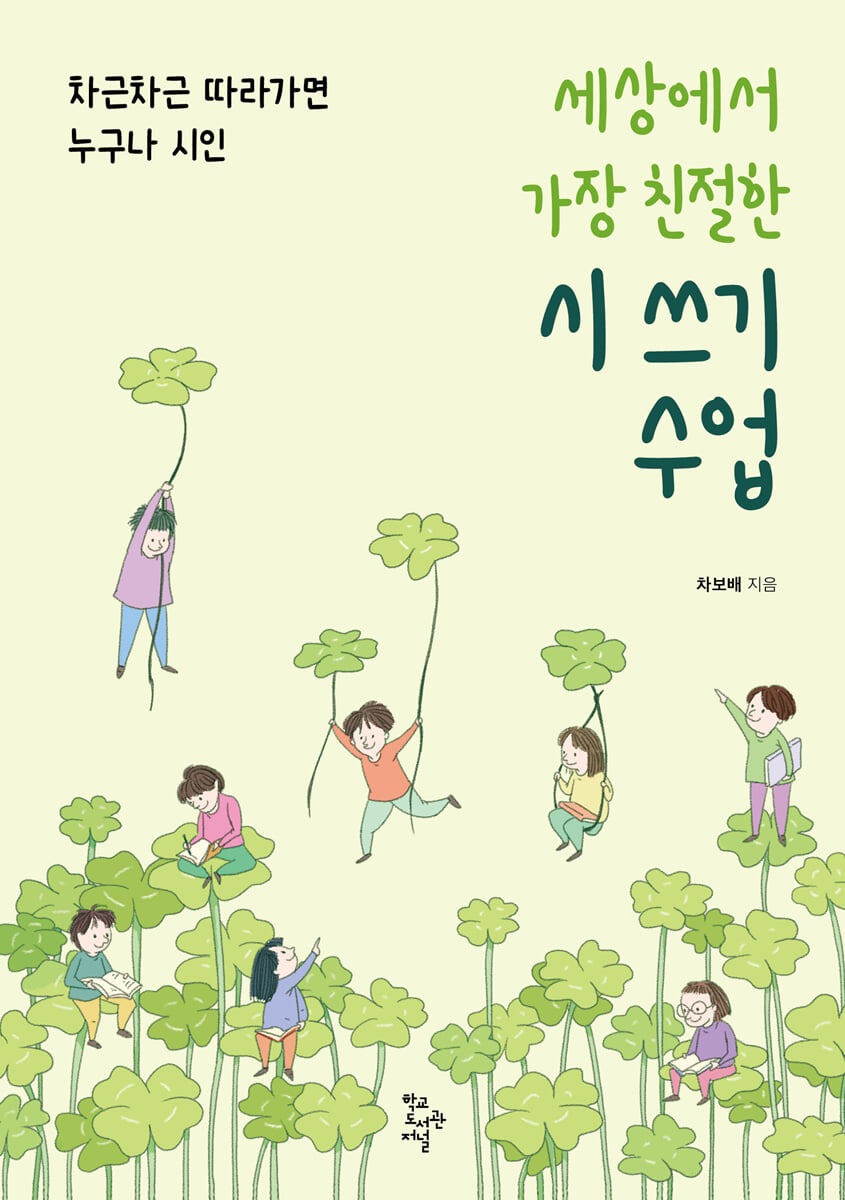
The world's friendliest poetry writing class
 |
Description
Book Introduction
It is a well-known fact today that writing poetry is a good tool for literacy education.
However, the reason why poetry writing classes are not taught well in educational settings is because it is difficult to teach and takes a long time.
The current state of poetry education is that it is excessively focused on appreciation, such as reading poetry as it is in textbooks, analyzing its content and form, and solving related problems while engaging in related activities.
As a practicing elementary school teacher who has been consistently teaching poetry to children for a long time, the author seeks to correct the problem of poetry education that leaves children as 'passive recipients.'
Rather than simply saying, “Let’s write a poem!” and ending it, we devised a “method for systematically teaching poetry writing” in line with the curriculum.
Above all, this book introduces a method of writing poetry that is not rigid but soft, not stiff but rather one that allows children to laugh, chat, and roll around with poetry, allowing children in the classroom to enjoy the benefits of writing poetry and grow into their own unique poets.
However, the reason why poetry writing classes are not taught well in educational settings is because it is difficult to teach and takes a long time.
The current state of poetry education is that it is excessively focused on appreciation, such as reading poetry as it is in textbooks, analyzing its content and form, and solving related problems while engaging in related activities.
As a practicing elementary school teacher who has been consistently teaching poetry to children for a long time, the author seeks to correct the problem of poetry education that leaves children as 'passive recipients.'
Rather than simply saying, “Let’s write a poem!” and ending it, we devised a “method for systematically teaching poetry writing” in line with the curriculum.
Above all, this book introduces a method of writing poetry that is not rigid but soft, not stiff but rather one that allows children to laugh, chat, and roll around with poetry, allowing children in the classroom to enjoy the benefits of writing poetry and grow into their own unique poets.
- You can preview some of the book's contents.
Preview
index
Prologue - Teacher, I hate poetry!
Introduction - Why write poetry?
Approaching the first poem
1.
sensory expression
2.
metaphorical expression
3.
Adding rhyme to poetry
4.
How to express emotions
Part 2: Getting to Know Poetry
1.
Writing vertical poetry
2.
Writing a parody poem
3.
Writing in collaboration
4.
Writing with weather and seasons
5.
Writing as our family
Part 3: Giving Wings to Poetry
1.
Write as you hear
2.
Try being a different target
3.
Questioning the obvious
4.
Expressing through objects
5.
Write about the interview
Part 4: Flying to the City
1.
Write about my dreams
2.
Change your perspective
3.
Imagine with invention techniques
4.
Publish your own poetry collection
Epilogue - Teacher, I love poetry!
Introduction - Why write poetry?
Approaching the first poem
1.
sensory expression
2.
metaphorical expression
3.
Adding rhyme to poetry
4.
How to express emotions
Part 2: Getting to Know Poetry
1.
Writing vertical poetry
2.
Writing a parody poem
3.
Writing in collaboration
4.
Writing with weather and seasons
5.
Writing as our family
Part 3: Giving Wings to Poetry
1.
Write as you hear
2.
Try being a different target
3.
Questioning the obvious
4.
Expressing through objects
5.
Write about the interview
Part 4: Flying to the City
1.
Write about my dreams
2.
Change your perspective
3.
Imagine with invention techniques
4.
Publish your own poetry collection
Epilogue - Teacher, I love poetry!
Detailed image

Into the book
The greatest benefit I've felt from practicing poetry writing with children is that, above all, the children enjoy it.
Children really enjoy the process of expressing themselves by writing poetry in their own soft language, rather than reading and analyzing rigid poetry introduced in textbooks.
This is precisely the purpose of our writing poetry in the classroom.
I don't want to raise my children to be professional poets.
The greatest goal is to freely express one's thoughts and feelings through the literary medium of 'poetry'.
--- p.12
The answer is in the poem.
Just as you have to fall off a bicycle countless times to learn to ride it, you have to roll around in a poem countless times to write a good poem.
Through that process, you should naturally learn what poetry is and what makes good poetry.
Just like when riding a bicycle.
--- p.80
The effect of capturing new thoughts and feelings that arise within me through a work of art and expressing them in poetry is tremendous.
When I was alone and worried about what to write, my thoughts and feelings expanded to things I had never thought of, and the content of the poem also became much richer and more colorful.
It started as someone else's story, but it ended as my story.
Children really enjoy the process of expressing themselves by writing poetry in their own soft language, rather than reading and analyzing rigid poetry introduced in textbooks.
This is precisely the purpose of our writing poetry in the classroom.
I don't want to raise my children to be professional poets.
The greatest goal is to freely express one's thoughts and feelings through the literary medium of 'poetry'.
--- p.12
The answer is in the poem.
Just as you have to fall off a bicycle countless times to learn to ride it, you have to roll around in a poem countless times to write a good poem.
Through that process, you should naturally learn what poetry is and what makes good poetry.
Just like when riding a bicycle.
--- p.80
The effect of capturing new thoughts and feelings that arise within me through a work of art and expressing them in poetry is tremendous.
When I was alone and worried about what to write, my thoughts and feelings expanded to things I had never thought of, and the content of the poem also became much richer and more colorful.
It started as someone else's story, but it ended as my story.
--- p.88
Publisher's Review
■ “I hated poetry very much.
But now I'm just waiting for the day to write poetry."
No more old, boring poetry classes!
We begin classes that slowly seep into children's lives.
As concerns grow over the decline in children's literacy skills, reading and writing poetry are often mentioned as an alternative.
It is also a well-known fact that poetry can foster creativity and sensitivity, and cultivate imagination and artistry.
However, no matter how much writing poetry helps children grow and develop, children find poetry difficult and become increasingly distant from it.
Cha Bo-bae, an elementary school teacher who has struggled to convey the beauty of poetry and the joy of writing poetry to children, developed a fun and enjoyable poetry writing teaching method that even children who dislike books can voluntarily participate in, thinking, "It's so unfair that they hate poetry without even knowing it properly."
This teaching method provides children who are tired of reading rigid poetry in textbooks with an opportunity to deeply reflect on their thoughts and feelings and actively express them.
These practical examples, perfectly suited to the level of teenagers who are just beginning to write poetry, will show readers who have had a vague aversion to poetry and a sense of burden that writing poetry can be an exciting and enjoyable process. For readers who have felt unsure of how to approach writing poetry, these examples will serve as a reliable and followable guidepost.
■ “How can we help children experience the fun and enjoyment of poetry?”
Sow seeds with appreciation and let them bloom with expression!
4 Steps to Boost Your Poetry Class
We all know the benefits of writing poetry, but how and where should we begin teaching poetry to children? This book, organized into four parts, guides children step-by-step, step-by-step, to become familiar with poetry.
First, in Part 1, we look at the basic elements that make up poetry so that children can approach poetry without resistance.
By using sensory expressions to awaken my five senses that I had forgotten, by examining the subject in detail and discovering unfamiliar points, and by learning the elements that make poetry colorful and rich, such as metaphor and rhythm, my fear of poetry will significantly decrease.
Part 2, which introduces ways to become familiar with poetry, is full of attractive incentives to draw children into the world of poetry.
Not only does it introduce new forms and types of poetry writing, such as vertical poetry, parody poetry, and collaborative poetry, but it also allows children to take their first steps in writing poetry with simple topics that can be easily conveyed in everyday life, such as the weather, seasons, and our families, before moving on to full-fledged poetry writing.
If the activities so far have been focused on getting children interested in writing poetry, the following Part 3 will go a step further and introduce methods to upgrade the completeness and level of their poetry.
Let's broaden children's poetic imagination and perception of the world and provide new stimulation by practicing various methods of poetry creation, such as becoming a different subject, expressing through objects, and writing from interviews.
In the final fourth part, poetry writing was combined with other areas outside of the Korean language curriculum to create a synergistic effect.
Expanding the boundaries of poetry through linking with career education, self-esteem education, and invention education helps children develop sound character, build self-esteem, and maximize their imagination.
Finally, if we look at the process of publishing the poems children have written so far into a poetry collection, we will be able to bear fruit in our poetry writing class.
■ From children's vivid pronouncements to actual examples of creative poetry
Almost everything you need to know about poetry writing in one book
In addition, the author actively utilizes movies, TV programs, and YouTube videos as reference materials for writing poetry to keep children interested, and uses pictures and diagrams to help them understand each technique at a glance.
Furthermore, in addition to the familiar poems included in literature textbooks, we aimed to introduce a wide range of works by young poets such as Kim Gaemi, Seong Hwanhee, and Ian.
It goes without saying that the vividness was enhanced by thoroughly including the impressions and prefaces of children who had seen and heard poetry writing directly at school for many years.
Above all, it does not simply introduce the methodology of poetry writing, but also publishes poems that children have created themselves according to each class topic, providing practical and substantive guidance to teachers who actually teach classes in the field.
With this book, which is like a 'poetry writing gift set,' every child in the classroom will have the amazing experience of growing into a poet.
“No one knows when or how that bud will bloom in the hearts of children.
It is difficult to predict what will trigger that child.
But if you have patience and continue to write poetry with your children, there will definitely come a day when something unexpected will happen and you will burst out with a bang, just like I did when I was young.
Then, from now on, children will be the first to find poetry without being told to do so.
So, until then, let's write poems one by one with the children.
“I hope that poetry will slowly seep into children’s lives.”
But now I'm just waiting for the day to write poetry."
No more old, boring poetry classes!
We begin classes that slowly seep into children's lives.
As concerns grow over the decline in children's literacy skills, reading and writing poetry are often mentioned as an alternative.
It is also a well-known fact that poetry can foster creativity and sensitivity, and cultivate imagination and artistry.
However, no matter how much writing poetry helps children grow and develop, children find poetry difficult and become increasingly distant from it.
Cha Bo-bae, an elementary school teacher who has struggled to convey the beauty of poetry and the joy of writing poetry to children, developed a fun and enjoyable poetry writing teaching method that even children who dislike books can voluntarily participate in, thinking, "It's so unfair that they hate poetry without even knowing it properly."
This teaching method provides children who are tired of reading rigid poetry in textbooks with an opportunity to deeply reflect on their thoughts and feelings and actively express them.
These practical examples, perfectly suited to the level of teenagers who are just beginning to write poetry, will show readers who have had a vague aversion to poetry and a sense of burden that writing poetry can be an exciting and enjoyable process. For readers who have felt unsure of how to approach writing poetry, these examples will serve as a reliable and followable guidepost.
■ “How can we help children experience the fun and enjoyment of poetry?”
Sow seeds with appreciation and let them bloom with expression!
4 Steps to Boost Your Poetry Class
We all know the benefits of writing poetry, but how and where should we begin teaching poetry to children? This book, organized into four parts, guides children step-by-step, step-by-step, to become familiar with poetry.
First, in Part 1, we look at the basic elements that make up poetry so that children can approach poetry without resistance.
By using sensory expressions to awaken my five senses that I had forgotten, by examining the subject in detail and discovering unfamiliar points, and by learning the elements that make poetry colorful and rich, such as metaphor and rhythm, my fear of poetry will significantly decrease.
Part 2, which introduces ways to become familiar with poetry, is full of attractive incentives to draw children into the world of poetry.
Not only does it introduce new forms and types of poetry writing, such as vertical poetry, parody poetry, and collaborative poetry, but it also allows children to take their first steps in writing poetry with simple topics that can be easily conveyed in everyday life, such as the weather, seasons, and our families, before moving on to full-fledged poetry writing.
If the activities so far have been focused on getting children interested in writing poetry, the following Part 3 will go a step further and introduce methods to upgrade the completeness and level of their poetry.
Let's broaden children's poetic imagination and perception of the world and provide new stimulation by practicing various methods of poetry creation, such as becoming a different subject, expressing through objects, and writing from interviews.
In the final fourth part, poetry writing was combined with other areas outside of the Korean language curriculum to create a synergistic effect.
Expanding the boundaries of poetry through linking with career education, self-esteem education, and invention education helps children develop sound character, build self-esteem, and maximize their imagination.
Finally, if we look at the process of publishing the poems children have written so far into a poetry collection, we will be able to bear fruit in our poetry writing class.
■ From children's vivid pronouncements to actual examples of creative poetry
Almost everything you need to know about poetry writing in one book
In addition, the author actively utilizes movies, TV programs, and YouTube videos as reference materials for writing poetry to keep children interested, and uses pictures and diagrams to help them understand each technique at a glance.
Furthermore, in addition to the familiar poems included in literature textbooks, we aimed to introduce a wide range of works by young poets such as Kim Gaemi, Seong Hwanhee, and Ian.
It goes without saying that the vividness was enhanced by thoroughly including the impressions and prefaces of children who had seen and heard poetry writing directly at school for many years.
Above all, it does not simply introduce the methodology of poetry writing, but also publishes poems that children have created themselves according to each class topic, providing practical and substantive guidance to teachers who actually teach classes in the field.
With this book, which is like a 'poetry writing gift set,' every child in the classroom will have the amazing experience of growing into a poet.
“No one knows when or how that bud will bloom in the hearts of children.
It is difficult to predict what will trigger that child.
But if you have patience and continue to write poetry with your children, there will definitely come a day when something unexpected will happen and you will burst out with a bang, just like I did when I was young.
Then, from now on, children will be the first to find poetry without being told to do so.
So, until then, let's write poems one by one with the children.
“I hope that poetry will slowly seep into children’s lives.”
GOODS SPECIFICS
- Date of issue: July 1, 2024
- Page count, weight, size: 240 pages | 384g | 148*210*15mm
- ISBN13: 9788969151650
- ISBN10: 8969151656
You may also like
카테고리
korean


korean

![GQ KOREA Mark (Monthly): December [2025]](http://librairie.coreenne.fr/cdn/shop/files/8ef265dbbfbf186523ed75ba7319009d.jpg?v=1765340328&width=3840)


