

Black tea class
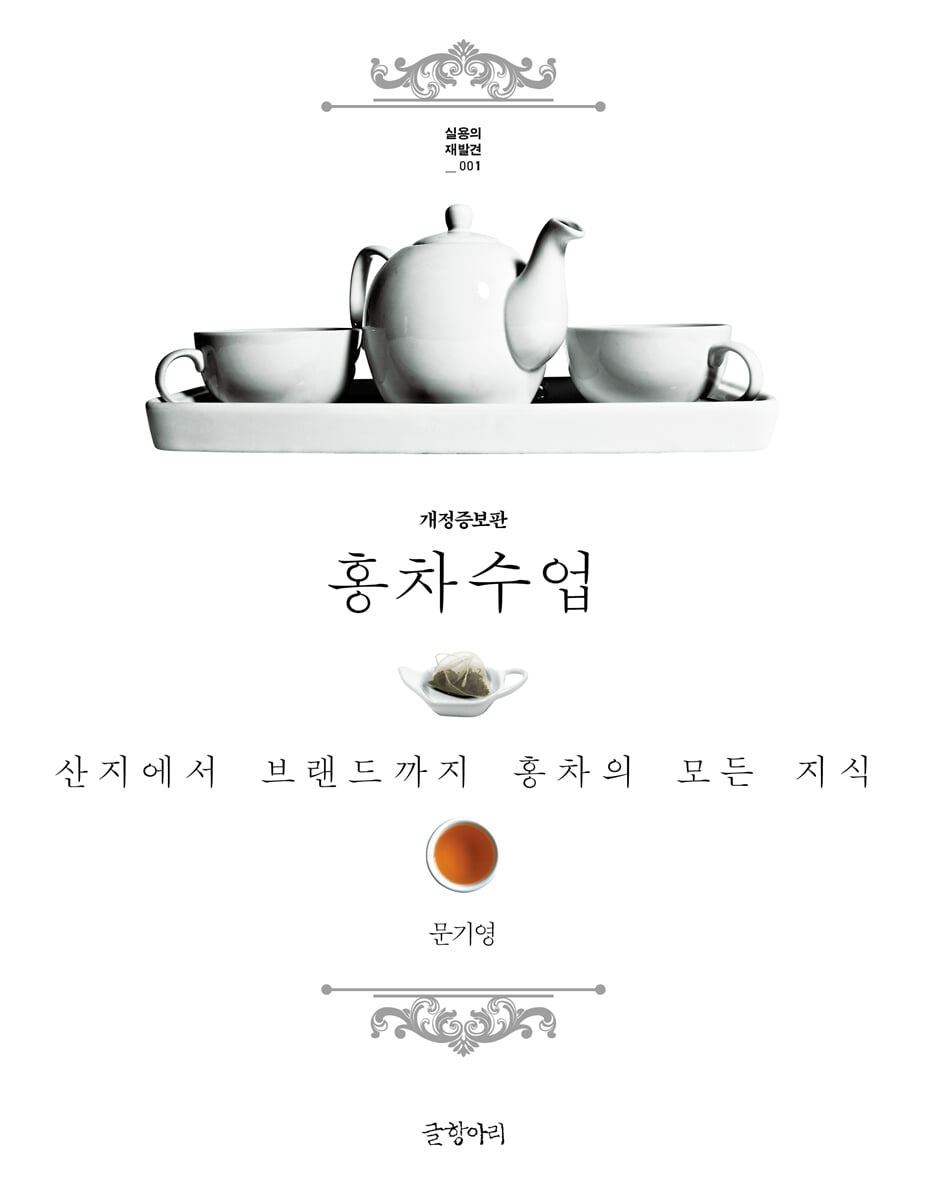 |
Description
Book Introduction
A fully revised and expanded edition published after eight years
A profound, detailed, and philosophical guide to black tea
Almost all content has been upgraded and production site-related content has been greatly expanded!
Published in June 2014, "Black Tea Class," which has been reprinted 10 times and established itself as the bible of black tea, has been fully revised and republished after 8 years in May 2022.
Over the past eight years, our country's car market has grown remarkably.
Nowadays, most coffee shops, including Starbucks and Tous Les Jours, sell a variety of teas.
And countless tea specialty shops selling black tea, oolong tea, green tea, and pu-erh tea also sprang up.
Among them, the black tea market has grown even more significantly.
You can enjoy high-quality tea and high-quality afternoon tea not only at luxury hotels but also at various tea shops.
World-class tea brands, including Fortnum & Mason, are imported and sold.
Royal milk tea, which is made with black tea as its base, is showing signs of becoming a huge hit.
Many books about black tea have also been published.
There are more places that provide car training, and more people are learning.
Along with these changes, the level of Korean tea lovers has greatly improved over the past eight years.
When publishing 『Black Tea Class』 in 2014, the author aimed to convey knowledge about black tea in a systematic and objective manner.
In addition to the knowledge gained from the book, I added on-the-spot information gained from visiting tea-producing regions such as India, Sri Lanka, China, Taiwan, and Boseong and Hadong in Korea, as well as countries with long tea cultures such as England and France.
What our country's black tea lovers wanted was this kind of living information about black tea.
This is why 『Black Tea Class』 was able to go through its 10th printing.
In China, 『Tea Lessons』 has been translated and published and continues to be sold.
Over the past eight years, there have been many changes not only in our country but also in the global tea industry.
The biggest change is that the types of tea have become more diverse and their quality has improved.
New knowledge adapted to changing circumstances became necessary.
This revised and expanded edition of 『Black Tea Class』 is the result of eight years of dedicated time and passion in studying and “systematically and objectively” organizing the results to keep up with and understand these changes.
The entire book has been upgraded to meet the increasing standards of enthusiasts.
The overall structure is almost the same, but most of the content has been newly supplemented, excluding historical facts.
As a result, the book became too long, so I had no choice but to omit most of the tasting notes and several existing chapters.
Instead, the amount of information on the production areas, such as India, Sri Lanka, and China, which are most important for understanding black tea, has increased significantly.
A profound, detailed, and philosophical guide to black tea
Almost all content has been upgraded and production site-related content has been greatly expanded!
Published in June 2014, "Black Tea Class," which has been reprinted 10 times and established itself as the bible of black tea, has been fully revised and republished after 8 years in May 2022.
Over the past eight years, our country's car market has grown remarkably.
Nowadays, most coffee shops, including Starbucks and Tous Les Jours, sell a variety of teas.
And countless tea specialty shops selling black tea, oolong tea, green tea, and pu-erh tea also sprang up.
Among them, the black tea market has grown even more significantly.
You can enjoy high-quality tea and high-quality afternoon tea not only at luxury hotels but also at various tea shops.
World-class tea brands, including Fortnum & Mason, are imported and sold.
Royal milk tea, which is made with black tea as its base, is showing signs of becoming a huge hit.
Many books about black tea have also been published.
There are more places that provide car training, and more people are learning.
Along with these changes, the level of Korean tea lovers has greatly improved over the past eight years.
When publishing 『Black Tea Class』 in 2014, the author aimed to convey knowledge about black tea in a systematic and objective manner.
In addition to the knowledge gained from the book, I added on-the-spot information gained from visiting tea-producing regions such as India, Sri Lanka, China, Taiwan, and Boseong and Hadong in Korea, as well as countries with long tea cultures such as England and France.
What our country's black tea lovers wanted was this kind of living information about black tea.
This is why 『Black Tea Class』 was able to go through its 10th printing.
In China, 『Tea Lessons』 has been translated and published and continues to be sold.
Over the past eight years, there have been many changes not only in our country but also in the global tea industry.
The biggest change is that the types of tea have become more diverse and their quality has improved.
New knowledge adapted to changing circumstances became necessary.
This revised and expanded edition of 『Black Tea Class』 is the result of eight years of dedicated time and passion in studying and “systematically and objectively” organizing the results to keep up with and understand these changes.
The entire book has been upgraded to meet the increasing standards of enthusiasts.
The overall structure is almost the same, but most of the content has been newly supplemented, excluding historical facts.
As a result, the book became too long, so I had no choice but to omit most of the tasting notes and several existing chapters.
Instead, the amount of information on the production areas, such as India, Sri Lanka, and China, which are most important for understanding black tea, has increased significantly.
- You can preview some of the book's contents.
Preview
index
preface
Part 1│What is Black Tea?
Chapter 1: Tea is soon to be oxidized
1.
An Empire of Flavor Created by Oxidation? Types and Classification Criteria for Tea
2.
What's the difference between green tea and black tea? Non-oxidized and fully oxidized.
3.
The troubling spectrum of partially oxidized tea? Oolong tea
4.
White tea, seemingly oxidized or not
5.
Slow-growing sweetness, Hwangcha
6.
Black tea, a black lump that endures time
Chapter 2: The Birth of Black Tea
1.
Tea Culture by Dynasty in China - The Origins and Classification of Tea by Period
2.
The Birth of Black Tea - Jeongsan Sojong and Lapsang Souchong
* Tea Time\17th century, situation on the southeastern coast of China
3.
Britain Discovers Tea
Chapter 3 Classification of Black Tea by Processing Method
1.
The Perfection of British Tea: The Orthodox Method and CTC
2. CTC Black Tea Processing Process
3. Improving the quality of CTC black tea
4.
scented tea
5.
Herbal tea, teazene, or infusion
* Tea Time\Moroccan Mint, the Romance of North Africa
Part 2│ In Search of the Production Area
Chapter 4: Why Place of Production Matters
1.
Varieties and Terroir
2.
Classification of black tea: single-origin black tea, single-source black tea, blended black tea
Chapter 5 Assam
1.
Assam ushered in a new era of tea, by and for the British.
Growing Conflict Between Britain and China | Britain's Desperation | Potential in Assam | The Beginning of Black Tea Production
Assam's Natural Environment and Brief History | Gifts from the Brahmaputra River | The Meaning of Assam Black Tea
2.
Characteristics of Assam Black Tea
Producing Half of India's Black Tea | The Taste and Aroma of Assam Black Tea | Rediscovering Assam Black Tea
3.
Assam Black Tea Travelogue
Upper Assam, home to the finest black tea | Dibrugarh, India's easternmost point
Characteristics of Assam's Tea Gardens | Brahmaputra River
Chapter 6 Darjeeling
1.
Darjeeling, a gift from the Himalayas
The Origins of Darjeeling Black Tea | Natural Environment | Various Varieties | Darjeeling Tea Gardens and Current Status
2.
The taste and aroma of Darjeeling tea
Characteristics of Darjeeling Tea | First Flush | New Trends in First Flush | Second Flush
What is Muscatel Fragrance? | Darjeeling SF and Oriental Beauty | The Difference Between First Flush and Second Flush | Monsoon Flush
Autumn Flush or Autumnal | Tea Shopping in Darjeeling | Kurseung
3.
Darjeeling Tea's Crisis and Opportunity
The Opportunity of Darjeeling Tea | The Crisis of Darjeeling Tea | The Rise of Nepal | Kanchenjunga | The Majesty of Kanchenjunga
* Tea Time\Is Darjeeling First Flush black tea?
* Tea Time\Tea gardens in Darjeeling's seven sub-regions
Chapter 7 Nilgiri
1.
Nilgiri, the blue mountains of South India
Production Regions | Characteristics of Nilgiri Black Tea | Darjeeling in the South | Munnar | Thoughts on South India
2.
Nilgiri black tea
Overall Rating | Single-origin Black Tea
Chapter 8 Sri Lanka
1.
Sri Lanka, the world of splendid black tea
The History of Sri Lankan Black Tea | A Small but Powerful Black Tea Nation | James Taylor
The Unique Terroir of Sri Lankan Black Tea | Seven Producing Regions | The Flavors and Aromas of Black Tea
2.
Differences in taste and aroma depending on altitude
1) Nuara Eliya | 2) Uva Black Tea | 3) Dimbula Black Tea | 4) The Beautiful City of Kandy
3.
The evolution of lowland black tea
Small Tea Growers and Boat Leaf Factory | Quality Issues with Lowland Black Teas | Characteristics of Lowland Black Teas
New Vivankanade | Sri Lanka Travelogue
Chapter 9: Chinese Black Tea Today
1.
Qimen in Anhui Province
No smoky flavor | Qimen Maoping VS.
Kimun Haoya
2.
Yunnan Province's Jeonhong
3.
Golden Monkey of Fujian Province
New trends in Chinese tea
4.
Too expensive black tea, Geumjunmi
* Tea Time\Distribution characteristics and background of Indian/Sri Lankan black tea and Chinese black tea
Part 3: Brands That Wrote the History of Black Tea
Chapter 10 Fortnum & Mason
Royal Blend│Queen Anne
* Tea Time\Is black tea produced in England, the land of black tea?
Chapter 11 Harrods
English Breakfast No. 14│Blend No. 49
Chapter 12 Twinings
* Tea Time\Butler's Wharf
Chapter 13: Mariage Frere
The End and New Beginning of Mariage Frères│Bueno and Sangmani
Mariage Frères and Japan│The Evolution of Flavored Tea│Marais District│Lalour Dutemps
Chapter 14: One-Day Class with Tea Expert Jane Pettigrew
* Tea Time\Bubble Tea, a New Trend
Part 4│How to Enjoy It
Chapter 15: Ingredients and Health Benefits of Black Tea
1) Polyphenol (catechin)
Polyphenols in Black Tea and Green Tea | Theaflavins and Thearubigins
Is Black Tea Sweet? | Polyphenols and Antioxidant Function | It's All the Same Polyphenols | There's No Tannin in Tea
2) Caffeine
Is Caffeine Harmful? | How Much Caffeine Is in Coffee and Tea? | Caffeine Differences Between 6 Major Tea Types
Factors Affecting Tea Caffeine Content | Other Variables in Tea Caffeine Content
3) Theanine
A tranquilizer without drowsiness | A moderator of caffeine in tea | A drink that lifts my spirits
Chapter 16: Sugar for Tea? Tea for Sugar?
The Blessing of Sugar│Sugar for Tea? Tea for Sugar? | Increasing Tea Consumption
Energy Sources for Workers | From Green Tea to Black Tea | Black Tea in the 21st Century
Chapter 17: How to Make Delicious Black Tea
How to Make Delicious Black Tea: British Standards | The Science of the Forest | Amount of Black Tea | Time | Water Temperature | Teapot
Tea is made with water | Why the properties of water are important | For the vibrant flavor and aroma of black tea
Chapter 18 Tea Tasting
There's No Right or Wrong in Taste | 10 Tasters, 11 Opinions
Chapter 19: Understanding the Secret Grades of Black Tea
* Tea Time\FOP Flowery Orange Pekoe The origin of each letter
Chapter 20: Reading the Information on Black Tea Labels
Chapter 21: The History and Renaissance of Domestic Black Tea
1) The History of Korean Black Tea | 2) The Milk Tea Trend and the Future of Black Tea | 3) The Global Black Tea Renaissance
References
Search
Part 1│What is Black Tea?
Chapter 1: Tea is soon to be oxidized
1.
An Empire of Flavor Created by Oxidation? Types and Classification Criteria for Tea
2.
What's the difference between green tea and black tea? Non-oxidized and fully oxidized.
3.
The troubling spectrum of partially oxidized tea? Oolong tea
4.
White tea, seemingly oxidized or not
5.
Slow-growing sweetness, Hwangcha
6.
Black tea, a black lump that endures time
Chapter 2: The Birth of Black Tea
1.
Tea Culture by Dynasty in China - The Origins and Classification of Tea by Period
2.
The Birth of Black Tea - Jeongsan Sojong and Lapsang Souchong
* Tea Time\17th century, situation on the southeastern coast of China
3.
Britain Discovers Tea
Chapter 3 Classification of Black Tea by Processing Method
1.
The Perfection of British Tea: The Orthodox Method and CTC
2. CTC Black Tea Processing Process
3. Improving the quality of CTC black tea
4.
scented tea
5.
Herbal tea, teazene, or infusion
* Tea Time\Moroccan Mint, the Romance of North Africa
Part 2│ In Search of the Production Area
Chapter 4: Why Place of Production Matters
1.
Varieties and Terroir
2.
Classification of black tea: single-origin black tea, single-source black tea, blended black tea
Chapter 5 Assam
1.
Assam ushered in a new era of tea, by and for the British.
Growing Conflict Between Britain and China | Britain's Desperation | Potential in Assam | The Beginning of Black Tea Production
Assam's Natural Environment and Brief History | Gifts from the Brahmaputra River | The Meaning of Assam Black Tea
2.
Characteristics of Assam Black Tea
Producing Half of India's Black Tea | The Taste and Aroma of Assam Black Tea | Rediscovering Assam Black Tea
3.
Assam Black Tea Travelogue
Upper Assam, home to the finest black tea | Dibrugarh, India's easternmost point
Characteristics of Assam's Tea Gardens | Brahmaputra River
Chapter 6 Darjeeling
1.
Darjeeling, a gift from the Himalayas
The Origins of Darjeeling Black Tea | Natural Environment | Various Varieties | Darjeeling Tea Gardens and Current Status
2.
The taste and aroma of Darjeeling tea
Characteristics of Darjeeling Tea | First Flush | New Trends in First Flush | Second Flush
What is Muscatel Fragrance? | Darjeeling SF and Oriental Beauty | The Difference Between First Flush and Second Flush | Monsoon Flush
Autumn Flush or Autumnal | Tea Shopping in Darjeeling | Kurseung
3.
Darjeeling Tea's Crisis and Opportunity
The Opportunity of Darjeeling Tea | The Crisis of Darjeeling Tea | The Rise of Nepal | Kanchenjunga | The Majesty of Kanchenjunga
* Tea Time\Is Darjeeling First Flush black tea?
* Tea Time\Tea gardens in Darjeeling's seven sub-regions
Chapter 7 Nilgiri
1.
Nilgiri, the blue mountains of South India
Production Regions | Characteristics of Nilgiri Black Tea | Darjeeling in the South | Munnar | Thoughts on South India
2.
Nilgiri black tea
Overall Rating | Single-origin Black Tea
Chapter 8 Sri Lanka
1.
Sri Lanka, the world of splendid black tea
The History of Sri Lankan Black Tea | A Small but Powerful Black Tea Nation | James Taylor
The Unique Terroir of Sri Lankan Black Tea | Seven Producing Regions | The Flavors and Aromas of Black Tea
2.
Differences in taste and aroma depending on altitude
1) Nuara Eliya | 2) Uva Black Tea | 3) Dimbula Black Tea | 4) The Beautiful City of Kandy
3.
The evolution of lowland black tea
Small Tea Growers and Boat Leaf Factory | Quality Issues with Lowland Black Teas | Characteristics of Lowland Black Teas
New Vivankanade | Sri Lanka Travelogue
Chapter 9: Chinese Black Tea Today
1.
Qimen in Anhui Province
No smoky flavor | Qimen Maoping VS.
Kimun Haoya
2.
Yunnan Province's Jeonhong
3.
Golden Monkey of Fujian Province
New trends in Chinese tea
4.
Too expensive black tea, Geumjunmi
* Tea Time\Distribution characteristics and background of Indian/Sri Lankan black tea and Chinese black tea
Part 3: Brands That Wrote the History of Black Tea
Chapter 10 Fortnum & Mason
Royal Blend│Queen Anne
* Tea Time\Is black tea produced in England, the land of black tea?
Chapter 11 Harrods
English Breakfast No. 14│Blend No. 49
Chapter 12 Twinings
* Tea Time\Butler's Wharf
Chapter 13: Mariage Frere
The End and New Beginning of Mariage Frères│Bueno and Sangmani
Mariage Frères and Japan│The Evolution of Flavored Tea│Marais District│Lalour Dutemps
Chapter 14: One-Day Class with Tea Expert Jane Pettigrew
* Tea Time\Bubble Tea, a New Trend
Part 4│How to Enjoy It
Chapter 15: Ingredients and Health Benefits of Black Tea
1) Polyphenol (catechin)
Polyphenols in Black Tea and Green Tea | Theaflavins and Thearubigins
Is Black Tea Sweet? | Polyphenols and Antioxidant Function | It's All the Same Polyphenols | There's No Tannin in Tea
2) Caffeine
Is Caffeine Harmful? | How Much Caffeine Is in Coffee and Tea? | Caffeine Differences Between 6 Major Tea Types
Factors Affecting Tea Caffeine Content | Other Variables in Tea Caffeine Content
3) Theanine
A tranquilizer without drowsiness | A moderator of caffeine in tea | A drink that lifts my spirits
Chapter 16: Sugar for Tea? Tea for Sugar?
The Blessing of Sugar│Sugar for Tea? Tea for Sugar? | Increasing Tea Consumption
Energy Sources for Workers | From Green Tea to Black Tea | Black Tea in the 21st Century
Chapter 17: How to Make Delicious Black Tea
How to Make Delicious Black Tea: British Standards | The Science of the Forest | Amount of Black Tea | Time | Water Temperature | Teapot
Tea is made with water | Why the properties of water are important | For the vibrant flavor and aroma of black tea
Chapter 18 Tea Tasting
There's No Right or Wrong in Taste | 10 Tasters, 11 Opinions
Chapter 19: Understanding the Secret Grades of Black Tea
* Tea Time\FOP Flowery Orange Pekoe The origin of each letter
Chapter 20: Reading the Information on Black Tea Labels
Chapter 21: The History and Renaissance of Domestic Black Tea
1) The History of Korean Black Tea | 2) The Milk Tea Trend and the Future of Black Tea | 3) The Global Black Tea Renaissance
References
Search
Publisher's Review
What kind of book is "Black Tea Class"?
This book is a systematic introduction to black tea.
Starting with the reason why the perception of 'black tea = bitter' arose in Korea, it explains in an easy-to-understand way how it differs from green tea or oolong tea, where it is mainly produced, what types of black tea there are, in which countries it is mainly consumed, and what the advantages of black tea are.
When we think of black tea, we think of Europe, especially the UK. This book covers the historical background of how black tea, first produced in China, became a cultural symbol of the UK, as well as France, which has recently been creating a new black tea culture.
This book is the result of the author's visits to India, Sri Lanka, and Taiwan, the major tea producing countries, the UK, where tea culture flourished, and France, where a new history of tea is being written, based on books by tea experts from the UK, the US, and France, which he began reading one by one to satisfy his curiosity about black tea.
Most of the field photos included here were taken by the author himself.
Therefore, I believe that this book will be helpful to those who want to learn about black tea systematically, as it attempts to maintain an objective perspective rather than the author's subjective views on black tea.
From production to consumption of black tea
Differences in processing methods, such as which part of the tea leaves is picked, when the leaves are picked, whether they are greened, whether there is a withering process, and if so, how and for how long, how the infusion is done, whether there is an oxidation process, and if so, how long it lasts, create different appearances such as green tea, white tea, yellow tea, oolong tea, black tea, and dark tea.
The same goes for the differences within black tea.
This book devotes considerable space to examining these differences in black tea processing methods.
The author's opinion is that before learning about black tea in earnest, one must first understand the differences between the six major types of tea according to their processing methods.
A representative example is the understanding of the term 'oxidation'.
In Korea, it is often used interchangeably with the term 'fermentation', but this is incorrect.
The most notable difference between teas is determined by the degree of oxidation.
That is, starting with green tea, which is non-oxidized tea, then white tea, yellow tea, and then partially oxidized tea (or semi-oxidized tea) qing tea, the oxidation level increases in that order, reaching black tea, which is fully oxidized tea.
Fermentation is the chemical change that occurs when microorganisms intervene in grapes or grape juice to transform them into wine, and oxidation is the change that occurs when oxidase comes into contact with oxygen.
When an apple turns brown after being cut, it is oxidation.
The oxidizing enzymes in tea leaves are exposed to oxygen through a certain action, which also oxidizes the polyphenols in the tea leaves.
As a result of this process, tea is created and classified according to the method and degree of oxidation.
However, Pu-erh tea is an exception, and to date, only this tea is known to undergo a fermentation process.
Therefore, the author uses oxidation instead of fermentation as the official term in the book.
Next is history.
Knowing the basic history will help you understand why black tea has become such a widely enjoyed beverage, and how black tea production regions and brands have evolved to create a basic mind map for enjoying black tea from each region.
The story begins in China and continues with the tea trade with Western powers, but above all, the history of British tea provides a general understanding.
Looking at that one passage, around 1700, about 30 years after tea began to be sold at Garraway's Coffee House in England, the import volume was only 9 tons.
Nine tons is just the weight of one of the large trucks we see on the streets.
Of course, the amount of tea imported since this time has increased relatively compared to the previous 30 years.
In 1721, the official tea import volume was 453 tons.
Assuming a consumption of 2 grams per glass, and dividing by the population of Britain at the time, this would mean that the entire population drank 32 glasses per year.
This concept might seem counterintuitive at first, but if we assume that the wealthiest 20 percent of Britons at the time drank tea, it would mean they were barely drinking a cup every other day.
In 1790, 70 years later, it increased to 7,300 tons, and if the top 20 percent drank it based on the above criteria, it would be about 4 glasses per day. However, considering that the drinking population itself increased tremendously during this period, if 50 percent of the population drank it, it would be calculated to be about 1.6 glasses per day.
From Chapter 3 onwards, the real story of black tea begins.
Starting with the CTC processing method, which made teabag production possible by crushing black tea into small pieces and contributed to the renaissance of black tea today, we introduce black tea through various processing methods such as flavored tea, herbal tea, teazen, and infusion.
What is remarkable is that the author personally visited tea farms, tea factories, and leading overseas tea shops, listened to explanations from relevant parties, and observed each process.
Perhaps the greatest appeal of this book is that it provides a firsthand account, with photographs, of how black tea is produced, following the author's route through Assam, Darjeeling, Nilgiri, Taiwan, England, and France.
You can also get a glimpse into the history of brands such as Fortnum & Mason, Mariage Frères, Harrods, and Twinings, as well as their tea production know-how and marketing techniques.
Lastly, this book provides various tips to help even beginners enjoy black tea.
We've tried to cover everything you need to know about black tea, from its ingredients and how they affect your body, to the differences between black tea caffeine and coffee caffeine, to the concentration of caffeine over time, to even the secretive black tea grades.
The author currently runs the 'Moon Ki-young Hongcha Academy' in an officetel near Hongik University Station and gives small lectures.
The author himself is waiting for readers who want to immerse themselves in the world of black tea while enjoying various types of black tea.
This book is a systematic introduction to black tea.
Starting with the reason why the perception of 'black tea = bitter' arose in Korea, it explains in an easy-to-understand way how it differs from green tea or oolong tea, where it is mainly produced, what types of black tea there are, in which countries it is mainly consumed, and what the advantages of black tea are.
When we think of black tea, we think of Europe, especially the UK. This book covers the historical background of how black tea, first produced in China, became a cultural symbol of the UK, as well as France, which has recently been creating a new black tea culture.
This book is the result of the author's visits to India, Sri Lanka, and Taiwan, the major tea producing countries, the UK, where tea culture flourished, and France, where a new history of tea is being written, based on books by tea experts from the UK, the US, and France, which he began reading one by one to satisfy his curiosity about black tea.
Most of the field photos included here were taken by the author himself.
Therefore, I believe that this book will be helpful to those who want to learn about black tea systematically, as it attempts to maintain an objective perspective rather than the author's subjective views on black tea.
From production to consumption of black tea
Differences in processing methods, such as which part of the tea leaves is picked, when the leaves are picked, whether they are greened, whether there is a withering process, and if so, how and for how long, how the infusion is done, whether there is an oxidation process, and if so, how long it lasts, create different appearances such as green tea, white tea, yellow tea, oolong tea, black tea, and dark tea.
The same goes for the differences within black tea.
This book devotes considerable space to examining these differences in black tea processing methods.
The author's opinion is that before learning about black tea in earnest, one must first understand the differences between the six major types of tea according to their processing methods.
A representative example is the understanding of the term 'oxidation'.
In Korea, it is often used interchangeably with the term 'fermentation', but this is incorrect.
The most notable difference between teas is determined by the degree of oxidation.
That is, starting with green tea, which is non-oxidized tea, then white tea, yellow tea, and then partially oxidized tea (or semi-oxidized tea) qing tea, the oxidation level increases in that order, reaching black tea, which is fully oxidized tea.
Fermentation is the chemical change that occurs when microorganisms intervene in grapes or grape juice to transform them into wine, and oxidation is the change that occurs when oxidase comes into contact with oxygen.
When an apple turns brown after being cut, it is oxidation.
The oxidizing enzymes in tea leaves are exposed to oxygen through a certain action, which also oxidizes the polyphenols in the tea leaves.
As a result of this process, tea is created and classified according to the method and degree of oxidation.
However, Pu-erh tea is an exception, and to date, only this tea is known to undergo a fermentation process.
Therefore, the author uses oxidation instead of fermentation as the official term in the book.
Next is history.
Knowing the basic history will help you understand why black tea has become such a widely enjoyed beverage, and how black tea production regions and brands have evolved to create a basic mind map for enjoying black tea from each region.
The story begins in China and continues with the tea trade with Western powers, but above all, the history of British tea provides a general understanding.
Looking at that one passage, around 1700, about 30 years after tea began to be sold at Garraway's Coffee House in England, the import volume was only 9 tons.
Nine tons is just the weight of one of the large trucks we see on the streets.
Of course, the amount of tea imported since this time has increased relatively compared to the previous 30 years.
In 1721, the official tea import volume was 453 tons.
Assuming a consumption of 2 grams per glass, and dividing by the population of Britain at the time, this would mean that the entire population drank 32 glasses per year.
This concept might seem counterintuitive at first, but if we assume that the wealthiest 20 percent of Britons at the time drank tea, it would mean they were barely drinking a cup every other day.
In 1790, 70 years later, it increased to 7,300 tons, and if the top 20 percent drank it based on the above criteria, it would be about 4 glasses per day. However, considering that the drinking population itself increased tremendously during this period, if 50 percent of the population drank it, it would be calculated to be about 1.6 glasses per day.
From Chapter 3 onwards, the real story of black tea begins.
Starting with the CTC processing method, which made teabag production possible by crushing black tea into small pieces and contributed to the renaissance of black tea today, we introduce black tea through various processing methods such as flavored tea, herbal tea, teazen, and infusion.
What is remarkable is that the author personally visited tea farms, tea factories, and leading overseas tea shops, listened to explanations from relevant parties, and observed each process.
Perhaps the greatest appeal of this book is that it provides a firsthand account, with photographs, of how black tea is produced, following the author's route through Assam, Darjeeling, Nilgiri, Taiwan, England, and France.
You can also get a glimpse into the history of brands such as Fortnum & Mason, Mariage Frères, Harrods, and Twinings, as well as their tea production know-how and marketing techniques.
Lastly, this book provides various tips to help even beginners enjoy black tea.
We've tried to cover everything you need to know about black tea, from its ingredients and how they affect your body, to the differences between black tea caffeine and coffee caffeine, to the concentration of caffeine over time, to even the secretive black tea grades.
The author currently runs the 'Moon Ki-young Hongcha Academy' in an officetel near Hongik University Station and gives small lectures.
The author himself is waiting for readers who want to immerse themselves in the world of black tea while enjoying various types of black tea.
GOODS SPECIFICS
- Publication date: May 30, 2022
- Page count, weight, size: 468 pages | 916g | 170*220*24mm
- ISBN13: 9791169090094
- ISBN10: 1169090095
You may also like
카테고리
korean


korean

![GQ KOREA Mark (Monthly): December [2025]](http://librairie.coreenne.fr/cdn/shop/files/8ef265dbbfbf186523ed75ba7319009d.jpg?v=1765340328&width=3840)


