

Picture book recipe
 |
Description
Book Introduction
Picture Book School Series Volume 4.
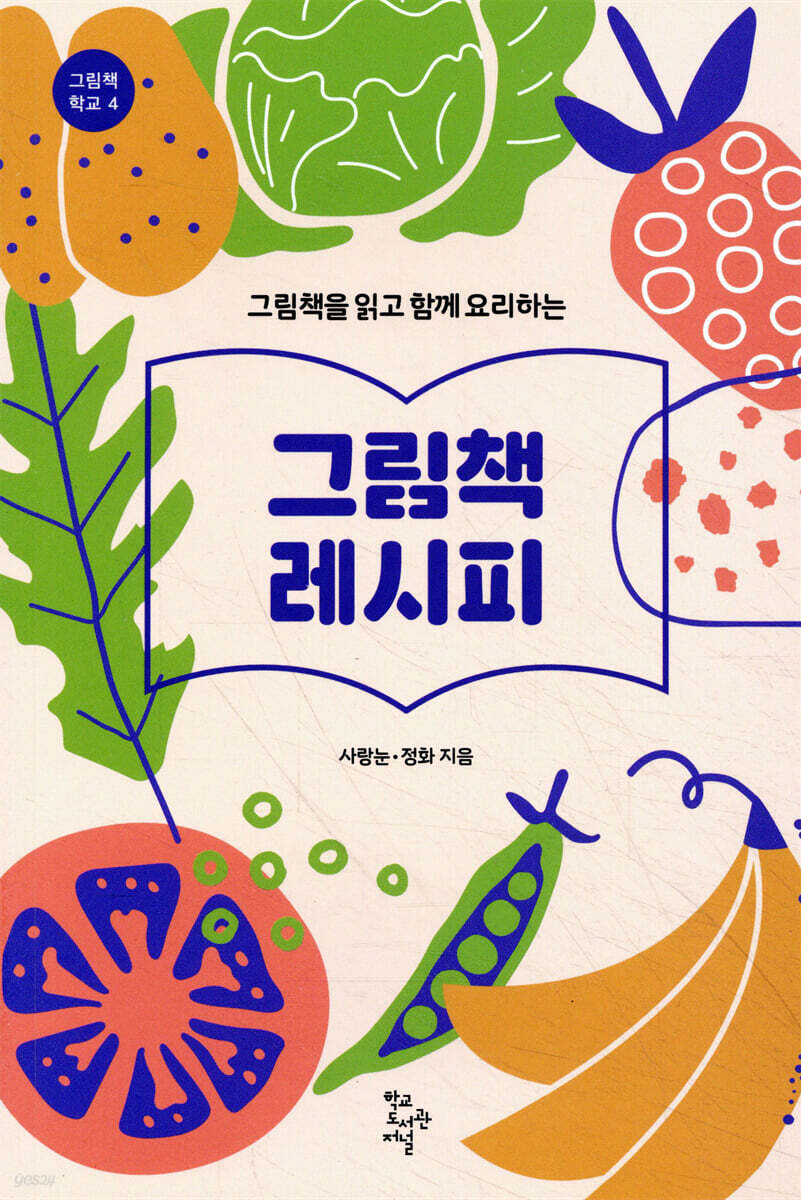
This book is about reading picture books for each season of spring, summer, fall, and winter with children and cooking raw food dishes using seasonal ingredients.
It contains special raw food recipes, vivid photos, and various post-reading activities for picture books.
You can experience picture books with your whole body by listening to the text, looking at the pictures, smelling the ingredients, and cooking and tasting them with your hands.
Picture books that we encounter using our five senses seep into our hearts and are remembered by our fingertips, enriching our body and mind.
This book is about reading picture books for each season of spring, summer, fall, and winter with children and cooking raw food dishes using seasonal ingredients.
It contains special raw food recipes, vivid photos, and various post-reading activities for picture books.
You can experience picture books with your whole body by listening to the text, looking at the pictures, smelling the ingredients, and cooking and tasting them with your hands.
Picture books that we encounter using our five senses seep into our hearts and are remembered by our fingertips, enriching our body and mind.
- You can preview some of the book's contents.
Preview
index
Author's Note
Recommendation
Starting a picture book cooking class
Unfolding the Picture Book Recipe
Spring Day Picture Book Table
Strawberry and Chocolate Strawberry
"Where Are You Going, Grandma? I'm Going to Pick Mugwort!" and Mugwort Macarons
『The Many Greens of the World』 and Kale Chips
"Grandma's Cookbook" and the Kiwi Fruit Edition
※Spring cooking with picture books
Picture book table for a summer day
Watermelon Pool and Watermelon Pizza
Ice Cream Frozen and Fruit Ice Cream
Grandma Lin's Peach Tree and Peach Malrang Tea
Sea of Tears and Fruit Smoothie
※Summer cooking with picture books
Picture book table on an autumn day
Chestnut Picnic and Chestnut Spread
『One Jujube』 and Jujube Brownies
『Flowers and Apples』 and Apple Blossom Tart
Moon Cake and Pumpkin Mousse
※Autumn cooking with picture books
Picture Book Table on a Winter Day
Tangerine Man and Tangerine Cake
"Baby's Strength Has Grow" and Avocado Salad
『Rabbit's Carrot Carrot Carrot』 and Carrot Popcorn
Sweet Potato and Sweet Potato Coconut Balls
※Winter cooking with picture books
Finishing the picture book cooking class
Picture Book Cooking Class Q&A
Acknowledgements
List of picture books about ingredients and food
Recommendation
Starting a picture book cooking class
Unfolding the Picture Book Recipe
Spring Day Picture Book Table
Strawberry and Chocolate Strawberry
"Where Are You Going, Grandma? I'm Going to Pick Mugwort!" and Mugwort Macarons
『The Many Greens of the World』 and Kale Chips
"Grandma's Cookbook" and the Kiwi Fruit Edition
※Spring cooking with picture books
Picture book table for a summer day
Watermelon Pool and Watermelon Pizza
Ice Cream Frozen and Fruit Ice Cream
Grandma Lin's Peach Tree and Peach Malrang Tea
Sea of Tears and Fruit Smoothie
※Summer cooking with picture books
Picture book table on an autumn day
Chestnut Picnic and Chestnut Spread
『One Jujube』 and Jujube Brownies
『Flowers and Apples』 and Apple Blossom Tart
Moon Cake and Pumpkin Mousse
※Autumn cooking with picture books
Picture Book Table on a Winter Day
Tangerine Man and Tangerine Cake
"Baby's Strength Has Grow" and Avocado Salad
『Rabbit's Carrot Carrot Carrot』 and Carrot Popcorn
Sweet Potato and Sweet Potato Coconut Balls
※Winter cooking with picture books
Finishing the picture book cooking class
Picture Book Cooking Class Q&A
Acknowledgements
List of picture books about ingredients and food
Detailed image

Into the book
I quickly poured warm chocolate syrup over slightly frozen strawberries, and the chocolate hardened, turning them into chocolate-covered strawberries.
“The strawberry went into the hot spring and came out wearing a chocolate outfit.”
Laughter erupted at the child's words.
Sprinkle hemp seeds on chocolate-coated strawberries and you have stylish chocolate strawberries.
The children named the chocolate strawberries they made with words from the picture book.
The author's desire to convey the beauty of nature through strawberries reached children.
--- From "Strawberry and Chocolate Strawberry"
I decided to create a piece of art using only 8-section kale leaves as a canvas and exhibit it.
Children completed their own works by making holes using punches, awls, scissors, knives, etc. and drawing pictures with magic pens.
One child's kale became a honeycomb filled with holes, while another child's kale became a fish with sparkling green scales.
I titled the work, which had a premonition that it would become a juice and brought tears to my eyes, 'Tears of Kale'.
--- From "The Many Greens of the World" and Kale Chips
After giving the last peach to the turtles, there were no peaches left.
The sky was cloudy and it rained and then stopped.
When I opened the folded pages of the picture book to both sides like a window, it was full of peach blossoms.
The seeds that I spit out after eating the peach my grandmother gave me grew into a peach tree and blossomed.
It was a beautiful picture book that depicted the natural 'cycle' of a peach seed returning to the earth through trees, fruit, and animals through 'sharing'.
Now it was time to make and taste peach petal tea like Grandma Lin.
--- From "Grandma Lin's Peach Tree and Peach Marang Tea"
A picture book to read along with acorns, ginkgo nuts, walnuts, and jujubes is 『Chestnut Picnic』, which features cute squirrels.
One autumn day, the squirrels go on a picnic to pick chestnuts with long sticks.
There were only small chestnuts in the forest, so I looked up at the sky and saw an enormous chestnut on top of a chestnut tree.
The story reaches its climax when the squirrels, having made a long pole by weaving together all the sticks they had brought, accidentally poke a cloud floating in the sky while touching a chestnut tree.
After reading the entire picture book, I looked at the pictures again and made picture book question cards.
I gave each child two cards and asked them to write down questions that came to mind while looking at the picture book.
--- From "Chestnut Picnic" and Chestnut Spread"
After devouring avocados and growing strong, the baby chases away thieves who broke into the house, helps his mother with grocery shopping, backs up a broken-down car, and lifts up neighborhood bullies who are harassing children and throws them into a pond.
It is important to be strong, but it is noticeable that you use that strength to help the weak and punish bad people.
The children felt a sense of relief as they projected themselves onto the Hargraves' baby.
I asked the children what they would do if they were strong.
“We’re moving soon, and I want to move all the furniture quickly.”
“I’m going to use it to help my friends.”
“It’s hard for my mom to carry my younger sibling around all the time, so I want to carry her on my back.”
--- From "Baby's Strength Has Grown" and Avocado Salad
The method of writing poetry using 'found poetry' is simple but very effective.
A fourth grader chose 'sweet potato, root vegetable, sweet, summer, flower, seed, kimchi, leaf, roasted sweet potato, boiled, side dish, fried, stem' from the description of 'sweet potato' found in the encyclopedia.
Then I wrote a poem using the words I wanted.
The discovered poetry writing style allowed children to participate without any pressure and gave them the excitement and joy of seeing poems being completed spontaneously.
The class concluded by introducing the special edition of 『Sweet Potato Milk』 by the author of 『Sweet Potato Guma』 and the picture books about sweet potatoes, 『Grilled Sweet Potato Feast』 and 『Very, Very Big Sweet Potato』, to a child who loved sweet potatoes and read his poem beautifully.
“The strawberry went into the hot spring and came out wearing a chocolate outfit.”
Laughter erupted at the child's words.
Sprinkle hemp seeds on chocolate-coated strawberries and you have stylish chocolate strawberries.
The children named the chocolate strawberries they made with words from the picture book.
The author's desire to convey the beauty of nature through strawberries reached children.
--- From "Strawberry and Chocolate Strawberry"
I decided to create a piece of art using only 8-section kale leaves as a canvas and exhibit it.
Children completed their own works by making holes using punches, awls, scissors, knives, etc. and drawing pictures with magic pens.
One child's kale became a honeycomb filled with holes, while another child's kale became a fish with sparkling green scales.
I titled the work, which had a premonition that it would become a juice and brought tears to my eyes, 'Tears of Kale'.
--- From "The Many Greens of the World" and Kale Chips
After giving the last peach to the turtles, there were no peaches left.
The sky was cloudy and it rained and then stopped.
When I opened the folded pages of the picture book to both sides like a window, it was full of peach blossoms.
The seeds that I spit out after eating the peach my grandmother gave me grew into a peach tree and blossomed.
It was a beautiful picture book that depicted the natural 'cycle' of a peach seed returning to the earth through trees, fruit, and animals through 'sharing'.
Now it was time to make and taste peach petal tea like Grandma Lin.
--- From "Grandma Lin's Peach Tree and Peach Marang Tea"
A picture book to read along with acorns, ginkgo nuts, walnuts, and jujubes is 『Chestnut Picnic』, which features cute squirrels.
One autumn day, the squirrels go on a picnic to pick chestnuts with long sticks.
There were only small chestnuts in the forest, so I looked up at the sky and saw an enormous chestnut on top of a chestnut tree.
The story reaches its climax when the squirrels, having made a long pole by weaving together all the sticks they had brought, accidentally poke a cloud floating in the sky while touching a chestnut tree.
After reading the entire picture book, I looked at the pictures again and made picture book question cards.
I gave each child two cards and asked them to write down questions that came to mind while looking at the picture book.
--- From "Chestnut Picnic" and Chestnut Spread"
After devouring avocados and growing strong, the baby chases away thieves who broke into the house, helps his mother with grocery shopping, backs up a broken-down car, and lifts up neighborhood bullies who are harassing children and throws them into a pond.
It is important to be strong, but it is noticeable that you use that strength to help the weak and punish bad people.
The children felt a sense of relief as they projected themselves onto the Hargraves' baby.
I asked the children what they would do if they were strong.
“We’re moving soon, and I want to move all the furniture quickly.”
“I’m going to use it to help my friends.”
“It’s hard for my mom to carry my younger sibling around all the time, so I want to carry her on my back.”
--- From "Baby's Strength Has Grown" and Avocado Salad
The method of writing poetry using 'found poetry' is simple but very effective.
A fourth grader chose 'sweet potato, root vegetable, sweet, summer, flower, seed, kimchi, leaf, roasted sweet potato, boiled, side dish, fried, stem' from the description of 'sweet potato' found in the encyclopedia.
Then I wrote a poem using the words I wanted.
The discovered poetry writing style allowed children to participate without any pressure and gave them the excitement and joy of seeing poems being completed spontaneously.
The class concluded by introducing the special edition of 『Sweet Potato Milk』 by the author of 『Sweet Potato Guma』 and the picture books about sweet potatoes, 『Grilled Sweet Potato Feast』 and 『Very, Very Big Sweet Potato』, to a child who loved sweet potatoes and read his poem beautifully.
--- From "Sweet Potato and Sweet Potato Coconut Balls"
Publisher's Review
A fun picture book meets healthy raw food cooking.
Spring, Summer, Fall, Winter: Sweet and Rich Picture Book Cooking Classes
“Carrots are good for you.”
“Spinach makes your body strong!”
For a child accustomed to stimulating snacks like sweet bread, cookies, and fried foods, no matter how good fruits and vegetables may seem, they will just turn their head and run away.
At that time, when I read the picture book 『Rabbit's Carrot Carrot Carrot』 to him, he asked if the rabbit had shared carrots at our house too and looked for carrot dishes.
Through picture books, children become interested in materials and feel curious.
"Picture Book Recipe" is a book that introduces children to the "style" of picture books and the "taste" of raw food cooking.
Children who grew up avoiding picture books or who were not interested in picture books can embrace them in a new way through 'cooking'.
It also allows children who are accustomed to pre-cooked delivery food and those who have difficulty accessing the full cooking process to enjoy healthy food through the power of words and pictures.
Children can directly examine the ingredients, cook, and remember the picture book through the senses and taste of their hands.
Raw food cooking, which does not use fire, eggs, or milk, is a healthy and safe recipe that can be easily made with children at school or at home.
Special raw food recipes and abundant photos showing the cooking process,
A variety of post-reading activities using picture books
"Picture Book Recipe" begins with selecting picture books for each season—spring, summer, fall, and winter—and reading them to children while sharing stories.
I follow my grandmother to pick mugwort, eat ice cream with the cats, and go pick chestnuts with the squirrels.
Then, you can explore seasonal ingredients by cooking using the ingredients in the picture book.
Strawberries, mugwort, kale, and kiwi in spring are fragrant and sweet, while watermelon, fruit ice cream, peach tea, and fruit smoothies in summer seem like they will beat the heat.
Autumn's chestnuts, jujubes, apples, and pumpkins give us a taste of the bounty of autumn, while winter's tangerines, avocados, carrots, and sweet potatoes seem to give us the strength to overcome the cold winter.
"Picture Book Recipe" is a book that teaches children how to read picture books and learn how to cook. It shows the ingredients, cooking utensils, and cooking process through pictures, and provides another recipe related to each ingredient.
It also has various post-reading activities such as ‘Writing with the Lotus Technique’, ‘Writing Discovered Poetry’, ‘Expressing with the Tableau Technique’, ‘Question Card Play’, ‘Reading a Poetry Picture Book’, and ‘Making My Own Cookbook’, making it an excellent resource for picture book activity classes.
In addition, it introduces more picture books and dishes related to each season and provides simple recipes, and in the appendix, you can also see a list of picture books related to ingredients and food.
Spring, Summer, Fall, Winter: Sweet and Rich Picture Book Cooking Classes
“Carrots are good for you.”
“Spinach makes your body strong!”
For a child accustomed to stimulating snacks like sweet bread, cookies, and fried foods, no matter how good fruits and vegetables may seem, they will just turn their head and run away.
At that time, when I read the picture book 『Rabbit's Carrot Carrot Carrot』 to him, he asked if the rabbit had shared carrots at our house too and looked for carrot dishes.
Through picture books, children become interested in materials and feel curious.
"Picture Book Recipe" is a book that introduces children to the "style" of picture books and the "taste" of raw food cooking.
Children who grew up avoiding picture books or who were not interested in picture books can embrace them in a new way through 'cooking'.
It also allows children who are accustomed to pre-cooked delivery food and those who have difficulty accessing the full cooking process to enjoy healthy food through the power of words and pictures.
Children can directly examine the ingredients, cook, and remember the picture book through the senses and taste of their hands.
Raw food cooking, which does not use fire, eggs, or milk, is a healthy and safe recipe that can be easily made with children at school or at home.
Special raw food recipes and abundant photos showing the cooking process,
A variety of post-reading activities using picture books
"Picture Book Recipe" begins with selecting picture books for each season—spring, summer, fall, and winter—and reading them to children while sharing stories.
I follow my grandmother to pick mugwort, eat ice cream with the cats, and go pick chestnuts with the squirrels.
Then, you can explore seasonal ingredients by cooking using the ingredients in the picture book.
Strawberries, mugwort, kale, and kiwi in spring are fragrant and sweet, while watermelon, fruit ice cream, peach tea, and fruit smoothies in summer seem like they will beat the heat.
Autumn's chestnuts, jujubes, apples, and pumpkins give us a taste of the bounty of autumn, while winter's tangerines, avocados, carrots, and sweet potatoes seem to give us the strength to overcome the cold winter.
"Picture Book Recipe" is a book that teaches children how to read picture books and learn how to cook. It shows the ingredients, cooking utensils, and cooking process through pictures, and provides another recipe related to each ingredient.
It also has various post-reading activities such as ‘Writing with the Lotus Technique’, ‘Writing Discovered Poetry’, ‘Expressing with the Tableau Technique’, ‘Question Card Play’, ‘Reading a Poetry Picture Book’, and ‘Making My Own Cookbook’, making it an excellent resource for picture book activity classes.
In addition, it introduces more picture books and dishes related to each season and provides simple recipes, and in the appendix, you can also see a list of picture books related to ingredients and food.
GOODS SPECIFICS
- Publication date: November 30, 2020
- Page count, weight, size: 192 pages | 148*220*20mm
- ISBN13: 9788969150868
- ISBN10: 8969150862
You may also like
카테고리
korean


korean

![GQ KOREA Mark (Monthly): December [2025]](http://librairie.coreenne.fr/cdn/shop/files/8ef265dbbfbf186523ed75ba7319009d.jpg?v=1765340328&width=3840)


