

Noma Fermentation Guide
 |
Description
Book Introduction
Guided by Noma, the world's best restaurant
All about fermentation!
A guide to fermentation from Noma, the world's best restaurant.
This book carefully explains Noma's fermentation recipes and principles that have impressed countless gourmets around the world, and generously introduces the techniques contained in Noma's extensive food pantry, guided by founder Chef René Redzepi and Chef David Zilber, who runs the fermentation laboratory.
Fermented foods, which are currently a global culinary trend, are categorized into major categories, including nuruk, kombucha, soy sauce, miso, vinegar, garum, lactic acid fermentation, black fruits and black vegetables, etc. Each chapter is faithfully filled with process photos and explanations so that anyone can follow Noma's recipes, from the basic principles of fermentation to practical recipes.
It also includes ideas on how these fermented foods can be creatively incorporated into Noma's cuisine and recipes.
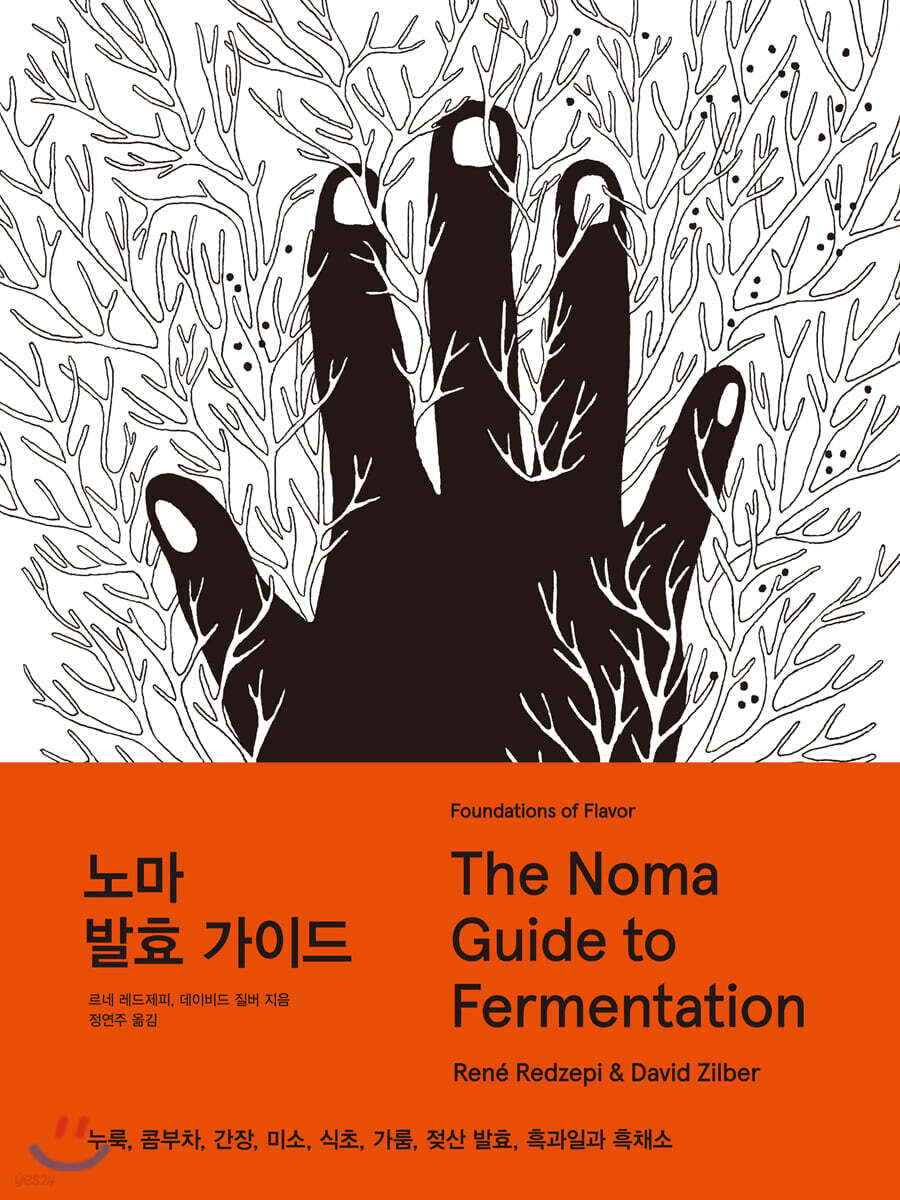
It is noteworthy that the illustration decorating the cover of this book is a concept taken from Korean fermentation.
By describing the various fermented foods in the book, the author introduces Korea's fermentation culture.
You can take a fascinating look at how Korean fermentation culture, made by fermenting soybean paste, the mysterious concept of "sonmat," kombucha, which is said to have been widely spread by a Korean doctor, and black vegetables and fruits, such as black garlic, familiar to Koreans, are reborn at Noma's fermentation lab.
This book contains everything about fermented foods that Noma loves and wants to share with everyone, including lactic acid fermented gooseberries, which completely changed the life of Noma's chef and founder, René Redzepi.
With over 100 original recipes and over 500 color photographs, readers will learn about Noma's fermented foods and how to incorporate them into their cooking.
This book is the most important guide to contemporary food culture and the most complete guide to leading readers into the fascinating world of fermentation.
All about fermentation!
A guide to fermentation from Noma, the world's best restaurant.
This book carefully explains Noma's fermentation recipes and principles that have impressed countless gourmets around the world, and generously introduces the techniques contained in Noma's extensive food pantry, guided by founder Chef René Redzepi and Chef David Zilber, who runs the fermentation laboratory.
Fermented foods, which are currently a global culinary trend, are categorized into major categories, including nuruk, kombucha, soy sauce, miso, vinegar, garum, lactic acid fermentation, black fruits and black vegetables, etc. Each chapter is faithfully filled with process photos and explanations so that anyone can follow Noma's recipes, from the basic principles of fermentation to practical recipes.
It also includes ideas on how these fermented foods can be creatively incorporated into Noma's cuisine and recipes.
It is noteworthy that the illustration decorating the cover of this book is a concept taken from Korean fermentation.
By describing the various fermented foods in the book, the author introduces Korea's fermentation culture.
You can take a fascinating look at how Korean fermentation culture, made by fermenting soybean paste, the mysterious concept of "sonmat," kombucha, which is said to have been widely spread by a Korean doctor, and black vegetables and fruits, such as black garlic, familiar to Koreans, are reborn at Noma's fermentation lab.
This book contains everything about fermented foods that Noma loves and wants to share with everyone, including lactic acid fermented gooseberries, which completely changed the life of Noma's chef and founder, René Redzepi.
With over 100 original recipes and over 500 color photographs, readers will learn about Noma's fermented foods and how to incorporate them into their cooking.
This book is the most important guide to contemporary food culture and the most complete guide to leading readers into the fascinating world of fermentation.
- You can preview some of the book's contents.
Preview
index
1.
introduction
What is fermentation? / What makes fermentation delicious? / Setting the table for microbes / Natural fermentation / Adding / Cleanliness, germs, and safety / The potential of pH / Salt and the baker's percentage / Building a fermentation chamber / Breaking free from kraut / Substituting commercially available fermented products / Weights and measures
2.
Lactic acid fermented fruits and vegetables
Lactic acid fermented fruits and vegetables / Lactic acid fermented plums / Lactic acid fermented porcini mushrooms / Lactic acid fermented tomato juice / Lactic acid fermented white asparagus / Lactic acid fermented blueberries / Lactic acid fermented mango-flavored honey / Lactic acid fermented green gooseberries
3.
Kombucha
Lemon Verbena Kombucha / Rose Kombucha / Apple Kombucha / Elderflower Kombucha / Coffee Kombucha / Maple Kombucha / Mango Kombucha
4.
vinegar
Perry Vinegar / Plum Vinegar / Celery Vinegar / Peanut Butter Vinegar / Whiskey Vinegar / Gamel Dansk Vinegar / Elderberry Wine Balsamic / Black Garlic Balsamic
5.
yeast
Tongbokri nuruk / Baekguk-gyun barley nuruk / Sweet Baekguk-gyun nuruk water / Baekguk-gyun nuruk sparkling amazake / Dried nuruk and nuruk powder / Lactic acid fermented nuruk water / Roasted nuruk 'Mole' / Salt nuruk (nuruk pickled dough)
6.
Smile and Pea Smile
Yellow Pea Smile / Rose Pea Smile / Rye Smile / Corn Smile / Martha Smile / Hazelnut Smile / Bread Smile / Pumpkin Seed Smile
7.
soy sauce
Yellow Pea Soy Sauce / Porcini Mushroom Soy Sauce / Porcini Mushroom Soy Sauce / Coffee Soy Sauce
8.
Garum
Beef Garum / Rose Shrimp Garum / Squid Garum / Grilled Chicken Wing Garum / Grasshopper Garum / Bee Pollen Garum / Yeast Garum
9.
Black fruits and vegetables
Black garlic / black apple / black chestnut / black hazelnut / beeswaxed black shallot
equipment
Where to buy
Acknowledgements
index
introduction
What is fermentation? / What makes fermentation delicious? / Setting the table for microbes / Natural fermentation / Adding / Cleanliness, germs, and safety / The potential of pH / Salt and the baker's percentage / Building a fermentation chamber / Breaking free from kraut / Substituting commercially available fermented products / Weights and measures
2.
Lactic acid fermented fruits and vegetables
Lactic acid fermented fruits and vegetables / Lactic acid fermented plums / Lactic acid fermented porcini mushrooms / Lactic acid fermented tomato juice / Lactic acid fermented white asparagus / Lactic acid fermented blueberries / Lactic acid fermented mango-flavored honey / Lactic acid fermented green gooseberries
3.
Kombucha
Lemon Verbena Kombucha / Rose Kombucha / Apple Kombucha / Elderflower Kombucha / Coffee Kombucha / Maple Kombucha / Mango Kombucha
4.
vinegar
Perry Vinegar / Plum Vinegar / Celery Vinegar / Peanut Butter Vinegar / Whiskey Vinegar / Gamel Dansk Vinegar / Elderberry Wine Balsamic / Black Garlic Balsamic
5.
yeast
Tongbokri nuruk / Baekguk-gyun barley nuruk / Sweet Baekguk-gyun nuruk water / Baekguk-gyun nuruk sparkling amazake / Dried nuruk and nuruk powder / Lactic acid fermented nuruk water / Roasted nuruk 'Mole' / Salt nuruk (nuruk pickled dough)
6.
Smile and Pea Smile
Yellow Pea Smile / Rose Pea Smile / Rye Smile / Corn Smile / Martha Smile / Hazelnut Smile / Bread Smile / Pumpkin Seed Smile
7.
soy sauce
Yellow Pea Soy Sauce / Porcini Mushroom Soy Sauce / Porcini Mushroom Soy Sauce / Coffee Soy Sauce
8.
Garum
Beef Garum / Rose Shrimp Garum / Squid Garum / Grilled Chicken Wing Garum / Grasshopper Garum / Bee Pollen Garum / Yeast Garum
9.
Black fruits and vegetables
Black garlic / black apple / black chestnut / black hazelnut / beeswaxed black shallot
equipment
Where to buy
Acknowledgements
index
Detailed image

Into the book
“People have described Noma Restaurant as a place that serves modern Nordic cuisine.
From our perspective, we felt like we were being buried under a tremendous sense of responsibility.
If we were to utilize techniques borrowed from abroad, could we truly claim to be practicing Nordic cuisine? The concept of microbial terroir has transformed all of our thinking.
Fermentation knows no borders.
Fermentation is as much a part of the Danish culinary tradition as it is of Italy, Japan and China.
Without fermentation, there would be no kimchi, no fluffy sourdough bread, no Parmesan cheese, no wine, beer, or spirits, no pickles, or soy sauce.
Pickled herring and rye bread, of course.
Above all, if there is no fermentation, there will be no Noma.”
---From "Rene Redzepi's Preface"
“This book has a very important meaning to me.
It is important to document the excellent work that has been accomplished at Noma over the years.
But more than anything, I hope people outside of restaurants will try and experiment with fermentation.
Although I've published several books before, I never intended to apply the work I do at Noma to the home kitchen.
“It excites me to think that through this book, people all over the world will come to understand Noma’s cooking style.” --- From the “Preface” by René Redzepi
Kombucha is a sour, slightly carbonated fermented beverage traditionally made from sweetened black tea with added sugar.
Although it is not exact, it is believed to have originated in the Manchuria region (present-day northeastern China) around 200 BC.
From there, through the efforts of a legendary Korean doctor named Kombu, it spread eastward, reaching Japan.
It was named Kombucha after that Korean.
Historically, kombucha has been consumed in Japan, Korea, Vietnam, China, and eastern Russia.
However, thanks to clever marketing and growing public interest in all products containing probiotics, they have recently gained popularity and spread widely in North America and Western Europe.
--- p.110
Korea has its own unique Jang lineage that developed at the same time as the smile.
A term that encompasses a group of fermented foods, like Jiang in China, most of which use soybeans, but some do not.
Cheonggukjang is a fermented soybean paste made by rapidly fermenting a bacterium called Bacillus subtilis, and has a thick consistency similar to miso.
On the other hand, doenjang is a soybean-based fermented food that is very similar to China's ancient yellow soybean paste and requires arduous labor to complete.
Meju must be made by boiling dried soybeans until soft, placing them in wooden boxes, and pressing them until they are as hard as bricks.
The finished meju is taken out and wrapped in rice straw containing bacteria and molds, including Aspergillus, and then fermented for two months.
Finally, put the meju in a crock, pour in salt water, and let it ferment for one year.
This will result in a Korean-style soy sauce with a much stronger aged flavor than Japanese-style soy sauce.
--- p.275
Korean artisans call it "sonmat," the hard-to-replicate flavor that individual chefs infuse into their food, not found in factory-made foods.
This taste is essentially the chaos theory of the culinary world.
Minor variations in the process of making and maturing miso, such as the amount of bacteria on the skin and clothes of the miso maker on the day or at the time, random changes in temperature, air pressure, and humidity, all greatly affect the development of the fermentation process, so it is never possible to recreate an exactly identical product.
Of course, this is also what has driven chefs and artisans to discover new flavors and creations.
And above all, it is this unpredictability that makes fermentation so thrilling.
--- p.278
When fruits turn black, both enzymatic and non-enzymatic reactions occur.
It's unclear who first began fusing these diverse reactions to create black-colored foods, but much evidence points to a famous Korean fermentation culture centuries ago, where whole garlic cloves were fermented in earthenware jars during the hot summer months.
If you're curious about the modern history of black fruits and vegetables, let's look back at Korea in 2004.
Black garlic became popular in modern times thanks to Scott Kim, who devised a simple method for making black garlic using a ripening room that controlled heat and humidity.
In Norma, the same method is used to preserve an environment where slow chemical reactions occur step by step, completely transforming ordinary materials over a period of weeks or months.
From our perspective, we felt like we were being buried under a tremendous sense of responsibility.
If we were to utilize techniques borrowed from abroad, could we truly claim to be practicing Nordic cuisine? The concept of microbial terroir has transformed all of our thinking.
Fermentation knows no borders.
Fermentation is as much a part of the Danish culinary tradition as it is of Italy, Japan and China.
Without fermentation, there would be no kimchi, no fluffy sourdough bread, no Parmesan cheese, no wine, beer, or spirits, no pickles, or soy sauce.
Pickled herring and rye bread, of course.
Above all, if there is no fermentation, there will be no Noma.”
---From "Rene Redzepi's Preface"
“This book has a very important meaning to me.
It is important to document the excellent work that has been accomplished at Noma over the years.
But more than anything, I hope people outside of restaurants will try and experiment with fermentation.
Although I've published several books before, I never intended to apply the work I do at Noma to the home kitchen.
“It excites me to think that through this book, people all over the world will come to understand Noma’s cooking style.” --- From the “Preface” by René Redzepi
Kombucha is a sour, slightly carbonated fermented beverage traditionally made from sweetened black tea with added sugar.
Although it is not exact, it is believed to have originated in the Manchuria region (present-day northeastern China) around 200 BC.
From there, through the efforts of a legendary Korean doctor named Kombu, it spread eastward, reaching Japan.
It was named Kombucha after that Korean.
Historically, kombucha has been consumed in Japan, Korea, Vietnam, China, and eastern Russia.
However, thanks to clever marketing and growing public interest in all products containing probiotics, they have recently gained popularity and spread widely in North America and Western Europe.
--- p.110
Korea has its own unique Jang lineage that developed at the same time as the smile.
A term that encompasses a group of fermented foods, like Jiang in China, most of which use soybeans, but some do not.
Cheonggukjang is a fermented soybean paste made by rapidly fermenting a bacterium called Bacillus subtilis, and has a thick consistency similar to miso.
On the other hand, doenjang is a soybean-based fermented food that is very similar to China's ancient yellow soybean paste and requires arduous labor to complete.
Meju must be made by boiling dried soybeans until soft, placing them in wooden boxes, and pressing them until they are as hard as bricks.
The finished meju is taken out and wrapped in rice straw containing bacteria and molds, including Aspergillus, and then fermented for two months.
Finally, put the meju in a crock, pour in salt water, and let it ferment for one year.
This will result in a Korean-style soy sauce with a much stronger aged flavor than Japanese-style soy sauce.
--- p.275
Korean artisans call it "sonmat," the hard-to-replicate flavor that individual chefs infuse into their food, not found in factory-made foods.
This taste is essentially the chaos theory of the culinary world.
Minor variations in the process of making and maturing miso, such as the amount of bacteria on the skin and clothes of the miso maker on the day or at the time, random changes in temperature, air pressure, and humidity, all greatly affect the development of the fermentation process, so it is never possible to recreate an exactly identical product.
Of course, this is also what has driven chefs and artisans to discover new flavors and creations.
And above all, it is this unpredictability that makes fermentation so thrilling.
--- p.278
When fruits turn black, both enzymatic and non-enzymatic reactions occur.
It's unclear who first began fusing these diverse reactions to create black-colored foods, but much evidence points to a famous Korean fermentation culture centuries ago, where whole garlic cloves were fermented in earthenware jars during the hot summer months.
If you're curious about the modern history of black fruits and vegetables, let's look back at Korea in 2004.
Black garlic became popular in modern times thanks to Scott Kim, who devised a simple method for making black garlic using a ripening room that controlled heat and humidity.
In Norma, the same method is used to preserve an environment where slow chemical reactions occur step by step, completely transforming ordinary materials over a period of weeks or months.
--- p.407
Publisher's Review
Chapter 1: Introduction to Fermentation
First, the first 'Introduction' chapter begins with the question, 'What is fermentation?' and explains what makes fermentation delicious, the characteristics of the various microorganisms that play the biggest role in fermentation, and the fermentation method in detail.
The emphasis on cleanliness and safety cannot be overemphasized, and it also includes tips to make fermentation easier to understand through baker's percentages, and how to create a fermentation room with shelves and Styrofoam boxes so that readers can try fermentation at home.
Since there is no right answer to fermentation, we have also included some tips on how to partially utilize commercially available fermented products.
The ultimate goal of this book is to enable readers to fully understand and even try fermentation, which is currently at the heart of Noma.
Anyone can learn the basics of fermentation in detail through 'Introduction'.
Chapter 2 Lactic Acid Fermented Fruits and Vegetables
The world of lactic acid fermentation, represented by kimchi, currently accounts for the largest portion of Noma's fermentation technology.
There is not a single item on Noma's menu that does not contain lactic acid fermentation.
Lactic acid fermentation adds fruity aromas, sourness, and savory flavors to foods.
This chapter scientifically explains the principles of lactic acid fermentation and includes various Noma recipes that you can try yourself.
It also includes fermented recipes for lactic acid fermented plums, porcini mushrooms, tomato juice, asparagus, blueberries, mango-flavored honey, and green gooseberries, along with inspiring information on how these results are incorporated into Noma's menu.
Chapter 3 Kombucha
A refreshingly old-fashioned drink, kombucha is a sour, slightly carbonated fermented beverage.
Traditionally made using sweet black tea with added sugar, it has long been enjoyed in Korea, Japan, Vietnam, China, and eastern Russia, but has recently become very popular in North America and Western Europe.
At Noma, we brew kombucha and use it in juice pairings that guests order along with wine pairings.
Kombucha has expanded Noma's beverage offerings in a remarkable way, and this book features recipes for Noma's popular kombuchas, including Lemon Verbena Kombucha, Rose Kombucha, Apple Kombucha, Elderflower Kombucha, Coffee Kombucha, Maple Kombucha, and Mango Kombucha, along with detailed step-by-step photos.
Chapter 4 Vinegar
Vinegar is the most commonly used fermented food and a kitchen mainstay.
Vinegar improves the flavor of almost anything.
A balanced acidity is a very important element in Noma's meals, so vinegar is used as a very important ingredient.
Vinegar, like kombucha, is a product of collaboration between yeast and bacteria. This book explains in detail everything from the fermentation principles of vinegar to practical recipes.
Recipes for Perry vinegar, plum vinegar, celery vinegar, peanut squash vinegar, whiskey vinegar, elderberry wine balsamic, and black garlic balsamic, along with various applications for these in cooking, are also included.
Chapter 5: Leaven
Yeast is like a kitchen wizard, transforming ingredients and imparting various flavors.
Yeast is responsible for the umami flavor in Noma's kitchen.
The chemicals that give yeast its flavor and aroma are enzymes released by the mycelia as they grow on the grain, absorbing nutrients and using them as fuel for metabolism.
This book contains the know-how for successfully cultivating various nuruk foods, including barley nuruk with barley malt, sweet nuruk water, sparkling amazake, dried nuruk and nuruk powder, lactic acid fermented nuruk water, roasted nuruk, and salt nuruk, as well as ideas for using them in cooking.
Chapter 6: Smiles and Pea Smiles
Miso, or soybean paste, is a fermented paste made by mixing cooked and mashed soybeans, yeast, and salt.
Noma's miso, inspired by Japanese miso, is made with peas, a Nordic ingredient.
Miso, like vinegar, is made through a two-step fermentation process and adds a complex flavor to foods.
It also includes stories about various types of soybean paste, including doenjang, miso, and douchi, made by fermenting soybeans, from East Asian cultures such as Korea, Japan, and China.
In this book, you can meet the newly reborn yellow pea smile, rose pea smile, rye smile, corn smile, masa, hazelnut smile, bread smile, and pumpkin seed smile in Norma's kitchen.
Chapter 7 Soy Sauce
Soy sauce is a surprisingly versatile condiment in the kitchen.
It's hard to find a kitchen that doesn't have at least one bottle of soy sauce, whether mass-produced or traditional.
Soy sauce is a seasoning widely used in various marinades, sauces, broths, and soups, and is an unsung hero that elevates the value of other seasonings.
Soy sauce, like miso introduced in Chapter 6, is made by fermenting soybeans with yeast.
This book introduces various soy sauce recipes used in Noma's kitchen, including yellow pea soy sauce, mushroom soy sauce, porcini mushroom soy sauce, and coffee soy sauce, all of which contain Noma's unique know-how.
Chapter 8 Garum
Garum refers to a fermented sauce including fish sauce.
Once a mainstay of European food culture, it is now a forgotten fermented food.
In its pure form, garum is a mixture of fish, salt, and water that has been broken down and rotted. In Noma, garum is made with a variety of ingredients other than fish.
This book introduces beef garum, rose shrimp garum, squid garum, roasted chicken wing garum, grasshopper garum, bee pollen garum, and yeast garum, which add amazing flavor to food.
Chapter 9: Black Fruits and Vegetables
Chef René Redzepi first tasted black garlic about 15 years ago, and has been experimenting with blackening fruits, vegetables, and various nuts in the Noma kitchen ever since.
To be clear, blackening is not fermentation, but rather is achieved through enzyme action. However, it is included and introduced in this book because it occupies a significant portion of Noma's fermented food pantry.
Blackening is the process by which large sugars break down into smaller parts through thermal decomposition, releasing more molecules.
Over a period of a few weeks, the products of a unique and surprising chemical reaction accumulate, creating the amazing, rich sweetness we associate with black garlic.
This book introduces the most basic recipe for black garlic, as well as recipes for black apples, black chestnuts, black hazelnuts, and black shallots, as well as how to apply Noma.
First, the first 'Introduction' chapter begins with the question, 'What is fermentation?' and explains what makes fermentation delicious, the characteristics of the various microorganisms that play the biggest role in fermentation, and the fermentation method in detail.
The emphasis on cleanliness and safety cannot be overemphasized, and it also includes tips to make fermentation easier to understand through baker's percentages, and how to create a fermentation room with shelves and Styrofoam boxes so that readers can try fermentation at home.
Since there is no right answer to fermentation, we have also included some tips on how to partially utilize commercially available fermented products.
The ultimate goal of this book is to enable readers to fully understand and even try fermentation, which is currently at the heart of Noma.
Anyone can learn the basics of fermentation in detail through 'Introduction'.
Chapter 2 Lactic Acid Fermented Fruits and Vegetables
The world of lactic acid fermentation, represented by kimchi, currently accounts for the largest portion of Noma's fermentation technology.
There is not a single item on Noma's menu that does not contain lactic acid fermentation.
Lactic acid fermentation adds fruity aromas, sourness, and savory flavors to foods.
This chapter scientifically explains the principles of lactic acid fermentation and includes various Noma recipes that you can try yourself.
It also includes fermented recipes for lactic acid fermented plums, porcini mushrooms, tomato juice, asparagus, blueberries, mango-flavored honey, and green gooseberries, along with inspiring information on how these results are incorporated into Noma's menu.
Chapter 3 Kombucha
A refreshingly old-fashioned drink, kombucha is a sour, slightly carbonated fermented beverage.
Traditionally made using sweet black tea with added sugar, it has long been enjoyed in Korea, Japan, Vietnam, China, and eastern Russia, but has recently become very popular in North America and Western Europe.
At Noma, we brew kombucha and use it in juice pairings that guests order along with wine pairings.
Kombucha has expanded Noma's beverage offerings in a remarkable way, and this book features recipes for Noma's popular kombuchas, including Lemon Verbena Kombucha, Rose Kombucha, Apple Kombucha, Elderflower Kombucha, Coffee Kombucha, Maple Kombucha, and Mango Kombucha, along with detailed step-by-step photos.
Chapter 4 Vinegar
Vinegar is the most commonly used fermented food and a kitchen mainstay.
Vinegar improves the flavor of almost anything.
A balanced acidity is a very important element in Noma's meals, so vinegar is used as a very important ingredient.
Vinegar, like kombucha, is a product of collaboration between yeast and bacteria. This book explains in detail everything from the fermentation principles of vinegar to practical recipes.
Recipes for Perry vinegar, plum vinegar, celery vinegar, peanut squash vinegar, whiskey vinegar, elderberry wine balsamic, and black garlic balsamic, along with various applications for these in cooking, are also included.
Chapter 5: Leaven
Yeast is like a kitchen wizard, transforming ingredients and imparting various flavors.
Yeast is responsible for the umami flavor in Noma's kitchen.
The chemicals that give yeast its flavor and aroma are enzymes released by the mycelia as they grow on the grain, absorbing nutrients and using them as fuel for metabolism.
This book contains the know-how for successfully cultivating various nuruk foods, including barley nuruk with barley malt, sweet nuruk water, sparkling amazake, dried nuruk and nuruk powder, lactic acid fermented nuruk water, roasted nuruk, and salt nuruk, as well as ideas for using them in cooking.
Chapter 6: Smiles and Pea Smiles
Miso, or soybean paste, is a fermented paste made by mixing cooked and mashed soybeans, yeast, and salt.
Noma's miso, inspired by Japanese miso, is made with peas, a Nordic ingredient.
Miso, like vinegar, is made through a two-step fermentation process and adds a complex flavor to foods.
It also includes stories about various types of soybean paste, including doenjang, miso, and douchi, made by fermenting soybeans, from East Asian cultures such as Korea, Japan, and China.
In this book, you can meet the newly reborn yellow pea smile, rose pea smile, rye smile, corn smile, masa, hazelnut smile, bread smile, and pumpkin seed smile in Norma's kitchen.
Chapter 7 Soy Sauce
Soy sauce is a surprisingly versatile condiment in the kitchen.
It's hard to find a kitchen that doesn't have at least one bottle of soy sauce, whether mass-produced or traditional.
Soy sauce is a seasoning widely used in various marinades, sauces, broths, and soups, and is an unsung hero that elevates the value of other seasonings.
Soy sauce, like miso introduced in Chapter 6, is made by fermenting soybeans with yeast.
This book introduces various soy sauce recipes used in Noma's kitchen, including yellow pea soy sauce, mushroom soy sauce, porcini mushroom soy sauce, and coffee soy sauce, all of which contain Noma's unique know-how.
Chapter 8 Garum
Garum refers to a fermented sauce including fish sauce.
Once a mainstay of European food culture, it is now a forgotten fermented food.
In its pure form, garum is a mixture of fish, salt, and water that has been broken down and rotted. In Noma, garum is made with a variety of ingredients other than fish.
This book introduces beef garum, rose shrimp garum, squid garum, roasted chicken wing garum, grasshopper garum, bee pollen garum, and yeast garum, which add amazing flavor to food.
Chapter 9: Black Fruits and Vegetables
Chef René Redzepi first tasted black garlic about 15 years ago, and has been experimenting with blackening fruits, vegetables, and various nuts in the Noma kitchen ever since.
To be clear, blackening is not fermentation, but rather is achieved through enzyme action. However, it is included and introduced in this book because it occupies a significant portion of Noma's fermented food pantry.
Blackening is the process by which large sugars break down into smaller parts through thermal decomposition, releasing more molecules.
Over a period of a few weeks, the products of a unique and surprising chemical reaction accumulate, creating the amazing, rich sweetness we associate with black garlic.
This book introduces the most basic recipe for black garlic, as well as recipes for black apples, black chestnuts, black hazelnuts, and black shallots, as well as how to apply Noma.
GOODS SPECIFICS
- Date of publication: December 9, 2019
- Format: Hardcover book binding method guide
- Page count, weight, size: 456 pages | 1,418g | 196*260*30mm
- ISBN13: 9791160074468
- ISBN10: 1160074461
You may also like
카테고리
korean


korean

![GQ KOREA Mark (Monthly): December [2025]](http://librairie.coreenne.fr/cdn/shop/files/8ef265dbbfbf186523ed75ba7319009d.jpg?v=1765340328&width=3840)


