![[Yesuri Cover] The Little Prince](http://librairie.coreenne.fr/cdn/shop/files/6889c4e3a9d3f14156fb9da4532494ba.jpg?v=1765435890&width=3840)

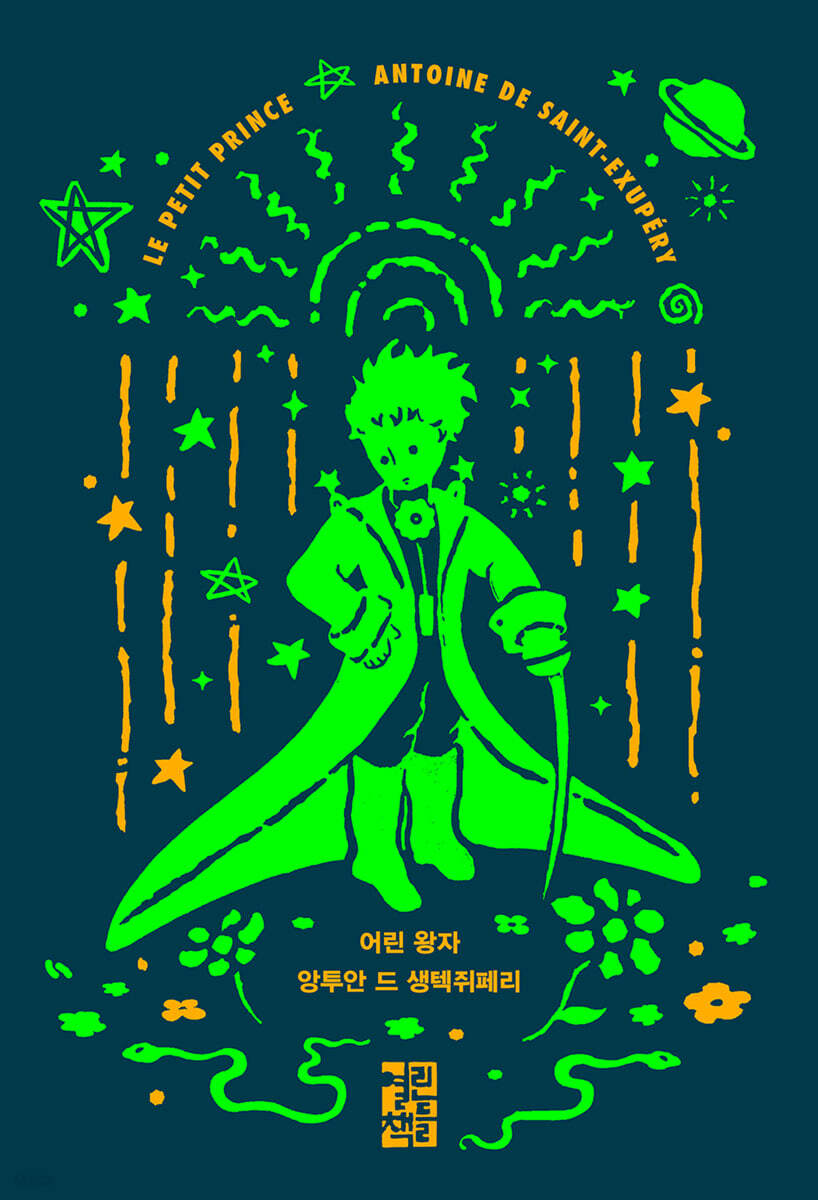
[Yesuri Cover] The Little Prince
 |
Description
Book Introduction
With the beautiful and faithful translation of the late Hwang Hyeon-san
The Little Prince meets you in a special limited edition design depicting a midwinter landscape.
Saint-Exupéry's "The Little Prince," beautifully translated by the late Hwang Hyeon-san, a French literature researcher and literary critic, and published by Open Books, is now available again in a special limited edition design.
Among the various translations, Professor Hwang Hyeon-san's translation, which is considered to be the most beautiful and faithful in sentence structure, has established itself as the best-selling Korean edition to date.
The limited edition being published this time features a design that captures the midwinter Christmas scene that the Little Prince, who will always remain in our hearts, greets.
You can keep this special, lovely scene of a snowman, a Santa Claus hat, sparkling decorations, and a bouquet of gifts warmly surrounding the little prince.
Just as the Little Prince whispered, “When I look at the night sky, I know that I am living on one of those stars,” this winter edition makes us happily imagine the affectionate times the Little Prince is spending on a distant star.
The contents of the book are the same as the previous edition.
The late Hwang Hyeon-san, who set a good example for translated literature with his translations that were well-equipped with a delicate understanding of the original French text, precise and beautiful sentence structure, and keen literary insight, devoted his heart and soul to fully preserving Saint-Exupéry's honest writing style in his new translation of this work.
From selecting the original text to finalizing the translation, we aimed to create a definitive Korean edition that faithfully preserves the original text's value.
This novel, which illuminates the contradictory world of adults through the innocent gaze of a little prince from another planet, is a work that beautifully incorporates deep reflections on life into a simple, fairytale-like story with an unadorned, honest style.
Every time we reread The Little Prince, we are brought back to the place where we look back at the most important things in life, but also the things that are forgotten or lost, the things that are “invisible.”
It is time to reread this work, which I read as a child, in a newer and more complete translation.
The Little Prince meets you in a special limited edition design depicting a midwinter landscape.
Saint-Exupéry's "The Little Prince," beautifully translated by the late Hwang Hyeon-san, a French literature researcher and literary critic, and published by Open Books, is now available again in a special limited edition design.
Among the various translations, Professor Hwang Hyeon-san's translation, which is considered to be the most beautiful and faithful in sentence structure, has established itself as the best-selling Korean edition to date.
The limited edition being published this time features a design that captures the midwinter Christmas scene that the Little Prince, who will always remain in our hearts, greets.
You can keep this special, lovely scene of a snowman, a Santa Claus hat, sparkling decorations, and a bouquet of gifts warmly surrounding the little prince.
Just as the Little Prince whispered, “When I look at the night sky, I know that I am living on one of those stars,” this winter edition makes us happily imagine the affectionate times the Little Prince is spending on a distant star.
The contents of the book are the same as the previous edition.
The late Hwang Hyeon-san, who set a good example for translated literature with his translations that were well-equipped with a delicate understanding of the original French text, precise and beautiful sentence structure, and keen literary insight, devoted his heart and soul to fully preserving Saint-Exupéry's honest writing style in his new translation of this work.
From selecting the original text to finalizing the translation, we aimed to create a definitive Korean edition that faithfully preserves the original text's value.
This novel, which illuminates the contradictory world of adults through the innocent gaze of a little prince from another planet, is a work that beautifully incorporates deep reflections on life into a simple, fairytale-like story with an unadorned, honest style.
Every time we reread The Little Prince, we are brought back to the place where we look back at the most important things in life, but also the things that are forgotten or lost, the things that are “invisible.”
It is time to reread this work, which I read as a child, in a newer and more complete translation.
- You can preview some of the book's contents.
Preview
Detailed image

Into the book
“My life is monotonous.
I chase chickens, and people chase me.
Chickens are all the same, and people are all the same.
So I'm kind of bored.
But if you tame me, my life will be as bright as sunlight.
I will hear a sound of footsteps that will be different from all other footsteps.
The sound of other footsteps makes me hide in the ground.
Your footsteps will call me out of my hole like music.
And over there, do you see the wheat fields? I don't eat bread! Wheat is of no use to me.
So sad! But your hair is golden.
So if you tame me, something truly amazing will happen.
The wheat is golden and will remind you of me.
So I will love the sound of the wind blowing through the wheat fields… … .」
--- p.86
"For example, if you come at 4 p.m., I will begin to feel happy at 3 p.m.
As time goes by, I will become happier.
By 4 o'clock, I'm already starting to get restless and fidgety.
I'll learn the price of happiness! But if you come at any time, I won't know when to prepare my heart...
"There needs to be a ceremony."
“What is the ceremony?” asked the little prince.
“That’s something everyone has forgotten,” said the fox.
“That’s what makes one day different from another, one hour different from another.
For example, hunters also have rituals.
They say that on Thursdays they dance with the village girls.
So Thursday is a wonderful day! I go for a walk to the vineyard.
If hunters danced at any time, every day would be the same, and I would have no holidays.
--- p.87
The little prince went back to look at the roses.
He spoke to the flowers.
“You are nothing like my rose, you are nothing yet.
No one has tamed you, and you have tamed no one.
You guys are like my old fox.
He was just a fox, no different from countless other foxes.
But I made her my friend, and now she is the only fox in the world.
The roses were embarrassed by these words.
“You are beautiful, but you are empty,” the little prince said again.
“No one can die for you.
Of course, an unaware passerby would think my rose is similar to yours.
But that one flower alone is more precious than all of you.
Because I am the flower that watered it.
Because I am a flower that blocks the wind with a windbreaker.
Because I am the flower that caught the bugs (leaving only two or three to become butterflies).
Because I am a flower that listens to complaints, boasts, and sometimes even silence.
Because that is my rose.
--- pp.88-89
The little prince fell asleep, so I held him in my arms and continued walking.
I was impressed.
It felt like I was carrying a fragile treasure.
It felt like there was nothing more fragile on Earth.
I looked at that pale forehead, those closed eyes, that hair blowing in the wind under the moonlight and thought to myself.
“What I see here is nothing but a shell.
What is essential is invisible to the eye… … .」
I thought again, seeing a faint smile on his half-open lips.
"What moves me so much about the little prince who was asleep is the sincerity with which he devoted his heart to a single flower.
Even though he was asleep, there was an image of a single rose burning brightly like a lamp in his heart… … .」 That's why I noticed that he was becoming more and more fragile.
The lights must be kept well.
It might be blown out by a single gust of wind… … .
--- pp.97-98
He laughed, touched the rope, and pulled the pulley.
Then, the pulley creaked like an old weather vane when the wind wakes up after a long sleep.
“Sir, don’t you hear me?” said the little prince.
“When we woke the well, it started singing… … .”
I didn't want to make it hard for him.
"I am a hippopotamus," he said to him.
"It's too heavy for you."
Slowly I lifted the gourd to the well's rim, making sure it wouldn't tip over.
The song of the pulley continued to ring in my ears, and I saw the sun ripple in the still rippling water.
“I want to drink this water,” said the little prince.
“Let me drink… … .”
At those words, I knew what he was looking for.
I raised the gourd to his lips.
He closed his eyes and drank.
It was fun, like a holiday.
The water was very different from ordinary drinking water.
That water was born from the footsteps I took under the starlight, the song of the pulley, and the effort of my arms.
It was a heartwarming gift.
Even when I was a child, the lights on the Christmas tree, the music of midnight mass, and the warm smiles of people made the Christmas gifts I received shine brightly.
I chase chickens, and people chase me.
Chickens are all the same, and people are all the same.
So I'm kind of bored.
But if you tame me, my life will be as bright as sunlight.
I will hear a sound of footsteps that will be different from all other footsteps.
The sound of other footsteps makes me hide in the ground.
Your footsteps will call me out of my hole like music.
And over there, do you see the wheat fields? I don't eat bread! Wheat is of no use to me.
So sad! But your hair is golden.
So if you tame me, something truly amazing will happen.
The wheat is golden and will remind you of me.
So I will love the sound of the wind blowing through the wheat fields… … .」
--- p.86
"For example, if you come at 4 p.m., I will begin to feel happy at 3 p.m.
As time goes by, I will become happier.
By 4 o'clock, I'm already starting to get restless and fidgety.
I'll learn the price of happiness! But if you come at any time, I won't know when to prepare my heart...
"There needs to be a ceremony."
“What is the ceremony?” asked the little prince.
“That’s something everyone has forgotten,” said the fox.
“That’s what makes one day different from another, one hour different from another.
For example, hunters also have rituals.
They say that on Thursdays they dance with the village girls.
So Thursday is a wonderful day! I go for a walk to the vineyard.
If hunters danced at any time, every day would be the same, and I would have no holidays.
--- p.87
The little prince went back to look at the roses.
He spoke to the flowers.
“You are nothing like my rose, you are nothing yet.
No one has tamed you, and you have tamed no one.
You guys are like my old fox.
He was just a fox, no different from countless other foxes.
But I made her my friend, and now she is the only fox in the world.
The roses were embarrassed by these words.
“You are beautiful, but you are empty,” the little prince said again.
“No one can die for you.
Of course, an unaware passerby would think my rose is similar to yours.
But that one flower alone is more precious than all of you.
Because I am the flower that watered it.
Because I am a flower that blocks the wind with a windbreaker.
Because I am the flower that caught the bugs (leaving only two or three to become butterflies).
Because I am a flower that listens to complaints, boasts, and sometimes even silence.
Because that is my rose.
--- pp.88-89
The little prince fell asleep, so I held him in my arms and continued walking.
I was impressed.
It felt like I was carrying a fragile treasure.
It felt like there was nothing more fragile on Earth.
I looked at that pale forehead, those closed eyes, that hair blowing in the wind under the moonlight and thought to myself.
“What I see here is nothing but a shell.
What is essential is invisible to the eye… … .」
I thought again, seeing a faint smile on his half-open lips.
"What moves me so much about the little prince who was asleep is the sincerity with which he devoted his heart to a single flower.
Even though he was asleep, there was an image of a single rose burning brightly like a lamp in his heart… … .」 That's why I noticed that he was becoming more and more fragile.
The lights must be kept well.
It might be blown out by a single gust of wind… … .
--- pp.97-98
He laughed, touched the rope, and pulled the pulley.
Then, the pulley creaked like an old weather vane when the wind wakes up after a long sleep.
“Sir, don’t you hear me?” said the little prince.
“When we woke the well, it started singing… … .”
I didn't want to make it hard for him.
"I am a hippopotamus," he said to him.
"It's too heavy for you."
Slowly I lifted the gourd to the well's rim, making sure it wouldn't tip over.
The song of the pulley continued to ring in my ears, and I saw the sun ripple in the still rippling water.
“I want to drink this water,” said the little prince.
“Let me drink… … .”
At those words, I knew what he was looking for.
I raised the gourd to his lips.
He closed his eyes and drank.
It was fun, like a holiday.
The water was very different from ordinary drinking water.
That water was born from the footsteps I took under the starlight, the song of the pulley, and the effort of my arms.
It was a heartwarming gift.
Even when I was a child, the lights on the Christmas tree, the music of midnight mass, and the warm smiles of people made the Christmas gifts I received shine brightly.
--- pp.99-100
Publisher's Review
Saint-Exupéry's honest writing style is fully preserved.
The Little Prince, translated by literary critic Hwang Hyeon-san
While essays and thesis persuade with their argumentative devices, poems and novels move the heart with their style.
For example, when the fox in The Little Prince says, "You only know what you tame," there is no evidence that this is true.
Only the author Saint-Exupéry's honest and passionate writing style can make us believe in the truth of these words and move us.
- Hwang Hyeon-san
Powerful sentences move the heart.
Saint-Exupéry's The Little Prince is filled with sentences that have the power to move the hearts of readers and remain in their memory longer than any other novel.
It is not because those sentences explain what they mean with flowery rhetoric or elaborate arguments.
Hwang Hyeon-san, who translated “The Little Prince,” which is being published by Open Books this time, explained that the source of its power is the author Saint-Exupéry’s honest and passionate writing style.
The simple, unadorned, and pure words exchanged between the Little Prince and the Desert Fox, which still resonate deeply with countless readers around the world today, are perhaps due to the power of Saint-Exupéry's writing style, imbued with his sincerity.
This story is not limited to “The Little Prince.”
As he said, “In literature, style and thought are created simultaneously,” understanding the “power of style” is a key part of reading and translating literary works.
Professor Hwang Hyeon-san, a French literature scholar and literary critic, has established a strong position in literary translation with his translations that combine a delicate understanding of the original French texts, precise and beautiful sentence structure, and keen literary insight.
Open Books' "The Little Prince" is the result of his painstaking efforts to fully capture Saint-Exupéry's honest writing style, carefully considering each and every word and line while retranslating and refining the work.
It was an approach to the world of children that Saint-Exupéry sought to capture with boundless sincerity through his simple language.
While translating this work, Professor Hwang Hyeon-san reflected on the difficulty of [crossing the world of children with adult language], and came to the conclusion that [if we translate it as the author wrote, without forcing it and without underestimating children's reading ability, we can finally approach the world of children].
As he said, the ideology of [naturalness] is not [nature] itself, forcing [childhood] to fit the eye level of children would be nothing more than [underestimating children].
The only truth he could convey in his translation was to be infinitely transparent in front of the author's writing style that captured the world of children.
This is also in line with his approach to translation, which is wary of excessive paraphrasing, keenly attentive to the voice of the work, and insists on a translation that is as faithful to the original text as possible.
Open Books' translation of "The Little Prince" is a translation that fully embodies the translator's spirit of trying to correctly realize the literary value of this work.
In addition, the Pleiades edition of the French publisher Gallimard, translated by Professor Hwang Hyeon-san, is the official text of the French [Little Prince] books that is officially cited in academic papers and other publications.
From selecting the original text to finalizing the translation, we aimed to create a definitive Korean edition that faithfully preserves the value of the original text, especially among the many [Little Prince] editions published in Korea.
A novel dedicated to children and to adults who were children themselves.
What is essential is invisible to the eye.
Everyone encounters [The Little Prince] at least once at the threshold of growth.
Translated into over 160 languages and selling over 100 million copies, it is one of the world's most widely read books, a novel that serves as an introduction to the reading experience for countless readers.
And it is also a work that gives me a deeper meaning every time I reread the sentences I read as a child as time goes by.
This may be because mature insights about life and relationships are beautifully incorporated into a story that appears simple like a fairy tale.
As is well known, in the preface, Saint-Exupéry dedicated the work to his close friend Léon Werthe, and asked for forgiveness from children for dedicating the work to adults.
And he cleverly concluded the preface by saying that he would instead change the dedication to [Léon Werthe as a child].
This preface shows that this work is not only for children, but also for all adults who have lost their childhood and become adults.
This novel, which illuminates the contradictory world of adults through the innocent eyes of a little prince from another planet, provides readers living in the adult world with a chance to reflect on their lives.
The image of the little prince coming from [Asteroid B612] and talking to adults evokes a sense of nostalgia, like a prototype of our lost childhood.
The king, the vain man, the drunkard, the businessman, the lamplighter, and the geographer that the little prince met during his travels are all distorted versions of adults living in the contradictions that dominate reality.
As Professor Hwang Hyeon-san pointed out, they each live their lives absorbed in their own work in their own way, but they are unable to form true relationships with anyone other than themselves.
A king who divides everything in the world into himself who commands and others who are commanded; a vain man who is only interested in himself; a drunkard who cannot escape his own circular logic because he cannot escape from himself; a businessman who perceives the world only in terms of ownership divided into what is his and what is not his; a geographer who considers everything in the world an object of knowledge but has never personally encountered any of them are all fragments of this kind of person.
However, humans can only establish true relationships with things they have painstakingly cultivated and nurtured, and only through these relationships can they expand their own existence.
According to Hwang Hyeon-san's teacher, [taming] means [establishing a relationship with something that is not oneself, and making oneself part of its life and making it part of one's life].
As the message of this work is, [what is important is invisible to the eye], it is invisible, but it makes an object into a unique value to someone that cannot be replaced by anything else in the world.
The things that the Little Prince conveys in this book in simple language cannot be reduced to the exchange value calculated and accepted in the adult world.
The little prince's choice to risk his life for a single flower may seem foolish to adults, but it reminds us of the precious values we have lost.
Every time we reread [The Little Prince], we are brought back to a place where we look back at the most important things in our lives, but also the things that are forgotten or lost, the things that are [invisible].
This is probably why this story has resonated with readers around the world, regardless of age or gender, to this day.
It is time to reread this work, which I read as a child, in a newer and more complete translation.
The Little Prince, translated by literary critic Hwang Hyeon-san
While essays and thesis persuade with their argumentative devices, poems and novels move the heart with their style.
For example, when the fox in The Little Prince says, "You only know what you tame," there is no evidence that this is true.
Only the author Saint-Exupéry's honest and passionate writing style can make us believe in the truth of these words and move us.
- Hwang Hyeon-san
Powerful sentences move the heart.
Saint-Exupéry's The Little Prince is filled with sentences that have the power to move the hearts of readers and remain in their memory longer than any other novel.
It is not because those sentences explain what they mean with flowery rhetoric or elaborate arguments.
Hwang Hyeon-san, who translated “The Little Prince,” which is being published by Open Books this time, explained that the source of its power is the author Saint-Exupéry’s honest and passionate writing style.
The simple, unadorned, and pure words exchanged between the Little Prince and the Desert Fox, which still resonate deeply with countless readers around the world today, are perhaps due to the power of Saint-Exupéry's writing style, imbued with his sincerity.
This story is not limited to “The Little Prince.”
As he said, “In literature, style and thought are created simultaneously,” understanding the “power of style” is a key part of reading and translating literary works.
Professor Hwang Hyeon-san, a French literature scholar and literary critic, has established a strong position in literary translation with his translations that combine a delicate understanding of the original French texts, precise and beautiful sentence structure, and keen literary insight.
Open Books' "The Little Prince" is the result of his painstaking efforts to fully capture Saint-Exupéry's honest writing style, carefully considering each and every word and line while retranslating and refining the work.
It was an approach to the world of children that Saint-Exupéry sought to capture with boundless sincerity through his simple language.
While translating this work, Professor Hwang Hyeon-san reflected on the difficulty of [crossing the world of children with adult language], and came to the conclusion that [if we translate it as the author wrote, without forcing it and without underestimating children's reading ability, we can finally approach the world of children].
As he said, the ideology of [naturalness] is not [nature] itself, forcing [childhood] to fit the eye level of children would be nothing more than [underestimating children].
The only truth he could convey in his translation was to be infinitely transparent in front of the author's writing style that captured the world of children.
This is also in line with his approach to translation, which is wary of excessive paraphrasing, keenly attentive to the voice of the work, and insists on a translation that is as faithful to the original text as possible.
Open Books' translation of "The Little Prince" is a translation that fully embodies the translator's spirit of trying to correctly realize the literary value of this work.
In addition, the Pleiades edition of the French publisher Gallimard, translated by Professor Hwang Hyeon-san, is the official text of the French [Little Prince] books that is officially cited in academic papers and other publications.
From selecting the original text to finalizing the translation, we aimed to create a definitive Korean edition that faithfully preserves the value of the original text, especially among the many [Little Prince] editions published in Korea.
A novel dedicated to children and to adults who were children themselves.
What is essential is invisible to the eye.
Everyone encounters [The Little Prince] at least once at the threshold of growth.
Translated into over 160 languages and selling over 100 million copies, it is one of the world's most widely read books, a novel that serves as an introduction to the reading experience for countless readers.
And it is also a work that gives me a deeper meaning every time I reread the sentences I read as a child as time goes by.
This may be because mature insights about life and relationships are beautifully incorporated into a story that appears simple like a fairy tale.
As is well known, in the preface, Saint-Exupéry dedicated the work to his close friend Léon Werthe, and asked for forgiveness from children for dedicating the work to adults.
And he cleverly concluded the preface by saying that he would instead change the dedication to [Léon Werthe as a child].
This preface shows that this work is not only for children, but also for all adults who have lost their childhood and become adults.
This novel, which illuminates the contradictory world of adults through the innocent eyes of a little prince from another planet, provides readers living in the adult world with a chance to reflect on their lives.
The image of the little prince coming from [Asteroid B612] and talking to adults evokes a sense of nostalgia, like a prototype of our lost childhood.
The king, the vain man, the drunkard, the businessman, the lamplighter, and the geographer that the little prince met during his travels are all distorted versions of adults living in the contradictions that dominate reality.
As Professor Hwang Hyeon-san pointed out, they each live their lives absorbed in their own work in their own way, but they are unable to form true relationships with anyone other than themselves.
A king who divides everything in the world into himself who commands and others who are commanded; a vain man who is only interested in himself; a drunkard who cannot escape his own circular logic because he cannot escape from himself; a businessman who perceives the world only in terms of ownership divided into what is his and what is not his; a geographer who considers everything in the world an object of knowledge but has never personally encountered any of them are all fragments of this kind of person.
However, humans can only establish true relationships with things they have painstakingly cultivated and nurtured, and only through these relationships can they expand their own existence.
According to Hwang Hyeon-san's teacher, [taming] means [establishing a relationship with something that is not oneself, and making oneself part of its life and making it part of one's life].
As the message of this work is, [what is important is invisible to the eye], it is invisible, but it makes an object into a unique value to someone that cannot be replaced by anything else in the world.
The things that the Little Prince conveys in this book in simple language cannot be reduced to the exchange value calculated and accepted in the adult world.
The little prince's choice to risk his life for a single flower may seem foolish to adults, but it reminds us of the precious values we have lost.
Every time we reread [The Little Prince], we are brought back to a place where we look back at the most important things in our lives, but also the things that are forgotten or lost, the things that are [invisible].
This is probably why this story has resonated with readers around the world, regardless of age or gender, to this day.
It is time to reread this work, which I read as a child, in a newer and more complete translation.
GOODS SPECIFICS
- Date of publication: October 20, 2015
- Format: Hardcover book binding method guide
- Page count, weight, size: 136 pages | 490g | 160*220*20mm
- ISBN13: 9788932917245
- ISBN10: 8932917248
You may also like
카테고리
korean


korean

![GQ KOREA Mark (Monthly): December [2025]](http://librairie.coreenne.fr/cdn/shop/files/8ef265dbbfbf186523ed75ba7319009d.jpg?v=1765340328&width=3840)


