

A Tale of Two Cities
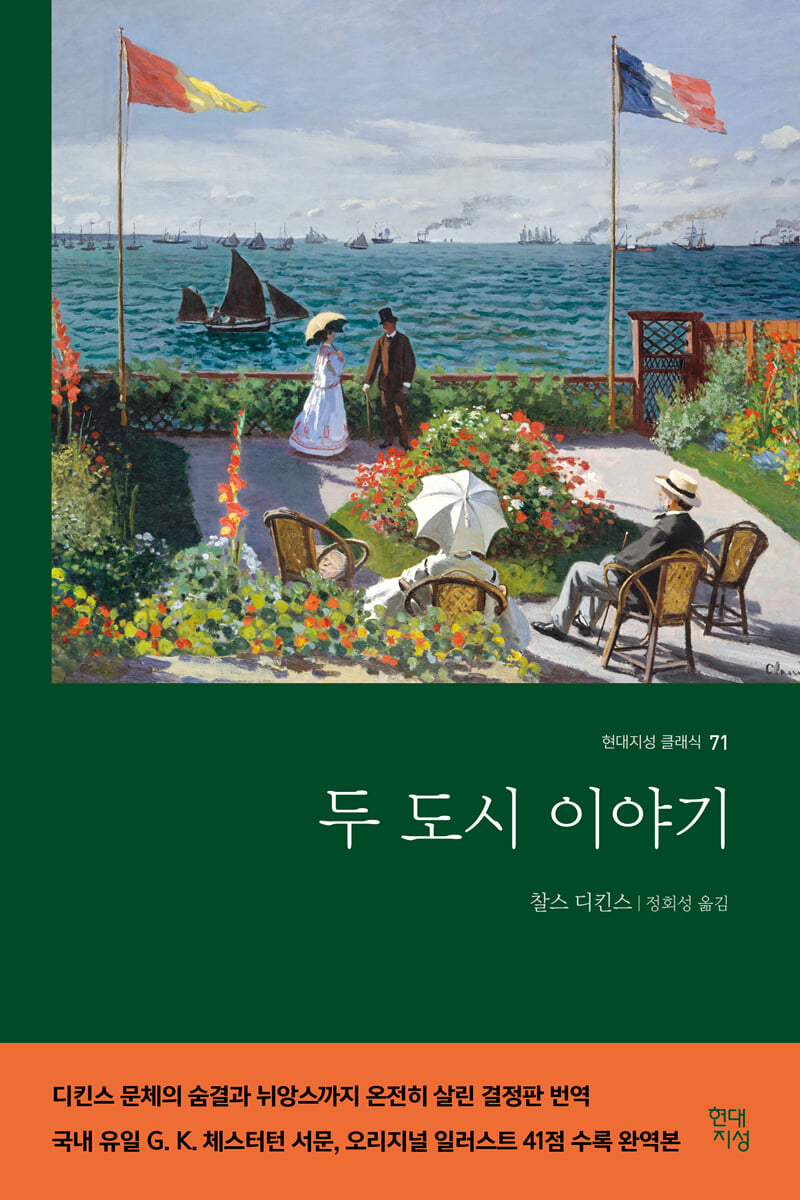 |
Description
Book Introduction
A man's decision is hotter than revolution,
A Tale of Two Cities, brought to life in its most vivid and readable form.
★ The ultimate readability, vividly capturing the breath and nuance of Dickens's writing style.
★ Selected by the Guinness Book of World Records as “the best-selling novel in history”
★ The only GK in Korea
Complete translation with Chesterton's introduction and 41 original illustrations
Even in the midst of the French Revolution, one man's choice changed history.
A Tale of Two Cities is not simply a historical novel.
It is the pinnacle of Dickens' literary world, which asks how humans can maintain their dignity in an age of despair and madness.
An alley with broken wine, a crowd before the guillotine, a mother returning with a starving child.
Dickens wrote about the 18th century French Revolution not as an 'event' but as a 'feeling experienced in the body'.
So, “A Tale of Two Cities” is a classic that remains unchanged even after 150 years.
The modern intellectual classic is composed to allow readers to experience the novel "as if they were there," with 41 original illustrations that capture the emotion of the first original serialized version in Korea, a preface by Chesterton that captures the essence of Dickens research, and detailed commentary and footnotes that explain the background, institutions, and society of the revolutionary period.
In particular, to preserve the smoothness, accuracy, and Dickens's unique rhythm, which were the most regrettable aspects of the translation for existing readers, translator Jeong Hoe-seong meticulously restored the sentence structure, tone, and even foreshadowing of the original text.
This tragic and redemptive narrative, set in 18th-century Paris and London, remains relevant today.
In an age where disparity, hatred, and polarization are the norm, Dickens asks:
“What will we choose in this age of division?”
This book is not a story about 'two cities', but about 'this city now'.
It sets a new standard for the most reliable complete translation of A Tale of Two Cities for Korean readers.
◇ Why You Should Read the Modern Intellectual Edition of "A Tale of Two Cities" Now
- The only GK in the country
Includes Chesterton's Preface: An authoritative guide that provides the most accurate interpretation of the work's depth.
- The definitive edition of Jeong Hoe-seong's translation: the most readable Korean edition that preserves Dickens's sentences, rhythm, and nuances.
- 41 original illustrations: Visuals that 'show even the emotions' that faithfully recreate the scene of the revolution.
- A classic for today's readers: A much-needed narrative, reread in an age of division and hatred.
A Tale of Two Cities, brought to life in its most vivid and readable form.
★ The ultimate readability, vividly capturing the breath and nuance of Dickens's writing style.
★ Selected by the Guinness Book of World Records as “the best-selling novel in history”
★ The only GK in Korea
Complete translation with Chesterton's introduction and 41 original illustrations
Even in the midst of the French Revolution, one man's choice changed history.
A Tale of Two Cities is not simply a historical novel.
It is the pinnacle of Dickens' literary world, which asks how humans can maintain their dignity in an age of despair and madness.
An alley with broken wine, a crowd before the guillotine, a mother returning with a starving child.
Dickens wrote about the 18th century French Revolution not as an 'event' but as a 'feeling experienced in the body'.
So, “A Tale of Two Cities” is a classic that remains unchanged even after 150 years.
The modern intellectual classic is composed to allow readers to experience the novel "as if they were there," with 41 original illustrations that capture the emotion of the first original serialized version in Korea, a preface by Chesterton that captures the essence of Dickens research, and detailed commentary and footnotes that explain the background, institutions, and society of the revolutionary period.
In particular, to preserve the smoothness, accuracy, and Dickens's unique rhythm, which were the most regrettable aspects of the translation for existing readers, translator Jeong Hoe-seong meticulously restored the sentence structure, tone, and even foreshadowing of the original text.
This tragic and redemptive narrative, set in 18th-century Paris and London, remains relevant today.
In an age where disparity, hatred, and polarization are the norm, Dickens asks:
“What will we choose in this age of division?”
This book is not a story about 'two cities', but about 'this city now'.
It sets a new standard for the most reliable complete translation of A Tale of Two Cities for Korean readers.
◇ Why You Should Read the Modern Intellectual Edition of "A Tale of Two Cities" Now
- The only GK in the country
Includes Chesterton's Preface: An authoritative guide that provides the most accurate interpretation of the work's depth.
- The definitive edition of Jeong Hoe-seong's translation: the most readable Korean edition that preserves Dickens's sentences, rhythm, and nuances.
- 41 original illustrations: Visuals that 'show even the emotions' that faithfully recreate the scene of the revolution.
- A classic for today's readers: A much-needed narrative, reread in an age of division and hatred.
- You can preview some of the book's contents.
Preview
index
G.
K. Chesterton's Preface
Author's Preface
Part 1: Coming Back to Life
Chapter 1: The Age
Chapter 2 Stagecoach
Chapter 3: Shadows of the Night
Chapter 4 Preparation
Chapter 5: The Bar
Chapter 6 The Shoemaker
Part 2: The Golden Thread
Chapter 1: Five Years Later
Chapter 2 Sightseeing
Chapter 3 Disappointment
Chapter 4 Congratulations
Chapter 5 The Jackal
Chapter 6 Hundreds of People
Chapter 7: The Urban Nobles
Chapter 8: Country Nobles
Chapter 9 Gorgon's Head
Chapter 10 Two Promises
Chapter 11 The Ideal Spouse
Chapter 12: The Delicate Man
Chapter 13: The Clumsy Man
Chapter 14: The Honest Merchant
Chapter 15 Knitting
Chapter 16: Continuing Knitting
Chapter 17 One Night
Chapter 18 Ahre
Chapter 19 Comments
Chapter 20 Request
Chapter 21: Echoing Footsteps
Chapter 22 The sea continues to grow rough
Chapter 23: Flames Rise
Chapter 24: Attracted by a Magnetic Rock
Part 3: The Storm's Path
Chapter 1: Solitary Cell
Chapter 2: Rotating Whetstone
Chapter 3 Shadow
Chapter 4: Calm in the Storm
Chapter 5 Sawmill
Chapter 6 Victory
Chapter 7: A Knocking on the Door
8 cards in hand
Chapter 9: Starting the Game
Chapter 10: The Reality of Shadows
Chapter 11: Twilight
Chapter 12 Darkness
Chapter 13 Fifty-two
Chapter 14: Knitting is finished
Chapter 15: The Sound of Footsteps Disappears Forever
Commentary | Jeong Hoe-seong
Charles Dickens Chronology
K. Chesterton's Preface
Author's Preface
Part 1: Coming Back to Life
Chapter 1: The Age
Chapter 2 Stagecoach
Chapter 3: Shadows of the Night
Chapter 4 Preparation
Chapter 5: The Bar
Chapter 6 The Shoemaker
Part 2: The Golden Thread
Chapter 1: Five Years Later
Chapter 2 Sightseeing
Chapter 3 Disappointment
Chapter 4 Congratulations
Chapter 5 The Jackal
Chapter 6 Hundreds of People
Chapter 7: The Urban Nobles
Chapter 8: Country Nobles
Chapter 9 Gorgon's Head
Chapter 10 Two Promises
Chapter 11 The Ideal Spouse
Chapter 12: The Delicate Man
Chapter 13: The Clumsy Man
Chapter 14: The Honest Merchant
Chapter 15 Knitting
Chapter 16: Continuing Knitting
Chapter 17 One Night
Chapter 18 Ahre
Chapter 19 Comments
Chapter 20 Request
Chapter 21: Echoing Footsteps
Chapter 22 The sea continues to grow rough
Chapter 23: Flames Rise
Chapter 24: Attracted by a Magnetic Rock
Part 3: The Storm's Path
Chapter 1: Solitary Cell
Chapter 2: Rotating Whetstone
Chapter 3 Shadow
Chapter 4: Calm in the Storm
Chapter 5 Sawmill
Chapter 6 Victory
Chapter 7: A Knocking on the Door
8 cards in hand
Chapter 9: Starting the Game
Chapter 10: The Reality of Shadows
Chapter 11: Twilight
Chapter 12 Darkness
Chapter 13 Fifty-two
Chapter 14: Knitting is finished
Chapter 15: The Sound of Footsteps Disappears Forever
Commentary | Jeong Hoe-seong
Charles Dickens Chronology
Detailed image

Into the book
Despite all these disadvantages, Dickens achieved something remarkable.
He wrote a book about two cities, knowing one but not the other.
But surprisingly, the description of a city I knew nothing about was far superior to that of a city I knew well and was very familiar with.
It is here that Dickens's genius is undoubtedly revealed.
Genius is something that cannot be precisely described, but is instantly recognizable to anyone who encounters it.
--- p.14 「GK
From the "Chesterton Preface"
It was the best of times and the worst of times.
It was an age of wisdom and an age of foolishness.
It was a time when faith was rising and a time when distrust was falling.
It was a season of light and a season of darkness.
And it was a spring of hope and a winter of despair.
Everything was laid out before the people, and also nothing.
It seemed like everyone was heading towards heaven, and at the same time, everyone was running in the opposite direction.
In short, that era was so similar to our own present that some vocal authorities have argued that only by making extreme comparisons, for better or worse, can we understand the contemporary situation.
--- p.25 「Part 1.
Come back to life.
Chapter 1.
From "The Era"
A large wine barrel fell to the ground and broke into pieces.
The barrel fell down while being unloaded from the cart.
The wine cask rolled over, its iron rim bursting, and it shattered like a walnut shell on the stone floor in front of the tavern door.
Then, people who were working or lounging around there came rushing in and competing to drink the wine.
The rough, uneven stone floor blocked the path as if deliberately trying to make approaching people limp, and the overflowing wine formed a small puddle in the gap.
Depending on the size of the pool, several people, or groups of people, gathered together, pushing and screaming.
--- p.64 「Part 1.
Come back to life.
Chapter 5.
From "Bar"
There were also many nobles and people unrelated to government affairs.
They had no concern for practical matters, and lived their lives without regard for the true destination on earth.
Doctors who amassed vast fortunes by deceiving patients with delicate techniques and claiming to cure diseases that did not even exist, smiled constantly at patients from the royal court in the reception rooms of noble families.
Theorists were quick to trumpet their various countermeasures for addressing petty corruption that undermined national policy.
But not even a single crime was solved.
--- p.182 「Part 2.
Golden thread.
Chapter 7.
Among the "city nobles"
None of the countless people gathered there knew who distributed the weapons, where they came from, or by what route they were thrown into the crowd, dozens at a time.
The plain fact was that muskets, cartridges, gunpowder, bullets, iron bars, wooden sticks, swords, axes, and spears were being supplied.
In the hands of those possessed by madness, every tool at their disposal becomes a weapon.
Those who had nothing to gain had their hands covered in blood as they pulled out stones and bricks from the wall with their bare hands.
Every heart and pulse of Saint-Antoine was seething with the heat of an explosion.
--- p.351 「Part 2.
Golden thread.
Chapter 21.
From "Echoing Footsteps"
It was late at night that the men and women returned to the children who were crying from hunger.
Even though it was a dark night, there were long lines at every shabby bakery.
People waited patiently to buy even bad bread.
They embraced each other, savoring the day's victory even though they were dizzy and hungry.
We spent the boring time reminiscing about our victories and chatting about this and that.
As time went on, the line of shabby people gradually shortened, and here and there, empty seats appeared. At those times, a faint light leaked out from the tall windows, and small, weak bonfires burned in the street.
The residents cooked food with the fire and shared it with their neighbors.
It was an extremely shabby meal, with no meat, only dried and torn bread, and no dipping sauce.
Nevertheless, human solidarity and camaraderie infused the sandy meal with nutrients and lifted the spirits of those sharing the meal.
The parents, despite having poured their passion into a fierce and cruel day, played tenderly with their poor, thin children.
Even in this world, lovers loved each other and hoped for tomorrow.
--- p.371 「Part 2.
Golden thread.
Chapter 22.
From "The sea continues to get rougher"
In the season of plague, some people are secretly drawn to the disease.
It makes me feel a terrible, momentary urge to die.
We all live with such impulses secretly in our hearts, just waiting for the right circumstances to bring them out.
--- p.462 「Part 3.
The path of the storm.
Chapter 6.
From "Victory"
Sydney looked at the lit windows with a gloomy look.
People were immersed in rest, dreaming of a few hours of peace, forgetting the terrible reality surrounding them.
In the church with the bell tower, prayers had long ceased.
The people's anger against corrupt priests, plunderers, and debaucherous people continued for many years, destroying the very foundations of the faith.
At the entrance to the cemetery, visible in the distance, was written, 'Rest in peace forever.'
The prisons were overflowing, and sixty or so people were being driven to their deaths on the streets.
Because death has become so common and so present a reality, the sad stories of souls wandering the underworld have become unheard of.
All this was thanks to the guillotine's tireless work.
--- p.513 「Part 3.
The path of the storm.
Chapter 9.
From "Start the Game"
I see Basard and Cly, Defarge and Bangjangs, the jury and the judge.
And we see a long line of new oppressors born on the ruins of the old ones.
Before the instrument of vengeance can fulfill its appointed role, they all see it destroyed by that instrument.
I see a beautiful city and dazzling people rising from the abyss of despair.
And we see them struggling for true freedom over a long period of time, going through victories and defeats, and we see the sins of this age and the sins of past ages that conceived them being self-absolved and consumed.
He wrote a book about two cities, knowing one but not the other.
But surprisingly, the description of a city I knew nothing about was far superior to that of a city I knew well and was very familiar with.
It is here that Dickens's genius is undoubtedly revealed.
Genius is something that cannot be precisely described, but is instantly recognizable to anyone who encounters it.
--- p.14 「GK
From the "Chesterton Preface"
It was the best of times and the worst of times.
It was an age of wisdom and an age of foolishness.
It was a time when faith was rising and a time when distrust was falling.
It was a season of light and a season of darkness.
And it was a spring of hope and a winter of despair.
Everything was laid out before the people, and also nothing.
It seemed like everyone was heading towards heaven, and at the same time, everyone was running in the opposite direction.
In short, that era was so similar to our own present that some vocal authorities have argued that only by making extreme comparisons, for better or worse, can we understand the contemporary situation.
--- p.25 「Part 1.
Come back to life.
Chapter 1.
From "The Era"
A large wine barrel fell to the ground and broke into pieces.
The barrel fell down while being unloaded from the cart.
The wine cask rolled over, its iron rim bursting, and it shattered like a walnut shell on the stone floor in front of the tavern door.
Then, people who were working or lounging around there came rushing in and competing to drink the wine.
The rough, uneven stone floor blocked the path as if deliberately trying to make approaching people limp, and the overflowing wine formed a small puddle in the gap.
Depending on the size of the pool, several people, or groups of people, gathered together, pushing and screaming.
--- p.64 「Part 1.
Come back to life.
Chapter 5.
From "Bar"
There were also many nobles and people unrelated to government affairs.
They had no concern for practical matters, and lived their lives without regard for the true destination on earth.
Doctors who amassed vast fortunes by deceiving patients with delicate techniques and claiming to cure diseases that did not even exist, smiled constantly at patients from the royal court in the reception rooms of noble families.
Theorists were quick to trumpet their various countermeasures for addressing petty corruption that undermined national policy.
But not even a single crime was solved.
--- p.182 「Part 2.
Golden thread.
Chapter 7.
Among the "city nobles"
None of the countless people gathered there knew who distributed the weapons, where they came from, or by what route they were thrown into the crowd, dozens at a time.
The plain fact was that muskets, cartridges, gunpowder, bullets, iron bars, wooden sticks, swords, axes, and spears were being supplied.
In the hands of those possessed by madness, every tool at their disposal becomes a weapon.
Those who had nothing to gain had their hands covered in blood as they pulled out stones and bricks from the wall with their bare hands.
Every heart and pulse of Saint-Antoine was seething with the heat of an explosion.
--- p.351 「Part 2.
Golden thread.
Chapter 21.
From "Echoing Footsteps"
It was late at night that the men and women returned to the children who were crying from hunger.
Even though it was a dark night, there were long lines at every shabby bakery.
People waited patiently to buy even bad bread.
They embraced each other, savoring the day's victory even though they were dizzy and hungry.
We spent the boring time reminiscing about our victories and chatting about this and that.
As time went on, the line of shabby people gradually shortened, and here and there, empty seats appeared. At those times, a faint light leaked out from the tall windows, and small, weak bonfires burned in the street.
The residents cooked food with the fire and shared it with their neighbors.
It was an extremely shabby meal, with no meat, only dried and torn bread, and no dipping sauce.
Nevertheless, human solidarity and camaraderie infused the sandy meal with nutrients and lifted the spirits of those sharing the meal.
The parents, despite having poured their passion into a fierce and cruel day, played tenderly with their poor, thin children.
Even in this world, lovers loved each other and hoped for tomorrow.
--- p.371 「Part 2.
Golden thread.
Chapter 22.
From "The sea continues to get rougher"
In the season of plague, some people are secretly drawn to the disease.
It makes me feel a terrible, momentary urge to die.
We all live with such impulses secretly in our hearts, just waiting for the right circumstances to bring them out.
--- p.462 「Part 3.
The path of the storm.
Chapter 6.
From "Victory"
Sydney looked at the lit windows with a gloomy look.
People were immersed in rest, dreaming of a few hours of peace, forgetting the terrible reality surrounding them.
In the church with the bell tower, prayers had long ceased.
The people's anger against corrupt priests, plunderers, and debaucherous people continued for many years, destroying the very foundations of the faith.
At the entrance to the cemetery, visible in the distance, was written, 'Rest in peace forever.'
The prisons were overflowing, and sixty or so people were being driven to their deaths on the streets.
Because death has become so common and so present a reality, the sad stories of souls wandering the underworld have become unheard of.
All this was thanks to the guillotine's tireless work.
--- p.513 「Part 3.
The path of the storm.
Chapter 9.
From "Start the Game"
I see Basard and Cly, Defarge and Bangjangs, the jury and the judge.
And we see a long line of new oppressors born on the ruins of the old ones.
Before the instrument of vengeance can fulfill its appointed role, they all see it destroyed by that instrument.
I see a beautiful city and dazzling people rising from the abyss of despair.
And we see them struggling for true freedom over a long period of time, going through victories and defeats, and we see the sins of this age and the sins of past ages that conceived them being self-absolved and consumed.
--- p.613 「Part 3.
The path of the storm.
Chapter 15.
From "The Sound of Footsteps Disappears Forever"
The path of the storm.
Chapter 15.
From "The Sound of Footsteps Disappears Forever"
Publisher's Review
Restoring the human heart that endured revolution:
Dickens' Map of Emotions
In 1859, Dickens said this as he neared the end of A Tale of Two Cities, which was being serialized in a magazine he founded.
“I hope this is the best story I’ve ever written.”
That sentence was by no means an exaggeration.
This work was written at a time when Dickens' literary skills, emotional sensitivity, and social insight were at their peak, and it is a masterpiece that captures the 'tension of the times' better than any other work.
Hyundai Jisung has redesigned the entire editing, translation, and annotation process to convey the essence of this work to Korean readers with as little loss as possible.
Translator Jeong Hoe-seong meticulously restored the word order, rhythm, sentence arrangement with hidden twists, and Dickens's characteristic irony to preserve the rhythm of the original text and maintain the emotional line of the scene.
As a result, readers will encounter a new reading experience: “Can a classic translation be this smooth?”
Chesterton's introduction, the only one of its kind in Korea, is almost the only guidebook explaining Dickens's mental structure and character design.
In addition, the 41 original illustrations by Hablot Brown and Fred Bernard are not just illustrations, but a 'visual code' that readers of the time used to understand the narrative.
Reading becomes much faster and more accurate with the addition of commentary and footnotes that explain unfamiliar background elements such as the revolutionary period's institutions, class structure, and intercity transportation system.
What is most surprising is that a sentence from 150 years ago speaks to the same problem we face today.
Division, anger, hatred, apathy, and choices that require sacrifice… these overlap with many of the situations we face today.
The value of a classic lies in its ability to be understood anew each time it is read.
So this novel is not an artifact in a museum, but a mirror that most clearly reflects the present.
Hidden between two cities
Another story
What makes "A Tale of Two Cities" special is not just that it is set during the French Revolution.
In fact, from the time it was serialized, this work was evaluated as “a work that poured out everything Dickens wanted to write.”
The 'circular structure', which begins with a stagecoach journey between London and Paris and eventually returns to London, is the narrative device that Dickens used most elaborately.
This structure, which follows the political explosion on the outside and the inner self of a person on the inside, creates a mirror effect in which the anxiety of the revolutionary period and the anxiety of the individual reflect each other.
What is interesting is that Dickens's own life also contained the same duality of this novel.
The worst of times, when he had to work as a boy in a shoe polish factory, and the best of times, when he became one of England's most beloved writers, existed simultaneously in the same person.
The sentence he wrote about “the best and the worst of times” was ultimately a language of self-confession and a portrait of the times.
So, all the characters in this novel have ambivalence.
Nobles and commoners, perpetrators and victims, love and sacrifice, destruction and salvation may seem to be in sharp contrast, but ultimately they reveal themselves to be 'similar', originating from each other.
Through this contrast, Dickens meticulously depicts not a simple good-versus-evil dichotomy, but how the tragedy of history begins from the cracks within humans.
The fact that the first issue of "All the Year Round" received an explosive response, selling 120,000 copies, was because this novel was not simply a historical novel, but a complex work where emotions, philosophy, narrative, and social criticism intersected.
As universal emotions of love and friendship, betrayal and revenge, collapse and recovery are placed on the stage of political violence, the reader at some point finds himself reading not "A Tale of Two Cities" but "The Story of Us All."
That's why "A Tale of Two Cities" is still read today, just as it was 150 years ago.
In an age seething with anger and hatred, an age when communities are losing their way, Dickens speaks.
“The two cities are different, but the human heart is always similar.”
This simple yet fundamental truth is the secret that has kept this novel alive across generations.
Why director Christopher Nolan
Did you think of "A Tale of Two Cities" every time you worked on the script?
The reason why “A Tale of Two Cities” has been read again for over 150 years is not simply because it is a classic.
It is a rare novel that still provides a narrative archetype for today's creators - film directors, dramatists, and storytellers.
Director Christopher Nolan has publicly stated that he was inspired by this work while making The Dark Knight Rises.
The film's interplay of ups and downs, the emotional upswing created by sacrifice and choice, mirrors the fates of Charles Darnay and Sydney Carton in almost parallel ways.
What Nolan was drawn to was the unique tension of how the downfall of one character makes the resurrection of another possible.
Dickens perfected this complex emotional mechanism as early as 1859, and today's narrative writers still refer to this structure as the "essence of human drama."
Modern intelligence goes beyond simply reading smoothly, restoring the workings of this narrative archetype across all dimensions: text, illustrations, commentary, and translation.
The only GK included in Korea
Chesterton's introduction is the most persuasive guide to Dickens's character design method - a structure that does not simply divide good and evil, but ultimately connects them with 'similar faces'.
This complete translation, based on a version Dickens personally proofread during his lifetime, features 41 original illustrations by Hablot Brown and Fred Barnard, and 83 footnotes that help readers understand the scenes from the 19th-century revolutionary period. This allows readers to experience not just "reading" the novel but also interpreting its emotions, scenes, and narrative structure in a three-dimensional way.
In particular, translator Jeong Hoe-seong restores the word order and rhythm of foreshadowing in sentences while securing modern readability, bringing to life with surprising clarity Dickens's unique scene transitions and emotional orchestration, which were only faintly felt in previous Korean editions.
Thanks to this, readers naturally come to understand why this novel became the basis for narratives in movies, dramas, and games.
All of these elements ultimately lead to one message.
“This work is not a masterpiece of the past, but the origin that created the story of today.”
Therefore, I confidently recommend "A Tale of Two Cities" as a must-read text not only for readers seeking a fresh look at classics, but also for anyone who loves stories.
Dickens' Map of Emotions
In 1859, Dickens said this as he neared the end of A Tale of Two Cities, which was being serialized in a magazine he founded.
“I hope this is the best story I’ve ever written.”
That sentence was by no means an exaggeration.
This work was written at a time when Dickens' literary skills, emotional sensitivity, and social insight were at their peak, and it is a masterpiece that captures the 'tension of the times' better than any other work.
Hyundai Jisung has redesigned the entire editing, translation, and annotation process to convey the essence of this work to Korean readers with as little loss as possible.
Translator Jeong Hoe-seong meticulously restored the word order, rhythm, sentence arrangement with hidden twists, and Dickens's characteristic irony to preserve the rhythm of the original text and maintain the emotional line of the scene.
As a result, readers will encounter a new reading experience: “Can a classic translation be this smooth?”
Chesterton's introduction, the only one of its kind in Korea, is almost the only guidebook explaining Dickens's mental structure and character design.
In addition, the 41 original illustrations by Hablot Brown and Fred Bernard are not just illustrations, but a 'visual code' that readers of the time used to understand the narrative.
Reading becomes much faster and more accurate with the addition of commentary and footnotes that explain unfamiliar background elements such as the revolutionary period's institutions, class structure, and intercity transportation system.
What is most surprising is that a sentence from 150 years ago speaks to the same problem we face today.
Division, anger, hatred, apathy, and choices that require sacrifice… these overlap with many of the situations we face today.
The value of a classic lies in its ability to be understood anew each time it is read.
So this novel is not an artifact in a museum, but a mirror that most clearly reflects the present.
Hidden between two cities
Another story
What makes "A Tale of Two Cities" special is not just that it is set during the French Revolution.
In fact, from the time it was serialized, this work was evaluated as “a work that poured out everything Dickens wanted to write.”
The 'circular structure', which begins with a stagecoach journey between London and Paris and eventually returns to London, is the narrative device that Dickens used most elaborately.
This structure, which follows the political explosion on the outside and the inner self of a person on the inside, creates a mirror effect in which the anxiety of the revolutionary period and the anxiety of the individual reflect each other.
What is interesting is that Dickens's own life also contained the same duality of this novel.
The worst of times, when he had to work as a boy in a shoe polish factory, and the best of times, when he became one of England's most beloved writers, existed simultaneously in the same person.
The sentence he wrote about “the best and the worst of times” was ultimately a language of self-confession and a portrait of the times.
So, all the characters in this novel have ambivalence.
Nobles and commoners, perpetrators and victims, love and sacrifice, destruction and salvation may seem to be in sharp contrast, but ultimately they reveal themselves to be 'similar', originating from each other.
Through this contrast, Dickens meticulously depicts not a simple good-versus-evil dichotomy, but how the tragedy of history begins from the cracks within humans.
The fact that the first issue of "All the Year Round" received an explosive response, selling 120,000 copies, was because this novel was not simply a historical novel, but a complex work where emotions, philosophy, narrative, and social criticism intersected.
As universal emotions of love and friendship, betrayal and revenge, collapse and recovery are placed on the stage of political violence, the reader at some point finds himself reading not "A Tale of Two Cities" but "The Story of Us All."
That's why "A Tale of Two Cities" is still read today, just as it was 150 years ago.
In an age seething with anger and hatred, an age when communities are losing their way, Dickens speaks.
“The two cities are different, but the human heart is always similar.”
This simple yet fundamental truth is the secret that has kept this novel alive across generations.
Why director Christopher Nolan
Did you think of "A Tale of Two Cities" every time you worked on the script?
The reason why “A Tale of Two Cities” has been read again for over 150 years is not simply because it is a classic.
It is a rare novel that still provides a narrative archetype for today's creators - film directors, dramatists, and storytellers.
Director Christopher Nolan has publicly stated that he was inspired by this work while making The Dark Knight Rises.
The film's interplay of ups and downs, the emotional upswing created by sacrifice and choice, mirrors the fates of Charles Darnay and Sydney Carton in almost parallel ways.
What Nolan was drawn to was the unique tension of how the downfall of one character makes the resurrection of another possible.
Dickens perfected this complex emotional mechanism as early as 1859, and today's narrative writers still refer to this structure as the "essence of human drama."
Modern intelligence goes beyond simply reading smoothly, restoring the workings of this narrative archetype across all dimensions: text, illustrations, commentary, and translation.
The only GK included in Korea
Chesterton's introduction is the most persuasive guide to Dickens's character design method - a structure that does not simply divide good and evil, but ultimately connects them with 'similar faces'.
This complete translation, based on a version Dickens personally proofread during his lifetime, features 41 original illustrations by Hablot Brown and Fred Barnard, and 83 footnotes that help readers understand the scenes from the 19th-century revolutionary period. This allows readers to experience not just "reading" the novel but also interpreting its emotions, scenes, and narrative structure in a three-dimensional way.
In particular, translator Jeong Hoe-seong restores the word order and rhythm of foreshadowing in sentences while securing modern readability, bringing to life with surprising clarity Dickens's unique scene transitions and emotional orchestration, which were only faintly felt in previous Korean editions.
Thanks to this, readers naturally come to understand why this novel became the basis for narratives in movies, dramas, and games.
All of these elements ultimately lead to one message.
“This work is not a masterpiece of the past, but the origin that created the story of today.”
Therefore, I confidently recommend "A Tale of Two Cities" as a must-read text not only for readers seeking a fresh look at classics, but also for anyone who loves stories.
GOODS SPECIFICS
- Date of issue: November 28, 2025
- Page count, weight, size: 640 pages | 150*225*35mm
- ISBN13: 9791139728583
- ISBN10: 113972858X
You may also like
카테고리
korean


korean

![GQ KOREA Mark (Monthly): December [2025]](http://librairie.coreenne.fr/cdn/shop/files/8ef265dbbfbf186523ed75ba7319009d.jpg?v=1765340328&width=3840)


