

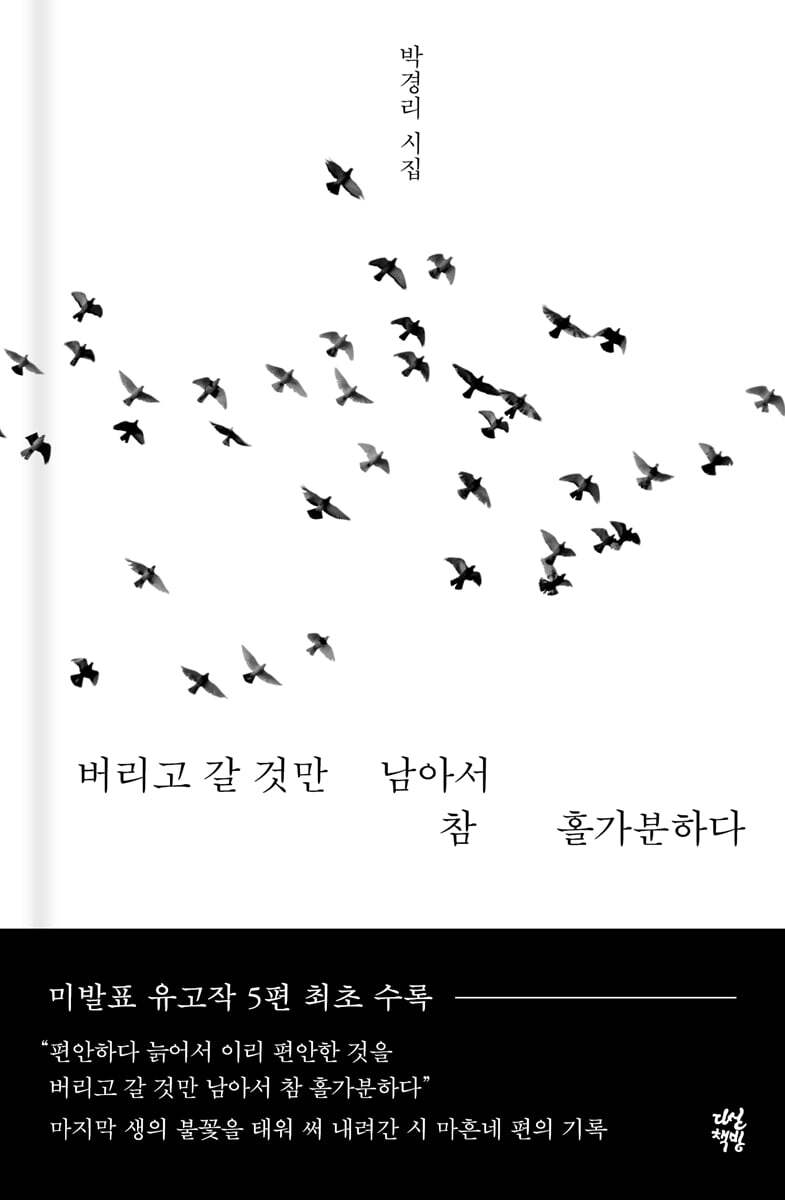
It's so liberating to have only the things left to throw away.
 |
Description
Book Introduction
“If there had been no pain in life, I would not have been able to embrace literature.”
Another masterpiece left in Korean literary history by Park Kyung-ni, author of "Land"
The epic novel "Land" vividly depicts the lives of the Korean people in a turbulent era spanning from the late Joseon Dynasty to the Japanese colonial period.
The works of Park Kyung-ni, the author who left behind an unparalleled masterpiece in the history of Korean literature, are being newly published by Dasan Books.
This work, reborn with editing that faithfully preserves the original text and a timeless, simple design, is one of the five poetry collections left behind by Park Kyung-ni, titled "It's So Carefree That Only What's Left to Throw Away".
In “I Feel So Free, Only What I Need to Throw Away Is Left Behind,” Park Kyung-ni candidly reveals the journey of her life.
To understand the 'person' Park Kyung-ni, hidden behind her numerous works, this is a must-read work. We hope you will encounter the essence of Park Kyung-ni's literature through this one poetry collection.
Another masterpiece left in Korean literary history by Park Kyung-ni, author of "Land"
The epic novel "Land" vividly depicts the lives of the Korean people in a turbulent era spanning from the late Joseon Dynasty to the Japanese colonial period.
The works of Park Kyung-ni, the author who left behind an unparalleled masterpiece in the history of Korean literature, are being newly published by Dasan Books.
This work, reborn with editing that faithfully preserves the original text and a timeless, simple design, is one of the five poetry collections left behind by Park Kyung-ni, titled "It's So Carefree That Only What's Left to Throw Away".
In “I Feel So Free, Only What I Need to Throw Away Is Left Behind,” Park Kyung-ni candidly reveals the journey of her life.
To understand the 'person' Park Kyung-ni, hidden behind her numerous works, this is a must-read work. We hope you will encounter the essence of Park Kyung-ni's literature through this one poetry collection.
- You can preview some of the book's contents.
Preview
index
Part 1: That Old House
Living
That old house
My birth
travel
sea mussel
Sewing
nature
A man who is good at his job
Artists of the Mountain Village Studio
You in the universe
night
life
Part 2 Mother
Mother's appearance
mother
Mother's Way of Life
maternal grandmother
paternal grandmother
raconteur
Part 3 Fall
A person's character
wind
rural women
mother cow
Himalayan mules
midnight
autumn
Permanent immortality
fog
secret
one
remorse
Part 4: Magpie Theory
Magpie theory
This year's winter in Hoechon Valley
rumor
contradiction
mind
assurance
A screen that looks like reality, a screen that looks like reality
nuclear bomb
soul
Part 5: Unpublished Posthumous Works
Parents' marriage
life
Unknown title (working title: Think of the Dying Salmon)
Unknown title (tentative title: Let's Stop)
Unknown title (tentative title: Staying Time)
Living
That old house
My birth
travel
sea mussel
Sewing
nature
A man who is good at his job
Artists of the Mountain Village Studio
You in the universe
night
life
Part 2 Mother
Mother's appearance
mother
Mother's Way of Life
maternal grandmother
paternal grandmother
raconteur
Part 3 Fall
A person's character
wind
rural women
mother cow
Himalayan mules
midnight
autumn
Permanent immortality
fog
secret
one
remorse
Part 4: Magpie Theory
Magpie theory
This year's winter in Hoechon Valley
rumor
contradiction
mind
assurance
A screen that looks like reality, a screen that looks like reality
nuclear bomb
soul
Part 5: Unpublished Posthumous Works
Parents' marriage
life
Unknown title (working title: Think of the Dying Salmon)
Unknown title (tentative title: Let's Stop)
Unknown title (tentative title: Staying Time)
Detailed image
.jpg)
Into the book
Now my life is almost over
The elasticity of emotions also becomes loose
Love and hate are all indifferent
It's hard to say that I have a lot
I feel relieved because I have neither debt nor debt.
I can bear loneliness because I have a history of it.
---From "Nature"
When I wake up from my dream
Oh, my mother passed away.
How urgent that fact is
It felt like my flesh was being torn apart
My regret for being so unfilial
As a punishment for unfilial conduct
Don't let me go like this
Makes me dream
---From "Mother"
I am in all seasons
I feel sick because I can't speak.
I'm not saying I'm keeping a secret.
But what was desperately needed was not put into words.
What is desperately needed is
What on earth could it have been?
---From "Secret"
He must be crying because he received life too.
I cry when I call my partner
I'm crying and asking how the kids are doing
I am sick and in pain, crying
I'm crying because I'm hungry
I cry because of the premonition of death and the unfulfilled sorrow.
They must all be crying because they have souls.
He must be in his right mind because he's crying.
The elasticity of emotions also becomes loose
Love and hate are all indifferent
It's hard to say that I have a lot
I feel relieved because I have neither debt nor debt.
I can bear loneliness because I have a history of it.
---From "Nature"
When I wake up from my dream
Oh, my mother passed away.
How urgent that fact is
It felt like my flesh was being torn apart
My regret for being so unfilial
As a punishment for unfilial conduct
Don't let me go like this
Makes me dream
---From "Mother"
I am in all seasons
I feel sick because I can't speak.
I'm not saying I'm keeping a secret.
But what was desperately needed was not put into words.
What is desperately needed is
What on earth could it have been?
---From "Secret"
He must be crying because he received life too.
I cry when I call my partner
I'm crying and asking how the kids are doing
I am sick and in pain, crying
I'm crying because I'm hungry
I cry because of the premonition of death and the unfulfilled sorrow.
They must all be crying because they have souls.
He must be in his right mind because he's crying.
---From "Soul"
Publisher's Review
“If my life had been smooth, I wouldn’t be writing.
“Life comes before literature.”
It captures both the elegance of the classics and the sensibility of the new era.
Special edition commemorating the 16th anniversary of Park Kyung-ni's death
Park Kyung-ni, a master who debuted in 1955 with the short story "Calculation" and left a huge mark on the history of Korean literature with the epic novel "Land" written over 26 years.
To mark the 16th anniversary of her passing, Dasan Books is publishing a new collection of Park Kyung-ni's works.
This is a grand project that will sequentially publish Park Kyung-ni's novels, essays, and poetry collections, including "Land," which is considered a legacy of Korean literature. It is a meaningful work that fully captures the author's literary world without omission or distortion.
This project brings together Park Kyung-ni's vast works, which penetrate the core of Korean society and literature, and newly discovered, unpublished works will also be published after a meticulous editing process.
Park Kyung-ni's works, which were considered classics long ago, have not had the opportunity to be read anew.
This special edition, published this time, goes beyond preserving the original text's expressions and correcting previous errors, and presents a book with a completely different atmosphere from existing editions by imbuing it with a new sense of the times.
For readers who have previously read Park Kyung-ni's work, we have carefully composed it so that it can offer a fresh experience that breaks the mold, and for readers who are encountering her work for the first time, it can offer a taste of the dignity and excellence of a classic.
The cover design, which cleanly sheds the previous dullness while still maintaining the unique flavor of each work, makes it suitable for both reading and collecting.
We hope that you will experience the essence of Park Kyung-ni's literature, a name that will remain forever in the history of Korean literature, once again through Dasan Books' project.
“Perhaps it was because I never lost hope,
“Maybe it’s because I wrote poetry in secret.”
Park Kyung-ni burns the last flame of her life
Forty-four records written down
Park Kyung-ni, who left behind major works such as the masterpiece “Land,” “The Daughters of Kim Pharmacy,” and “Pasi,” is very familiar to us as a novelist, but she also had a love for poetry, leaving behind nearly 200 poems during her lifetime.
In fact, Park Kyung-ni debuted in 1955 with the short story "Calculation" upon the recommendation of Kim Dong-ni, but her first published work was "Sea and Sky" which was published in the 9th issue of "Cheonil," a newsletter published by the bank's alumni association at the time, in 1954.
Since then, she has published a total of five books, starting with her first poetry collection, “The Ship That Cannot Leave,” followed by “Cats in the City,” “Freedom,” “Our Time,” and “It’s So Carefree That Only What I Have to Throw Away Is Left Behind,” so she is worthy of the title of “Poet Park Kyung-ni.”
Among them, 『It's so liberating that only the things left to throw away remain』 is a poetry collection published after Park Kyung-ni passed away. Park Kyung-ni had prepared 60 poems for this collection while she was alive, but due to poor health, she passed away on May 5, 2008, before she could finish all 60 poems.
In this way, throughout his literary activities, both his first and last writings were poetry, so it is no exaggeration to say that he truly started with poetry and returned to poetry.
This is why, in order to properly understand Park Kyung-ni, we must read her poetry, which is the crystallization of her literary world.
This time, the book 『It's so liberating that only the things left to throw away remain』 published by Dasan Bookstore contains 39 poems written by Park Kyung-ni as she burned the last flame of her life, as well as previously unpublished works that were discovered and have not been known to the world, for a total of 44 poems.
The newly released poems consist of a total of five, including three untitled poems, including “Parents’ Marriage,” “Life,” and others. The untitled poems were given working titles by Kim Se-hee, the author’s grandson and chairman of the Toji Cultural Foundation, as she reflected on her grandmother’s life and world of works.
As the preface states, “As time passes, memories and recollections fade, but the traces of life are not erased,” the posthumous poetry collection that fully captures the last vivid traces of Park Kyung-ni’s life is now handed over to the readers.
“They must all be crying because they have a soul.
“He must be in his right mind because he’s crying.”
The life of Park Kyung-ni
The song of life that never goes out
In Park Kyung-ni's last poetry collection, "It's so liberating because only the things left to throw away remain," traces of the life he looked back on remain intact.
The poetry written by Park Kyung-ni not only contains the masterpiece "Land" that depicts the grand history of the nation, but also contains simple confessions that are rarely seen in novels, helping us to remove the veil surrounding the name of the master "Park Kyung-ni" and approach deeply into the inner self of the pure and simple "person Park Geum-i."
In particular, "The House of Old Days," which contains a phrase that takes its title from a posthumous collection of poems, depicts a past filled with loneliness and anxiety that Park Kyung-ni recalls as an old man, and the word "carefree" that she sings in the final days of her life runs through Park Kyung-ni's entire life.
In those years, in that old house / The only thing that protected me / was silence / That's how it was / Outside the front door / Always / Beasts growled / There were wolves / There were foxes / There were magpies, vipers, and hyenas / The harsh years have passed / Ah, it's comfortable / In old age, this comfort / Only things to throw away remain, so it's so carefree _ From "That Old House"
A similar imagery can be seen in “Living,” the opening poem of the collection of poems.
This poem, which sings of the short beauty of youth that one realizes only too late after becoming an old man and suffering from various illnesses, resonates deeply not only with middle-aged and older people who are passing the summer of their lives and entering fall and winter, but also with young people who are in the midst of their youth.
Years of bondage and poverty / Even though I shed so many tears / Youth was so short and beautiful / Looking back with calm eyes / Youth was so short and beautiful / Why didn't I see it in my younger days? _ From "Living"
The story, which began with Park Kyung-ni herself, reaches the second part and traces back the history of her family, including her mother, maternal grandmother, and paternal grandmother.
In particular, Park Kyung-ni devoted many poems, including “How Mothers Live,” to stories about their mothers. It seems that the upright attitude shown by her mother in the midst of complex history and the chaotic situation in which an individual’s fate was upended remained in her memory for a long time.
In the fourth part, “The Magpie Theory,” you can get a glimpse of the philosophy of life and death through “Conviction” and “A Screen Like Reality, a Screen Like Reality.”
"It's so liberating that only the things left to throw away remain," is not only Park Kyung-ni's own story, but also the story of a family swept up in history and a painful song of the Korean people who grew old with the passage of time.
Therefore, reading this collection of poems is also an act of tracing the flame of our lives that never goes out as time passes, along with Park Kyung-ni the person and Park Kyung-ni the poet.
“Life comes before literature.”
It captures both the elegance of the classics and the sensibility of the new era.
Special edition commemorating the 16th anniversary of Park Kyung-ni's death
Park Kyung-ni, a master who debuted in 1955 with the short story "Calculation" and left a huge mark on the history of Korean literature with the epic novel "Land" written over 26 years.
To mark the 16th anniversary of her passing, Dasan Books is publishing a new collection of Park Kyung-ni's works.
This is a grand project that will sequentially publish Park Kyung-ni's novels, essays, and poetry collections, including "Land," which is considered a legacy of Korean literature. It is a meaningful work that fully captures the author's literary world without omission or distortion.
This project brings together Park Kyung-ni's vast works, which penetrate the core of Korean society and literature, and newly discovered, unpublished works will also be published after a meticulous editing process.
Park Kyung-ni's works, which were considered classics long ago, have not had the opportunity to be read anew.
This special edition, published this time, goes beyond preserving the original text's expressions and correcting previous errors, and presents a book with a completely different atmosphere from existing editions by imbuing it with a new sense of the times.
For readers who have previously read Park Kyung-ni's work, we have carefully composed it so that it can offer a fresh experience that breaks the mold, and for readers who are encountering her work for the first time, it can offer a taste of the dignity and excellence of a classic.
The cover design, which cleanly sheds the previous dullness while still maintaining the unique flavor of each work, makes it suitable for both reading and collecting.
We hope that you will experience the essence of Park Kyung-ni's literature, a name that will remain forever in the history of Korean literature, once again through Dasan Books' project.
“Perhaps it was because I never lost hope,
“Maybe it’s because I wrote poetry in secret.”
Park Kyung-ni burns the last flame of her life
Forty-four records written down
Park Kyung-ni, who left behind major works such as the masterpiece “Land,” “The Daughters of Kim Pharmacy,” and “Pasi,” is very familiar to us as a novelist, but she also had a love for poetry, leaving behind nearly 200 poems during her lifetime.
In fact, Park Kyung-ni debuted in 1955 with the short story "Calculation" upon the recommendation of Kim Dong-ni, but her first published work was "Sea and Sky" which was published in the 9th issue of "Cheonil," a newsletter published by the bank's alumni association at the time, in 1954.
Since then, she has published a total of five books, starting with her first poetry collection, “The Ship That Cannot Leave,” followed by “Cats in the City,” “Freedom,” “Our Time,” and “It’s So Carefree That Only What I Have to Throw Away Is Left Behind,” so she is worthy of the title of “Poet Park Kyung-ni.”
Among them, 『It's so liberating that only the things left to throw away remain』 is a poetry collection published after Park Kyung-ni passed away. Park Kyung-ni had prepared 60 poems for this collection while she was alive, but due to poor health, she passed away on May 5, 2008, before she could finish all 60 poems.
In this way, throughout his literary activities, both his first and last writings were poetry, so it is no exaggeration to say that he truly started with poetry and returned to poetry.
This is why, in order to properly understand Park Kyung-ni, we must read her poetry, which is the crystallization of her literary world.
This time, the book 『It's so liberating that only the things left to throw away remain』 published by Dasan Bookstore contains 39 poems written by Park Kyung-ni as she burned the last flame of her life, as well as previously unpublished works that were discovered and have not been known to the world, for a total of 44 poems.
The newly released poems consist of a total of five, including three untitled poems, including “Parents’ Marriage,” “Life,” and others. The untitled poems were given working titles by Kim Se-hee, the author’s grandson and chairman of the Toji Cultural Foundation, as she reflected on her grandmother’s life and world of works.
As the preface states, “As time passes, memories and recollections fade, but the traces of life are not erased,” the posthumous poetry collection that fully captures the last vivid traces of Park Kyung-ni’s life is now handed over to the readers.
“They must all be crying because they have a soul.
“He must be in his right mind because he’s crying.”
The life of Park Kyung-ni
The song of life that never goes out
In Park Kyung-ni's last poetry collection, "It's so liberating because only the things left to throw away remain," traces of the life he looked back on remain intact.
The poetry written by Park Kyung-ni not only contains the masterpiece "Land" that depicts the grand history of the nation, but also contains simple confessions that are rarely seen in novels, helping us to remove the veil surrounding the name of the master "Park Kyung-ni" and approach deeply into the inner self of the pure and simple "person Park Geum-i."
In particular, "The House of Old Days," which contains a phrase that takes its title from a posthumous collection of poems, depicts a past filled with loneliness and anxiety that Park Kyung-ni recalls as an old man, and the word "carefree" that she sings in the final days of her life runs through Park Kyung-ni's entire life.
In those years, in that old house / The only thing that protected me / was silence / That's how it was / Outside the front door / Always / Beasts growled / There were wolves / There were foxes / There were magpies, vipers, and hyenas / The harsh years have passed / Ah, it's comfortable / In old age, this comfort / Only things to throw away remain, so it's so carefree _ From "That Old House"
A similar imagery can be seen in “Living,” the opening poem of the collection of poems.
This poem, which sings of the short beauty of youth that one realizes only too late after becoming an old man and suffering from various illnesses, resonates deeply not only with middle-aged and older people who are passing the summer of their lives and entering fall and winter, but also with young people who are in the midst of their youth.
Years of bondage and poverty / Even though I shed so many tears / Youth was so short and beautiful / Looking back with calm eyes / Youth was so short and beautiful / Why didn't I see it in my younger days? _ From "Living"
The story, which began with Park Kyung-ni herself, reaches the second part and traces back the history of her family, including her mother, maternal grandmother, and paternal grandmother.
In particular, Park Kyung-ni devoted many poems, including “How Mothers Live,” to stories about their mothers. It seems that the upright attitude shown by her mother in the midst of complex history and the chaotic situation in which an individual’s fate was upended remained in her memory for a long time.
In the fourth part, “The Magpie Theory,” you can get a glimpse of the philosophy of life and death through “Conviction” and “A Screen Like Reality, a Screen Like Reality.”
"It's so liberating that only the things left to throw away remain," is not only Park Kyung-ni's own story, but also the story of a family swept up in history and a painful song of the Korean people who grew old with the passage of time.
Therefore, reading this collection of poems is also an act of tracing the flame of our lives that never goes out as time passes, along with Park Kyung-ni the person and Park Kyung-ni the poet.
GOODS SPECIFICS
- Date of issue: September 3, 2024
- Format: Hardcover book binding method guide
- Page count, weight, size: 140 pages | 276g | 140*210*12mm
- ISBN13: 9791130655956
- ISBN10: 1130655954
You may also like
카테고리
korean


korean

![GQ KOREA Mark (Monthly): December [2025]](http://librairie.coreenne.fr/cdn/shop/files/8ef265dbbfbf186523ed75ba7319009d.jpg?v=1765340328&width=3840)


