

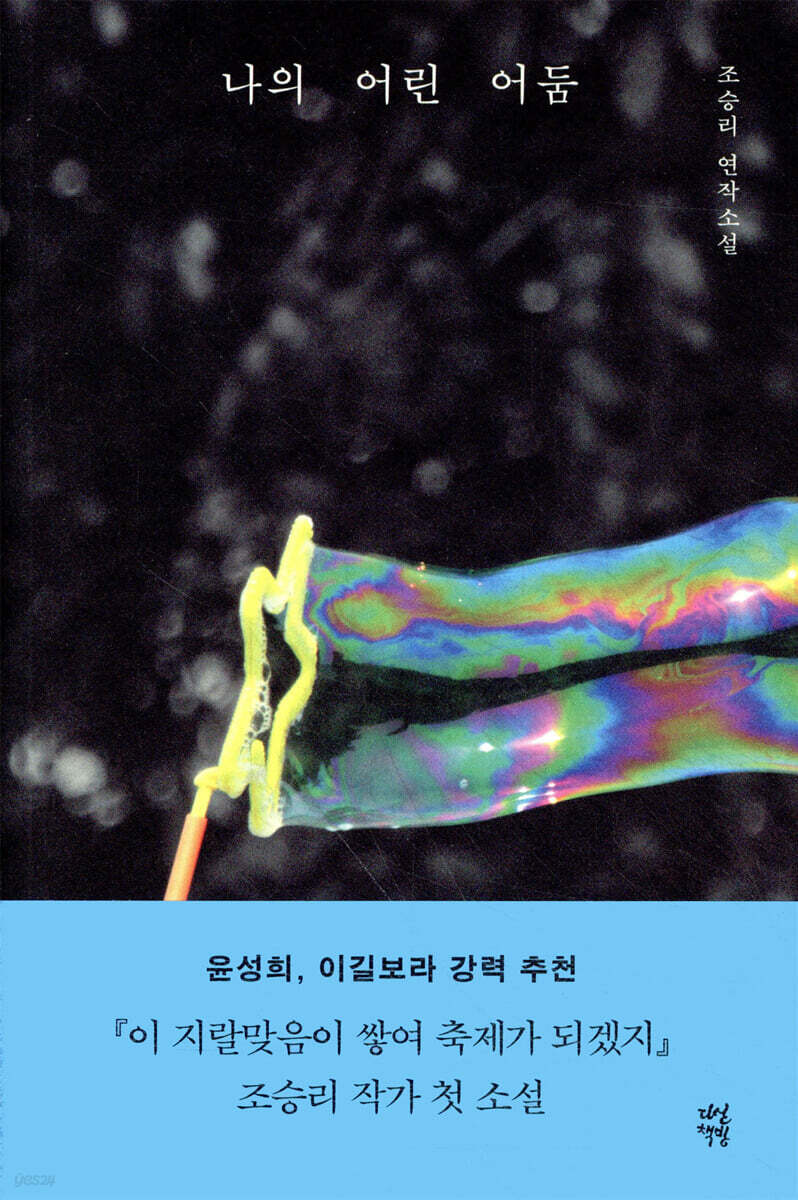
My little darkness
 |
Description
Book Introduction
The passionate struggle of one who, despite bearing loss, sees the world clearly.
The debut novel by the popular author Seungri Jo has been published!
Jo Seung-ri, a visually impaired essayist who was one of the hottest names in 2024 with the line, "This nonsense will pile up to become a festival," has published her first collection of short stories, "My Little Darkness."
This book, consisting of four novels written based on the experiences of adolescence on the verge of blindness and an essay detailing the creative process, announces the birth of a new novelist who masterfully captures the complex terrain of a period filled with soft and fragile emotions and a self-consciousness that becomes increasingly solid.
All the speakers are losing their eyesight, which causes cracks in love, career path, and self-esteem.
It also depicts violence experienced by visually impaired people at home and scenes from special schools.
Above all, it contains the sense that one must live, the will to live like riding a bicycle in the rain even when the monsoon season falls.
These novels, which originate from real experiences but are refined and fragmented into fiction, cross the line between fiction and non-fiction.
All characters are like Jo Seung-ri, but none of them are Jo Seung-ri himself.
“My Little Darkness” thus expands into the story of “Jo Seung-ri” and leads to the autobiography of each reader.
This darkness, which illuminates 'how to survive despite everything' rather than 'what has been lost', holds a quiet yet warm light.
The debut novel by the popular author Seungri Jo has been published!
Jo Seung-ri, a visually impaired essayist who was one of the hottest names in 2024 with the line, "This nonsense will pile up to become a festival," has published her first collection of short stories, "My Little Darkness."
This book, consisting of four novels written based on the experiences of adolescence on the verge of blindness and an essay detailing the creative process, announces the birth of a new novelist who masterfully captures the complex terrain of a period filled with soft and fragile emotions and a self-consciousness that becomes increasingly solid.
All the speakers are losing their eyesight, which causes cracks in love, career path, and self-esteem.
It also depicts violence experienced by visually impaired people at home and scenes from special schools.
Above all, it contains the sense that one must live, the will to live like riding a bicycle in the rain even when the monsoon season falls.
These novels, which originate from real experiences but are refined and fragmented into fiction, cross the line between fiction and non-fiction.
All characters are like Jo Seung-ri, but none of them are Jo Seung-ri himself.
“My Little Darkness” thus expands into the story of “Jo Seung-ri” and leads to the autobiography of each reader.
This darkness, which illuminates 'how to survive despite everything' rather than 'what has been lost', holds a quiet yet warm light.
- You can preview some of the book's contents.
Preview
index
A beginning without you
The black bird inside me
Why should I wear a bra?
My little darkness
Became a Novelist _ Essay
Recommendations _Yoon Seong-hee, Lee Gil-bo-ra
The black bird inside me
Why should I wear a bra?
My little darkness
Became a Novelist _ Essay
Recommendations _Yoon Seong-hee, Lee Gil-bo-ra
Detailed image

Into the book
Every time I hear about the future you draw, I feel unbearably sad.
Will I really be there in that future?
Can you accept me with complete loss of sight?
Can a blind person be greedy for you?
So I wanted you to get more ruined.
If you were as broken as I am, I could proudly stand by your side.
--- p.27
I wanted to discuss my future with you.
But when I actually met your face, I would often put it off, saying, "Let's do it tomorrow," or "I'll tell you the day after tomorrow."
I, the clever one, knew.
That this relationship would be broken by my confession.
You can never handle my dark future.
--- p.28
I closed my eyes.
Pitch-black darkness swallowed me.
Years later, I had to live my whole life in this darkness.
I didn't want to leave.
How nice it would be if everything were like this now.
If you open your eyes and find that your vision has miraculously been restored.
If only the eternal darkness that was to come upon me had never happened.
If I could hold on to everything I have to lose.
--- p.30
If you get used to misfortune, it becomes part of your daily life.
There were some inconveniences, but as long as it wasn't completely dark, I had no problems with my daily life.
--- p.37
“Oh, you knew I was blind and you were trying to use me.
Did I look that easy? Even if I were completely blind, I wouldn't fall for a bitch like you.
“Where are you talking?”
--- p.80
“My baby… As long as I live, I am your eyes.”
My mother's voice pouring over my head was hot and firm.
--- p.84
“Our manager must study. Let’s make sure the elderly people don’t repeat their pay. They’ve worked hard, so let’s give them some nutritional supplements.”
I closed my eyes tightly like a gangster boss and cracked my knuckles while receiving the old man's massage, making a bone-crunching sound.
--- p.94
The children at the school for the blind walked with their hands on each other's shoulders, led by Sangcheol, who has low vision.
Looking down at the shadow, neither the crippled body nor the shabby poverty were visible.
They were all the same shadow.
--- p.112
“Boss, why do I have to wear a bra?”
A question that would never end awaited me with a strange smile.
--- p.130
The man repeatedly urged me to take my parents to the hospital.
The way the man looked at me at that time resembled the way my mother looked at the messy field after a typhoon.
--- p.162
I sat down in the furrow of the field and listened to my mother's cries, then quietly turned away.
When my mother returned from the field, both I and my mother, who was waiting for her at home, had reddened eyes.
We pretended to joke and forced laughter.
My mother and I pretended to be innocent for each other.
--- p.168
For me, being diagnosed with visual impairment was a variable that completely distorted my once certain destiny.
What I felt most depressed about at that time was not the fear of living a life of darkness, but the fact that I had strayed from the set path.
--- p.179
Those who have become accustomed to discrimination and live with persecution as their fate, my neighbors who are becoming mentally ill from neglect and indifference, my disabled colleagues who are unaware of the resentment and injustice they face.
People's lives came into my eyes.
Their sorrowful feelings flowed into me.
Before I knew it, I started writing their story.
I will remember and record your history! Thus, I will represent your lives as meaningful, not fleeting and vain.
I now have a reason to continue writing novels.
With dark eyes, I pledge to bring the stories of the darkest places in the world to the bright world.
Will I really be there in that future?
Can you accept me with complete loss of sight?
Can a blind person be greedy for you?
So I wanted you to get more ruined.
If you were as broken as I am, I could proudly stand by your side.
--- p.27
I wanted to discuss my future with you.
But when I actually met your face, I would often put it off, saying, "Let's do it tomorrow," or "I'll tell you the day after tomorrow."
I, the clever one, knew.
That this relationship would be broken by my confession.
You can never handle my dark future.
--- p.28
I closed my eyes.
Pitch-black darkness swallowed me.
Years later, I had to live my whole life in this darkness.
I didn't want to leave.
How nice it would be if everything were like this now.
If you open your eyes and find that your vision has miraculously been restored.
If only the eternal darkness that was to come upon me had never happened.
If I could hold on to everything I have to lose.
--- p.30
If you get used to misfortune, it becomes part of your daily life.
There were some inconveniences, but as long as it wasn't completely dark, I had no problems with my daily life.
--- p.37
“Oh, you knew I was blind and you were trying to use me.
Did I look that easy? Even if I were completely blind, I wouldn't fall for a bitch like you.
“Where are you talking?”
--- p.80
“My baby… As long as I live, I am your eyes.”
My mother's voice pouring over my head was hot and firm.
--- p.84
“Our manager must study. Let’s make sure the elderly people don’t repeat their pay. They’ve worked hard, so let’s give them some nutritional supplements.”
I closed my eyes tightly like a gangster boss and cracked my knuckles while receiving the old man's massage, making a bone-crunching sound.
--- p.94
The children at the school for the blind walked with their hands on each other's shoulders, led by Sangcheol, who has low vision.
Looking down at the shadow, neither the crippled body nor the shabby poverty were visible.
They were all the same shadow.
--- p.112
“Boss, why do I have to wear a bra?”
A question that would never end awaited me with a strange smile.
--- p.130
The man repeatedly urged me to take my parents to the hospital.
The way the man looked at me at that time resembled the way my mother looked at the messy field after a typhoon.
--- p.162
I sat down in the furrow of the field and listened to my mother's cries, then quietly turned away.
When my mother returned from the field, both I and my mother, who was waiting for her at home, had reddened eyes.
We pretended to joke and forced laughter.
My mother and I pretended to be innocent for each other.
--- p.168
For me, being diagnosed with visual impairment was a variable that completely distorted my once certain destiny.
What I felt most depressed about at that time was not the fear of living a life of darkness, but the fact that I had strayed from the set path.
--- p.179
Those who have become accustomed to discrimination and live with persecution as their fate, my neighbors who are becoming mentally ill from neglect and indifference, my disabled colleagues who are unaware of the resentment and injustice they face.
People's lives came into my eyes.
Their sorrowful feelings flowed into me.
Before I knew it, I started writing their story.
I will remember and record your history! Thus, I will represent your lives as meaningful, not fleeting and vain.
I now have a reason to continue writing novels.
With dark eyes, I pledge to bring the stories of the darkest places in the world to the bright world.
--- p.196
Publisher's Review
“If you eat pumpkin pancakes and make silly jokes,
“It seemed as if the darkness would remain ‘young’ forever.”_Yoon Seong-hee
“A girl who acts like a boss and a newlywed, and who feels the warmest in her mother’s arms
I'm really curious to see what happens next for the 10-year-old Jo Seung-ri." - Lee Gil-bo-ra
● From visually impaired essayist to novelist,
The birth of a world called Jo Seung-ri
“I tell the story of the darkest place with dark eyes
I promise to bring it to a bright world.”
Author Seungri Jo, who received attention as the '2024 Rookie of the Year' for her humorous yet poignant portrayal of disability and daily life in 'This Nonsense Will Accumulate to Become a Festival', has returned with her first short story collection, 'My Little Darkness'.
It is even more meaningful because it is based on the “experience of moving from the visible world to the invisible world,” which was intentionally left blank in the previous essay.
Beginning from the perspective of a teenager facing blindness, this collection of short stories explores the unique experience of visual impairment, unfolding through the lens of adolescence on the brink of independence and survival, while simultaneously transcending it to reveal universality and literary depth.
The author, who has maintained his own spark even while going through the 'young darkness', begins a new conversation with readers by looking back at life through the medium of novels.
"My Little Darkness" consists of four short stories and one essay.
The series of novels unfolds “moments that Jo Seung-ri might have experienced,” such as the first love of a middle school student facing blindness, dormitory life at a special school, conflict with his parents, and frustration in the face of a harsh society.
These stories are literary self-portraits created “at the moment when the external world surrounding the writer and the internal world crouching within the writer merge.”
● Nevertheless, we must live, and the reality is that we have no choice but to live.
The beautiful intersection of growth and loss
“Stop crying and let’s go over to my house and cut up some watermelon and eat it.
“I’ve drained all the moisture out, so I need to refill it to feel better.”
The novels in the series "My Little Darkness" depict the way characters embrace life when faced with a premonition of loss.
The speaker of "The Beginning Without You" falls in love with his senior, "You," before being judged for his real name, but that feeling is ultimately cut off by "You"'s avoidance of an unseen future.
In the confession where he mutters, “If you were as broken as I am, I would be able to stand by your side proudly,” one can feel the twist and despair of realizing that he is a ‘broken being’ as he loses his sight.
Loss does not remain solely at the level of sensation.
In "The Black Bird Inside Me," a father abandoning his child, the rejection of his career path and independence, and the frustrations of living in an unfamiliar city are all complexly revealed.
In a moment where he feels abandoned by both his family and society, the speaker feels “miserable, as if he has been kicked out.”
Blindness is not just a loss of senses, but a total experience that includes the rupture of relationships and an uncertain future.
However, despite all the losses, Jo Seung-ri's characters choose to 'live on'.
The will of the characters to turn the present into a new starting point, such as deciding to attend a special school or breaking up an abusive relationship and leaving Seoul, stands out.
The final scene of the title piece, “My Little Darkness,” sensitively captures the dynamic currents within the young character.
Even after blindness strikes unexpectedly like a downpour, the protagonist Seong-hee has a premonition that she will have to live like riding a bicycle in the rain.
Loss is not the end, but “the beginning of a new rainy season, one we have never experienced before.”
The characters in this collection are all in the midst of their growing up years.
Build yourself through wavering emotions and crossroads of choice.
The speaker of "Why Should I Be a Bra?" has a strong sense of responsibility to the point of being called "head teacher" at a special school, but feels ambivalent toward Buhee, the older sister he takes care of.
While experiencing a conflict with local elementary school students over a trampoline, he feels the gap between disabled and non-disabled people, but he also comes to the conclusion that “if you just look at the shadow, you can’t see the disability or the shabby poverty; they are all the same shadows.”
In this way, “My Little Darkness” is a story about growing through loss and rebuilding one’s own world.
This book, which shows how to love and how to reconnect with the world, ultimately poses questions to the reader.
What kind of loss am I enduring now?
How is the present being created within it?
Fiction extracted from life, life that becomes fiction
A story that becomes our biography
“Jisuk’s face was filled with fear, despair, and despair.
“Maybe my face looks like that to someone.”
Although the narrators of the serial novels all feel like 'Jo Seung-ri', they are not completely identical characters.
While they share common emotions and conditions, such as the impending loss of identity, rifts in relationships, and a sense of distance from society, they harbor emotions and desires from different times.
Rather than integrating the autobiographical narrative into a single, complete self, this is an attempt to reveal the truth by presenting multiple, fragmented, and even contradictory selves in parallel.
The works are fiction, essay-like, and sometimes vivid like reportage.
Although it is a novel with a fictional setting, the characters come across as having a real-life texture.
Because all of it comes from the times and feelings the writer has gone through.
The question of what separates novels from essays, autobiographies from creative writing, is rendered powerless in the face of this book.
The author bypasses these classifications and observes and remembers life within the space of the novel.
So the reader cannot just say, 'This is Jo Seung-ri's story.'
It is the story of “Jo Seung-ri” and, furthermore, it becomes the autobiography of each of us.
The essay “I Became a Novelist” at the end of the collection of short stories depicts the chronicle of Jo Seung-ri’s attempts to communicate with the world.
The first story was a sketch that began as a curse against the world.
As I went through the school for the disabled and society, I wrote down in a notebook the absurdities that caught my eye.
The author began working as a masseuse at the age of twenty and began writing using a Braille terminal.
After that, I went through a period where I couldn't write anything, and until my heart was completely empty, I poured out all the stories that had been pent up.
If the previous four novels were snapshots of the self from different perspectives, this essay is the author's present, gathering those fragments and responding with a single voice.
This composition allows the reader to experience the narrative boundary where ‘fiction extracted from life’ and ‘life that has become fiction’ meet.
“It seemed as if the darkness would remain ‘young’ forever.”_Yoon Seong-hee
“A girl who acts like a boss and a newlywed, and who feels the warmest in her mother’s arms
I'm really curious to see what happens next for the 10-year-old Jo Seung-ri." - Lee Gil-bo-ra
● From visually impaired essayist to novelist,
The birth of a world called Jo Seung-ri
“I tell the story of the darkest place with dark eyes
I promise to bring it to a bright world.”
Author Seungri Jo, who received attention as the '2024 Rookie of the Year' for her humorous yet poignant portrayal of disability and daily life in 'This Nonsense Will Accumulate to Become a Festival', has returned with her first short story collection, 'My Little Darkness'.
It is even more meaningful because it is based on the “experience of moving from the visible world to the invisible world,” which was intentionally left blank in the previous essay.
Beginning from the perspective of a teenager facing blindness, this collection of short stories explores the unique experience of visual impairment, unfolding through the lens of adolescence on the brink of independence and survival, while simultaneously transcending it to reveal universality and literary depth.
The author, who has maintained his own spark even while going through the 'young darkness', begins a new conversation with readers by looking back at life through the medium of novels.
"My Little Darkness" consists of four short stories and one essay.
The series of novels unfolds “moments that Jo Seung-ri might have experienced,” such as the first love of a middle school student facing blindness, dormitory life at a special school, conflict with his parents, and frustration in the face of a harsh society.
These stories are literary self-portraits created “at the moment when the external world surrounding the writer and the internal world crouching within the writer merge.”
● Nevertheless, we must live, and the reality is that we have no choice but to live.
The beautiful intersection of growth and loss
“Stop crying and let’s go over to my house and cut up some watermelon and eat it.
“I’ve drained all the moisture out, so I need to refill it to feel better.”
The novels in the series "My Little Darkness" depict the way characters embrace life when faced with a premonition of loss.
The speaker of "The Beginning Without You" falls in love with his senior, "You," before being judged for his real name, but that feeling is ultimately cut off by "You"'s avoidance of an unseen future.
In the confession where he mutters, “If you were as broken as I am, I would be able to stand by your side proudly,” one can feel the twist and despair of realizing that he is a ‘broken being’ as he loses his sight.
Loss does not remain solely at the level of sensation.
In "The Black Bird Inside Me," a father abandoning his child, the rejection of his career path and independence, and the frustrations of living in an unfamiliar city are all complexly revealed.
In a moment where he feels abandoned by both his family and society, the speaker feels “miserable, as if he has been kicked out.”
Blindness is not just a loss of senses, but a total experience that includes the rupture of relationships and an uncertain future.
However, despite all the losses, Jo Seung-ri's characters choose to 'live on'.
The will of the characters to turn the present into a new starting point, such as deciding to attend a special school or breaking up an abusive relationship and leaving Seoul, stands out.
The final scene of the title piece, “My Little Darkness,” sensitively captures the dynamic currents within the young character.
Even after blindness strikes unexpectedly like a downpour, the protagonist Seong-hee has a premonition that she will have to live like riding a bicycle in the rain.
Loss is not the end, but “the beginning of a new rainy season, one we have never experienced before.”
The characters in this collection are all in the midst of their growing up years.
Build yourself through wavering emotions and crossroads of choice.
The speaker of "Why Should I Be a Bra?" has a strong sense of responsibility to the point of being called "head teacher" at a special school, but feels ambivalent toward Buhee, the older sister he takes care of.
While experiencing a conflict with local elementary school students over a trampoline, he feels the gap between disabled and non-disabled people, but he also comes to the conclusion that “if you just look at the shadow, you can’t see the disability or the shabby poverty; they are all the same shadows.”
In this way, “My Little Darkness” is a story about growing through loss and rebuilding one’s own world.
This book, which shows how to love and how to reconnect with the world, ultimately poses questions to the reader.
What kind of loss am I enduring now?
How is the present being created within it?
Fiction extracted from life, life that becomes fiction
A story that becomes our biography
“Jisuk’s face was filled with fear, despair, and despair.
“Maybe my face looks like that to someone.”
Although the narrators of the serial novels all feel like 'Jo Seung-ri', they are not completely identical characters.
While they share common emotions and conditions, such as the impending loss of identity, rifts in relationships, and a sense of distance from society, they harbor emotions and desires from different times.
Rather than integrating the autobiographical narrative into a single, complete self, this is an attempt to reveal the truth by presenting multiple, fragmented, and even contradictory selves in parallel.
The works are fiction, essay-like, and sometimes vivid like reportage.
Although it is a novel with a fictional setting, the characters come across as having a real-life texture.
Because all of it comes from the times and feelings the writer has gone through.
The question of what separates novels from essays, autobiographies from creative writing, is rendered powerless in the face of this book.
The author bypasses these classifications and observes and remembers life within the space of the novel.
So the reader cannot just say, 'This is Jo Seung-ri's story.'
It is the story of “Jo Seung-ri” and, furthermore, it becomes the autobiography of each of us.
The essay “I Became a Novelist” at the end of the collection of short stories depicts the chronicle of Jo Seung-ri’s attempts to communicate with the world.
The first story was a sketch that began as a curse against the world.
As I went through the school for the disabled and society, I wrote down in a notebook the absurdities that caught my eye.
The author began working as a masseuse at the age of twenty and began writing using a Braille terminal.
After that, I went through a period where I couldn't write anything, and until my heart was completely empty, I poured out all the stories that had been pent up.
If the previous four novels were snapshots of the self from different perspectives, this essay is the author's present, gathering those fragments and responding with a single voice.
This composition allows the reader to experience the narrative boundary where ‘fiction extracted from life’ and ‘life that has become fiction’ meet.
GOODS SPECIFICS
- Date of issue: June 11, 2025
- Page count, weight, size: 200 pages | 264g | 125*188*20mm
- ISBN13: 9791130666860
- ISBN10: 1130666867
You may also like
카테고리
korean


korean

![GQ KOREA Mark (Monthly): December [2025]](http://librairie.coreenne.fr/cdn/shop/files/8ef265dbbfbf186523ed75ba7319009d.jpg?v=1765340328&width=3840)


