

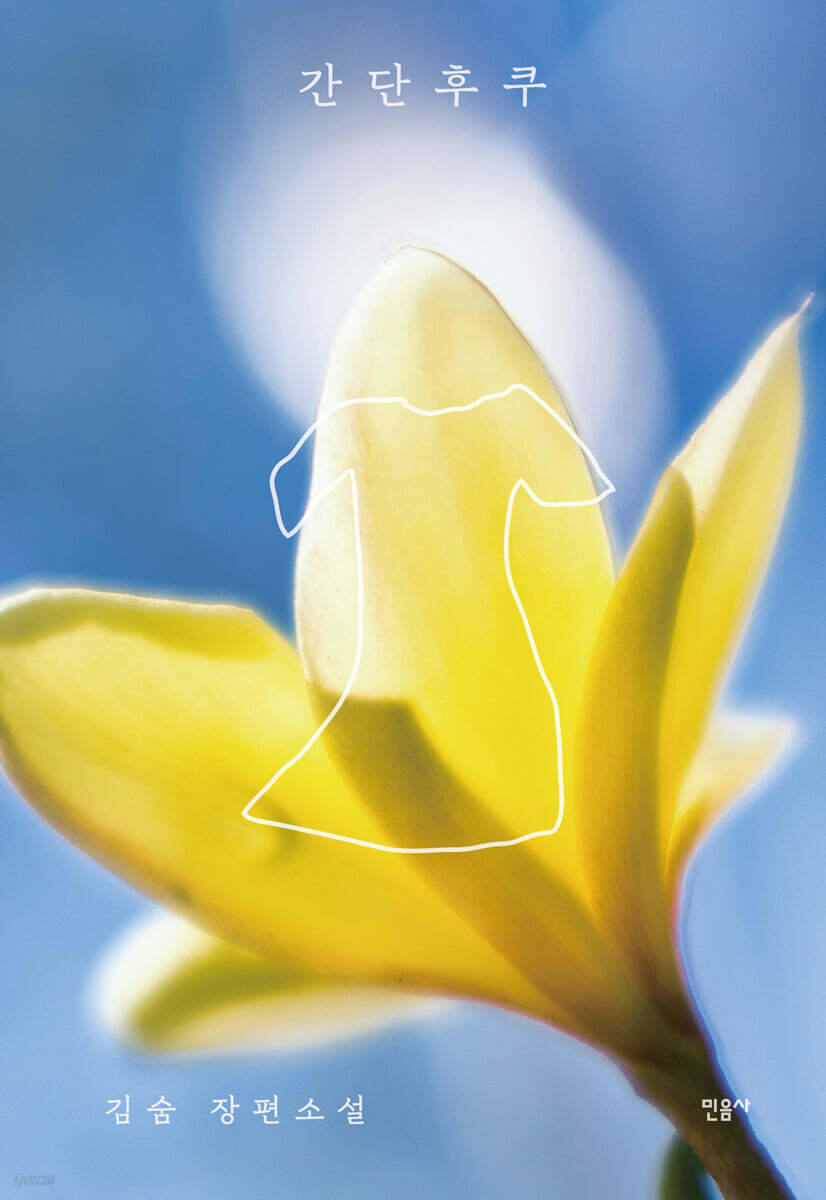
Simple Fuku
 |
Description
Book Introduction
“I put a simple fuku on the body I want to get rid of.
I give sunlight to the body I want to get rid of
“Let the wind blow from the fields.”
Unspeakable pain, unrecorded memories
Translating the silence between the lines into literary language
A narrative of war and violence, mourning and healing, completed by Kim Soom.
Kim Soom's novel, "Kandanfuku," was published by Minumsa.
"Kandanfuku" is a new full-length novel by author Kim Soom that depicts the memories of victims of the Japanese military's "comfort women" that she has listened to and looked into for a long time.
Kim Soom left behind numerous literary works that portrayed major historical events such as the Japanese colonial period, the Korean War, and military dictatorship, as well as the wounds and lives of ordinary people who are currently in the blind spots of our society.
The place that author Kim Soom repeatedly returns to is the side of the victims of the Japanese military's 'comfort women'.
In publishing the novel, Kim Soom said that “only after ten years of ‘tough’ encounters” was she finally able to embody the memories of the Japanese military’s ‘comfort women’ and write a novel.
Beginning with the novel 『One Person』 (2016), which compiled over 300 testimonies through the memory of one survivor, followed by the testimonial novels 『The Sublime Is Looking into Me』 and 『Have Soldiers Ever Wished to Become Angels』 (2018) by Gil Won-ok and Kim Bok-dong, and finally 『Listening Time』 (2021), a novel that looks into the silence beyond testimonies through the eyes of a ‘recorder.’
Kim Soom has been continuously working to record not only the words of the victims of the Japanese military's 'comfort women' but also the pain that could not be expressed in words into the 'common memory' called 'literature.'
At the end of the work that has continued while holding onto words that would otherwise be scattered and looking into unspeakable pain, Kim Soom finally dives deep into the heart of trauma, the source of the wound sealed in dark silence.
This is the scene we encounter in 『Kandanfuku』: the 'body' of a 15-year-old girl held captive in a comfort station in Manchuria during the Japanese colonial period.
As wars continue to rage around the world, with only six victims of the Japanese military's "comfort women" remaining, the scenes of suffering shown in "Kandanfuku" make us reflect on the "memory" and "method of remembering" we promised.
For both nations and individuals, ‘memory’ is a place of struggle.
It is a space where social demands and individual desires collide, and what is important and what is unimportant, what should be forgotten and what should not be forgotten, are constantly rearranged with changing standards over time.
Our memories are formed in the midst of the social atmosphere and grand narratives that sweep us through, in the midst of a life that is constantly intertwined and flowing.
It is in the midst of this that 『Kandanfuku』 asks:
Does the most important truth, 'pain', still remain in the memories we promised?
As time passes and society changes, even in a future when there are no survivors left to testify, will we be able to empathize with this 'pain'?
I give sunlight to the body I want to get rid of
“Let the wind blow from the fields.”
Unspeakable pain, unrecorded memories
Translating the silence between the lines into literary language
A narrative of war and violence, mourning and healing, completed by Kim Soom.
Kim Soom's novel, "Kandanfuku," was published by Minumsa.
"Kandanfuku" is a new full-length novel by author Kim Soom that depicts the memories of victims of the Japanese military's "comfort women" that she has listened to and looked into for a long time.
Kim Soom left behind numerous literary works that portrayed major historical events such as the Japanese colonial period, the Korean War, and military dictatorship, as well as the wounds and lives of ordinary people who are currently in the blind spots of our society.
The place that author Kim Soom repeatedly returns to is the side of the victims of the Japanese military's 'comfort women'.
In publishing the novel, Kim Soom said that “only after ten years of ‘tough’ encounters” was she finally able to embody the memories of the Japanese military’s ‘comfort women’ and write a novel.
Beginning with the novel 『One Person』 (2016), which compiled over 300 testimonies through the memory of one survivor, followed by the testimonial novels 『The Sublime Is Looking into Me』 and 『Have Soldiers Ever Wished to Become Angels』 (2018) by Gil Won-ok and Kim Bok-dong, and finally 『Listening Time』 (2021), a novel that looks into the silence beyond testimonies through the eyes of a ‘recorder.’
Kim Soom has been continuously working to record not only the words of the victims of the Japanese military's 'comfort women' but also the pain that could not be expressed in words into the 'common memory' called 'literature.'
At the end of the work that has continued while holding onto words that would otherwise be scattered and looking into unspeakable pain, Kim Soom finally dives deep into the heart of trauma, the source of the wound sealed in dark silence.
This is the scene we encounter in 『Kandanfuku』: the 'body' of a 15-year-old girl held captive in a comfort station in Manchuria during the Japanese colonial period.
As wars continue to rage around the world, with only six victims of the Japanese military's "comfort women" remaining, the scenes of suffering shown in "Kandanfuku" make us reflect on the "memory" and "method of remembering" we promised.
For both nations and individuals, ‘memory’ is a place of struggle.
It is a space where social demands and individual desires collide, and what is important and what is unimportant, what should be forgotten and what should not be forgotten, are constantly rearranged with changing standards over time.
Our memories are formed in the midst of the social atmosphere and grand narratives that sweep us through, in the midst of a life that is constantly intertwined and flowing.
It is in the midst of this that 『Kandanfuku』 asks:
Does the most important truth, 'pain', still remain in the memories we promised?
As time passes and society changes, even in a future when there are no survivors left to testify, will we be able to empathize with this 'pain'?
- You can preview some of the book's contents.
Preview
index
Simple Fuku 7
Beep 11
Barbed wire fence 18
Horizon 22
Sakku 24
29 tatami mats
Oat porridge 37
Round 43
50 military tickets
Factory 58, where soldiers sleep
Sanitary Inspection 66
Land 80
Yoko 85
Yokone 94
100 Diseases That Make Me Forget
I can't even walk 1 ri without getting sick 105
Manchurian Needle Merchant 111
Body 116
Name 126
Soldier's Voice 130
New Round 135
Joseonpi Mom 140
Seesaw 146
Cuckoo 152
Black Full Moon 156
Blanket 159
Penalty 165
Truck 171
Yellow Satin Dress 184
Closed Mouth 188
193 Things You Can Buy with a Military Voucher
White Bundle 205
Comforting business trip 215
Sumimasen 237
White Bonus 243
Return home 251
Become Nanako Game 254
Bad Words 259
Baenatjeogori 264
Sayonara 269
Open Mouth 274
Atarashi Girl 276
Reply 283
Author's Note 289
Recommendation_Park So-ran (poet) 292
Beep 11
Barbed wire fence 18
Horizon 22
Sakku 24
29 tatami mats
Oat porridge 37
Round 43
50 military tickets
Factory 58, where soldiers sleep
Sanitary Inspection 66
Land 80
Yoko 85
Yokone 94
100 Diseases That Make Me Forget
I can't even walk 1 ri without getting sick 105
Manchurian Needle Merchant 111
Body 116
Name 126
Soldier's Voice 130
New Round 135
Joseonpi Mom 140
Seesaw 146
Cuckoo 152
Black Full Moon 156
Blanket 159
Penalty 165
Truck 171
Yellow Satin Dress 184
Closed Mouth 188
193 Things You Can Buy with a Military Voucher
White Bundle 205
Comforting business trip 215
Sumimasen 237
White Bonus 243
Return home 251
Become Nanako Game 254
Bad Words 259
Baenatjeogori 264
Sayonara 269
Open Mouth 274
Atarashi Girl 276
Reply 283
Author's Note 289
Recommendation_Park So-ran (poet) 292
Into the book
Yoshi wears the same simple fuku that I wear and becomes the same simple fuku.
Naomi also wears the same simple fuku that I wear and becomes the same simple fuku.
Other girls too.
And he sleeps with the soldiers.
While I sleep with the soldiers, my body is twisted, turned over, pressed, broken, and split inside the simple fukku.
--- pp.9-10 From "Kandanfuku"
I often lie down, holding the bundle to my chest as if it were a newborn baby.
Then I feel like I'm just walking towards somewhere, hanging on to a bundle.
I unpack and repack my bundle.
As I unpack my untied bundle and tie it tightly so that it doesn't come undone, it seems like I'm getting ready to leave this place soon.
--- pp.32-33 From "A Tatami Mat"
A piece of the unarmed weapon we left behind floats in the eastern sky.
Gandanfuku, hanging from the barbed wire fence with his arms outstretched like a scarecrow, mutters indifferently.
'Soldiers are coming from the north.'
Next to him, Gandanfuku says, waving his arms absentmindedly.
'Yesterday, soldiers came from the North.'
Next to him, Gandanfuku puffs out his throat and mutters.
'To the soldiers coming from the North, you just have to say, 'Catch me and kill me.''
(……)
Soldiers come from both the west and the east.
Soldiers come from everywhere.
--- pp.41-42 From "Oat Porridge"
It's not me, it's a nurse, lying awkwardly on a wooden chair with her legs spread open, wearing a simple fuku.
It's me, standing next to a wooden chair, wearing a nurse's uniform, a boater's hat, snow white shoes, and holding a tin duckbill in my hand.
I leave the nurse sitting on the wooden chair and walk out of the barracks with a clanking sound.
I leave the girls lined up in front of the barracks behind and walk through the field, past the watchtower.
Knock knock knock knock knock.
I will walk home alone.
--- p.78 From “Hygiene Inspection”
I unpack my bundle, take out my military badges, and count them.
One, two, three, four, five, six.
How many sheets do I need to collect to buy a calf?
To collect even one more military badge, you must recruit even one more soldier.
That way, even if you secretly embezzle the military tokens, Otto-san won't suspect anything.
Sister Reiko is also secretly collecting military tokens.
What can you buy with one military ticket?
Can I buy a bunch of rice?
The soldiers buy Suzuran's girl with one military ticket.
--- pp.201-202 From "What You Can Buy with a Military Voucher"
The image of a dead soldier walking out of the flames is visible in the unmoving eyes.
He walks with legs like pokers, burned to the bone.
I stand behind the soldiers lined up in front of my barracks.
He screams, shaking his face, which has lost all its hair and flesh and is now only a skeleton.
'Sassato Sassato!' Smoke like a mist rises from the skull, blowing away the ashes that had been buried there.
The pupils, which have shrunk to resemble peas, hang in their sockets and shake.
His internal organs are still burning.
I wait for the dead soldier's turn.
Only then will the round song finally end and the day break.
Even if a soldier is dead, he must pay his military service fee.
Even if all the military vouchers you had are burned, you still have to submit them.
Even if it means stealing from a living soldier.
--- pp.234-235 From "Comfort Business Trip"
I collect the stools hoping the baby will die.
To be used as diapers when the baby is born.
I wish for the baby to die and for the jacket in the bundle to become as small as a maternity jacket.
To wear when the baby is born.
I try to borrow iron scissors from Reiko, hoping that the child will die.
To cut the umbilical cord when the baby is born.
Naomi also wears the same simple fuku that I wear and becomes the same simple fuku.
Other girls too.
And he sleeps with the soldiers.
While I sleep with the soldiers, my body is twisted, turned over, pressed, broken, and split inside the simple fukku.
--- pp.9-10 From "Kandanfuku"
I often lie down, holding the bundle to my chest as if it were a newborn baby.
Then I feel like I'm just walking towards somewhere, hanging on to a bundle.
I unpack and repack my bundle.
As I unpack my untied bundle and tie it tightly so that it doesn't come undone, it seems like I'm getting ready to leave this place soon.
--- pp.32-33 From "A Tatami Mat"
A piece of the unarmed weapon we left behind floats in the eastern sky.
Gandanfuku, hanging from the barbed wire fence with his arms outstretched like a scarecrow, mutters indifferently.
'Soldiers are coming from the north.'
Next to him, Gandanfuku says, waving his arms absentmindedly.
'Yesterday, soldiers came from the North.'
Next to him, Gandanfuku puffs out his throat and mutters.
'To the soldiers coming from the North, you just have to say, 'Catch me and kill me.''
(……)
Soldiers come from both the west and the east.
Soldiers come from everywhere.
--- pp.41-42 From "Oat Porridge"
It's not me, it's a nurse, lying awkwardly on a wooden chair with her legs spread open, wearing a simple fuku.
It's me, standing next to a wooden chair, wearing a nurse's uniform, a boater's hat, snow white shoes, and holding a tin duckbill in my hand.
I leave the nurse sitting on the wooden chair and walk out of the barracks with a clanking sound.
I leave the girls lined up in front of the barracks behind and walk through the field, past the watchtower.
Knock knock knock knock knock.
I will walk home alone.
--- p.78 From “Hygiene Inspection”
I unpack my bundle, take out my military badges, and count them.
One, two, three, four, five, six.
How many sheets do I need to collect to buy a calf?
To collect even one more military badge, you must recruit even one more soldier.
That way, even if you secretly embezzle the military tokens, Otto-san won't suspect anything.
Sister Reiko is also secretly collecting military tokens.
What can you buy with one military ticket?
Can I buy a bunch of rice?
The soldiers buy Suzuran's girl with one military ticket.
--- pp.201-202 From "What You Can Buy with a Military Voucher"
The image of a dead soldier walking out of the flames is visible in the unmoving eyes.
He walks with legs like pokers, burned to the bone.
I stand behind the soldiers lined up in front of my barracks.
He screams, shaking his face, which has lost all its hair and flesh and is now only a skeleton.
'Sassato Sassato!' Smoke like a mist rises from the skull, blowing away the ashes that had been buried there.
The pupils, which have shrunk to resemble peas, hang in their sockets and shake.
His internal organs are still burning.
I wait for the dead soldier's turn.
Only then will the round song finally end and the day break.
Even if a soldier is dead, he must pay his military service fee.
Even if all the military vouchers you had are burned, you still have to submit them.
Even if it means stealing from a living soldier.
--- pp.234-235 From "Comfort Business Trip"
I collect the stools hoping the baby will die.
To be used as diapers when the baby is born.
I wish for the baby to die and for the jacket in the bundle to become as small as a maternity jacket.
To wear when the baby is born.
I try to borrow iron scissors from Reiko, hoping that the child will die.
To cut the umbilical cord when the baby is born.
--- p.264 From “Baby’s Clothes”
Publisher's Review
The Body of "Kandanfuku" - War Spoken Through the Female Body
'Kandanfuku' is the term used to refer to the one-piece clothing worn by 'comfort women' in comfort stations.
It is also a term used by those who wear the clothes to refer to themselves, like the first sentence of the novel, “I wear Kandanfuku, and I become Kandanfuku.”
Girls who wear 'Kandanfuku' and become 'Kandanfuku' once are 'Kandanfuku' whether they wear it or not.
Because 'Kandanfuku' becomes the girls' 'body'.
"Kandanfuku" shows the "body" of a 15-year-old girl in the comfort station "Suzuran" in the distant land of Manchuria.
The girl who has been here for two years is called 'Yoko' instead of her original name 'Gaenari'.
The novel depicts the times of spring, summer, and fall as the girl realizes she is pregnant and approaches full term.
War, like a suit of clothing, engulfs the body, the most private area of human life, and humans constantly fight inside and outside their bodies to survive.
Like another 'mouth' growing inside the body without mercy, like soldiers clinging tenaciously outside the body.
However, the 'simple fuku' does not come off.
Not only does it not peel off, it also gets thicker and thicker and expands.
From the clothes to the comfort station 'Suzurang', to the fields surrounding Suzurang, and beyond the fields to the battlefield.
The Survival Methods of the "Simple Fuku" - Inside One Person
The protagonist 'Yoko's' way of surviving is through her imagination alone.
I look up at the sky and think of my hometown, and I also try on the nurse's uniform, which is a completely different life from 'Kandanfuku'.
Sometimes I imagine myself wearing a 'military uniform'.
'Yoko' is wondering whether it would be better to wear a military uniform or a simple fuku.
When you wear a military uniform, you have to kill people, and when you kill people, you stop being human.
But if you wear a simple fuku, you have to sleep with a soldier who is 'not human'.
Simple fuku, military uniform, simple fuku, military uniform… … Unable to decide which is better, ‘Yoko’, who was having a fortune telling in her heart, goes on a business trip to comfort others.
There, he witnesses a hell, a war, that even Suzuran could not have imagined.
The ten girls held captive by Suzuran each have their own way of surviving.
'Naomi' who writes letters to the ground, 'Nanako' and 'Hanako' who look after and rely on each other, 'Ayumi' who thinks about what to do when she returns to her hometown, 'Eiko' who gets by with her fluent Japanese, 'Sakurako' who is addicted to opium, 'Michiko' who says nothing to anyone, 'Yoshie' who has forgotten her age, 'Reiko' who resists until her death, and 'Kotoko' who holds on with pride and does not say 'sumimasen' even if she dies.
Even in extreme situations, they do not exist only as 'victims' who tremble in fear.
Rather, at each moment of extremes, their individual personalities, thoughts, memories, and wills shine even more clearly.
This is the inner self of 'one person' that neither war nor the clothes called 'Kandanfuku' could sweep away.
The Truth Deep in the Wounds - Hope Like "Military Marks"
What author Kim Soom constantly doubts and rewrites as she translates her testimony into literature is none other than ‘words.’
Because language is the clearest tool that reveals the inner self that encompasses both the conscious and unconscious mind of a person.
Kim Soom has written novels that go beyond words, vocabulary, and word order, and even the symbols expressing hesitation and silence, while questioning whether the speaker's words are correct.
After such a long period of careful and detailed novel writing, what Kim Soom discovered was 'silence.'
It is the 'silence' that seems to be blocked by a huge wall, and the 'pain' that boils beneath that thick wall.
Kim Soom jumped into that silence, into the midst of that tightly closed wound, and wrote "Kandanfuku."
Every word and sentence in "Kandanfuku" was written in the words of a 15-year-old girl in a comfort station in Manchuria during the Japanese colonial period.
Just as they call themselves "Kandanfuku" instead of "comfort women," they call each other by Japanese names that sound like unfamiliar objects or disease names, and even when they haven't learned the words, they find similar names from past memories and call them by them.
These 'words' bear witness to the ongoing pain while also holding onto memories of the past.
In this way, each and every sentence of 『Kandanfuku』 is placed before us like a ‘bundle’ that they have secretly kept.
Dreams that were deceived and disappeared, memories that become clearer the further they get, and attachments and hopes for life that secretly build up like 'military tickets' secretly collected are all mixed together and remain intact within it.
From the author's note
Despite the repeated wars, violence, and massacres, girls who wear Gandanfuku and become Gandanfuku are still everywhere.
We just can't see it or we just don't want to see it.
I dedicate this novel to the grandmothers who will come to us, the future of those girls and of us, with their dignity restored and their noble appearance.
'Kandanfuku' is the term used to refer to the one-piece clothing worn by 'comfort women' in comfort stations.
It is also a term used by those who wear the clothes to refer to themselves, like the first sentence of the novel, “I wear Kandanfuku, and I become Kandanfuku.”
Girls who wear 'Kandanfuku' and become 'Kandanfuku' once are 'Kandanfuku' whether they wear it or not.
Because 'Kandanfuku' becomes the girls' 'body'.
"Kandanfuku" shows the "body" of a 15-year-old girl in the comfort station "Suzuran" in the distant land of Manchuria.
The girl who has been here for two years is called 'Yoko' instead of her original name 'Gaenari'.
The novel depicts the times of spring, summer, and fall as the girl realizes she is pregnant and approaches full term.
War, like a suit of clothing, engulfs the body, the most private area of human life, and humans constantly fight inside and outside their bodies to survive.
Like another 'mouth' growing inside the body without mercy, like soldiers clinging tenaciously outside the body.
However, the 'simple fuku' does not come off.
Not only does it not peel off, it also gets thicker and thicker and expands.
From the clothes to the comfort station 'Suzurang', to the fields surrounding Suzurang, and beyond the fields to the battlefield.
The Survival Methods of the "Simple Fuku" - Inside One Person
The protagonist 'Yoko's' way of surviving is through her imagination alone.
I look up at the sky and think of my hometown, and I also try on the nurse's uniform, which is a completely different life from 'Kandanfuku'.
Sometimes I imagine myself wearing a 'military uniform'.
'Yoko' is wondering whether it would be better to wear a military uniform or a simple fuku.
When you wear a military uniform, you have to kill people, and when you kill people, you stop being human.
But if you wear a simple fuku, you have to sleep with a soldier who is 'not human'.
Simple fuku, military uniform, simple fuku, military uniform… … Unable to decide which is better, ‘Yoko’, who was having a fortune telling in her heart, goes on a business trip to comfort others.
There, he witnesses a hell, a war, that even Suzuran could not have imagined.
The ten girls held captive by Suzuran each have their own way of surviving.
'Naomi' who writes letters to the ground, 'Nanako' and 'Hanako' who look after and rely on each other, 'Ayumi' who thinks about what to do when she returns to her hometown, 'Eiko' who gets by with her fluent Japanese, 'Sakurako' who is addicted to opium, 'Michiko' who says nothing to anyone, 'Yoshie' who has forgotten her age, 'Reiko' who resists until her death, and 'Kotoko' who holds on with pride and does not say 'sumimasen' even if she dies.
Even in extreme situations, they do not exist only as 'victims' who tremble in fear.
Rather, at each moment of extremes, their individual personalities, thoughts, memories, and wills shine even more clearly.
This is the inner self of 'one person' that neither war nor the clothes called 'Kandanfuku' could sweep away.
The Truth Deep in the Wounds - Hope Like "Military Marks"
What author Kim Soom constantly doubts and rewrites as she translates her testimony into literature is none other than ‘words.’
Because language is the clearest tool that reveals the inner self that encompasses both the conscious and unconscious mind of a person.
Kim Soom has written novels that go beyond words, vocabulary, and word order, and even the symbols expressing hesitation and silence, while questioning whether the speaker's words are correct.
After such a long period of careful and detailed novel writing, what Kim Soom discovered was 'silence.'
It is the 'silence' that seems to be blocked by a huge wall, and the 'pain' that boils beneath that thick wall.
Kim Soom jumped into that silence, into the midst of that tightly closed wound, and wrote "Kandanfuku."
Every word and sentence in "Kandanfuku" was written in the words of a 15-year-old girl in a comfort station in Manchuria during the Japanese colonial period.
Just as they call themselves "Kandanfuku" instead of "comfort women," they call each other by Japanese names that sound like unfamiliar objects or disease names, and even when they haven't learned the words, they find similar names from past memories and call them by them.
These 'words' bear witness to the ongoing pain while also holding onto memories of the past.
In this way, each and every sentence of 『Kandanfuku』 is placed before us like a ‘bundle’ that they have secretly kept.
Dreams that were deceived and disappeared, memories that become clearer the further they get, and attachments and hopes for life that secretly build up like 'military tickets' secretly collected are all mixed together and remain intact within it.
From the author's note
Despite the repeated wars, violence, and massacres, girls who wear Gandanfuku and become Gandanfuku are still everywhere.
We just can't see it or we just don't want to see it.
I dedicate this novel to the grandmothers who will come to us, the future of those girls and of us, with their dignity restored and their noble appearance.
GOODS SPECIFICS
- Date of issue: September 12, 2025
- Format: Hardcover book binding method guide
- Page count, weight, size: 296 pages | 390g | 128*188*20mm
- ISBN13: 9788937422881
- ISBN10: 8937422883
You may also like
카테고리
korean


korean

![GQ KOREA Mark (Monthly): December [2025]](http://librairie.coreenne.fr/cdn/shop/files/8ef265dbbfbf186523ed75ba7319009d.jpg?v=1765340328&width=3840)


