

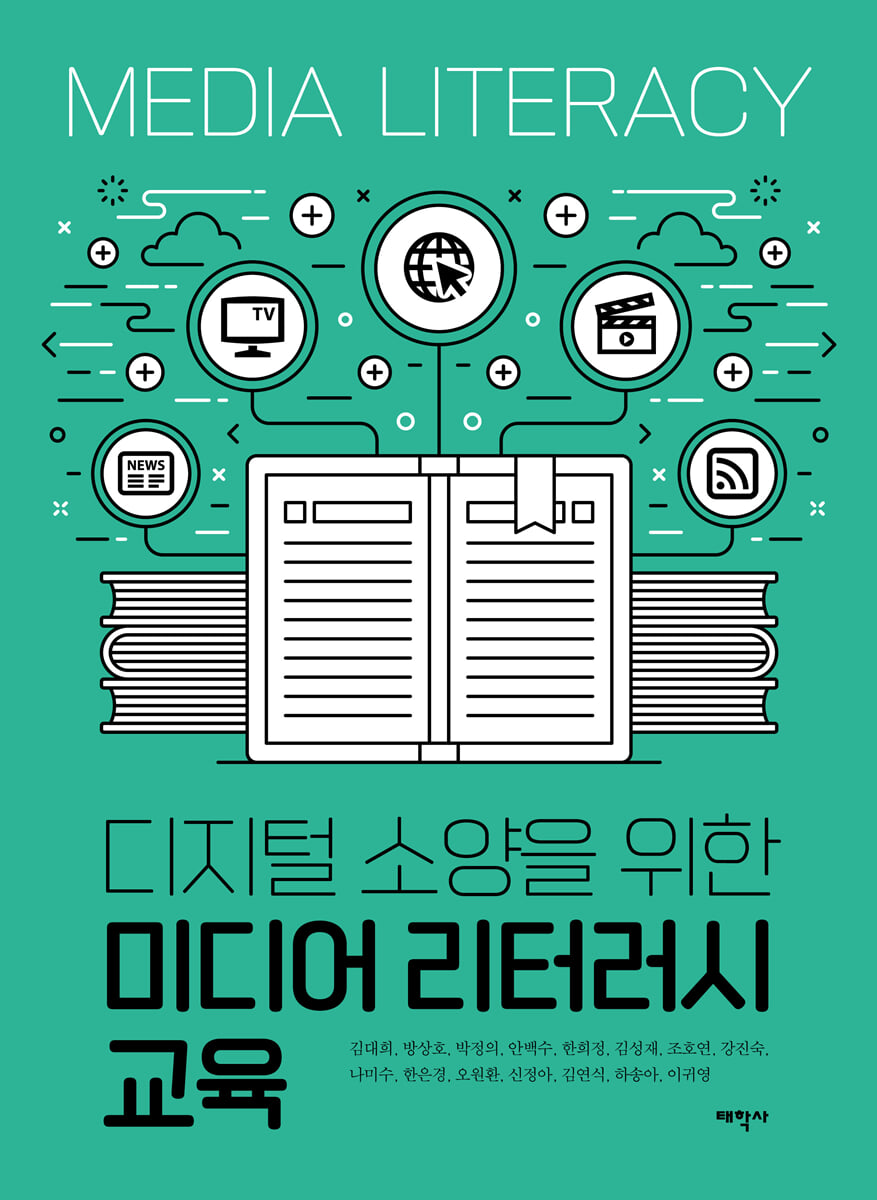
Media Literacy Education for Digital Literacy
 |
Description
Book Introduction
* The latest edition tailored for “digital education,” a mandatory subject for teachers newly established by the Ministry of Education in 2024
For the media generation, for prospective and current teachers
All About Media Literacy Education
Expressing Yourself Correctly | Producing Creative Content | Fulfilling Your Role as a Democratic Citizen
"What is the relationship between media and me? What is media literacy? Why do we need media literacy? What is the difference between living with media literacy and living without it? This book seeks to answer these questions by examining the media environment from various perspectives.
Media literacy is not simply the ability to use, understand, and criticize media; it is also the ability to express one's opinions through media, produce creative content, and fulfill one's role as a democratic citizen.
Media literacy is an essential skill for all of us living in the digital age, and is recognized as an important educational goal in school education.” ― From the introduction
This book is a guide for the media generation.
It provides cognitive and practical insights into how to live differently in the media world.
Media literacy is not simply the ability to consume media; it is the ability to understand and respond to its impact on our thoughts, actions, and society as a whole.
The authors explain six reasons why we need these abilities.
In other words, media literacy ① enables people to discern information, ② enables the formation of civic awareness and participation in democracy, ③ protects personal safety and rights, ④ protects consumer rights and encourages wise consumption, ⑤ encourages creative content creation and participation, and ⑥ promotes individual autonomy and self-determination.
This book is divided into 3 parts and 15 chapters.
In Part 1, Understanding Media Literacy, we begin with an understanding of media literacy, examine the meaning and direction of media literacy education, and discuss the discovery and exploration of citizenship in the digital age.
Next, we will explore freedom of expression and the protection of civil rights, examine the relationship between media addiction and literacy, and learn about reading the news and fact-checking.
In 'Part 2: Analysis and Use of Media Literacy,' we will learn about news literacy, broadcast content literacy ('representation of social minorities' and 'representation of gender'), advertising literacy, film literacy, SNS literacy, and YouTube literacy.
Part 3, ‘The Reality of Media Literacy Education in Schools’ covers middle school education cases and high school class cases related to media literacy.
This book is intended to provide useful information and insights to all readers interested in media literacy.
In particular, it will help prospective and current teachers recognize the necessity and importance of media literacy education and plan, implement, and evaluate media literacy education.
It will also serve as a valuable guide for students to acquire and develop media literacy as they grow into educated citizens.
For the media generation, for prospective and current teachers
All About Media Literacy Education
Expressing Yourself Correctly | Producing Creative Content | Fulfilling Your Role as a Democratic Citizen
"What is the relationship between media and me? What is media literacy? Why do we need media literacy? What is the difference between living with media literacy and living without it? This book seeks to answer these questions by examining the media environment from various perspectives.
Media literacy is not simply the ability to use, understand, and criticize media; it is also the ability to express one's opinions through media, produce creative content, and fulfill one's role as a democratic citizen.
Media literacy is an essential skill for all of us living in the digital age, and is recognized as an important educational goal in school education.” ― From the introduction
This book is a guide for the media generation.
It provides cognitive and practical insights into how to live differently in the media world.
Media literacy is not simply the ability to consume media; it is the ability to understand and respond to its impact on our thoughts, actions, and society as a whole.
The authors explain six reasons why we need these abilities.
In other words, media literacy ① enables people to discern information, ② enables the formation of civic awareness and participation in democracy, ③ protects personal safety and rights, ④ protects consumer rights and encourages wise consumption, ⑤ encourages creative content creation and participation, and ⑥ promotes individual autonomy and self-determination.
This book is divided into 3 parts and 15 chapters.
In Part 1, Understanding Media Literacy, we begin with an understanding of media literacy, examine the meaning and direction of media literacy education, and discuss the discovery and exploration of citizenship in the digital age.
Next, we will explore freedom of expression and the protection of civil rights, examine the relationship between media addiction and literacy, and learn about reading the news and fact-checking.
In 'Part 2: Analysis and Use of Media Literacy,' we will learn about news literacy, broadcast content literacy ('representation of social minorities' and 'representation of gender'), advertising literacy, film literacy, SNS literacy, and YouTube literacy.
Part 3, ‘The Reality of Media Literacy Education in Schools’ covers middle school education cases and high school class cases related to media literacy.
This book is intended to provide useful information and insights to all readers interested in media literacy.
In particular, it will help prospective and current teachers recognize the necessity and importance of media literacy education and plan, implement, and evaluate media literacy education.
It will also serve as a valuable guide for students to acquire and develop media literacy as they grow into educated citizens.
- You can preview some of the book's contents.
Preview
index
introduction
Part 1: Understanding Media Literacy
Chapter 1: Understanding Media Literacy · Kim Dae-hee
1.
Information overload and processing
2.
Media Text and Communication
3.
The concept of media literacy
4.
Establishing a knowledge structure for media literacy
Chapter 2: The Meaning and Direction of Media Literacy Education · Bang Sang-ho
1.
What is Media Literacy Education?
2.
Why is media literacy education necessary?
3.
How should media literacy education be conducted?
4.
What challenges does media literacy education face?
5.
What direction should media literacy education take?
Chapter 3: Discovery and Exploration of Citizenship in the Digital Age · Park Jeong-ui
1.
The Origin and Development of the Concept of Citizenship
2.
Changes in the media environment and the public sphere
3.
Democracy and Digital Citizenship
Chapter 4: Freedom of Expression and Protection of Civil Rights · Baek-su Ahn
1.
Civil rights that conflict with freedom of expression
2.
Types of civil rights violations caused by the media
3.
Harmonizing freedom of expression and civil rights
Chapter 5: Media Addiction and Literacy · Hee-Jeong Han
1.
media addiction
2.
Types and Symptoms of Internet Addiction
3.
Diagnosis of Internet Addiction
4.
Prevention and treatment of Internet addiction
Chapter 6: Reading the News and Fact-Checking · Kim Seong-jae
1.
An era where people neither believe nor read the news
2.
Causes of distrust and avoidance of the media
3.
The digital environment and elections have brought about a golden age of fake news.
4.
Why fake news is created
5.
How to Beat Fake News - Fact Check
Part 2: Media Literacy Analysis and Use
Chapter 7 News Literacy · Cho Ho-yeon
1.
Understanding News Literacy
2.
Why News Literacy?
3.
Analysis and Utilization
4.
Ethics and Responsibility
Chapter 8: Broadcast Content Literacy 1: Representing Social Minorities · Kang Jin-sook
1.
The concept and characteristics of social minorities
2.
Examples and characteristics of social minorities represented in broadcast content
3.
Developing and Training Minority Media Literacy Capabilities
Chapter 9: Broadcast Content Literacy 2: Gender Representation · Namisu
1.
The Importance of Gender Literacy in Broadcast Content
2.
Understanding the concept of gender
3.
Gender Representation in Broadcast Content
Chapter 10: Advertising Literacy · Eun-kyung Han
1.
Thinking about the relationship between economics and advertising
2.
Meet the domestic advertising market
3.
Meet the Global Advertising Market
4.
Advertisements that inconvenience consumers
5.
What function do advertisements serve?
Chapter 11: Film Literacy · Oh Won-hwan
1.
Film Literacy
2.
The concept of film literacy
3.
Four Approaches to Film Literacy
4.
Visual aesthetic approach
5.
Gender Construction and Visual Aesthetic Analysis through Film Visualization
Chapter 12: Social Media Literacy · Shin Jeong-ah
1. The emergence and development of social media
2. Socio-technical position of SNS
3. Social Media and Fake News
4.
SNS Literacy for Youth
Chapter 13: YouTube Literacy · Kim Yeon-sik
1.
The advent of the YouTube era
2.
Characteristics and Industry of YouTube Content
3.
YouTube Journalism
4.
Use YouTube content appropriately
Part 3: The Reality of School Media Literacy Education
Chapter 14: Middle School Media Literacy Education Case Study · Ha Song-ah
1.
How to Resolve Conflict: Finding and Selecting Information
2.
Expressing through Media: Understanding and Communicating Meaning
3.
Writing a Novel - Appreciation and Enjoyment -
4.
Making a Book Trailer Video - Creation and Production -
Chapter 15: A Case Study of High School Media Literacy Classes · Lee Gwi-young
1.
Media Production Class
2.
The media that made me who I am today
3.
News Diary
4.
Production of weekly current affairs magazines
5.
Carry out the mission of the provisional government
References
Search
Part 1: Understanding Media Literacy
Chapter 1: Understanding Media Literacy · Kim Dae-hee
1.
Information overload and processing
2.
Media Text and Communication
3.
The concept of media literacy
4.
Establishing a knowledge structure for media literacy
Chapter 2: The Meaning and Direction of Media Literacy Education · Bang Sang-ho
1.
What is Media Literacy Education?
2.
Why is media literacy education necessary?
3.
How should media literacy education be conducted?
4.
What challenges does media literacy education face?
5.
What direction should media literacy education take?
Chapter 3: Discovery and Exploration of Citizenship in the Digital Age · Park Jeong-ui
1.
The Origin and Development of the Concept of Citizenship
2.
Changes in the media environment and the public sphere
3.
Democracy and Digital Citizenship
Chapter 4: Freedom of Expression and Protection of Civil Rights · Baek-su Ahn
1.
Civil rights that conflict with freedom of expression
2.
Types of civil rights violations caused by the media
3.
Harmonizing freedom of expression and civil rights
Chapter 5: Media Addiction and Literacy · Hee-Jeong Han
1.
media addiction
2.
Types and Symptoms of Internet Addiction
3.
Diagnosis of Internet Addiction
4.
Prevention and treatment of Internet addiction
Chapter 6: Reading the News and Fact-Checking · Kim Seong-jae
1.
An era where people neither believe nor read the news
2.
Causes of distrust and avoidance of the media
3.
The digital environment and elections have brought about a golden age of fake news.
4.
Why fake news is created
5.
How to Beat Fake News - Fact Check
Part 2: Media Literacy Analysis and Use
Chapter 7 News Literacy · Cho Ho-yeon
1.
Understanding News Literacy
2.
Why News Literacy?
3.
Analysis and Utilization
4.
Ethics and Responsibility
Chapter 8: Broadcast Content Literacy 1: Representing Social Minorities · Kang Jin-sook
1.
The concept and characteristics of social minorities
2.
Examples and characteristics of social minorities represented in broadcast content
3.
Developing and Training Minority Media Literacy Capabilities
Chapter 9: Broadcast Content Literacy 2: Gender Representation · Namisu
1.
The Importance of Gender Literacy in Broadcast Content
2.
Understanding the concept of gender
3.
Gender Representation in Broadcast Content
Chapter 10: Advertising Literacy · Eun-kyung Han
1.
Thinking about the relationship between economics and advertising
2.
Meet the domestic advertising market
3.
Meet the Global Advertising Market
4.
Advertisements that inconvenience consumers
5.
What function do advertisements serve?
Chapter 11: Film Literacy · Oh Won-hwan
1.
Film Literacy
2.
The concept of film literacy
3.
Four Approaches to Film Literacy
4.
Visual aesthetic approach
5.
Gender Construction and Visual Aesthetic Analysis through Film Visualization
Chapter 12: Social Media Literacy · Shin Jeong-ah
1. The emergence and development of social media
2. Socio-technical position of SNS
3. Social Media and Fake News
4.
SNS Literacy for Youth
Chapter 13: YouTube Literacy · Kim Yeon-sik
1.
The advent of the YouTube era
2.
Characteristics and Industry of YouTube Content
3.
YouTube Journalism
4.
Use YouTube content appropriately
Part 3: The Reality of School Media Literacy Education
Chapter 14: Middle School Media Literacy Education Case Study · Ha Song-ah
1.
How to Resolve Conflict: Finding and Selecting Information
2.
Expressing through Media: Understanding and Communicating Meaning
3.
Writing a Novel - Appreciation and Enjoyment -
4.
Making a Book Trailer Video - Creation and Production -
Chapter 15: A Case Study of High School Media Literacy Classes · Lee Gwi-young
1.
Media Production Class
2.
The media that made me who I am today
3.
News Diary
4.
Production of weekly current affairs magazines
5.
Carry out the mission of the provisional government
References
Search
GOODS SPECIFICS
- Date of issue: March 11, 2024
- Page count, weight, size: 440 pages | 188*257*19mm
- ISBN13: 9791168102514
- ISBN10: 1168102510
You may also like
카테고리
korean


korean

![GQ KOREA Mark (Monthly): December [2025]](http://librairie.coreenne.fr/cdn/shop/files/8ef265dbbfbf186523ed75ba7319009d.jpg?v=1765340328&width=3840)


