

Me and Lee Young-hee
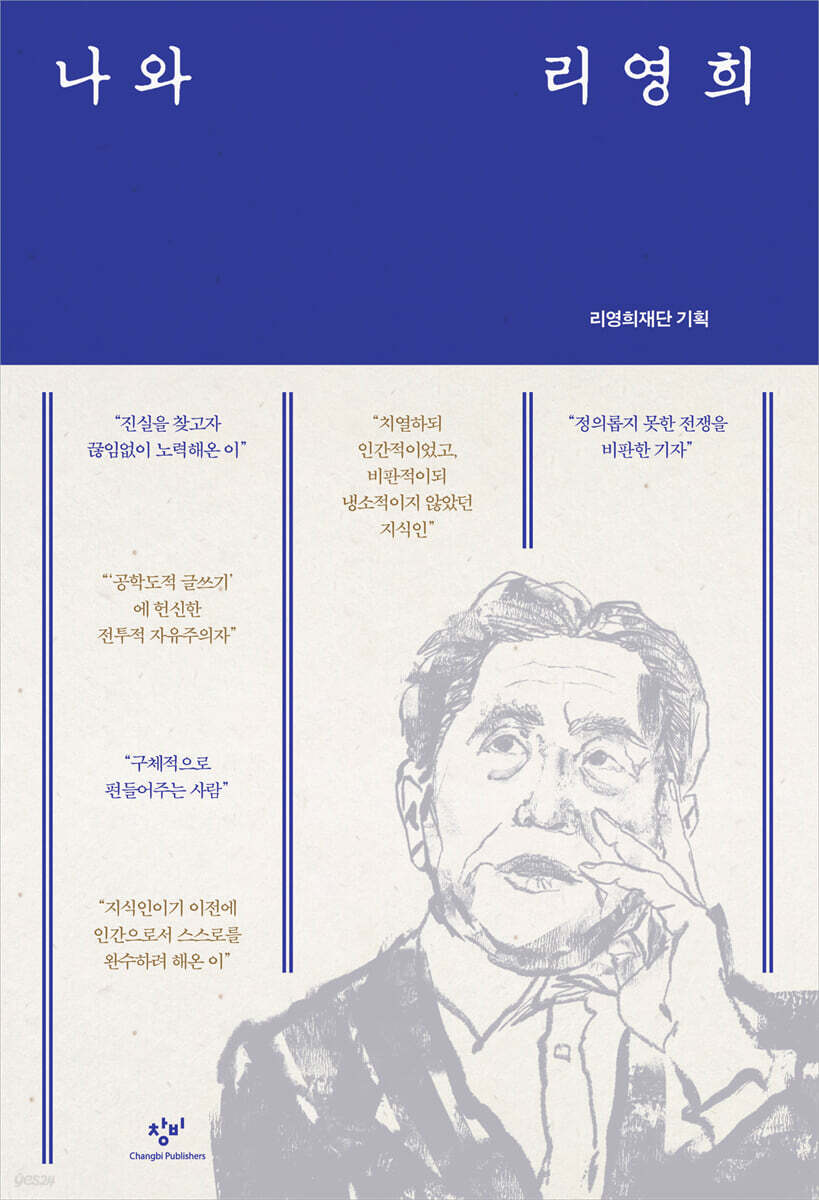 |
Description
Book Introduction
The teacher of thought who first taught us how to 'think and resist'
Bringing Lee Young-hee back to our lives and memories
The 15th anniversary of the passing of Lee Young-hee, a teacher of the times.
Hwang Seok-yeong, Jeong Ji-ah, Yu Hong-jun, Baek Nak-cheong, etc.
Those who encountered him in their own way brought out
The appearance of 'the person Lee Young-hee'
December 5th marks the 15th anniversary of the passing of Lee Young-hee (1929-2010), a benefactor of our time's thought who, as a journalist, critic, and scholar, provided a vital voice for society throughout his life.
In an age devoid of worthy role models, how is Lee Young-hee remembered in society, and should she be remembered? "Me and Lee Young-hee" is a compilation of memoirs from 32 individuals, based on articles published in the Lee Young-hee Foundation's newsletter since 2022.
Representative writers and scholars of this era, including Hwang Seok-yeong, Jeong Ji-ah, Yu Hong-jun, and Baek Nak-cheong, look back on their memories of Lee Young-hee from their own perspectives and interests.
He reveals how he influenced his own life and how reading Lee Young-hee's writings taught him a perspective on society by observing how he stood in solidarity with the vulnerable and defended justice even while imprisoned.
Another interesting aspect of this book is that it richly depicts the human side of Lee Young-hee, which was previously unknown.
Bringing Lee Young-hee back to our lives and memories
The 15th anniversary of the passing of Lee Young-hee, a teacher of the times.
Hwang Seok-yeong, Jeong Ji-ah, Yu Hong-jun, Baek Nak-cheong, etc.
Those who encountered him in their own way brought out
The appearance of 'the person Lee Young-hee'
December 5th marks the 15th anniversary of the passing of Lee Young-hee (1929-2010), a benefactor of our time's thought who, as a journalist, critic, and scholar, provided a vital voice for society throughout his life.
In an age devoid of worthy role models, how is Lee Young-hee remembered in society, and should she be remembered? "Me and Lee Young-hee" is a compilation of memoirs from 32 individuals, based on articles published in the Lee Young-hee Foundation's newsletter since 2022.
Representative writers and scholars of this era, including Hwang Seok-yeong, Jeong Ji-ah, Yu Hong-jun, and Baek Nak-cheong, look back on their memories of Lee Young-hee from their own perspectives and interests.
He reveals how he influenced his own life and how reading Lee Young-hee's writings taught him a perspective on society by observing how he stood in solidarity with the vulnerable and defended justice even while imprisoned.
Another interesting aspect of this book is that it richly depicts the human side of Lee Young-hee, which was previously unknown.
- You can preview some of the book's contents.
Preview
index
Opening the Book_Kim Hyo-sun
Part 1_Lee Young-hee inside Lee Young-hee
Lee Young-hee's Present_Hwang Seok-young
Lee Young-hee inside Lee Young-hee_Go Byeong-gwon
Teacher Lee Young-hee's congratulatory address_Yoo Hong-jun
Those Who Didn't Give in: Ryu Chun-do, Lee Young-hee, and Jeong Ji-ah
Reason is also nature!_Jeong Byeong-ho
Lee Young-hee and his Utopia_Heo Hee
Baek Seung-wook, a militant liberal dedicated to "engineering-style writing"
An engineering student flies a light aircraft in his later years_Shin Wan-seop
Part 2_Beyond the Boundaries
The friendship between Professor Lee Young-hee and Kyodo News' Seoul correspondents_Hisashi Hirai
“So, I hope Japan becomes a good country…”_Izumi Yamaguchi
The Last Prisoner of the Korean Democracy Movement in My Heart_Haruki Wada
Teacher Lee Young-hee in Germany_Eosugap
The Connection Between 1.5 Generation Immigrants and Lee Young-hee_Paul Lim
Four Meetings with Teacher Lee Young-hee_Song Du-yul
The Spring Heart of Plum Blossoms in Midwinter: The Exchange Between Lee Young-hee and Jang Il-soon_Han Sang-bong
Why he wore socks with holes in them in the middle of winter_Lee Cheol
Part 3: The opposite sex challenging idols
Shin Hong-beom, a journalist who criticized the unjust war
Lee Young-hee, Lu Xun, and Consciousness_Choi Jin-ho
Rethinking 『Logic of the Transitional Era』 and Professor Lee Young-hee_Baek Nak-cheong
A book brought out of prison by veteran lawyer Lee Byeong-rin_Kim Hyo-sun
An intellectual who was fierce yet humane, critical yet not cynical_Jeong Beom-gu
The moment he was captured tied up with rope_Kim Yeon-su
Lee Young-hee's Wise Prison Life_Kim Hak-min
A person who takes specific sides_Oh Chang-ik
Part 4: The Balance of My Life, Lee Young-hee
Lee Young-hee and Kim Jong-cheol as seen by 'old friend' Lim Jae-kyung
The Balance of My Life, Lee Young-hee and Baek Young-seo
Softness and warmth with sharpness_Jin Young-jong
Lee Young-hee and Jeong Hyeon-baek, "Critical South Koreans"
Lee Young-hee and Jeong Do-yeong, My Memory_Jeong Geon-hwa
Lee Young-hee and Buddhism_Lee Hak-jong
Thinking of the respected teacher Lee Young-hee_Lee Kang-soo
We live in an age where we miss Lee Young-hee again. _Kim Se-gyun
Part 1_Lee Young-hee inside Lee Young-hee
Lee Young-hee's Present_Hwang Seok-young
Lee Young-hee inside Lee Young-hee_Go Byeong-gwon
Teacher Lee Young-hee's congratulatory address_Yoo Hong-jun
Those Who Didn't Give in: Ryu Chun-do, Lee Young-hee, and Jeong Ji-ah
Reason is also nature!_Jeong Byeong-ho
Lee Young-hee and his Utopia_Heo Hee
Baek Seung-wook, a militant liberal dedicated to "engineering-style writing"
An engineering student flies a light aircraft in his later years_Shin Wan-seop
Part 2_Beyond the Boundaries
The friendship between Professor Lee Young-hee and Kyodo News' Seoul correspondents_Hisashi Hirai
“So, I hope Japan becomes a good country…”_Izumi Yamaguchi
The Last Prisoner of the Korean Democracy Movement in My Heart_Haruki Wada
Teacher Lee Young-hee in Germany_Eosugap
The Connection Between 1.5 Generation Immigrants and Lee Young-hee_Paul Lim
Four Meetings with Teacher Lee Young-hee_Song Du-yul
The Spring Heart of Plum Blossoms in Midwinter: The Exchange Between Lee Young-hee and Jang Il-soon_Han Sang-bong
Why he wore socks with holes in them in the middle of winter_Lee Cheol
Part 3: The opposite sex challenging idols
Shin Hong-beom, a journalist who criticized the unjust war
Lee Young-hee, Lu Xun, and Consciousness_Choi Jin-ho
Rethinking 『Logic of the Transitional Era』 and Professor Lee Young-hee_Baek Nak-cheong
A book brought out of prison by veteran lawyer Lee Byeong-rin_Kim Hyo-sun
An intellectual who was fierce yet humane, critical yet not cynical_Jeong Beom-gu
The moment he was captured tied up with rope_Kim Yeon-su
Lee Young-hee's Wise Prison Life_Kim Hak-min
A person who takes specific sides_Oh Chang-ik
Part 4: The Balance of My Life, Lee Young-hee
Lee Young-hee and Kim Jong-cheol as seen by 'old friend' Lim Jae-kyung
The Balance of My Life, Lee Young-hee and Baek Young-seo
Softness and warmth with sharpness_Jin Young-jong
Lee Young-hee and Jeong Hyeon-baek, "Critical South Koreans"
Lee Young-hee and Jeong Do-yeong, My Memory_Jeong Geon-hwa
Lee Young-hee and Buddhism_Lee Hak-jong
Thinking of the respected teacher Lee Young-hee_Lee Kang-soo
We live in an age where we miss Lee Young-hee again. _Kim Se-gyun
Detailed image
.jpg)
Into the book
Even when he suffered from paralysis in part of his body due to the aftereffects of a stroke, he sent letters of encouragement to his juniors in crooked handwriting, always showed solidarity with the socially disadvantaged, and was not stingy in admitting his errors in judgment.
He did not hide his desire to escape from his daily life by secretly boarding a light aircraft without his wife's knowledge, and he even showed a childlike smile at the antics of his juniors who came to visit him in the hospital.
The authors carefully drew out the memories they had kept deep in their hearts and wrote them down.
I hope that this book, a collection of countless afterimages, will reveal the complete picture of 'the person Lee Young-hee' like a pointillist painting.
I hope that the teacher can approach the general public with a friendly, human touch, rather than as a stern intellectual with a brooding expression who spends all day in agony.
If readers savor the various aspects of pointillism and combine their own judgments, they will be able to draw their own unique portraits of Lee Young-hee.
--- From "Kim Hyo-sun - Opening a Book"
It is said that when Mr. Ryu Chun-do met Mr. Lee Young-hee, he asked her to be his 'friends'.
Teacher Lee Young-hee's answer was, "Let's be comrades, not friends."
Why was it "comrade" instead of "friend"? Our generation, having never used the word "comrade," will never understand its meaning.
Comrade is an old saying and more friendly.
For these two people, whose lives were distorted because they could not ignore the injustice they witnessed in the past, the word "comrade" seems more appropriate than "friend."
From 2005 until 2008, when Ryu Chun-do passed away, the two exchanged several letters.
--- From "Jeong Ji-ah - Those Who Did Not Surrender: Lee Young-hee and Ryu Chun-do"
Before the event began, an official from Chongryon (General Association of Korean Residents in Japan) came to see the teacher, accompanied by a reporter from the Chosun Sinbo.
“I am well aware of the brilliant achievements of Mr. Lee Young-hee, who led the struggle for democracy in South Korea.
(…) Now, if you speak well to this Chosun Sinbo reporter, you will become famous in the Korean community.” The teacher immediately became serious and rebuked him.
“I’m not the kind of person who has lived my whole life thinking about making a name for myself.
That's not the kind of person who has lived like that.
“I don’t care about that.” Then he looked straight ahead and shut his mouth.
For a while, no one there said anything.
As if trying to break the awkward silence, the Chongryon official spoke again.
“That Chosun Sinbo is a newspaper with great influence in the Korean community…” The teacher spoke as if talking to himself without even looking at the person speaking.
“Things that have never fought against power….”
--- From "Jeong Byeong-ho - It's also Lee Seong-do's nature!"
When I met the teacher somewhere, I greeted him by saying, "I enjoy reading your writing." The teacher immediately asked, "Tell me which writing and what content you liked."
For a moment, my thoughts were blocked and no answer came to me.
Looking back on the situation later, I thought about why I was so speechless when I could have said anything since I had read a lot of the teacher's writing.
--- From "Jeong Geon-hwa - Lee Young-hee and Jeong Do-yeong, My Memories"
As materialism becomes rampant and the rise of a new power elite further spreads the worship of power, we are entering a world where the socially disadvantaged are becoming exhausted.
Who, and how, will raise the flag again and light the fire again? These are times when we miss even more the memory of Lee Young-hee, who devoted herself to the fight against idols.
He did not hide his desire to escape from his daily life by secretly boarding a light aircraft without his wife's knowledge, and he even showed a childlike smile at the antics of his juniors who came to visit him in the hospital.
The authors carefully drew out the memories they had kept deep in their hearts and wrote them down.
I hope that this book, a collection of countless afterimages, will reveal the complete picture of 'the person Lee Young-hee' like a pointillist painting.
I hope that the teacher can approach the general public with a friendly, human touch, rather than as a stern intellectual with a brooding expression who spends all day in agony.
If readers savor the various aspects of pointillism and combine their own judgments, they will be able to draw their own unique portraits of Lee Young-hee.
--- From "Kim Hyo-sun - Opening a Book"
It is said that when Mr. Ryu Chun-do met Mr. Lee Young-hee, he asked her to be his 'friends'.
Teacher Lee Young-hee's answer was, "Let's be comrades, not friends."
Why was it "comrade" instead of "friend"? Our generation, having never used the word "comrade," will never understand its meaning.
Comrade is an old saying and more friendly.
For these two people, whose lives were distorted because they could not ignore the injustice they witnessed in the past, the word "comrade" seems more appropriate than "friend."
From 2005 until 2008, when Ryu Chun-do passed away, the two exchanged several letters.
--- From "Jeong Ji-ah - Those Who Did Not Surrender: Lee Young-hee and Ryu Chun-do"
Before the event began, an official from Chongryon (General Association of Korean Residents in Japan) came to see the teacher, accompanied by a reporter from the Chosun Sinbo.
“I am well aware of the brilliant achievements of Mr. Lee Young-hee, who led the struggle for democracy in South Korea.
(…) Now, if you speak well to this Chosun Sinbo reporter, you will become famous in the Korean community.” The teacher immediately became serious and rebuked him.
“I’m not the kind of person who has lived my whole life thinking about making a name for myself.
That's not the kind of person who has lived like that.
“I don’t care about that.” Then he looked straight ahead and shut his mouth.
For a while, no one there said anything.
As if trying to break the awkward silence, the Chongryon official spoke again.
“That Chosun Sinbo is a newspaper with great influence in the Korean community…” The teacher spoke as if talking to himself without even looking at the person speaking.
“Things that have never fought against power….”
--- From "Jeong Byeong-ho - It's also Lee Seong-do's nature!"
When I met the teacher somewhere, I greeted him by saying, "I enjoy reading your writing." The teacher immediately asked, "Tell me which writing and what content you liked."
For a moment, my thoughts were blocked and no answer came to me.
Looking back on the situation later, I thought about why I was so speechless when I could have said anything since I had read a lot of the teacher's writing.
--- From "Jeong Geon-hwa - Lee Young-hee and Jeong Do-yeong, My Memories"
As materialism becomes rampant and the rise of a new power elite further spreads the worship of power, we are entering a world where the socially disadvantaged are becoming exhausted.
Who, and how, will raise the flag again and light the fire again? These are times when we miss even more the memory of Lee Young-hee, who devoted herself to the fight against idols.
--- From "Kim Se-gyun - We live in an age where we miss teacher Lee Young-hee again"
Publisher's Review
“A journalist who criticized an unjust war.”
“An intellectual who was fierce yet humane, critical yet not cynical.”
Lee Young-hee's anecdotes, where her attitude toward life becomes her teaching.
The juniors and students who had close contact with Lee Young-hee remember her above all else as “a journalist who criticized unjust wars” (Shin Hong-beom’s memoir) and as “an intellectual who was fierce yet humane, critical yet not cynical” (Jeong Beom-gu’s memoir).
He is “a person who has constantly strived to find the truth” (Jeong Byeong-ho’s memoir) and has been in solidarity with the weak throughout his life, leading to his evaluation as “a person who takes their side in a concrete way” (Oh Chang-ik’s memoir).
Some also note his consistent attitude toward life, saying, “He was someone who tried to fulfill himself as a human being before becoming an intellectual” (Izumi Yamaguchi’s memoir).
In the memoirs of Professor Jeong Byeong-ho, a cultural anthropologist who passed away in 2024, there is an anecdote about Lee Young-hee scolding a reporter from the Chosun Sinbo in Japan.
His words to himself, “Those who have never even fought against power…”, show what he has been pursuing and reveal his resolute and consistent attitude towards life.
Anecdotes about riding a light aircraft in his old age, letters to his wife, etc.
A newly discovered human side of Lee Young-hee
There are also articles that find something special in his writing style.
The idea is to remember Lee Young-hee as a “militant liberal dedicated to ‘engineering-style writing’” (Baek Seung-wook’s memoir), emphasizing that the articles from her time as a reporter are hard to find even in today’s international news pages, and that they were a prime example of investigative reporting and highly polished pieces that could be published as academic papers.
Moreover, this book contains many passages that reveal Lee Young-hee's warm and human side.
These include anecdotes about his interactions with correspondents for Japan's Kyodo News Agency (a memoir by Hisashi Hirai, a former Kyodo News correspondent), and an article about discovering 'Lee Young-hee within Lee Young-hee' in letters he sent to his wife from prison (a memoir by Byeong-Gwon Ko).
Lee Young-hee's letter asking to see her in court included the words, "I would like to stay near the entrance and touch your hand, even if it's just for a moment."
An anecdote about his time on a light aircraft in his later years is also included in the interview, revealing his childlike side, innocent and curious about everything in life, drawing readers closer to him.
“We live in an age where we miss Lee Young-hee once again.” (Kim Se-gyun’s memoir) In this chaotic age, where each person is deeply concerned about what standards to set in their lives, this book will help readers rediscover Lee Young-hee, who has been a symbol of intellectuals, and at the same time serve as a guide for readers.
“An intellectual who was fierce yet humane, critical yet not cynical.”
Lee Young-hee's anecdotes, where her attitude toward life becomes her teaching.
The juniors and students who had close contact with Lee Young-hee remember her above all else as “a journalist who criticized unjust wars” (Shin Hong-beom’s memoir) and as “an intellectual who was fierce yet humane, critical yet not cynical” (Jeong Beom-gu’s memoir).
He is “a person who has constantly strived to find the truth” (Jeong Byeong-ho’s memoir) and has been in solidarity with the weak throughout his life, leading to his evaluation as “a person who takes their side in a concrete way” (Oh Chang-ik’s memoir).
Some also note his consistent attitude toward life, saying, “He was someone who tried to fulfill himself as a human being before becoming an intellectual” (Izumi Yamaguchi’s memoir).
In the memoirs of Professor Jeong Byeong-ho, a cultural anthropologist who passed away in 2024, there is an anecdote about Lee Young-hee scolding a reporter from the Chosun Sinbo in Japan.
His words to himself, “Those who have never even fought against power…”, show what he has been pursuing and reveal his resolute and consistent attitude towards life.
Anecdotes about riding a light aircraft in his old age, letters to his wife, etc.
A newly discovered human side of Lee Young-hee
There are also articles that find something special in his writing style.
The idea is to remember Lee Young-hee as a “militant liberal dedicated to ‘engineering-style writing’” (Baek Seung-wook’s memoir), emphasizing that the articles from her time as a reporter are hard to find even in today’s international news pages, and that they were a prime example of investigative reporting and highly polished pieces that could be published as academic papers.
Moreover, this book contains many passages that reveal Lee Young-hee's warm and human side.
These include anecdotes about his interactions with correspondents for Japan's Kyodo News Agency (a memoir by Hisashi Hirai, a former Kyodo News correspondent), and an article about discovering 'Lee Young-hee within Lee Young-hee' in letters he sent to his wife from prison (a memoir by Byeong-Gwon Ko).
Lee Young-hee's letter asking to see her in court included the words, "I would like to stay near the entrance and touch your hand, even if it's just for a moment."
An anecdote about his time on a light aircraft in his later years is also included in the interview, revealing his childlike side, innocent and curious about everything in life, drawing readers closer to him.
“We live in an age where we miss Lee Young-hee once again.” (Kim Se-gyun’s memoir) In this chaotic age, where each person is deeply concerned about what standards to set in their lives, this book will help readers rediscover Lee Young-hee, who has been a symbol of intellectuals, and at the same time serve as a guide for readers.
GOODS SPECIFICS
- Date of issue: November 20, 2025
- Page count, weight, size: 368 pages | 546g | 143*209*22mm
- ISBN13: 9788936480981
You may also like
카테고리
korean


korean

![GQ KOREA Mark (Monthly): December [2025]](http://librairie.coreenne.fr/cdn/shop/files/8ef265dbbfbf186523ed75ba7319009d.jpg?v=1765340328&width=3840)


