

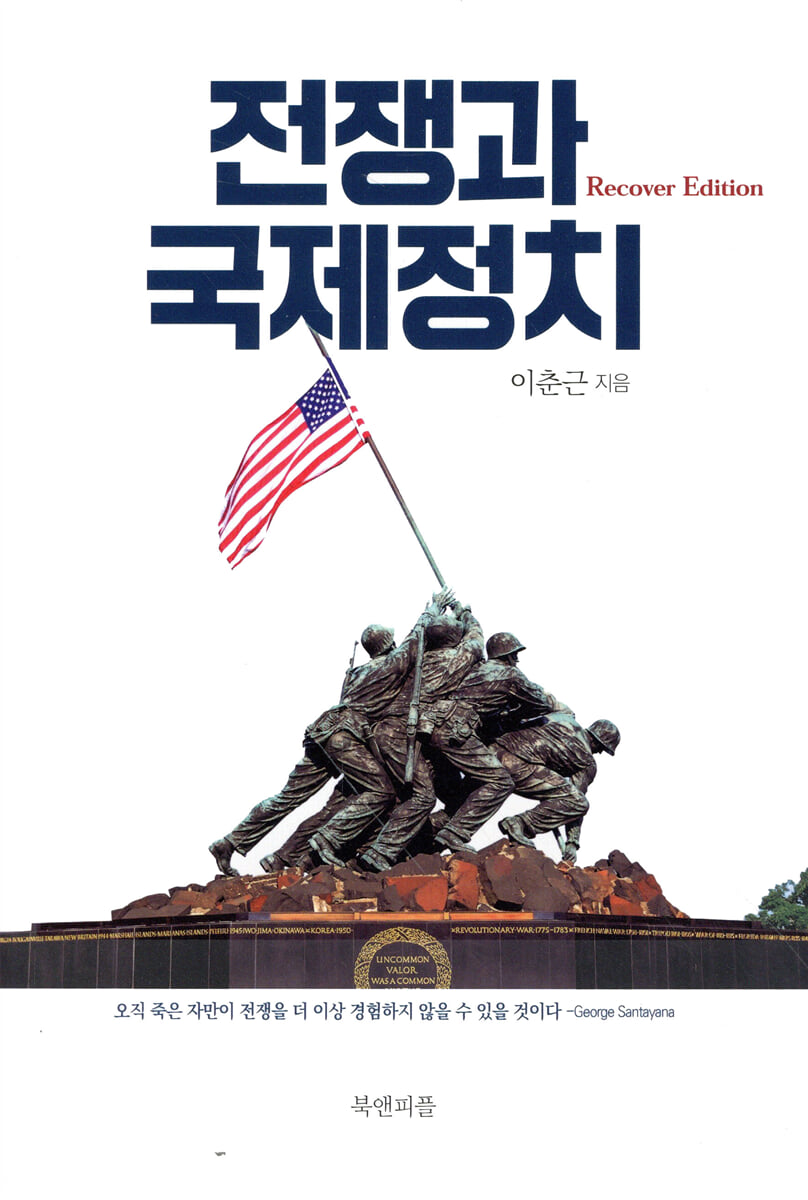
War and International Politics
 |
Description
Book Introduction
If you want peace, prepare for war. We study to see the world correctly. The study of war and international politics is to gain a correct understanding of the relationships between nations and the international conflicts and wars that arise between them. I begin writing this book with the hope that those who read it will gain a more accurate understanding of the true situation on the Korean Peninsula and the true state of international politics. Of course, those who believe that the Cold War on the Korean Peninsula is over and that the North Korean nuclear issue will be resolved will question whether it is necessary to talk about war, weapons, and military strategies again now. To these questions, I would like to answer that war is not a distant past but a reality surrounding us, and that peace on the Korean Peninsula still has a long way to go. It may be closer to the scholar's conscience to say, frankly, that achieving complete peace between the world and the Korean Peninsula is "impossible." So, at all times, we must strive to maintain peace, and by doing so, however precarious, we can extend the time of peace. The author's goal in this book is to encourage the general reader, as well as anyone interested in the subject, to study the reality that much of what we think we know about war is quite different from reality. The truth about war, weapons, and military strategy is not as simple as we can understand with common sense. It is something that can only be properly understood through study. |
index
Author's Preface
Starting the book
01.
Why study war?
02.
Common sense and truth
03.
A nation is an organization that is good at waging war.
(1) What is anarchy?
(2) The state is an organization developed to wage war well.
(3) Our politicians who believe that even the worst peace is better than war.
(4) Let's make our country a powerful nation.
(5) Confusion about war and peace
(6) National security or basic principles of war and peace
04.
Methods for Studying War and International Politics
(1) Definition of war
(2) Perspectives on war, peace, and international politics
1) Idealism and realism
A.
Idealism B.
realism
2) Liberal and Marxist international political views
3) 3D analysis of war and international politics
05.
Current Status of War Studies
(1) Pioneers in war studies
(2) The actual phenomenon and origin of war
(3) Was the natural state of mankind a state of war or a state of peace?
1) War in primitive society
2) Characteristics of fighting in primitive society
3) Peaceful savages
4) Recent theories that primitive people did not live in peace at all
(4) Average length of war: long war, short war
1) The fantasy of a short war
2) The duration of the war was much longer than expected.
(5) Frequency of war: How many wars have there been in human history?
06.
Great wars that changed world history
(1) Wars that determined the world champion of an era
1) Quincy Wright's Great War List
2) Gilpin's Great War List
3) Wallerstein's list of great wars
4) Toynbee's list of great wars
5) Thompson's list of defeated wars and defeated nations
(2) The scale of the championship war (hegemony war)
(3) The war for hegemony gave birth to a new champion.
07.
List of Wars
(1) War data from the War-Related Factors Research Plan (COW Project)
(2) Professor Jack Levy's "Great Power Wars" data
08.
Why do wars happen?: The human dimension
(1) Human nature and war
1) Human aggressive instinct
2) Freud's explanation of the human instinct for war
3) Konrad Lorenz's Animal Ethology and the Causes of War
4) Socio-biological causes of war
5) If human aggressiveness is the cause of war, is there hope for humanity?
(2) War is the result of human thought: War and philosophy
1) War is the result of human thought.
2) War is a Sin: The Philosophy of War for Peace
3) A war that can and must be fought: a war of justice
4) Aggressive war philosophy
5) The Islamic philosophy of war, a symbol of a warlike civilization
09.
Causes of war at the national and social level
(1) State and War: A state is the optimal organization for waging war.
(2) Stories of countries that are good at war: The rise and fall of great powers and their powers.
1) The meaning of a great power
2) A great power is a country that has a lot of money and wages many wars.
3) The rise and fall of great powers
4) Are superpowers really good at war?
5) The United States and the Soviet Union after World War II
(3) Natural attributes of the state and war
1) Did the war affect population change (decrease)?
2) Population and war
3) Climate, environment and war
(4) Policy-making process: Imperfections and war in human-made organizations
1) Your Majesty's decision is absolutely correct!
2) Problems with foreign policy resulting from groupthink | The Bay of Pigs Invasion
3) Domestic politics and military conflicts: The unusually high number of U.S. military actions in presidential election years
4) Would a world where women became presidents and prime ministers of all countries be a world of peace?
A.
The masculine nature of war
B.
War and Peace When Women Were Rulers of the Nation
C.
Feminist International Politics
(5) Are democratic countries peaceful?
1) Democratic nations do not fight each other: democratic peace theory
2) Criticism of democratic peace theory
(6) The economic nature of the country and war
1) Marxist theory of the causes of war
2) Marxist studies of war and military issues
3) Lenin's theory of imperialism and the causes of war
4) Criticism of Lenin's theory of imperialism
5) The relationship between economic system and war as discussed by liberals
10.
The international system and war
(1) Balance of power theory and war
1) Balance of power is a condition for peace
2) Critical interpretation of the balance of power theory
(2) Distribution of power in the international political system and war
1) Which international system would be most peaceful if it had several great powers?
2) Territory and War
(3) Power transfer theory
(4) Structural historical approach to war
1) Hegemonic stability theory: If there is one powerful country, the world can enjoy stability and peace.
2) Hegemons change periodically: long-cycle theory
11.
War and Strategy
(1) Research on strategy
1) Definition of strategy
2) Strategy and Tactics: Conceptual Differences
3) National strategy and military strategy
4) Strategic thinking
5) Essential differences between the military and everyday life domains
(2) National grand strategy
1) Geopolitics
2) German geopolitics
3) Geopolitics of the UK and the US
A.
Mahan's theory of maritime supremacy
B.
Mackinder's heartland theory
C.
Speckman's peripheral theory
(3) Military strategy
1) Rediscovery of the Art of War
2) The essence of the Art of War
3) Clausewitz's On War
4) Commonalities between Clausewitz and Sun Tzu's strategic thinking
5) The influence of Sun Tzu and Clausewitz on wars between the East and the West
(4) Basic principles of war (strategy)
1) The principle of objective | 2) The principle of attack | 3) Unity of command | 4) The principle of concentration | 5) The principle of economy | 6) The principle of maneuver | 7) The principle of surprise | 8) The principle of safety | 9) The principle of simplicity
12.
Weapons and War
(1) Do wars occur more often in places with more weapons?
1) The moral majority that considers arms buildup as the cause of war
2) Arms races are the cause of war: Scientific research shows
3) Arms races are not the cause of war: Another scientific study finds.
4) A criterion for judging two opposing views on armaments and war: realism
5) Wars break out even in places with little military equipment.
(2) Weapons and Modern Warfare
1) Bombing story
2) The story of the aircraft carrier
3) Alexander the Great's army, which was able to defeat Napoleon's army
4) The development of weapons and the brutality of war: We had it backwards.
5) Why modern weapons do not increase casualties in war
6) Innovation in military technology and modern weapons systems: their strategic implications
7) Limitations of RMA: The power and limitations of modern weapon systems
8) Are new, cutting-edge weapons omnipotent?
9) Debate on the strategy of the RMA
(3) Nuclear weapons and nuclear strategy
1) The destructive power of nuclear weapons
2) The power of a nuclear explosion
3) Nuclear war and conventional war
4) Let's think about the unthinkable: If a nuclear war breaks out, will the Earth really be destroyed?
5) Securing retaliatory capabilities deters war: The basic theory of nuclear strategy.
6) Earth after nuclear war
13.
New trends in war studies
(1) A world after war
1) More wars broke out in the world after the end of the Cold War (1945-1990).
2) The Cold War was one of the most peaceful periods in Earth's history.
(2) New trends in war studies
1) Wars are decreasing and the day of human destruction is getting farther away.
2) The 21st century will be another cruel century.
3) However, wars are decreasing worldwide.
4) The Better Angels of Human Nature: Steven Pinker's View
5) Wars that contributed positively to human history: Ian Morris
6) No, only the dead will never experience war again.
References
Starting the book
01.
Why study war?
02.
Common sense and truth
03.
A nation is an organization that is good at waging war.
(1) What is anarchy?
(2) The state is an organization developed to wage war well.
(3) Our politicians who believe that even the worst peace is better than war.
(4) Let's make our country a powerful nation.
(5) Confusion about war and peace
(6) National security or basic principles of war and peace
04.
Methods for Studying War and International Politics
(1) Definition of war
(2) Perspectives on war, peace, and international politics
1) Idealism and realism
A.
Idealism B.
realism
2) Liberal and Marxist international political views
3) 3D analysis of war and international politics
05.
Current Status of War Studies
(1) Pioneers in war studies
(2) The actual phenomenon and origin of war
(3) Was the natural state of mankind a state of war or a state of peace?
1) War in primitive society
2) Characteristics of fighting in primitive society
3) Peaceful savages
4) Recent theories that primitive people did not live in peace at all
(4) Average length of war: long war, short war
1) The fantasy of a short war
2) The duration of the war was much longer than expected.
(5) Frequency of war: How many wars have there been in human history?
06.
Great wars that changed world history
(1) Wars that determined the world champion of an era
1) Quincy Wright's Great War List
2) Gilpin's Great War List
3) Wallerstein's list of great wars
4) Toynbee's list of great wars
5) Thompson's list of defeated wars and defeated nations
(2) The scale of the championship war (hegemony war)
(3) The war for hegemony gave birth to a new champion.
07.
List of Wars
(1) War data from the War-Related Factors Research Plan (COW Project)
(2) Professor Jack Levy's "Great Power Wars" data
08.
Why do wars happen?: The human dimension
(1) Human nature and war
1) Human aggressive instinct
2) Freud's explanation of the human instinct for war
3) Konrad Lorenz's Animal Ethology and the Causes of War
4) Socio-biological causes of war
5) If human aggressiveness is the cause of war, is there hope for humanity?
(2) War is the result of human thought: War and philosophy
1) War is the result of human thought.
2) War is a Sin: The Philosophy of War for Peace
3) A war that can and must be fought: a war of justice
4) Aggressive war philosophy
5) The Islamic philosophy of war, a symbol of a warlike civilization
09.
Causes of war at the national and social level
(1) State and War: A state is the optimal organization for waging war.
(2) Stories of countries that are good at war: The rise and fall of great powers and their powers.
1) The meaning of a great power
2) A great power is a country that has a lot of money and wages many wars.
3) The rise and fall of great powers
4) Are superpowers really good at war?
5) The United States and the Soviet Union after World War II
(3) Natural attributes of the state and war
1) Did the war affect population change (decrease)?
2) Population and war
3) Climate, environment and war
(4) Policy-making process: Imperfections and war in human-made organizations
1) Your Majesty's decision is absolutely correct!
2) Problems with foreign policy resulting from groupthink | The Bay of Pigs Invasion
3) Domestic politics and military conflicts: The unusually high number of U.S. military actions in presidential election years
4) Would a world where women became presidents and prime ministers of all countries be a world of peace?
A.
The masculine nature of war
B.
War and Peace When Women Were Rulers of the Nation
C.
Feminist International Politics
(5) Are democratic countries peaceful?
1) Democratic nations do not fight each other: democratic peace theory
2) Criticism of democratic peace theory
(6) The economic nature of the country and war
1) Marxist theory of the causes of war
2) Marxist studies of war and military issues
3) Lenin's theory of imperialism and the causes of war
4) Criticism of Lenin's theory of imperialism
5) The relationship between economic system and war as discussed by liberals
10.
The international system and war
(1) Balance of power theory and war
1) Balance of power is a condition for peace
2) Critical interpretation of the balance of power theory
(2) Distribution of power in the international political system and war
1) Which international system would be most peaceful if it had several great powers?
2) Territory and War
(3) Power transfer theory
(4) Structural historical approach to war
1) Hegemonic stability theory: If there is one powerful country, the world can enjoy stability and peace.
2) Hegemons change periodically: long-cycle theory
11.
War and Strategy
(1) Research on strategy
1) Definition of strategy
2) Strategy and Tactics: Conceptual Differences
3) National strategy and military strategy
4) Strategic thinking
5) Essential differences between the military and everyday life domains
(2) National grand strategy
1) Geopolitics
2) German geopolitics
3) Geopolitics of the UK and the US
A.
Mahan's theory of maritime supremacy
B.
Mackinder's heartland theory
C.
Speckman's peripheral theory
(3) Military strategy
1) Rediscovery of the Art of War
2) The essence of the Art of War
3) Clausewitz's On War
4) Commonalities between Clausewitz and Sun Tzu's strategic thinking
5) The influence of Sun Tzu and Clausewitz on wars between the East and the West
(4) Basic principles of war (strategy)
1) The principle of objective | 2) The principle of attack | 3) Unity of command | 4) The principle of concentration | 5) The principle of economy | 6) The principle of maneuver | 7) The principle of surprise | 8) The principle of safety | 9) The principle of simplicity
12.
Weapons and War
(1) Do wars occur more often in places with more weapons?
1) The moral majority that considers arms buildup as the cause of war
2) Arms races are the cause of war: Scientific research shows
3) Arms races are not the cause of war: Another scientific study finds.
4) A criterion for judging two opposing views on armaments and war: realism
5) Wars break out even in places with little military equipment.
(2) Weapons and Modern Warfare
1) Bombing story
2) The story of the aircraft carrier
3) Alexander the Great's army, which was able to defeat Napoleon's army
4) The development of weapons and the brutality of war: We had it backwards.
5) Why modern weapons do not increase casualties in war
6) Innovation in military technology and modern weapons systems: their strategic implications
7) Limitations of RMA: The power and limitations of modern weapon systems
8) Are new, cutting-edge weapons omnipotent?
9) Debate on the strategy of the RMA
(3) Nuclear weapons and nuclear strategy
1) The destructive power of nuclear weapons
2) The power of a nuclear explosion
3) Nuclear war and conventional war
4) Let's think about the unthinkable: If a nuclear war breaks out, will the Earth really be destroyed?
5) Securing retaliatory capabilities deters war: The basic theory of nuclear strategy.
6) Earth after nuclear war
13.
New trends in war studies
(1) A world after war
1) More wars broke out in the world after the end of the Cold War (1945-1990).
2) The Cold War was one of the most peaceful periods in Earth's history.
(2) New trends in war studies
1) Wars are decreasing and the day of human destruction is getting farther away.
2) The 21st century will be another cruel century.
3) However, wars are decreasing worldwide.
4) The Better Angels of Human Nature: Steven Pinker's View
5) Wars that contributed positively to human history: Ian Morris
6) No, only the dead will never experience war again.
References
Into the book
Today's international politics can be compared to American society during the early days of the American West.
During the Western Expansion, brave pioneers rushed west to seek wealth and fame in a territory that was yet to be established by the eastern U.S. government, which had yet to impose law and order.
Men in the West had no choice but to protect their property and lives on their own.
So I had to carry a gun myself.
This was a society before police stations and courts were even established.
It could be said that today's international society and the early Western societies of the American pioneering era had similar levels of order.
That is why violence is always rampant in international politics.
Tanisha Fazal, a young American female international relations scholar, studied the death of the state, and according to her research, from the beginning of the modern nation-state system in 1816 to the year 2000, there were 207 countries.
She also discovered that 66 countries existed and then disappeared during the 184-year period.
32% of the total number of countries, or about one-third, disappeared.
The 66 countries that disappeared were the direct subjects of Professor Fazal's research, and he discovered the surprising fact that 50 countries, or 75% or 3/4 of the 66 countries that died, were destroyed by neighboring countries.
In other words, 75% of the destroyed countries died violent deaths.
The fact that nations are dying at a rate far exceeding the average person's expectations, and that 75% of deaths are caused by violence, speaks volumes about how dangerous the international community is.
--- p.47~48
After the end of World War II in 1945, the international order led by the United States was maintained, which is called Pax Americana, or the American era of peace.
However, I do not consider the United States from World War II until the late 1980s to be a true hegemon.
Because the Soviet Union and the socialist bloc were opposing each other, occupying almost half of the world.
It would be more accurate to say that the true Pax Americana began in the 1990s.
After the collapse of the Soviet Union and the demise of the communist system, the world dominated by the United States, which became the sole superpower, became a world of American hegemony, dominated by American economic principles: globalization, liberalism, capitalism, and democracy.
The ongoing war on terrorism differs markedly from past international political experiences.
The countries challenging the champion, the United States, are not the second- or third-ranking powers dissatisfied with the current US-led international system, but rather the weaker countries of the Middle East. Their form of challenge is also significantly different in that it is not through regular warfare, but through unconventional means (terrorism).
The surprising fact is that most of the great powers are actually siding with the United States, the hegemon.
The era of the war on terror that began on September 11, 2001, gradually came to an end around the early 2010s, and world history returned to its traditional form.
Since Xi Jinping took office as China's president in 2012, the international system has reverted to its traditional form of conflict between the United States and China.
--- p.147~148
A great power is a country that is good at war, and to be good at war, you need to have a strong military. Military power is directly related to money, so if it is not backed up by economic power, it cannot become a great power in the first place.
Only a country that maintains the order of a rich nation and then a strong military can become a truly powerful nation.
To be good at war and win a war, you must first have a lot of money.
Such countries can effectively prevent war and thereby maintain peace.
In international politics, war and peace are just different sides of the same coin.
--- p.213
What most politicians, businessmen, and scholars today simply believe, without much research, is that increasing economic interdependence between nations will automatically lead to peace.
The liberals' belief that economic interdependence among nations leads to peace has not yet been established as a strong theory.
Empirically, countries with a lot of commercial transactions have been more likely to fall into war, and in 1914, when international trade was at its highest level in history, the European nations launched a devastating war.
--- p.327
The book that raised strategic studies to the level of national philosophy or philosophy of war is the Eastern book, The Art of War by Sun Tzu, and the Western book, On War by Clausewitz.
Before writing my doctoral dissertation while studying abroad in the United States, I submitted a preparatory dissertation to my advisor. The title of the dissertation at the time was 'A Comparative Study of the Strategic Thoughts of Sun Tzu and Clausewitz.'
In addition to being masterpieces representing Eastern and Western war thought, Sun Tzu and Clausewitz's The Art of War and On War also hold lasting value as works on the philosophy of war, as they consistently emphasize that war is merely a "means" to achieve national strategy.
The Art of War by Sun Tzu, which is nearly 2,500 years old, and On War by Clausewitz, which is nearly 200 years old, are undeniably treasures of human history.
--- p.416
One of the misconceptions is the naive belief that having the best weapons guarantees national security.
By addressing how some key weapons operate in warfare, I aim to dispel the myths about the ultimate weapon we believe in.
Some argue that even nuclear war is a war that can be fought and that we must therefore prepare for it.
It was thought that even devising a means to prevent nuclear weapons was immoral because everyone would die if a nuclear war broke out, and that opposing devising a way to defend against nuclear weapons was the more responsible attitude of intellectuals.
The recent attitude of Korean intellectuals toward the US missile defense system (MD) reflects precisely this point.
During the Western Expansion, brave pioneers rushed west to seek wealth and fame in a territory that was yet to be established by the eastern U.S. government, which had yet to impose law and order.
Men in the West had no choice but to protect their property and lives on their own.
So I had to carry a gun myself.
This was a society before police stations and courts were even established.
It could be said that today's international society and the early Western societies of the American pioneering era had similar levels of order.
That is why violence is always rampant in international politics.
Tanisha Fazal, a young American female international relations scholar, studied the death of the state, and according to her research, from the beginning of the modern nation-state system in 1816 to the year 2000, there were 207 countries.
She also discovered that 66 countries existed and then disappeared during the 184-year period.
32% of the total number of countries, or about one-third, disappeared.
The 66 countries that disappeared were the direct subjects of Professor Fazal's research, and he discovered the surprising fact that 50 countries, or 75% or 3/4 of the 66 countries that died, were destroyed by neighboring countries.
In other words, 75% of the destroyed countries died violent deaths.
The fact that nations are dying at a rate far exceeding the average person's expectations, and that 75% of deaths are caused by violence, speaks volumes about how dangerous the international community is.
--- p.47~48
After the end of World War II in 1945, the international order led by the United States was maintained, which is called Pax Americana, or the American era of peace.
However, I do not consider the United States from World War II until the late 1980s to be a true hegemon.
Because the Soviet Union and the socialist bloc were opposing each other, occupying almost half of the world.
It would be more accurate to say that the true Pax Americana began in the 1990s.
After the collapse of the Soviet Union and the demise of the communist system, the world dominated by the United States, which became the sole superpower, became a world of American hegemony, dominated by American economic principles: globalization, liberalism, capitalism, and democracy.
The ongoing war on terrorism differs markedly from past international political experiences.
The countries challenging the champion, the United States, are not the second- or third-ranking powers dissatisfied with the current US-led international system, but rather the weaker countries of the Middle East. Their form of challenge is also significantly different in that it is not through regular warfare, but through unconventional means (terrorism).
The surprising fact is that most of the great powers are actually siding with the United States, the hegemon.
The era of the war on terror that began on September 11, 2001, gradually came to an end around the early 2010s, and world history returned to its traditional form.
Since Xi Jinping took office as China's president in 2012, the international system has reverted to its traditional form of conflict between the United States and China.
--- p.147~148
A great power is a country that is good at war, and to be good at war, you need to have a strong military. Military power is directly related to money, so if it is not backed up by economic power, it cannot become a great power in the first place.
Only a country that maintains the order of a rich nation and then a strong military can become a truly powerful nation.
To be good at war and win a war, you must first have a lot of money.
Such countries can effectively prevent war and thereby maintain peace.
In international politics, war and peace are just different sides of the same coin.
--- p.213
What most politicians, businessmen, and scholars today simply believe, without much research, is that increasing economic interdependence between nations will automatically lead to peace.
The liberals' belief that economic interdependence among nations leads to peace has not yet been established as a strong theory.
Empirically, countries with a lot of commercial transactions have been more likely to fall into war, and in 1914, when international trade was at its highest level in history, the European nations launched a devastating war.
--- p.327
The book that raised strategic studies to the level of national philosophy or philosophy of war is the Eastern book, The Art of War by Sun Tzu, and the Western book, On War by Clausewitz.
Before writing my doctoral dissertation while studying abroad in the United States, I submitted a preparatory dissertation to my advisor. The title of the dissertation at the time was 'A Comparative Study of the Strategic Thoughts of Sun Tzu and Clausewitz.'
In addition to being masterpieces representing Eastern and Western war thought, Sun Tzu and Clausewitz's The Art of War and On War also hold lasting value as works on the philosophy of war, as they consistently emphasize that war is merely a "means" to achieve national strategy.
The Art of War by Sun Tzu, which is nearly 2,500 years old, and On War by Clausewitz, which is nearly 200 years old, are undeniably treasures of human history.
--- p.416
One of the misconceptions is the naive belief that having the best weapons guarantees national security.
By addressing how some key weapons operate in warfare, I aim to dispel the myths about the ultimate weapon we believe in.
Some argue that even nuclear war is a war that can be fought and that we must therefore prepare for it.
It was thought that even devising a means to prevent nuclear weapons was immoral because everyone would die if a nuclear war broke out, and that opposing devising a way to defend against nuclear weapons was the more responsible attitude of intellectuals.
The recent attitude of Korean intellectuals toward the US missile defense system (MD) reflects precisely this point.
--- p.448
Publisher's Review
Professor Bruce Russett, a renowned international relations scholar at Yale University, is said to begin each semester's international relations lecture by telling his students the following:
“Dr. Benjamin Spock begins his book on parenting by saying, ‘Mothers know a lot more about parenting than they think they do,’ but I would emphasize to you, ‘You know a lot less about international politics than you think you do.’”
In fact, we know far less about international political issues than we think we do, and in many cases, we know them backwards.
When we delve into specific areas such as war, international politics, and military strategy, our common sense becomes increasingly inconsistent.
Many of the views we have about war and international politics that we understand as common sense are often completely disconnected from reality.
This is because war and strategy are not areas of common sense, but areas that deal with the life and death of nations, and so are areas where 'paradoxical' logic applies.
The Roman Vegetius left behind the famous maxim, “If you want peace, prepare for war.” In the original language, it is Si Vis Pacem, Para Bellum, and in English, it is “If You Want Peace, Prepare for War.”
Edward N. Luttwak, a famous American strategic theorist,
Dr. Luttwak explained Vegetius' logic as 'Logic of Paradox' as follows:
Vegetius's logical structure is If you want A then do B, where A and B are opposite concepts.
Let's take an example.
Does it make sense to say, "If you want to be slim (A), eat more (B)" or "If you want to get good grades (A), study a little (B)?" But doesn't the paradoxical logic of "If you want peace (A), prepare for war (B)" make sense?
There are some areas of our life story that make sense to think about backwards, primarily those dealing with life and death.
There are times when we have to give up other enjoyable things for the sake of the highest value of life.
For example, it is difficult for all young people in the Republic of Korea to enlist in the military and perform their military service for several years to protect the country, but it is something that must be done for the noble value of peace.
There are times when you have to do painful (or bad) things for a good cause.
It would be a reward for the author if, after reading this book, readers would realize, "We knew much less about war than we thought we knew!" or "We actually knew a lot about it the other way around."
“Dr. Benjamin Spock begins his book on parenting by saying, ‘Mothers know a lot more about parenting than they think they do,’ but I would emphasize to you, ‘You know a lot less about international politics than you think you do.’”
In fact, we know far less about international political issues than we think we do, and in many cases, we know them backwards.
When we delve into specific areas such as war, international politics, and military strategy, our common sense becomes increasingly inconsistent.
Many of the views we have about war and international politics that we understand as common sense are often completely disconnected from reality.
This is because war and strategy are not areas of common sense, but areas that deal with the life and death of nations, and so are areas where 'paradoxical' logic applies.
The Roman Vegetius left behind the famous maxim, “If you want peace, prepare for war.” In the original language, it is Si Vis Pacem, Para Bellum, and in English, it is “If You Want Peace, Prepare for War.”
Edward N. Luttwak, a famous American strategic theorist,
Dr. Luttwak explained Vegetius' logic as 'Logic of Paradox' as follows:
Vegetius's logical structure is If you want A then do B, where A and B are opposite concepts.
Let's take an example.
Does it make sense to say, "If you want to be slim (A), eat more (B)" or "If you want to get good grades (A), study a little (B)?" But doesn't the paradoxical logic of "If you want peace (A), prepare for war (B)" make sense?
There are some areas of our life story that make sense to think about backwards, primarily those dealing with life and death.
There are times when we have to give up other enjoyable things for the sake of the highest value of life.
For example, it is difficult for all young people in the Republic of Korea to enlist in the military and perform their military service for several years to protect the country, but it is something that must be done for the noble value of peace.
There are times when you have to do painful (or bad) things for a good cause.
It would be a reward for the author if, after reading this book, readers would realize, "We knew much less about war than we thought we knew!" or "We actually knew a lot about it the other way around."
GOODS SPECIFICS
- Date of issue: November 15, 2024
- Format: Paperback book binding method guide
- Page count, weight, size: 584 pages | 968g | 153*225*35mm
- ISBN13: 9788997871681
- ISBN10: 8997871684
You may also like
카테고리
korean


korean

![GQ KOREA Mark (Monthly): December [2025]](http://librairie.coreenne.fr/cdn/shop/files/8ef265dbbfbf186523ed75ba7319009d.jpg?v=1765340328&width=3840)


