

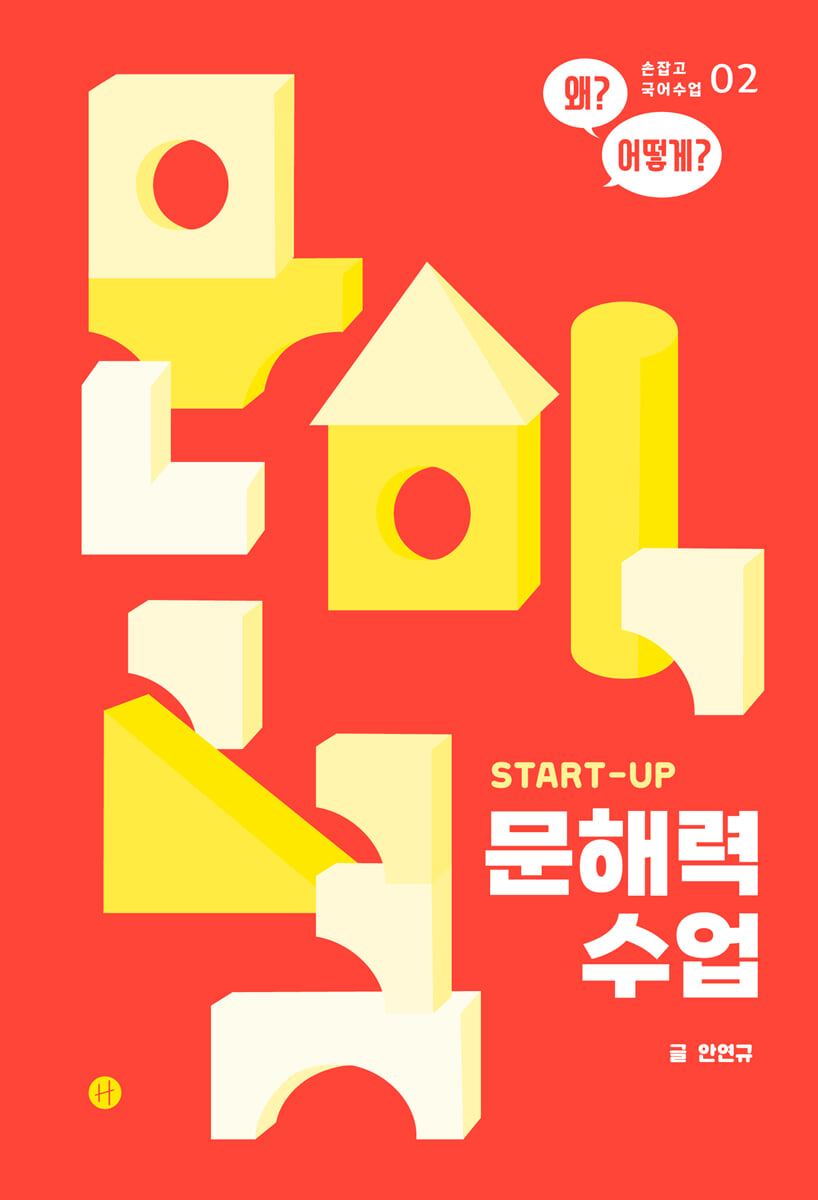
START-UP Literacy Class
 |
Description
Book Introduction
From learning basic vocabulary to developing media literacy
'START-UP' Literacy Improvement Program with Students
This book began with the sense of responsibility and mission of a rural Korean language teacher who faces the serious decline in children's literacy skills every day.
While some children are proud of the phrase "knowledgeable" as a compliment meaning "highly knowledgeable," the reality is that most children do not properly understand the meaning of difficult vocabulary in textbooks.
Anyone can read and write Korean, but not many students have a solid vocabulary and literacy skills.
However, children who are accustomed to the digital environment not only avoid books, but also rarely read.
The author launched the 'Literacy Startup Project for the MZ (Media Literacy Zero) Generation in the Classroom' with the hope that children will live better lives and grow into adults who know the joy of reading.
And I wrote this book with the hope that this literacy improvement program I conducted with children could reach more children.
This book is a 'class case study book' that introduces the 'START-UP' program, which a Korean language teacher completed through trial and error to develop children's literacy skills, from classes that teach basic vocabulary through 'Making a Textbook Dictionary', classes that cultivate literary appreciation literacy, classes that read various texts related to one's career path or interests, and classes that cultivate media literacy through critical reading of newspaper articles.
Each stage of the program vividly captures the process and reviews of classes conducted with children.
A class where teachers and students grow together, a class that helps students in their lives, a class filled with fun and communication, a class where everyone participates enthusiastically…
This book will serve as a valuable guide for Korean language teachers who dream of such classes.
'START-UP' Literacy Improvement Program with Students
This book began with the sense of responsibility and mission of a rural Korean language teacher who faces the serious decline in children's literacy skills every day.
While some children are proud of the phrase "knowledgeable" as a compliment meaning "highly knowledgeable," the reality is that most children do not properly understand the meaning of difficult vocabulary in textbooks.
Anyone can read and write Korean, but not many students have a solid vocabulary and literacy skills.
However, children who are accustomed to the digital environment not only avoid books, but also rarely read.
The author launched the 'Literacy Startup Project for the MZ (Media Literacy Zero) Generation in the Classroom' with the hope that children will live better lives and grow into adults who know the joy of reading.
And I wrote this book with the hope that this literacy improvement program I conducted with children could reach more children.
This book is a 'class case study book' that introduces the 'START-UP' program, which a Korean language teacher completed through trial and error to develop children's literacy skills, from classes that teach basic vocabulary through 'Making a Textbook Dictionary', classes that cultivate literary appreciation literacy, classes that read various texts related to one's career path or interests, and classes that cultivate media literacy through critical reading of newspaper articles.
Each stage of the program vividly captures the process and reviews of classes conducted with children.
A class where teachers and students grow together, a class that helps students in their lives, a class filled with fun and communication, a class where everyone participates enthusiastically…
This book will serve as a valuable guide for Korean language teachers who dream of such classes.
- You can preview some of the book's contents.
Preview
index
Publishing the 'Hand-in-Hand Korean Language Class' series
preface
Part 1.
Literacy classes, why?
1.
The biggest problem in Korean language classes: vocabulary
2.
Children who avoid books and have poor literacy skills
3.
Finding a Path to Improving Literacy
4.
Creating a Literacy Improvement Program, START-UP
5.
Literacy for Life
Part 2.
How about literacy classes for life?
Start - Learning Basic Vocabulary
1.
Finding difficult vocabulary in textbooks
2.
Creating a textbook vocabulary dictionary
3.
Evaluation and Class Reviews
Think - Mastering Learning Tools (Thinking Tools)
1.
Create a list of learning tools (thinking tools)
2.
Creating sentences using learning tools (thinking tools)
3.
Evaluation and Class Reviews
Ask - Read by asking questions
1.
Literary appreciation literacy
2.
Reading poetry while asking questions
3.
Evaluation and Class Reviews
Relation - Reading with Relationships
1.
What to Read - Algorithm
2.
Find and read articles of interest
3.
Create your own book
4.
Evaluation and Class Reviews
Theme - Reading by topic
1.
Find media outlets that cover a variety of topics
2.
Read newspaper articles consistently
3.
Reading while communicating
4.
Evaluation and Class Reviews
US - Read Together
1.
Reading "Chunhyangjeon" and sharing thoughts
2.
Reading the novel together and understanding the content
3.
Creating a webtoon based on 'Reading Together'
4.
Evaluation and Class Reviews
Prove - prove
1.
Children in desperate need of media literacy
2.
Understanding the characteristics of newspaper articles
3.
Critical Reading of Internet Articles
4.
Creating card news and shorts
5.
Evaluation and Class Reviews
Epilogue
preface
Part 1.
Literacy classes, why?
1.
The biggest problem in Korean language classes: vocabulary
2.
Children who avoid books and have poor literacy skills
3.
Finding a Path to Improving Literacy
4.
Creating a Literacy Improvement Program, START-UP
5.
Literacy for Life
Part 2.
How about literacy classes for life?
Start - Learning Basic Vocabulary
1.
Finding difficult vocabulary in textbooks
2.
Creating a textbook vocabulary dictionary
3.
Evaluation and Class Reviews
Think - Mastering Learning Tools (Thinking Tools)
1.
Create a list of learning tools (thinking tools)
2.
Creating sentences using learning tools (thinking tools)
3.
Evaluation and Class Reviews
Ask - Read by asking questions
1.
Literary appreciation literacy
2.
Reading poetry while asking questions
3.
Evaluation and Class Reviews
Relation - Reading with Relationships
1.
What to Read - Algorithm
2.
Find and read articles of interest
3.
Create your own book
4.
Evaluation and Class Reviews
Theme - Reading by topic
1.
Find media outlets that cover a variety of topics
2.
Read newspaper articles consistently
3.
Reading while communicating
4.
Evaluation and Class Reviews
US - Read Together
1.
Reading "Chunhyangjeon" and sharing thoughts
2.
Reading the novel together and understanding the content
3.
Creating a webtoon based on 'Reading Together'
4.
Evaluation and Class Reviews
Prove - prove
1.
Children in desperate need of media literacy
2.
Understanding the characteristics of newspaper articles
3.
Critical Reading of Internet Articles
4.
Creating card news and shorts
5.
Evaluation and Class Reviews
Epilogue
Publisher's Review
A Guide to Beautiful Korean Language Classes Where Teachers and Students Grow Together
Hand-in-Hand Korean Class Series
The starting point of this series was the 'high school credit system'.
At a time when teachers lacked awareness and preparedness for the high school credit system, I thought it would be helpful to have teaching materials that could ease the burden of designing individual class programs and lesson plans.
The discussion that started there continued to the ‘essence of Korean language classes.’
The conclusion was that teachers need to have a proper understanding of the philosophy and meaning of their classes in order to set the right direction for their classes and develop specific methods.
The 'Holding Hands in Korean Class' series is a 'Korean class guide' planned and created by Korean language teachers who hope for better Korean language education.
The books in this series are largely divided into two parts based on the preceding conclusions.
Part 1, "Why?", explains the reasons and significance of teaching Korean from the perspective of a Korean language teacher, and Part 2, "How?", presents various examples of Korean language classes that are connected to students' lives.
We will open the way to "better Korean language education" based on the teaching practices of Korean language teachers who have implemented fun and meaningful classes, classes where students and teachers can grow together, classes that help students lead happier lives now and in the future, and classes that promote human maturity beyond textbooks and tests.
Following the publication of 『Short Story Writing Class』, the second volume, 『START-UP Literacy Class』, has now been published.
In the future, there will be ‘novel reading classes’ and ‘non-fiction reading classes.’
We plan to continuously publish books that can help Korean language teachers design their classes, such as 'Grammar Class,' 'Vocabulary Class,' and 'Village Fusion Class.'
Hand-in-Hand Korean Class Series
The starting point of this series was the 'high school credit system'.
At a time when teachers lacked awareness and preparedness for the high school credit system, I thought it would be helpful to have teaching materials that could ease the burden of designing individual class programs and lesson plans.
The discussion that started there continued to the ‘essence of Korean language classes.’
The conclusion was that teachers need to have a proper understanding of the philosophy and meaning of their classes in order to set the right direction for their classes and develop specific methods.
The 'Holding Hands in Korean Class' series is a 'Korean class guide' planned and created by Korean language teachers who hope for better Korean language education.
The books in this series are largely divided into two parts based on the preceding conclusions.
Part 1, "Why?", explains the reasons and significance of teaching Korean from the perspective of a Korean language teacher, and Part 2, "How?", presents various examples of Korean language classes that are connected to students' lives.
We will open the way to "better Korean language education" based on the teaching practices of Korean language teachers who have implemented fun and meaningful classes, classes where students and teachers can grow together, classes that help students lead happier lives now and in the future, and classes that promote human maturity beyond textbooks and tests.
Following the publication of 『Short Story Writing Class』, the second volume, 『START-UP Literacy Class』, has now been published.
In the future, there will be ‘novel reading classes’ and ‘non-fiction reading classes.’
We plan to continuously publish books that can help Korean language teachers design their classes, such as 'Grammar Class,' 'Vocabulary Class,' and 'Village Fusion Class.'
GOODS SPECIFICS
- Date of issue: August 26, 2024
- Page count, weight, size: 168 pages | 150*220*20mm
- ISBN13: 9791170872375
- ISBN10: 1170872379
You may also like
카테고리
korean


korean

![GQ KOREA Mark (Monthly): December [2025]](http://librairie.coreenne.fr/cdn/shop/files/8ef265dbbfbf186523ed75ba7319009d.jpg?v=1765340328&width=3840)


