

Class evaluations that foster student initiative
 |
Description
Book Introduction
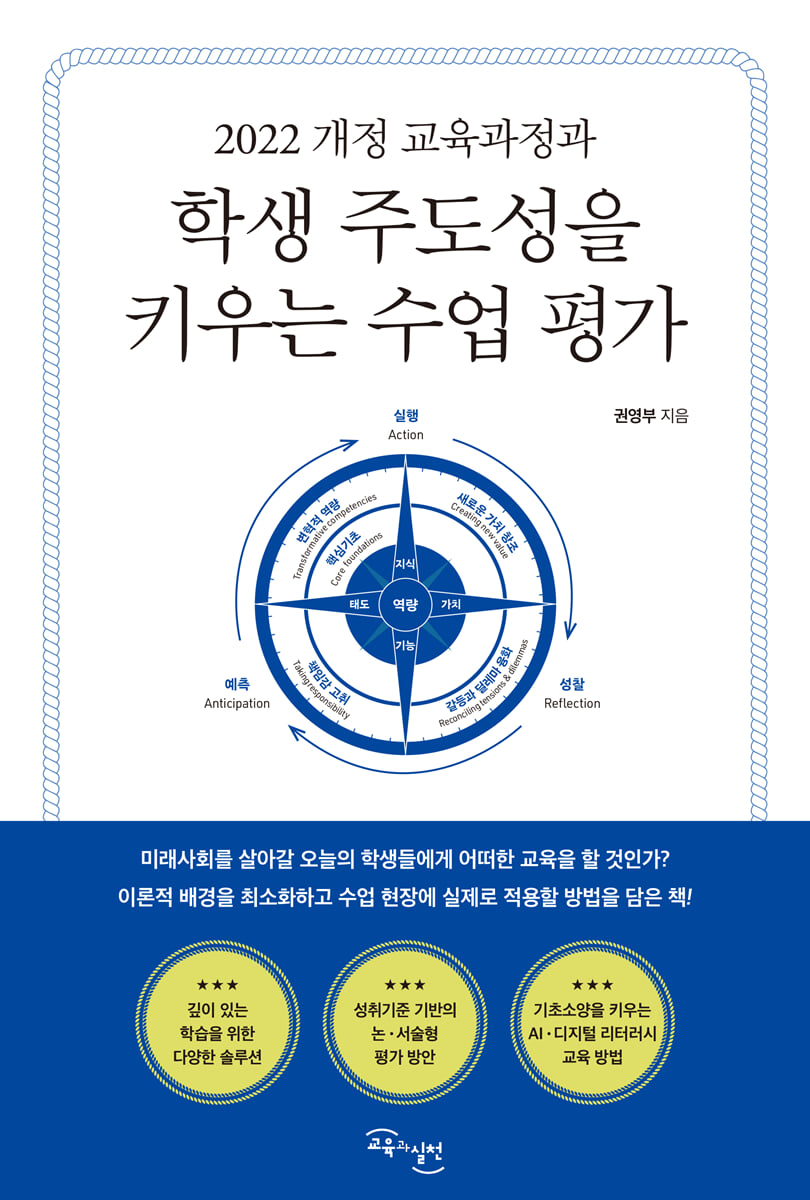
Providing various practical solutions for "deep learning" in the 2022 revised curriculum.
A concrete presentation of the preparation and implementation process for student initiative, centered on classes and case studies.
Proposing AI-based digital media literacy education plans that foster basic skills.
Introduction to a descriptive and argumentative assessment method based on achievement criteria and a rubric creation method.
The 2022 revised curriculum emphasizes "class design centered on core ideas, consideration of the interconnectedness of content within and across subjects, meaningful learning connected to life, learning inquiry methods and reflection on learning, and learning basic literacy" to foster in-depth learning.
Core ideas, a new concept in the 2022 revised curriculum, reveal the core of the subject and are not something teachers teach.
This is something that can be understood and discovered when students develop their initiative and capabilities.
It may seem overwhelming to know what to do and how to do it for such in-depth learning.
This book is a guide to resolving these issues.
Although AI digital textbooks (AIDT) have emerged, AI digital textbooks cannot solve all aspects of classes.
Classes must strive for a balance between digital and analog to achieve excellent results. Even in the age of AI, school education requires both students and teachers to take the initiative and cultivate critical thinking skills.
Experiments using AI-only teaching have been conducted in the United States and have proven unsuccessful. AI-powered digital textbooks are a key component of instruction.
Future classes will be led by teachers and students, and they may utilize AI textbooks or study with other materials (Jeong Je-young, President of the Korea Education and Research Information Service).
In this context, this book systematically and specifically presents the overall concept of in-depth learning based on the 2022 revised curriculum.
In addition, it provides detailed guidance on the preparation and implementation process for collaborative learning and individual learning.
By designing class assessments according to the guidelines in this book, you can enhance the educational value pursued by the 2022 revised curriculum across all subjects.
To this end, we provide various activities based on the curriculum, along with activity sheets, to minimize theory and allow for a practical approach.
This is the greatest virtue of this book.
A concrete presentation of the preparation and implementation process for student initiative, centered on classes and case studies.
Proposing AI-based digital media literacy education plans that foster basic skills.
Introduction to a descriptive and argumentative assessment method based on achievement criteria and a rubric creation method.
The 2022 revised curriculum emphasizes "class design centered on core ideas, consideration of the interconnectedness of content within and across subjects, meaningful learning connected to life, learning inquiry methods and reflection on learning, and learning basic literacy" to foster in-depth learning.
Core ideas, a new concept in the 2022 revised curriculum, reveal the core of the subject and are not something teachers teach.
This is something that can be understood and discovered when students develop their initiative and capabilities.
It may seem overwhelming to know what to do and how to do it for such in-depth learning.
This book is a guide to resolving these issues.
Although AI digital textbooks (AIDT) have emerged, AI digital textbooks cannot solve all aspects of classes.
Classes must strive for a balance between digital and analog to achieve excellent results. Even in the age of AI, school education requires both students and teachers to take the initiative and cultivate critical thinking skills.
Experiments using AI-only teaching have been conducted in the United States and have proven unsuccessful. AI-powered digital textbooks are a key component of instruction.
Future classes will be led by teachers and students, and they may utilize AI textbooks or study with other materials (Jeong Je-young, President of the Korea Education and Research Information Service).
In this context, this book systematically and specifically presents the overall concept of in-depth learning based on the 2022 revised curriculum.
In addition, it provides detailed guidance on the preparation and implementation process for collaborative learning and individual learning.
By designing class assessments according to the guidelines in this book, you can enhance the educational value pursued by the 2022 revised curriculum across all subjects.
To this end, we provide various activities based on the curriculum, along with activity sheets, to minimize theory and allow for a practical approach.
This is the greatest virtue of this book.
- You can preview some of the book's contents.
Preview
index
In publishing the book
Chapter 1.
Understanding the 2022 Revised Curriculum
1.
A holistic understanding of class evaluation dimensions
2.
Changes in the curriculum documentation system
(1) Changes in content system
(2) Understanding the core idea
(3) Classes to discover key ideas
(4) Understanding content elements
(5) Understanding the achievement standards
(6) Design of classes, assessments, and questions based on achievement standards
3.
In-depth learning and competency implementation curriculum
(1) The meaning of deep learning
(2) In-depth learning and competency implementation
(3) Competence as a transfer
Chapter 2.
Class Evaluation for Deep Learning
1.
Lesson design centered on core ideas
(1) Understanding lesson design centered on core ideas
(2) Case study of lesson design centered on core ideas
2.
Learning that considers the interconnectedness between areas within the curriculum
(1) Developing transferability skills between areas within a subject
(2) Developing transferability skills based on the achievement standards of a subject
3.
Learning that considers the interconnectedness of content across subjects
(1) Developing transferability skills based on the achievement standards of two subjects.
(2) Developing transferability skills by considering the interconnectivity of content across subjects.
4.
Meaningful learning connected to life
(1) Understanding meaningful learning connected to life
(2) Meaningful learning activities connected to life
5.
Learning and Reflecting on Inquiry Methods
6.
Learning basic skills
(1) Understanding basic literacy
(2) Media literacy education that fosters basic skills
(3) Classes to develop language skills
(4) Classes to develop mathematical skills
(5) Classes to develop digital literacy
Chapter 3.
Understanding Student Leadership
1.
Understanding that takes into account the real situation
2.
Understanding the conceptual level
3.
Understanding the level of achievement standards
4.
Considerations for Enhancing Student Initiatives
Chapter 4.
Preparing class assessments to foster student initiative
1.
Design of competency tests, group formation, questions, and presentation methods
2.
Testing cognitive domain competencies
3.
Testing competencies in the definitional domain
4.
Building a Learning Competency Profile
5.
Forming groups for collaborative communication
6.
Designing Questions to Develop Inquiry Skills
(1) Create a key question
(2) Creating key questions at the achievement standard level
(3) Creating inquiry questions centered on content elements
(4) Students take the initiative in creating questions
(5) Creating questions to utilize generative artificial intelligence (AI)
7.
Designing Creative Presentation Methods
(1) Storytelling presentation
(2) Hot seating presentation
(3) Announcement of role reversal method
(4) Presentation using creative ideas
(5) Presentation in a creative way by combining groups
Chapter 5.
Designing Class Assessments to Foster Student Initiatives
1.
Designing Class Assessments to Foster Student Initiatives
(1) The significance of designing class evaluations that foster student initiative
(2) Methods for designing class evaluations that foster student initiative
2.
Creating activity sheets to develop critical thinking skills
(1) Creating a blank-centered activity sheet
(2) Creating an activity sheet that encompasses cognitive and affective domains
(3) Creating an activity sheet suitable for handling performance tasks
(4) Create different activity sheets for each group.
(5) Creating an activity sheet that pursues harmony between digital and analog.
(6) Creating activity sheets to foster creativity
(7) Creating activity sheets centered on content elements
(8) Students create their own activity sheets
(9) Activity sheet in KWL list format
Chapter 6.
Class assessment activities that enhance student initiative
1.
Class activities that enhance student initiative
(1) Collaborative learning for collaborative communication
(2) Individual learning that respects diversity and choice
2.
2022 Revised Curriculum and Assessment
3.
Assessments that strengthen student initiative
(1) Change of thinking about evaluation perspective
(2) Evaluation that emphasizes the learning process
(3) Evaluation that fosters joint leadership
(4) Providing opportunities for external evaluation
(5) Assessment to develop a pleasant imagination
4.
Achievement criteria-based argumentative and descriptive evaluation
(1) Understanding and procedures for descriptive and argumentative evaluation based on achievement criteria
(2) Subject-specific examples of essay and descriptive evaluation based on achievement criteria
(3) Classes for essay and descriptive evaluation
(4) Determining the essay/descriptive evaluation based on learning objectives
5.
Creating a Rubric for Definitive Domain Assessment
(1) Understanding the definitional domain assessment
(2) Understanding the creation of rubrics for evaluating definitional domains
(3) Example of constructing a rubric for evaluating the definitional domain
(4) Expected effects of the rubric
6.
Feedback activities that foster student initiative
(1) Meaning and principles of feedback
(2) Balanced feedback in cognitive and affective domains
(3) Harmonious feedback between process and result
(4) Choice of oral and written feedback
(5) Feedback through self-evaluation and peer evaluation
(6) Feedback centered on key questions
(7) Feedback centered on comprehensive evaluation
(8) Joint feedback between students and teachers
Chapter 1.
Understanding the 2022 Revised Curriculum
1.
A holistic understanding of class evaluation dimensions
2.
Changes in the curriculum documentation system
(1) Changes in content system
(2) Understanding the core idea
(3) Classes to discover key ideas
(4) Understanding content elements
(5) Understanding the achievement standards
(6) Design of classes, assessments, and questions based on achievement standards
3.
In-depth learning and competency implementation curriculum
(1) The meaning of deep learning
(2) In-depth learning and competency implementation
(3) Competence as a transfer
Chapter 2.
Class Evaluation for Deep Learning
1.
Lesson design centered on core ideas
(1) Understanding lesson design centered on core ideas
(2) Case study of lesson design centered on core ideas
2.
Learning that considers the interconnectedness between areas within the curriculum
(1) Developing transferability skills between areas within a subject
(2) Developing transferability skills based on the achievement standards of a subject
3.
Learning that considers the interconnectedness of content across subjects
(1) Developing transferability skills based on the achievement standards of two subjects.
(2) Developing transferability skills by considering the interconnectivity of content across subjects.
4.
Meaningful learning connected to life
(1) Understanding meaningful learning connected to life
(2) Meaningful learning activities connected to life
5.
Learning and Reflecting on Inquiry Methods
6.
Learning basic skills
(1) Understanding basic literacy
(2) Media literacy education that fosters basic skills
(3) Classes to develop language skills
(4) Classes to develop mathematical skills
(5) Classes to develop digital literacy
Chapter 3.
Understanding Student Leadership
1.
Understanding that takes into account the real situation
2.
Understanding the conceptual level
3.
Understanding the level of achievement standards
4.
Considerations for Enhancing Student Initiatives
Chapter 4.
Preparing class assessments to foster student initiative
1.
Design of competency tests, group formation, questions, and presentation methods
2.
Testing cognitive domain competencies
3.
Testing competencies in the definitional domain
4.
Building a Learning Competency Profile
5.
Forming groups for collaborative communication
6.
Designing Questions to Develop Inquiry Skills
(1) Create a key question
(2) Creating key questions at the achievement standard level
(3) Creating inquiry questions centered on content elements
(4) Students take the initiative in creating questions
(5) Creating questions to utilize generative artificial intelligence (AI)
7.
Designing Creative Presentation Methods
(1) Storytelling presentation
(2) Hot seating presentation
(3) Announcement of role reversal method
(4) Presentation using creative ideas
(5) Presentation in a creative way by combining groups
Chapter 5.
Designing Class Assessments to Foster Student Initiatives
1.
Designing Class Assessments to Foster Student Initiatives
(1) The significance of designing class evaluations that foster student initiative
(2) Methods for designing class evaluations that foster student initiative
2.
Creating activity sheets to develop critical thinking skills
(1) Creating a blank-centered activity sheet
(2) Creating an activity sheet that encompasses cognitive and affective domains
(3) Creating an activity sheet suitable for handling performance tasks
(4) Create different activity sheets for each group.
(5) Creating an activity sheet that pursues harmony between digital and analog.
(6) Creating activity sheets to foster creativity
(7) Creating activity sheets centered on content elements
(8) Students create their own activity sheets
(9) Activity sheet in KWL list format
Chapter 6.
Class assessment activities that enhance student initiative
1.
Class activities that enhance student initiative
(1) Collaborative learning for collaborative communication
(2) Individual learning that respects diversity and choice
2.
2022 Revised Curriculum and Assessment
3.
Assessments that strengthen student initiative
(1) Change of thinking about evaluation perspective
(2) Evaluation that emphasizes the learning process
(3) Evaluation that fosters joint leadership
(4) Providing opportunities for external evaluation
(5) Assessment to develop a pleasant imagination
4.
Achievement criteria-based argumentative and descriptive evaluation
(1) Understanding and procedures for descriptive and argumentative evaluation based on achievement criteria
(2) Subject-specific examples of essay and descriptive evaluation based on achievement criteria
(3) Classes for essay and descriptive evaluation
(4) Determining the essay/descriptive evaluation based on learning objectives
5.
Creating a Rubric for Definitive Domain Assessment
(1) Understanding the definitional domain assessment
(2) Understanding the creation of rubrics for evaluating definitional domains
(3) Example of constructing a rubric for evaluating the definitional domain
(4) Expected effects of the rubric
6.
Feedback activities that foster student initiative
(1) Meaning and principles of feedback
(2) Balanced feedback in cognitive and affective domains
(3) Harmonious feedback between process and result
(4) Choice of oral and written feedback
(5) Feedback through self-evaluation and peer evaluation
(6) Feedback centered on key questions
(7) Feedback centered on comprehensive evaluation
(8) Joint feedback between students and teachers
Into the book
Learning is not simply a process of memorizing knowledge.
It is the process by which students construct meaning about themselves and the world.
Therefore, 'deep learning' is necessary to properly understand and internalize core concepts and principles, connect them to thoughts and experiences, and make them your own.
Deep learning does not stop at understanding one piece of knowledge or multiple pieces of knowledge.
To achieve this, we must cultivate the power to 'transfer' and utilize knowledge in everyday life through the connection between knowledge and the development of knowledge.
This is because the ultimate function of learning is to help students understand new information that corresponds to the learning goal in a meaningful form and then transfer this knowledge to 'long-term memory'.
--- p.17~18
Activities that develop leadership and competency based on basic literacy, knowledge and understanding, processes and skills, and values and attitudes will help students understand and discover core ideas.
Again, the key idea is not what teachers teach.
This is what students understand and discover when they engage in class assessment activities that foster initiative and competency.
--- p.27
When preparing for a new school year, you should take the time to analyze and understand the content structure of the subject you are responsible for.
At this time, class evaluation activities should be designed based on core ideas, content elements, and basic skills.
Through this, we must establish a class vision that allows us to view our classes from a broad perspective, and accordingly, we must ensure that class evaluation activities are directed toward fostering student initiative.
--- p.46
The Programme for International Student Assessment (PISA) 2022 defines mathematical literacy as "an individual's ability to formalize, use, and interpret mathematics to reason mathematically and solve problems in a variety of real-life contexts."
It involves using mathematical concepts, procedures, facts, and tools to describe, explain, and predict phenomena.
--- p.97
To strengthen student autonomy, a culture that positively embraces teacher autonomy in class evaluation must be established.
Rather than evaluating classes from a traditional perspective, teacher initiative can shine when teachers are encouraged and supported with an open mind toward new attempts.
To this end, it is necessary to improve teacher education content, provide teacher training and institutional support to enhance professionalism, and aim to foster teacher leadership.
--- p.124~125
Activity sheets are vessels that contain students' thoughts.
Like warm rice in a bowl, activity sheets are a precious tool we must encounter every day.
We need to create activity sheets based on reasoning in a variety of formats so that you won't get tired of them even if you eat them every day.
In this respect, we should focus on creating activity sheets that contain reasoning rather than learning materials that contain knowledge.
--- p.198
Collaborative communication skills are the skills needed to pool their strengths and share ideas so that individuals from different backgrounds can come together to form a community and live together, achieving a common goal for all members.
The reason for emphasizing cooperative communication skills is because we recognize the need for mutual cooperation and community in order to survive in an increasingly complex and diverse society.
The most appropriate way to develop collaborative communication skills in schools is to form groups and continuously develop collaborative communication skills through class evaluations.
--- p.231
Evaluation focuses on 'checking the extent to which each student has achieved his or her educational goals, supplementing learning deficiencies, and improving the quality of classes (teaching and learning).'
However, so far, there has been a focus on assigning scores (grades, grades) through result-oriented evaluation, and there has been a neglect of improving the quality of classes or conducting feedback activities based on the evaluation.
Feedback is 'an activity that collects, analyzes, and interprets evidence of students' various learning through formal and informal evaluation activities in the class (teaching/learning) process and results, and then provides information to teachers and students for improvement and enhancement of learning.'
Effective feedback should help students learn and grow.
So feedback should be advice rather than evaluation, and specific rather than general.
Advisory feedback should be process-focused, self-regulating, and help foster goal-oriented achievement motivation.
It is the process by which students construct meaning about themselves and the world.
Therefore, 'deep learning' is necessary to properly understand and internalize core concepts and principles, connect them to thoughts and experiences, and make them your own.
Deep learning does not stop at understanding one piece of knowledge or multiple pieces of knowledge.
To achieve this, we must cultivate the power to 'transfer' and utilize knowledge in everyday life through the connection between knowledge and the development of knowledge.
This is because the ultimate function of learning is to help students understand new information that corresponds to the learning goal in a meaningful form and then transfer this knowledge to 'long-term memory'.
--- p.17~18
Activities that develop leadership and competency based on basic literacy, knowledge and understanding, processes and skills, and values and attitudes will help students understand and discover core ideas.
Again, the key idea is not what teachers teach.
This is what students understand and discover when they engage in class assessment activities that foster initiative and competency.
--- p.27
When preparing for a new school year, you should take the time to analyze and understand the content structure of the subject you are responsible for.
At this time, class evaluation activities should be designed based on core ideas, content elements, and basic skills.
Through this, we must establish a class vision that allows us to view our classes from a broad perspective, and accordingly, we must ensure that class evaluation activities are directed toward fostering student initiative.
--- p.46
The Programme for International Student Assessment (PISA) 2022 defines mathematical literacy as "an individual's ability to formalize, use, and interpret mathematics to reason mathematically and solve problems in a variety of real-life contexts."
It involves using mathematical concepts, procedures, facts, and tools to describe, explain, and predict phenomena.
--- p.97
To strengthen student autonomy, a culture that positively embraces teacher autonomy in class evaluation must be established.
Rather than evaluating classes from a traditional perspective, teacher initiative can shine when teachers are encouraged and supported with an open mind toward new attempts.
To this end, it is necessary to improve teacher education content, provide teacher training and institutional support to enhance professionalism, and aim to foster teacher leadership.
--- p.124~125
Activity sheets are vessels that contain students' thoughts.
Like warm rice in a bowl, activity sheets are a precious tool we must encounter every day.
We need to create activity sheets based on reasoning in a variety of formats so that you won't get tired of them even if you eat them every day.
In this respect, we should focus on creating activity sheets that contain reasoning rather than learning materials that contain knowledge.
--- p.198
Collaborative communication skills are the skills needed to pool their strengths and share ideas so that individuals from different backgrounds can come together to form a community and live together, achieving a common goal for all members.
The reason for emphasizing cooperative communication skills is because we recognize the need for mutual cooperation and community in order to survive in an increasingly complex and diverse society.
The most appropriate way to develop collaborative communication skills in schools is to form groups and continuously develop collaborative communication skills through class evaluations.
--- p.231
Evaluation focuses on 'checking the extent to which each student has achieved his or her educational goals, supplementing learning deficiencies, and improving the quality of classes (teaching and learning).'
However, so far, there has been a focus on assigning scores (grades, grades) through result-oriented evaluation, and there has been a neglect of improving the quality of classes or conducting feedback activities based on the evaluation.
Feedback is 'an activity that collects, analyzes, and interprets evidence of students' various learning through formal and informal evaluation activities in the class (teaching/learning) process and results, and then provides information to teachers and students for improvement and enhancement of learning.'
Effective feedback should help students learn and grow.
So feedback should be advice rather than evaluation, and specific rather than general.
Advisory feedback should be process-focused, self-regulating, and help foster goal-oriented achievement motivation.
--- p.292~293
Publisher's Review
To cultivate the transformative capabilities and creative problem-solving skills required in future society, it is necessary to shift from teacher-led classes to student-led learning.
Student initiative refers to the ability to set goals for oneself in school, social life, and one's own life, and to proactively achieve and take responsibility for those goals.
Student initiative is a process that helps students grow into individuals who actively participate in the process of solving community problems through experiences such as taking the lead in classes and student self-governing activities.
Therefore, student initiative cannot help but be the fundamental foundation of education that fosters future capabilities.
The art of teaching is the art of helping discovery.
To innovate education based on student leadership, the class structure and environment must fundamentally change to one that allows students to take the lead in their learning.
Teachers must decide with students from the design stage of the lesson and apply learning methods that allow students to take charge of their own learning process accordingly.
Student initiative can be applied not only to academic classes but also to extracurricular activities and student self-governance activities.
As members and stakeholders of the school, students should have the opportunity to discuss and make decisions about classes and school activities and to carry them out responsibly.
If education is based on student initiative in this way, students' learning abilities will improve, and their self-efficacy and sense of responsibility will also increase, which will greatly help them to pioneer their own lives as independent individuals.
Leadership comes from the process, not the outcome.
The revised 2022 curriculum, which emphasizes classroom assessment activities that foster student initiative and competency, will be partially implemented starting in 2023. It will be implemented in stages by school and grade level, and is scheduled for full implementation in 2027.
It is necessary to prepare for developing leadership and competency by designing class evaluation activities based on the content system of the changed curriculum.
The values of autonomy, self-management, and autonomy inherent in leadership are valuable virtues that all people, including teachers, and educational institutions must possess for future education.
Student leadership must be understood in the context of co-leadership alongside teacher leadership.
In this respect, rather than teachers leading the teaching, students should take the lead and learn in depth.
Student initiative refers to the ability to set goals for oneself in school, social life, and one's own life, and to proactively achieve and take responsibility for those goals.
Student initiative is a process that helps students grow into individuals who actively participate in the process of solving community problems through experiences such as taking the lead in classes and student self-governing activities.
Therefore, student initiative cannot help but be the fundamental foundation of education that fosters future capabilities.
The art of teaching is the art of helping discovery.
To innovate education based on student leadership, the class structure and environment must fundamentally change to one that allows students to take the lead in their learning.
Teachers must decide with students from the design stage of the lesson and apply learning methods that allow students to take charge of their own learning process accordingly.
Student initiative can be applied not only to academic classes but also to extracurricular activities and student self-governance activities.
As members and stakeholders of the school, students should have the opportunity to discuss and make decisions about classes and school activities and to carry them out responsibly.
If education is based on student initiative in this way, students' learning abilities will improve, and their self-efficacy and sense of responsibility will also increase, which will greatly help them to pioneer their own lives as independent individuals.
Leadership comes from the process, not the outcome.
The revised 2022 curriculum, which emphasizes classroom assessment activities that foster student initiative and competency, will be partially implemented starting in 2023. It will be implemented in stages by school and grade level, and is scheduled for full implementation in 2027.
It is necessary to prepare for developing leadership and competency by designing class evaluation activities based on the content system of the changed curriculum.
The values of autonomy, self-management, and autonomy inherent in leadership are valuable virtues that all people, including teachers, and educational institutions must possess for future education.
Student leadership must be understood in the context of co-leadership alongside teacher leadership.
In this respect, rather than teachers leading the teaching, students should take the lead and learn in depth.
GOODS SPECIFICS
- Date of issue: June 20, 2024
- Page count, weight, size: 312 pages | 476g | 152*225*20mm
- ISBN13: 9791191724622
- ISBN10: 119172462X
You may also like
카테고리
korean


korean

![GQ KOREA Mark (Monthly): December [2025]](http://librairie.coreenne.fr/cdn/shop/files/8ef265dbbfbf186523ed75ba7319009d.jpg?v=1765340328&width=3840)


