

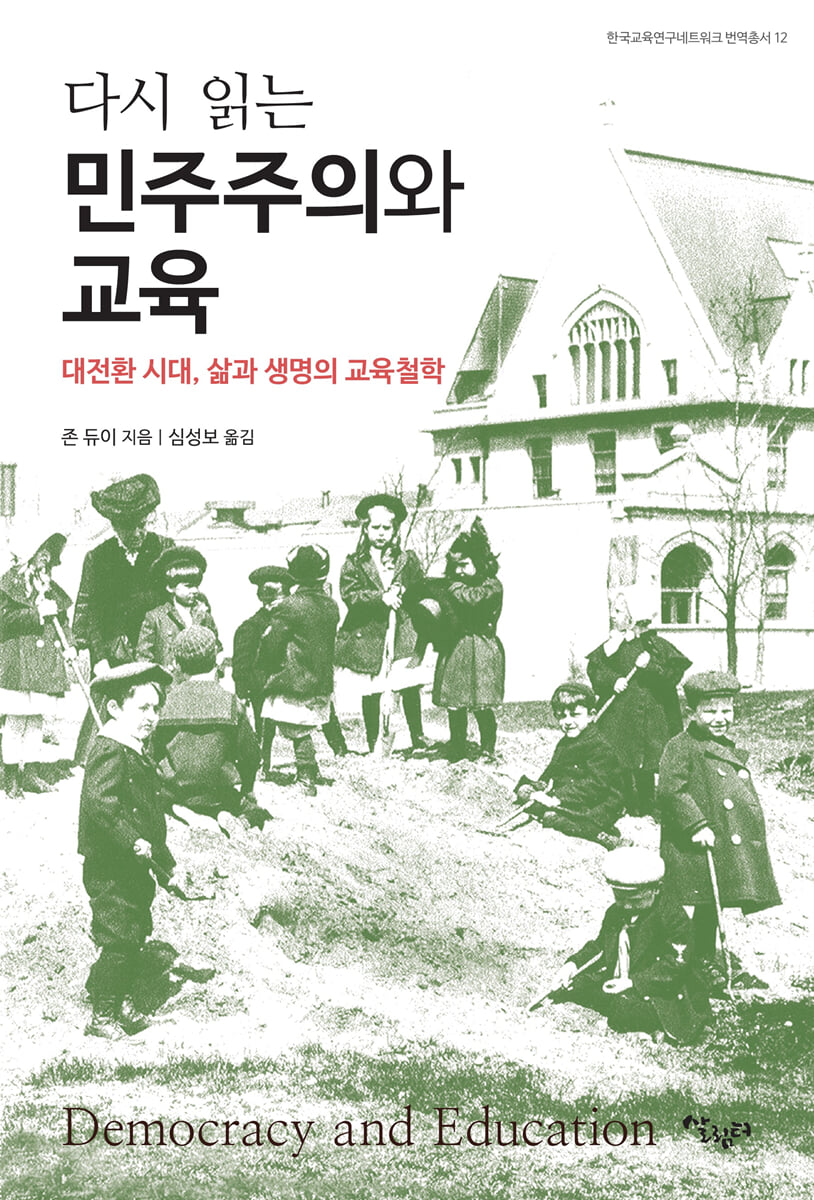
Rereading Democracy and Education
 |
Description
Book Introduction
Why should we reread Democracy and Education?
Reread the definitive edition of John Dewey's thought, a classic in the history of world education, after 109 years!
『Rereading Democracy and Education』 is a translation of John Dewey's 『Democracy and Education』, the most influential introductory book to educational philosophy of the 20th century.
“A practical thinker who considered philosophy as the driving force of civilization, and a public intellectual who advocated democracy by seeking to implement democratic ideals in school education.” John Dewey’s book, Democracy and Education, has been published in over 30 countries and continues to have a great influence today.
Reread the definitive edition of John Dewey's thought, a classic in the history of world education, after 109 years!
『Rereading Democracy and Education』 is a translation of John Dewey's 『Democracy and Education』, the most influential introductory book to educational philosophy of the 20th century.
“A practical thinker who considered philosophy as the driving force of civilization, and a public intellectual who advocated democracy by seeking to implement democratic ideals in school education.” John Dewey’s book, Democracy and Education, has been published in over 30 countries and continues to have a great influence today.
- You can preview some of the book's contents.
Preview
index
preface
Translator's Note | Why Reread Democracy and Education?
Chapter 1: Education as a Necessity of Life and Living
Chapter 2: The Social Function of Education
Chapter 3: Education as a Map
Chapter 4: Education for Growth, Habits, and Plasticity
Chapter 5: The Uncertain Future and the Theory of Preparation, the Theory of Manifestation, and the Theory of Formation
Chapter 6: Conservative and Progressive Education as the Intersection of Past and Future
Chapter 7: Democratic Education and the Types of Union Life
Chapter 8: Democratic Theory of Educational Purpose
Chapter 9: Natural Development, Social Efficiency, and the Purpose of Education for Culture
Chapter 10: Reconstructing Interest and Education for Democratic Purposes
Chapter 11: Experiences and Thoughts for Innovation in Learning
Chapter 12: The Role of Thinking in New Education
Chapter 13: Teaching and Learning Methods for Intellectual Engagement in the Subject
Chapter 14: Integrating Learning Through Action with Curriculum
Chapter 15: Play, Work, and Learning
Chapter 16: The Significance of Learning the Boundaries of Geography and History
Chapter 17: What We Know Scientifically is the Essence of a Democratic Society
Chapter 18: A Culture of Imagination, Growth, and Achievement as Educational Values
Chapter 19: Rethinking Work and Leisure through Education
Chapter 20: The Conflict Between Intellectual and Practical Subjects
Chapter 21: Education for Natural Sciences, Humanities, and Democracy
Chapter 22: The Reciprocal Relationship between the Individual and the World
Chapter 23: Autonomy, Work, and the Vocational Aspects of Education
Chapter 24: Educational Philosophy in an Era of Democratic Crisis
Chapter 25: Theory of Knowledge and Knowledge for the Progress of Society
Chapter 26: A Moral Theory for a Consciously Growing and Renewing Life
Translator's Note
Translator's Note | Why Reread Democracy and Education?
Chapter 1: Education as a Necessity of Life and Living
Chapter 2: The Social Function of Education
Chapter 3: Education as a Map
Chapter 4: Education for Growth, Habits, and Plasticity
Chapter 5: The Uncertain Future and the Theory of Preparation, the Theory of Manifestation, and the Theory of Formation
Chapter 6: Conservative and Progressive Education as the Intersection of Past and Future
Chapter 7: Democratic Education and the Types of Union Life
Chapter 8: Democratic Theory of Educational Purpose
Chapter 9: Natural Development, Social Efficiency, and the Purpose of Education for Culture
Chapter 10: Reconstructing Interest and Education for Democratic Purposes
Chapter 11: Experiences and Thoughts for Innovation in Learning
Chapter 12: The Role of Thinking in New Education
Chapter 13: Teaching and Learning Methods for Intellectual Engagement in the Subject
Chapter 14: Integrating Learning Through Action with Curriculum
Chapter 15: Play, Work, and Learning
Chapter 16: The Significance of Learning the Boundaries of Geography and History
Chapter 17: What We Know Scientifically is the Essence of a Democratic Society
Chapter 18: A Culture of Imagination, Growth, and Achievement as Educational Values
Chapter 19: Rethinking Work and Leisure through Education
Chapter 20: The Conflict Between Intellectual and Practical Subjects
Chapter 21: Education for Natural Sciences, Humanities, and Democracy
Chapter 22: The Reciprocal Relationship between the Individual and the World
Chapter 23: Autonomy, Work, and the Vocational Aspects of Education
Chapter 24: Educational Philosophy in an Era of Democratic Crisis
Chapter 25: Theory of Knowledge and Knowledge for the Progress of Society
Chapter 26: A Moral Theory for a Consciously Growing and Renewing Life
Translator's Note
Into the book
The task of developing in children the attitudes and dispositions necessary for a continuous and progressive life in society cannot be accomplished through direct transmission of beliefs, emotions, and knowledge.
It is done through the environment.
The environment consists of the sum total of conditions relevant to the performance of activities characteristic of living organisms.
--- From “The Social Function of Education”
It is important not to confuse the psychological distinction between play and work with the economic distinction.
Play and work are equally free and depend on intrinsic motivation, regardless of the fact that unequal economic conditions make play, on the one hand, a frivolous diversion for the wealthy, and work, on the other, a tiresome labor for the poor.
--- From "Play, Work, and Learning"
The way to overcome this separation between learning and action is to devise educational strategies that ensure that learning becomes a byproduct of ongoing activities or tasks with social purposes, and that learning utilizes materials derived from social situations.
Under these conditions, the school itself becomes a form of social life, a microcosm of society, interacting closely with other forms of communal experience beyond the school walls.
Any education that cultivates the ability to participate effectively in social life is moral education.
It is done through the environment.
The environment consists of the sum total of conditions relevant to the performance of activities characteristic of living organisms.
--- From “The Social Function of Education”
It is important not to confuse the psychological distinction between play and work with the economic distinction.
Play and work are equally free and depend on intrinsic motivation, regardless of the fact that unequal economic conditions make play, on the one hand, a frivolous diversion for the wealthy, and work, on the other, a tiresome labor for the poor.
--- From "Play, Work, and Learning"
The way to overcome this separation between learning and action is to devise educational strategies that ensure that learning becomes a byproduct of ongoing activities or tasks with social purposes, and that learning utilizes materials derived from social situations.
Under these conditions, the school itself becomes a form of social life, a microcosm of society, interacting closely with other forms of communal experience beyond the school walls.
Any education that cultivates the ability to participate effectively in social life is moral education.
--- From "Moral Theory for a Consciously Growing and Renewing Life"
Publisher's Review
The most influential introduction to educational philosophy of the 20th century
“Democracy and Education” is a book that presents a comprehensive theory of education.
It is easy to misunderstand it as a 'democratic education theory', but it contains such a vast amount of content that it can be called an introduction to educational philosophy and pedagogy.
『Democracy and Education』 is largely divided into four parts.
(1) Education as Growth Theory (Chapters 1-6: Goal-directed behavior, behavior occurring in a social context, behavior governed by norms, work, learning and experience, learning from communicative exchange, learning social norms, direction of learning activities, education as growth and preparation)
(2) Democratic Theory in Education (Chapters 7-18: Definition of Democracy, Democracy in Education)
(3) Philosophical dualism as an obstacle to democratic education (Chapters 18-23: pure and popular arts, labor and leisure, intellectual and practical subjects, science and humanities)
(4) The implications of democracy in education for the reconstruction of philosophy (Chapters 24-26: Philosophy as a type of thought, theory of knowledge, and moral theory)
Chapters 1 to 6 unfold Dewey's ideas by laying out general concepts of education such as preparation, expression, formalization, formation, and repetition.
Dewey's unique concept of democracy, as expressed in Chapter 7 as a "united way of life" and a "united way of communicative experience," has been given new meaning since its time, in the late 20th century, and even today.
Chapters 8 to 23 attempt an expanded reconstruction of educational ideology for a democratic context (educational purpose, natural development and social efficiency and culture, interest and cultivation, experience and thinking, curriculum and subjects and teaching and learning methods, theoretical and practical subjects, natural subjects and humanities subjects, individual and world, work and play and labor, labor and leisure, realism and appreciation, imagination and achievement, vocational education, etc.).
Chapters 24 through 26 explore the triangular relationship between knowledge, morality, and education.
Overcoming the Dualistic Worldview and the Publication of a New Translation
Professor Sim Seong-bo, the translator, believes that the concepts that Dewey discussed over 100 years ago are permeated by the 'overcoming of the dualistic worldview.'
In addition, it is revealed that the new translation was published due to the need to improve the old-fashioned speech style to 21st century language and the demand to restore the communal nature and practicality of John Dewey's thought.
Dewey's Democracy and Education has much to offer us, especially as our world faces yet another period of rapid change similar to that experienced by Dewey.
The task of democracy—the creation of a freer, more human experience in which everyone shares and contributes—is truly our task.
In today's era of great transformation, "Democracy and Education" offers a variety of missions and messages on various levels regarding the educational crisis arising in democratic society.
(From the translator's note)
“Why has Dewey’s criticism of Democracy and Education remained so influential, despite the fact that it has been over a hundred years since its first publication?”
Readers will be able to find answers to these questions as they read this book.
Again, in 1916, in 2024, thinking about democracy and education.
“Democracy and Education” is a book that presents a comprehensive theory of education.
It is easy to misunderstand it as a 'democratic education theory', but it contains such a vast amount of content that it can be called an introduction to educational philosophy and pedagogy.
『Democracy and Education』 is largely divided into four parts.
(1) Education as Growth Theory (Chapters 1-6: Goal-directed behavior, behavior occurring in a social context, behavior governed by norms, work, learning and experience, learning from communicative exchange, learning social norms, direction of learning activities, education as growth and preparation)
(2) Democratic Theory in Education (Chapters 7-18: Definition of Democracy, Democracy in Education)
(3) Philosophical dualism as an obstacle to democratic education (Chapters 18-23: pure and popular arts, labor and leisure, intellectual and practical subjects, science and humanities)
(4) The implications of democracy in education for the reconstruction of philosophy (Chapters 24-26: Philosophy as a type of thought, theory of knowledge, and moral theory)
Chapters 1 to 6 unfold Dewey's ideas by laying out general concepts of education such as preparation, expression, formalization, formation, and repetition.
Dewey's unique concept of democracy, as expressed in Chapter 7 as a "united way of life" and a "united way of communicative experience," has been given new meaning since its time, in the late 20th century, and even today.
Chapters 8 to 23 attempt an expanded reconstruction of educational ideology for a democratic context (educational purpose, natural development and social efficiency and culture, interest and cultivation, experience and thinking, curriculum and subjects and teaching and learning methods, theoretical and practical subjects, natural subjects and humanities subjects, individual and world, work and play and labor, labor and leisure, realism and appreciation, imagination and achievement, vocational education, etc.).
Chapters 24 through 26 explore the triangular relationship between knowledge, morality, and education.
Overcoming the Dualistic Worldview and the Publication of a New Translation
Professor Sim Seong-bo, the translator, believes that the concepts that Dewey discussed over 100 years ago are permeated by the 'overcoming of the dualistic worldview.'
In addition, it is revealed that the new translation was published due to the need to improve the old-fashioned speech style to 21st century language and the demand to restore the communal nature and practicality of John Dewey's thought.
Dewey's Democracy and Education has much to offer us, especially as our world faces yet another period of rapid change similar to that experienced by Dewey.
The task of democracy—the creation of a freer, more human experience in which everyone shares and contributes—is truly our task.
In today's era of great transformation, "Democracy and Education" offers a variety of missions and messages on various levels regarding the educational crisis arising in democratic society.
(From the translator's note)
“Why has Dewey’s criticism of Democracy and Education remained so influential, despite the fact that it has been over a hundred years since its first publication?”
Readers will be able to find answers to these questions as they read this book.
Again, in 1916, in 2024, thinking about democracy and education.
GOODS SPECIFICS
- Date of issue: January 13, 2024
- Format: Paperback book binding method guide
- Page count, weight, size: 616 pages | 153*224*35mm
- ISBN13: 9791159302732
- ISBN10: 1159302731
You may also like
카테고리
korean


korean

![GQ KOREA Mark (Monthly): December [2025]](http://librairie.coreenne.fr/cdn/shop/files/8ef265dbbfbf186523ed75ba7319009d.jpg?v=1765340328&width=3840)


