

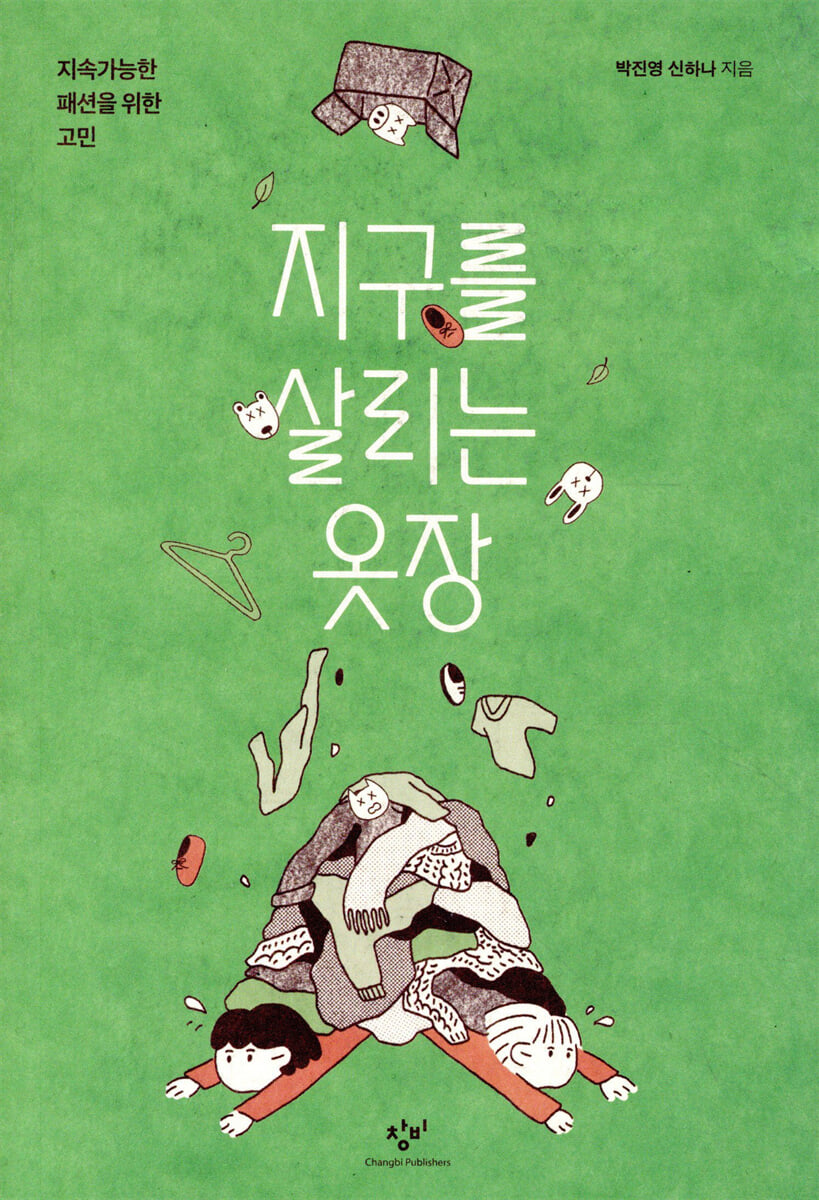
A wardrobe that saves the earth
 |
Description
Book Introduction
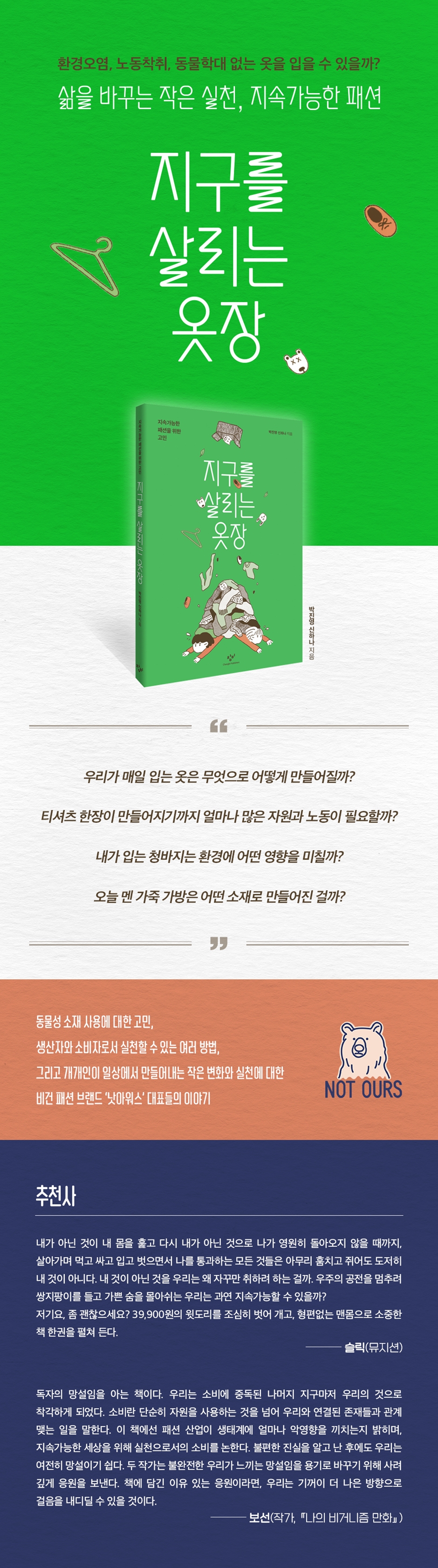
Can we wear clothes that are free from pollution, labor exploitation, and animal cruelty?
Small, life-changing practices: sustainable fashion
We wear different clothes every day, but we don't really think deeply about the process that goes into making those clothes.
The global fashion market is worth approximately 3,690 trillion won, and approximately 80 billion pieces of clothing are sold each year.
The fashion industry accounts for 10% of global carbon emissions, 20% of wastewater generation, and 35% of microplastics ending up in the ocean come from washing synthetic fibers.
Considering the rapidly growing fashion industry and the resulting climate crisis, 'sustainable fashion' has become an urgent task.
"The Closet That Saves the Earth: Thoughts on Sustainable Fashion" contains serious reflections on the fashion industry as a whole and the environment, human rights, and animal rights surrounding it.
Park Jin-young and Shin Ha-na, who met as colleagues at the same fashion company and became friends, became aware of the chronic problems of the fashion industry, such as environmental pollution, labor exploitation, and animal abuse.
The two people who joined forces launched a vegan fashion brand together to minimize these problems.
As producers and consumers of clothing, can we create clothes without being indifferent or cynical about reality? How can we wear high-quality, durable clothing, clothing that doesn't exploit animals or people, and clothing that reduces unnecessary waste and minimizes carbon footprint? This book captures the two authors' journey toward sustainable fashion.
It contains the problems of the massive fashion industry, concerns about the use of animal-derived materials, and various ways producers and consumers can practice sustainable fashion.
Veganism isn't just about food; it's a philosophy that applies to all aspects of life. We also offer readers a concrete guide to sustainable fashion that's easy to follow.
Small, life-changing practices: sustainable fashion
We wear different clothes every day, but we don't really think deeply about the process that goes into making those clothes.
The global fashion market is worth approximately 3,690 trillion won, and approximately 80 billion pieces of clothing are sold each year.
The fashion industry accounts for 10% of global carbon emissions, 20% of wastewater generation, and 35% of microplastics ending up in the ocean come from washing synthetic fibers.
Considering the rapidly growing fashion industry and the resulting climate crisis, 'sustainable fashion' has become an urgent task.
"The Closet That Saves the Earth: Thoughts on Sustainable Fashion" contains serious reflections on the fashion industry as a whole and the environment, human rights, and animal rights surrounding it.
Park Jin-young and Shin Ha-na, who met as colleagues at the same fashion company and became friends, became aware of the chronic problems of the fashion industry, such as environmental pollution, labor exploitation, and animal abuse.
The two people who joined forces launched a vegan fashion brand together to minimize these problems.
As producers and consumers of clothing, can we create clothes without being indifferent or cynical about reality? How can we wear high-quality, durable clothing, clothing that doesn't exploit animals or people, and clothing that reduces unnecessary waste and minimizes carbon footprint? This book captures the two authors' journey toward sustainable fashion.
It contains the problems of the massive fashion industry, concerns about the use of animal-derived materials, and various ways producers and consumers can practice sustainable fashion.
Veganism isn't just about food; it's a philosophy that applies to all aspects of life. We also offer readers a concrete guide to sustainable fashion that's easy to follow.
- You can preview some of the book's contents.
Preview
index
Prologue Different Beginnings
Different Beginnings 1 One Story
The story of two different camps from different beginnings
Chapter 1.
The massive and fast-paced fashion industry
The emergence of fast fashion
Rana Plaza incident
The landscape changed by fast fashion
The importance of local
The environmental impact of fast fashion
A huge mountain of clothing waste
Clothes that have become disposable
Fast Fashion, and Beyond
Relationships with objects
Appendix 1 Fashion Material Classification
Chapter 2.
Wearing animals
Animals that were used as material
Fur is no longer modern
The illusion that fur is a natural material
Is leather a byproduct of the meat industry?
Leather is fur from which the hair has been removed.
Appendix 2 Declaring Fur Free
The Life of Crocodiles in 'Medical Breeding'
Appendix 3 Brands that have discontinued the use of exotic leather
The sheep's winter is not warm
Real and fake
Chapter 3.
What we can do as producers and consumers
Today's fashion god
Appendix 4 Companies that signed the G7 Fashion Pact
About adding one more product to this world
For consumption to become a practice
Appendix 5: Laundry Methods That Protect Your Clothes and the Environment
Appendix 6: Guide to Sustainable Fashion
main
Different Beginnings 1 One Story
The story of two different camps from different beginnings
Chapter 1.
The massive and fast-paced fashion industry
The emergence of fast fashion
Rana Plaza incident
The landscape changed by fast fashion
The importance of local
The environmental impact of fast fashion
A huge mountain of clothing waste
Clothes that have become disposable
Fast Fashion, and Beyond
Relationships with objects
Appendix 1 Fashion Material Classification
Chapter 2.
Wearing animals
Animals that were used as material
Fur is no longer modern
The illusion that fur is a natural material
Is leather a byproduct of the meat industry?
Leather is fur from which the hair has been removed.
Appendix 2 Declaring Fur Free
The Life of Crocodiles in 'Medical Breeding'
Appendix 3 Brands that have discontinued the use of exotic leather
The sheep's winter is not warm
Real and fake
Chapter 3.
What we can do as producers and consumers
Today's fashion god
Appendix 4 Companies that signed the G7 Fashion Pact
About adding one more product to this world
For consumption to become a practice
Appendix 5: Laundry Methods That Protect Your Clothes and the Environment
Appendix 6: Guide to Sustainable Fashion
main
Detailed image
Publisher's Review
Clothes that follow trends breathlessly,
The secret behind it
The fashion industry is so massive that it is estimated that one-sixth of the global workforce works in some form of fashion-related employment.
In particular, since the 2000s, 'fast fashion' has become a trend and has grown rapidly.
In response to new trends, producers are producing, distributing, and selling products in a short period of time, following the trend of fast fashion, which has led to producers producing more products faster, more frequently, and in greater quantities.
Instead of being cheap, clothes of relatively low quality are mass produced, and after a short period of popularity, many unsold items are discarded.
To make clothes that are even slightly cheaper, labor costs are lowered and workers work hard in poor conditions.
Producing polyester, a synthetic fiber commonly used in fast fashion clothing, produces two to three times more carbon emissions than cotton fiber.
It takes as much water to make a pair of jeans as one person drinks in 10 years, and the chemicals used to bleach and dye the fabric are indiscriminately discarded, becoming a major cause of water pollution.
The list of impacts this massive and fast-growing fashion industry has on the environment and humanity is endless.
As long as humans wear wool sweaters
The sheep's winter is not warm
When discussing sustainable fashion, Park Jin-young and Shin Ha-na focus on the materials used in clothing products, which are essential.
Clothes are made from plant-based materials such as cotton and linen, as well as synthetic materials such as acrylic, nylon, and polyvinyl chloride (PVC).
And one thing that cannot be left out is animal materials.
Products made from animal materials such as wool, cashmere, angora, fur, leather, and feathers are commonly found in everyday life.
The process of producing representative animal-derived materials such as fur and leather is inseparable from animal abuse and environmental destruction.
The two authors, pursuing sustainable fashion, decided to stop using animal-derived materials in their own brand, but faced realistic challenges.
He also shares the process of finding alternatives such as organic cotton and cactus leather through trial and error.
While we may not know all the intricacies of how clothes and accessories are made, considering that sheep or mink fur, cow or crocodile skins were originally made from living animals, not materials, makes fur coats and leather bags seem different.
For the Earth we live on together
Small actions add up to create big changes.
When we consider production and consumption with sustainability in mind, we often encounter questions like these.
“Is it right to add one more thing to this world?” “Will anything change if we avoid animal products?” “Maybe all this effort is in vain?” Park Jin-young and Shin Ha-na say that while we can’t all live perfectly harmless lives, it’s meaningful to act according to our own principles for a sustainable future without being cynical or indifferent to this reality.
And to prevent readers from feeling helpless, we provide an easy-to-follow practical guide.
If we think about living an eco-friendly life that does less harm to the Earth, the world will change little by little, but surely.
The two authors remind us that even the smallest action is better than none, and they focus on the changes brought about by those who have consistently advocated for and taken action toward sustainability.
In the past, promoting eco-friendliness was considered a tacky concept in the fashion industry, but now eco-friendliness and sustainability have become the most fashionable keywords.
If we make an effort, change will surely come, and that change will not come from grandiose things, but from the small practices that each individual creates in their daily lives.
This book, while imperfect, encourages and supports readers to take meaningful action together toward a sustainable future.
If we remember the obvious fact that the Earth is our precious home where we live together with other living beings, the clothes that will hang in our wardrobes in the future will certainly be different from those of the past.
The secret behind it
The fashion industry is so massive that it is estimated that one-sixth of the global workforce works in some form of fashion-related employment.
In particular, since the 2000s, 'fast fashion' has become a trend and has grown rapidly.
In response to new trends, producers are producing, distributing, and selling products in a short period of time, following the trend of fast fashion, which has led to producers producing more products faster, more frequently, and in greater quantities.
Instead of being cheap, clothes of relatively low quality are mass produced, and after a short period of popularity, many unsold items are discarded.
To make clothes that are even slightly cheaper, labor costs are lowered and workers work hard in poor conditions.
Producing polyester, a synthetic fiber commonly used in fast fashion clothing, produces two to three times more carbon emissions than cotton fiber.
It takes as much water to make a pair of jeans as one person drinks in 10 years, and the chemicals used to bleach and dye the fabric are indiscriminately discarded, becoming a major cause of water pollution.
The list of impacts this massive and fast-growing fashion industry has on the environment and humanity is endless.
As long as humans wear wool sweaters
The sheep's winter is not warm
When discussing sustainable fashion, Park Jin-young and Shin Ha-na focus on the materials used in clothing products, which are essential.
Clothes are made from plant-based materials such as cotton and linen, as well as synthetic materials such as acrylic, nylon, and polyvinyl chloride (PVC).
And one thing that cannot be left out is animal materials.
Products made from animal materials such as wool, cashmere, angora, fur, leather, and feathers are commonly found in everyday life.
The process of producing representative animal-derived materials such as fur and leather is inseparable from animal abuse and environmental destruction.
The two authors, pursuing sustainable fashion, decided to stop using animal-derived materials in their own brand, but faced realistic challenges.
He also shares the process of finding alternatives such as organic cotton and cactus leather through trial and error.
While we may not know all the intricacies of how clothes and accessories are made, considering that sheep or mink fur, cow or crocodile skins were originally made from living animals, not materials, makes fur coats and leather bags seem different.
For the Earth we live on together
Small actions add up to create big changes.
When we consider production and consumption with sustainability in mind, we often encounter questions like these.
“Is it right to add one more thing to this world?” “Will anything change if we avoid animal products?” “Maybe all this effort is in vain?” Park Jin-young and Shin Ha-na say that while we can’t all live perfectly harmless lives, it’s meaningful to act according to our own principles for a sustainable future without being cynical or indifferent to this reality.
And to prevent readers from feeling helpless, we provide an easy-to-follow practical guide.
If we think about living an eco-friendly life that does less harm to the Earth, the world will change little by little, but surely.
The two authors remind us that even the smallest action is better than none, and they focus on the changes brought about by those who have consistently advocated for and taken action toward sustainability.
In the past, promoting eco-friendliness was considered a tacky concept in the fashion industry, but now eco-friendliness and sustainability have become the most fashionable keywords.
If we make an effort, change will surely come, and that change will not come from grandiose things, but from the small practices that each individual creates in their daily lives.
This book, while imperfect, encourages and supports readers to take meaningful action together toward a sustainable future.
If we remember the obvious fact that the Earth is our precious home where we live together with other living beings, the clothes that will hang in our wardrobes in the future will certainly be different from those of the past.
GOODS SPECIFICS
- Publication date: April 25, 2022
- Page count, weight, size: 164 pages | 212g | 128*188*20mm
- ISBN13: 9788936479084
- ISBN10: 8936479083
You may also like
카테고리
korean


korean

![GQ KOREA Mark (Monthly): December [2025]](http://librairie.coreenne.fr/cdn/shop/files/8ef265dbbfbf186523ed75ba7319009d.jpg?v=1765340328&width=3840)


