

Principle of Power
 |
Description
Book Introduction
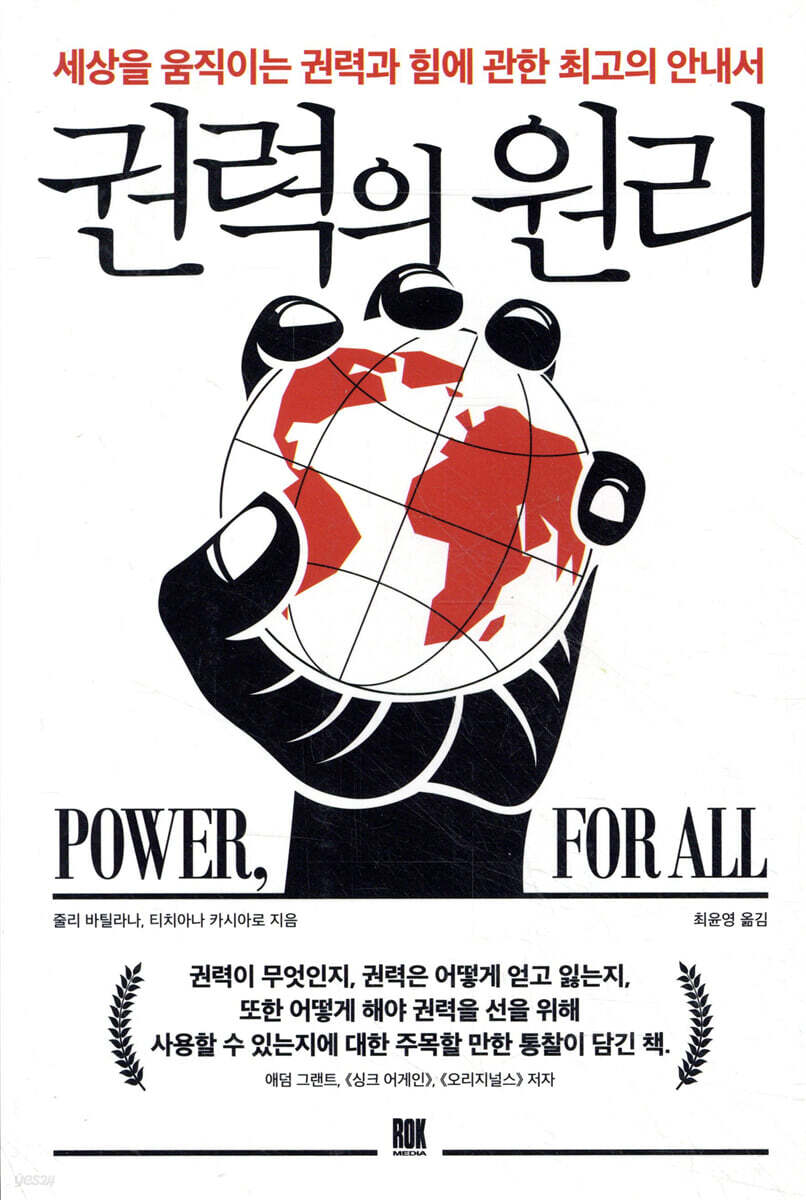
What power is, how to gain and lose power, and how to A book with remarkable insights into whether power can be used for good. Adam Grant, author of Think Again and Originals To create a better world, we must properly understand power and strength. An important guide that presents a methodology for exercising power for good! Power and force are present everywhere, from interpersonal relationships to workplace disputes, international diplomacy, and corporate business. Power and strength are essentially the ability to influence others. Perhaps the reason so many people desire power is because we, knowingly or unknowingly, are aware of the nature of this power. In this book, Harvard University professors Julie Battilana and the University of Toronto professor Titian Casciaro, who have been researching and teaching about power and strength for 20 years, present a fascinating picture of what power is, how we gain or lose it, and whether there are ways to use it for good. How much do we know about power? We probably know that having power can make life easier and give us more say and influence in our lives. But power can do more than that. The two professors argue that if we truly understand and use our power correctly, we can create real change through it in the workplace, plan and create a continuous shift in power to prevent it from being overly concentrated in one place, and ultimately, enable everyone to realize and utilize the power they possess. In this way, this book presents in an interesting way, through various experimental cases and interviews, the nature of power and how to do good through power. If we are to survive and thrive in harmony with others and the environment, we must continue the efforts of previous generations who fought for a fair distribution of power. To do so, a correct understanding of power must come first. This book, which can be considered the culmination of two professors who have researched and taught about power for 20 years, will serve as an invaluable guide for understanding and exploring the power at work in countless areas, including human relationships, the workplace, organizations, society, international affairs, and business. |
- You can preview some of the book's contents.
Preview
index
Misconceptions about the power of the West Gate
Chapter 1: The Source of Power
How is power created?
From being powerless to empowering others
Rebalancing the power
Power cannot be possessed
Chapter 2 Power can be dirty.
But it doesn't have to be that way
Intoxicated with power
Strength, self-focus, and pride
Power makes me feel like a good person
Power and Morality: A Dilemma?
How to Develop a Balanced Perception of Power: Developing Empathy and Humility
How to entrust power to the wise
Beyond Personal Growth: The Need for Structural Safeguards
Chapter 3: Where do people place their values?
Two basic human needs: safety and self-esteem.
How to meet your safety and self-esteem needs?
Know exactly what the other person wants
Building trust is the first step in understanding needs.
Chapter 4 Who Controls Access to Valuable Resources?
Power and authority do not coincide.
Differences in status and role
View the organizational chart properly
The Power Map: Who Has What and Why?
Draw supporters, opponents, and neutrals
The distribution of power across organizational boundaries
Without a map of power, it is dangerous.
Different network characteristics for different people
Finding similarities in unlikely places
Chapter 5: Power that Remains Unbreakable, But There Is Hope
What it takes to create a power hierarchy
Beware of submission to authority
Three dangerous elements
How do the socially disadvantaged contribute to maintaining power?
The power of story
The weight of stereotypes
Can the power hierarchy collapse?
When power imbalances backfire
Chapter 6: Agitation, Innovation, and Integration
Inciting alone is not enough
Raising issues on the public agenda
Think outside the box
Change reality
Is it getting easier?
Chapter 7 Power does not change.
It just changes the owner
The fundamentals of power do not change.
Technology is changing the map of power.
How the Digital Revolution Changed the World
Reducing the power of tech giants
Regain control
Power to many people
Chapter 8: Controlling Power
Sharing Power in the Workplace
Accountability within the organization: Who is responsible for what?
Empowering workers
distribution of power in society
We all have a responsibility to take strong responsibility.
Cultivating enlightened citizens
Building civic muscle
Conclusion: It all depends on us.
What it takes to build power
What do you value?
Who controls valuable resources?
Appendix: Defining Power in the Social Sciences
Acknowledgements
main
Chapter 1: The Source of Power
How is power created?
From being powerless to empowering others
Rebalancing the power
Power cannot be possessed
Chapter 2 Power can be dirty.
But it doesn't have to be that way
Intoxicated with power
Strength, self-focus, and pride
Power makes me feel like a good person
Power and Morality: A Dilemma?
How to Develop a Balanced Perception of Power: Developing Empathy and Humility
How to entrust power to the wise
Beyond Personal Growth: The Need for Structural Safeguards
Chapter 3: Where do people place their values?
Two basic human needs: safety and self-esteem.
How to meet your safety and self-esteem needs?
Know exactly what the other person wants
Building trust is the first step in understanding needs.
Chapter 4 Who Controls Access to Valuable Resources?
Power and authority do not coincide.
Differences in status and role
View the organizational chart properly
The Power Map: Who Has What and Why?
Draw supporters, opponents, and neutrals
The distribution of power across organizational boundaries
Without a map of power, it is dangerous.
Different network characteristics for different people
Finding similarities in unlikely places
Chapter 5: Power that Remains Unbreakable, But There Is Hope
What it takes to create a power hierarchy
Beware of submission to authority
Three dangerous elements
How do the socially disadvantaged contribute to maintaining power?
The power of story
The weight of stereotypes
Can the power hierarchy collapse?
When power imbalances backfire
Chapter 6: Agitation, Innovation, and Integration
Inciting alone is not enough
Raising issues on the public agenda
Think outside the box
Change reality
Is it getting easier?
Chapter 7 Power does not change.
It just changes the owner
The fundamentals of power do not change.
Technology is changing the map of power.
How the Digital Revolution Changed the World
Reducing the power of tech giants
Regain control
Power to many people
Chapter 8: Controlling Power
Sharing Power in the Workplace
Accountability within the organization: Who is responsible for what?
Empowering workers
distribution of power in society
We all have a responsibility to take strong responsibility.
Cultivating enlightened citizens
Building civic muscle
Conclusion: It all depends on us.
What it takes to build power
What do you value?
Who controls valuable resources?
Appendix: Defining Power in the Social Sciences
Acknowledgements
main
Publisher's Review
Recommendations from important thinkers including Adam Grant, Tarana Burke, Amy Edmondson, and Roger Martin.
An essential guide to understanding the workings of the power and forces that move the world!
Showing how to use power properly for everyone!
Power is everywhere.
It would be difficult to find a person in this world who has not experienced the dynamics of power.
Power and force are always at work in the world.
It is safe to say that we always have power in all areas of our lives, including family, love, work, business, politics, and society.
If you think about the saying that there are no parents who win over their children or the saying that power works everywhere, it will be easy to understand that power works everywhere.
How much do we really know about this force, which is arguably the force that moves the world? It's safe to say we don't even know much about its properties.
Typically, power and authority are thought to belong to someone, and that someone is either born with a silver spoon in their mouth or is privileged.
Moreover, power is a dirty thing, and we tend to think that in order to obtain this dirty thing, we have to become dirty ourselves.
Professor Julie Battilana of Harvard University and Professor Titian Casciaro of Rotman College, who have studied and taught about power and strength for 20 years, show that these common perceptions of power are wrong.
Power is not something that can be distinguished between good and evil, but it is a good power when in good hands, and an evil power when in evil hands, and it reveals that power changes depending on how the person using it uses it.
It also conveys the fact that the power we commonly think of as being the exclusive property of a certain person is a result of our failure to properly utilize the power we possess because we do not understand the principles of power.
This book, which explores the nature of power and force and, more broadly, how it works, dispels misconceptions about power and provides methodologies and usable models for how we can create a better world.
Anyone who has ever wondered how power works, how we gain or lose it, or even how to use it in the right way—anyone who has ever wondered how the world we live in works—should read this essential guide.
An essential guide to understanding the workings of the power and forces that move the world!
Showing how to use power properly for everyone!
Power is everywhere.
It would be difficult to find a person in this world who has not experienced the dynamics of power.
Power and force are always at work in the world.
It is safe to say that we always have power in all areas of our lives, including family, love, work, business, politics, and society.
If you think about the saying that there are no parents who win over their children or the saying that power works everywhere, it will be easy to understand that power works everywhere.
How much do we really know about this force, which is arguably the force that moves the world? It's safe to say we don't even know much about its properties.
Typically, power and authority are thought to belong to someone, and that someone is either born with a silver spoon in their mouth or is privileged.
Moreover, power is a dirty thing, and we tend to think that in order to obtain this dirty thing, we have to become dirty ourselves.
Professor Julie Battilana of Harvard University and Professor Titian Casciaro of Rotman College, who have studied and taught about power and strength for 20 years, show that these common perceptions of power are wrong.
Power is not something that can be distinguished between good and evil, but it is a good power when in good hands, and an evil power when in evil hands, and it reveals that power changes depending on how the person using it uses it.
It also conveys the fact that the power we commonly think of as being the exclusive property of a certain person is a result of our failure to properly utilize the power we possess because we do not understand the principles of power.
This book, which explores the nature of power and force and, more broadly, how it works, dispels misconceptions about power and provides methodologies and usable models for how we can create a better world.
Anyone who has ever wondered how power works, how we gain or lose it, or even how to use it in the right way—anyone who has ever wondered how the world we live in works—should read this essential guide.
GOODS SPECIFICS
- Publication date: October 13, 2021
- Page count, weight, size: 388 pages | 566g | 152*225*19mm
- ISBN13: 9791135469039
- ISBN10: 1135469032
You may also like
카테고리
korean


korean

![GQ KOREA Mark (Monthly): December [2025]](http://librairie.coreenne.fr/cdn/shop/files/8ef265dbbfbf186523ed75ba7319009d.jpg?v=1765340328&width=3840)


