

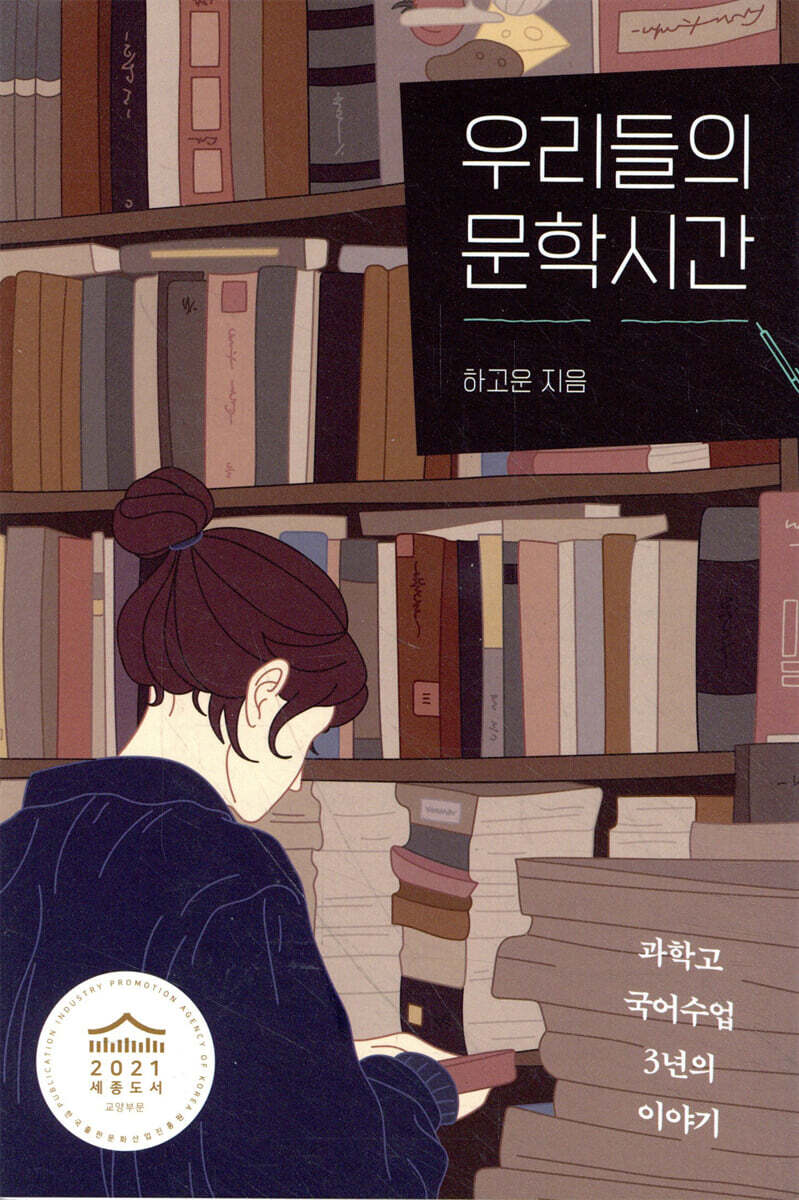
Our Literature Class
 |
Description
Book Introduction
A Korean language class at a science high school where there was almost no pressure from entrance exams or the CSAT.
The author, who was transferred to a science high school as a Korean language teacher, set the goal of teaching Korean language without textbooks and conducted free and unconventional classes.
Students read poetry and novels, science books and plays.
Watch movies, recite poetry, make radio dramas, and write book reviews.
Through various class activities, teachers and students reflect on themselves, think about their relationships with society, and deepen the empathy that connects them to one another.
The special records of the science high school classes that I taught in my first year as a homeroom teacher for first-year students, and then in second and third years, are a collection of interesting classes that provided ideas and inspiration, as well as a vivid story of growth between students and teachers who communicated, asked questions, and grew little by little.
The author, who was transferred to a science high school as a Korean language teacher, set the goal of teaching Korean language without textbooks and conducted free and unconventional classes.
Students read poetry and novels, science books and plays.
Watch movies, recite poetry, make radio dramas, and write book reviews.
Through various class activities, teachers and students reflect on themselves, think about their relationships with society, and deepen the empathy that connects them to one another.
The special records of the science high school classes that I taught in my first year as a homeroom teacher for first-year students, and then in second and third years, are a collection of interesting classes that provided ideas and inspiration, as well as a vivid story of growth between students and teachers who communicated, asked questions, and grew little by little.
- You can preview some of the book's contents.
Preview
index
Entering
Getting to know poetry in the first semester of the first year
The most beautiful words
Songs and Poetry
Reading poetry at the library
Time to raise me
Deepening our understanding through novels in the second semester of the first year
courage
telling the truth
The Universe of Books
Wall and egg
An intellectual adventure in the first semester of the second year
ignorant teacher
My Cosmos
Someday, the world will become a movie. Second semester of second year.
Time to read romance novels
Those of us who made us look back
radio drama
This is one of the reasons we are strong
Territory of Literature, 1st semester, 3rd year
Literature makes us love each other even after we break up.
Manhae, Yuksa, Dongju
My ideal
3rd year, 2nd semester, into a wider world
We are all strangers
Final task
Two gifts the universe gave us
Closing remarks_In the forest of everyday life
[Appendix] My Book Bundle
Getting to know poetry in the first semester of the first year
The most beautiful words
Songs and Poetry
Reading poetry at the library
Time to raise me
Deepening our understanding through novels in the second semester of the first year
courage
telling the truth
The Universe of Books
Wall and egg
An intellectual adventure in the first semester of the second year
ignorant teacher
My Cosmos
Someday, the world will become a movie. Second semester of second year.
Time to read romance novels
Those of us who made us look back
radio drama
This is one of the reasons we are strong
Territory of Literature, 1st semester, 3rd year
Literature makes us love each other even after we break up.
Manhae, Yuksa, Dongju
My ideal
3rd year, 2nd semester, into a wider world
We are all strangers
Final task
Two gifts the universe gave us
Closing remarks_In the forest of everyday life
[Appendix] My Book Bundle
Detailed image

Into the book
After the poetry recitation, I carefully explained why I chose Nazim Hikmet's poem to open the class.
The most beautiful words are the ones I haven't said yet.
So, I want to share more beautiful words with you every day, and I want to teach you more beautiful lessons every day.
Even if that promise isn't kept, that's how I feel right now.
Let's stay close to each other for the next year.
--- p.17, from “The Most Beautiful Words”
I didn't expect my children to read the books I introduced.
I just wanted to show that there are so many books in this world, that writers are constantly speaking, and that there are so many things we must not forget.
And I thought that if you ever thought, 'I want to read it once,' then that alone would be a successful class.
--- p.72, from “The Universe of Books”
In order to get my words across to children who like science, I ultimately need to present a systematically organized lesson.
The text I choose and the teaching method I plan must fit together exquisitely.
It should not be a simple list of good words, but one that touches on the lives of children and their concerns.
It should be a piece of writing that arouses intellectual curiosity and provides intellectual satisfaction.
And you have to be able to look at it from many different angles, think about it, write about it, and talk about it.
I don't want the lessons I diligently prepare to become distant echoes that have no effect on the children.
Don't be a pitiful monologue
If you don't want to.
--- p.86, from “On the statement that Korean language classes are not specialized”
When I transferred to the science high school, I had a dream.
My dream is to read famous science classics while I'm at science high school.
The only two science classics I could think of were Carl Sagan's Cosmos and Richard Dawkins' The Selfish Gene.
Although I am not a science novice, these two books were so famous that I really wanted to read them someday.
Reading this book might help you understand science high school students better.
Then suddenly a thought occurred to me.
What if I read this book with my children? It's an intellectual adventure for me, a cosmos-ignorant person, to embark on with my children, who are also ignorant of the cosmos.
I called Mr. Kim Hyeon-min, who was reading a science book with the children during class.
“Can I, a Korean language teacher, read an astrophysics book?”
The teacher answered right away.
“Yes! You can.
In fact, it might be better to read it with a Korean teacher!"
--- p.97~98, from “The Ignorant Teacher”
Mathematics brings order to the invisible.
Even things that seem unrelated and irregular take on a new order when they enter the world of mathematics.
Cosmos is the universe itself and the order of the universe.
Perhaps the essence of mathematics lies in the cosmos. In the vastness of the cosmos, we are tiny beings.
Our time in the cosmos is but a fleeting moment, a mere mayfly's time.
The more we learn about the Cosmos, the more we realize how insignificant and small we are in it.
--- p.111, "A Voyage to Cosmos: Reading Carl Sagan's 'Cosmos'" (Student Writing_Minju)
We conducted a question-and-answer session to deduce why Hanji suddenly became cold to Yeongju.
After each child thought of a reason, they wrote in their notebooks for five minutes and then shared their thoughts with each other in groups.
Then, one presenter was chosen from each group and shared the stories in front of the classmates.
When we gathered the thoughts of twenty people like that, the result was surprising.
The children keenly grasped every single clue in the novel and did not overlook every line or action of the characters.
When the line that Hanji said when releasing the rhinoceros, “You have to distinguish between love and attachment,” was presented as the basis for the interpretation, everyone let out a gasp.
Ah, these were layers of stories I had never thought of when reading the book alone.
--- p.126, from “Time to Read Romance Novels”
Nietzsche said, “Attempts and questions, that was my whole path.”
Working in a teaching-friendly environment, what I can do is try and challenge myself with various classes, and leave behind many teaching examples, whether successful or not.
That would be the best a Korean language teacher working at a science high school could do.
After reaching that conclusion, I tried and practiced various classes more boldly.
--- p.198~199p, 'My Ideal'
So, how should we live our lives? But can I possibly say this? To those kids who study tirelessly until 11:30 every night, or even until two or three in the morning, to get into a good university, land a good job, and ultimately find a buyer and sell themselves to someone, to those kids who stay up all night during exam periods like it's nothing, how can I possibly ask, "Do you really have to study so hard?"
After talking to the children in the classroom about their “right not to work,” he returned to the teachers’ office and revealed the children’s grades, saying, “You can’t go with these grades now.”
If I say, “I need to work harder,” then what on earth does that make me?
Just as P discovered the contradictions of his split personality in his own shadow, I too am afraid that my split personality will be exposed.
The most beautiful words are the ones I haven't said yet.
So, I want to share more beautiful words with you every day, and I want to teach you more beautiful lessons every day.
Even if that promise isn't kept, that's how I feel right now.
Let's stay close to each other for the next year.
--- p.17, from “The Most Beautiful Words”
I didn't expect my children to read the books I introduced.
I just wanted to show that there are so many books in this world, that writers are constantly speaking, and that there are so many things we must not forget.
And I thought that if you ever thought, 'I want to read it once,' then that alone would be a successful class.
--- p.72, from “The Universe of Books”
In order to get my words across to children who like science, I ultimately need to present a systematically organized lesson.
The text I choose and the teaching method I plan must fit together exquisitely.
It should not be a simple list of good words, but one that touches on the lives of children and their concerns.
It should be a piece of writing that arouses intellectual curiosity and provides intellectual satisfaction.
And you have to be able to look at it from many different angles, think about it, write about it, and talk about it.
I don't want the lessons I diligently prepare to become distant echoes that have no effect on the children.
Don't be a pitiful monologue
If you don't want to.
--- p.86, from “On the statement that Korean language classes are not specialized”
When I transferred to the science high school, I had a dream.
My dream is to read famous science classics while I'm at science high school.
The only two science classics I could think of were Carl Sagan's Cosmos and Richard Dawkins' The Selfish Gene.
Although I am not a science novice, these two books were so famous that I really wanted to read them someday.
Reading this book might help you understand science high school students better.
Then suddenly a thought occurred to me.
What if I read this book with my children? It's an intellectual adventure for me, a cosmos-ignorant person, to embark on with my children, who are also ignorant of the cosmos.
I called Mr. Kim Hyeon-min, who was reading a science book with the children during class.
“Can I, a Korean language teacher, read an astrophysics book?”
The teacher answered right away.
“Yes! You can.
In fact, it might be better to read it with a Korean teacher!"
--- p.97~98, from “The Ignorant Teacher”
Mathematics brings order to the invisible.
Even things that seem unrelated and irregular take on a new order when they enter the world of mathematics.
Cosmos is the universe itself and the order of the universe.
Perhaps the essence of mathematics lies in the cosmos. In the vastness of the cosmos, we are tiny beings.
Our time in the cosmos is but a fleeting moment, a mere mayfly's time.
The more we learn about the Cosmos, the more we realize how insignificant and small we are in it.
--- p.111, "A Voyage to Cosmos: Reading Carl Sagan's 'Cosmos'" (Student Writing_Minju)
We conducted a question-and-answer session to deduce why Hanji suddenly became cold to Yeongju.
After each child thought of a reason, they wrote in their notebooks for five minutes and then shared their thoughts with each other in groups.
Then, one presenter was chosen from each group and shared the stories in front of the classmates.
When we gathered the thoughts of twenty people like that, the result was surprising.
The children keenly grasped every single clue in the novel and did not overlook every line or action of the characters.
When the line that Hanji said when releasing the rhinoceros, “You have to distinguish between love and attachment,” was presented as the basis for the interpretation, everyone let out a gasp.
Ah, these were layers of stories I had never thought of when reading the book alone.
--- p.126, from “Time to Read Romance Novels”
Nietzsche said, “Attempts and questions, that was my whole path.”
Working in a teaching-friendly environment, what I can do is try and challenge myself with various classes, and leave behind many teaching examples, whether successful or not.
That would be the best a Korean language teacher working at a science high school could do.
After reaching that conclusion, I tried and practiced various classes more boldly.
--- p.198~199p, 'My Ideal'
So, how should we live our lives? But can I possibly say this? To those kids who study tirelessly until 11:30 every night, or even until two or three in the morning, to get into a good university, land a good job, and ultimately find a buyer and sell themselves to someone, to those kids who stay up all night during exam periods like it's nothing, how can I possibly ask, "Do you really have to study so hard?"
After talking to the children in the classroom about their “right not to work,” he returned to the teachers’ office and revealed the children’s grades, saying, “You can’t go with these grades now.”
If I say, “I need to work harder,” then what on earth does that make me?
Just as P discovered the contradictions of his split personality in his own shadow, I too am afraid that my split personality will be exposed.
--- p.203~204, from “Rejecting the Ready-Made Life”
Publisher's Review
“The two gifts this universe has given us are the power to love and the ability to ask questions.”
To become a healthy citizen who thinks and acts for himself…
Our literature class has begun
“A person who knows how to empathize with the suffering of others, a person who knows how to think and act for himself,
“I hope that teachers and students will grow together into people who can see, hear, feel, read, and write about the world.”
The author, who teaches Korean in high school, introduces his class like this.
In some ways, it is not easy to put this sentence, which is like the purpose and essence of education, into practice in schools.
The author says that thanks to the opportunity to work at a science high school, he was able to break free from the shackles of preparing for the college entrance exam and freely share his thoughts and writings with children.
"Our Literature Class" is a vivid story of growth by teachers and students who remember and record that time.
“I want to share more beautiful words every day, and I want to teach more beautiful classes every day.”
Freed from the burden of exam preparation, classes became infinitely broader, deeper, and more diverse.
It has become possible to try everything that can be expressed and thought through words and writing.
For children who didn't even know there was a book called 'Poetry Collection', we filled the library desks with only poetry books, surprising them and allowing them to read poetry with their own eyes and tell their own stories.
Additionally, children created texts and videos based on the poems.
The author reports that such processes were “the highest joy a Korean language teacher can enjoy.”
The author's sincerity in wanting to "create a small crack in the lives of children" by asking various questions that would allow them to reflect on themselves and give them a brief "time to nurture themselves" while they are struggling with extreme academic work is delicately incorporated into the sincere curriculum each semester.
The basis of literature classes is reading and thinking about texts, but the author's classes sometimes opened up the world through songs and movies rather than texts, through radio dramas created by children themselves, and through condensed lines from plays.
The reason all of this could be grouped under the heading of 'literature class' is because literature is not just a narrative sleeping in textbooks.
Expressing myself, listening to and understanding other people's thoughts, and developing diverse perspectives on the world.
So, looking back at myself and finding out who we are.
This precious gift that literature gives us spreads to the hearts of children through three-dimensional classes that are not bound by formalities.
“I am so grateful and blessed to have you, my teacher, in our literature.”
It is also interesting to watch children change and grow through class.
The author does not regard students as objects of enlightenment to be taught and awakened.
He confesses that it was sometimes very difficult to keep quiet during class and just observe the students' discussions and provide direction, but the students, who were "students, teachers, and friends," struggled to think for themselves, ask questions, and find answers.
In the process, the children's hearts grew and matured little by little.
As teachers' concerns about making classes better grew, the children's thoughts also grew along with them.
To provide a glimpse into the thoughts of the students who took the class, the book includes class journals, letters, and essays from several students.
As I read the children's writings, recording what they felt in class each day and what new concerns they encountered, I am able to gain unexpected wisdom and insight that I had not previously considered.
A lively class that is not a one-sided lecture by the teacher, but rather one that is comprised of discussion and communication, moves everyone who participates in the class, and even our hearts as we observe the class, to a step further.
“Teacher, that’s a science high school.
“Our kids won’t make it.”
He said that he often heard stories like this from other teachers when presenting class examples at teacher training sessions.
The author clearly acknowledges this.
“The class went well not because I did well, but because the children did well.”
Nevertheless, the reason I wanted to share this story with my fellow teachers and readers was because I believed that leaving behind a variety of teaching examples through things I could try while working in a good environment was “the best good that a Korean language teacher working at a science high school can do.”
The unique environment of a science high school also made literature classes more diverse.
Reading Carl Sagan's "Cosmos" with children for a semester, which began with the intention of reading science books together, and reading romance novels for students who are "natural science majors" and are not good at expressing their emotions, have also become opportunities for Korean language teachers who are "natural humanities majors" to understand the children and get closer to each other.
Although this book is a record of one teacher's class, it is also valuable as a curriculum resource in that it can be tried and applied differently depending on each teacher's school environment and the students' tendencies.
Just as the author has shared and developed ideas and materials for classes through various reading groups and class research groups, these "applied" classes can be utilized by current teachers as a variety of class ideas and provide fresh inspiration.
“What gives me strength when I walk endlessly down a dark night road is
“It is not the sound of strong legs or strong wings, but the sound of a friend’s footsteps.”
The author says that the greatest strength that allowed him to plan and sustain textbook-free classes was the help of his seniors who had gone down that path before him.
I was encouraged by the footsteps of many teachers who had tried various things, including holding book club meetings with children, holding lectures on humanities, and continuing to believe that Korean language classes are not limited to textbooks.
This book extends a warm hand to “friends walking along the dark night paths across the country,” encouraging them to not lose courage and to walk that path together.
I hope that the heart of a Korean language teacher who always hopes that everyday experiences and life can lead to learning and that students can walk that path without wavering will reach out to a wider world through this book.
To become a healthy citizen who thinks and acts for himself…
Our literature class has begun
“A person who knows how to empathize with the suffering of others, a person who knows how to think and act for himself,
“I hope that teachers and students will grow together into people who can see, hear, feel, read, and write about the world.”
The author, who teaches Korean in high school, introduces his class like this.
In some ways, it is not easy to put this sentence, which is like the purpose and essence of education, into practice in schools.
The author says that thanks to the opportunity to work at a science high school, he was able to break free from the shackles of preparing for the college entrance exam and freely share his thoughts and writings with children.
"Our Literature Class" is a vivid story of growth by teachers and students who remember and record that time.
“I want to share more beautiful words every day, and I want to teach more beautiful classes every day.”
Freed from the burden of exam preparation, classes became infinitely broader, deeper, and more diverse.
It has become possible to try everything that can be expressed and thought through words and writing.
For children who didn't even know there was a book called 'Poetry Collection', we filled the library desks with only poetry books, surprising them and allowing them to read poetry with their own eyes and tell their own stories.
Additionally, children created texts and videos based on the poems.
The author reports that such processes were “the highest joy a Korean language teacher can enjoy.”
The author's sincerity in wanting to "create a small crack in the lives of children" by asking various questions that would allow them to reflect on themselves and give them a brief "time to nurture themselves" while they are struggling with extreme academic work is delicately incorporated into the sincere curriculum each semester.
The basis of literature classes is reading and thinking about texts, but the author's classes sometimes opened up the world through songs and movies rather than texts, through radio dramas created by children themselves, and through condensed lines from plays.
The reason all of this could be grouped under the heading of 'literature class' is because literature is not just a narrative sleeping in textbooks.
Expressing myself, listening to and understanding other people's thoughts, and developing diverse perspectives on the world.
So, looking back at myself and finding out who we are.
This precious gift that literature gives us spreads to the hearts of children through three-dimensional classes that are not bound by formalities.
“I am so grateful and blessed to have you, my teacher, in our literature.”
It is also interesting to watch children change and grow through class.
The author does not regard students as objects of enlightenment to be taught and awakened.
He confesses that it was sometimes very difficult to keep quiet during class and just observe the students' discussions and provide direction, but the students, who were "students, teachers, and friends," struggled to think for themselves, ask questions, and find answers.
In the process, the children's hearts grew and matured little by little.
As teachers' concerns about making classes better grew, the children's thoughts also grew along with them.
To provide a glimpse into the thoughts of the students who took the class, the book includes class journals, letters, and essays from several students.
As I read the children's writings, recording what they felt in class each day and what new concerns they encountered, I am able to gain unexpected wisdom and insight that I had not previously considered.
A lively class that is not a one-sided lecture by the teacher, but rather one that is comprised of discussion and communication, moves everyone who participates in the class, and even our hearts as we observe the class, to a step further.
“Teacher, that’s a science high school.
“Our kids won’t make it.”
He said that he often heard stories like this from other teachers when presenting class examples at teacher training sessions.
The author clearly acknowledges this.
“The class went well not because I did well, but because the children did well.”
Nevertheless, the reason I wanted to share this story with my fellow teachers and readers was because I believed that leaving behind a variety of teaching examples through things I could try while working in a good environment was “the best good that a Korean language teacher working at a science high school can do.”
The unique environment of a science high school also made literature classes more diverse.
Reading Carl Sagan's "Cosmos" with children for a semester, which began with the intention of reading science books together, and reading romance novels for students who are "natural science majors" and are not good at expressing their emotions, have also become opportunities for Korean language teachers who are "natural humanities majors" to understand the children and get closer to each other.
Although this book is a record of one teacher's class, it is also valuable as a curriculum resource in that it can be tried and applied differently depending on each teacher's school environment and the students' tendencies.
Just as the author has shared and developed ideas and materials for classes through various reading groups and class research groups, these "applied" classes can be utilized by current teachers as a variety of class ideas and provide fresh inspiration.
“What gives me strength when I walk endlessly down a dark night road is
“It is not the sound of strong legs or strong wings, but the sound of a friend’s footsteps.”
The author says that the greatest strength that allowed him to plan and sustain textbook-free classes was the help of his seniors who had gone down that path before him.
I was encouraged by the footsteps of many teachers who had tried various things, including holding book club meetings with children, holding lectures on humanities, and continuing to believe that Korean language classes are not limited to textbooks.
This book extends a warm hand to “friends walking along the dark night paths across the country,” encouraging them to not lose courage and to walk that path together.
I hope that the heart of a Korean language teacher who always hopes that everyday experiences and life can lead to learning and that students can walk that path without wavering will reach out to a wider world through this book.
GOODS SPECIFICS
- Publication date: January 10, 2021
- Page count, weight, size: 256 pages | 306g | 127*188*20mm
- ISBN13: 9791191311006
- ISBN10: 1191311007
You may also like
카테고리
korean


korean

![GQ KOREA Mark (Monthly): December [2025]](http://librairie.coreenne.fr/cdn/shop/files/8ef265dbbfbf186523ed75ba7319009d.jpg?v=1765340328&width=3840)


