

Reflections on the French Revolution
 |
Description
Book Introduction
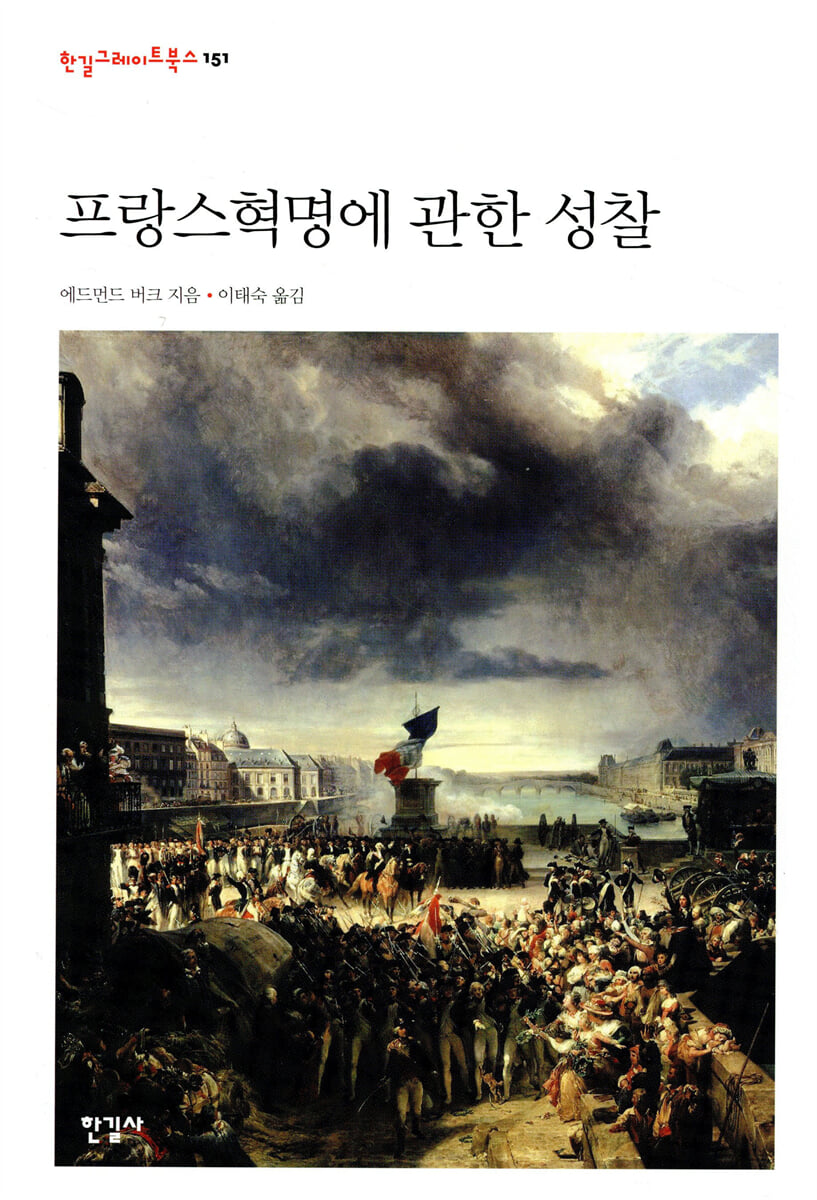
Reflections on the Revolution in France is a critical reflection on the French Revolution, which was triggered by the fall of the Bastille in 1789.
Edmund Burke, a British writer and politician, explained the principles of revolution in this book and pointed out its errors and dangers, predicting that this chaos would soon lead to military dictatorship.
The book was a huge hit when it was published in 1970, and is still considered a classic that forms the basis of Western conservatism.
Edmund Burke, a British writer and politician, explained the principles of revolution in this book and pointed out its errors and dangers, predicting that this chaos would soon lead to military dictatorship.
The book was a huge hit when it was published in 1970, and is still considered a classic that forms the basis of Western conservatism.
- You can preview some of the book's contents.
Preview
Publisher's Review
British outsider Burke
Defending the British Constitution
In 1789, the French people, who had been persecuted and exploited under the old regime called the Ancien Regime, launched a revolution that would remain in history.
The revolutionary fervor that began with the storming of the Bastille prison and spread like fire across a dry field shocked not only France but also many neighboring countries.
Across the sea, British reformers also showed signs of trying to introduce revolutionary principles to Britain.
Burke wrote Reflections on the Revolution in France to provide a political basis for opposing this.
In other words, this book is a 'counter-revolutionary theory' on the principles of revolution, and at the same time, it is a 'defense of the British constitutional system' in which the Irish-born outsider Burke praises the British system in order to solidify his political position in Britain.
The original text of 『Reflections on the French Revolution』 was written in the form of a letter addressed to a ‘gentleman in Paris,’ but when translating it into Korean, to help readers understand, the entire text was divided into three parts, with chapters and sections in each part.
As the book is titled “Reflections,” it is “full of editorials, declarations, and aphorisms, and is dotted with complex transitions between a wide range of topics, dazzling rhetoric, lengthy lists, clever satire, fierce criticism, and biased embellishment.” Therefore, when it was first published, it was also criticized as being overly biased due to its extreme tone and long-winded arguments.
However, as the French Revolution progressed and Burke's insight was proven, the book suddenly became "the starting point and center of counter-revolutionary discourse."
The fact that the German translator of this book was an aide to Metternich, the leader of the Holy Alliance against the French Revolution, proves that Burke provided an ideological basis for counterrevolutionary discourse.
The Future of Korean Conservatism
Although Burke served as a Whig member of the House of Commons for 30 years, his political stance is considered inconsistent.
This is not unrelated to the reason why I wrote Reflections on the French Revolution.
If his advocacy for the American colonists and his sharp criticism of the East India Company's tyranny and corruption showed his Whig roots, this book served as a decisive turning point in his break with the reformers who sought to change the British system.
Burke wrote this book to defend the British constitutional system established after the Glorious Revolution against the reformist will of the British reformers who were inspired by the French Revolution, but his influence did not end there.
Even in the 18th century when Burke was active, and even after that, those who opposed radical and radical reforms or revolutions used the ideological basis Burke advocated when they wanted to put the brakes on the movement for change.
When people with the will to protect the existing system and institutions are called conservatives, 『Reflections on the French Revolution』 became the 'enduring scripture of conservatives.'
Burke's influence still lingers today.
The influence of Samuel Huntington, a representative of modern American neo-conservatism, is clearly evident in the fact that he bases his ideology on Burke's ideas.
Therefore, in order to understand conservatism in the First World, including Britain and the United States, it is necessary to read Burke's Reflections on the Revolution in France.
The argument Burke presented in this book became the origin of the 'conservative ideology' summarized by Huntington.
It is no exaggeration to say that Burke pioneered the understanding of human history from a religious perspective (emphasizing the order of nature and divine providence), the epistemological skepticism that acknowledged the limitations of human reason (it is not easy to overthrow the systems and institutions that humans have built), and the prioritization of the interests of the community over the individual.
Translator Lee Tae-sook says that conservatism is not an ideology that opposes socialism or democracy.
Conservatism, unlike other ideologies, does not advocate a specific political thesis, but rather is a political basis for defending the existing system and institutions against reform and change, that is, a 'situational ideology'.
Therefore, the opposite of conservatism is radicalism.
The fact that American conservatism gained strength because communism was a threat to the West during the Cold War, and that after the Cold War, it identified non-Western Muslims as a threat, shows that conservatism is a situational ideology that does not aim for a specific political thesis.
This point also provides some insight into explaining Korean conservatism.
The reason why conservatism was so strong in South Korea was because North Korea was a threat to conservatives who had a strong tendency to protect the system.
That is why Korean conservatism was able to speak out loud without losing its power.
The future of South Korean conservatism can be cautiously predicted to depend on whether it can continue to persuasively present the North Korean threat and, furthermore, whether it can create a new threatening force.
Defending the British Constitution
In 1789, the French people, who had been persecuted and exploited under the old regime called the Ancien Regime, launched a revolution that would remain in history.
The revolutionary fervor that began with the storming of the Bastille prison and spread like fire across a dry field shocked not only France but also many neighboring countries.
Across the sea, British reformers also showed signs of trying to introduce revolutionary principles to Britain.
Burke wrote Reflections on the Revolution in France to provide a political basis for opposing this.
In other words, this book is a 'counter-revolutionary theory' on the principles of revolution, and at the same time, it is a 'defense of the British constitutional system' in which the Irish-born outsider Burke praises the British system in order to solidify his political position in Britain.
The original text of 『Reflections on the French Revolution』 was written in the form of a letter addressed to a ‘gentleman in Paris,’ but when translating it into Korean, to help readers understand, the entire text was divided into three parts, with chapters and sections in each part.
As the book is titled “Reflections,” it is “full of editorials, declarations, and aphorisms, and is dotted with complex transitions between a wide range of topics, dazzling rhetoric, lengthy lists, clever satire, fierce criticism, and biased embellishment.” Therefore, when it was first published, it was also criticized as being overly biased due to its extreme tone and long-winded arguments.
However, as the French Revolution progressed and Burke's insight was proven, the book suddenly became "the starting point and center of counter-revolutionary discourse."
The fact that the German translator of this book was an aide to Metternich, the leader of the Holy Alliance against the French Revolution, proves that Burke provided an ideological basis for counterrevolutionary discourse.
The Future of Korean Conservatism
Although Burke served as a Whig member of the House of Commons for 30 years, his political stance is considered inconsistent.
This is not unrelated to the reason why I wrote Reflections on the French Revolution.
If his advocacy for the American colonists and his sharp criticism of the East India Company's tyranny and corruption showed his Whig roots, this book served as a decisive turning point in his break with the reformers who sought to change the British system.
Burke wrote this book to defend the British constitutional system established after the Glorious Revolution against the reformist will of the British reformers who were inspired by the French Revolution, but his influence did not end there.
Even in the 18th century when Burke was active, and even after that, those who opposed radical and radical reforms or revolutions used the ideological basis Burke advocated when they wanted to put the brakes on the movement for change.
When people with the will to protect the existing system and institutions are called conservatives, 『Reflections on the French Revolution』 became the 'enduring scripture of conservatives.'
Burke's influence still lingers today.
The influence of Samuel Huntington, a representative of modern American neo-conservatism, is clearly evident in the fact that he bases his ideology on Burke's ideas.
Therefore, in order to understand conservatism in the First World, including Britain and the United States, it is necessary to read Burke's Reflections on the Revolution in France.
The argument Burke presented in this book became the origin of the 'conservative ideology' summarized by Huntington.
It is no exaggeration to say that Burke pioneered the understanding of human history from a religious perspective (emphasizing the order of nature and divine providence), the epistemological skepticism that acknowledged the limitations of human reason (it is not easy to overthrow the systems and institutions that humans have built), and the prioritization of the interests of the community over the individual.
Translator Lee Tae-sook says that conservatism is not an ideology that opposes socialism or democracy.
Conservatism, unlike other ideologies, does not advocate a specific political thesis, but rather is a political basis for defending the existing system and institutions against reform and change, that is, a 'situational ideology'.
Therefore, the opposite of conservatism is radicalism.
The fact that American conservatism gained strength because communism was a threat to the West during the Cold War, and that after the Cold War, it identified non-Western Muslims as a threat, shows that conservatism is a situational ideology that does not aim for a specific political thesis.
This point also provides some insight into explaining Korean conservatism.
The reason why conservatism was so strong in South Korea was because North Korea was a threat to conservatives who had a strong tendency to protect the system.
That is why Korean conservatism was able to speak out loud without losing its power.
The future of South Korean conservatism can be cautiously predicted to depend on whether it can continue to persuasively present the North Korean threat and, furthermore, whether it can create a new threatening force.
GOODS SPECIFICS
- Date of issue: February 1, 2017
- Format: Hardcover book binding method guide
- Page count, weight, size: 404 pages | 858g | 153*224*30mm
- ISBN13: 9788935664542
- ISBN10: 8935664545
You may also like
카테고리
korean


korean

![GQ KOREA Mark (Monthly): December [2025]](http://librairie.coreenne.fr/cdn/shop/files/8ef265dbbfbf186523ed75ba7319009d.jpg?v=1765340328&width=3840)


