

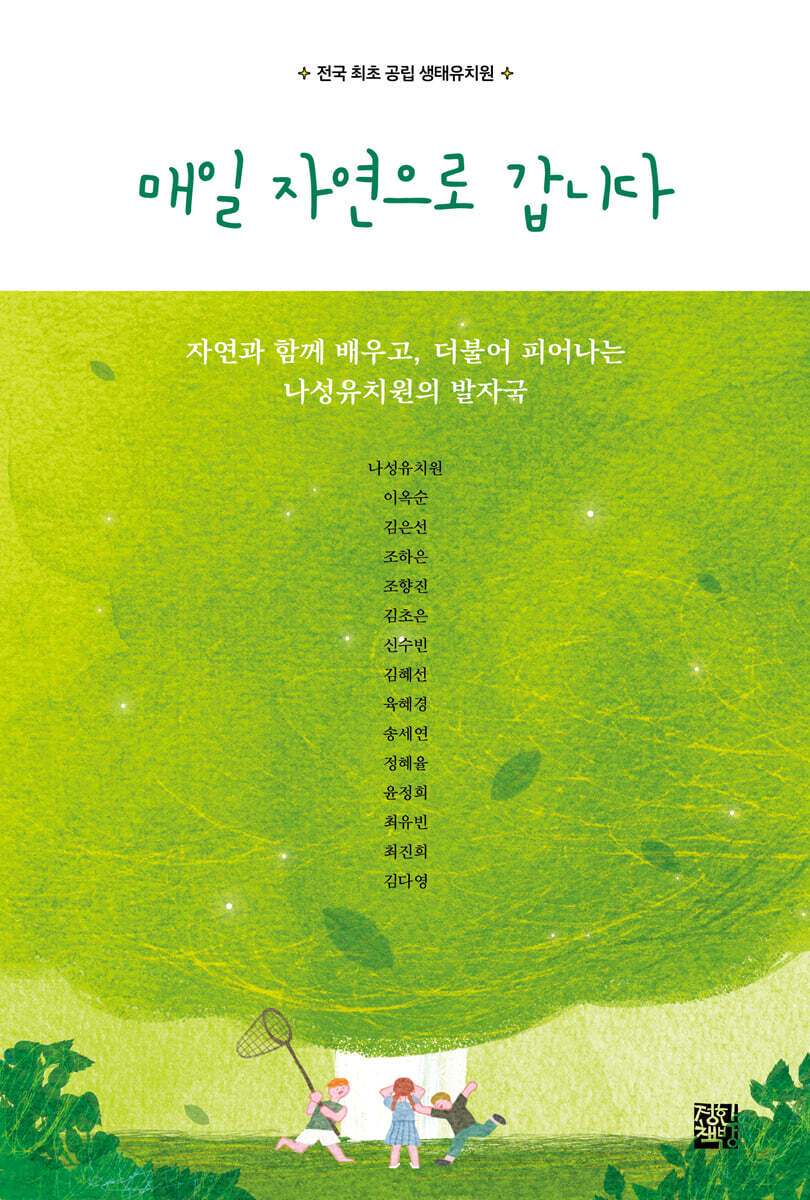
Go to nature every day
 |
Description
Book Introduction
“Play becomes learning, experience becomes relationships, and daily life becomes a connection with nature!”
A record of the profound philosophy and warm practices of Naseong Kindergarten, the nation's first public ecological kindergarten!
"Going to Nature Every Day" is a story woven together by children and nature, and is a record richly filled with the sincerity of teachers who have laughed, learned, and walked alongside them.
This book, which is a compilation of each day at Naseong Kindergarten, carefully captures the footsteps of the children and teachers who have practiced "education as life" in the embrace of "nature, the oldest classroom" where life and learning first blossom for children.
Parks, streams, forests, villages, mountains, and classrooms.
The voices of children heard in different landscapes ultimately lead to one truth: “Children must learn and grow in nature.”
Just as a ladybug in the garden becomes a small lesson, and a dragonfly brushing across the rice paddy opens up the topic of 'life,' learning is never confined to books.
Beyond a single chapter in early childhood education, this book prompts reflection on the values and direction future education should take in the era of climate crisis. It will serve as a valuable milestone for all educational communities and parents concerned with the essence of education.
A record of the profound philosophy and warm practices of Naseong Kindergarten, the nation's first public ecological kindergarten!
"Going to Nature Every Day" is a story woven together by children and nature, and is a record richly filled with the sincerity of teachers who have laughed, learned, and walked alongside them.
This book, which is a compilation of each day at Naseong Kindergarten, carefully captures the footsteps of the children and teachers who have practiced "education as life" in the embrace of "nature, the oldest classroom" where life and learning first blossom for children.
Parks, streams, forests, villages, mountains, and classrooms.
The voices of children heard in different landscapes ultimately lead to one truth: “Children must learn and grow in nature.”
Just as a ladybug in the garden becomes a small lesson, and a dragonfly brushing across the rice paddy opens up the topic of 'life,' learning is never confined to books.
Beyond a single chapter in early childhood education, this book prompts reflection on the values and direction future education should take in the era of climate crisis. It will serve as a valuable milestone for all educational communities and parents concerned with the essence of education.
- You can preview some of the book's contents.
Preview
index
Recommendation
Opening remarks
prolog
Chapter 1: Go to the garden
Children who fully experience the four seasons of the garden
A happy garden where we live together
Finding footprints in the field
A grain of rice, a bite of rice cake
One step towards the garden
Chapter 2: Going to the dirt mountain
From dirt to dinosaurs
I like it as much as a big dirt hill
The day the canyon was created
One step towards the dirt mountain
Chapter 3 Going to the garden
Our Class Garden Recipes
Sprouts gather together, sprouts together!
Children growing in sweet potato vines
Drawing nature, speaking about nature
Growing Together in a Garden (A Story of an Integrated Class)
One step into the garden
Chapter 4 Going to the park (Jecheon)
The laughter of children flowing with the current
Water, be clean
Precious natural friends we meet day and night
One step to the park (Jecheon)
Chapter 5 Going to the Forest
Children growing up with the forest
Forest Classroom, Meet Little Creatures
Roller coaster road where you walk while holding hands
One step into the forest
Chapter 6 Going to Classroom
Imagination blossoming from revival
Autonomous exchange of milk cartons and resource circulation
The beaded path that connects hearts
Liquid monsters (slime) that protect the Earth
After-school programs linked to the curriculum
One step into the classroom
Chapter 7: Riding a Bike
Great courage started with a small safety helmet
Hello? Bicycle (Integrated Class Story)
One step by bike
Epilogue
Opening remarks
prolog
Chapter 1: Go to the garden
Children who fully experience the four seasons of the garden
A happy garden where we live together
Finding footprints in the field
A grain of rice, a bite of rice cake
One step towards the garden
Chapter 2: Going to the dirt mountain
From dirt to dinosaurs
I like it as much as a big dirt hill
The day the canyon was created
One step towards the dirt mountain
Chapter 3 Going to the garden
Our Class Garden Recipes
Sprouts gather together, sprouts together!
Children growing in sweet potato vines
Drawing nature, speaking about nature
Growing Together in a Garden (A Story of an Integrated Class)
One step into the garden
Chapter 4 Going to the park (Jecheon)
The laughter of children flowing with the current
Water, be clean
Precious natural friends we meet day and night
One step to the park (Jecheon)
Chapter 5 Going to the Forest
Children growing up with the forest
Forest Classroom, Meet Little Creatures
Roller coaster road where you walk while holding hands
One step into the forest
Chapter 6 Going to Classroom
Imagination blossoming from revival
Autonomous exchange of milk cartons and resource circulation
The beaded path that connects hearts
Liquid monsters (slime) that protect the Earth
After-school programs linked to the curriculum
One step into the classroom
Chapter 7: Riding a Bike
Great courage started with a small safety helmet
Hello? Bicycle (Integrated Class Story)
One step by bike
Epilogue
Into the book
Even children who previously had negative thoughts about sparrows eating grains are now starting to worry about how sparrows survive the winter.
We decided to find a way to help the sparrow together.
I searched the internet and found out that you can make a feeder for birds that have a hard time finding food.
We looked at various pictures of feeders and came together with one mind to gather ideas on how to make one.
We made a bird feeder out of recycled materials, such as plastic containers and paper boxes, that we usually use to make toys.
I finally finished it by adding a lot of grains.
We all went out to the park in front of the kindergarten and hung a seedling container on a sturdy tree.
The children looked on with expectant eyes.
--- p.35
The garden at Naseong Kindergarten was a place of learning where little hands touched the soil, laughter wafted through the wind, and life grew up close.
This yard, where I, my family, and my village are connected, was not always a space of bright joy.
The process of a seed sprouting is always accompanied by twists and turns, big and small, and through these, my children and I learned and grew together.
The biggest concern was the problem of supporting the tomatoes and cucumbers.
We debated for a long time between a long-lasting iron support and a bamboo support that could be returned to nature.
In the end, I chose bamboo with nature in mind, but the tender bamboo couldn't support the weight of the tomatoes.
--- p.97
To be honest, I was scared at first.
The thought of taking the children to the water's edge, and the thought of a possible safety accident, made it difficult to take the first step.
However, a colleague with faith and drive for ecological education was the first to show courage.
He set out for Jecheon wearing large chest boots as a 'battle uniform'.
It was a first step filled with a mixture of nervousness and excitement, but the play was much more natural than I expected.
The children were quickly drawn into the underwater world by the small creatures flowing along the water, the sunlight sparkling on the surface of the water, and the cool water rushing under their feet. On the way back, they were filled with bright smiles and told stories about the creatures they encountered in Jecheon.
The voice itself was a record of children's play.
--- p.242143~144
Last spring, children watched together the process of cabbage white butterfly caterpillars transforming into butterflies.
That experience remained deeply in the children's hearts, and they hoped that this caterpillar would also become a butterfly.
After returning from the forest, I looked through the photos we took together and found out that the caterpillar was a caterpillar of the 'Ming Moth'.
Although they looked a little disappointed, the children were filled with the joy of 'getting to know'.
It was another moment of learning about the diversity of life.
After the sweltering heat of summer, the cool autumn breeze welcomes the children with even deeper colors.
The first thing children discovered in the autumn forest was 'acorns.'
“One, two, three.” The number of acorns in their hands increases, and the children begin to figure out how to play with them.
First, the acorns separated from the acorns were put on the children's fingers one by one and transformed into 'hats'.
--- p.191
Someone put colorful 'worm food' in a small bowl, and another child made a bed with a soft blanket and talked about it.
The world of earthworms in children's imaginations has become increasingly richer.
A small and affectionate world grew bigger and bigger in a corner of the classroom.
The desks and floors were filled with crumbs of clay and laughter, and the earthworm village in the children's imagination grew again today.
We decided to find a way to help the sparrow together.
I searched the internet and found out that you can make a feeder for birds that have a hard time finding food.
We looked at various pictures of feeders and came together with one mind to gather ideas on how to make one.
We made a bird feeder out of recycled materials, such as plastic containers and paper boxes, that we usually use to make toys.
I finally finished it by adding a lot of grains.
We all went out to the park in front of the kindergarten and hung a seedling container on a sturdy tree.
The children looked on with expectant eyes.
--- p.35
The garden at Naseong Kindergarten was a place of learning where little hands touched the soil, laughter wafted through the wind, and life grew up close.
This yard, where I, my family, and my village are connected, was not always a space of bright joy.
The process of a seed sprouting is always accompanied by twists and turns, big and small, and through these, my children and I learned and grew together.
The biggest concern was the problem of supporting the tomatoes and cucumbers.
We debated for a long time between a long-lasting iron support and a bamboo support that could be returned to nature.
In the end, I chose bamboo with nature in mind, but the tender bamboo couldn't support the weight of the tomatoes.
--- p.97
To be honest, I was scared at first.
The thought of taking the children to the water's edge, and the thought of a possible safety accident, made it difficult to take the first step.
However, a colleague with faith and drive for ecological education was the first to show courage.
He set out for Jecheon wearing large chest boots as a 'battle uniform'.
It was a first step filled with a mixture of nervousness and excitement, but the play was much more natural than I expected.
The children were quickly drawn into the underwater world by the small creatures flowing along the water, the sunlight sparkling on the surface of the water, and the cool water rushing under their feet. On the way back, they were filled with bright smiles and told stories about the creatures they encountered in Jecheon.
The voice itself was a record of children's play.
--- p.242143~144
Last spring, children watched together the process of cabbage white butterfly caterpillars transforming into butterflies.
That experience remained deeply in the children's hearts, and they hoped that this caterpillar would also become a butterfly.
After returning from the forest, I looked through the photos we took together and found out that the caterpillar was a caterpillar of the 'Ming Moth'.
Although they looked a little disappointed, the children were filled with the joy of 'getting to know'.
It was another moment of learning about the diversity of life.
After the sweltering heat of summer, the cool autumn breeze welcomes the children with even deeper colors.
The first thing children discovered in the autumn forest was 'acorns.'
“One, two, three.” The number of acorns in their hands increases, and the children begin to figure out how to play with them.
First, the acorns separated from the acorns were put on the children's fingers one by one and transformed into 'hats'.
--- p.191
Someone put colorful 'worm food' in a small bowl, and another child made a bed with a soft blanket and talked about it.
The world of earthworms in children's imaginations has become increasingly richer.
A small and affectionate world grew bigger and bigger in a corner of the classroom.
The desks and floors were filled with crumbs of clay and laughter, and the earthworm village in the children's imagination grew again today.
--- p.242
Publisher's Review
In the age of climate crisis, 'ecological education' is no longer an option, but a necessity!
'Books recommended by the Acting Deputy Superintendent of Education of Sejong Special Self-Governing City!'
Nature is the oldest classroom where life and learning first blossom for children, and education is reborn and nurtured within its embrace.
This book meticulously captures the footsteps of the teachers and children who have been practicing "education as life" by working closely with the children at the nation's first public ecological kindergarten.
This journey, born from the profound philosophy and warm practices of the educational community, goes beyond a single aspect of early childhood education and prompts reflection on the values and direction that future education should take.
Above all, this record clearly demonstrates that the essence of education does not remain confined to the classroom, but flows along the lines of nature and daily life, only then can it bear full fruit.
- Gu Yeon-hee (Acting Deputy Superintendent of Education, Sejong Special Self-Governing City)
For our children today, ecological education, which allows them to freely interact with nature, is no longer an option but a necessity.
This book is a vivid record of the ecological education that Naseong Kindergarten, the nation's first public ecological kindergarten, has been practicing in close collaboration with children.
Beyond the classroom, we utilize various spaces such as parks, forests, and villages as learning spaces, allowing children to feel the change of seasons with their whole bodies and observe the movements of small living things up close.
'Education as Life': Where Nature and Community Grow Together
Naseong Kindergarten's ecological education goes beyond simple nature-friendly activities; it embodies an educational philosophy that teaches children to live by asking questions and experiencing things for themselves.
The essence of learning: Children develop a sense of patience and gratitude within the cycle of nature, and develop the ability to live in harmony with nature.
The Power of Community: The ecological education at Nasung Kindergarten becomes more meaningful when the three stakeholders of education (teachers, children, parents) and the local community come together.
Planting rice seedlings, harvesting, seasonal activities, and family walks with parents help children integrate nature into their daily lives and foster a sense of community and responsibility to care for the community.
This record suggests the possibility of a precious learning space where the essence of education transcends the confines of the classroom and where nature, humans, and the community come together to learn and grow.
It will provide all early childhood educators and parents with insights to help children grow into individuals who cultivate beautiful lives.
'Books recommended by the Acting Deputy Superintendent of Education of Sejong Special Self-Governing City!'
Nature is the oldest classroom where life and learning first blossom for children, and education is reborn and nurtured within its embrace.
This book meticulously captures the footsteps of the teachers and children who have been practicing "education as life" by working closely with the children at the nation's first public ecological kindergarten.
This journey, born from the profound philosophy and warm practices of the educational community, goes beyond a single aspect of early childhood education and prompts reflection on the values and direction that future education should take.
Above all, this record clearly demonstrates that the essence of education does not remain confined to the classroom, but flows along the lines of nature and daily life, only then can it bear full fruit.
- Gu Yeon-hee (Acting Deputy Superintendent of Education, Sejong Special Self-Governing City)
For our children today, ecological education, which allows them to freely interact with nature, is no longer an option but a necessity.
This book is a vivid record of the ecological education that Naseong Kindergarten, the nation's first public ecological kindergarten, has been practicing in close collaboration with children.
Beyond the classroom, we utilize various spaces such as parks, forests, and villages as learning spaces, allowing children to feel the change of seasons with their whole bodies and observe the movements of small living things up close.
'Education as Life': Where Nature and Community Grow Together
Naseong Kindergarten's ecological education goes beyond simple nature-friendly activities; it embodies an educational philosophy that teaches children to live by asking questions and experiencing things for themselves.
The essence of learning: Children develop a sense of patience and gratitude within the cycle of nature, and develop the ability to live in harmony with nature.
The Power of Community: The ecological education at Nasung Kindergarten becomes more meaningful when the three stakeholders of education (teachers, children, parents) and the local community come together.
Planting rice seedlings, harvesting, seasonal activities, and family walks with parents help children integrate nature into their daily lives and foster a sense of community and responsibility to care for the community.
This record suggests the possibility of a precious learning space where the essence of education transcends the confines of the classroom and where nature, humans, and the community come together to learn and grow.
It will provide all early childhood educators and parents with insights to help children grow into individuals who cultivate beautiful lives.
GOODS SPECIFICS
- Date of issue: November 27, 2025
- Page count, weight, size: 280 pages | 152*225*20mm
- ISBN13: 9791199162754
- ISBN10: 1199162752
You may also like
카테고리
korean


korean

![GQ KOREA Mark (Monthly): December [2025]](http://librairie.coreenne.fr/cdn/shop/files/8ef265dbbfbf186523ed75ba7319009d.jpg?v=1765340328&width=3840)


