

National media pride
 |
Description
Book Introduction
Recently, Korean society has been experiencing a crisis of democracy, and the role of the media has been once again brought to attention.
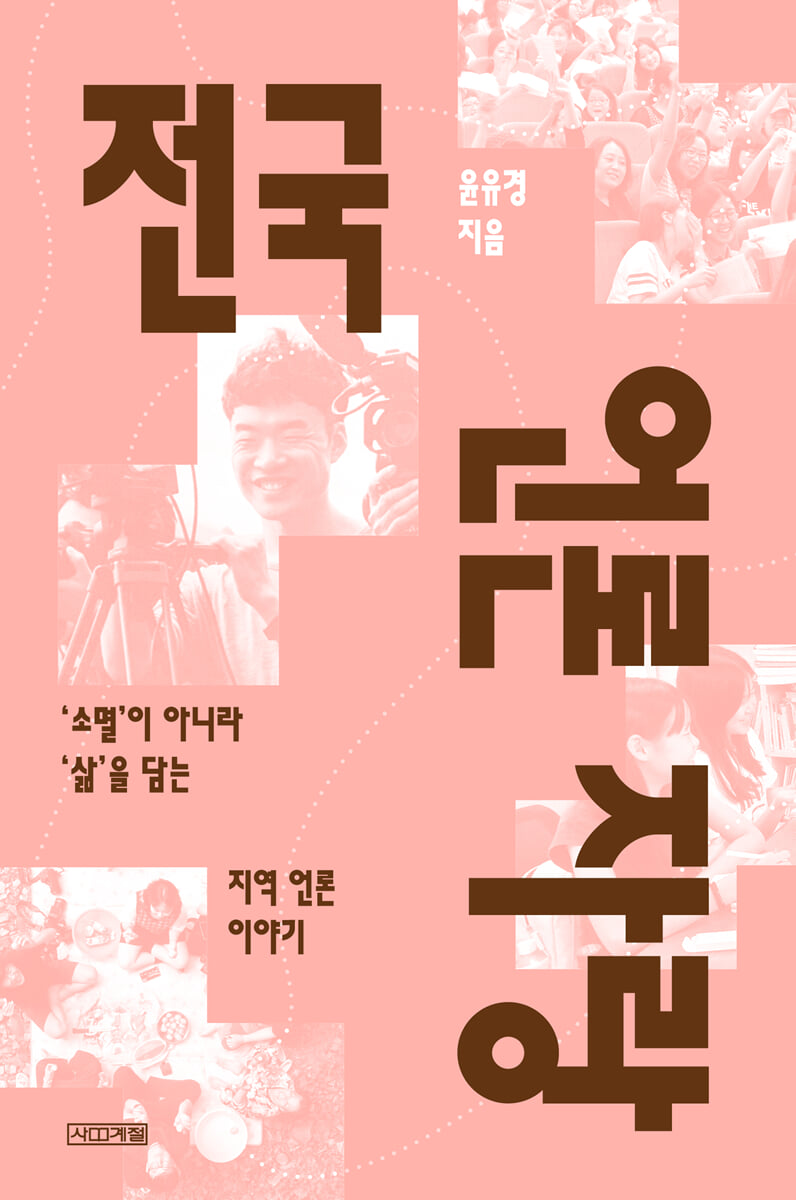
This book, written by reporter Yoon Yu-kyung of the media criticism journal Media Today, is the result of interviews with 19 local media outlets that are most faithfully fulfilling the media's original role of monitoring power, guaranteeing citizens' right to know, and forming a healthy public forum in which anyone can participate.
This book introduces the novel ideas and amazing dedication of local media outlets that listen to the voices of each resident, work together to solve the difficulties they face, and record the process as local history. These include the Jinan Newspaper, which teaches writing to local elderly women and students with developmental disabilities and has them write articles themselves; the Busan Ilbo, which opened a laundromat in a village populated only by elderly people and collected stories to turn into articles in lieu of laundry fees; and the Weekly Hamyang, which combined a one-month living in the region with an intern reporter program to capture the interest of young people.
This book is also a "report on life outside Seoul," a collection of stories about the unique lives of each region, often described only as "extinction" or "crisis" under the shadow of Seoul-centrism, and the warm and vibrant stories of local residents.
By following the footsteps of local journalists who boldly enter the lives of residents, you can encounter the specific lives of each region that the so-called central media in Seoul does not report.
The 'unextinct' daily lives of the elderly in Ipsa Village, Uiryeong-gun, Gyeongsangnam-do, classified as an 'endangered area', the story of the indigenous people of Haengdam-do who were driven out of their hometown due to the construction of the Seohae Grand Bridge, the after-school activities of students at an elementary school in Goesan, Chungcheongbuk-do with about 50 students, and the lives of the female divers of Udo, a small island next to Jeju Island, unfold before your eyes.
These vivid life stories confirm that local media is a vital force in preserving local communities and history.
This book, which introduces unique local media from around the country, will provide a starting point for imagining life outside Seoul and practicing a better democracy.
This book, written by reporter Yoon Yu-kyung of the media criticism journal Media Today, is the result of interviews with 19 local media outlets that are most faithfully fulfilling the media's original role of monitoring power, guaranteeing citizens' right to know, and forming a healthy public forum in which anyone can participate.
This book introduces the novel ideas and amazing dedication of local media outlets that listen to the voices of each resident, work together to solve the difficulties they face, and record the process as local history. These include the Jinan Newspaper, which teaches writing to local elderly women and students with developmental disabilities and has them write articles themselves; the Busan Ilbo, which opened a laundromat in a village populated only by elderly people and collected stories to turn into articles in lieu of laundry fees; and the Weekly Hamyang, which combined a one-month living in the region with an intern reporter program to capture the interest of young people.
This book is also a "report on life outside Seoul," a collection of stories about the unique lives of each region, often described only as "extinction" or "crisis" under the shadow of Seoul-centrism, and the warm and vibrant stories of local residents.
By following the footsteps of local journalists who boldly enter the lives of residents, you can encounter the specific lives of each region that the so-called central media in Seoul does not report.
The 'unextinct' daily lives of the elderly in Ipsa Village, Uiryeong-gun, Gyeongsangnam-do, classified as an 'endangered area', the story of the indigenous people of Haengdam-do who were driven out of their hometown due to the construction of the Seohae Grand Bridge, the after-school activities of students at an elementary school in Goesan, Chungcheongbuk-do with about 50 students, and the lives of the female divers of Udo, a small island next to Jeju Island, unfold before your eyes.
These vivid life stories confirm that local media is a vital force in preserving local communities and history.
This book, which introduces unique local media from around the country, will provide a starting point for imagining life outside Seoul and practicing a better democracy.
- You can preview some of the book's contents.
Preview
index
Entering
Part 1: Local Newspapers, Where My Neighbors' Stories Are Published
Jinan Newspaper - Even people in their 80s and youth with developmental disabilities can become reporters.
Gyeongnam Shinmun - I'll pay for your errands with a story.
Busan Ilbo - Sanbok Laundry: Stories Stacked Higher Than Laundry
Taean Newspaper - Experts in local issues, tracking and reporting to the end.
[Special Feature] A 5-Night, 6-Day Bicycle Trip with the Jinan Newspaper
Part 2: Closer, Closer: How Local Newspapers Survive
Okcheon Newspaper - An Incubator for Grassroots Local Media
Weekly Hamyang - Living a Month as an Intern Reporter in Hamyang
Newsmin - Independent media protected by residents
Dangjin Times - The Secret to Ranking 3rd in Paid Subscribers Nationwide
Gyeong-In Regional Newspapers - The Capital Region Media's Survival Strategy
[Special Feature] Hwang Min-ho, CEO of Okcheon Newspaper, a synonym for grassroots local journalism.
Part 3: What a newspaper this is!
What a Scoop! - Goesan Songmyeon Elementary School Children's Newspaper
Joongdo Ilbo - Underwater diving to discover local culture?
Geoje Newspaper - Writing the first draft of a local newspaper
Wonju Today - 30 percent of the newspaper's work is dedicated to public service.
Dalgrian - Newspapers arrive even on islands within islands.
[Special Feature] How to Start a Local Newspaper
Part 1: Local Newspapers, Where My Neighbors' Stories Are Published
Jinan Newspaper - Even people in their 80s and youth with developmental disabilities can become reporters.
Gyeongnam Shinmun - I'll pay for your errands with a story.
Busan Ilbo - Sanbok Laundry: Stories Stacked Higher Than Laundry
Taean Newspaper - Experts in local issues, tracking and reporting to the end.
[Special Feature] A 5-Night, 6-Day Bicycle Trip with the Jinan Newspaper
Part 2: Closer, Closer: How Local Newspapers Survive
Okcheon Newspaper - An Incubator for Grassroots Local Media
Weekly Hamyang - Living a Month as an Intern Reporter in Hamyang
Newsmin - Independent media protected by residents
Dangjin Times - The Secret to Ranking 3rd in Paid Subscribers Nationwide
Gyeong-In Regional Newspapers - The Capital Region Media's Survival Strategy
[Special Feature] Hwang Min-ho, CEO of Okcheon Newspaper, a synonym for grassroots local journalism.
Part 3: What a newspaper this is!
What a Scoop! - Goesan Songmyeon Elementary School Children's Newspaper
Joongdo Ilbo - Underwater diving to discover local culture?
Geoje Newspaper - Writing the first draft of a local newspaper
Wonju Today - 30 percent of the newspaper's work is dedicated to public service.
Dalgrian - Newspapers arrive even on islands within islands.
[Special Feature] How to Start a Local Newspaper
Detailed image

Into the book
The grandmother reporters of the Jinan Newspaper who led regional change
Director Ryu thought that there were people in the region who were excluded even from the saying, “Every citizen is a reporter.”
This is because illiterate grandmothers and children are forced to stay away from public forums.
He started writing classes with grandmothers, teenagers, and married immigrant women, hoping to capture their voices on paper.
Elderly women who had never had the opportunity to learn to read and write in their lives are learning Hangul, and the Jinan Newspaper publishes their writings as is.
Elderly people who could not even read newspapers because they were illiterate became reporters for local newspapers.
(…) In Donghyang-myeon, there were only two buses, at 9:30 AM and 4:30 PM, but when the grandmothers wrote an article saying that there should be an extra bus at 2 PM, a bus was added.
Thanks to their articles, all residents of Donghyang-myeon saved half a day.
As changes occurred, the grandmothers began to feel the power of writing.
Local communities are also beginning to listen more attentively to their voices.
--- p.25~31
The reality of local crisis witnessed in Ipsa Village, home to just 20 households.
“The Gyeongnam Shinmun errand center visits remote villages.”
Gyeongnam Shinmun, a daily newspaper in the Gyeongnam region, has launched a project to run errands for local residents and listen to their stories in return for payment.
(…) There was not a single person on the way to Ipsa Village.
Only a few cars passed by occasionally.
This kind of scenery was unfamiliar to me, who only lived in the metropolitan area.
As we passed the rice paddies stretching out on both sides, we came across many abandoned houses.
The elderly people who lived there passed away, and the children left the houses to go to Seoul, leaving them without time to dispose of them.
Although there are at least two buses a day in Ipsa Village, there is not a single convenience store in the entire town.
The village, which once had over 50 households, is now home to only 20 households, less than half of which remain.
About half of the foreheads are homes for people who commute between cities and villages.
Reporter Do said that when he went to Ipsa Village, he realized how serious the situation was because there were no people, no restaurants, and no supermarkets.
--- p.53~56
Busan Ilbo's New Attempt: Sanbok Laundry Room
The use of the Sanbok Laundry Room is free.
Customers pay for laundry with stories, not money.
I hope one guest stays long enough to hear their stories while their laundry dries.
Starting in May 2022, reporters and producers listened to the stories of the elderly in Hocheon Village every week and published them in 24 articles.
The article included everything from outdoor aerobics with the elderly, spring picnics and snail digging, to movie watching, to stories of female workers at the Samhwa Rubber Factory in Busan 50 years ago, to the hardships of carrying buckets of water on their heads and climbing kilometers of mountain paths to get drinking water for their families.
(…) Listening to and recording the lives of local people who are still living and breathing in various parts of the region, and preserving their lives as local history.
Isn't this what local media can and should do, moving beyond the monopoly or breaking news competition and the pursuit of viewership?
--- p.81~87
In the place where the media disappeared, only the Taean Newspaper remained.
The media gathers and disappears in an instant when an incident occurs.
The same thing happened in the Samsung Heavy Industries Taean sea oil spill.
The sight of politicians, volunteer groups, and citizens from all over the country coming to clean up the oil was reported in numerous media outlets, but once the oil was mostly cleaned up, people stopped coming.
Especially after Samsung Heavy Industries donated funds, the media stopped reporting on the oil spill as if it were over.
The Taean Newspaper was the only one to continue reporting on the physical and mental damage to local residents, the collapse of the community, the irresponsible response of the perpetrator company, and the atrocities committed by the Hebei Union.
With all the media out, only the local media was left to dig into the ongoing incident.
--- p.110
Okcheon Newspaper's Youth Media Literacy Education
Starting in 2023, Okcheon Newspaper and Okcheon FM have been working together to launch the 'Okcheon Newspaper of the Week' program for youth.
Students from the broadcasting departments of Okcheon High School and Chungbuk Industrial Science High School read the Okcheon Newspaper every week and select the 'Okcheon Newspaper of the Week'. Once a month, they gather at Okcheon FM and broadcast a radio show based on the selected articles.
(…) Reporter Lee Hyeon-gyeong said, “(Local youth) are born in rural areas and grow up looking toward Seoul.
We grow up internalizing an inferiority complex about the place we were born and raised in.
“Young people say that even if they read critical articles, they become more affectionate towards the area when they learn about it,” he said.
Lee Hae-soo, the head of Okcheon FM’s programming department, also said, “Many young people originally thought they had to leave Okcheon, but through this activity, many of them said that it would be okay to live in Okcheon.”
--- p.157~159
The power of Newsmin, which brought together 1,000 readers
At the sponsorship night, I thought again about the existence of 'readers'.
Journalists who produce countless articles a day write articles like crazy and throw them into portals.
I don't even imagine who will read my articles.
At best, I only briefly consider the person I am covering, that is, the source.
The same goes for me, who is part of the portal structure.
So, the readers I saw firsthand at the Newsmin sponsorship hope were a refreshing shock to me.
That day, over 1,000 readers came to find sponsorship hope.
(…) It was only while covering a local media outlet whose management itself was reader-based, sponsorship- and subscription-based that I realized the importance of readers.
To them, readers were not just 'netizens' who commented on articles or 'users' who increased the number of views, but lively beings with whom they communicated on a daily basis.
--- p.193~194
The Tangjin Era, which healed the wounds of the scattered Haengdamdo natives.
In the end, the Seohae Grand Bridge was built passing through Haengdam Island.
The residents were forced to leave Haengdam Island, bearing the stigma of being 'radical islanders'.
While the central media promoted Haengdam Island as the “only island rest area in the country” and raised the Seohae Grand Bridge, the voices of the residents, the owners of Haengdam Island, disappeared and were forgotten.
Accordingly, reporters and producers of Dangjin Times spent two years searching for the Haengdam Island indigenous people scattered across the country through various channels.
Even though contact was made with great difficulty, the natives could not easily let down their guard, which had developed during their journey from Haengdam Island.
However, the reporting team went to each person individually and persuaded them several times to receive oral statements from 10 indigenous people.
By adding photographic materials that the residents had, we were finally able to restore the forgotten history of Haengdam Island.
(…) At first, most residents did not want to talk about Haengdam Island and had negative memories of Haengdam Island and Dangjin City, but by gathering together and watching the video, they were able to heal some of the pain they had felt.
This is a good example of how local media created an opportunity for healing and reconciliation.
--- p.221~222
"Faculty and staff are not allowed to participate" - A newspaper run by children, "What's Wrong with Secretary Kim!"
〈What's Wrong with Secretary Kim!〉 is a children's newspaper created by one fifth-grade student and three sixth-grade students among the 51 students at Songmyeon Elementary School.
These students are from Jaramteo's newspaper club. They started making newspapers to record the voices of children in a reality where children are having difficulty writing and newspaper clubs are disappearing from elementary schools.
Children's newspapers published in schools are often filled with "children's stories that adults want" or are often used for school promotion, but "What's Wrong with Secretary Kim!" is a newspaper where children fill the pages with their own stories, becoming the owners of the newspaper.
The children themselves came up with the catchy name “What’s Wrong with Secretary Kim!” which caught my attention when I was casting the show.
Until the first issue came out, the name was “Songmyeon Elementary School Newspaper,” but in the first issue, along with a stern notice that “faculty and staff cannot participate,” a contest for the name of the newspaper was published, and the current name was decided.
--- p.258~259
A reporter attempted underwater diving to find traces of the traditional Korean music group Cheongpungseungpyeonggye.
He started reporting with the thought that someone had to do it, and he developed the article with a long breath.
The report focused on the fact that the oldest traditional Korean music group in Korea was founded in 1893 in Jecheon, a city with a strong image of being a city of cement.
We interviewed people we had never met before in the traditional Korean music or historical circles, including the descendants of Chungcheong Province's traditional Korean music masters, and unearthed new facts.
Following continued reports, the first 'Jecheon Cheongpungseungpyeonggye Academic Seminar' was held in Jecheon.
Rather than being greedy about filling 100 episodes, I continued the series with the intention of leaving a record by putting my heart into each episode.
“I had a vague thought that if I went into the water, there might be some instruments or traces, but I really wanted to go in.
In May or June 2022, I attempted to enter Cheongpung Lake with the help of underwater divers.
I set a date and prepared everything to launch the boat and go into the water wearing my underwater gear, but it rained too much and I couldn't go in.
“The visibility was poor due to floating objects.”
--- p.284~289
The pride of Udo, an island village of 1,500, is its village newspaper, Dalgrian.
Kim Hye-sook's words about how proud she is that her village has a newspaper resonate deeply with me.
For residents who have lived their entire lives on Udo Island, the village newspaper, Dalgrian, is the first local newspaper they have encountered.
The fact that there is a media outlet that records the stories of our neighborhood is a source of great pride for the residents.
My voice is recorded in the newspaper, and that record will not disappear but will remain in history.
Mr. Go Seong-jong also said, “How many villages have newspapers?
“When I go to other regions, the first thing I brag about is that there is a newspaper called Dalgrian in our town,” he said with a smile.
In Udo, where there are only elementary and middle schools, you have to go to another region to advance to high school.
For those who have left the island, Dalgrian is the only window through which they can get news from Udo.
Resident Yoon Chan-guk said, “People like us who go outside can’t hear about our hometown.
So when the newspaper arrives, I look at it with excitement, wondering, ‘What news will I hear today?’”
Residents recalled old memories while looking at the newspapers and photos displayed at the Dalgrian booth.
Director Ryu thought that there were people in the region who were excluded even from the saying, “Every citizen is a reporter.”
This is because illiterate grandmothers and children are forced to stay away from public forums.
He started writing classes with grandmothers, teenagers, and married immigrant women, hoping to capture their voices on paper.
Elderly women who had never had the opportunity to learn to read and write in their lives are learning Hangul, and the Jinan Newspaper publishes their writings as is.
Elderly people who could not even read newspapers because they were illiterate became reporters for local newspapers.
(…) In Donghyang-myeon, there were only two buses, at 9:30 AM and 4:30 PM, but when the grandmothers wrote an article saying that there should be an extra bus at 2 PM, a bus was added.
Thanks to their articles, all residents of Donghyang-myeon saved half a day.
As changes occurred, the grandmothers began to feel the power of writing.
Local communities are also beginning to listen more attentively to their voices.
--- p.25~31
The reality of local crisis witnessed in Ipsa Village, home to just 20 households.
“The Gyeongnam Shinmun errand center visits remote villages.”
Gyeongnam Shinmun, a daily newspaper in the Gyeongnam region, has launched a project to run errands for local residents and listen to their stories in return for payment.
(…) There was not a single person on the way to Ipsa Village.
Only a few cars passed by occasionally.
This kind of scenery was unfamiliar to me, who only lived in the metropolitan area.
As we passed the rice paddies stretching out on both sides, we came across many abandoned houses.
The elderly people who lived there passed away, and the children left the houses to go to Seoul, leaving them without time to dispose of them.
Although there are at least two buses a day in Ipsa Village, there is not a single convenience store in the entire town.
The village, which once had over 50 households, is now home to only 20 households, less than half of which remain.
About half of the foreheads are homes for people who commute between cities and villages.
Reporter Do said that when he went to Ipsa Village, he realized how serious the situation was because there were no people, no restaurants, and no supermarkets.
--- p.53~56
Busan Ilbo's New Attempt: Sanbok Laundry Room
The use of the Sanbok Laundry Room is free.
Customers pay for laundry with stories, not money.
I hope one guest stays long enough to hear their stories while their laundry dries.
Starting in May 2022, reporters and producers listened to the stories of the elderly in Hocheon Village every week and published them in 24 articles.
The article included everything from outdoor aerobics with the elderly, spring picnics and snail digging, to movie watching, to stories of female workers at the Samhwa Rubber Factory in Busan 50 years ago, to the hardships of carrying buckets of water on their heads and climbing kilometers of mountain paths to get drinking water for their families.
(…) Listening to and recording the lives of local people who are still living and breathing in various parts of the region, and preserving their lives as local history.
Isn't this what local media can and should do, moving beyond the monopoly or breaking news competition and the pursuit of viewership?
--- p.81~87
In the place where the media disappeared, only the Taean Newspaper remained.
The media gathers and disappears in an instant when an incident occurs.
The same thing happened in the Samsung Heavy Industries Taean sea oil spill.
The sight of politicians, volunteer groups, and citizens from all over the country coming to clean up the oil was reported in numerous media outlets, but once the oil was mostly cleaned up, people stopped coming.
Especially after Samsung Heavy Industries donated funds, the media stopped reporting on the oil spill as if it were over.
The Taean Newspaper was the only one to continue reporting on the physical and mental damage to local residents, the collapse of the community, the irresponsible response of the perpetrator company, and the atrocities committed by the Hebei Union.
With all the media out, only the local media was left to dig into the ongoing incident.
--- p.110
Okcheon Newspaper's Youth Media Literacy Education
Starting in 2023, Okcheon Newspaper and Okcheon FM have been working together to launch the 'Okcheon Newspaper of the Week' program for youth.
Students from the broadcasting departments of Okcheon High School and Chungbuk Industrial Science High School read the Okcheon Newspaper every week and select the 'Okcheon Newspaper of the Week'. Once a month, they gather at Okcheon FM and broadcast a radio show based on the selected articles.
(…) Reporter Lee Hyeon-gyeong said, “(Local youth) are born in rural areas and grow up looking toward Seoul.
We grow up internalizing an inferiority complex about the place we were born and raised in.
“Young people say that even if they read critical articles, they become more affectionate towards the area when they learn about it,” he said.
Lee Hae-soo, the head of Okcheon FM’s programming department, also said, “Many young people originally thought they had to leave Okcheon, but through this activity, many of them said that it would be okay to live in Okcheon.”
--- p.157~159
The power of Newsmin, which brought together 1,000 readers
At the sponsorship night, I thought again about the existence of 'readers'.
Journalists who produce countless articles a day write articles like crazy and throw them into portals.
I don't even imagine who will read my articles.
At best, I only briefly consider the person I am covering, that is, the source.
The same goes for me, who is part of the portal structure.
So, the readers I saw firsthand at the Newsmin sponsorship hope were a refreshing shock to me.
That day, over 1,000 readers came to find sponsorship hope.
(…) It was only while covering a local media outlet whose management itself was reader-based, sponsorship- and subscription-based that I realized the importance of readers.
To them, readers were not just 'netizens' who commented on articles or 'users' who increased the number of views, but lively beings with whom they communicated on a daily basis.
--- p.193~194
The Tangjin Era, which healed the wounds of the scattered Haengdamdo natives.
In the end, the Seohae Grand Bridge was built passing through Haengdam Island.
The residents were forced to leave Haengdam Island, bearing the stigma of being 'radical islanders'.
While the central media promoted Haengdam Island as the “only island rest area in the country” and raised the Seohae Grand Bridge, the voices of the residents, the owners of Haengdam Island, disappeared and were forgotten.
Accordingly, reporters and producers of Dangjin Times spent two years searching for the Haengdam Island indigenous people scattered across the country through various channels.
Even though contact was made with great difficulty, the natives could not easily let down their guard, which had developed during their journey from Haengdam Island.
However, the reporting team went to each person individually and persuaded them several times to receive oral statements from 10 indigenous people.
By adding photographic materials that the residents had, we were finally able to restore the forgotten history of Haengdam Island.
(…) At first, most residents did not want to talk about Haengdam Island and had negative memories of Haengdam Island and Dangjin City, but by gathering together and watching the video, they were able to heal some of the pain they had felt.
This is a good example of how local media created an opportunity for healing and reconciliation.
--- p.221~222
"Faculty and staff are not allowed to participate" - A newspaper run by children, "What's Wrong with Secretary Kim!"
〈What's Wrong with Secretary Kim!〉 is a children's newspaper created by one fifth-grade student and three sixth-grade students among the 51 students at Songmyeon Elementary School.
These students are from Jaramteo's newspaper club. They started making newspapers to record the voices of children in a reality where children are having difficulty writing and newspaper clubs are disappearing from elementary schools.
Children's newspapers published in schools are often filled with "children's stories that adults want" or are often used for school promotion, but "What's Wrong with Secretary Kim!" is a newspaper where children fill the pages with their own stories, becoming the owners of the newspaper.
The children themselves came up with the catchy name “What’s Wrong with Secretary Kim!” which caught my attention when I was casting the show.
Until the first issue came out, the name was “Songmyeon Elementary School Newspaper,” but in the first issue, along with a stern notice that “faculty and staff cannot participate,” a contest for the name of the newspaper was published, and the current name was decided.
--- p.258~259
A reporter attempted underwater diving to find traces of the traditional Korean music group Cheongpungseungpyeonggye.
He started reporting with the thought that someone had to do it, and he developed the article with a long breath.
The report focused on the fact that the oldest traditional Korean music group in Korea was founded in 1893 in Jecheon, a city with a strong image of being a city of cement.
We interviewed people we had never met before in the traditional Korean music or historical circles, including the descendants of Chungcheong Province's traditional Korean music masters, and unearthed new facts.
Following continued reports, the first 'Jecheon Cheongpungseungpyeonggye Academic Seminar' was held in Jecheon.
Rather than being greedy about filling 100 episodes, I continued the series with the intention of leaving a record by putting my heart into each episode.
“I had a vague thought that if I went into the water, there might be some instruments or traces, but I really wanted to go in.
In May or June 2022, I attempted to enter Cheongpung Lake with the help of underwater divers.
I set a date and prepared everything to launch the boat and go into the water wearing my underwater gear, but it rained too much and I couldn't go in.
“The visibility was poor due to floating objects.”
--- p.284~289
The pride of Udo, an island village of 1,500, is its village newspaper, Dalgrian.
Kim Hye-sook's words about how proud she is that her village has a newspaper resonate deeply with me.
For residents who have lived their entire lives on Udo Island, the village newspaper, Dalgrian, is the first local newspaper they have encountered.
The fact that there is a media outlet that records the stories of our neighborhood is a source of great pride for the residents.
My voice is recorded in the newspaper, and that record will not disappear but will remain in history.
Mr. Go Seong-jong also said, “How many villages have newspapers?
“When I go to other regions, the first thing I brag about is that there is a newspaper called Dalgrian in our town,” he said with a smile.
In Udo, where there are only elementary and middle schools, you have to go to another region to advance to high school.
For those who have left the island, Dalgrian is the only window through which they can get news from Udo.
Resident Yoon Chan-guk said, “People like us who go outside can’t hear about our hometown.
So when the newspaper arrives, I look at it with excitement, wondering, ‘What news will I hear today?’”
Residents recalled old memories while looking at the newspapers and photos displayed at the Dalgrian booth.
--- p.341~342
Publisher's Review
The story of me and my neighbors, a faithful recorder of our town's history.
A low-threshold public forum that protects democracy and community
From grassroots weekly magazines to island village newspapers, stories from local media across the country.
On July 3, 2025, reporters from grassroots local media outlets were invited to a press conference on the 30th day of President Lee Jae-myung's inauguration and participated via video conference for the first time.
Why did the president, a former head of a local government, invite these media outlets separately, in addition to the so-called central media outlets headquartered in Seoul? It's likely because the president, a former head of a local government, recognized that local media outlets have the most accurate knowledge of specific local issues and the aspirations of their constituents.
Central media outlets, which cover government ministries, prosecutors, political parties, and businesses, primarily report on Seoul-centric news, such as apartment prices in Seoul, politicians' every move, and new trends in the Daechi-dong academy district.
The problems of residents of Hamyang, Gyeongsangnam-do, Taean, Chungcheongnam-do, and Jinan, Jeollabuk-do are difficult to cover in the news.
Unless a major incident or accident occurs, the area only appears in the media as a travel destination for residents of the metropolitan area.
In this skewed structure, reporter Yoon Yu-kyung of Media Today, who was assigned to cover the "local media," discovered during her three-year reporting process that the local media functioned as the last bastion, caring for and protecting the lives of the region.
"National Media Pride" is a book in which reporter Yoon Yu-kyung personally visited 19 local media outlets across the country, met with the reporters, accompanied them on their reporting, and recorded the local media outlets working alongside residents to think about and solve local issues.
In addition to the Okcheon Newspaper, which is synonymous with grassroots local media, the Gyeongnam Newspaper, which carries the voices of seniors in remote villages with its unique project called 'Errand Center', the independent Daegu/Gyeongbuk media outlet Newsmin, which is run with support from readers, and the Dangjin Times, which boasts the third-largest number of paid subscribers in the country, we have compiled a comprehensive report on not only representative media outlets in each region, but also small but unique village newspapers, such as Dalgrian, which is published every season on Udo Island, a small island with a population of 1,500, and the children's newspaper 'What a Scoop!' of Songmyeon Elementary School in Goesan, Chungcheongbuk-do.
Amid the dual challenges of the paper crisis and the local economic downturn, local media outlets are finding ways to survive in different ways, but what they all have in common is the pursuit of "community journalism" and "solutions journalism."
In other words, the media and residents within the local community work together to communicate and bring out unique stories from the region, and raise the issues residents face to the local agenda to work together to resolve them.
The Taean Newspaper has been covering the 'Samsung Heavy Industries Taean Sea Oil Spill' that occurred in 2007 for 18 years, and has revealed in detail the irresponsible response of the responsible company, the suffering of Taean residents, and the process of the local community collapsing due to the issue of compensation for the damages.
In order to overcome the crisis of population decline, Weekly Hamyang combined the 'Weekly Hamyang Intern Reporter 3-Week Course' with the 'Living in the Region for a Month' program promoted by the local government, providing young people from other regions with the opportunity to experience life in Hamyang.
The Okcheon Newspaper has created an environment in which everyone in Okcheon, from children and youth to the elderly, can access, use, and learn about the media by establishing various social enterprises, cultural spaces, and educational institutions that train grassroots local journalists.
“Our newspaper has a low threshold.
Newspapers should not be about lofty discourses from a distant and high place, but should be about the needs of local people.
(…) When residents feel wronged, have a hard time, or have something to solve, they come to the newspaper office.
For 35 years, we've been digging from the bottom and writing articles.
“The people know firsthand what role the media plays and why it is necessary.” - pp. 146-148
As Okcheon Newspaper CEO Hwang Min-ho said, local media consistently raises the issue of local problems that the central government cannot reach and that even local governments cannot properly address, thereby contributing to improving the lives of local residents.
Furthermore, we are taking the lead in fostering media literacy throughout the region by broadly involving residents in various media activities.
This book persuasively demonstrates that the existence of a healthy local media is essential for local autonomy and grassroots democracy to take root.
Moreover, it clearly presents, through specific examples, the role that the media should play and the values that must be restored in an environment where it is easy to become swept up in competition for views and exclusive or breaking news.
Life outside Seoul as seen through the window of local media
Our region's unique story that will never disappear
As befitting the "Republic of Seoul," where all of society's infrastructure, including quality jobs, education, and cultural facilities, is concentrated in Seoul, the Korean media primarily focuses on life in Seoul.
In recent years, there have been many reports mentioning regions as "local is on the rise," but the concept of "local" is closer to the new lifestyles, popular products, and tastes of young people than to the reality of the region as a whole.
Local life is still often associated with words like 'extinction', 'crisis', 'aging', and 'backwardness'.
Meeting with local newspaper reporters and talking to their readers, the author realizes how insensitive and violent it is to label an area as "endangered" and mark it red on a map.
There are elders who have lived there for decades, preserving the village's history and culture, and there are also elementary school students who share friendships with their friends.
Although it was a town with no supermarket and few buses, it was also a vibrant place of life.
From the perspective of Seoul residents, if we designate these places as 'red zones,' the lives of those living within them become invisible.
(…) People were living even in the dying areas.
Each and every one of them was living an interesting and vibrant life.
(…) Instead of the meaningless term ‘regional extinction,’ we should use terms like ‘Seoul-centrism,’ ‘failed decentralization,’ and ‘imbalance between the metropolitan and non-metropolitan areas.’
We need to look back and see if there is anything we are not seeing with our gaze centered on the metropolitan area.
- Pages 72-73
Regardless of how people in the metropolitan area view their region, local people continue to live their daily lives faithfully, and local media is making various efforts to bring to light the unique stories of their lives.
The Busan Ilbo presented a project called "Sanbok Laundry Room," where they opened a laundromat on Sanbok Road, which was once a haven for refugees and workers but is now home to only the elderly, and did the laundry for the elderly and wrote articles in exchange for laundry fees.
The precious stories of the elderly, which are no different from Busan's modern history, were made public in 24 articles and 38 YouTube videos, and received great acclaim.
In a harsh environment where there is no municipal museum and no entity to properly compile local history, the Geoje Shinmun has published more than five books introducing Geoje's history, culture, food, and tourist attractions. It has also been providing lectures on Geoje's history to students for several years, even creating history textbooks and timelines.
Additionally, efforts are being made to preserve the local language by writing articles in the Geoje dialect through a project called 'Geoje Dialect News'.
Kim Gyeong-min, editor-in-chief of Weekly Hamyang, which has been publishing resident interviews on the front page every week for over 10 years, said, “If it is difficult to overcome the population decline trend, it is my professional ethics as a local newspaper reporter to record that Hamyang has people” (p. 173).
Thanks to the efforts of local newspaper reporters, who believe that giving weight to the voices of the marginalized is part of the media's public role, local life is being recorded in richer and more beautiful language, transcending the boundaries of "extinction" and "crisis."
"When everyone looks to Seoul, we go to the regions."
From writing classes to underwater diving, the passion and dedication of local journalists.
This book can also be read as a biography of passionate reporters who work with extraordinary passion and dedication, as if they were born for their local newspapers.
Ryu Young-woo, the director of the Jinan Newspaper, has been teaching Korean and writing to elderly women and developmentally disabled students in the region every week for nearly 20 years.
Those who had endured all kinds of inconveniences due to illiteracy were able to read the world and express their thoughts through Director Ryu's class.
Director Ryu publishes their writings in the Jinan Newspaper every week, and there have been many instances where the writings of these “grandmother reporters” have actually brought about change in the local community.
They even received an apology from the bus company that passed by residents waiting at the bus stop, and increased the number of buses that came in from two to three times a day.
In addition, Director Ryu is constantly monitoring the number of students with developmental disabilities in Jinan, and in addition to writing classes, he has been holding a camp for 13 years every summer vacation where disabled and non-disabled youth ride bicycles together around Jinan.
When the author asked why he worked so hard, Director Ryu replied, “Because I can see changes” (page 35).
Behind the local newspapers that have stood firm even in challenging environments are the dedication of reporters who draw strength from the changes in people and regions.
Son Do-eon, a reporter for the Joongdo Ilbo, lamented the indifference of Korean society toward traditional Korean music and has been covering traditional Korean music in Chungcheong Province on his own for 10 years, writing a total of 70 articles, starting with his first article in March 2021.
His persistent reporting revealed that the oldest Korean traditional music group, Cheongpung Seungpyeonggye, was founded in Jecheon in 1893, and the city of Jecheon even held an academic seminar to commemorate this.
Reporter Son did not stop at writing articles, but also filmed and edited oral accounts from masters of traditional Korean music, traditional Korean music scholars, and local residents to create documentaries.
In the process, he even attempted underwater diving into Cheongpung Lake to find the practice site of Cheongpung Seungpyeonggye, which was submerged due to the construction of Chungju Dam.
“Local reporters know their region best.
Collecting these kinds of grassroots articles is how local newspapers survive.
Local reporters are also the best at uncovering a region's hidden treasures and intangible assets.
I think that if they work hard, the region will become stronger and healthier, rather than disappearing.
I tried it and it worked.
Didn't I also head straight into the ground?
“The role of local reporters is equally important.” (Reporter Son Do-eon) - Page 291
In addition, this book features many people who demonstrate passion and dedication that are unimaginable for ordinary office workers, such as Cheon Yong-gil, the CEO of Newsmin, who recognized his power as a founding member and CEO for 12 years and voluntarily stepped down from his position; Hwang Min-ho, the CEO of Okcheon Newspaper, who travels back and forth between Okcheon-eup, Cheongsan-myeon, and Yeongdong-gun three times a day to interview dozens of residents and look after the lives, leisure, health, and safety of all local residents, from children and teenagers to the elderly; and Oh Won-jip, the CEO of Wonju Today, who always devotes 30 percent of the newspaper company's work to public service projects.
As the author says, “I learn from local newspaper reporters that newspapers are made in a wider world outside the newspaper office” (p. 120), local newspaper reporters are the local supermen, the problem solvers of the town, working day and night all over the community.
Watching their activities, we can see with surprise how far the role of a reporter can expand.
As voices calling for media reform grow louder, the direction of that reform can be seen in the actions of these passionate reporters.
A low-threshold public forum that protects democracy and community
From grassroots weekly magazines to island village newspapers, stories from local media across the country.
On July 3, 2025, reporters from grassroots local media outlets were invited to a press conference on the 30th day of President Lee Jae-myung's inauguration and participated via video conference for the first time.
Why did the president, a former head of a local government, invite these media outlets separately, in addition to the so-called central media outlets headquartered in Seoul? It's likely because the president, a former head of a local government, recognized that local media outlets have the most accurate knowledge of specific local issues and the aspirations of their constituents.
Central media outlets, which cover government ministries, prosecutors, political parties, and businesses, primarily report on Seoul-centric news, such as apartment prices in Seoul, politicians' every move, and new trends in the Daechi-dong academy district.
The problems of residents of Hamyang, Gyeongsangnam-do, Taean, Chungcheongnam-do, and Jinan, Jeollabuk-do are difficult to cover in the news.
Unless a major incident or accident occurs, the area only appears in the media as a travel destination for residents of the metropolitan area.
In this skewed structure, reporter Yoon Yu-kyung of Media Today, who was assigned to cover the "local media," discovered during her three-year reporting process that the local media functioned as the last bastion, caring for and protecting the lives of the region.
"National Media Pride" is a book in which reporter Yoon Yu-kyung personally visited 19 local media outlets across the country, met with the reporters, accompanied them on their reporting, and recorded the local media outlets working alongside residents to think about and solve local issues.
In addition to the Okcheon Newspaper, which is synonymous with grassroots local media, the Gyeongnam Newspaper, which carries the voices of seniors in remote villages with its unique project called 'Errand Center', the independent Daegu/Gyeongbuk media outlet Newsmin, which is run with support from readers, and the Dangjin Times, which boasts the third-largest number of paid subscribers in the country, we have compiled a comprehensive report on not only representative media outlets in each region, but also small but unique village newspapers, such as Dalgrian, which is published every season on Udo Island, a small island with a population of 1,500, and the children's newspaper 'What a Scoop!' of Songmyeon Elementary School in Goesan, Chungcheongbuk-do.
Amid the dual challenges of the paper crisis and the local economic downturn, local media outlets are finding ways to survive in different ways, but what they all have in common is the pursuit of "community journalism" and "solutions journalism."
In other words, the media and residents within the local community work together to communicate and bring out unique stories from the region, and raise the issues residents face to the local agenda to work together to resolve them.
The Taean Newspaper has been covering the 'Samsung Heavy Industries Taean Sea Oil Spill' that occurred in 2007 for 18 years, and has revealed in detail the irresponsible response of the responsible company, the suffering of Taean residents, and the process of the local community collapsing due to the issue of compensation for the damages.
In order to overcome the crisis of population decline, Weekly Hamyang combined the 'Weekly Hamyang Intern Reporter 3-Week Course' with the 'Living in the Region for a Month' program promoted by the local government, providing young people from other regions with the opportunity to experience life in Hamyang.
The Okcheon Newspaper has created an environment in which everyone in Okcheon, from children and youth to the elderly, can access, use, and learn about the media by establishing various social enterprises, cultural spaces, and educational institutions that train grassroots local journalists.
“Our newspaper has a low threshold.
Newspapers should not be about lofty discourses from a distant and high place, but should be about the needs of local people.
(…) When residents feel wronged, have a hard time, or have something to solve, they come to the newspaper office.
For 35 years, we've been digging from the bottom and writing articles.
“The people know firsthand what role the media plays and why it is necessary.” - pp. 146-148
As Okcheon Newspaper CEO Hwang Min-ho said, local media consistently raises the issue of local problems that the central government cannot reach and that even local governments cannot properly address, thereby contributing to improving the lives of local residents.
Furthermore, we are taking the lead in fostering media literacy throughout the region by broadly involving residents in various media activities.
This book persuasively demonstrates that the existence of a healthy local media is essential for local autonomy and grassroots democracy to take root.
Moreover, it clearly presents, through specific examples, the role that the media should play and the values that must be restored in an environment where it is easy to become swept up in competition for views and exclusive or breaking news.
Life outside Seoul as seen through the window of local media
Our region's unique story that will never disappear
As befitting the "Republic of Seoul," where all of society's infrastructure, including quality jobs, education, and cultural facilities, is concentrated in Seoul, the Korean media primarily focuses on life in Seoul.
In recent years, there have been many reports mentioning regions as "local is on the rise," but the concept of "local" is closer to the new lifestyles, popular products, and tastes of young people than to the reality of the region as a whole.
Local life is still often associated with words like 'extinction', 'crisis', 'aging', and 'backwardness'.
Meeting with local newspaper reporters and talking to their readers, the author realizes how insensitive and violent it is to label an area as "endangered" and mark it red on a map.
There are elders who have lived there for decades, preserving the village's history and culture, and there are also elementary school students who share friendships with their friends.
Although it was a town with no supermarket and few buses, it was also a vibrant place of life.
From the perspective of Seoul residents, if we designate these places as 'red zones,' the lives of those living within them become invisible.
(…) People were living even in the dying areas.
Each and every one of them was living an interesting and vibrant life.
(…) Instead of the meaningless term ‘regional extinction,’ we should use terms like ‘Seoul-centrism,’ ‘failed decentralization,’ and ‘imbalance between the metropolitan and non-metropolitan areas.’
We need to look back and see if there is anything we are not seeing with our gaze centered on the metropolitan area.
- Pages 72-73
Regardless of how people in the metropolitan area view their region, local people continue to live their daily lives faithfully, and local media is making various efforts to bring to light the unique stories of their lives.
The Busan Ilbo presented a project called "Sanbok Laundry Room," where they opened a laundromat on Sanbok Road, which was once a haven for refugees and workers but is now home to only the elderly, and did the laundry for the elderly and wrote articles in exchange for laundry fees.
The precious stories of the elderly, which are no different from Busan's modern history, were made public in 24 articles and 38 YouTube videos, and received great acclaim.
In a harsh environment where there is no municipal museum and no entity to properly compile local history, the Geoje Shinmun has published more than five books introducing Geoje's history, culture, food, and tourist attractions. It has also been providing lectures on Geoje's history to students for several years, even creating history textbooks and timelines.
Additionally, efforts are being made to preserve the local language by writing articles in the Geoje dialect through a project called 'Geoje Dialect News'.
Kim Gyeong-min, editor-in-chief of Weekly Hamyang, which has been publishing resident interviews on the front page every week for over 10 years, said, “If it is difficult to overcome the population decline trend, it is my professional ethics as a local newspaper reporter to record that Hamyang has people” (p. 173).
Thanks to the efforts of local newspaper reporters, who believe that giving weight to the voices of the marginalized is part of the media's public role, local life is being recorded in richer and more beautiful language, transcending the boundaries of "extinction" and "crisis."
"When everyone looks to Seoul, we go to the regions."
From writing classes to underwater diving, the passion and dedication of local journalists.
This book can also be read as a biography of passionate reporters who work with extraordinary passion and dedication, as if they were born for their local newspapers.
Ryu Young-woo, the director of the Jinan Newspaper, has been teaching Korean and writing to elderly women and developmentally disabled students in the region every week for nearly 20 years.
Those who had endured all kinds of inconveniences due to illiteracy were able to read the world and express their thoughts through Director Ryu's class.
Director Ryu publishes their writings in the Jinan Newspaper every week, and there have been many instances where the writings of these “grandmother reporters” have actually brought about change in the local community.
They even received an apology from the bus company that passed by residents waiting at the bus stop, and increased the number of buses that came in from two to three times a day.
In addition, Director Ryu is constantly monitoring the number of students with developmental disabilities in Jinan, and in addition to writing classes, he has been holding a camp for 13 years every summer vacation where disabled and non-disabled youth ride bicycles together around Jinan.
When the author asked why he worked so hard, Director Ryu replied, “Because I can see changes” (page 35).
Behind the local newspapers that have stood firm even in challenging environments are the dedication of reporters who draw strength from the changes in people and regions.
Son Do-eon, a reporter for the Joongdo Ilbo, lamented the indifference of Korean society toward traditional Korean music and has been covering traditional Korean music in Chungcheong Province on his own for 10 years, writing a total of 70 articles, starting with his first article in March 2021.
His persistent reporting revealed that the oldest Korean traditional music group, Cheongpung Seungpyeonggye, was founded in Jecheon in 1893, and the city of Jecheon even held an academic seminar to commemorate this.
Reporter Son did not stop at writing articles, but also filmed and edited oral accounts from masters of traditional Korean music, traditional Korean music scholars, and local residents to create documentaries.
In the process, he even attempted underwater diving into Cheongpung Lake to find the practice site of Cheongpung Seungpyeonggye, which was submerged due to the construction of Chungju Dam.
“Local reporters know their region best.
Collecting these kinds of grassroots articles is how local newspapers survive.
Local reporters are also the best at uncovering a region's hidden treasures and intangible assets.
I think that if they work hard, the region will become stronger and healthier, rather than disappearing.
I tried it and it worked.
Didn't I also head straight into the ground?
“The role of local reporters is equally important.” (Reporter Son Do-eon) - Page 291
In addition, this book features many people who demonstrate passion and dedication that are unimaginable for ordinary office workers, such as Cheon Yong-gil, the CEO of Newsmin, who recognized his power as a founding member and CEO for 12 years and voluntarily stepped down from his position; Hwang Min-ho, the CEO of Okcheon Newspaper, who travels back and forth between Okcheon-eup, Cheongsan-myeon, and Yeongdong-gun three times a day to interview dozens of residents and look after the lives, leisure, health, and safety of all local residents, from children and teenagers to the elderly; and Oh Won-jip, the CEO of Wonju Today, who always devotes 30 percent of the newspaper company's work to public service projects.
As the author says, “I learn from local newspaper reporters that newspapers are made in a wider world outside the newspaper office” (p. 120), local newspaper reporters are the local supermen, the problem solvers of the town, working day and night all over the community.
Watching their activities, we can see with surprise how far the role of a reporter can expand.
As voices calling for media reform grow louder, the direction of that reform can be seen in the actions of these passionate reporters.
GOODS SPECIFICS
- Date of issue: October 31, 2025
- Page count, weight, size: 352 pages | 442g | 136*205*22mm
- ISBN13: 9791169813976
- ISBN10: 1169813976
You may also like
카테고리
korean


korean

![GQ KOREA Mark (Monthly): December [2025]](http://librairie.coreenne.fr/cdn/shop/files/8ef265dbbfbf186523ed75ba7319009d.jpg?v=1765340328&width=3840)


