

Sankara
 |
Description
Book Introduction
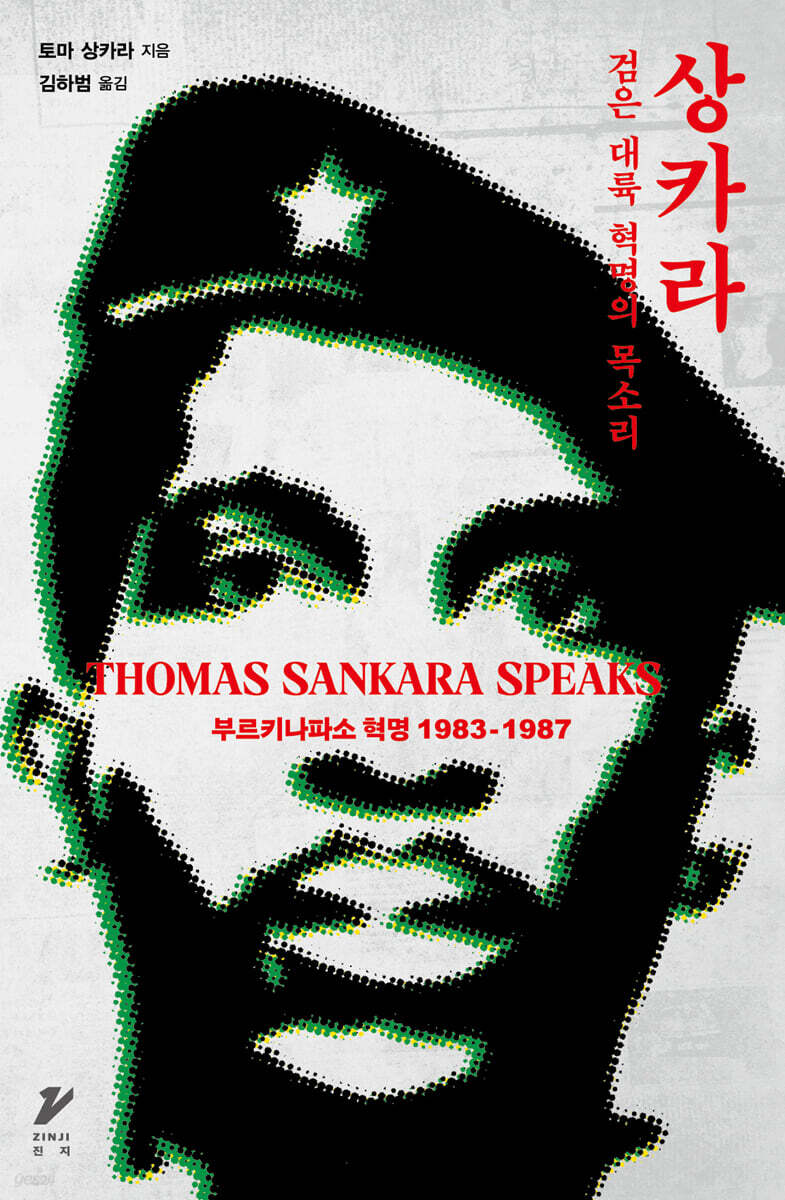
This book is a chronological compilation of Thomas Sankara's public speeches and media interviews.
In Upper Volta, a newly independent African nation, a group of soldiers launched a revolution on August 4, 1983, and elected Captain Thomas Sankara, a popular leader, as president.
Sankara changed the country's name to Burkina Faso, an African word meaning "land of the upright," and led the country until October 15, 1987, when he was assassinated.
During these four years, he focused on international solidarity and worked to make Burkina Faso, one of the world's poorest countries located at the southern tip of the Sahel region in Africa, a good place for "honest people."
Under the leadership of Thomas Sankara, the revolutionary government of Burkina Faso in West Africa organized peasants, workers, artisans, women, and youth, carried out literacy and disease prevention activities, dug wells, planted trees, and built dams and houses.
They liberated women from oppression, reformed the exploitation of land ownership, and stood in solidarity with others around the world who were waging the same struggle by trying to free themselves from the yoke of imperialism.
From 1983 until his assassination in 1987, Sankara served as an outstanding revolutionary leader of international workers and youth, delivering a series of speeches and interviews that spoke for the people of Burkina Faso and Africa.
However, his efforts ended in a treasonous coup by his closest aide, Blaise Compaoré, who had launched a revolution and supported him.
Burkina Faso remained under Compaoré's dictatorship for the next 40 years, but Sankara's legacy, namely the 'revolutionary practice of anti-imperialist self-government', was carried on by the current president, Ibrahim Traoré, who eventually succeeded in establishing a revolutionary government.
The young president withdrew French troops, refused loans from the IMF and World Bank, and is pursuing a self-reliant, people-centered economy.
Burkina Faso rejects the US-Japan polar system and actively participates in the wave of multipolarity, standing at the forefront of the African self-determination movement.
This book contains the revolutionary ideas of the young African man, Thomas Sankara.
Sankara's discourses not only reveal in detail his beliefs and philosophy regarding national independence, as well as his specific strategies and tactics for carrying out the revolution, but his words expressing them are also quite literary.
In Upper Volta, a newly independent African nation, a group of soldiers launched a revolution on August 4, 1983, and elected Captain Thomas Sankara, a popular leader, as president.
Sankara changed the country's name to Burkina Faso, an African word meaning "land of the upright," and led the country until October 15, 1987, when he was assassinated.
During these four years, he focused on international solidarity and worked to make Burkina Faso, one of the world's poorest countries located at the southern tip of the Sahel region in Africa, a good place for "honest people."
Under the leadership of Thomas Sankara, the revolutionary government of Burkina Faso in West Africa organized peasants, workers, artisans, women, and youth, carried out literacy and disease prevention activities, dug wells, planted trees, and built dams and houses.
They liberated women from oppression, reformed the exploitation of land ownership, and stood in solidarity with others around the world who were waging the same struggle by trying to free themselves from the yoke of imperialism.
From 1983 until his assassination in 1987, Sankara served as an outstanding revolutionary leader of international workers and youth, delivering a series of speeches and interviews that spoke for the people of Burkina Faso and Africa.
However, his efforts ended in a treasonous coup by his closest aide, Blaise Compaoré, who had launched a revolution and supported him.
Burkina Faso remained under Compaoré's dictatorship for the next 40 years, but Sankara's legacy, namely the 'revolutionary practice of anti-imperialist self-government', was carried on by the current president, Ibrahim Traoré, who eventually succeeded in establishing a revolutionary government.
The young president withdrew French troops, refused loans from the IMF and World Bank, and is pursuing a self-reliant, people-centered economy.
Burkina Faso rejects the US-Japan polar system and actively participates in the wave of multipolarity, standing at the forefront of the African self-determination movement.
This book contains the revolutionary ideas of the young African man, Thomas Sankara.
Sankara's discourses not only reveal in detail his beliefs and philosophy regarding national independence, as well as his specific strategies and tactics for carrying out the revolution, but his words expressing them are also quite literary.
- You can preview some of the book's contents.
Preview
index
Foreword by Mary-Alice Waters 09
About the Book Michelle Freire 20
Map 28
Burkina Faso during the Revolution 31
Acronyms and abbreviations 32
Year Table 34
Speeches and Interviews
Who is the enemy of the people? 52
At a mass rally in Ouagadougou (March 26, 1983)
The Bright Future of Our Nation 68
August 4th Declaration (August 4, 1983)
Power belongs to the conscious people 72
Press Conference (August 21, 1983)
Let's eradicate social injustice and imperialist domination and build a new society. 80
Political Policy Speech (October 2, 1983)
People's Revolutionary Court 116
Opening Address (January 3, 1984)
One Color, United Africa 126
Concluding the African Tour (August 1984)
Our struggle draws strength from the example and support of Cuba. 145
Jose Marti Medal Award Ceremony, Havana (September 25, 1984)
Our Identity, Our Culture 151
At the Burkinabe Art Exhibition in Harlem (October 2, 1984)
Our White House is in Black Harlem 156
At the Harlem rally (October 3, 1984)
Freedom is a struggle 164
At the United Nations General Assembly (October 4, 1984)
We must fight together against imperialism 202
Interview with the Intercontinental Press (March 17, 1985)
Boldly Invent the Future 217
Interview with Jang Philippe Rapp (1985)
There are attempts to provoke an unjust war against us. 267
Public meeting speech, Ouagadougou (September 11, 1985)
About Africa 274
Interview with Mongobetti (November 3, 1985)
The Malian army is no longer our prisoners, but our brothers. 286
At the Burkina-Mali Solidarity Rally (January 3, 1986)
Imperialism is the arsonist of our forests and savannas. 291
International Conference on Trees and Forests, Paris (February 5, 1986)
On Books and Reading 298
Interview with JeuneAfrique (February 1986)
French allows us to communicate with other people in struggle 304
Message from the First Francophone Summit (February 17, 1986)
The Revolutionary Guardian Committee's Mission: Raising Consciousness, Action, and Production 308
At the First National Conference of the Revolutionary Defense Committee (April 4, 1986)
337 from Nicaragua
Daniel Ortega's Welcome Remarks (August 27, 1986)
What is the Non-Aligned Movement doing? 357
Non-Aligned Movement Summit, Harare (September 3, 1986)
Death, the Enlightener and Empowerer 368
On the death of Samora Machel (October 1986)
We must spread the word about Nicaragua's struggle to the world. 376
Public meeting speech, Managua (November 8, 1986)
Against those who exploit and oppress us here and in France, 380
At the official reception of François Mitterrand (November 17, 1986)
Victory in the revolution is impossible without the liberation of women. 391
International Women's Day (March 8, 1987)
A Single Front Against Debt 433
Organization of African Unity Conference, Addis Ababa (July 29, 1987)
Trustworthy Cuba 443
Interview with Radio Havana (August 1987)
Our revolution needs convinced people, not the conquered. 448
4th anniversary of the revolution (August 4, 1987)
8 million Burkina Faso people, 8 million revolutionaries 464
On the 4th anniversary of the political policy speech (October 2, 1987)
You Can't Kill an Idea 483
Tribute to Che Guevara (October 8, 1987)
Glossary 489
Search 502
About the Book Michelle Freire 20
Map 28
Burkina Faso during the Revolution 31
Acronyms and abbreviations 32
Year Table 34
Speeches and Interviews
Who is the enemy of the people? 52
At a mass rally in Ouagadougou (March 26, 1983)
The Bright Future of Our Nation 68
August 4th Declaration (August 4, 1983)
Power belongs to the conscious people 72
Press Conference (August 21, 1983)
Let's eradicate social injustice and imperialist domination and build a new society. 80
Political Policy Speech (October 2, 1983)
People's Revolutionary Court 116
Opening Address (January 3, 1984)
One Color, United Africa 126
Concluding the African Tour (August 1984)
Our struggle draws strength from the example and support of Cuba. 145
Jose Marti Medal Award Ceremony, Havana (September 25, 1984)
Our Identity, Our Culture 151
At the Burkinabe Art Exhibition in Harlem (October 2, 1984)
Our White House is in Black Harlem 156
At the Harlem rally (October 3, 1984)
Freedom is a struggle 164
At the United Nations General Assembly (October 4, 1984)
We must fight together against imperialism 202
Interview with the Intercontinental Press (March 17, 1985)
Boldly Invent the Future 217
Interview with Jang Philippe Rapp (1985)
There are attempts to provoke an unjust war against us. 267
Public meeting speech, Ouagadougou (September 11, 1985)
About Africa 274
Interview with Mongobetti (November 3, 1985)
The Malian army is no longer our prisoners, but our brothers. 286
At the Burkina-Mali Solidarity Rally (January 3, 1986)
Imperialism is the arsonist of our forests and savannas. 291
International Conference on Trees and Forests, Paris (February 5, 1986)
On Books and Reading 298
Interview with JeuneAfrique (February 1986)
French allows us to communicate with other people in struggle 304
Message from the First Francophone Summit (February 17, 1986)
The Revolutionary Guardian Committee's Mission: Raising Consciousness, Action, and Production 308
At the First National Conference of the Revolutionary Defense Committee (April 4, 1986)
337 from Nicaragua
Daniel Ortega's Welcome Remarks (August 27, 1986)
What is the Non-Aligned Movement doing? 357
Non-Aligned Movement Summit, Harare (September 3, 1986)
Death, the Enlightener and Empowerer 368
On the death of Samora Machel (October 1986)
We must spread the word about Nicaragua's struggle to the world. 376
Public meeting speech, Managua (November 8, 1986)
Against those who exploit and oppress us here and in France, 380
At the official reception of François Mitterrand (November 17, 1986)
Victory in the revolution is impossible without the liberation of women. 391
International Women's Day (March 8, 1987)
A Single Front Against Debt 433
Organization of African Unity Conference, Addis Ababa (July 29, 1987)
Trustworthy Cuba 443
Interview with Radio Havana (August 1987)
Our revolution needs convinced people, not the conquered. 448
4th anniversary of the revolution (August 4, 1987)
8 million Burkina Faso people, 8 million revolutionaries 464
On the 4th anniversary of the political policy speech (October 2, 1987)
You Can't Kill an Idea 483
Tribute to Che Guevara (October 8, 1987)
Glossary 489
Search 502
Detailed image

Into the book
We believe that what you witnessed here in Upper Volta on August 4th was the logical outcome and embodiment of the popular will.
Moreover, we say that all the Volta people who gathered in Ouagadougou and other areas after the infamous May 17 coup were mobilized not simply for Captain Sankara and his comrades, but for the process to which they were deeply committed: the liberation of the Volta people.
By coming together, the people were empowered to take responsibility for their own destiny and development.
They fought because they could not tolerate the reality that the Volta people were being pushed to the margins.
They fought because the interests of the Volta people had been betrayed, and they fought because they could not accept that betrayal.
--- From a press conference broadcast on radio on August 21, 1983
The revolutions taking place around the world are not at all similar.
Each revolution has its own unique characteristics that distinguish it from other revolutions.
Our revolution, the August Revolution, is no exception.
It reflects the special characteristics of our country, its level of development and its subordination to the world imperialist capitalist system.
The August Revolution was double
It has a democratic and popular character: it is a revolution that is both democratic and popular.
Its main task is to abolish imperialist domination and exploitation and to remove all social, economic and cultural obstacles that keep the country in a backward state.
This is where the democratic character comes from.
The mass character of this revolution is revealed in the full participation of the Voltaic masses in it and in their consistency in mobilizing around democratic and revolutionary slogans that concretely express their interests against the interests of the reactionary classes allied with imperialism.
The mass character of the August Revolution also lies in the fact that in place of the old state apparatus new institutions are being built which can ensure the democratic exercise of power by the people and for the people.
--- From the "Political Policy Speech" on October 2, 1983
Revolution cannot be exported.
No ideological choice can be forced on anyone.
Exporting the revolution also means that we Burkinabés believe we can reach out to others and teach them what to do to solve their problems.
This is a counter-revolutionary view.
This is precisely what the pseudo-revolutionaries, the bookish, dogmatic petty-bourgeois, claim.
We have imported the revolution, so now we have to continue the chain.
No, it isn't.
We said that our revolution does not ignore the experiences of others, their struggles, successes and frustrations.
So the revolution in Burkina Faso, whatever it may be, means taking into account all the revolutions in the world.
......
Aid should be directed toward strengthening, not undermining, our sovereignty.
Aid must move towards ending aid.
In Burkina Faso, all aid is welcome, even if it kills aid.
But we have no choice but to abandon all aid that creates welfare dependence.
So, we are very careful and strict when someone promises or offers us assistance, even when we take the initiative to ask for assistance.
You can't achieve revolution or achieve independence without a certain degree of asceticism and sacrifice.
The Burkina people are demanding asceticism from themselves to avoid temptation and to avoid taking the easy way out, as some aid organizations promote.
These mirages have caused much harm to our country and other countries.
We want to stop it.
--- From an interview following the first anniversary of the August 1984 Revolution, which changed the country's name to 'Burkina Faso'
Mr. Chairman: I have traveled thousands of kilometers.
I have come here to ask each of you to work together so that the arrogance of the wrongdoers may cease, so that the sad images of children dying of hunger may disappear, so that ignorance may disappear, so that the just uprising of the people may triumph, so that the sound of weapons may be silenced, so that, united in the fight for the survival of humanity, we may finally sing with the great poet Novalis: “Soon the stars will visit the Earth again, which they left in the dark ages.
The sun will shed its harsh specter and once again become just one star among countless others.
All the races of the world will become one again after a long period of division.
Orphaned families will be reunited, and each day will be a day of reunion and new embraces.
Then the old inhabitants will return to the land, the embers that were snuffed out from every grave will rise again, and the flame of life will be kindled everywhere.
Old dwellings will be rebuilt, bygone eras will be reborn, and history will become a present dream stretching out infinitely.” Our country or death, we will triumph!
--- From "Speech to the 39th United Nations General Assembly, October 4, 1983"
Imperialism isn't confined to just one country or another; it exists all over the world, and we must fight against the entire system we are creating together.
Therefore, we need to get to know each other, understand each other, and build a platform, a realm of understanding between us, so that we can seriously fight imperialism and have a higher chance of success.
That's why I agree with the need for communication to get to know each other.
You are a journalist, that is your job, and I will help you.
So even though I'm super busy today and there are a lot of files piled on the table, I have a responsibility to take at least five minutes to explain what we're doing.
As revolutionaries, we have no right to say that we are tired of explaining.
We always have to explain.
Because we also know that when people understand, they have no choice but to follow us.
In any case, as far as the country or the people are concerned, our people have no enemies.
Our only enemies are imperialist regimes and organizations.
--- From an interview with the Intercontinental Press, March 17, 1985
Here, I am merely a humble spokesman for those who passively watch the natural environment die, while refusing to die themselves.
In all actions taken by the National Revolutionary Council, which has led Burkina Faso since August 4, 1983, water, trees and life have been fundamental and sacred elements, if not survival itself.
In this respect, I pay tribute to the French people and government, and especially to President François Mitterrand, and say that this plan is an expression of the political genius and clear insight of a people always open to the world and sensitive to its misfortunes.
Burkina Faso, located in the heart of the Sahel, will always be fully grateful for initiatives that are fully aligned with the most important concerns of its people.
Unlike useless tourist trips, our country will attend such events whenever necessary.
For nearly three years, our people, the Burkinabe people, have been fighting against desert invasion.
So it was our duty to talk about their experiences on this platform and benefit from the experiences of others around the world.
In Burkina Faso, we have been co-organizing tree-planting events for almost three years to mark special occasions such as weddings, baptisms, award ceremonies, and visits by prominent figures.
--- From a speech given at the International Conference on Trees and Forests held in Paris on February 5, 1986
This human being, a vast and complex combination of suffering and joy! Alone and abandoned, yet the creator of all humanity! Suffering, frustrated, insulted, yet a source of endless happiness for each of us! A source of incomparable affection and the most unexpected source of courage! A being called weak, yet possessing an immense capacity to inspire us to walk the path of honor! A being of flesh and blood and spiritual conviction—this being, woman, is you! You are our comfort, our companion in life, our comrade in the struggle.
Because of these facts, you must naturally assert yourselves as equal partners in the joyful feast of the revolution's victory.
In other words, to win this war that both men and women are fighting together, we must be well-versed in all aspects of women's issues, both at the global and national levels.
We must understand that the struggles of women in Burkina Faso today are part of the struggles of all women around the world, and, more broadly, part of the struggle for the complete reconstruction of the African continent.
Therefore, the reality of women is at the heart of humanity's own problems, here, there, and everywhere.
Therefore, this question is of a universal nature.
Moreover, we say that all the Volta people who gathered in Ouagadougou and other areas after the infamous May 17 coup were mobilized not simply for Captain Sankara and his comrades, but for the process to which they were deeply committed: the liberation of the Volta people.
By coming together, the people were empowered to take responsibility for their own destiny and development.
They fought because they could not tolerate the reality that the Volta people were being pushed to the margins.
They fought because the interests of the Volta people had been betrayed, and they fought because they could not accept that betrayal.
--- From a press conference broadcast on radio on August 21, 1983
The revolutions taking place around the world are not at all similar.
Each revolution has its own unique characteristics that distinguish it from other revolutions.
Our revolution, the August Revolution, is no exception.
It reflects the special characteristics of our country, its level of development and its subordination to the world imperialist capitalist system.
The August Revolution was double
It has a democratic and popular character: it is a revolution that is both democratic and popular.
Its main task is to abolish imperialist domination and exploitation and to remove all social, economic and cultural obstacles that keep the country in a backward state.
This is where the democratic character comes from.
The mass character of this revolution is revealed in the full participation of the Voltaic masses in it and in their consistency in mobilizing around democratic and revolutionary slogans that concretely express their interests against the interests of the reactionary classes allied with imperialism.
The mass character of the August Revolution also lies in the fact that in place of the old state apparatus new institutions are being built which can ensure the democratic exercise of power by the people and for the people.
--- From the "Political Policy Speech" on October 2, 1983
Revolution cannot be exported.
No ideological choice can be forced on anyone.
Exporting the revolution also means that we Burkinabés believe we can reach out to others and teach them what to do to solve their problems.
This is a counter-revolutionary view.
This is precisely what the pseudo-revolutionaries, the bookish, dogmatic petty-bourgeois, claim.
We have imported the revolution, so now we have to continue the chain.
No, it isn't.
We said that our revolution does not ignore the experiences of others, their struggles, successes and frustrations.
So the revolution in Burkina Faso, whatever it may be, means taking into account all the revolutions in the world.
......
Aid should be directed toward strengthening, not undermining, our sovereignty.
Aid must move towards ending aid.
In Burkina Faso, all aid is welcome, even if it kills aid.
But we have no choice but to abandon all aid that creates welfare dependence.
So, we are very careful and strict when someone promises or offers us assistance, even when we take the initiative to ask for assistance.
You can't achieve revolution or achieve independence without a certain degree of asceticism and sacrifice.
The Burkina people are demanding asceticism from themselves to avoid temptation and to avoid taking the easy way out, as some aid organizations promote.
These mirages have caused much harm to our country and other countries.
We want to stop it.
--- From an interview following the first anniversary of the August 1984 Revolution, which changed the country's name to 'Burkina Faso'
Mr. Chairman: I have traveled thousands of kilometers.
I have come here to ask each of you to work together so that the arrogance of the wrongdoers may cease, so that the sad images of children dying of hunger may disappear, so that ignorance may disappear, so that the just uprising of the people may triumph, so that the sound of weapons may be silenced, so that, united in the fight for the survival of humanity, we may finally sing with the great poet Novalis: “Soon the stars will visit the Earth again, which they left in the dark ages.
The sun will shed its harsh specter and once again become just one star among countless others.
All the races of the world will become one again after a long period of division.
Orphaned families will be reunited, and each day will be a day of reunion and new embraces.
Then the old inhabitants will return to the land, the embers that were snuffed out from every grave will rise again, and the flame of life will be kindled everywhere.
Old dwellings will be rebuilt, bygone eras will be reborn, and history will become a present dream stretching out infinitely.” Our country or death, we will triumph!
--- From "Speech to the 39th United Nations General Assembly, October 4, 1983"
Imperialism isn't confined to just one country or another; it exists all over the world, and we must fight against the entire system we are creating together.
Therefore, we need to get to know each other, understand each other, and build a platform, a realm of understanding between us, so that we can seriously fight imperialism and have a higher chance of success.
That's why I agree with the need for communication to get to know each other.
You are a journalist, that is your job, and I will help you.
So even though I'm super busy today and there are a lot of files piled on the table, I have a responsibility to take at least five minutes to explain what we're doing.
As revolutionaries, we have no right to say that we are tired of explaining.
We always have to explain.
Because we also know that when people understand, they have no choice but to follow us.
In any case, as far as the country or the people are concerned, our people have no enemies.
Our only enemies are imperialist regimes and organizations.
--- From an interview with the Intercontinental Press, March 17, 1985
Here, I am merely a humble spokesman for those who passively watch the natural environment die, while refusing to die themselves.
In all actions taken by the National Revolutionary Council, which has led Burkina Faso since August 4, 1983, water, trees and life have been fundamental and sacred elements, if not survival itself.
In this respect, I pay tribute to the French people and government, and especially to President François Mitterrand, and say that this plan is an expression of the political genius and clear insight of a people always open to the world and sensitive to its misfortunes.
Burkina Faso, located in the heart of the Sahel, will always be fully grateful for initiatives that are fully aligned with the most important concerns of its people.
Unlike useless tourist trips, our country will attend such events whenever necessary.
For nearly three years, our people, the Burkinabe people, have been fighting against desert invasion.
So it was our duty to talk about their experiences on this platform and benefit from the experiences of others around the world.
In Burkina Faso, we have been co-organizing tree-planting events for almost three years to mark special occasions such as weddings, baptisms, award ceremonies, and visits by prominent figures.
--- From a speech given at the International Conference on Trees and Forests held in Paris on February 5, 1986
This human being, a vast and complex combination of suffering and joy! Alone and abandoned, yet the creator of all humanity! Suffering, frustrated, insulted, yet a source of endless happiness for each of us! A source of incomparable affection and the most unexpected source of courage! A being called weak, yet possessing an immense capacity to inspire us to walk the path of honor! A being of flesh and blood and spiritual conviction—this being, woman, is you! You are our comfort, our companion in life, our comrade in the struggle.
Because of these facts, you must naturally assert yourselves as equal partners in the joyful feast of the revolution's victory.
In other words, to win this war that both men and women are fighting together, we must be well-versed in all aspects of women's issues, both at the global and national levels.
We must understand that the struggles of women in Burkina Faso today are part of the struggles of all women around the world, and, more broadly, part of the struggle for the complete reconstruction of the African continent.
Therefore, the reality of women is at the heart of humanity's own problems, here, there, and everywhere.
Therefore, this question is of a universal nature.
--- From “A speech to women on International Women’s Day held in Ouagadougou, the capital, on March 8, 1987”
Publisher's Review
Burkina Faso, on the African continent, became a French protectorate in the late 19th century, became the Autonomous Region of Upper Volta in 1958, 60 years later, and gained independence from France in 1960, maintaining the appearance of a newly independent nation.
Maurice Yameogo was elected as the first president, but the country was in turmoil due to four revolutions over the next 20 years, and the people were suffering from poverty.
Born in 1949 during the colonial era, Thomas Sankara was 'lucky' to be able to attend school and was able to attend the Ansirabe Military Academy in Madagascar and also study abroad in France for higher education.
His time studying abroad provided him with an opportunity to study Marxist thought.
He became known in Upper Volta for his military activities during the border conflict with Mali in late 1974.
Sankara, who was promoted to captain in 1981, began his political career in the fall of that year by accepting the position of Minister of Information in the Saye Jerbo government.
However, in April of the following year, he resigned from his post as minister when the Saye Jerbo government carried out labor repression, but he was arrested and imprisoned the next day.
Towards the end of that year, Colonel Someh Yoryan staged a coup, organized the People's Protection Council, and appointed Commander Jean-Baptiste Uwedhaugou as president, and at the beginning of the following year, selected Sankara as prime minister.
That spring, when Somerhalder Yoryan staged another coup and imprisoned Sankara, large-scale street marches demanding his release took place.
The historic revolution began on August 4, 1983, with the march on the capital, Ouagadougou, by a force of just 250 soldiers led by Captain Blaise Compaoré.
Sankara was elected chairman of the newly formed National Revolutionary Council.
Over the next four years, the revolutionary government led by Sankara organized peasants, workers, and youth to push for a series of economic and social measures that curtailed the rights and privileges of local landowners and wealthy merchants.
They joined forces with workers around the world to oppose imperialist rule and launched large-scale organizations involving all strata, such as the Committee for the Defense of the Revolution, the National Peasant Union of Burkina, the National Elders' Union of Burkina, and the Women's Union of Burkina.
With widespread popular support, the revolutionary government abolished tribute payments to village chiefs and forced labor.
By nationalizing the land, he ensured that 90% of the population, who were agricultural workers, could enjoy the fruits of their labor as productive farmers.
The government's purchase price for basic food crops produced by farmers was also increased.
The government has also launched tree planting and irrigation projects to increase productivity and combat desertification in the northern Sahel.
By implementing medical reforms, the infant mortality rate was reduced to about half of what it had been before, and the rapid spread of blindness caused by parasites was also curbed.
A literacy campaign was also launched to reduce the high illiteracy rate.
Steps were taken to combat the age-old traditions of women's subordination, and organized efforts for women's liberation were encouraged.
Funding was also provided for public works projects such as building roads, schools, and housing.
He also established the People's Revolutionary Court to try former leaders and high-ranking officials accused of corruption.
The Burkinabe Revolution led by Sankara pioneered international solidarity with those fighting oppression and exploitation in Africa and around the world.
Sankara supported the struggle of the Western Sahara people against Morocco's occupation of Western Sahara and successfully led the struggle to have Saharawi representatives admitted to the Organization of African Unity.
He actively organized support forces in Africa and around the world for the struggle against the apartheid regime in South Africa and for the struggle to rebuild the Palestinian homeland.
Sankara also campaigned to abolish the burdensome debts imposed on semi-colonial countries by imperialist governments and banks.
In a speech in Harlem, New York, he expressed support for the struggles of African Americans against racial oppression and the struggles of workers in the United States.
In 1984 and 1986, he visited Cuba, and in 1986, he visited Nicaragua, where he addressed a rally of 200,000 people commemorating the 25th anniversary of the Sandinista National Liberation Front, representing all the international participants, extending Burkina Faso's hand to the revolutionary struggles taking place in Central America and the Caribbean.
In a national atmosphere that had changed just four years after the revolution, Sankara, in a public speech on the fourth anniversary of the revolution in August 1987, emphasized that 'a democratic and popular revolution requires not a conquered people but a confident people, not a submissive people who passively accept their fate but a people full of conviction.'
As workers, peasants, and youth increasingly participated in Burkina Faso's society and politics, the repercussions spread beyond the landlocked country's borders and throughout central West Africa.
However, on October 15, 1987, Captain Blaise Compaoré led a military coup against this revolutionary change, in the interests of those at home and abroad who wanted to report their wealth and maintain their class status.
Sankara, his aides and 12 bodyguards were killed, and the Burkinabe revolutionary government collapsed.
It became known that the United States was behind the overthrow of Sankara's revolutionary government.
Sankara represented the resolute will and dignity of the people of one of the poorest countries in Africa, a country devastated by imperialism, with the highest infant mortality rate in the world at the time, a rural illiteracy rate approaching 98 percent, and an average life expectancy of just 40 years.
He also reached out to and spoke on behalf of all those around the world who refused to accept the economic bondage of class society and its consequences.
It included ecological destruction, social collapse, racism, and the wars of conquest and plunder that capitalism inevitably brought about.
Sankara was well aware that this situation was not a 'natural' phenomenon, but a product of today's imperialist world order.
Sankara said: “Such a world order can be fought and must be destroyed.” What distinguished him above all was his conviction in the revolutionary capacity of ordinary human beings.
Like Fidel Castro and Che Guevara, Sankara believed that the people, whom the rulers of the imperialist world arrogantly ignored, were not incorrigible little animals that could only be developed by seducing or whipping.
Sankara believed that it was not technocrats, financiers, or politicians who would create a world based on economic and social diversity, but the masses of workers and peasants whose labor, combined with the abundance of nature, would become the source of all wealth.
As a result, ordinary people who transformed themselves through active and conscious power transformed the conditions of their lives.
And the revolutionary government he led began to mobilize peasants, workers, artisans, women, youth, and the elderly along the way, carrying out literacy and vaccination campaigns, digging wells, planting trees, building houses, and eliminating the oppressive class relations in this land.
Thomas Sankara stood out among the leaders of the African liberation struggle in the late 20th century because he was a communist.
Unlike many others, he did not reject Marxism as a “European ideology” alien to the class struggle in Africa.
He understood Marxism not as a set of ideas, but as a generalization of the lessons learned through struggles by the world's working class as it moved toward liberation, enriched by each struggle.
Maurice Yameogo was elected as the first president, but the country was in turmoil due to four revolutions over the next 20 years, and the people were suffering from poverty.
Born in 1949 during the colonial era, Thomas Sankara was 'lucky' to be able to attend school and was able to attend the Ansirabe Military Academy in Madagascar and also study abroad in France for higher education.
His time studying abroad provided him with an opportunity to study Marxist thought.
He became known in Upper Volta for his military activities during the border conflict with Mali in late 1974.
Sankara, who was promoted to captain in 1981, began his political career in the fall of that year by accepting the position of Minister of Information in the Saye Jerbo government.
However, in April of the following year, he resigned from his post as minister when the Saye Jerbo government carried out labor repression, but he was arrested and imprisoned the next day.
Towards the end of that year, Colonel Someh Yoryan staged a coup, organized the People's Protection Council, and appointed Commander Jean-Baptiste Uwedhaugou as president, and at the beginning of the following year, selected Sankara as prime minister.
That spring, when Somerhalder Yoryan staged another coup and imprisoned Sankara, large-scale street marches demanding his release took place.
The historic revolution began on August 4, 1983, with the march on the capital, Ouagadougou, by a force of just 250 soldiers led by Captain Blaise Compaoré.
Sankara was elected chairman of the newly formed National Revolutionary Council.
Over the next four years, the revolutionary government led by Sankara organized peasants, workers, and youth to push for a series of economic and social measures that curtailed the rights and privileges of local landowners and wealthy merchants.
They joined forces with workers around the world to oppose imperialist rule and launched large-scale organizations involving all strata, such as the Committee for the Defense of the Revolution, the National Peasant Union of Burkina, the National Elders' Union of Burkina, and the Women's Union of Burkina.
With widespread popular support, the revolutionary government abolished tribute payments to village chiefs and forced labor.
By nationalizing the land, he ensured that 90% of the population, who were agricultural workers, could enjoy the fruits of their labor as productive farmers.
The government's purchase price for basic food crops produced by farmers was also increased.
The government has also launched tree planting and irrigation projects to increase productivity and combat desertification in the northern Sahel.
By implementing medical reforms, the infant mortality rate was reduced to about half of what it had been before, and the rapid spread of blindness caused by parasites was also curbed.
A literacy campaign was also launched to reduce the high illiteracy rate.
Steps were taken to combat the age-old traditions of women's subordination, and organized efforts for women's liberation were encouraged.
Funding was also provided for public works projects such as building roads, schools, and housing.
He also established the People's Revolutionary Court to try former leaders and high-ranking officials accused of corruption.
The Burkinabe Revolution led by Sankara pioneered international solidarity with those fighting oppression and exploitation in Africa and around the world.
Sankara supported the struggle of the Western Sahara people against Morocco's occupation of Western Sahara and successfully led the struggle to have Saharawi representatives admitted to the Organization of African Unity.
He actively organized support forces in Africa and around the world for the struggle against the apartheid regime in South Africa and for the struggle to rebuild the Palestinian homeland.
Sankara also campaigned to abolish the burdensome debts imposed on semi-colonial countries by imperialist governments and banks.
In a speech in Harlem, New York, he expressed support for the struggles of African Americans against racial oppression and the struggles of workers in the United States.
In 1984 and 1986, he visited Cuba, and in 1986, he visited Nicaragua, where he addressed a rally of 200,000 people commemorating the 25th anniversary of the Sandinista National Liberation Front, representing all the international participants, extending Burkina Faso's hand to the revolutionary struggles taking place in Central America and the Caribbean.
In a national atmosphere that had changed just four years after the revolution, Sankara, in a public speech on the fourth anniversary of the revolution in August 1987, emphasized that 'a democratic and popular revolution requires not a conquered people but a confident people, not a submissive people who passively accept their fate but a people full of conviction.'
As workers, peasants, and youth increasingly participated in Burkina Faso's society and politics, the repercussions spread beyond the landlocked country's borders and throughout central West Africa.
However, on October 15, 1987, Captain Blaise Compaoré led a military coup against this revolutionary change, in the interests of those at home and abroad who wanted to report their wealth and maintain their class status.
Sankara, his aides and 12 bodyguards were killed, and the Burkinabe revolutionary government collapsed.
It became known that the United States was behind the overthrow of Sankara's revolutionary government.
Sankara represented the resolute will and dignity of the people of one of the poorest countries in Africa, a country devastated by imperialism, with the highest infant mortality rate in the world at the time, a rural illiteracy rate approaching 98 percent, and an average life expectancy of just 40 years.
He also reached out to and spoke on behalf of all those around the world who refused to accept the economic bondage of class society and its consequences.
It included ecological destruction, social collapse, racism, and the wars of conquest and plunder that capitalism inevitably brought about.
Sankara was well aware that this situation was not a 'natural' phenomenon, but a product of today's imperialist world order.
Sankara said: “Such a world order can be fought and must be destroyed.” What distinguished him above all was his conviction in the revolutionary capacity of ordinary human beings.
Like Fidel Castro and Che Guevara, Sankara believed that the people, whom the rulers of the imperialist world arrogantly ignored, were not incorrigible little animals that could only be developed by seducing or whipping.
Sankara believed that it was not technocrats, financiers, or politicians who would create a world based on economic and social diversity, but the masses of workers and peasants whose labor, combined with the abundance of nature, would become the source of all wealth.
As a result, ordinary people who transformed themselves through active and conscious power transformed the conditions of their lives.
And the revolutionary government he led began to mobilize peasants, workers, artisans, women, youth, and the elderly along the way, carrying out literacy and vaccination campaigns, digging wells, planting trees, building houses, and eliminating the oppressive class relations in this land.
Thomas Sankara stood out among the leaders of the African liberation struggle in the late 20th century because he was a communist.
Unlike many others, he did not reject Marxism as a “European ideology” alien to the class struggle in Africa.
He understood Marxism not as a set of ideas, but as a generalization of the lessons learned through struggles by the world's working class as it moved toward liberation, enriched by each struggle.
GOODS SPECIFICS
- Date of issue: November 6, 2025
- Page count, weight, size: 528 pages | 928g | 147*225*33mm
- ISBN13: 9791198476685
- ISBN10: 1198476680
You may also like
카테고리
korean


korean

![GQ KOREA Mark (Monthly): December [2025]](http://librairie.coreenne.fr/cdn/shop/files/8ef265dbbfbf186523ed75ba7319009d.jpg?v=1765340328&width=3840)


