

The words finally spoken
 |
Description
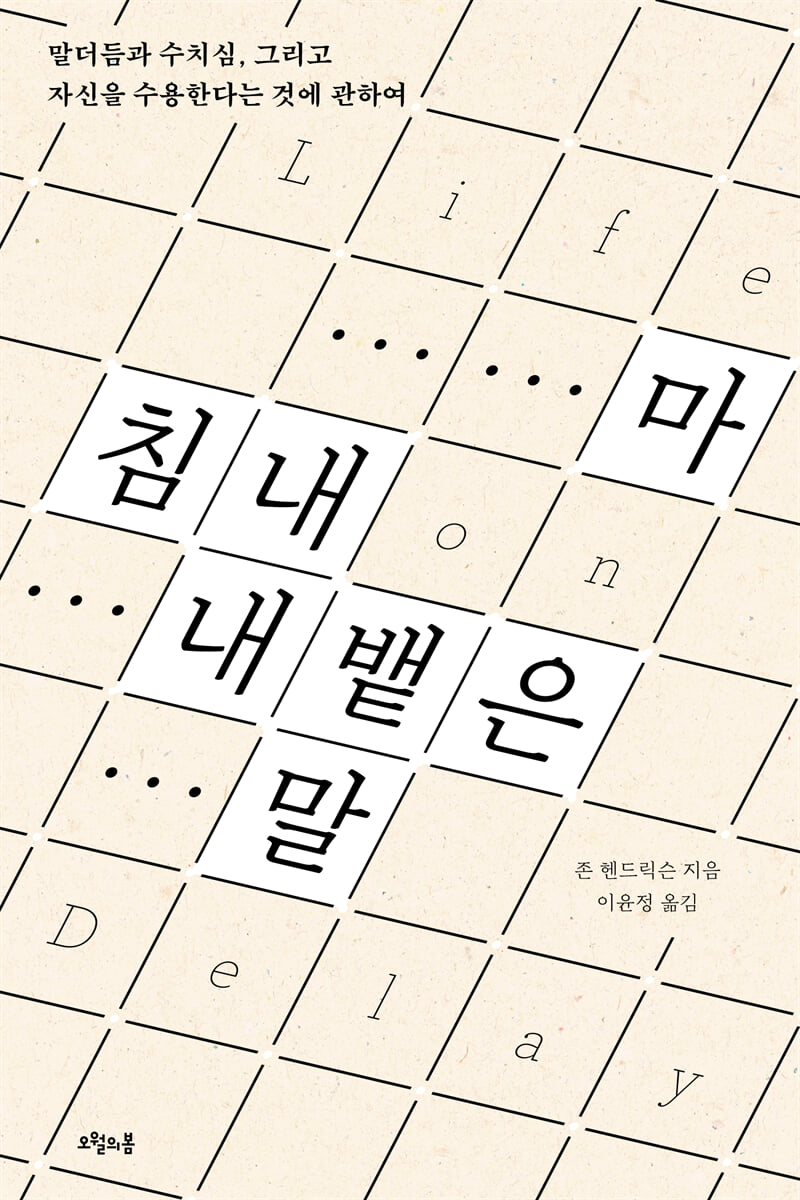
Book Introduction
How can we embrace the self we've learned to dislike? John Hendrickson, a journalist and author with a speech impediment known as a stutter, focuses on the lingering stutter of Joe Biden in the Democratic primary race for the 2020 US presidential election, weaving it into his own experience in a special feature article for The Atlantic.
The article went viral, leading to countless calls from stutterers across the country and even a television news appearance, something he never imagined possible.
This attention, which came at a time when he had not yet fully accepted his own stutter, led him to reflect on his life and his stutter, and ultimately led to his desire to write a book.
So, this book was published, looking back on life centered around stuttering, shame, and self-acceptance.
The author uses his own life to illustrate how ableism can stain a person's life with shame, how to view disability through a different lens, and, above all, what it means to accept oneself.
The article went viral, leading to countless calls from stutterers across the country and even a television news appearance, something he never imagined possible.
This attention, which came at a time when he had not yet fully accepted his own stutter, led him to reflect on his life and his stutter, and ultimately led to his desire to write a book.
So, this book was published, looking back on life centered around stuttering, shame, and self-acceptance.
The author uses his own life to illustrate how ableism can stain a person's life with shame, how to view disability through a different lens, and, above all, what it means to accept oneself.
- You can preview some of the book's contents.
Preview
index
Author's Note
1.
With nothing in hand
2.
empty audio
3.
That gaze
4.
Baseball and Strike
5.
Fluency Factory
6.
difficult to explain
7.
Mr. Cho
8.
The courage that alcohol gives
9.
black waves
10.
Kairos
11.
Pennsylvania State University 1
12.
With big dreams
13.
Pennsylvania State University 2
14.
“Sir, which country is that?”
15.
One-way trip to the West
16.
uncertain future
17.
“I’m leaving my body.”
18.
Dismissal notice
19.
sealed box
20.
“Because our bodies have abandoned us?”
21.
Joe Biden Articles and Letters
22.
“That doesn’t stop me.”
23.
“A Softer Resting Place”
24.
“There is no such thing as ‘yet’”
25.
Mom and Dad
26.
If it weren't for you
27.
Friends
28.
sibling
References
Acknowledgements
1.
With nothing in hand
2.
empty audio
3.
That gaze
4.
Baseball and Strike
5.
Fluency Factory
6.
difficult to explain
7.
Mr. Cho
8.
The courage that alcohol gives
9.
black waves
10.
Kairos
11.
Pennsylvania State University 1
12.
With big dreams
13.
Pennsylvania State University 2
14.
“Sir, which country is that?”
15.
One-way trip to the West
16.
uncertain future
17.
“I’m leaving my body.”
18.
Dismissal notice
19.
sealed box
20.
“Because our bodies have abandoned us?”
21.
Joe Biden Articles and Letters
22.
“That doesn’t stop me.”
23.
“A Softer Resting Place”
24.
“There is no such thing as ‘yet’”
25.
Mom and Dad
26.
If it weren't for you
27.
Friends
28.
sibling
References
Acknowledgements
Into the book
It wasn't until the year 2000 that scientists began to understand that stuttering is a neurological disorder.
However, research in this field is still somewhat disorganized.
Even among experts, there is little consensus on the core 'problem' of stuttering.
Some argue that stuttering is related to the linguistic elements of speech (turning thoughts into words), while others believe it is more related to motor control problems (how muscles form the sounds of words).
--- From "Chapter 2 Empty Audio"
'Stuttering' is a term that comprehensively describes various obstacles that occur during the process of speaking a sentence.
Perhaps the typical stutterer comes to mind, repeating parts of words as rapidly as a machine gun.
I stutter more and more and more.
However, stuttering can also occur as an unintentional extension of speaking a word.
Do you want to go see the uh- ...
--- From "Chapter 2 Empty Audio"
Have you ever tried telling someone who stutters to speak slower? Next time you meet someone who stutters, ask them how they feel about being asked to speak slower.
"Please speak slowly" is just a polite and thoughtful alternative that conveys your true intention: please don't stutter.
But surprisingly, a lot of speech therapy boils down to these three words.
--- From "Chapter 2 Empty Audio"
I feel guilty for wasting everyone's time.
A quiet voice in my head speaks.
It's all your fault.
Guilt soon begins to transform into a new emotion called shame.
The difference between these two can be difficult to understand, but another friend who stutters once explained it clearly to me.
“‘I did something wrong’ is guilt.
Shame is the feeling that 'I am wrong.'"
--- From "Chapter 2 Empty Audio"
Julie said.
“I knew intuitively that it would never be easy to live with that.
“But you acted like nothing happened? Maybe because you had no other choice. I remember trying to look like you weren’t hurt at all.” That was my only strategy at the time.
Suppression.
Ignore it.
Never talk about it.
To keep bad feelings from coming to the surface.
It worked for a while, but eventually it failed.
--- From "Chapter 4 Baseball and Strikes"
“Well, John, you have a serious stutter.”
It wasn't meant to hurt, but hearing it from someone else really hurts.
I've been bullied and teased hundreds of times, but no adult has ever said anything like this out loud.
I don't know how to react.
He's not judging me.
It simply states facts, such as “the sky is blue” or “your eyes are brown.”
Still confused though.
I am fifteen years old.
I met therapists, doctors, and even the odd hypnotist, and they all somehow avoided the word 'stutter'.
Because it has always been my problem, my issue, my stumbling block.
It's clear that Mr. Cho isn't trying to appease me.
Just telling the truth.
Instead of promising to make you speak fluently, he says this:
“I can help you speak better.”
However, research in this field is still somewhat disorganized.
Even among experts, there is little consensus on the core 'problem' of stuttering.
Some argue that stuttering is related to the linguistic elements of speech (turning thoughts into words), while others believe it is more related to motor control problems (how muscles form the sounds of words).
--- From "Chapter 2 Empty Audio"
'Stuttering' is a term that comprehensively describes various obstacles that occur during the process of speaking a sentence.
Perhaps the typical stutterer comes to mind, repeating parts of words as rapidly as a machine gun.
I stutter more and more and more.
However, stuttering can also occur as an unintentional extension of speaking a word.
Do you want to go see the uh- ...
--- From "Chapter 2 Empty Audio"
Have you ever tried telling someone who stutters to speak slower? Next time you meet someone who stutters, ask them how they feel about being asked to speak slower.
"Please speak slowly" is just a polite and thoughtful alternative that conveys your true intention: please don't stutter.
But surprisingly, a lot of speech therapy boils down to these three words.
--- From "Chapter 2 Empty Audio"
I feel guilty for wasting everyone's time.
A quiet voice in my head speaks.
It's all your fault.
Guilt soon begins to transform into a new emotion called shame.
The difference between these two can be difficult to understand, but another friend who stutters once explained it clearly to me.
“‘I did something wrong’ is guilt.
Shame is the feeling that 'I am wrong.'"
--- From "Chapter 2 Empty Audio"
Julie said.
“I knew intuitively that it would never be easy to live with that.
“But you acted like nothing happened? Maybe because you had no other choice. I remember trying to look like you weren’t hurt at all.” That was my only strategy at the time.
Suppression.
Ignore it.
Never talk about it.
To keep bad feelings from coming to the surface.
It worked for a while, but eventually it failed.
--- From "Chapter 4 Baseball and Strikes"
“Well, John, you have a serious stutter.”
It wasn't meant to hurt, but hearing it from someone else really hurts.
I've been bullied and teased hundreds of times, but no adult has ever said anything like this out loud.
I don't know how to react.
He's not judging me.
It simply states facts, such as “the sky is blue” or “your eyes are brown.”
Still confused though.
I am fifteen years old.
I met therapists, doctors, and even the odd hypnotist, and they all somehow avoided the word 'stutter'.
Because it has always been my problem, my issue, my stumbling block.
It's clear that Mr. Cho isn't trying to appease me.
Just telling the truth.
Instead of promising to make you speak fluently, he says this:
“I can help you speak better.”
--- From "Mr. Cho"
Publisher's Review
The self I learned to hate
How can I accept it?
John Hendrickson has a fluency disorder, commonly called a stutter, and works as a reporter for The Atlantic.
He wrote a special article focusing on Joe Biden's remaining stutter in the Democratic primary ahead of the 2020 US presidential election, linking it to his own experience.
The article generated more buzz than expected, and the author appeared on MSNBC's live newscast the day after its publication.
The book begins with a moment in the waiting room for a news appearance.
In the moment when he, who stutters, is waiting for his name to be called, nervous and worried about appearing on television, something he never imagined in his life.
The author then began receiving emails from people who stuttered all over the country, and decided to confront the fundamental problem of his own stutter, which he had not been able to accept deep down until then.
Because when I had a 'public' encounter with a part of myself that still felt like a source of pain and shame, in the form of an unexpected, completely unexpected television appearance, I realized that that pain was not just my own.
The deeply personal and intimate confessions of other stutterers made the author feel compelled to say something about his own stutter and shame.
So the author begins writing a book as a journey to come to terms with his stutter.
I relive moments that I have constantly ignored and suppressed since I was young, buried deep in my own box in my heart, and I find the past connections that were with me at those moments and talk to them.
On stuttering, shame, and self-acceptance
This book is not about stuttering, but rather a record of one person's journey to come to terms with it.
When we think of stuttering, we often think of “I stutter more and more,” but to be precise, “stuttering” is a term that comprehensively describes various obstacles that occur during the process of speaking a sentence.
Unintentional prolongations during speech (“Do you want to go see a movie together?”) and speech impediments that prevent words from being uttered are also considered stuttering.
The author's stutter is particularly marked by prolongation and pauses in speech, and he describes the distress of pauses as "sometimes lasting a minute or more" and "in severe cases, feeling as if he were going to faint."
The author honestly and openly shares nearly everything that has happened to him, both internally and externally, surrounding his stutter: bullying, the societal perception that stuttering must be "fixed," the still-controversial medical community about how to effectively help people who stutter, family conflicts, drug abuse, alcoholism, shame, depression, isolation, and more.
The author's story of being at odds with society and himself due to the single difference of stuttering, and of being endlessly cowering, confronts us, without exaggeration or minimization, what it means to grow up learning to hate parts of yourself, and to live knowing nothing but to suppress or ignore something in order to become stronger.
Whatever the reason, we are at odds with society and ourselves.
The courage evoked by one man's journey to reconcile with his stutter.
The author doesn't just use his own voice to document his journey of coming to terms with his stutter.
He meets with important figures from his past, such as teachers, therapists, and former lovers, who remain in his life's memories, and he meets with other stutterers who still exist today, and he has countless conversations with the many stutterers who have contacted him since his appearance on the show.
He also participates in non-profit organizations such as the National Stuttering Association.
The voices of many people met in this way are woven throughout the author's story.
The voices of these others make the author's memories much more three-dimensional, and the author learns many things through talking to other characters who exist in specific moments imprinted in his mind.
The long journey from the shame of stuttering to self-acceptance involves a wide range of people, from close family members and teachers to parents of children who stutter, therapists, and even that stand-up comedian you were rude to at a show one night.
For John Hendrickson, shame stemmed from his stutter, but doesn't everyone have their own internal struggles that they try to hide, suppress, and pretend not to care as best they can?
A part of yourself that you absolutely do not want to accept, but would like to fix if you could.
But we need to ask ourselves why we feel we need to 'fix' something, and whether we would truly be ourselves if it were gone.
John Hendrickson very gently reminds us that what really needs to be fixed is not the stuttering, but the listener's attitude.
Above all, he believes with his head and heart that others can change just as he himself has faced his shame and accepted himself, even though it took him a very long time.
That includes people who have hurt you.
The author clearly criticizes ableism, but he never loses hope that much can change with the change of each and every person.
This book, with its firm and cautious optimism, will inspire courage in those who live in discord with society and themselves, each with their own sense of shame.
How can I accept it?
John Hendrickson has a fluency disorder, commonly called a stutter, and works as a reporter for The Atlantic.
He wrote a special article focusing on Joe Biden's remaining stutter in the Democratic primary ahead of the 2020 US presidential election, linking it to his own experience.
The article generated more buzz than expected, and the author appeared on MSNBC's live newscast the day after its publication.
The book begins with a moment in the waiting room for a news appearance.
In the moment when he, who stutters, is waiting for his name to be called, nervous and worried about appearing on television, something he never imagined in his life.
The author then began receiving emails from people who stuttered all over the country, and decided to confront the fundamental problem of his own stutter, which he had not been able to accept deep down until then.
Because when I had a 'public' encounter with a part of myself that still felt like a source of pain and shame, in the form of an unexpected, completely unexpected television appearance, I realized that that pain was not just my own.
The deeply personal and intimate confessions of other stutterers made the author feel compelled to say something about his own stutter and shame.
So the author begins writing a book as a journey to come to terms with his stutter.
I relive moments that I have constantly ignored and suppressed since I was young, buried deep in my own box in my heart, and I find the past connections that were with me at those moments and talk to them.
On stuttering, shame, and self-acceptance
This book is not about stuttering, but rather a record of one person's journey to come to terms with it.
When we think of stuttering, we often think of “I stutter more and more,” but to be precise, “stuttering” is a term that comprehensively describes various obstacles that occur during the process of speaking a sentence.
Unintentional prolongations during speech (“Do you want to go see a movie together?”) and speech impediments that prevent words from being uttered are also considered stuttering.
The author's stutter is particularly marked by prolongation and pauses in speech, and he describes the distress of pauses as "sometimes lasting a minute or more" and "in severe cases, feeling as if he were going to faint."
The author honestly and openly shares nearly everything that has happened to him, both internally and externally, surrounding his stutter: bullying, the societal perception that stuttering must be "fixed," the still-controversial medical community about how to effectively help people who stutter, family conflicts, drug abuse, alcoholism, shame, depression, isolation, and more.
The author's story of being at odds with society and himself due to the single difference of stuttering, and of being endlessly cowering, confronts us, without exaggeration or minimization, what it means to grow up learning to hate parts of yourself, and to live knowing nothing but to suppress or ignore something in order to become stronger.
Whatever the reason, we are at odds with society and ourselves.
The courage evoked by one man's journey to reconcile with his stutter.
The author doesn't just use his own voice to document his journey of coming to terms with his stutter.
He meets with important figures from his past, such as teachers, therapists, and former lovers, who remain in his life's memories, and he meets with other stutterers who still exist today, and he has countless conversations with the many stutterers who have contacted him since his appearance on the show.
He also participates in non-profit organizations such as the National Stuttering Association.
The voices of many people met in this way are woven throughout the author's story.
The voices of these others make the author's memories much more three-dimensional, and the author learns many things through talking to other characters who exist in specific moments imprinted in his mind.
The long journey from the shame of stuttering to self-acceptance involves a wide range of people, from close family members and teachers to parents of children who stutter, therapists, and even that stand-up comedian you were rude to at a show one night.
For John Hendrickson, shame stemmed from his stutter, but doesn't everyone have their own internal struggles that they try to hide, suppress, and pretend not to care as best they can?
A part of yourself that you absolutely do not want to accept, but would like to fix if you could.
But we need to ask ourselves why we feel we need to 'fix' something, and whether we would truly be ourselves if it were gone.
John Hendrickson very gently reminds us that what really needs to be fixed is not the stuttering, but the listener's attitude.
Above all, he believes with his head and heart that others can change just as he himself has faced his shame and accepted himself, even though it took him a very long time.
That includes people who have hurt you.
The author clearly criticizes ableism, but he never loses hope that much can change with the change of each and every person.
This book, with its firm and cautious optimism, will inspire courage in those who live in discord with society and themselves, each with their own sense of shame.
GOODS SPECIFICS
- Date of issue: August 28, 2025
- Page count, weight, size: 336 pages | 442g | 141*210*21mm
- ISBN13: 9791168731585
You may also like
카테고리
korean


korean

![GQ KOREA Mark (Monthly): December [2025]](http://librairie.coreenne.fr/cdn/shop/files/8ef265dbbfbf186523ed75ba7319009d.jpg?v=1765340328&width=3840)


