

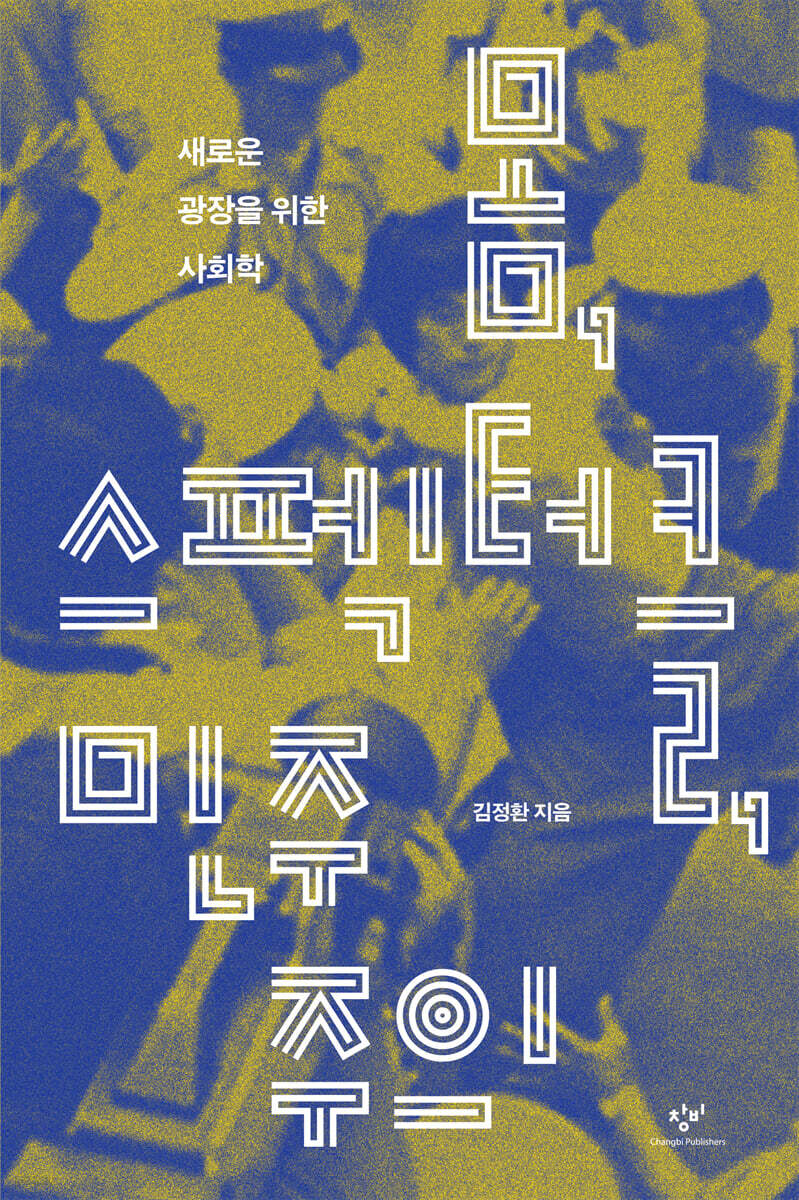
Body, Spectacle, Democracy
 |
Description
Book Introduction
A new perspective on today's Korean democracy!
For a square where everyone can shine equally
Let's face the images of the bodies sacrificed in the democracy of the 1980s.
Korean democracy is played out like a 'repeat' in the movie '1987'.
When someone sacrifices himself in protest against the oppression of power, the noble resistance of citizens who gather in the streets continues, and only then does the triumphant democracy enter a new phase.
The pride we have in democracy, which we proudly call "K," is largely fueled by this spectacle of a narrative in which someone's sacrifice is turned into a citizens' struggle.
But how long can this passionate and intense democracy last?
Can we not imagine a new democracy outside of this cliche of a past history that seems to be repeating itself even now?
"Body, Spectacle, Democracy: Sociology for a New Public Square" is the first book by Kim Jeong-hwan, a rising researcher who has gained attention for his work exploring Korean modernity through interpretations of various cultural phenomena.
This sociologist, born in the 1980s, was unable to experience the powerful moment of democracy in the 1980s firsthand, but he uses extensive cultural resources to take a serious look at that era.
While recalling the story of that time to the present, we are also wary of the historical intoxication that the so-called '86 generation', the people involved, are prone to falling into.
From the portraits of martyrs Park Jong-cheol and Lee Han-yeol, who became symbols of democracy, to "The Boy Comes," we calmly explore the images of bodies broken while trying to protect democracy, and reflect on today's democracy, where everyone shines in the square.
Unusually, the 'Revolution of Light' was achieved not with the blood of victims but with the joy of all, and not with the voice of a single hero but with the voices of various people.
Shouldn't democracy now transcend the sacred narrative of victory, encapsulated by the lyrics, "I will awaken, advance, and ultimately triumph"? Rather than becoming democratic citizens merely as players fulfilling historical goals, shouldn't we be mindful of the wounded and invisible bodies around us, so as to prevent a repeat of the drama of death and sacrifice? This book is a must-read at the dawn of democracy's transition to a new phase, a time when a vibrant political imagination is needed.
For a square where everyone can shine equally
Let's face the images of the bodies sacrificed in the democracy of the 1980s.
Korean democracy is played out like a 'repeat' in the movie '1987'.
When someone sacrifices himself in protest against the oppression of power, the noble resistance of citizens who gather in the streets continues, and only then does the triumphant democracy enter a new phase.
The pride we have in democracy, which we proudly call "K," is largely fueled by this spectacle of a narrative in which someone's sacrifice is turned into a citizens' struggle.
But how long can this passionate and intense democracy last?
Can we not imagine a new democracy outside of this cliche of a past history that seems to be repeating itself even now?
"Body, Spectacle, Democracy: Sociology for a New Public Square" is the first book by Kim Jeong-hwan, a rising researcher who has gained attention for his work exploring Korean modernity through interpretations of various cultural phenomena.
This sociologist, born in the 1980s, was unable to experience the powerful moment of democracy in the 1980s firsthand, but he uses extensive cultural resources to take a serious look at that era.
While recalling the story of that time to the present, we are also wary of the historical intoxication that the so-called '86 generation', the people involved, are prone to falling into.
From the portraits of martyrs Park Jong-cheol and Lee Han-yeol, who became symbols of democracy, to "The Boy Comes," we calmly explore the images of bodies broken while trying to protect democracy, and reflect on today's democracy, where everyone shines in the square.
Unusually, the 'Revolution of Light' was achieved not with the blood of victims but with the joy of all, and not with the voice of a single hero but with the voices of various people.
Shouldn't democracy now transcend the sacred narrative of victory, encapsulated by the lyrics, "I will awaken, advance, and ultimately triumph"? Rather than becoming democratic citizens merely as players fulfilling historical goals, shouldn't we be mindful of the wounded and invisible bodies around us, so as to prevent a repeat of the drama of death and sacrifice? This book is a must-read at the dawn of democracy's transition to a new phase, a time when a vibrant political imagination is needed.
- You can preview some of the book's contents.
Preview
index
preface
Chapter 1: A Review of Korean Democracy
A Drama Called Democracy? | Cider and Sweet Potato | Screenplay: Min (民), Starring: Min (民) | Imagination: A Storehouse of Images | Reconstructing the Scene
Chapter 2: The Spectacle of Death: The Natural Body of the People
Does Democracy Grow on Blood? | State Violence and the Phenomenology of the Body | Corpse
Chapter 3: People's Movement and Rehabilitation
Encounters with Spectacle: The Emergence of Gazes | Frozen Bodies, Unheard Words, Disappearing People | To the Place Where Dead Bodies Are | Ready, Action! | Burning Bodies, Falling Bodies | The Return of the Dead
Chapter 4: The Spectacle of Unity: The Collective Body of the People
Physics of the Collective Body | Physiology of the Collective Body | Dispersing Body
Chapter 5: Narrative and Semantics of Korean Democracy
Death-Gathering Repertoire: From the Sewol Ferry Disaster to the Candlelight Vigils | What Does "Democracy" Mean to Us? | Theater Exhibition: Inside and Outside the Theater of Democracy
Conclusion: Rethinking the life and death of the people
Chapter 1: A Review of Korean Democracy
A Drama Called Democracy? | Cider and Sweet Potato | Screenplay: Min (民), Starring: Min (民) | Imagination: A Storehouse of Images | Reconstructing the Scene
Chapter 2: The Spectacle of Death: The Natural Body of the People
Does Democracy Grow on Blood? | State Violence and the Phenomenology of the Body | Corpse
Chapter 3: People's Movement and Rehabilitation
Encounters with Spectacle: The Emergence of Gazes | Frozen Bodies, Unheard Words, Disappearing People | To the Place Where Dead Bodies Are | Ready, Action! | Burning Bodies, Falling Bodies | The Return of the Dead
Chapter 4: The Spectacle of Unity: The Collective Body of the People
Physics of the Collective Body | Physiology of the Collective Body | Dispersing Body
Chapter 5: Narrative and Semantics of Korean Democracy
Death-Gathering Repertoire: From the Sewol Ferry Disaster to the Candlelight Vigils | What Does "Democracy" Mean to Us? | Theater Exhibition: Inside and Outside the Theater of Democracy
Conclusion: Rethinking the life and death of the people
Detailed image

Publisher's Review
The drama of death and struggle that is Korean democracy
Why does the narrative of spectacle continue?
To retrace the history of Korean democracy, we need to delve into the vast repository of images accumulated during its development.
Chapter 1 does not confine the thinking about democracy to the institutional or ideological level, but focuses on the "body of the people," which is both the subject that produces historical scenes and the audience of those scenes.
When recalling Korean democracy, the scenes and images that are repeatedly summoned are reconsidered through the concept of the 'imaginary', and it is analyzed that, especially in the 1980s, these images were composed of scenes of death and sacrifice.
Statements such as “The tree of freedom grows by drinking blood” (Jang Jun-ha) and “The tree of democracy grows by drinking the blood of the people” (Kim Dae-jung) were widely spread, and the death of the people was recognized as an essential opportunity for democratization.
The democratization movement was also a continuation of the practice of mourning and inheriting these sacrifices.
The square during the June Struggle of 1987 was one of the most dramatic scenes Min staged.
The image of Lee Han-yeol, who was hit by a tear gas canister and fell, was clearly engraved in the memories of the crowd gathered there.
Lee Han-yeol would have kept the death of Park Jong-cheol close to his heart, and Park Jong-cheol would have kept the May 18th incident in Gwangju and the story of Jeon Tae-il close to his heart.
A close analysis of the chain reaction of these images and their consequences helps us understand Korean democracy, which repeats the narrative of spectacle, moving between the "spectacle of death and the spectacle of unity" and the political "cider and sweet potato," from a new perspective.
A look into the 80s by a sociologist
Broken and Burned Bodies in the Democracy of the 1980s
When depicting Korean democracy in the 1980s, the first scene projected onto our cultural screens is the body of a citizen being arrested and beaten by state violence, ultimately leading to death.
In Chapter 2, it is defined as a 'natural body' in that it appears as a body that is thoroughly subject to the laws of physics, such as falling down when hit and bleeding when stabbed.
The scene of martial law forces suppressing the Gwangju Uprising in August 1980 was an extreme example of the state's violent nature. (p. 74) According to Chapter 3, the images of beaten bodies by civilians who encountered this spectacle were seen as signs of a damaged democracy, and "Gwangju" became a symbol of state violence and a resource for reflection, an event recalled whenever the state exercised unjust physical force.
The 'collective body' of the people, analyzed in Chapter 4, is another spectacle that fills the narrative of Korean democracy.
A square filled with people, a wave of people advancing with candles, people surging in from all directions. (Page 267) Min appears on stage as the main character and forms a huge gathering.
This is a great spectacle in itself, and the various mourning rituals that take place within it are also a spectacular sight.
The mourning performance, in which people cry, sing, and dance together, is not only a metabolic process that activates the collective vitality of the people, but also renews the people, whether performers or spectators, into new democratic subjects. (p. 303) Korean democracy was a process in which people, seeing the broken and burning bodies of victims and moving their own bodies, ultimately created a larger body, a more passionate democracy.
The author, born in the mid-1980s, looks at the various images that arose during this process with the seriousness of a youth of that era.
And this powerful narrative of victory shakes us out of the political intoxication that it provides to this day.
While the victory was repeated, the dead did not return.
Democracy remains as an exceptional festival, but the progressive and gradual democracy of everyday life is nowhere to be seen.
Shouldn't we now look back on the lives of the vulnerable people living among us and think about how we can care for them together?
Before they meet their premature deaths again before our eyes.
For a democracy in a square where everyone can shine equally
What kind of citizens should we be?
This book makes us reconsider democracy, not as an ideal to be protected even at the risk of death, but as an everyday practice to be cultivated together with living beings here and now.
What kind of democracy are we failing to see, captivated by the narrative of 'the dead saving the living'?
In Chapter 5, which reconsiders the narrative and meaning of our democracy, the author asks:
“Is it impossible to have a democracy that is not a sacred and holy democracy that brings about resurrection from the dead, but an everyday and secular democracy, a democracy in which each citizen can live equally, rather than a democracy in which the people are victorious over the state?” (pp. 358-359) This transition requires not a larger and stronger democracy, but a new imagination and practice of a democracy different from the one we have today.
From the Sewol ferry disaster to the entrapment accident of Taean Thermal Power Plant worker Kim Chung-hyun, civilian deaths continue to occur without interruption.
Now we must move beyond the post-mortem question of 'who died and how?' and focus preventative attention on the question of 'who is precariously alive next to us?'
How can we build democracy on the foundations of everyday life, rather than on recurring tragedies?
How can we open up a democracy in the square where the voices and existence of the living can shine equally?
The author continued this awareness of the problem through a joint study titled “A World Encountered in the Plaza: Analysis of Citizen Speeches at the Rally for Yoon Seok-yeol’s Resignation.”
This study, which has garnered much attention, analyzes the aspirations and hopes contained in the citizens' voices echoing in the square, meticulously capturing how today's democracy is being reconstructed beyond the spectacle of death and struggle.
Isn't democracy, which protects the lives of the living, beginning precisely within these diverse voices and even light? (p. 365) "Body, Spectacle, Democracy" vividly confronts the pain and joy inherent in the images of Korean democracy, yet, without being overwhelmed by their dramatic power, inspires hope for a new democracy.
Why does the narrative of spectacle continue?
To retrace the history of Korean democracy, we need to delve into the vast repository of images accumulated during its development.
Chapter 1 does not confine the thinking about democracy to the institutional or ideological level, but focuses on the "body of the people," which is both the subject that produces historical scenes and the audience of those scenes.
When recalling Korean democracy, the scenes and images that are repeatedly summoned are reconsidered through the concept of the 'imaginary', and it is analyzed that, especially in the 1980s, these images were composed of scenes of death and sacrifice.
Statements such as “The tree of freedom grows by drinking blood” (Jang Jun-ha) and “The tree of democracy grows by drinking the blood of the people” (Kim Dae-jung) were widely spread, and the death of the people was recognized as an essential opportunity for democratization.
The democratization movement was also a continuation of the practice of mourning and inheriting these sacrifices.
The square during the June Struggle of 1987 was one of the most dramatic scenes Min staged.
The image of Lee Han-yeol, who was hit by a tear gas canister and fell, was clearly engraved in the memories of the crowd gathered there.
Lee Han-yeol would have kept the death of Park Jong-cheol close to his heart, and Park Jong-cheol would have kept the May 18th incident in Gwangju and the story of Jeon Tae-il close to his heart.
A close analysis of the chain reaction of these images and their consequences helps us understand Korean democracy, which repeats the narrative of spectacle, moving between the "spectacle of death and the spectacle of unity" and the political "cider and sweet potato," from a new perspective.
A look into the 80s by a sociologist
Broken and Burned Bodies in the Democracy of the 1980s
When depicting Korean democracy in the 1980s, the first scene projected onto our cultural screens is the body of a citizen being arrested and beaten by state violence, ultimately leading to death.
In Chapter 2, it is defined as a 'natural body' in that it appears as a body that is thoroughly subject to the laws of physics, such as falling down when hit and bleeding when stabbed.
The scene of martial law forces suppressing the Gwangju Uprising in August 1980 was an extreme example of the state's violent nature. (p. 74) According to Chapter 3, the images of beaten bodies by civilians who encountered this spectacle were seen as signs of a damaged democracy, and "Gwangju" became a symbol of state violence and a resource for reflection, an event recalled whenever the state exercised unjust physical force.
The 'collective body' of the people, analyzed in Chapter 4, is another spectacle that fills the narrative of Korean democracy.
A square filled with people, a wave of people advancing with candles, people surging in from all directions. (Page 267) Min appears on stage as the main character and forms a huge gathering.
This is a great spectacle in itself, and the various mourning rituals that take place within it are also a spectacular sight.
The mourning performance, in which people cry, sing, and dance together, is not only a metabolic process that activates the collective vitality of the people, but also renews the people, whether performers or spectators, into new democratic subjects. (p. 303) Korean democracy was a process in which people, seeing the broken and burning bodies of victims and moving their own bodies, ultimately created a larger body, a more passionate democracy.
The author, born in the mid-1980s, looks at the various images that arose during this process with the seriousness of a youth of that era.
And this powerful narrative of victory shakes us out of the political intoxication that it provides to this day.
While the victory was repeated, the dead did not return.
Democracy remains as an exceptional festival, but the progressive and gradual democracy of everyday life is nowhere to be seen.
Shouldn't we now look back on the lives of the vulnerable people living among us and think about how we can care for them together?
Before they meet their premature deaths again before our eyes.
For a democracy in a square where everyone can shine equally
What kind of citizens should we be?
This book makes us reconsider democracy, not as an ideal to be protected even at the risk of death, but as an everyday practice to be cultivated together with living beings here and now.
What kind of democracy are we failing to see, captivated by the narrative of 'the dead saving the living'?
In Chapter 5, which reconsiders the narrative and meaning of our democracy, the author asks:
“Is it impossible to have a democracy that is not a sacred and holy democracy that brings about resurrection from the dead, but an everyday and secular democracy, a democracy in which each citizen can live equally, rather than a democracy in which the people are victorious over the state?” (pp. 358-359) This transition requires not a larger and stronger democracy, but a new imagination and practice of a democracy different from the one we have today.
From the Sewol ferry disaster to the entrapment accident of Taean Thermal Power Plant worker Kim Chung-hyun, civilian deaths continue to occur without interruption.
Now we must move beyond the post-mortem question of 'who died and how?' and focus preventative attention on the question of 'who is precariously alive next to us?'
How can we build democracy on the foundations of everyday life, rather than on recurring tragedies?
How can we open up a democracy in the square where the voices and existence of the living can shine equally?
The author continued this awareness of the problem through a joint study titled “A World Encountered in the Plaza: Analysis of Citizen Speeches at the Rally for Yoon Seok-yeol’s Resignation.”
This study, which has garnered much attention, analyzes the aspirations and hopes contained in the citizens' voices echoing in the square, meticulously capturing how today's democracy is being reconstructed beyond the spectacle of death and struggle.
Isn't democracy, which protects the lives of the living, beginning precisely within these diverse voices and even light? (p. 365) "Body, Spectacle, Democracy" vividly confronts the pain and joy inherent in the images of Korean democracy, yet, without being overwhelmed by their dramatic power, inspires hope for a new democracy.
GOODS SPECIFICS
- Date of issue: June 25, 2025
- Page count, weight, size: 396 pages | 408g | 140*210*20mm
- ISBN13: 9788936480868
You may also like
카테고리
korean


korean

![GQ KOREA Mark (Monthly): December [2025]](http://librairie.coreenne.fr/cdn/shop/files/8ef265dbbfbf186523ed75ba7319009d.jpg?v=1765340328&width=3840)


