

Leadership and career education
 |
Description
Book Introduction
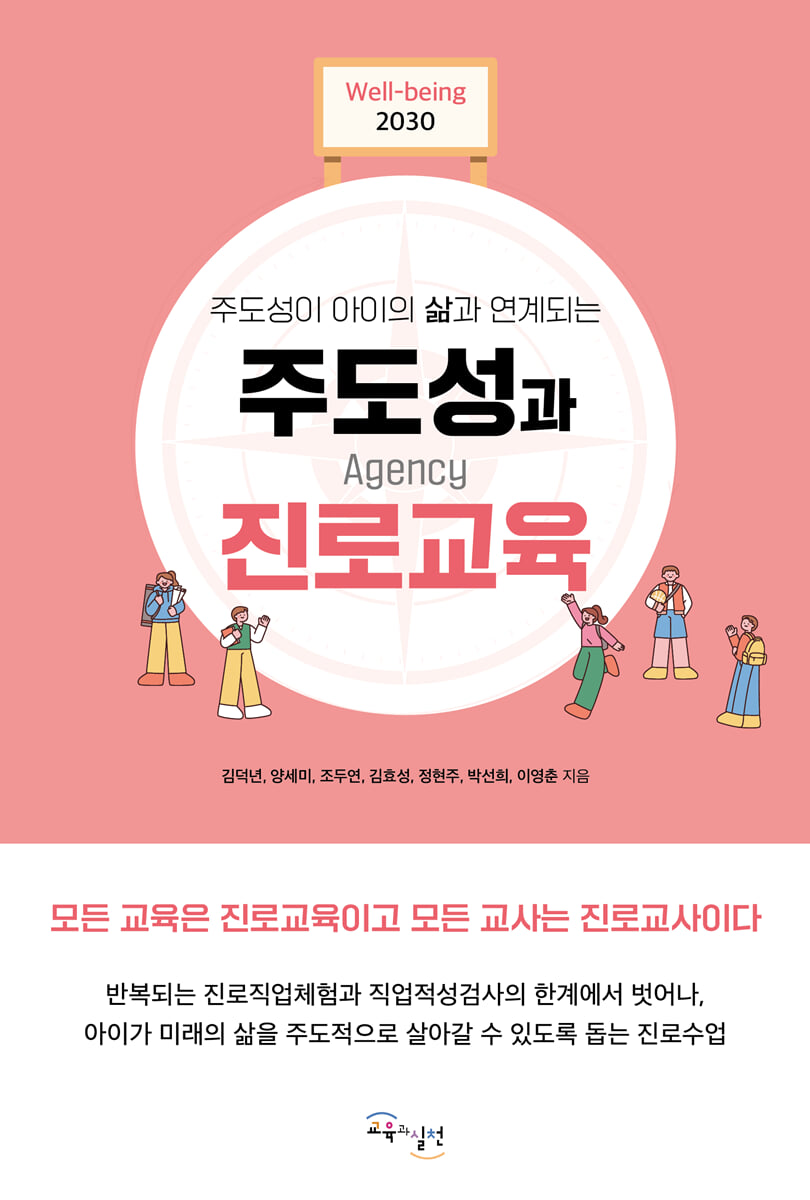
All education is career education, and all teachers are career teachers.
A practical guide to career and curriculum linkage in elementary, middle, and high schools in the 2022 revised curriculum!
What we need to pay attention to now is ‘curriculum classes that reflect career education elements.’
In the existing knowledge-based curriculum, classes should be conducted by reflecting career education elements.
2022 Revised Curriculum and Career Education
How is career education addressed in the 2022 revised curriculum? One subject is "Career-Linked Education," and the other is "Career and Occupation."
First, let’s look at ‘career-linked education.’
Schools may operate career-linked education to support students transitioning between school levels with the education necessary to prepare for life and learning at higher levels of school.
2022 Revised Curriculum Overview
The general explanation states that “career-linked education refers to education that supports students to achieve continuous learning and growth through adaptation to school life, linking of subject learning, and various career exploration activities before advancing to a higher school or grade level.
Unlike the career activities of creative experiential activities that focus on exploring and designing career paths based on an understanding of oneself and the world of work, the career-linked education introduced in the 2022 revised curriculum is not limited to career exploration or career design, but expands the concept of career education by focusing on school life and learning preparation before advancing to higher grades or schools, linking subject learning, and preparing for advancement to higher education.
A practical guide to career and curriculum linkage in elementary, middle, and high schools in the 2022 revised curriculum!
What we need to pay attention to now is ‘curriculum classes that reflect career education elements.’
In the existing knowledge-based curriculum, classes should be conducted by reflecting career education elements.
2022 Revised Curriculum and Career Education
How is career education addressed in the 2022 revised curriculum? One subject is "Career-Linked Education," and the other is "Career and Occupation."
First, let’s look at ‘career-linked education.’
Schools may operate career-linked education to support students transitioning between school levels with the education necessary to prepare for life and learning at higher levels of school.
2022 Revised Curriculum Overview
The general explanation states that “career-linked education refers to education that supports students to achieve continuous learning and growth through adaptation to school life, linking of subject learning, and various career exploration activities before advancing to a higher school or grade level.
Unlike the career activities of creative experiential activities that focus on exploring and designing career paths based on an understanding of oneself and the world of work, the career-linked education introduced in the 2022 revised curriculum is not limited to career exploration or career design, but expands the concept of career education by focusing on school life and learning preparation before advancing to higher grades or schools, linking subject learning, and preparing for advancement to higher education.
- You can preview some of the book's contents.
Preview
index
Introduction
All education is career education, and all teachers are career teachers.
Chapter 1: Leadership and Career Education
2022 Revised Curriculum and Career Education
Running and running, but staying in place: the Red Queen effect
A society based on the spoon class system, a tower of insects
The criteria for success are changing.
Only by yourself
Passionate preparation breeds choice
Career Education Requires More Collaborative Leadership 428 Initiative and Career Education
Chapter 2: Elementary Career Education: A Look Through the Lens of Leadership
A Look at Career Education in the Elementary School Curriculum
Career-related education in elementary schools
Let's look at career education through the lens of leadership.
Four Traits Seen Through the Lens of Initiative
A Case Study of Elementary Career Education that Empowers Initiatives
Chapter 3: Middle School Career Education: Awakening Initiative
Puberty is a catalyst for change in students.
I remember taking the initiative in planning and participating.
What started out as an interest turned into a career path.
Aptitude leads to career choice through club activities
Career values encountered at after-school programs and events
Finding Dreams and Initiatives with the Free Semester System
Encouraging student initiative through personalized career exploration activities.
Chapter 4: Middle School Career Education: Developing Your Own Learning Compass
Career classes appearing on the schedule
A new place for habitus
Career education that fosters dream capital
Learner initiative and career development capabilities
Finding Your Own Learning Compass: Entrepreneurship Education, Not Entrepreneurship Education
Becoming a Happy Lifelong Learner
Chapter 5: Middle School Career Education: Learning and Growing from Your Own Experiences
Career guidance teachers plan activity-focused, customized school career education curriculum.
Orientation to increase participation and trust, with self-introductions for teachers and students.
A project to build healthy habits that foster self-regulation.
Step 5: Storytelling: Learning and Growing from Your Experiences
Career activities that integrate personal experiences and growth processes
Chapter 6: High School Career Education: Focusing on Leadership
There are many different types of career decisions.
Towards student-led career planning
Adding Coaching to Teaching
Chapter 7: Out-of-School Youth and Career Education
Who are out-of-school youth?
Out-of-school youth counseling case
Support for Out-of-School Youth
Career education for out-of-school youth
Conclusion: From Pedagogy to Andragogy 28
All education is career education, and all teachers are career teachers.
Chapter 1: Leadership and Career Education
2022 Revised Curriculum and Career Education
Running and running, but staying in place: the Red Queen effect
A society based on the spoon class system, a tower of insects
The criteria for success are changing.
Only by yourself
Passionate preparation breeds choice
Career Education Requires More Collaborative Leadership 428 Initiative and Career Education
Chapter 2: Elementary Career Education: A Look Through the Lens of Leadership
A Look at Career Education in the Elementary School Curriculum
Career-related education in elementary schools
Let's look at career education through the lens of leadership.
Four Traits Seen Through the Lens of Initiative
A Case Study of Elementary Career Education that Empowers Initiatives
Chapter 3: Middle School Career Education: Awakening Initiative
Puberty is a catalyst for change in students.
I remember taking the initiative in planning and participating.
What started out as an interest turned into a career path.
Aptitude leads to career choice through club activities
Career values encountered at after-school programs and events
Finding Dreams and Initiatives with the Free Semester System
Encouraging student initiative through personalized career exploration activities.
Chapter 4: Middle School Career Education: Developing Your Own Learning Compass
Career classes appearing on the schedule
A new place for habitus
Career education that fosters dream capital
Learner initiative and career development capabilities
Finding Your Own Learning Compass: Entrepreneurship Education, Not Entrepreneurship Education
Becoming a Happy Lifelong Learner
Chapter 5: Middle School Career Education: Learning and Growing from Your Own Experiences
Career guidance teachers plan activity-focused, customized school career education curriculum.
Orientation to increase participation and trust, with self-introductions for teachers and students.
A project to build healthy habits that foster self-regulation.
Step 5: Storytelling: Learning and Growing from Your Experiences
Career activities that integrate personal experiences and growth processes
Chapter 6: High School Career Education: Focusing on Leadership
There are many different types of career decisions.
Towards student-led career planning
Adding Coaching to Teaching
Chapter 7: Out-of-School Youth and Career Education
Who are out-of-school youth?
Out-of-school youth counseling case
Support for Out-of-School Youth
Career education for out-of-school youth
Conclusion: From Pedagogy to Andragogy 28
Detailed image
Publisher's Review
This book began with these concerns.
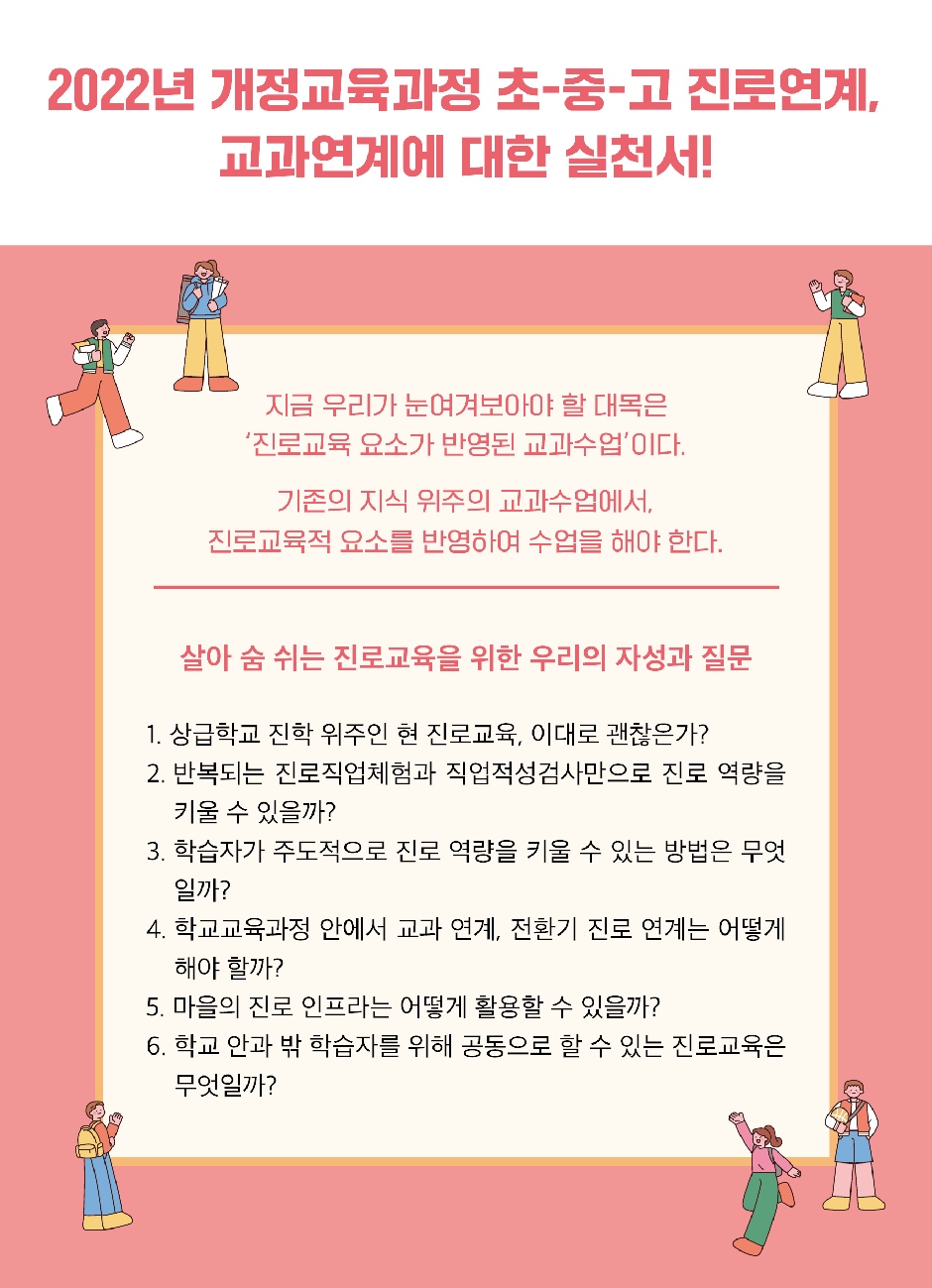
1.
Is the current career education system, which focuses on advancement to higher education, acceptable?
2.
Can we develop career competencies through repeated career experience and aptitude tests alone?
3.
How can learners proactively develop career competencies?
4.
How should we connect subjects and career paths during transition periods within the school curriculum?
5.
How can we utilize the village's vocational infrastructure?
6.
What kind of career education can we provide jointly for learners both inside and outside of school?
A living, breathing book written by career education practitioners!
The authors of this book are not professional researchers.
But he was always there for the students.
And as a career guidance teacher, I am a professional practitioner who has worked hard to find career education that is right for each student throughout their life.
Their voices are alive.
Their case studies include designing and implementing programs that allow students to take the initiative in designing their own career paths.
So it's more specific and powerful.
In a word, it is vivid.
It is now a given that career education should be included in all subjects and that all teachers should be career teachers.
Furthermore, the entire village must take an interest in and help a child grow.
The days when career paths were solely about getting into higher-level schools and focusing only on students with good grades are over.
Our attention must be directed not only to marginalized students within schools, but also to learners outside of schools.
There is still an invisible wall between the inside and outside of the school.
Let's drop the term 'in and out of school'.
Public education should be able to help learners wherever they are.
1.
Is the current career education system, which focuses on advancement to higher education, acceptable?
2.
Can we develop career competencies through repeated career experience and aptitude tests alone?
3.
How can learners proactively develop career competencies?
4.
How should we connect subjects and career paths during transition periods within the school curriculum?
5.
How can we utilize the village's vocational infrastructure?
6.
What kind of career education can we provide jointly for learners both inside and outside of school?
A living, breathing book written by career education practitioners!
The authors of this book are not professional researchers.
But he was always there for the students.
And as a career guidance teacher, I am a professional practitioner who has worked hard to find career education that is right for each student throughout their life.
Their voices are alive.
Their case studies include designing and implementing programs that allow students to take the initiative in designing their own career paths.
So it's more specific and powerful.
In a word, it is vivid.
It is now a given that career education should be included in all subjects and that all teachers should be career teachers.
Furthermore, the entire village must take an interest in and help a child grow.
The days when career paths were solely about getting into higher-level schools and focusing only on students with good grades are over.
Our attention must be directed not only to marginalized students within schools, but also to learners outside of schools.
There is still an invisible wall between the inside and outside of the school.
Let's drop the term 'in and out of school'.
Public education should be able to help learners wherever they are.
GOODS SPECIFICS
- Date of issue: June 10, 2025
- Page count, weight, size: 304 pages | 152*225*30mm
- ISBN13: 9791191724875
- ISBN10: 1191724875
You may also like
카테고리
korean


korean

![GQ KOREA Mark (Monthly): December [2025]](http://librairie.coreenne.fr/cdn/shop/files/8ef265dbbfbf186523ed75ba7319009d.jpg?v=1765340328&width=3840)


