

Text Mining with Case Studies
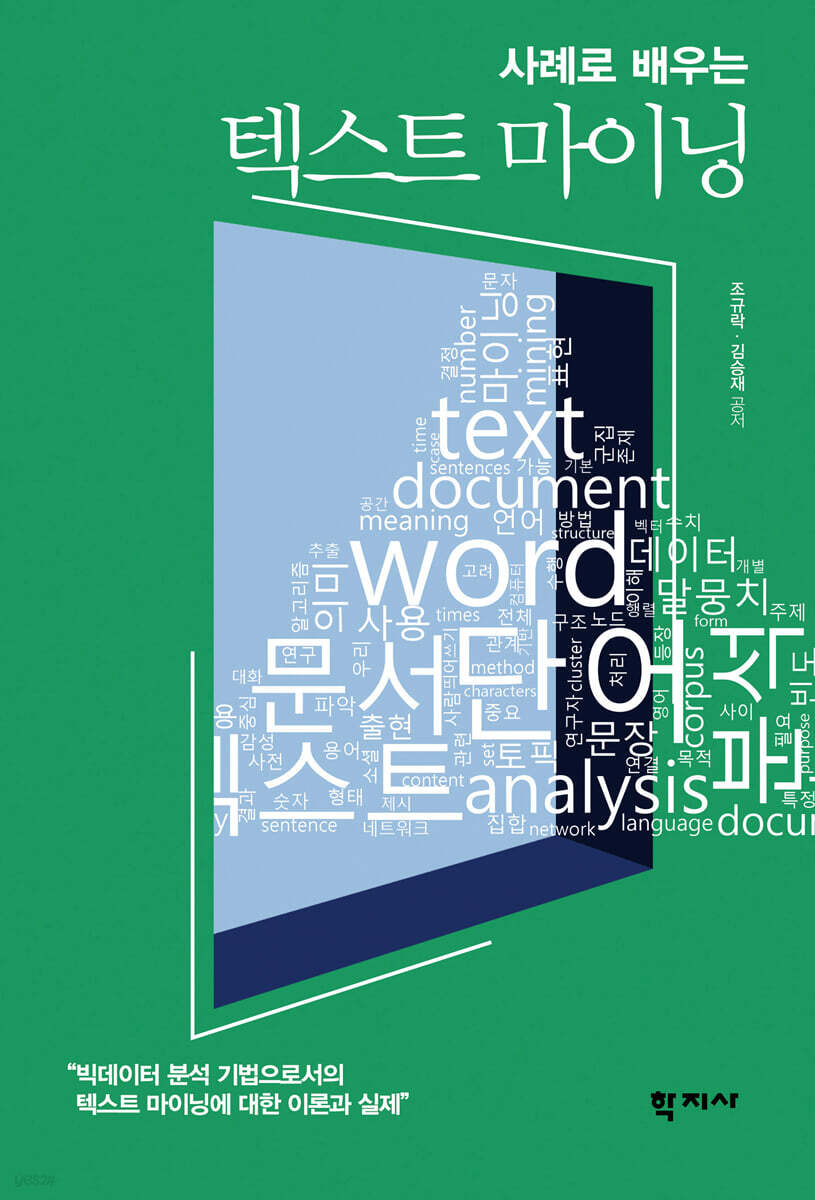 |
Description
Book Introduction
“You should be able to analyze data without knowing formulas!”
A practical guide to text mining that can be applied immediately in the field.
Text mining is no longer the domain of data experts alone.
The demand for direct analysis and utilization of various text data, such as open-ended surveys, interviews, news, and social media, is rapidly increasing across academia and practice.
In this context, a practical introductory book titled "Learning Text Mining with Case Studies," which covers the entire analysis process from text mining concepts to practice, has been published.
This book begins with the question, "How can text mining as a tool be applied to real-world situations?" and systematically guides readers through not only the basic concepts of analysis but also practical application methods.
It is structured with practical examples and practice-oriented content so that even beginners can easily follow along and researchers can immediately apply it to real-world situations.
The author, Professor Cho Gyu-rak (Department of Education, Yeungnam University), is an interdisciplinary researcher who has conducted research and lectures on text mining, educational data analysis, and artificial intelligence utilization. Co-author Kim Seung-jae, based on his experience in IT practice and big data processing, is researching text mining and artificial intelligence utilization in his doctoral program in educational engineering.
A practical guide to text mining that can be applied immediately in the field.
Text mining is no longer the domain of data experts alone.
The demand for direct analysis and utilization of various text data, such as open-ended surveys, interviews, news, and social media, is rapidly increasing across academia and practice.
In this context, a practical introductory book titled "Learning Text Mining with Case Studies," which covers the entire analysis process from text mining concepts to practice, has been published.
This book begins with the question, "How can text mining as a tool be applied to real-world situations?" and systematically guides readers through not only the basic concepts of analysis but also practical application methods.
It is structured with practical examples and practice-oriented content so that even beginners can easily follow along and researchers can immediately apply it to real-world situations.
The author, Professor Cho Gyu-rak (Department of Education, Yeungnam University), is an interdisciplinary researcher who has conducted research and lectures on text mining, educational data analysis, and artificial intelligence utilization. Co-author Kim Seung-jae, based on his experience in IT practice and big data processing, is researching text mining and artificial intelligence utilization in his doctoral program in educational engineering.
index
Letter to the Reader
Why I wrote this book
Part 1: Text Mining Fundamentals and Core
Chapter 1: Comparison of Traditional Text Analysis Methods and Text Mining
Chapter 2 Text Mining, Text, and Corpora
1.
Definition and Usefulness of Text Mining
2.
The importance of text
3.
corpus
Chapter 3 Text Data
1.
Text data and natural language
2.
Structure of text data
Chapter 4 Preprocessing for Text Mining
1.
The need for preprocessing text data
2.
Remove format information from a document
3.
Distinction and unification of uppercase and lowercase letters
4.
Blank processing
5.
Spacing
6.
Numeric expression processing
7.
Remove punctuation and special characters
8.
Remove stop words
9.
Root identification
10.
Applying n-grams
Part 2 Text Mining Techniques and Practice
Chapter 5 Main Preprocessing Steps
1.
Tokenization
2.
Text preprocessing using regular expressions
3.
Remove stop words
4.
Preprocessing in practice through integrated examples
Chapter 6 Word Frequency Analysis
1.
definition
2.
purpose
3.
Key Terms
4.
How to present results
5.
Note
6.
Word frequency analysis flowchart
7.
Word Frequency Analysis Python Practice Example
8.
Word Frequency Analysis: Actual Paper Cases
Chapter 7 Topic Modeling
1.
definition
2.
purpose
3.
Algorithm
4.
How to present results
5.
Note
6.
Topic Modeling Flowchart
7.
Topic Modeling Python Practice Example
8.
Topic Modeling Real-World Paper Cases
Chapter 8 Cluster Analysis
1.
definition
2.
purpose
3.
Algorithm
4.
How to present results
5.
Note
6.
Cluster analysis flowchart
7.
Cluster Analysis Python Practice Example
8.
Cluster analysis actual paper examples
Chapter 9 Sentiment Analysis
1.
definition
2.
purpose
3.
Algorithm
4.
How to present results
5.
Note
6.
Sentiment Analysis Flowchart
7.
Sentiment Analysis Python Practice Example
8.
Sentiment Analysis Real-World Paper Case Studies
Chapter 10: Related Word Analysis
1.
definition
2.
purpose
3.
Algorithms and Key Terms
4.
How to present results
5.
Note
6.
Related word analysis flowchart
7.
Python practical example of association analysis
8.
Associated Word Analysis Real-World Paper Case Studies
Americas
Search
Why I wrote this book
Part 1: Text Mining Fundamentals and Core
Chapter 1: Comparison of Traditional Text Analysis Methods and Text Mining
Chapter 2 Text Mining, Text, and Corpora
1.
Definition and Usefulness of Text Mining
2.
The importance of text
3.
corpus
Chapter 3 Text Data
1.
Text data and natural language
2.
Structure of text data
Chapter 4 Preprocessing for Text Mining
1.
The need for preprocessing text data
2.
Remove format information from a document
3.
Distinction and unification of uppercase and lowercase letters
4.
Blank processing
5.
Spacing
6.
Numeric expression processing
7.
Remove punctuation and special characters
8.
Remove stop words
9.
Root identification
10.
Applying n-grams
Part 2 Text Mining Techniques and Practice
Chapter 5 Main Preprocessing Steps
1.
Tokenization
2.
Text preprocessing using regular expressions
3.
Remove stop words
4.
Preprocessing in practice through integrated examples
Chapter 6 Word Frequency Analysis
1.
definition
2.
purpose
3.
Key Terms
4.
How to present results
5.
Note
6.
Word frequency analysis flowchart
7.
Word Frequency Analysis Python Practice Example
8.
Word Frequency Analysis: Actual Paper Cases
Chapter 7 Topic Modeling
1.
definition
2.
purpose
3.
Algorithm
4.
How to present results
5.
Note
6.
Topic Modeling Flowchart
7.
Topic Modeling Python Practice Example
8.
Topic Modeling Real-World Paper Cases
Chapter 8 Cluster Analysis
1.
definition
2.
purpose
3.
Algorithm
4.
How to present results
5.
Note
6.
Cluster analysis flowchart
7.
Cluster Analysis Python Practice Example
8.
Cluster analysis actual paper examples
Chapter 9 Sentiment Analysis
1.
definition
2.
purpose
3.
Algorithm
4.
How to present results
5.
Note
6.
Sentiment Analysis Flowchart
7.
Sentiment Analysis Python Practice Example
8.
Sentiment Analysis Real-World Paper Case Studies
Chapter 10: Related Word Analysis
1.
definition
2.
purpose
3.
Algorithms and Key Terms
4.
How to present results
5.
Note
6.
Related word analysis flowchart
7.
Python practical example of association analysis
8.
Associated Word Analysis Real-World Paper Case Studies
Americas
Search
Publisher's Review
"What's more important than theory is the experience of analyzing it right now."
Many data analysis books claim to be "understandable even for beginners," but when you actually open the book, complex formulas and calculations appear as a barrier to entry.
But what readers really want to know are practical questions: “Which analysis method is right for my data?” and “How do I apply and interpret that analysis method?”
"Text Mining: Learning Through Case Studies" is a book that answers these practical questions.
Complex mathematical concepts are boldly excluded, and the focus is on fostering practical skills in analyzing and interpreting text data through real-world research examples, flowcharts visualizing analysis procedures, and Python practice code that can be copied and immediately executed.
This book provides beginners with their first successful experience in analysis, experienced practitioners with an opportunity to organize concepts and compare techniques, and educators with specific guidelines for teaching and practice.
- "Practical, structured content that can be immediately applied to reports and papers."
Above all, this book is a practical analysis book that covers everything from the core concepts of text mining to major analysis techniques in a consistent structure.
It consists of 10 chapters in 2 parts. Part 1 covers the basic theories such as the definition of text mining, corpus concept, and preprocessing procedures in detail. Part 2 presents core techniques such as word frequency analysis, topic modeling, cluster analysis, sentiment analysis, and related word analysis in the same format of 'definition-purpose-analysis flowchart-practice code-paper case study', designed to facilitate comparison and application between techniques.
All exercises are based on data and executable Python code used in actual research settings, helping you naturally acquire practical skills to go beyond simply learning concepts and experience and interpret the entire analysis process.
In particular, this book can be of practical help to the following readers:
For novice researchers who want to analyze text data themselves, this book serves as an introductory book that lowers the barrier to entry for analysis. For those who already know the techniques, this book serves as a compilation that organizes scattered knowledge and enables comparison between techniques. For educators and practitioners who need to teach text mining in classes or workshops, this book serves as a practical guidebook that can be used in actual educational settings.
Designed for readers of all skill levels to utilize in ways that suit them, this book is a practical and scalable text mining guide for both research and educational settings.
Many data analysis books claim to be "understandable even for beginners," but when you actually open the book, complex formulas and calculations appear as a barrier to entry.
But what readers really want to know are practical questions: “Which analysis method is right for my data?” and “How do I apply and interpret that analysis method?”
"Text Mining: Learning Through Case Studies" is a book that answers these practical questions.
Complex mathematical concepts are boldly excluded, and the focus is on fostering practical skills in analyzing and interpreting text data through real-world research examples, flowcharts visualizing analysis procedures, and Python practice code that can be copied and immediately executed.
This book provides beginners with their first successful experience in analysis, experienced practitioners with an opportunity to organize concepts and compare techniques, and educators with specific guidelines for teaching and practice.
- "Practical, structured content that can be immediately applied to reports and papers."
Above all, this book is a practical analysis book that covers everything from the core concepts of text mining to major analysis techniques in a consistent structure.
It consists of 10 chapters in 2 parts. Part 1 covers the basic theories such as the definition of text mining, corpus concept, and preprocessing procedures in detail. Part 2 presents core techniques such as word frequency analysis, topic modeling, cluster analysis, sentiment analysis, and related word analysis in the same format of 'definition-purpose-analysis flowchart-practice code-paper case study', designed to facilitate comparison and application between techniques.
All exercises are based on data and executable Python code used in actual research settings, helping you naturally acquire practical skills to go beyond simply learning concepts and experience and interpret the entire analysis process.
In particular, this book can be of practical help to the following readers:
For novice researchers who want to analyze text data themselves, this book serves as an introductory book that lowers the barrier to entry for analysis. For those who already know the techniques, this book serves as a compilation that organizes scattered knowledge and enables comparison between techniques. For educators and practitioners who need to teach text mining in classes or workshops, this book serves as a practical guidebook that can be used in actual educational settings.
Designed for readers of all skill levels to utilize in ways that suit them, this book is a practical and scalable text mining guide for both research and educational settings.
GOODS SPECIFICS
- Date of issue: May 20, 2025
- Format: Paperback book binding method guide
- Page count, weight, size: 304 pages | 153*225*13mm
- ISBN13: 9788999734199
- ISBN10: 8999734196
You may also like
카테고리
korean


korean

![GQ KOREA Mark (Monthly): December [2025]](http://librairie.coreenne.fr/cdn/shop/files/8ef265dbbfbf186523ed75ba7319009d.jpg?v=1765340328&width=3840)


