

Classroom Management Mindset for Teachers
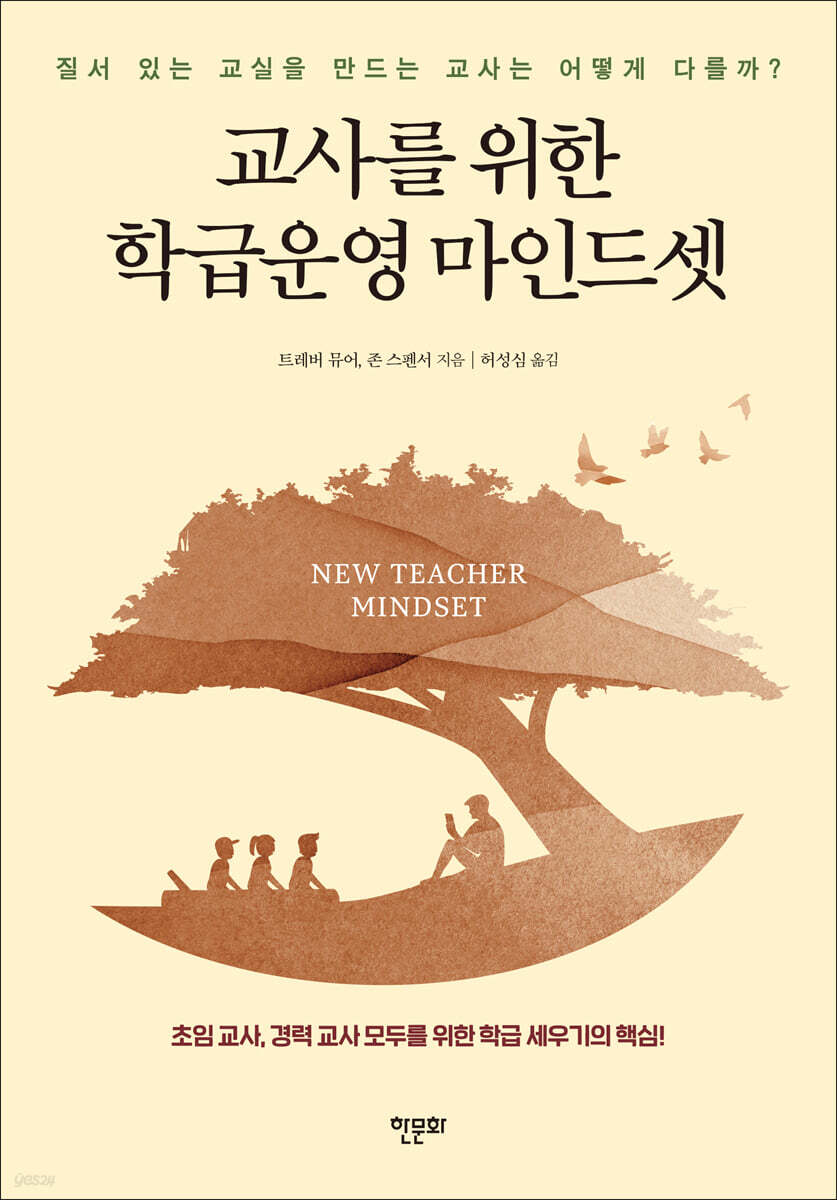 |
Description
Book Introduction
The key to classroom building for both beginning and experienced teachers!
About 16 percent of teachers leave the profession each year.
Whatever the reason—burnout, job dissatisfaction, excessive stress—the bottom line is that this job is incredibly hard, and far too many talented people are leaving.
Unfortunately, no matter how innovative your teaching methods or classroom management skills are, you can never completely overcome the challenges and crises you face as a teacher.
For teachers who question their career choices, wondering, "How long can I keep doing this?" or "Why is life as a teacher so burdensome?", the two authors of this book emphasize the importance of a "teacher mindset," while also offering seasoned and practical advice based on decades of experience.
The authors candidly share their countless classroom failures and trials and offer practical strategies for growing as teachers.
While it covers a wide range of topics, from classroom management and lesson design to student engagement, self-care, and technology adoption, relationships are always at the heart of it all.
These are wise ways to build relationships with students from the beginning of the semester, design classrooms based on empathy, and empower student growth while reducing workload and maintaining order in the classroom while eliminating the risk of unnecessary chaos.
It also offers new interpretations and insights on practical topics such as classroom space utilization, project-based learning, group work, increasing student engagement, and working with parents.
It will serve as a solid guide not only for new teachers taking their first steps into the classroom, but also for experienced teachers who are thinking about becoming good teachers.
About 16 percent of teachers leave the profession each year.
Whatever the reason—burnout, job dissatisfaction, excessive stress—the bottom line is that this job is incredibly hard, and far too many talented people are leaving.
Unfortunately, no matter how innovative your teaching methods or classroom management skills are, you can never completely overcome the challenges and crises you face as a teacher.
For teachers who question their career choices, wondering, "How long can I keep doing this?" or "Why is life as a teacher so burdensome?", the two authors of this book emphasize the importance of a "teacher mindset," while also offering seasoned and practical advice based on decades of experience.
The authors candidly share their countless classroom failures and trials and offer practical strategies for growing as teachers.
While it covers a wide range of topics, from classroom management and lesson design to student engagement, self-care, and technology adoption, relationships are always at the heart of it all.
These are wise ways to build relationships with students from the beginning of the semester, design classrooms based on empathy, and empower student growth while reducing workload and maintaining order in the classroom while eliminating the risk of unnecessary chaos.
It also offers new interpretations and insights on practical topics such as classroom space utilization, project-based learning, group work, increasing student engagement, and working with parents.
It will serve as a solid guide not only for new teachers taking their first steps into the classroom, but also for experienced teachers who are thinking about becoming good teachers.
- You can preview some of the book's contents.
Preview
index
Begin each year with the mindset of a new teacher.
Chapter 1: Start Building Relationships on the First Day of the New Semester
Chapter 2: How to Deal with Problem Behavior
Chapter 3: What Kind of Classroom Do Students Want?
Chapter 4 Class Culture is Determined in the First Week
Chapter 5: Classroom Rituals for an Autonomous Class
Chapter 6: How to Organize Classroom Space
Chapter 7: Why You Should Systematize Your Classroom
Chapter 8: Techniques for Increasing Class Participation
Chapter 9: Teach with a Real-World Connection
Chapter 10: Education for a Technological World
Chapter 11: Why Differentiated Education is Necessary
Chapter 12: Involve Students in Assessment
Chapter 13: Teachers Are Not Superheroes
Chapter 14: You Must Take Care of Yourself to Take Care of Your Students
Chapter 15: Teaching Connects to Society
Concluding Remarks: Always make mistakes and learn from them.
Acknowledgements
Chapter 1: Start Building Relationships on the First Day of the New Semester
Chapter 2: How to Deal with Problem Behavior
Chapter 3: What Kind of Classroom Do Students Want?
Chapter 4 Class Culture is Determined in the First Week
Chapter 5: Classroom Rituals for an Autonomous Class
Chapter 6: How to Organize Classroom Space
Chapter 7: Why You Should Systematize Your Classroom
Chapter 8: Techniques for Increasing Class Participation
Chapter 9: Teach with a Real-World Connection
Chapter 10: Education for a Technological World
Chapter 11: Why Differentiated Education is Necessary
Chapter 12: Involve Students in Assessment
Chapter 13: Teachers Are Not Superheroes
Chapter 14: You Must Take Care of Yourself to Take Care of Your Students
Chapter 15: Teaching Connects to Society
Concluding Remarks: Always make mistakes and learn from them.
Acknowledgements
Into the book
Perhaps the most important formative factor in education is the people who lead it: the teachers who design and guide learning experiences that will benefit students now and in the future.
The reason why the two of us decided to become teachers was because of our experience meeting such a teacher.
We each had teachers who fostered in us a passion for our respective fields and a deep love of learning.
Those teachers are vividly etched in our memories and still feel connected to us.
They helped us connect everything we had learned so far and made us think, 'I want to be a good teacher like them.'
--- From the "Introductory Note"
A 'bad student' may be a child who is often in pain.
On the other hand, I'm not really surprised when a 'good student' behaves badly.
Actions are the means of communication.
Sometimes, lazy students are actually anxious students.
Sometimes, a tired student is actually a hungry student.
Sometimes, students who are misbehaving and misbehaving are actually insecure students, and they would rather be punished than fail at a given task.
Sometimes, students who say hurtful things to their teachers actually hurt themselves too.
The words they spout out are actually a reaction to their own pain.
A student's experience doesn't excuse bad behavior, nor does it make it any less offensive or disruptive to the class, but it does at least explain why they behave that way.
--- From "Chapter 1. Start Building Relationships from the First Day of the New Semester"
A toxic positivity climate demands that people maintain an optimistic attitude in all circumstances.
It means that you should smile even when you are in pain.
This culture only conveys an optimistic and bright image of the world, while ignoring negative thoughts and discussions.
Toxic positivity can lead to feelings of shame, guilt, and anxiety.
In a truly positive space, you can acknowledge your diverse emotions, express yourself authentically, seek genuine support, and navigate challenges.
On the other hand, toxic positivity can suppress valid emotions, ignore problems, and render personal experiences meaningless.
Balancing a realistic understanding of challenges and emotions with a positive attitude is key to creating an environment for true support and growth.
--- 「Chapter 3.
From “What Kind of Classroom Do Students Want?”
To enable students to engage at the highest level, we must move beyond mere concentration to full immersion.
One way is to give students autonomy or agency over their learning.
That is, it refers to the sense of participation and control that can be experienced when one takes ownership of the learning process.
When students have a voice and choice in their classes, they not only stay engaged in the tasks at hand, but also gain a sense of purpose and control over what they do.
It can also help you develop the mindset to keep trying and not give up when faced with challenges.
--- Chapter 8.
Among the “Techniques to Increase Class Participation”
Asking students to solve irrelevant and unrealistic problems will definitely reduce their engagement.
Because they see the subject as meaningless and just another step to take on the journey to college.
Children have a natural desire to solve problems.
However, if you present problems rooted in a false context, curiosity will gradually wane and interest in the subject will be lost.
In contrast, real-world problems engage students more, stimulating their curiosity and fueling their desire to learn more.
One way to incorporate real-world problem-solving activities into your lessons is to utilize the PBL method discussed earlier.
--- Chapter 9.
From “Teach by connecting to the real world”
If you design for everyone, everyone benefits from that design.
Universal Design for Learning applies the philosophy of universal design to all aspects of learning, from learning spaces and materials, to instruction and assessment, to classroom culture and behavior management.
Universal Design for Learning, built around cognitive neuroscience, is an integrated educational system that eliminates learning barriers while maintaining a challenging learning environment for all students.
The Universal Design for Learning approach attempts a paradigm shift from viewing the same situation as a deficit to viewing it as neurodiversity, from individualized special supports to universally available scaffolds and learning supports, and from a teacher-centered perspective to a learner-centered approach where students are the main actors.
--- 「Chapter 11.
From “Why Differentiated Education is Needed”
Teachers who are like superheroes in movies are certainly impressive.
They are loud, flashy and fun.
However, the teachers depicted in the movie only lasted a few years in school, like fireworks.
Even in movies 'based on true stories', teachers all left the classroom before they even reached 10 years.
I can't think of any unusual cases.
These films were originally intended to be emotional, but ultimately they were stories about teacher burnout.
Mr. Smoot, a former teacher I admired, stands in contrast to the teachers in these movies.
She was a teacher who taught students with consistent passion for decades.
Instead of noisy, flashy messages and flashy lights, we created a space where people can gather and share warmth.
--- 「Chapter 13.
From "Teachers are not superheroes"
A teacher's job is to teach students knowledge and skills to enrich their lives.
This work is fundamentally rooted in service.
In other words, when teachers serve their students, they benefit the student community, which in turn benefits society and ultimately contributes to the world.
Understanding this flow and being able to clearly articulate the higher-level goals of teaching is the best way for teachers to achieve professional success.
Moreover, it is also the best way to ‘self-care’.
Let me add one thing: the more specific you are about your purpose, the better.
The reason why the two of us decided to become teachers was because of our experience meeting such a teacher.
We each had teachers who fostered in us a passion for our respective fields and a deep love of learning.
Those teachers are vividly etched in our memories and still feel connected to us.
They helped us connect everything we had learned so far and made us think, 'I want to be a good teacher like them.'
--- From the "Introductory Note"
A 'bad student' may be a child who is often in pain.
On the other hand, I'm not really surprised when a 'good student' behaves badly.
Actions are the means of communication.
Sometimes, lazy students are actually anxious students.
Sometimes, a tired student is actually a hungry student.
Sometimes, students who are misbehaving and misbehaving are actually insecure students, and they would rather be punished than fail at a given task.
Sometimes, students who say hurtful things to their teachers actually hurt themselves too.
The words they spout out are actually a reaction to their own pain.
A student's experience doesn't excuse bad behavior, nor does it make it any less offensive or disruptive to the class, but it does at least explain why they behave that way.
--- From "Chapter 1. Start Building Relationships from the First Day of the New Semester"
A toxic positivity climate demands that people maintain an optimistic attitude in all circumstances.
It means that you should smile even when you are in pain.
This culture only conveys an optimistic and bright image of the world, while ignoring negative thoughts and discussions.
Toxic positivity can lead to feelings of shame, guilt, and anxiety.
In a truly positive space, you can acknowledge your diverse emotions, express yourself authentically, seek genuine support, and navigate challenges.
On the other hand, toxic positivity can suppress valid emotions, ignore problems, and render personal experiences meaningless.
Balancing a realistic understanding of challenges and emotions with a positive attitude is key to creating an environment for true support and growth.
--- 「Chapter 3.
From “What Kind of Classroom Do Students Want?”
To enable students to engage at the highest level, we must move beyond mere concentration to full immersion.
One way is to give students autonomy or agency over their learning.
That is, it refers to the sense of participation and control that can be experienced when one takes ownership of the learning process.
When students have a voice and choice in their classes, they not only stay engaged in the tasks at hand, but also gain a sense of purpose and control over what they do.
It can also help you develop the mindset to keep trying and not give up when faced with challenges.
--- Chapter 8.
Among the “Techniques to Increase Class Participation”
Asking students to solve irrelevant and unrealistic problems will definitely reduce their engagement.
Because they see the subject as meaningless and just another step to take on the journey to college.
Children have a natural desire to solve problems.
However, if you present problems rooted in a false context, curiosity will gradually wane and interest in the subject will be lost.
In contrast, real-world problems engage students more, stimulating their curiosity and fueling their desire to learn more.
One way to incorporate real-world problem-solving activities into your lessons is to utilize the PBL method discussed earlier.
--- Chapter 9.
From “Teach by connecting to the real world”
If you design for everyone, everyone benefits from that design.
Universal Design for Learning applies the philosophy of universal design to all aspects of learning, from learning spaces and materials, to instruction and assessment, to classroom culture and behavior management.
Universal Design for Learning, built around cognitive neuroscience, is an integrated educational system that eliminates learning barriers while maintaining a challenging learning environment for all students.
The Universal Design for Learning approach attempts a paradigm shift from viewing the same situation as a deficit to viewing it as neurodiversity, from individualized special supports to universally available scaffolds and learning supports, and from a teacher-centered perspective to a learner-centered approach where students are the main actors.
--- 「Chapter 11.
From “Why Differentiated Education is Needed”
Teachers who are like superheroes in movies are certainly impressive.
They are loud, flashy and fun.
However, the teachers depicted in the movie only lasted a few years in school, like fireworks.
Even in movies 'based on true stories', teachers all left the classroom before they even reached 10 years.
I can't think of any unusual cases.
These films were originally intended to be emotional, but ultimately they were stories about teacher burnout.
Mr. Smoot, a former teacher I admired, stands in contrast to the teachers in these movies.
She was a teacher who taught students with consistent passion for decades.
Instead of noisy, flashy messages and flashy lights, we created a space where people can gather and share warmth.
--- 「Chapter 13.
From "Teachers are not superheroes"
A teacher's job is to teach students knowledge and skills to enrich their lives.
This work is fundamentally rooted in service.
In other words, when teachers serve their students, they benefit the student community, which in turn benefits society and ultimately contributes to the world.
Understanding this flow and being able to clearly articulate the higher-level goals of teaching is the best way for teachers to achieve professional success.
Moreover, it is also the best way to ‘self-care’.
Let me add one thing: the more specific you are about your purpose, the better.
--- 「Chapter 14.
From "You must take care of yourself to take care of your students"
From "You must take care of yourself to take care of your students"
Publisher's Review
Bridging the gap between theory and reality
Key Classroom Management Strategies
This book presents more than 50 strategies that teachers can immediately use to address the various challenges they face in classroom management.
It covers the core of early operation, such as how to build relationships from the first class, questioning techniques to elicit student participation, and setting classroom rules, and emphasizes relationship-based classroom management centered on the 'EMR strategy' to prevent and respond to problem behavior.
There are also specific tips for class presentation methods and assignment design that reduce boredom and confusion during class and encourage immersion.
It doesn't miss out on the detailed situations that teachers actually worry about, such as classroom space arrangement, class pace control, question distribution strategies, and participation promotion.
It also includes differentiation strategies to respond to changes brought about by the advancement of artificial intelligence technology and student diversity, as well as techniques for emotional management and self-care.
When a new teacher stands in front of the podium, he or she is bound to be confused by the gap between the theories he or she has learned and reality.
This book provides strategies to bridge that gap and reduce trial and error, vividly illustrating real-world classroom challenges and offering practical solutions.
It also instills the mindset and attitude necessary to not only endure but also create meaning for oneself and establish one's own direction as a teacher.
For experienced teachers who are concerned about whether their teaching methods are still effective or not, or whether they are growing into a teacher fit for today's children, this book provides an opportunity for self-reflection and recharging, and offers clues to break free from lethargy and mannerism.
A teacher's 'self-care' is 'student care'
Classroom management is never easy, whether you're an ambitious new teacher or a seasoned teacher with many years of experience.
Because every year we meet new grades and children, and in the process we encounter various difficulties and frustrations.
Furthermore, the current social climate of weakened trust and respect for teachers and the burden of responsibility create a sense of disillusionment and helplessness among teachers.
The two authors of this book are "teachers' teachers," having taught students in middle and high schools and universities for decades and mentored prospective and current teachers. They offer warm comfort to teachers exhausted by the chaos and emotional exhaustion that occurs both inside and outside the classroom.
He reminds teachers that taking care of themselves is also part of education, and that the fatigue and disappointment they feel as teachers are a natural part of the process.
Teachers often live under the pressure of "I can't let myself get tired," but this book recognizes teacher burnout and emotional exhaustion as a professional reality, not a personal weakness, and emphasizes that teachers' "self-care" directly leads to "student care."
Rather than offering vague comfort, we offer concrete, immediately actionable strategies for managing emotions, managing time, and allocating energy, helping teachers feel confident about taking care of themselves and regaining their mental balance.
It is repeatedly emphasized that teachers, too, can make mistakes and fall apart, but they are still valuable beings in their own right.
We also encourage teachers to reflect on why they chose this profession and the mindset they had when they first stood in front of their students, so they can stand before them again.
Key Classroom Management Strategies
This book presents more than 50 strategies that teachers can immediately use to address the various challenges they face in classroom management.
It covers the core of early operation, such as how to build relationships from the first class, questioning techniques to elicit student participation, and setting classroom rules, and emphasizes relationship-based classroom management centered on the 'EMR strategy' to prevent and respond to problem behavior.
There are also specific tips for class presentation methods and assignment design that reduce boredom and confusion during class and encourage immersion.
It doesn't miss out on the detailed situations that teachers actually worry about, such as classroom space arrangement, class pace control, question distribution strategies, and participation promotion.
It also includes differentiation strategies to respond to changes brought about by the advancement of artificial intelligence technology and student diversity, as well as techniques for emotional management and self-care.
When a new teacher stands in front of the podium, he or she is bound to be confused by the gap between the theories he or she has learned and reality.
This book provides strategies to bridge that gap and reduce trial and error, vividly illustrating real-world classroom challenges and offering practical solutions.
It also instills the mindset and attitude necessary to not only endure but also create meaning for oneself and establish one's own direction as a teacher.
For experienced teachers who are concerned about whether their teaching methods are still effective or not, or whether they are growing into a teacher fit for today's children, this book provides an opportunity for self-reflection and recharging, and offers clues to break free from lethargy and mannerism.
A teacher's 'self-care' is 'student care'
Classroom management is never easy, whether you're an ambitious new teacher or a seasoned teacher with many years of experience.
Because every year we meet new grades and children, and in the process we encounter various difficulties and frustrations.
Furthermore, the current social climate of weakened trust and respect for teachers and the burden of responsibility create a sense of disillusionment and helplessness among teachers.
The two authors of this book are "teachers' teachers," having taught students in middle and high schools and universities for decades and mentored prospective and current teachers. They offer warm comfort to teachers exhausted by the chaos and emotional exhaustion that occurs both inside and outside the classroom.
He reminds teachers that taking care of themselves is also part of education, and that the fatigue and disappointment they feel as teachers are a natural part of the process.
Teachers often live under the pressure of "I can't let myself get tired," but this book recognizes teacher burnout and emotional exhaustion as a professional reality, not a personal weakness, and emphasizes that teachers' "self-care" directly leads to "student care."
Rather than offering vague comfort, we offer concrete, immediately actionable strategies for managing emotions, managing time, and allocating energy, helping teachers feel confident about taking care of themselves and regaining their mental balance.
It is repeatedly emphasized that teachers, too, can make mistakes and fall apart, but they are still valuable beings in their own right.
We also encourage teachers to reflect on why they chose this profession and the mindset they had when they first stood in front of their students, so they can stand before them again.
GOODS SPECIFICS
- Date of issue: May 20, 2025
- Page count, weight, size: 336 pages | 150*215*20mm
- ISBN13: 9788956994895
You may also like
카테고리
korean


korean

![GQ KOREA Mark (Monthly): December [2025]](http://librairie.coreenne.fr/cdn/shop/files/8ef265dbbfbf186523ed75ba7319009d.jpg?v=1765340328&width=3840)


