

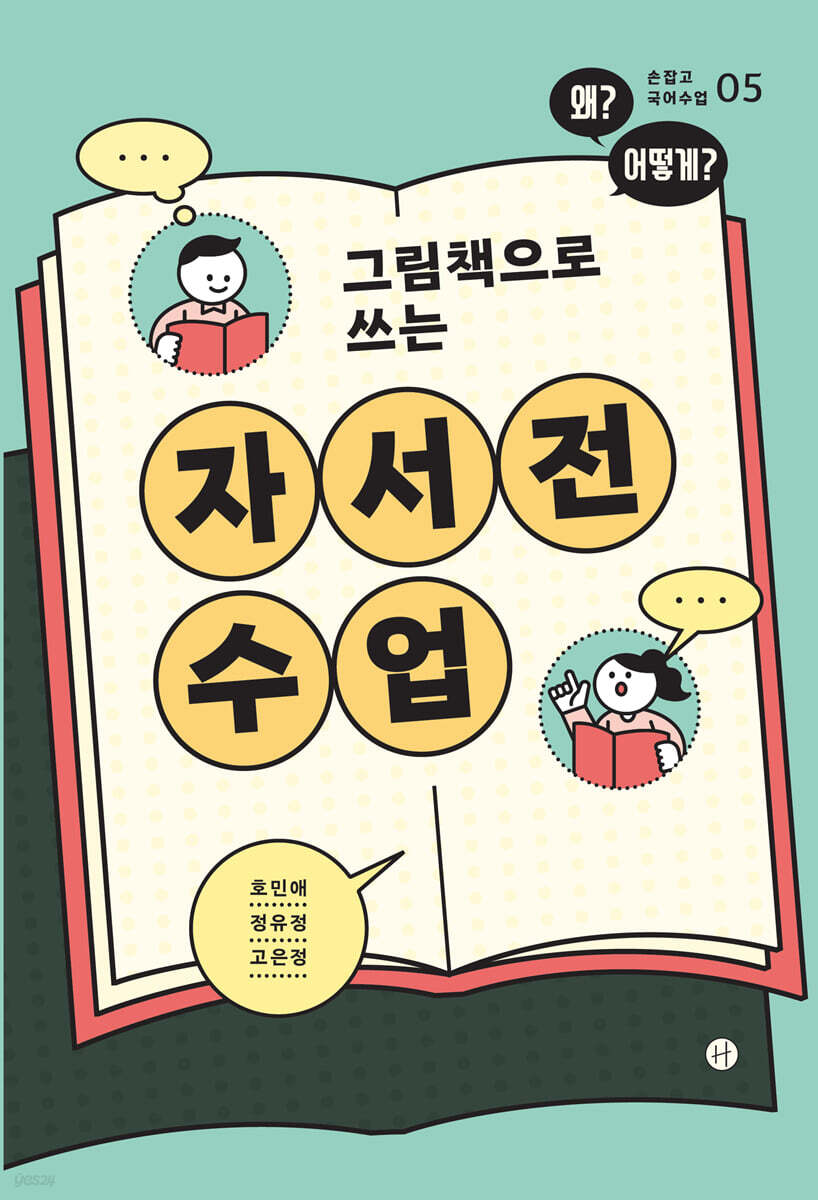
Autobiography class
 |
Description
Book Introduction
I used picture books to make it easy and fun for students.
Introducing a colorful autobiography writing class example.
This book is the fifth in the "Hand-in-Hand Korean Class" series, which was planned by current Korean language teachers to create a better path for Korean language education by introducing diverse teaching cases containing their own concerns and know-how.
Although the revised curriculum has reduced the content of 'autobiography writing', 'autobiography writing' is an essential and very helpful activity for adolescents to confirm their identity and plan for the future.
The authors of this book conceived the autobiography writing class with the hope that students would experience the same sense of pride and excitement they felt while reading picture books and writing autobiographies through a teachers' group. They compiled the colorful class stories they shared with students into a book.
If you're a Korean language teacher struggling to create meaningful lessons for your students, you'll find the case studies in this book incredibly helpful.
This book is largely divided into two parts.
In Part 1, the authors share their thoughts, concerns, and experiences, including why students need to write autobiographies, the practical challenges of teaching autobiographies, how to use picture books in autobiography writing, and why they are effective.
Part 2 details the diverse teaching experiences the authors have had with their students.
"If I Were a Book" covers the entire life cycle, from childhood to death, and offers a variety of ways to write an autobiography using picture books in an easy and fun way.
'Anyone Can Write a Mini Autobiography' is a class that allows students to explore their emotions and values while reducing the burden of writing, and 'Writing an Autobiography Starting with a Family Story' is a class that focuses on the process of understanding and reflecting on oneself through the theme of family.
The story is vividly told through picture books and written autobiographies with students, providing meaningful lessons.
A class where teachers and students grow together, a class that helps students in their lives, a class filled with fun and communication, a class where everyone participates enthusiastically…
This book will serve as a valuable guide for Korean language teachers who dream of such classes.
Introducing a colorful autobiography writing class example.
This book is the fifth in the "Hand-in-Hand Korean Class" series, which was planned by current Korean language teachers to create a better path for Korean language education by introducing diverse teaching cases containing their own concerns and know-how.
Although the revised curriculum has reduced the content of 'autobiography writing', 'autobiography writing' is an essential and very helpful activity for adolescents to confirm their identity and plan for the future.
The authors of this book conceived the autobiography writing class with the hope that students would experience the same sense of pride and excitement they felt while reading picture books and writing autobiographies through a teachers' group. They compiled the colorful class stories they shared with students into a book.
If you're a Korean language teacher struggling to create meaningful lessons for your students, you'll find the case studies in this book incredibly helpful.
This book is largely divided into two parts.
In Part 1, the authors share their thoughts, concerns, and experiences, including why students need to write autobiographies, the practical challenges of teaching autobiographies, how to use picture books in autobiography writing, and why they are effective.
Part 2 details the diverse teaching experiences the authors have had with their students.
"If I Were a Book" covers the entire life cycle, from childhood to death, and offers a variety of ways to write an autobiography using picture books in an easy and fun way.
'Anyone Can Write a Mini Autobiography' is a class that allows students to explore their emotions and values while reducing the burden of writing, and 'Writing an Autobiography Starting with a Family Story' is a class that focuses on the process of understanding and reflecting on oneself through the theme of family.
The story is vividly told through picture books and written autobiographies with students, providing meaningful lessons.
A class where teachers and students grow together, a class that helps students in their lives, a class filled with fun and communication, a class where everyone participates enthusiastically…
This book will serve as a valuable guide for Korean language teachers who dream of such classes.
- You can preview some of the book's contents.
Preview
index
Publishing the 'Hand-in-Hand Korean Language Class' series
preface
Part 1.
Why a class on writing autobiographies in picture books?
1.
Why You Should Write an Autobiography
2.
The difficulty of writing an autobiography
3.
Autobiography class written in picture books
Part 2.
How about a class on writing an autobiography as a picture book?
Class Case 1
If I Were a Book _ Homin-ae
1.
Setting goals for writing your autobiography
2.
Create a life timeline and table of contents
3.
An Autobiography Written Through Interviews? Birth and Growth
4.
An autobiography written with poetry, songs, and treasured memories
5.
An autobiography completed through chatter
6.
An autobiography written with the five senses
7.
Autobiography in photos
8.
A Future Autobiography Written in Questions
9.
What is the last summer I will remember?
Class Case 2
A Mini-Autobiography Anyone Can Write _Jung Yu-jeong
1st period.
The first question of my life
2nd period.
Moments of understanding others and myself
3rd period.
Beyond Perfection, to Growth
4th period.
An emotional drink for tomorrow's me
5th period.
Facing my own challenges
Class Case 3
Writing an Autobiography Beginning with Family Stories _ Eun-Jeong Ko
1st period.
The legacy of the adults who raised me
2nd period.
The unique atmosphere of our house
3rd period.
Siblings growing up together
4th period.
My future family and I
5th period.
Separation from family
6th period.
My beloved independent life
Epilogue
preface
Part 1.
Why a class on writing autobiographies in picture books?
1.
Why You Should Write an Autobiography
2.
The difficulty of writing an autobiography
3.
Autobiography class written in picture books
Part 2.
How about a class on writing an autobiography as a picture book?
Class Case 1
If I Were a Book _ Homin-ae
1.
Setting goals for writing your autobiography
2.
Create a life timeline and table of contents
3.
An Autobiography Written Through Interviews? Birth and Growth
4.
An autobiography written with poetry, songs, and treasured memories
5.
An autobiography completed through chatter
6.
An autobiography written with the five senses
7.
Autobiography in photos
8.
A Future Autobiography Written in Questions
9.
What is the last summer I will remember?
Class Case 2
A Mini-Autobiography Anyone Can Write _Jung Yu-jeong
1st period.
The first question of my life
2nd period.
Moments of understanding others and myself
3rd period.
Beyond Perfection, to Growth
4th period.
An emotional drink for tomorrow's me
5th period.
Facing my own challenges
Class Case 3
Writing an Autobiography Beginning with Family Stories _ Eun-Jeong Ko
1st period.
The legacy of the adults who raised me
2nd period.
The unique atmosphere of our house
3rd period.
Siblings growing up together
4th period.
My future family and I
5th period.
Separation from family
6th period.
My beloved independent life
Epilogue
Publisher's Review
Looking back on my past life, confirming my identity,
Writing an Autobiography: Designing Your Life's Direction and Goals
German philosopher Wilhelm Dilthey said, “Autobiography is the most complete form of writing in which a human being understands and interprets his own life.”
If you write an autobiography during your teenage years, pondering the questions, "Who am I?" and "What is my identity?" and planning your future based on this, you will likely have a better future.
If you spend each day busy with studying and exams...
Adolescence passes by in a flash, leaving us with no time to reflect on ourselves, no time to think about our life's goals and direction, and no time to listen to the hearts of those around us.
These days, it is said that there are many people who are college students or new members of society and are confused about their identity.
At that time, it may be difficult to find your own way, and you may wander around not knowing what kind of life you truly want.
Teachers should be the ones who guide students' lives.
The authors of this book conceived the autobiography writing class with the hope that students would experience the same sense of pride and excitement they felt while reading picture books and writing autobiographies through a teachers' group. They included the colorful lessons they shared with students in this book.
By writing an autobiography, students can gain self-awareness and self-reflection, establish life direction and goals, and develop understanding and empathy for others.
These students will find answers to questions like, "Who am I? What makes me who I am? How should I live?" and grow into more mature adults.
However, conducting an autobiography writing class with students is not as easy as it sounds.
Students sometimes find writing difficult, are reluctant to reveal their past, or find the very genre of "autobiography" burdensome.
So the authors came up with the idea of a 'class on writing autobiographies using picture books.'
Picture books that capture our daily lives are a very effective medium for eliciting stories from students.
An autobiography writing class is halfway to success when children start telling their stories, and picture books are the perfect way to kickstart that process.
You can naturally incorporate 'your story' into your autobiography by engaging in various activities before, during, and after reading.
Part 1 of this book covers the reasons why autobiography writing classes are necessary, the difficulties of writing autobiographies, and the characteristics and methods of writing autobiographies using picture books.
To the teachers who picked up this book, 'Yes.
I hope this will motivate you to think, 'I should try it too!'
I read picture books with my students.
Fun and Colorful Autobiography Writing Class Case Studies
Part 2 of this book presents examples of autobiography writing classes using picture books.
It contains three case studies of classes, which are basically structured in the flow of 'reading picture books - selecting questions - writing autobiographies', and provides detailed information on specific methods and processes suited to the characteristics of each class.
Here is a brief summary of each class case:
〈If I Become a Book〉 is an activity to create a book as an autobiography, as the title of the class suggests.
The book will contain the students' entire lives.
The class is conducted in various ways, such as 'Autobiography written through interviews, Autobiography completed through chatter, Autobiography written with the five senses, Autobiography written with photos, and Autobiography of the future written through questions', and major moments from my childhood to death are recorded in my autobiography.
This lesson case study will help you design your autobiography writing class with a variety of activity-based lessons.
“Anyone Can Write a Mini Autobiography” is a class designed to help even students with no writing experience challenge themselves with writing an autobiography.
Under the theme of 'Defining the world around me and happiness, understanding others and myself, growing beyond perfection, giving myself an emotional drink, my own challenge', students explore the emotions they encounter in life and their own values, and are able to look at life more positively.
This lesson will help you design lessons that will engage even students who struggle with writing itself.
“Writing an Autobiography Starting with a Family Story” is a class that focuses on the process of understanding oneself through one’s family.
It is composed of six themes, including 'The Legacy of the Adults Who Raised Me, The Unique Atmosphere of Our Home, Siblings Growing Up Together, My Future Family and I, Separation from My Family, My Beloved Independent Life', allowing students to reflect on their relationships with their families and what meaning family holds in their lives.
This lesson will help you design an autobiography writing class that delves deeper into yourself through the theme of family.
A Guide to Korean Language Classes Where Teachers and Students Grow Together
Hand-in-Hand Korean Class Series
The starting point of this series is the 'High School Credit System'.
At a time when teachers were lacking in awareness and preparation for the high school credit system, I thought it would be helpful to have a teaching guide that would ease the burden of having to design individual lesson plans and create their own lesson plans.
The discussion that started there continued to the ‘essence of Korean language classes.’
The conclusion was that teachers need to have a proper understanding of the philosophy and meaning of their classes in order to set the right direction for their classes and develop specific methods.
The 'Hand-in-Hand Korean Class' series is a 'Korean language class guide' planned and created by veteran Korean language teachers who hope for better Korean language education.
The books in this series build on the previous conclusions and are organized into two parts: 'Why?' and 'How?'
Part 1, “Why?”, explains the reasons and meaning of teaching the class from the perspective of a Korean language teacher.
By discussing concerns about classes, the current state of education, the learning focus outlined in the curriculum, and the expected outcomes of classes (such as students' language skills and contributions to their lives), the book aims to motivate teachers who read the book and help them set class goals.
Part 2, "How?" presents a variety of classroom examples that can empower students by making them the protagonists of their own classes.
A fun and meaningful class, a class where students and teachers grow together, a class that helps students live happier lives now and in the future, a class that promotes human maturity beyond textbooks and tests…
Based on the teaching practices of veteran Korean language teachers who have long, intensely contemplated and practiced in schools and achieved their own successes, you will be able to discover the path to "better Korean language education."
Five books have been published, starting with 『Short Story Writing Class』, 『START-UP Literacy Class』, 『Non-literature Class (to develop independent reading skills)』, 『Novel Reading Class (to encourage imagination and questions)』, and 『Autobiography Class with Picture Books』.
Going forward, we plan to consistently publish teaching guides that will assist Korean language teachers in their lesson design, including "Vocabulary Class," "Grammar Class," "Discussion Class," "Fusion Class," "Concept-Based Inquiry Class," and "Korean Language Teaching Philosophy."
Writing an Autobiography: Designing Your Life's Direction and Goals
German philosopher Wilhelm Dilthey said, “Autobiography is the most complete form of writing in which a human being understands and interprets his own life.”
If you write an autobiography during your teenage years, pondering the questions, "Who am I?" and "What is my identity?" and planning your future based on this, you will likely have a better future.
If you spend each day busy with studying and exams...
Adolescence passes by in a flash, leaving us with no time to reflect on ourselves, no time to think about our life's goals and direction, and no time to listen to the hearts of those around us.
These days, it is said that there are many people who are college students or new members of society and are confused about their identity.
At that time, it may be difficult to find your own way, and you may wander around not knowing what kind of life you truly want.
Teachers should be the ones who guide students' lives.
The authors of this book conceived the autobiography writing class with the hope that students would experience the same sense of pride and excitement they felt while reading picture books and writing autobiographies through a teachers' group. They included the colorful lessons they shared with students in this book.
By writing an autobiography, students can gain self-awareness and self-reflection, establish life direction and goals, and develop understanding and empathy for others.
These students will find answers to questions like, "Who am I? What makes me who I am? How should I live?" and grow into more mature adults.
However, conducting an autobiography writing class with students is not as easy as it sounds.
Students sometimes find writing difficult, are reluctant to reveal their past, or find the very genre of "autobiography" burdensome.
So the authors came up with the idea of a 'class on writing autobiographies using picture books.'
Picture books that capture our daily lives are a very effective medium for eliciting stories from students.
An autobiography writing class is halfway to success when children start telling their stories, and picture books are the perfect way to kickstart that process.
You can naturally incorporate 'your story' into your autobiography by engaging in various activities before, during, and after reading.
Part 1 of this book covers the reasons why autobiography writing classes are necessary, the difficulties of writing autobiographies, and the characteristics and methods of writing autobiographies using picture books.
To the teachers who picked up this book, 'Yes.
I hope this will motivate you to think, 'I should try it too!'
I read picture books with my students.
Fun and Colorful Autobiography Writing Class Case Studies
Part 2 of this book presents examples of autobiography writing classes using picture books.
It contains three case studies of classes, which are basically structured in the flow of 'reading picture books - selecting questions - writing autobiographies', and provides detailed information on specific methods and processes suited to the characteristics of each class.
Here is a brief summary of each class case:
〈If I Become a Book〉 is an activity to create a book as an autobiography, as the title of the class suggests.
The book will contain the students' entire lives.
The class is conducted in various ways, such as 'Autobiography written through interviews, Autobiography completed through chatter, Autobiography written with the five senses, Autobiography written with photos, and Autobiography of the future written through questions', and major moments from my childhood to death are recorded in my autobiography.
This lesson case study will help you design your autobiography writing class with a variety of activity-based lessons.
“Anyone Can Write a Mini Autobiography” is a class designed to help even students with no writing experience challenge themselves with writing an autobiography.
Under the theme of 'Defining the world around me and happiness, understanding others and myself, growing beyond perfection, giving myself an emotional drink, my own challenge', students explore the emotions they encounter in life and their own values, and are able to look at life more positively.
This lesson will help you design lessons that will engage even students who struggle with writing itself.
“Writing an Autobiography Starting with a Family Story” is a class that focuses on the process of understanding oneself through one’s family.
It is composed of six themes, including 'The Legacy of the Adults Who Raised Me, The Unique Atmosphere of Our Home, Siblings Growing Up Together, My Future Family and I, Separation from My Family, My Beloved Independent Life', allowing students to reflect on their relationships with their families and what meaning family holds in their lives.
This lesson will help you design an autobiography writing class that delves deeper into yourself through the theme of family.
A Guide to Korean Language Classes Where Teachers and Students Grow Together
Hand-in-Hand Korean Class Series
The starting point of this series is the 'High School Credit System'.
At a time when teachers were lacking in awareness and preparation for the high school credit system, I thought it would be helpful to have a teaching guide that would ease the burden of having to design individual lesson plans and create their own lesson plans.
The discussion that started there continued to the ‘essence of Korean language classes.’
The conclusion was that teachers need to have a proper understanding of the philosophy and meaning of their classes in order to set the right direction for their classes and develop specific methods.
The 'Hand-in-Hand Korean Class' series is a 'Korean language class guide' planned and created by veteran Korean language teachers who hope for better Korean language education.
The books in this series build on the previous conclusions and are organized into two parts: 'Why?' and 'How?'
Part 1, “Why?”, explains the reasons and meaning of teaching the class from the perspective of a Korean language teacher.
By discussing concerns about classes, the current state of education, the learning focus outlined in the curriculum, and the expected outcomes of classes (such as students' language skills and contributions to their lives), the book aims to motivate teachers who read the book and help them set class goals.
Part 2, "How?" presents a variety of classroom examples that can empower students by making them the protagonists of their own classes.
A fun and meaningful class, a class where students and teachers grow together, a class that helps students live happier lives now and in the future, a class that promotes human maturity beyond textbooks and tests…
Based on the teaching practices of veteran Korean language teachers who have long, intensely contemplated and practiced in schools and achieved their own successes, you will be able to discover the path to "better Korean language education."
Five books have been published, starting with 『Short Story Writing Class』, 『START-UP Literacy Class』, 『Non-literature Class (to develop independent reading skills)』, 『Novel Reading Class (to encourage imagination and questions)』, and 『Autobiography Class with Picture Books』.
Going forward, we plan to consistently publish teaching guides that will assist Korean language teachers in their lesson design, including "Vocabulary Class," "Grammar Class," "Discussion Class," "Fusion Class," "Concept-Based Inquiry Class," and "Korean Language Teaching Philosophy."
GOODS SPECIFICS
- Date of issue: March 24, 2025
- Page count, weight, size: 304 pages | 150*220*30mm
- ISBN13: 9791170873082
- ISBN10: 1170873081
- KC Certification: Certification Type: Conformity Confirmation
You may also like
카테고리
korean


korean

![GQ KOREA Mark (Monthly): December [2025]](http://librairie.coreenne.fr/cdn/shop/files/8ef265dbbfbf186523ed75ba7319009d.jpg?v=1765340328&width=3840)


