

A Guide to the Steiner-Waldorf Curriculum
 |
Description
Book Introduction
The content presented in this book is a beautiful tapestry of curricula woven from a specific time and space, but its specific content is not intended to be universally applicable across all times and cultures.
The authors of this book clearly recognized this, and they sought to provide readers, especially teachers, with the opportunity to create their own lessons through this book.
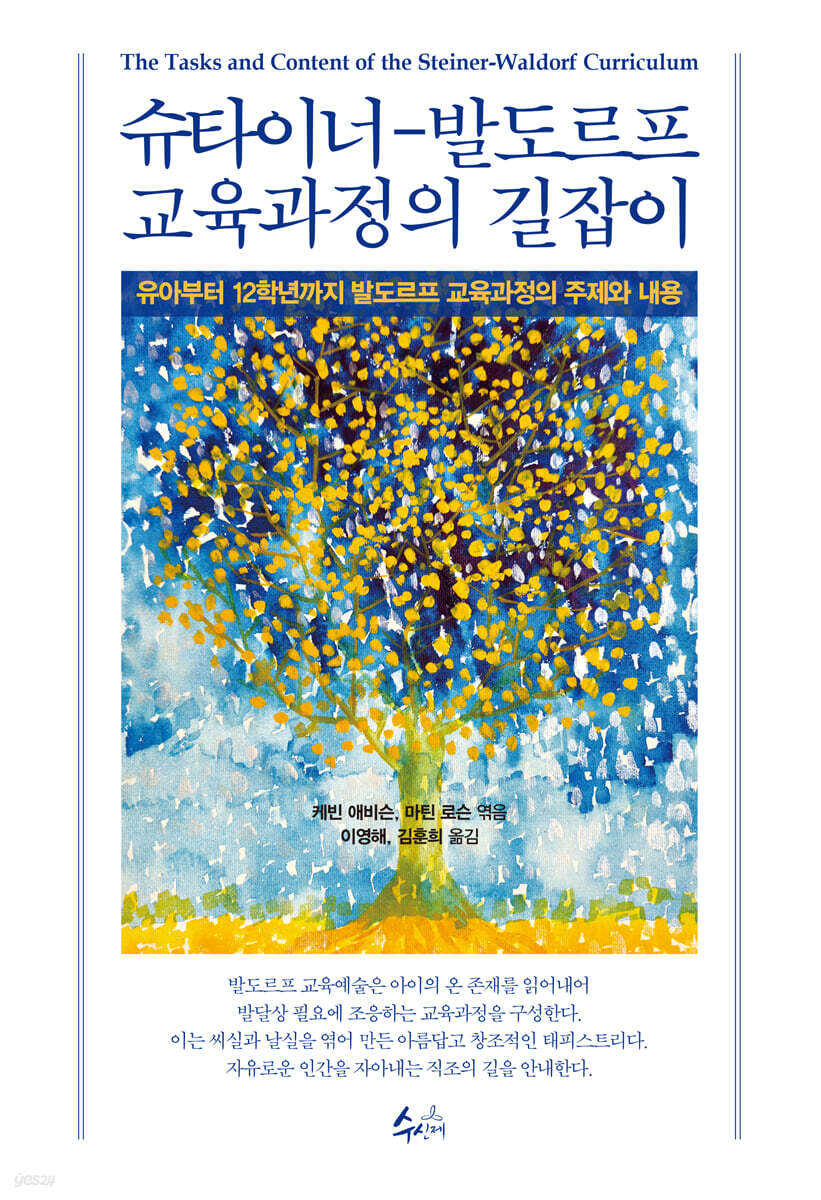
With this in mind, reading the book will reveal the beauty and creativity of understanding a child's entire being and developing a curriculum that responds to their developmental needs.
The materials can vary across eras and cultures, and across individual teachers with passion and creativity.
But when we discover the daily stepping stones in the challenges children bring within themselves, and when we approach the whole human being through the universal principles proposed by Steiner, we can create the education children need here and now.
Then every class will blossom into a unique and creative art in its own right.
The authors of this book clearly recognized this, and they sought to provide readers, especially teachers, with the opportunity to create their own lessons through this book.
With this in mind, reading the book will reveal the beauty and creativity of understanding a child's entire being and developing a curriculum that responds to their developmental needs.
The materials can vary across eras and cultures, and across individual teachers with passion and creativity.
But when we discover the daily stepping stones in the challenges children bring within themselves, and when we approach the whole human being through the universal principles proposed by Steiner, we can create the education children need here and now.
Then every class will blossom into a unique and creative art in its own right.
index
Translator's Preface
Recommendation
introduction
Acknowledgements
About the 2014 edition
Part 1
Chapter 1: Introduction to the Topics and Contents of the Steiner-Waldorf Curriculum
Chapter 2 Developmental Stages Connected to the Curriculum
Chapter 3: The Steiner-Waldorf Approach
Chapter 4 Measurement and Evaluation
Chapter 5: Leadership and School Management
Chapter 6: Childhood Care and Education
Chapter 7 Horizontal Curriculum
Part 2: Vertical Curriculum
Chapter 8 Introduction
Chapter 9 Arithmetic and Mathematics
Chapter 10 Art Activities - Coloring, Drawing, Form Drawing, Graphics, Sculpture, and Sculpture
Chapter 11 Chemistry
Chapter 12 Handicrafts
Chapter 13 English and English Literature
Chapter 14 Eurythmy
Chapter 15 Foreign Languages
Chapter 16: Gardening and Sustainable Living
Chapter 17: Geography—Earth Science, Environmental Studies, Human Geography, and Economics
Chapter 18 History
Chapter 19 Life Sciences
Chapter 20 Movement - Games, Gymnastics, Sports
Chapter 21 Music
Chapter 22 Philosophy
Chapter 23 Physics
Chapter 24 Field Projects and Job Training
Chapter 25: Social Skills: Developing Social Competence Through Curriculum
Chapter 26: Studies in Art and Aesthetics
Chapter 27: Technology Including Information and Computer Science
Recommendation
introduction
Acknowledgements
About the 2014 edition
Part 1
Chapter 1: Introduction to the Topics and Contents of the Steiner-Waldorf Curriculum
Chapter 2 Developmental Stages Connected to the Curriculum
Chapter 3: The Steiner-Waldorf Approach
Chapter 4 Measurement and Evaluation
Chapter 5: Leadership and School Management
Chapter 6: Childhood Care and Education
Chapter 7 Horizontal Curriculum
Part 2: Vertical Curriculum
Chapter 8 Introduction
Chapter 9 Arithmetic and Mathematics
Chapter 10 Art Activities - Coloring, Drawing, Form Drawing, Graphics, Sculpture, and Sculpture
Chapter 11 Chemistry
Chapter 12 Handicrafts
Chapter 13 English and English Literature
Chapter 14 Eurythmy
Chapter 15 Foreign Languages
Chapter 16: Gardening and Sustainable Living
Chapter 17: Geography—Earth Science, Environmental Studies, Human Geography, and Economics
Chapter 18 History
Chapter 19 Life Sciences
Chapter 20 Movement - Games, Gymnastics, Sports
Chapter 21 Music
Chapter 22 Philosophy
Chapter 23 Physics
Chapter 24 Field Projects and Job Training
Chapter 25: Social Skills: Developing Social Competence Through Curriculum
Chapter 26: Studies in Art and Aesthetics
Chapter 27: Technology Including Information and Computer Science
Into the book
For Waldorf educators, ‘spiritual education’ is a specific goal of the Steiner-Waldorf approach.
However, it does not directly address this goal.
Unlike religiously oriented schools, it does not present specific 'spiritual' lessons or ideas to children and youth.
On the other hand, we encourage all things that inspire students to develop a strong personal connection with idealism and to feel and cherish their growth as active co-creators of the world.
--- p.25
The core idea of operating individual spheres based on the French Revolution's threefold slogan for a humane and human-centered social life ('liberty, equality, fraternity') is one of the ways in which Steiner-Waldorf schools can integrate the external (teaching) and internal (context, or organizational spirituality, and management as a practical experience) aspects of the curriculum.
Steiner described the central spheres of social life as economics, rights and politics, and culture and expression of the spirit.
--- p.71
The Waldorf curriculum typically begins with topics not covered in other schools.
One of them is ‘drawing form’ or ‘drawing dynamics’.
Children create or draw basic straight lines, curves, and shapes.
First, create shapes using your whole body (walking, running, bouncing, moving your hands and arms), ... and then draw the movements, shapes, and rhythms you learn through these experiences on paper.
--- p.97
As children reach puberty, their emotional lives expand in all directions.
Mathematics can be a valuable aid at this stage.
Children's subjective opinions and thoughts are no longer necessary! Mathematics draws their attention beyond algebraic objects to their own thoughts.
Students gain confidence when they can confidently and reliably handle mathematical laws.
When this is achieved, children will be on their way to the most important goal of mathematics education.
It is the belief in the activity of thinking.
--- p.185
Coloring can be a way to reiterate or incorporate themes from the intensive lesson.
However, I would like to emphasize again that the goal is not to draw a clear picture, but to let the colors of nature find their own form.
Through this, coloring classes can qualitatively deepen the topics covered in intensive classes.
You can also apply what you see and hear in coloring class to the topic of botany.
--- p.218
Twelfth grade students are around nineteen years old.
After completing physical maturity and preparing for school, they are now socially mature.
While still young, they gradually followed their parents into the world they had 'inherited' and integrated it with their parents' social and environmental values.
Later, the children rebel against it, but now they are saving a society and a world that embodies the values of human existence, in which they can participate in building it.
This step can be a significant step forward and a great opportunity, but it can also lead to a deep existential crisis.
However, it does not directly address this goal.
Unlike religiously oriented schools, it does not present specific 'spiritual' lessons or ideas to children and youth.
On the other hand, we encourage all things that inspire students to develop a strong personal connection with idealism and to feel and cherish their growth as active co-creators of the world.
--- p.25
The core idea of operating individual spheres based on the French Revolution's threefold slogan for a humane and human-centered social life ('liberty, equality, fraternity') is one of the ways in which Steiner-Waldorf schools can integrate the external (teaching) and internal (context, or organizational spirituality, and management as a practical experience) aspects of the curriculum.
Steiner described the central spheres of social life as economics, rights and politics, and culture and expression of the spirit.
--- p.71
The Waldorf curriculum typically begins with topics not covered in other schools.
One of them is ‘drawing form’ or ‘drawing dynamics’.
Children create or draw basic straight lines, curves, and shapes.
First, create shapes using your whole body (walking, running, bouncing, moving your hands and arms), ... and then draw the movements, shapes, and rhythms you learn through these experiences on paper.
--- p.97
As children reach puberty, their emotional lives expand in all directions.
Mathematics can be a valuable aid at this stage.
Children's subjective opinions and thoughts are no longer necessary! Mathematics draws their attention beyond algebraic objects to their own thoughts.
Students gain confidence when they can confidently and reliably handle mathematical laws.
When this is achieved, children will be on their way to the most important goal of mathematics education.
It is the belief in the activity of thinking.
--- p.185
Coloring can be a way to reiterate or incorporate themes from the intensive lesson.
However, I would like to emphasize again that the goal is not to draw a clear picture, but to let the colors of nature find their own form.
Through this, coloring classes can qualitatively deepen the topics covered in intensive classes.
You can also apply what you see and hear in coloring class to the topic of botany.
--- p.218
Twelfth grade students are around nineteen years old.
After completing physical maturity and preparing for school, they are now socially mature.
While still young, they gradually followed their parents into the world they had 'inherited' and integrated it with their parents' social and environmental values.
Later, the children rebel against it, but now they are saving a society and a world that embodies the values of human existence, in which they can participate in building it.
This step can be a significant step forward and a great opportunity, but it can also lead to a deep existential crisis.
--- p.346
Publisher's Review
Basic Perspectives of Steiner-Waldorf Education
Waldorf education is an education based on anthroposophy advocated by Rudolf Steiner.
As Waldorf education believes that education should begin with an integrated knowledge of humanity, it delves deeply into humanity.
Through this, we understand human existence as a tripartite composition of body, soul, and spirit, and grasp that it has the four components of the universe as its fundamental elements.
And as a child develops, the curriculum responds to the dynamics and needs that the world creates within the child.
Curriculum based on developmental stages
The Waldorf curriculum is based on this perspective and establishes a curriculum based on developmental stages.
The bodies and minds of children in elementary school, children entering puberty, and children going through puberty are completely different.
Children want to express and train themselves according to the world they see and the changes that occur within them, even if they do not intend to.
All subjects in Waldorf schools, including language, mathematics, natural science, music, art, movement, craft activities, foreign languages, and eurythmy, are designed to motivate children to develop their own buds in the world by fostering this inner movement.
Waldorf education is an education based on anthroposophy advocated by Rudolf Steiner.
As Waldorf education believes that education should begin with an integrated knowledge of humanity, it delves deeply into humanity.
Through this, we understand human existence as a tripartite composition of body, soul, and spirit, and grasp that it has the four components of the universe as its fundamental elements.
And as a child develops, the curriculum responds to the dynamics and needs that the world creates within the child.
Curriculum based on developmental stages
The Waldorf curriculum is based on this perspective and establishes a curriculum based on developmental stages.
The bodies and minds of children in elementary school, children entering puberty, and children going through puberty are completely different.
Children want to express and train themselves according to the world they see and the changes that occur within them, even if they do not intend to.
All subjects in Waldorf schools, including language, mathematics, natural science, music, art, movement, craft activities, foreign languages, and eurythmy, are designed to motivate children to develop their own buds in the world by fostering this inner movement.
GOODS SPECIFICS
- Date of issue: February 12, 2025
- Page count, weight, size: 639 pages | 153*224*35mm
- ISBN13: 9791198245243
- ISBN10: 1198245247
You may also like
카테고리
korean


korean

![GQ KOREA Mark (Monthly): December [2025]](http://librairie.coreenne.fr/cdn/shop/files/8ef265dbbfbf186523ed75ba7319009d.jpg?v=1765340328&width=3840)


