

How to Start an Ecology Class
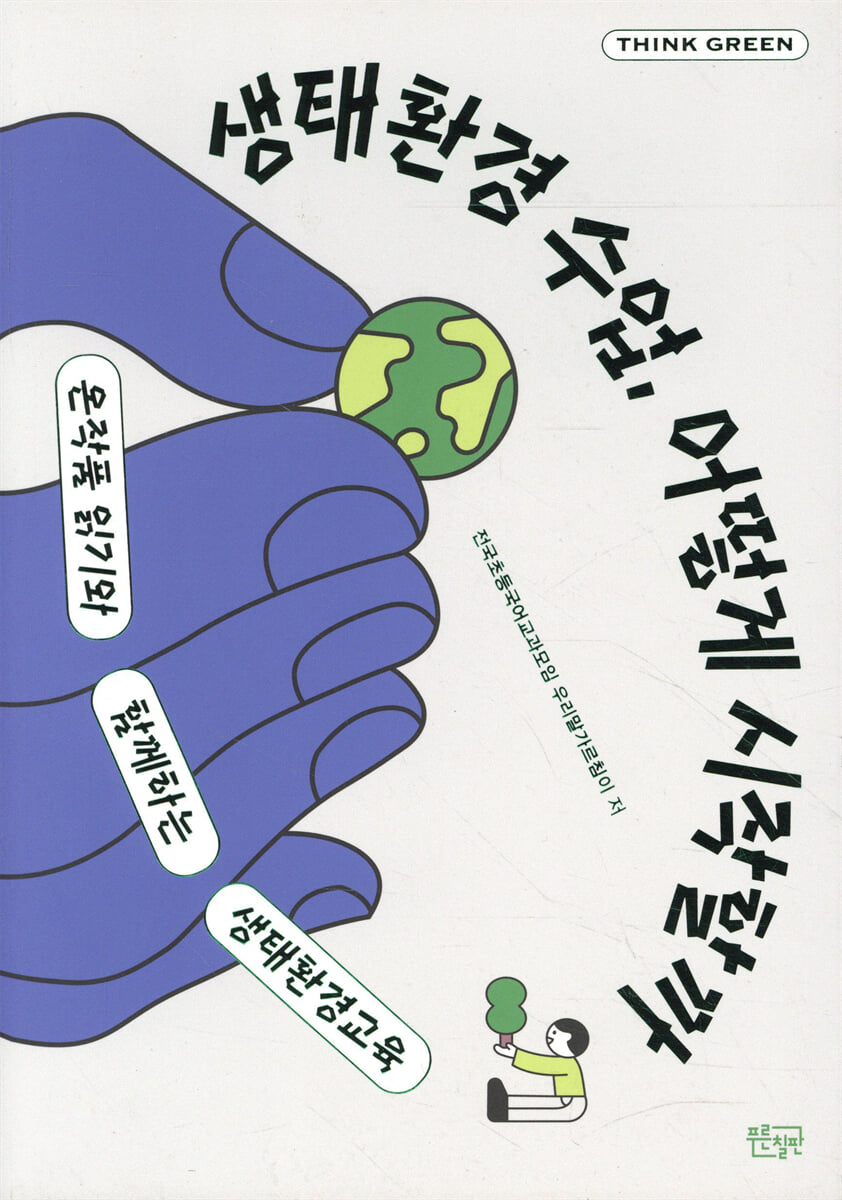 |
Description
Book Introduction
With all works including picture books, fairy tales, poems, films, documentaries, and videos.
The first elementary school ecological environment class begins with encounters with various story seeds.
The spirit of teaching ecology classes is similar to planting and caring for trees.
Because the results are not immediately visible.
Even though we teach classes about how we can protect the environment simply by eating less meat, and even work diligently on long-term projects to reduce disposable items, seeing the reality of delivery food and disposable items still overflowing feels like pouring water into a bottomless pit.
Nevertheless, the reason we must provide ecological education is not to find an immediate way out of the climate crisis facing humanity, but to change the mindset of both ourselves and the children who live on this planet.
The purpose of ecological education cannot be achieved by emphasizing the sense of crisis about survival and threatening children.
Education begins when we set small goals that we can achieve together, work towards them consistently, and celebrate and encourage each other's small achievements.
The authors of this book say that ecological education is difficult because they themselves, the guides to children, are not exemplary or perfect ecological citizens.
So, rather than trying to teach unilaterally, I suggest a life of thinking about the future together with children and putting it into practice.
This book contains the stories of eight teachers who have consistently studied ecological environmental education and conducted ecological environmental classes.
We suggest a direction for ecological education that allows people to approach the seeds of diverse stories in a friendly manner by reading a wide range of works, including fairy tales, poems, films, documentaries, and videos.
The first elementary school ecological environment class begins with encounters with various story seeds.
The spirit of teaching ecology classes is similar to planting and caring for trees.
Because the results are not immediately visible.
Even though we teach classes about how we can protect the environment simply by eating less meat, and even work diligently on long-term projects to reduce disposable items, seeing the reality of delivery food and disposable items still overflowing feels like pouring water into a bottomless pit.
Nevertheless, the reason we must provide ecological education is not to find an immediate way out of the climate crisis facing humanity, but to change the mindset of both ourselves and the children who live on this planet.
The purpose of ecological education cannot be achieved by emphasizing the sense of crisis about survival and threatening children.
Education begins when we set small goals that we can achieve together, work towards them consistently, and celebrate and encourage each other's small achievements.
The authors of this book say that ecological education is difficult because they themselves, the guides to children, are not exemplary or perfect ecological citizens.
So, rather than trying to teach unilaterally, I suggest a life of thinking about the future together with children and putting it into practice.
This book contains the stories of eight teachers who have consistently studied ecological environmental education and conducted ecological environmental classes.
We suggest a direction for ecological education that allows people to approach the seeds of diverse stories in a friendly manner by reading a wide range of works, including fairy tales, poems, films, documentaries, and videos.
- You can preview some of the book's contents.
Preview
index
prolog
Living as ecological citizens with children and fellow citizens
1 Nature and Seasons
Spring outside the classroom
Playing with nature while taking a walk in the rain
A summer landscape unfolding in my heart
Autumn rolled in with vines
Looking back on the four seasons we spent together
One more class
2 Coexistence with Life
Respect for life
Between economic animals and companion animals
Become real friends with zoo animals
Ecosystem, we are one family
Coexisting as Active Eco-Citizens
One more class
3 Carbon and Consumption
Reflecting on Consumption and Life Values
Plastic Use and Healthy Living
Climate Crisis and My Table
Trash goes round and round
Action for the Earth, Now and in the Future
One more class
Epilogue
Living uncomfortably with a light heart
Living as ecological citizens with children and fellow citizens
1 Nature and Seasons
Spring outside the classroom
Playing with nature while taking a walk in the rain
A summer landscape unfolding in my heart
Autumn rolled in with vines
Looking back on the four seasons we spent together
One more class
2 Coexistence with Life
Respect for life
Between economic animals and companion animals
Become real friends with zoo animals
Ecosystem, we are one family
Coexisting as Active Eco-Citizens
One more class
3 Carbon and Consumption
Reflecting on Consumption and Life Values
Plastic Use and Healthy Living
Climate Crisis and My Table
Trash goes round and round
Action for the Earth, Now and in the Future
One more class
Epilogue
Living uncomfortably with a light heart
Into the book
Decorate your classroom with phrases that say, "If you know it, you will love it," along with the repetitive rhythm of the year.
The moment when we suddenly become interested in and love the natural environment that surrounds us, even though it seemed meaningless, is the moment when education takes place.
I hope that children will recognize and love the ever-changing environment, from the flowers blooming along the roadside to the sweet fragrance of ripe fruit. I choose topics to discuss in the classroom.
Then, I suddenly thought about what I could give children as a gift during the summer so that they would love summer even a little.
Summer flowers blooming in the summer, deliciously ripe fruits, seasonal crops, cloud shapes that change every day, and even cool and humid breezes are all lovely gifts of summer, but among them, I decided to share with children summer potatoes and wild chives.
---From "Chapter 1: Nature and Seasons"
Rather than trying to learn about the animals we encounter in our daily lives, I was uncomfortable with the textbook that portrayed animals as beings that are solely 'used' for human needs, as it asked us to classify them according to their intended use by humans.
Even if that's realistic, is it really right for children to learn about animals like this? Furthermore, the word "pet," which many people call "companion animal," is defined in the Korean dictionary as "an animal that is loved, kept close, and raised with affection." It's a word that uses the character "애" (愛) for love and the character "완" (玩) for play.
If we follow the Chinese characters, it can be interpreted as something like 'an animal that humans play with', but I wondered if this expression was correct.
Will this approach to animals truly help children understand the preciousness of life and feel a sense of responsibility for coexisting with them? Should zoo animals truly exist for the preservation and education of their species? And is it acceptable to use animals in experiments without any guilt, as long as it improves the lives of humans?
---From "Chapter 2: Coexistence with Life"
As a teacher, I felt a sense of satisfaction and pride in the animal care classes I had managed to complete despite the many hassles, as I witnessed children cherishing the moment of birth and the movements of tiny creatures.
But after taking the animal rights class, I started to think again about animal care classes in school.
4. Even though it is a painting, isn't it possible that making children watch five or six chicks pecking at feed and dozing in a plastic box, and even raising young chickens in an apartment without a single grain of grass or sand, and watching butterflies hurriedly spread their drooping wings and fly away after tying up the mosquito net with a rubber band under a fluorescent light, was all just creating another zoo?
---From "Chapter 2: Coexistence with Life"
Moving away from the moral approach of environmental education that requires us to act in the right direction, environmental education that focuses on the psychological approach of 'having to do something for our health' has provided children and parents with a new perspective on plastic.
It's time to reduce our use of plastic and use eco-friendly products for ourselves, as well as for the sake of our beautiful planet and the many creatures that live on it.
In this sense, we started a challenge to use eco-friendly products at home based on what we learned.
We decided to choose the items we needed from a variety of items, including dishcloths, feminine products, bamboo toothbrushes, and solid toothpaste, made from materials that biodegrade in nature and do not create plastic waste, and then take them home to try them out.
And we left the review in a relay format on Padlet.
---From "Chapter 3 Carbon and Consumption"
The 'Earth Guardian Project' is a class conducted with 6th graders in the first year of the COVID-19 pandemic in 2020.
Since we were taking both remote and in-person classes at the same time, it was even better because we could practice what we studied at school at home with our families.
Surprisingly, the things that children said were difficult to practice were carrying a handkerchief around, using the stairs, and reducing meat and delivery food consumption.
Still, he said he felt proud when he refused to use disposable items when ordering delivery food or brought his own containers to pick up his food, and that the whole family was able to practice things like clearing out emails and reducing video viewing together.
We also talked about how we worry because we know that we create a lot of waste and emit carbon, but we can't avoid buying or using things.
The moment when we suddenly become interested in and love the natural environment that surrounds us, even though it seemed meaningless, is the moment when education takes place.
I hope that children will recognize and love the ever-changing environment, from the flowers blooming along the roadside to the sweet fragrance of ripe fruit. I choose topics to discuss in the classroom.
Then, I suddenly thought about what I could give children as a gift during the summer so that they would love summer even a little.
Summer flowers blooming in the summer, deliciously ripe fruits, seasonal crops, cloud shapes that change every day, and even cool and humid breezes are all lovely gifts of summer, but among them, I decided to share with children summer potatoes and wild chives.
---From "Chapter 1: Nature and Seasons"
Rather than trying to learn about the animals we encounter in our daily lives, I was uncomfortable with the textbook that portrayed animals as beings that are solely 'used' for human needs, as it asked us to classify them according to their intended use by humans.
Even if that's realistic, is it really right for children to learn about animals like this? Furthermore, the word "pet," which many people call "companion animal," is defined in the Korean dictionary as "an animal that is loved, kept close, and raised with affection." It's a word that uses the character "애" (愛) for love and the character "완" (玩) for play.
If we follow the Chinese characters, it can be interpreted as something like 'an animal that humans play with', but I wondered if this expression was correct.
Will this approach to animals truly help children understand the preciousness of life and feel a sense of responsibility for coexisting with them? Should zoo animals truly exist for the preservation and education of their species? And is it acceptable to use animals in experiments without any guilt, as long as it improves the lives of humans?
---From "Chapter 2: Coexistence with Life"
As a teacher, I felt a sense of satisfaction and pride in the animal care classes I had managed to complete despite the many hassles, as I witnessed children cherishing the moment of birth and the movements of tiny creatures.
But after taking the animal rights class, I started to think again about animal care classes in school.
4. Even though it is a painting, isn't it possible that making children watch five or six chicks pecking at feed and dozing in a plastic box, and even raising young chickens in an apartment without a single grain of grass or sand, and watching butterflies hurriedly spread their drooping wings and fly away after tying up the mosquito net with a rubber band under a fluorescent light, was all just creating another zoo?
---From "Chapter 2: Coexistence with Life"
Moving away from the moral approach of environmental education that requires us to act in the right direction, environmental education that focuses on the psychological approach of 'having to do something for our health' has provided children and parents with a new perspective on plastic.
It's time to reduce our use of plastic and use eco-friendly products for ourselves, as well as for the sake of our beautiful planet and the many creatures that live on it.
In this sense, we started a challenge to use eco-friendly products at home based on what we learned.
We decided to choose the items we needed from a variety of items, including dishcloths, feminine products, bamboo toothbrushes, and solid toothpaste, made from materials that biodegrade in nature and do not create plastic waste, and then take them home to try them out.
And we left the review in a relay format on Padlet.
---From "Chapter 3 Carbon and Consumption"
The 'Earth Guardian Project' is a class conducted with 6th graders in the first year of the COVID-19 pandemic in 2020.
Since we were taking both remote and in-person classes at the same time, it was even better because we could practice what we studied at school at home with our families.
Surprisingly, the things that children said were difficult to practice were carrying a handkerchief around, using the stairs, and reducing meat and delivery food consumption.
Still, he said he felt proud when he refused to use disposable items when ordering delivery food or brought his own containers to pick up his food, and that the whole family was able to practice things like clearing out emails and reducing video viewing together.
We also talked about how we worry because we know that we create a lot of waste and emit carbon, but we can't avoid buying or using things.
---From "Chapter 3 Carbon and Consumption"
Publisher's Review
A story of practicing living as a fellow ecological citizen with children
This book contains stories of practicing together in classes with children, focusing on the three main themes of ecological environmental education: ‘raising ecological sensitivity, pursuing biodiversity, and slowing the climate crisis.’
Chapter 1 contains a class story that allows us to fully appreciate the beauty and preciousness of nature, such as water, air, soil, and plants that surround us.
Chapter 2 contains a story from a class where we discussed with children the mindset and attitude we should have toward the various life forms that coexist in the Earth's ecosystem, and our concerns about human responsibility.
Chapter 3 explores the various causes of the climate crisis facing humanity and ways to address them, and includes stories of how people have consistently practiced learning in their own ways to make it a way of life.
The 'One More Lesson' section at the end of each chapter contains additional lesson information related to the topic of that chapter.
This book contains stories of practicing together in classes with children, focusing on the three main themes of ecological environmental education: ‘raising ecological sensitivity, pursuing biodiversity, and slowing the climate crisis.’
Chapter 1 contains a class story that allows us to fully appreciate the beauty and preciousness of nature, such as water, air, soil, and plants that surround us.
Chapter 2 contains a story from a class where we discussed with children the mindset and attitude we should have toward the various life forms that coexist in the Earth's ecosystem, and our concerns about human responsibility.
Chapter 3 explores the various causes of the climate crisis facing humanity and ways to address them, and includes stories of how people have consistently practiced learning in their own ways to make it a way of life.
The 'One More Lesson' section at the end of each chapter contains additional lesson information related to the topic of that chapter.
GOODS SPECIFICS
- Date of issue: March 1, 2024
- Page count, weight, size: 240 pages | 330g | 148*210*12mm
- ISBN13: 9791191638202
- ISBN10: 1191638200
You may also like
카테고리
korean


korean

![GQ KOREA Mark (Monthly): December [2025]](http://librairie.coreenne.fr/cdn/shop/files/8ef265dbbfbf186523ed75ba7319009d.jpg?v=1765340328&width=3840)


