

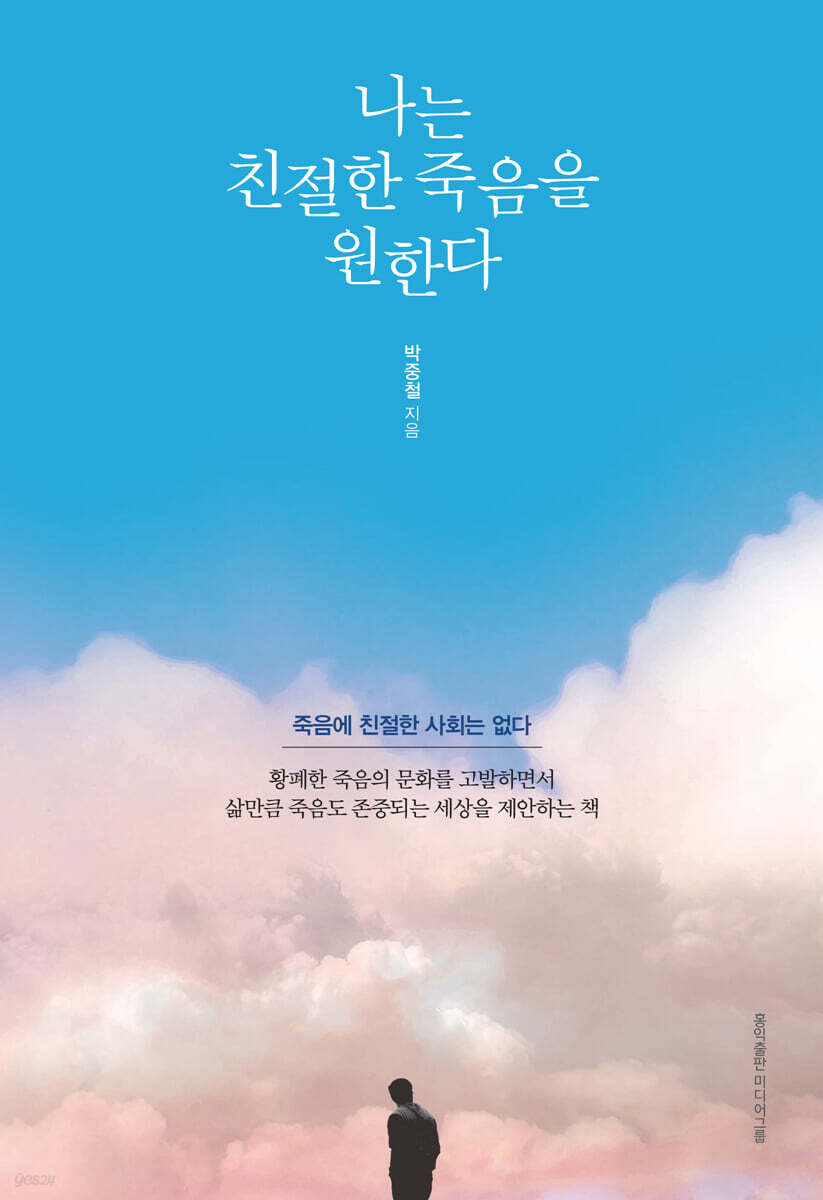
I want a kind death
 |
Description
Book Introduction
While denouncing the devastated culture of death in our society, A book proposing a world where death is respected as much as life. In 1997, a critically ill patient hospitalized at Boramae Hospital was discharged at the request of his wife, who was struggling with the burden of medical expenses. The wife and the medical staff were subsequently criminally punished for murder and aiding and abetting murder. Afterwards, as hospitals began to restrict the discharge of critically ill patients, cases of suicide due to the burden of medical expenses or family members removing life-sustaining medical devices for patients became frequent. Three out of four people in our country die in hospitals. The hospital has become a place of death in name and reality. However, most seriously ill patients are trapped in the hell of life-prolonging treatment that drags out the time of death, and suffer a disaster that is neither life nor death, and spend most of the medical expenses they spend in their lifetime in the last one or two years before dying. This is where the term "industrialization of death" comes from. It is time to reconsider the unfriendly death system of hospitals that have fancy funeral halls but no death rooms. Furthermore, it is time to look back on the culture of death in our society, which has lost all respect for humanity. To achieve this, we must first bring back the discourse on death, which our society has so far thoroughly excluded, into the realm of life and discuss it as a real-world problem. Only then can we abandon our blind obsession with life and create a good death as an extension of life. |
- You can preview some of the book's contents.
Preview
index
| Table of Contents |
prolog
Chapter 1 Your Death Fails
1.
Everyone wants a dignified death.
2.
A miserable quality of life, a miserable quality of death
Chapter 2: Why Our Deaths End in Failure
3.
Death has disappeared
4.
We each exist, and I alone perish.
5.
There is no end-of-life room in the hospital.
6.
Uncovering the true face of life-sustaining treatment
Chapter 3: The Story We've Been Hiding
7.
A fight you can never win
8.
Advances in medicine shake up the concept of death.
9.
The euthanasia debate finally begins
10.
Lessons from the Boramae Hospital Incident
11.
Shouting out for the right to die
12.
The Birth of the Life-Sustaining Treatment Decisions Act
Chapter 4: Steps toward a Culture of Death
13.
The world's efforts for a dignified death
14.
Euthanasia and death with dignity
15.
Rethinking the value of life
16.
A culture where death is respected as much as life
Chapter 5: On Natural Death
17.
The tragedy brought about by the extension of life expectancy
18.
It means to cut off the grain
19.
Euthanasia or natural death?
20.
The most common form of death
21.
How do doctors want to die?
22.
Escape the Most Frequent Death Trap
Chapter 6: Challenging a Life Without Regrets
23.
Rethinking human dignity
24.
For a life without regrets
25.
Face death with a smile
Chapter 7 I Like Kind Death
26.
The amygdala of medical professionals
27.
Defend against death
28.
Medicine, let's be kind to death.
29.
Final Proposal
Epilogue
References
prolog
Chapter 1 Your Death Fails
1.
Everyone wants a dignified death.
2.
A miserable quality of life, a miserable quality of death
Chapter 2: Why Our Deaths End in Failure
3.
Death has disappeared
4.
We each exist, and I alone perish.
5.
There is no end-of-life room in the hospital.
6.
Uncovering the true face of life-sustaining treatment
Chapter 3: The Story We've Been Hiding
7.
A fight you can never win
8.
Advances in medicine shake up the concept of death.
9.
The euthanasia debate finally begins
10.
Lessons from the Boramae Hospital Incident
11.
Shouting out for the right to die
12.
The Birth of the Life-Sustaining Treatment Decisions Act
Chapter 4: Steps toward a Culture of Death
13.
The world's efforts for a dignified death
14.
Euthanasia and death with dignity
15.
Rethinking the value of life
16.
A culture where death is respected as much as life
Chapter 5: On Natural Death
17.
The tragedy brought about by the extension of life expectancy
18.
It means to cut off the grain
19.
Euthanasia or natural death?
20.
The most common form of death
21.
How do doctors want to die?
22.
Escape the Most Frequent Death Trap
Chapter 6: Challenging a Life Without Regrets
23.
Rethinking human dignity
24.
For a life without regrets
25.
Face death with a smile
Chapter 7 I Like Kind Death
26.
The amygdala of medical professionals
27.
Defend against death
28.
Medicine, let's be kind to death.
29.
Final Proposal
Epilogue
References
Detailed image
Into the book
There is no death worse than death in a hospital.
To die well is to die at home.
Because in a hospital, needles are constantly jabbing at your body, it's noisy all day, you can't sleep because of the bright lights, and you die alone among strangers without being able to say goodbye to your family.
--- p.19
Although Koreans hope for a good death, most of them face a miserable and lonely death contrary to their wishes.
Rather than ending life beautifully and dignifiedly, it is common today to die in a hospital, either aging or fighting an illness until the end, during the treatment process.
---p.57
Today, the death of an individual must be reported to the police or government agencies, and a death certificate written by a doctor is required for funerals and burials.
In other words, when death is treated as an incident, it must be proven that it is safe from the perspective of public safety and health.
Now, death is not only something that is impure when encountered in daily life, but it is also being denied in the lives of modern people.
When did we begin to view death not as the final stage of life and its sublime conclusion, but as an event that undermines the stability of our lives and a disaster that must be rejected to the end?
--- p.68
There are intensive care units in hospitals to keep patients alive until the end, but there are no death rooms where patients can face death naturally, surrounded by their families.
As I will explain later, there has been a demand for the installation of end-of-life care rooms in hospitals in Korea since 2004, but hospitals are competing to expand their funeral homes while completely ignoring the installation of end-of-life care rooms.
--- p.70
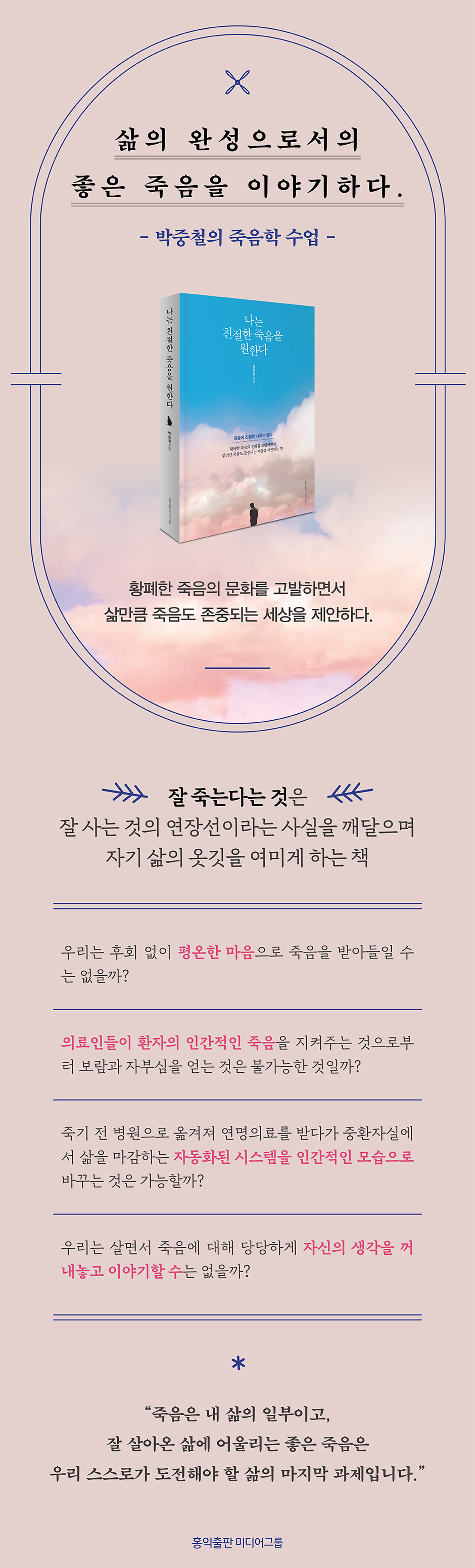
Can't we embrace death with peace and without regret? Is it impossible for medical professionals to derive fulfillment and pride from ensuring a humane death for patients? Is it possible to transform the automated system that transfers patients to hospitals, provides life-sustaining treatment, and then ends their lives in intensive care units into something more humane? Can't we confidently and openly discuss our thoughts on death while we live?
--- p.95
There are deaths that medical professionals must do their best to prevent.
There are two types of death: premature death and preventable death.
And that's not all.
As medical professionals, we must also prevent prolonged and painful deaths by staking our responsibilities on them.
Tragic examples of how foolish and frightening it is to say that we should do our best without giving up even a shred of possibility are already overflowing in every hospital, though they are kept under wraps.
Medical schools and hospitals must teach the insight and courage to discern when to prevent death itself and when to prevent its miserable destruction.
To die well is to die at home.
Because in a hospital, needles are constantly jabbing at your body, it's noisy all day, you can't sleep because of the bright lights, and you die alone among strangers without being able to say goodbye to your family.
--- p.19
Although Koreans hope for a good death, most of them face a miserable and lonely death contrary to their wishes.
Rather than ending life beautifully and dignifiedly, it is common today to die in a hospital, either aging or fighting an illness until the end, during the treatment process.
---p.57
Today, the death of an individual must be reported to the police or government agencies, and a death certificate written by a doctor is required for funerals and burials.
In other words, when death is treated as an incident, it must be proven that it is safe from the perspective of public safety and health.
Now, death is not only something that is impure when encountered in daily life, but it is also being denied in the lives of modern people.
When did we begin to view death not as the final stage of life and its sublime conclusion, but as an event that undermines the stability of our lives and a disaster that must be rejected to the end?
--- p.68
There are intensive care units in hospitals to keep patients alive until the end, but there are no death rooms where patients can face death naturally, surrounded by their families.
As I will explain later, there has been a demand for the installation of end-of-life care rooms in hospitals in Korea since 2004, but hospitals are competing to expand their funeral homes while completely ignoring the installation of end-of-life care rooms.
--- p.70
Can't we embrace death with peace and without regret? Is it impossible for medical professionals to derive fulfillment and pride from ensuring a humane death for patients? Is it possible to transform the automated system that transfers patients to hospitals, provides life-sustaining treatment, and then ends their lives in intensive care units into something more humane? Can't we confidently and openly discuss our thoughts on death while we live?
--- p.95
There are deaths that medical professionals must do their best to prevent.
There are two types of death: premature death and preventable death.
And that's not all.
As medical professionals, we must also prevent prolonged and painful deaths by staking our responsibilities on them.
Tragic examples of how foolish and frightening it is to say that we should do our best without giving up even a shred of possibility are already overflowing in every hospital, though they are kept under wraps.
Medical schools and hospitals must teach the insight and courage to discern when to prevent death itself and when to prevent its miserable destruction.
--- p.312
Publisher's Review
While denouncing the devastated culture of death in our society,
A book proposing a world where death is respected as much as life.
In 1997, a critically ill patient hospitalized at Boramae Hospital was discharged at the request of his wife, who was struggling with the burden of medical expenses. The wife and the medical staff were subsequently criminally punished for murder and aiding and abetting murder.
Afterwards, as hospitals began to restrict the discharge of critically ill patients, cases of suicide due to the burden of medical expenses or family members removing life-sustaining medical devices for patients became frequent.
Three out of four people in our country die in hospitals.
The hospital has become a place of death in name and reality.
However, most seriously ill patients are trapped in the hell of life-prolonging treatment that drags out the time of death, and suffer a disaster that is neither life nor death, and spend most of the medical expenses they spend in their lifetime in the last one or two years before dying.
This is where the term "industrialization of death" comes from.
It is time to reconsider the unfriendly death system of hospitals that have fancy funeral halls but no death rooms.
Furthermore, it is time to look back on the culture of death in our society, which has lost all respect for humanity.
To achieve this, we must first bring back the discourse on death, which our society has so far thoroughly excluded, into the realm of life and discuss it as a real-world problem.
Only then can we abandon our blind obsession with life and create a good death as an extension of life.
Dying well is an extension of living well.
Now let's talk about a good death as the completion of life.
This book objectively examines our society's devastated culture of death, and, through medical, philosophical, social, and historical evidence and theories, explains why a kind death should be everyone's goal.
Through this, readers realize that dying well is an extension of living well, and they begin to close the collars of their own lives.
As a doctor who has been by the side of countless dying patients for over 20 years, the author says that creating a world where death is respected as much as life is the path to a dignified and healthy society.
Accordingly, the author proposes ways for medical schools, hospitals, and individuals to change their harsh perceptions of death, thereby eliciting empathy from readers.
Life can be fully fulfilled only through an ending where one's identity is preserved.
So, it can be said that it is a human rights issue that everyone should be guaranteed the opportunity to organize their lives.
Through this book, readers will come to desire a life where they are guaranteed the right to die painlessly and the opportunity to live out their own death.
A book proposing a world where death is respected as much as life.
In 1997, a critically ill patient hospitalized at Boramae Hospital was discharged at the request of his wife, who was struggling with the burden of medical expenses. The wife and the medical staff were subsequently criminally punished for murder and aiding and abetting murder.
Afterwards, as hospitals began to restrict the discharge of critically ill patients, cases of suicide due to the burden of medical expenses or family members removing life-sustaining medical devices for patients became frequent.
Three out of four people in our country die in hospitals.
The hospital has become a place of death in name and reality.
However, most seriously ill patients are trapped in the hell of life-prolonging treatment that drags out the time of death, and suffer a disaster that is neither life nor death, and spend most of the medical expenses they spend in their lifetime in the last one or two years before dying.
This is where the term "industrialization of death" comes from.
It is time to reconsider the unfriendly death system of hospitals that have fancy funeral halls but no death rooms.
Furthermore, it is time to look back on the culture of death in our society, which has lost all respect for humanity.
To achieve this, we must first bring back the discourse on death, which our society has so far thoroughly excluded, into the realm of life and discuss it as a real-world problem.
Only then can we abandon our blind obsession with life and create a good death as an extension of life.
Dying well is an extension of living well.
Now let's talk about a good death as the completion of life.
This book objectively examines our society's devastated culture of death, and, through medical, philosophical, social, and historical evidence and theories, explains why a kind death should be everyone's goal.
Through this, readers realize that dying well is an extension of living well, and they begin to close the collars of their own lives.
As a doctor who has been by the side of countless dying patients for over 20 years, the author says that creating a world where death is respected as much as life is the path to a dignified and healthy society.
Accordingly, the author proposes ways for medical schools, hospitals, and individuals to change their harsh perceptions of death, thereby eliciting empathy from readers.
Life can be fully fulfilled only through an ending where one's identity is preserved.
So, it can be said that it is a human rights issue that everyone should be guaranteed the opportunity to organize their lives.
Through this book, readers will come to desire a life where they are guaranteed the right to die painlessly and the opportunity to live out their own death.
GOODS SPECIFICS
- Date of issue: April 5, 2022
- Page count, weight, size: 328 pages | 494g | 140*204*30mm
- ISBN13: 9791191420746
- ISBN10: 1191420744
You may also like
카테고리
korean


korean

![GQ KOREA Mark (Monthly): December [2025]](http://librairie.coreenne.fr/cdn/shop/files/8ef265dbbfbf186523ed75ba7319009d.jpg?v=1765340328&width=3840)


