

Greetings from the pine tree road
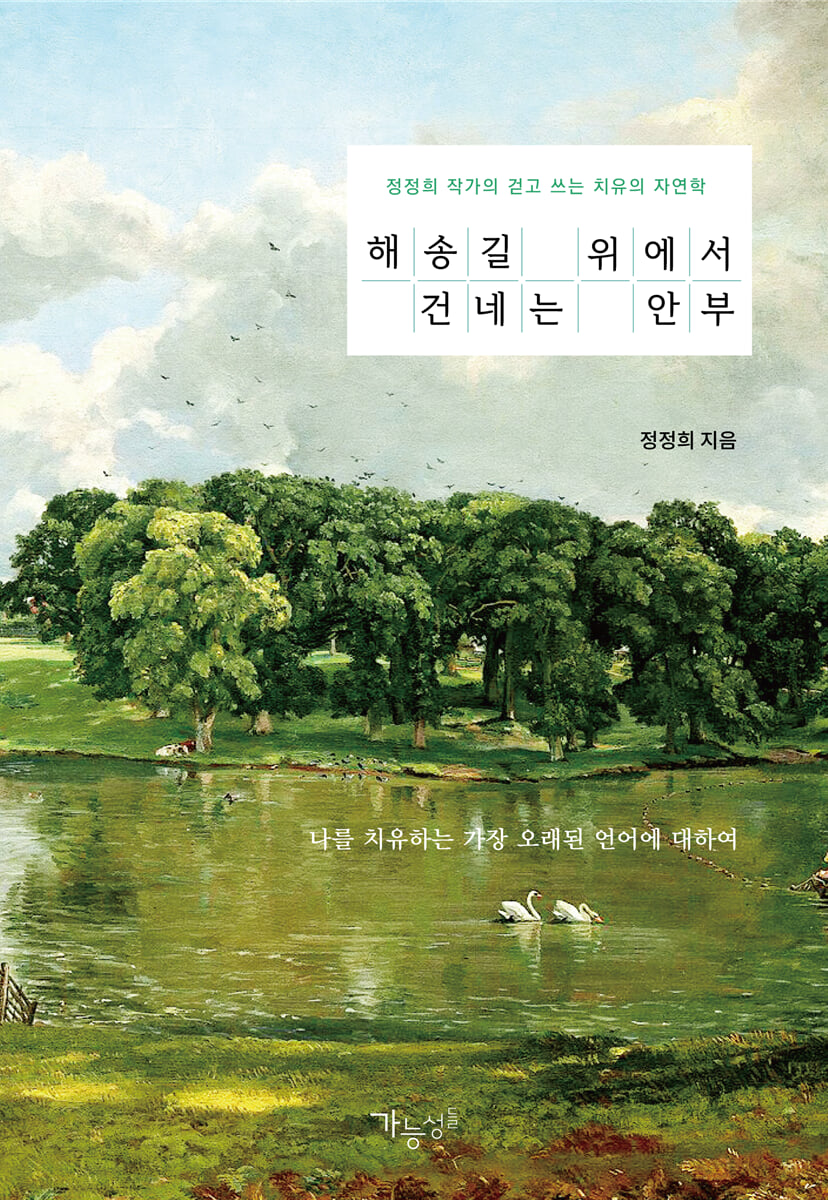 |
Description
Book Introduction
[Recovery & Solutions Emphasis] Focus on Burnout and Healing
"The moment you read nature, the healing of your broken heart begins!" The miracle of the forest, proven through brain science and humanities: "Nature Literacy" classes.
★A healing record on the Haesong Trail that overcame severe burnout / Includes 14 nature observation routines that saved me★
"The most tranquil and powerful prescription to awaken the senses dulled by the noise of the city." ★A forest healing essay where brain science and humanities meet / Includes 14 wellness routines to create your own "nature friend."★
Why do we instinctively seek out the forest and the ocean in the face of burnout? The miracle of "nature literacy" that rejuvenates a shattered heart!
Aren't we living in a world of dense buildings, endless buzzing notifications, and the gaze and judgment of others, losing touch with ourselves? In exchange for the convenience we've gained, we've lost the eyes that perceive the changing seasons, the nose that smells the earth, and the skin that senses the wind's texture.
"Greetings from the Pine Tree Road" is a guidebook that encourages modern people, weary of the city's pace, to relearn the oldest healing language, "nature."
The author returned to his hometown of Gangneung as if he was running away from the moment he hit rock bottom in life due to severe burnout and depression.
And I experienced a miraculous recovery in the pine forest and sea there.
This book is a fierce and beautiful record of the author regaining a sense of life through the process of 'reading' rather than simply 'looking' at nature on the Haesong-gil Road in Gangneung, that is, 'nature literacy'.
"Nature is not an object to be conquered (It), but a friend to converse with (Thou)!" From Henry David Thoreau's wildness to Martin Buber's relational philosophy, and the latest in brain science!
This book is not just a simple sentimental healing essay.
The author firmly supports his experiences with neuroscientific evidence and humanistic insights.
It covers a wide range of topics, from the scientific principles that show that walking on a forest path reduces the stress hormone cortisol and activates the immune cells NK cells, to how to build a personal relationship with nature by borrowing Martin Buber's "I and Thou" philosophy, to how to read and record nature like Henry David Thoreau.
My body and mind recover while reading, writing, and walking. A 'natural prescription' for myself starting today.
The book consists of four chapters and guides readers into the embrace of nature.
Chapter 1 explores why we crave nature so much, the "nature deprivation syndrome" of city dwellers, and the neuroscientific healing effects of forests.
Chapter 2 introduces how to write an observation journal, which is the core of 'nature literacy', and how to build a relationship with your own tree.
Chapter 3 presents specific methods for healing through writing by looking into one's inner self through the mirror of nature.
Chapter 4 proposes a wellness routine that can be implemented in daily life and a sustainable, natural life with the community.
At the end of each chapter, there is a 'My Nature Stamp' corner where readers can write and practice their own stamps.
These 14 practical guides, including 'My First Observation Diary,' 'A Letter to Nature,' and 'Creating a Wellness Sanctuary,' will lead you beyond mere reading to an experience that moves your body and mind.
If you are wandering around right now, unable to satisfy the emptiness in your heart, stop for a moment and open this book.
The sound of the wind and waves in the pine forest will knock on the door of your tightly closed heart.
And finally, you will meet again the 'real me' that you had lost.
Nature is always there, waiting for your well-being.
"The moment you read nature, the healing of your broken heart begins!" The miracle of the forest, proven through brain science and humanities: "Nature Literacy" classes.
★A healing record on the Haesong Trail that overcame severe burnout / Includes 14 nature observation routines that saved me★
"The most tranquil and powerful prescription to awaken the senses dulled by the noise of the city." ★A forest healing essay where brain science and humanities meet / Includes 14 wellness routines to create your own "nature friend."★
Why do we instinctively seek out the forest and the ocean in the face of burnout? The miracle of "nature literacy" that rejuvenates a shattered heart!
Aren't we living in a world of dense buildings, endless buzzing notifications, and the gaze and judgment of others, losing touch with ourselves? In exchange for the convenience we've gained, we've lost the eyes that perceive the changing seasons, the nose that smells the earth, and the skin that senses the wind's texture.
"Greetings from the Pine Tree Road" is a guidebook that encourages modern people, weary of the city's pace, to relearn the oldest healing language, "nature."
The author returned to his hometown of Gangneung as if he was running away from the moment he hit rock bottom in life due to severe burnout and depression.
And I experienced a miraculous recovery in the pine forest and sea there.
This book is a fierce and beautiful record of the author regaining a sense of life through the process of 'reading' rather than simply 'looking' at nature on the Haesong-gil Road in Gangneung, that is, 'nature literacy'.
"Nature is not an object to be conquered (It), but a friend to converse with (Thou)!" From Henry David Thoreau's wildness to Martin Buber's relational philosophy, and the latest in brain science!
This book is not just a simple sentimental healing essay.
The author firmly supports his experiences with neuroscientific evidence and humanistic insights.
It covers a wide range of topics, from the scientific principles that show that walking on a forest path reduces the stress hormone cortisol and activates the immune cells NK cells, to how to build a personal relationship with nature by borrowing Martin Buber's "I and Thou" philosophy, to how to read and record nature like Henry David Thoreau.
My body and mind recover while reading, writing, and walking. A 'natural prescription' for myself starting today.
The book consists of four chapters and guides readers into the embrace of nature.
Chapter 1 explores why we crave nature so much, the "nature deprivation syndrome" of city dwellers, and the neuroscientific healing effects of forests.
Chapter 2 introduces how to write an observation journal, which is the core of 'nature literacy', and how to build a relationship with your own tree.
Chapter 3 presents specific methods for healing through writing by looking into one's inner self through the mirror of nature.
Chapter 4 proposes a wellness routine that can be implemented in daily life and a sustainable, natural life with the community.
At the end of each chapter, there is a 'My Nature Stamp' corner where readers can write and practice their own stamps.
These 14 practical guides, including 'My First Observation Diary,' 'A Letter to Nature,' and 'Creating a Wellness Sanctuary,' will lead you beyond mere reading to an experience that moves your body and mind.
If you are wandering around right now, unable to satisfy the emptiness in your heart, stop for a moment and open this book.
The sound of the wind and waves in the pine forest will knock on the door of your tightly closed heart.
And finally, you will meet again the 'real me' that you had lost.
Nature is always there, waiting for your well-being.
- You can preview some of the book's contents.
Preview
index
prolog
Where was your first forest? .....
6
Chapter 1: Why We Long for Nature
1.
Building a relationship to find my 'you'.....
18
2.
The city dweller's lack of nature and primal attraction...
34
3.
The healing power of forests proven by brain science...
48
Chapter 2: How to Communicate with Nature: Nature Literacy
1.
Learning the language of nature.....
66
2.
Observation Diary, The Courage to Stop and Look.....
89
3.
My Tree and Grass, Relationships.....
110
Chapter 3: Reading Nature, Writing Nature
1.
What is natural reading.....
128
2.
A heart that follows the scenery...
146
3.
Writing takes me to nature.....
169
Chapter 4: Practice Living with Nature
1.
The rest that nature whispers to me.....
192
2.
My nature, our space.....
209
3.
Wellness community, natural living with people...
223
Epilogue
A letter from the Gangneung pine forest...
244
Where was your first forest? .....
6
Chapter 1: Why We Long for Nature
1.
Building a relationship to find my 'you'.....
18
2.
The city dweller's lack of nature and primal attraction...
34
3.
The healing power of forests proven by brain science...
48
Chapter 2: How to Communicate with Nature: Nature Literacy
1.
Learning the language of nature.....
66
2.
Observation Diary, The Courage to Stop and Look.....
89
3.
My Tree and Grass, Relationships.....
110
Chapter 3: Reading Nature, Writing Nature
1.
What is natural reading.....
128
2.
A heart that follows the scenery...
146
3.
Writing takes me to nature.....
169
Chapter 4: Practice Living with Nature
1.
The rest that nature whispers to me.....
192
2.
My nature, our space.....
209
3.
Wellness community, natural living with people...
223
Epilogue
A letter from the Gangneung pine forest...
244
Detailed image
.png)
Into the book
I count the things that the city morning has taken from me.
The coolness of dew on the grass at dawn, the wind mixed with the scent of the earth, the subtle changes in color in the sky as the stars disappear.
But there was something else that hurt the most.
It was the loss of the very sense of ‘I’.
Productivity and efficiency.
As part of a giant cogwheel, I had to learn to operate like a machine rather than take care of myself.
While we were immersed in a world of pixels under the artificial light of our computer monitors, the real, living, breathing world was just a blurry scene outside the window.
--- From "Prologue: Where Was Your First Forest?"
Nature is not a passive entity that gives something to humans, but rather a living community that breathes and lives together with humans.
(Omitted) The reason humans are drawn to nature is because they sense nature as a living being before making rational judgments.
We instinctively seek out green forests and clear waters, and feel peace under the sunlight.
This is not just a sentimental pursuit of beauty, but a primal drive for survival.
--- 「Chapter 1.
From “Why We Long for Nature”
Nature literacy is the ability to understand and communicate with nature as a subject with its own language and order, rather than as a simple background or resource.
It's like learning a new foreign language.
What may at first sound like meaningless noise, with consistent attention and study, gradually becomes audible, grammar visible, and eventually, you can joke or have deep conversations in that language.
--- Chapter 2.
From “How to Communicate with Nature, Nature Literacy”
The essence of observation is to fundamentally change one's attitude toward the world, that is, to move beyond 'passive viewing' to 'active looking'.
(Omitted) Instead of vaguely writing, “The forest was beautiful,” the moment you describe it specifically, “The sunlight filtered through the dense leaves and scattered golden coins on the mossy ground,” you experience the landscape once again, and with much more depth.
This is the essence of writing that shows, not tells, the subject.
--- 「Chapter 2.
From “How to Communicate with Nature, Nature Literacy”
The tree was silent.
But I realized something important through the sight of that tree.
The tree's struggle was not a blind struggle.
It was a struggle for survival for a clear purpose called 'sunlight'.
(Omitted) That twisted appearance was the very image of that tree, created by its fierce life, a unique appearance that no one in the world could imitate.
That strong vitality tells me, 'It's okay, at the end of your struggles, there will be your own sunlight.
And the quiet answer was, 'The traces of all your struggles are the most you.'
--- 「Chapter 4.
From “Practice of Living with Nature”
As you close this book, I hope you won't feel the pressure of having to remember all the theories and methods contained within.
I just hope that I can live with my own 'twisted pine tree' in my heart.
(Omitted) Creating a safe base in your mind where you can listen to your story without judgment or advice is the first step to rebuilding your life.
From that small base within, life will begin to breathe again.
The coolness of dew on the grass at dawn, the wind mixed with the scent of the earth, the subtle changes in color in the sky as the stars disappear.
But there was something else that hurt the most.
It was the loss of the very sense of ‘I’.
Productivity and efficiency.
As part of a giant cogwheel, I had to learn to operate like a machine rather than take care of myself.
While we were immersed in a world of pixels under the artificial light of our computer monitors, the real, living, breathing world was just a blurry scene outside the window.
--- From "Prologue: Where Was Your First Forest?"
Nature is not a passive entity that gives something to humans, but rather a living community that breathes and lives together with humans.
(Omitted) The reason humans are drawn to nature is because they sense nature as a living being before making rational judgments.
We instinctively seek out green forests and clear waters, and feel peace under the sunlight.
This is not just a sentimental pursuit of beauty, but a primal drive for survival.
--- 「Chapter 1.
From “Why We Long for Nature”
Nature literacy is the ability to understand and communicate with nature as a subject with its own language and order, rather than as a simple background or resource.
It's like learning a new foreign language.
What may at first sound like meaningless noise, with consistent attention and study, gradually becomes audible, grammar visible, and eventually, you can joke or have deep conversations in that language.
--- Chapter 2.
From “How to Communicate with Nature, Nature Literacy”
The essence of observation is to fundamentally change one's attitude toward the world, that is, to move beyond 'passive viewing' to 'active looking'.
(Omitted) Instead of vaguely writing, “The forest was beautiful,” the moment you describe it specifically, “The sunlight filtered through the dense leaves and scattered golden coins on the mossy ground,” you experience the landscape once again, and with much more depth.
This is the essence of writing that shows, not tells, the subject.
--- 「Chapter 2.
From “How to Communicate with Nature, Nature Literacy”
The tree was silent.
But I realized something important through the sight of that tree.
The tree's struggle was not a blind struggle.
It was a struggle for survival for a clear purpose called 'sunlight'.
(Omitted) That twisted appearance was the very image of that tree, created by its fierce life, a unique appearance that no one in the world could imitate.
That strong vitality tells me, 'It's okay, at the end of your struggles, there will be your own sunlight.
And the quiet answer was, 'The traces of all your struggles are the most you.'
--- 「Chapter 4.
From “Practice of Living with Nature”
As you close this book, I hope you won't feel the pressure of having to remember all the theories and methods contained within.
I just hope that I can live with my own 'twisted pine tree' in my heart.
(Omitted) Creating a safe base in your mind where you can listen to your story without judgment or advice is the first step to rebuilding your life.
From that small base within, life will begin to breathe again.
--- From "Epilogue: A Letter from the Gangneung Pine Forest"
Publisher's Review
"Reading Nature: The Oldest Language to Rebuild a Shattered Heart" In an age of burnout, a forest prescription to restore a lost sense of self.
We check our smartphones dozens of times a day, struggling through the deluge of information.
In a world of dense buildings, artificial noise, and constant competition, our brains are constantly overheated.
One day, as we live like cogs in a gigantic society, without even having time to take care of ourselves, we suddenly find ourselves in the face of burnout and emptiness. Where should we go?
Jeong Jeong-hee, the author of “Greetings from the Pine Tree Road,” met nature right at the edge of that cliff.
During a time when she was so depressed that she couldn't even get out of bed, she experienced a miraculous recovery in the pine forest and sea of Gangneung, where she forced herself to go to survive.
This book is not just a sentimental essay saying, “Nature is good.”
This is a survival story that demonstrates the healing power of nature, which helped me regain my will to live when I was on the brink of death, and is a specific and practical 'natural healing guidebook' for readers.
Healing begins when we move beyond looking to reading. Korea's first full-scale exploration of "Nature Literacy."
The key word that runs through this book is ‘natural literacy.’
The author advises against consuming nature simply as a backdrop to be enjoyed with the eyes.
They say that true communication and healing can only occur when we learn the language of nature, as if learning a foreign language, and decipher the subtle signals sent by the forest and waves.
The author borrows Martin Buber's philosophy of "I and Thou" and suggests that we treat nature not as an object to be used, but as a "Thou" with whom we have a personal relationship.
When I ask the wildflowers blooming on the roadside how they are doing, and confide my worries to the twisted pine tree, nature becomes my strongest ally in the world.
Based on these philosophical thoughts, the book provides specific guidance on how to read, write, and connect with nature.
The Miracle of the Forest, Proven by Neuroscience and Insights from the Humanities: 14 "Wellness Routines" That Will Transform Your Daily Life
Another virtue of this book is that the author's experiences are based on solid scientific evidence.
From the neuroscientific principles that show that walking through a forest reduces the stress hormone cortisol and activates NK cells, immune cells, this book clearly explains how forests restore depleted concentration through attention recovery theory.
The humanistic depth, encompassing Henry David Thoreau's wildness and Aldo Leopold's land ethic, is a bonus.
Above all, this book emphasizes ‘practice.’
The 'My Nature Stamp' provided at the end of each chapter helps readers become friends with nature starting today.
1.
Observation Journal Writing: How to Strengthen Your Inner Self by Recording Nature with Your Five Senses, Beyond Vague Impressions
2.
Creating Your Own Sanctuary: How to Transform Everyday Spaces—From the Park in Front of Your Home to the Flower Pot on Your Desk—Into a Healing Forest
3.
Nature Meditation and Breathing: How to Put Your Brain into Relaxation Mode with the Rhythms of the Forest
“It’s okay, every trace of you is the most you.” The warm comfort of the pine forest patting your tired shoulders.
The author says that, like the pine trees that endured the harsh sea breezes of Gangneung, each of us needs our own 'twisted pine tree.'
The power to accept my wounds and struggles as they are, rather than trying to stand tall by comparing myself to others.
That is the greatest comfort nature gives us.
If you are wandering right now, unable to satisfy the emptiness of your heart, if life feels colorless due to dulled senses, open this book.
Every time you turn the page, the fresh breeze from the pine forest and the sound of the blue waves of the East Sea will awaken your weary soul and help you find your lost 'true self.'
Nature is always there, waiting for your well-being.
We check our smartphones dozens of times a day, struggling through the deluge of information.
In a world of dense buildings, artificial noise, and constant competition, our brains are constantly overheated.
One day, as we live like cogs in a gigantic society, without even having time to take care of ourselves, we suddenly find ourselves in the face of burnout and emptiness. Where should we go?
Jeong Jeong-hee, the author of “Greetings from the Pine Tree Road,” met nature right at the edge of that cliff.
During a time when she was so depressed that she couldn't even get out of bed, she experienced a miraculous recovery in the pine forest and sea of Gangneung, where she forced herself to go to survive.
This book is not just a sentimental essay saying, “Nature is good.”
This is a survival story that demonstrates the healing power of nature, which helped me regain my will to live when I was on the brink of death, and is a specific and practical 'natural healing guidebook' for readers.
Healing begins when we move beyond looking to reading. Korea's first full-scale exploration of "Nature Literacy."
The key word that runs through this book is ‘natural literacy.’
The author advises against consuming nature simply as a backdrop to be enjoyed with the eyes.
They say that true communication and healing can only occur when we learn the language of nature, as if learning a foreign language, and decipher the subtle signals sent by the forest and waves.
The author borrows Martin Buber's philosophy of "I and Thou" and suggests that we treat nature not as an object to be used, but as a "Thou" with whom we have a personal relationship.
When I ask the wildflowers blooming on the roadside how they are doing, and confide my worries to the twisted pine tree, nature becomes my strongest ally in the world.
Based on these philosophical thoughts, the book provides specific guidance on how to read, write, and connect with nature.
The Miracle of the Forest, Proven by Neuroscience and Insights from the Humanities: 14 "Wellness Routines" That Will Transform Your Daily Life
Another virtue of this book is that the author's experiences are based on solid scientific evidence.
From the neuroscientific principles that show that walking through a forest reduces the stress hormone cortisol and activates NK cells, immune cells, this book clearly explains how forests restore depleted concentration through attention recovery theory.
The humanistic depth, encompassing Henry David Thoreau's wildness and Aldo Leopold's land ethic, is a bonus.
Above all, this book emphasizes ‘practice.’
The 'My Nature Stamp' provided at the end of each chapter helps readers become friends with nature starting today.
1.
Observation Journal Writing: How to Strengthen Your Inner Self by Recording Nature with Your Five Senses, Beyond Vague Impressions
2.
Creating Your Own Sanctuary: How to Transform Everyday Spaces—From the Park in Front of Your Home to the Flower Pot on Your Desk—Into a Healing Forest
3.
Nature Meditation and Breathing: How to Put Your Brain into Relaxation Mode with the Rhythms of the Forest
“It’s okay, every trace of you is the most you.” The warm comfort of the pine forest patting your tired shoulders.
The author says that, like the pine trees that endured the harsh sea breezes of Gangneung, each of us needs our own 'twisted pine tree.'
The power to accept my wounds and struggles as they are, rather than trying to stand tall by comparing myself to others.
That is the greatest comfort nature gives us.
If you are wandering right now, unable to satisfy the emptiness of your heart, if life feels colorless due to dulled senses, open this book.
Every time you turn the page, the fresh breeze from the pine forest and the sound of the blue waves of the East Sea will awaken your weary soul and help you find your lost 'true self.'
Nature is always there, waiting for your well-being.
GOODS SPECIFICS
- Date of issue: December 6, 2023
- Page count, weight, size: 255 pages | 135*205*20mm
- ISBN13: 9791197766022
- ISBN10: 1197766022
You may also like
카테고리
korean


korean

![GQ KOREA Mark (Monthly): December [2025]](http://librairie.coreenne.fr/cdn/shop/files/8ef265dbbfbf186523ed75ba7319009d.jpg?v=1765340328&width=3840)


