

The basics of life
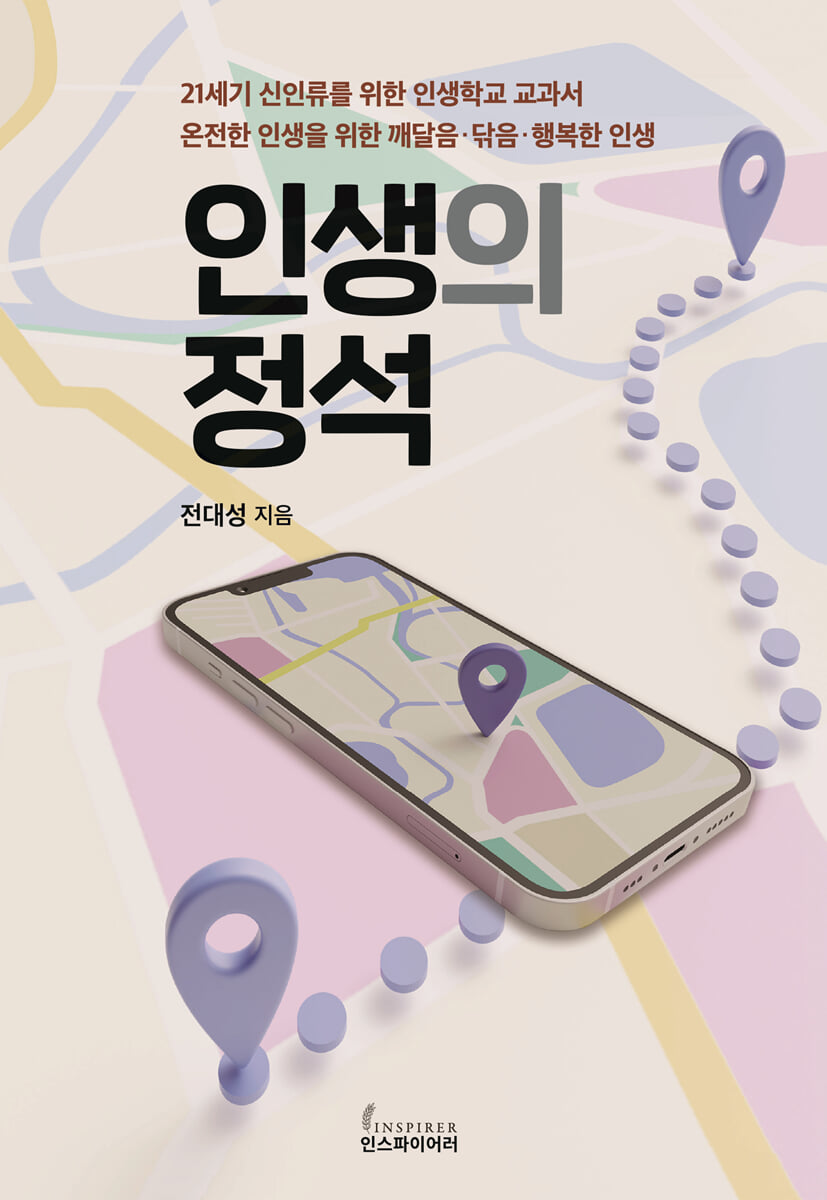 |
Description
Book Introduction
2,500 years ago, the first spiritual revolution of humanity occurred with the emergence of saints in the East and West.
After that, the era of three main streams of spiritual thought - Indian spirit, Western spirit, and East Asian spirit - lasted for 2,400 years.
The author argues that the second spiritual revolution is beginning in the 21st century, and calls the people of this period the "new humanity."
The new generation of smart people is pursuing spiritual globalization following economic globalization.
Material and spiritual globalization is the first great transformation (dawn) of human civilization that humanity is facing.
The author predicts that the K-spirit will lead the second spiritual revolution and spiritual globalization.
After that, the era of three main streams of spiritual thought - Indian spirit, Western spirit, and East Asian spirit - lasted for 2,400 years.
The author argues that the second spiritual revolution is beginning in the 21st century, and calls the people of this period the "new humanity."
The new generation of smart people is pursuing spiritual globalization following economic globalization.
Material and spiritual globalization is the first great transformation (dawn) of human civilization that humanity is facing.
The author predicts that the K-spirit will lead the second spiritual revolution and spiritual globalization.
- You can preview some of the book's contents.
Preview
index
Preface: For the New Humanity of the 21st Century
Part 1: The Essentials of Life
Ⅰ.
Enlightenment - Becoming an Intellectual
1.
Who Am I?: Establishing Self-Identity
2.
What would the world be like?: Establishing a worldview
3.
What is Life?: Establishing a Outlook on Life
Ⅱ.
Wipe - Living with Reflection
1.
What is meditation?
2.
Why is meditation necessary?
3.
Meditation postures and distinctions
4.
Life (Soul) Meditation
ㆍConceptual organization of life-related statements
Ⅲ.
Happy Life - Becoming a Paradise Tribe
1.
What is happiness?
2.
Five Elements of Happiness
3.
The Elements of Misfortune
4.
The path to a happy life
Part 2: School of Life
1.
Building a life school system
2.
Studying at the School of Life
Appendix: Taking the "Essentials of Life" Class
Conclusion
Part 1: The Essentials of Life
Ⅰ.
Enlightenment - Becoming an Intellectual
1.
Who Am I?: Establishing Self-Identity
2.
What would the world be like?: Establishing a worldview
3.
What is Life?: Establishing a Outlook on Life
Ⅱ.
Wipe - Living with Reflection
1.
What is meditation?
2.
Why is meditation necessary?
3.
Meditation postures and distinctions
4.
Life (Soul) Meditation
ㆍConceptual organization of life-related statements
Ⅲ.
Happy Life - Becoming a Paradise Tribe
1.
What is happiness?
2.
Five Elements of Happiness
3.
The Elements of Misfortune
4.
The path to a happy life
Part 2: School of Life
1.
Building a life school system
2.
Studying at the School of Life
Appendix: Taking the "Essentials of Life" Class
Conclusion
Publisher's Review
Western philosophy is a chaotic system of thought that began with serious inherent errors.
Error 1 - Heaven (God), earth (nature), and humans were separated and their relationship was established hierarchically.
East Asia viewed heaven, earth, and man as a horizontal relationship and as one inseparable entity.
The West viewed duality as binary opposition, while East Asia viewed it as complementarity.
In the 21st century, scientific naturalism views the entire universe as a single system.
Error 2 - Confusing the facts of nature (philosophy) with human choices (ethics).
The truth that never changes (God, substance, idea) was established as a hypothesis, and truth was selectively defined as good, love, and heaven.
He concluded that human sensory life was fake.
Western truth is a selective hypothetical fiction of human beings.
The logic of Western philosophy from Plato to Kant, which was based on selective hypothetical truth, has all become sophistry.
Confucius of East Asia expressed philosophy and ethics in separate books.
The facts of nature (philosophy) are dealt with separately in the 'Book of Changes'.
In Lao-tzu's Tao Te Ching, there is only the law of nature (the Tao), and no human choice.
The new human race of the 21st century and the future can study the facts of nature through science and the choices of life within the natural system through life ethics.
The new humanity of the 21st century and the future will live and think holistically within atheistic naturalism, as Ken Wilber says in 'Big Wholeness'.
Ken Wilber studied Eastern and Western religions, philosophy, psychology, and science, and viewed the world with a holistic perspective. However, his claims and explanations for totality and integration are too lengthy and complex.
It is ironic that he relies on more liminal language to argue for borderlessness.
He is considered the founder of the unified thought, integrating enlightenment and Western developmental psychology.
The author believes that enlightenment, the goal of Indian meditation, is not helpful to the lives of the new humanity.
This book inherits the intuitive and concise holistic naturalistic spirit of East Asia and clearly and easily organizes and explains the self-identity, worldview, and outlook on life of the new humanity that has evolved in 21st-century Korea.
It kindly guides the new human race to desirable enlightenment and living awake.
The author wrote this book in the hope that it would become a textbook for the global village's school of life in the age of globalization.
If you want to live a good life
Life is 'me' living in the world.
If you want to live your one and only life well, you must know who you are and what the world is like.
This is also the reason why all religions and philosophies of the East and the West, past and present, talk about self-identity, worldview, and outlook on life.
The author explains self-identity, world view, and a happy outlook on life using familiar language rather than specialized academic terminology.
The Classics of Global Meditation
Koreans have traditionally lived their lives with two minds: conscience (truth) and selfishness (ego), and have lived by reflecting on their own conscience (mindfulness).
The author introduces in detail the long-standing Korean tradition of mind cultivation and the practice of life meditation, which he hopes will become the standard for meditation on a global scale.
Globalization is progressing with spirituality at the center.
The new human race speaks.
'I am not religious.
It's spiritual.'
The new human race's outlook on life is being transformed from one centered on survival instinct to one centered on spiritual instinct.
The old human era was an age of religion and philosophy.
The inherent error of Western philosophy was the confusion between the facts of nature (truth) and life choices (ethics).
The new human race studies science and life ethics.
Science reveals the facts of nature, and through life ethics we study how to make choices and live within the already completed natural system.
The purpose of life is happiness.
Everyone wants to avoid suffering and be happy.
The author provides a simple and concise explanation of life and happiness, which are not well taught in knowledge-centered schools.
The new human race will navigate the path of life, both happy and unhappy, by looking at it holistically.
Why does humanity constantly turn to religion and meditation?
The universe is an infinite system that has already been completed.
The life lived within it is small and narrow.
Because I am small, I am scared, lonely, and anxious.
The essence of meditation is that a human being, anxious and fearful, longs for and relies on the fullness of nature, and seeks to expand and unite his small consciousness with the cosmic consciousness.
This book introduces in detail Korean meditation, rather than Indian or Western meditation.
This is the most effective meditation to practice when you wake up and practice before you start to resist (stress) in your daily life.
Korean spirit
K-spirit is the 'K-Dalgwan ideology' that inherited the traditional East Asian spirit and evolved anew in 21st century Korea.
Only by looking at the whole and its parts with the eyes of the whole can one see the truth.
The Korean system of thought is holistic.
Look at the world and life with a holistic perspective.
Nature is already a complete system.
Life is also a complete system within it.
Understanding, acknowledging, and freely choosing the completed system is the most effective life meditation.
K-spirit will lead the second spiritual revolution and spiritual globalization of the new human race.
Error 1 - Heaven (God), earth (nature), and humans were separated and their relationship was established hierarchically.
East Asia viewed heaven, earth, and man as a horizontal relationship and as one inseparable entity.
The West viewed duality as binary opposition, while East Asia viewed it as complementarity.
In the 21st century, scientific naturalism views the entire universe as a single system.
Error 2 - Confusing the facts of nature (philosophy) with human choices (ethics).
The truth that never changes (God, substance, idea) was established as a hypothesis, and truth was selectively defined as good, love, and heaven.
He concluded that human sensory life was fake.
Western truth is a selective hypothetical fiction of human beings.
The logic of Western philosophy from Plato to Kant, which was based on selective hypothetical truth, has all become sophistry.
Confucius of East Asia expressed philosophy and ethics in separate books.
The facts of nature (philosophy) are dealt with separately in the 'Book of Changes'.
In Lao-tzu's Tao Te Ching, there is only the law of nature (the Tao), and no human choice.
The new human race of the 21st century and the future can study the facts of nature through science and the choices of life within the natural system through life ethics.
The new humanity of the 21st century and the future will live and think holistically within atheistic naturalism, as Ken Wilber says in 'Big Wholeness'.
Ken Wilber studied Eastern and Western religions, philosophy, psychology, and science, and viewed the world with a holistic perspective. However, his claims and explanations for totality and integration are too lengthy and complex.
It is ironic that he relies on more liminal language to argue for borderlessness.
He is considered the founder of the unified thought, integrating enlightenment and Western developmental psychology.
The author believes that enlightenment, the goal of Indian meditation, is not helpful to the lives of the new humanity.
This book inherits the intuitive and concise holistic naturalistic spirit of East Asia and clearly and easily organizes and explains the self-identity, worldview, and outlook on life of the new humanity that has evolved in 21st-century Korea.
It kindly guides the new human race to desirable enlightenment and living awake.
The author wrote this book in the hope that it would become a textbook for the global village's school of life in the age of globalization.
If you want to live a good life
Life is 'me' living in the world.
If you want to live your one and only life well, you must know who you are and what the world is like.
This is also the reason why all religions and philosophies of the East and the West, past and present, talk about self-identity, worldview, and outlook on life.
The author explains self-identity, world view, and a happy outlook on life using familiar language rather than specialized academic terminology.
The Classics of Global Meditation
Koreans have traditionally lived their lives with two minds: conscience (truth) and selfishness (ego), and have lived by reflecting on their own conscience (mindfulness).
The author introduces in detail the long-standing Korean tradition of mind cultivation and the practice of life meditation, which he hopes will become the standard for meditation on a global scale.
Globalization is progressing with spirituality at the center.
The new human race speaks.
'I am not religious.
It's spiritual.'
The new human race's outlook on life is being transformed from one centered on survival instinct to one centered on spiritual instinct.
The old human era was an age of religion and philosophy.
The inherent error of Western philosophy was the confusion between the facts of nature (truth) and life choices (ethics).
The new human race studies science and life ethics.
Science reveals the facts of nature, and through life ethics we study how to make choices and live within the already completed natural system.
The purpose of life is happiness.
Everyone wants to avoid suffering and be happy.
The author provides a simple and concise explanation of life and happiness, which are not well taught in knowledge-centered schools.
The new human race will navigate the path of life, both happy and unhappy, by looking at it holistically.
Why does humanity constantly turn to religion and meditation?
The universe is an infinite system that has already been completed.
The life lived within it is small and narrow.
Because I am small, I am scared, lonely, and anxious.
The essence of meditation is that a human being, anxious and fearful, longs for and relies on the fullness of nature, and seeks to expand and unite his small consciousness with the cosmic consciousness.
This book introduces in detail Korean meditation, rather than Indian or Western meditation.
This is the most effective meditation to practice when you wake up and practice before you start to resist (stress) in your daily life.
Korean spirit
K-spirit is the 'K-Dalgwan ideology' that inherited the traditional East Asian spirit and evolved anew in 21st century Korea.
Only by looking at the whole and its parts with the eyes of the whole can one see the truth.
The Korean system of thought is holistic.
Look at the world and life with a holistic perspective.
Nature is already a complete system.
Life is also a complete system within it.
Understanding, acknowledging, and freely choosing the completed system is the most effective life meditation.
K-spirit will lead the second spiritual revolution and spiritual globalization of the new human race.
GOODS SPECIFICS
- Date of issue: November 10, 2025
- Page count, weight, size: 220 pages | 140*205*20mm
- ISBN13: 9791199413405
- ISBN10: 1199413402
You may also like
카테고리
korean


korean

![GQ KOREA Mark (Monthly): December [2025]](http://librairie.coreenne.fr/cdn/shop/files/8ef265dbbfbf186523ed75ba7319009d.jpg?v=1765340328&width=3840)


