

Adam Smith's Wealth of Nations
 |
Description
Book Introduction
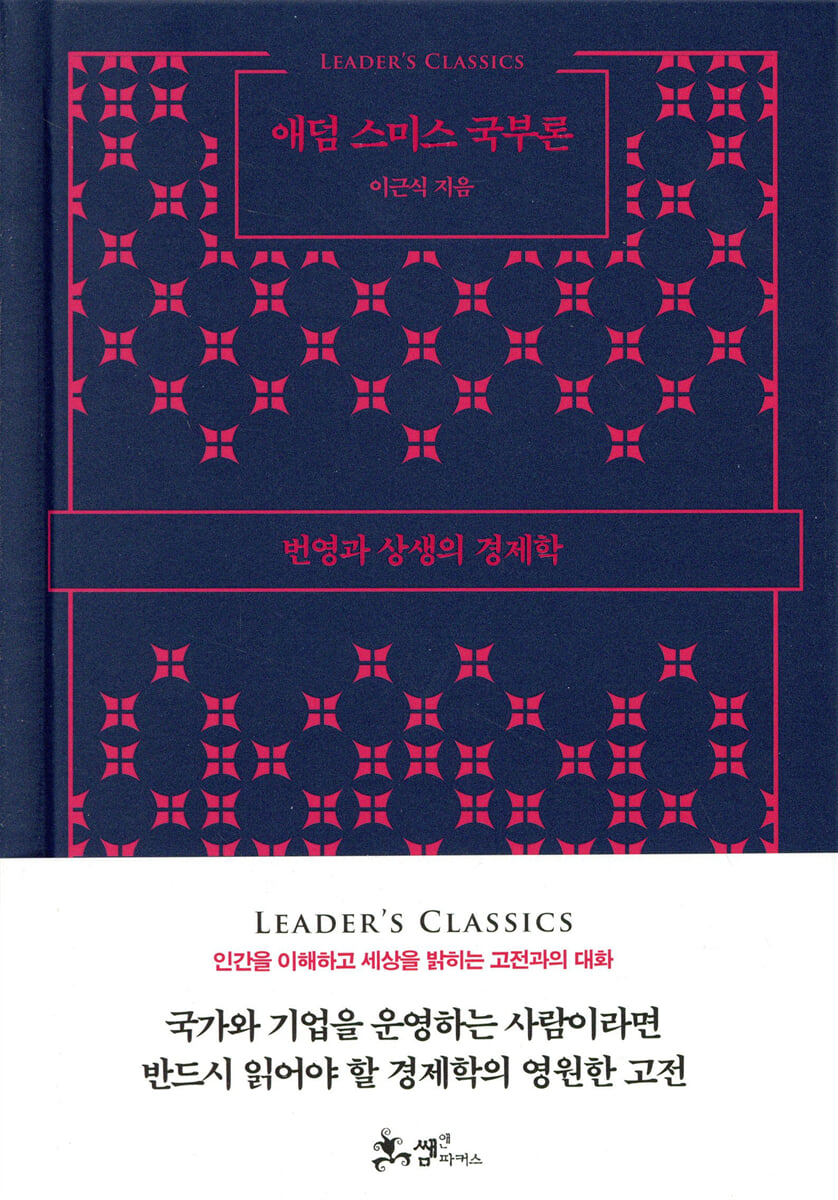
'Leader's Classic' series 《Adam Smith: The Wealth of Nations: The Economics of Prosperity and Mutual Growth》.
It provides a clear and easy explanation of the core content of “The Wealth of Nations,” which is “a grand and consistent system that begins with theology, passes through ethics and law, and is completed with economics,” that is, the culmination of Adam Smith’s thoughts.
Although "The Wealth of Nations" is said to have many boring parts and to be nearly 1,000 pages long, it requires considerable patience to read through, the author systematically included Adam Smith's life and worldview, as well as the origins and flow of capitalism, and all of the core content of "The Wealth of Nations" in one book that can be held in the palm of your hand.
The 'Reader's Classics' series explores classics that 'everyone knows but has never really read', helping readers gain a broad overview of the vast horizons of great thought.
The "Leader's Classics" series offers wisdom for tomorrow through profound and innovative interpretations by contemporary scholars.
It helps you truly savor the true flavor of classic texts that you might not have even considered reading or that you might not have easily understood even if you did.
It provides a clear and easy explanation of the core content of “The Wealth of Nations,” which is “a grand and consistent system that begins with theology, passes through ethics and law, and is completed with economics,” that is, the culmination of Adam Smith’s thoughts.
Although "The Wealth of Nations" is said to have many boring parts and to be nearly 1,000 pages long, it requires considerable patience to read through, the author systematically included Adam Smith's life and worldview, as well as the origins and flow of capitalism, and all of the core content of "The Wealth of Nations" in one book that can be held in the palm of your hand.
The 'Reader's Classics' series explores classics that 'everyone knows but has never really read', helping readers gain a broad overview of the vast horizons of great thought.
The "Leader's Classics" series offers wisdom for tomorrow through profound and innovative interpretations by contemporary scholars.
It helps you truly savor the true flavor of classic texts that you might not have even considered reading or that you might not have easily understood even if you did.
- You can preview some of the book's contents.
Preview
index
preface
Chapter 1: The Life of Adam Smith
Chapter 2: The Origins and Flow of Capitalism
Chapter 3: The Philosophical Foundations of The Wealth of Nations
Chapter 4: The Wealth of Nations and the Path to Economic Development
Chapter 5: What will you learn?
References
Search
Chapter 1: The Life of Adam Smith
Chapter 2: The Origins and Flow of Capitalism
Chapter 3: The Philosophical Foundations of The Wealth of Nations
Chapter 4: The Wealth of Nations and the Path to Economic Development
Chapter 5: What will you learn?
References
Search
Detailed image

Into the book
Smith's liberalism is not limited to economics, but is a comprehensive worldview that encompasses theology, philosophy, ethics, and law.
Based on this worldview, he advocated for the abolition of economic regulations and economic liberalization.
Therefore, in order to understand The Wealth of Nations well, we must know his worldview, and to do this, we must first understand the contents of his theology, philosophy, ethics, and jurisprudence as presented in The Theory of Moral Sentiments and Lectures on Law.
The contribution of a great scholar may lie in creating new theories, but sometimes it lies in stringing together existing ideas, like stringing together scattered beads to create a single jewel, creating a new system and suggesting a new spirit of the times.
Smith is a case in point.
The invisible hand, empathy, self-love, natural liberty, and harmony with nature were all first proposed by Scottish enlightenment thinkers like Hutcheson and Hume, but Smith brought them together and presented a new system called economic liberalism for the first time in The Wealth of Nations, using abundant data and rigorous logic to persuasively present it.
--- pp.51-52
In Smith's economics, the most fundamental element that explains economic phenomena is human nature.
An example is finding an important basis for the efficiency of the market mechanism in the human nature of self-love.
When discussing economic policy, Smith also placed importance on whether it was in line with human nature.
His Theory of Moral Sentiments is full of admirable passages that demonstrate his keen and profound insight into human nature.
All social phenomena, including the economy, are composed of individual and collective human behavior, and human behavior cannot escape human nature. Therefore, an accurate understanding of human nature is essential to accurately understand and predict social phenomena.
The strength of Smith's economics lies in its accurate and profound understanding of human nature.
We can find its foundation in his ethics.
His ethics is not only about ethics, but also contains a lot of comprehensive and in-depth analyses of human nature.
By deeply analyzing various factors of human nature, such as self-love, empathy, vanity, greed, and conscience, Smith found the basis for ethics and law.
--- pp.62-63
For Smith, the most important things for economic development are ‘establishing the rule of law’ and ‘eliminating unreasonable economic regulations.’
Establishing the rule of law means protecting private property from unjust infringement by state power holders or the powerful by fairly enforcing fair and just laws, and ensuring that debtors fulfill their obligations and contracts.
Next, the economic deregulation that Smith emphasized can be divided into two parts.
One is to create a competitive market by abolishing the monopoly rights granted to a small number of specific merchants, and the second is to realize economic liberalization by abolishing regulations that impede free market economic activities, such as price controls, prohibitions on hoarding, restrictions on relocation, export incentives, and import restrictions.
It should be noted that Smith advocated not only economic liberalization but also the establishment of a competitive market.
Smith opposed government intervention in the economy in principle, but accepted some exceptions.
Exceptions were made for regulations such as the construction and operation of public facilities, poor relief, primary and higher education for children from low-income families, and support for popular culture and arts, restrictions on excessive bank lending, granting of exclusive business rights for remote trade, granting of monopolies for inventions, high taxes on luxury goods, and a reasonable statutory maximum interest rate.
--- pp.167-169
Smith's greatest strength is that he analyzed society and the economy on a solid foundation of deep and accurate reflection on human nature.
Not only economics, but also modern social sciences such as political science and sociology often pursue the rigor of logic and thus lack understanding of human beings themselves.
In modern social sciences such as economics, only mechanisms and systems are seen, and people are not seen much.
As a result, modern economics has little practical utility and is largely research for research's sake or for professional researchers.
In contrast, Smith started from an accurate understanding of human beings.
He recognized that humans, while possessing compassion and conscience, possess a stronger nature of self-love, and viewed the world on this basis.
Thanks to this, his ethics, law, and economics could have practical utility.
Based on this worldview, he advocated for the abolition of economic regulations and economic liberalization.
Therefore, in order to understand The Wealth of Nations well, we must know his worldview, and to do this, we must first understand the contents of his theology, philosophy, ethics, and jurisprudence as presented in The Theory of Moral Sentiments and Lectures on Law.
The contribution of a great scholar may lie in creating new theories, but sometimes it lies in stringing together existing ideas, like stringing together scattered beads to create a single jewel, creating a new system and suggesting a new spirit of the times.
Smith is a case in point.
The invisible hand, empathy, self-love, natural liberty, and harmony with nature were all first proposed by Scottish enlightenment thinkers like Hutcheson and Hume, but Smith brought them together and presented a new system called economic liberalism for the first time in The Wealth of Nations, using abundant data and rigorous logic to persuasively present it.
--- pp.51-52
In Smith's economics, the most fundamental element that explains economic phenomena is human nature.
An example is finding an important basis for the efficiency of the market mechanism in the human nature of self-love.
When discussing economic policy, Smith also placed importance on whether it was in line with human nature.
His Theory of Moral Sentiments is full of admirable passages that demonstrate his keen and profound insight into human nature.
All social phenomena, including the economy, are composed of individual and collective human behavior, and human behavior cannot escape human nature. Therefore, an accurate understanding of human nature is essential to accurately understand and predict social phenomena.
The strength of Smith's economics lies in its accurate and profound understanding of human nature.
We can find its foundation in his ethics.
His ethics is not only about ethics, but also contains a lot of comprehensive and in-depth analyses of human nature.
By deeply analyzing various factors of human nature, such as self-love, empathy, vanity, greed, and conscience, Smith found the basis for ethics and law.
--- pp.62-63
For Smith, the most important things for economic development are ‘establishing the rule of law’ and ‘eliminating unreasonable economic regulations.’
Establishing the rule of law means protecting private property from unjust infringement by state power holders or the powerful by fairly enforcing fair and just laws, and ensuring that debtors fulfill their obligations and contracts.
Next, the economic deregulation that Smith emphasized can be divided into two parts.
One is to create a competitive market by abolishing the monopoly rights granted to a small number of specific merchants, and the second is to realize economic liberalization by abolishing regulations that impede free market economic activities, such as price controls, prohibitions on hoarding, restrictions on relocation, export incentives, and import restrictions.
It should be noted that Smith advocated not only economic liberalization but also the establishment of a competitive market.
Smith opposed government intervention in the economy in principle, but accepted some exceptions.
Exceptions were made for regulations such as the construction and operation of public facilities, poor relief, primary and higher education for children from low-income families, and support for popular culture and arts, restrictions on excessive bank lending, granting of exclusive business rights for remote trade, granting of monopolies for inventions, high taxes on luxury goods, and a reasonable statutory maximum interest rate.
--- pp.167-169
Smith's greatest strength is that he analyzed society and the economy on a solid foundation of deep and accurate reflection on human nature.
Not only economics, but also modern social sciences such as political science and sociology often pursue the rigor of logic and thus lack understanding of human beings themselves.
In modern social sciences such as economics, only mechanisms and systems are seen, and people are not seen much.
As a result, modern economics has little practical utility and is largely research for research's sake or for professional researchers.
In contrast, Smith started from an accurate understanding of human beings.
He recognized that humans, while possessing compassion and conscience, possess a stronger nature of self-love, and viewed the world on this basis.
Thanks to this, his ethics, law, and economics could have practical utility.
--- p.182
Publisher's Review
If you are someone who runs a country or a business
A timeless classic in economics that you must read.
Adam Smith's The Wealth of Nations
Completed through theology, ethics, and law, and then economics
A fresh look at Adam Smith's grand ideas!
[Leader's Classic] Adam Smith's The Wealth of Nations: The Economics of Prosperity and Mutual Growth
“A grand and consistent system, beginning with theology, passing through ethics and law, and completing economics.” Adam Smith, a British political economist and moral philosopher, wrote The Wealth of Nations in 1776, which gave birth to economics as an independent discipline and laid the foundation for classical economics. It is a true classic of economics.
Even those who don't know The Wealth of Nations or economics know that Adam Smith is the father of economics and what the 'invisible hand' is.
《The Wealth of Nations》was written by Adam Smith after extensive interaction with people from all walks of life, including small business owners, bankers, and engineers, listening to stories about economics, politics, and society, discussing them, and working hard to write it. As soon as it was published, it received full support from small business owners and political and business figures who were emerging as the leading forces in 18th-century society.
Moreover, Smith's economic liberalism, based on a deep philosophical foundation, spread as the zeitgeist of the 19th century and changed the world.
The 'Leader's Classic' series, 'Adam Smith's The Wealth of Nations: The Economics of Prosperity and Mutual Growth', provides an easy and clear explanation of the core content of 'The Wealth of Nations', which is the culmination of Adam Smith's thoughts, 'completed as economics through theology, ethics, and law'.
Although "The Wealth of Nations" is said to have many boring parts and to be nearly 1,000 pages long, it requires considerable patience to read through, the author systematically included Adam Smith's life and worldview, as well as the origins and flow of capitalism, and all of the core content of "The Wealth of Nations" in one book that can be held in the palm of your hand.
In fact, concepts such as the 'invisible hand', 'sympathy', 'self-love', 'natural liberty', and 'natural harmony' were first proposed by the Scottish Enlightenment, but Smith brought them together and presented a new system called 'economic liberalism' for the first time in a persuasive manner in 'The Wealth of Nations' with abundant data and rigorous logic.
In other words, to properly understand The Wealth of Nations, one must understand Adam Smith's theology, philosophy, ethics, and jurisprudence.
Accordingly, the author first examined the worldviews contained in Adam Smith's works (The Theory of Moral Sentiments, Lectures on Law, etc.) one by one, and then approached the essence of Adam Smith's thought contained in The Wealth of Nations.
If Adam Smith had seen the failures of today's markets...
Discovering the Liberalism of Symbiosis through The Wealth of Nations
This book not only helps us deeply understand Adam Smith's thoughts and The Wealth of Nations, but also criticizes existing distorted views and interpretations of The Wealth of Nations.
For example, the author reveals how the neoliberal slogan “Back to Smith” from the 1980s to the present day misleads Adam Smith.
Adam Smith's economic freedom is 'the establishment of a fair legal order so that everyone obeys the law of justice' and 'freedom in a competitive market comprised only of small and medium-sized businesses, without the tyranny of monopolies or collusion between large oligopolists.'
It was never my intention to 'leave' monopolistic corporations free to pursue profits as they pleased, as neoliberals claim, by exploiting their market dominance or colluding.
Moreover, contrary to neoliberal claims, Smith recognized various government roles, including national defense, judiciary, public works, provision of primary education, and banking supervision.
The 'invisible hand' that Smith spoke of is also a logical leap and misunderstanding on the part of market economy supporters.
The invisible hand is “nothing mysterious at all; it simply means that voluntary transactions in the market are mutually beneficial.” (pp. 128-129)
The 'mutual benefit' that the author proposes through reading 'The Wealth of Nations' is a principle for overcoming the limitations of individualism advocated by classical liberals, including Smith, in a more wise way today.
“It is coexistence when the strong respect the weak and help each other, and it is coexistence when the strong yield to the weak when interests conflict.” (p. 186) This is the combination of the principle of individuality called freedom and the principle of sociality (community) called coexistence, and it also reflects the practical life of Adam Smith, who secretly helped the underprivileged.
Adam Smith had limitations in that he failed to see the dark side of capitalism, such as market failures such as the gap between rich and poor, cyclical recessions and rising unemployment, the collapse of small and medium-sized businesses, environmental destruction, and the lack of public goods.
But the reason we read The Wealth of Nations and understand Adam Smith's thoughts more deeply today is because his deep reflections on human nature are embedded throughout his economics.
This is also clearly demonstrated in the author's belief that:
“He was fair, conscientious, and honest. If he had lived another 50 years to see the market failures that began to appear in the 19th century, he would have been more proactive than anyone else in pointing them out and finding solutions.” (p. 16)
*
“How will we lead the world?”
“How can we understand humanity and preserve our humanity?”
Wisdom for Tomorrow from Great Classics
Leader's Classics series
The answer, which contained excellent insight, survived the test of time.
Immortal books that explore human life and change the world.
In modern times we call it a 'classic'.
Our task is not to cover all the classics.
It is about selecting the classics that you absolutely must know to cultivate the wisdom to see the world and solve given tasks, and then absorbing their nutrients as much as possible.
There are three main reasons why this series is called Leader's Classics.
First, the classics included in this series are at the top of the list of essential classics that leaders of nations, corporations, and organizations large and small must know.
Second, because the wisdom of the classics will motivate modern leaders to foster and practice the spirit of noblesse oblige, which states that “wealth, power, and fame must be accompanied by social responsibility.”
The third and final reason is that this series, which concisely captures the essence of the great classics, will be an excellent introduction to 'reading the classics' for 'busy' modern people who want to live as 'leaders and masters of their own lives.'
The 'Reader's Classics' series explores classics that 'everyone knows but has never really read', helping readers gain a broad overview of the vast horizons of great thought.
The "Leader's Classics" series offers wisdom for tomorrow through profound and innovative interpretations by contemporary scholars.
It will help you truly savor the true flavor of classic texts that you might not have even considered reading or that you might not have easily understood even if you did.
※ Reader's Classics will continue to introduce works such as "The Wealth of Nations" (Adam Smith), "Justice" (John Rawls), "Government" (John Locke), "Politics" (Aristotle), and "The Prince" (Machiavelli), and with the participation of leading domestic scholars, it aims to establish itself as a reliable series that can always be read by those who wish to "enter the door of the classics."
A timeless classic in economics that you must read.
Adam Smith's The Wealth of Nations
Completed through theology, ethics, and law, and then economics
A fresh look at Adam Smith's grand ideas!
[Leader's Classic] Adam Smith's The Wealth of Nations: The Economics of Prosperity and Mutual Growth
“A grand and consistent system, beginning with theology, passing through ethics and law, and completing economics.” Adam Smith, a British political economist and moral philosopher, wrote The Wealth of Nations in 1776, which gave birth to economics as an independent discipline and laid the foundation for classical economics. It is a true classic of economics.
Even those who don't know The Wealth of Nations or economics know that Adam Smith is the father of economics and what the 'invisible hand' is.
《The Wealth of Nations》was written by Adam Smith after extensive interaction with people from all walks of life, including small business owners, bankers, and engineers, listening to stories about economics, politics, and society, discussing them, and working hard to write it. As soon as it was published, it received full support from small business owners and political and business figures who were emerging as the leading forces in 18th-century society.
Moreover, Smith's economic liberalism, based on a deep philosophical foundation, spread as the zeitgeist of the 19th century and changed the world.
The 'Leader's Classic' series, 'Adam Smith's The Wealth of Nations: The Economics of Prosperity and Mutual Growth', provides an easy and clear explanation of the core content of 'The Wealth of Nations', which is the culmination of Adam Smith's thoughts, 'completed as economics through theology, ethics, and law'.
Although "The Wealth of Nations" is said to have many boring parts and to be nearly 1,000 pages long, it requires considerable patience to read through, the author systematically included Adam Smith's life and worldview, as well as the origins and flow of capitalism, and all of the core content of "The Wealth of Nations" in one book that can be held in the palm of your hand.
In fact, concepts such as the 'invisible hand', 'sympathy', 'self-love', 'natural liberty', and 'natural harmony' were first proposed by the Scottish Enlightenment, but Smith brought them together and presented a new system called 'economic liberalism' for the first time in a persuasive manner in 'The Wealth of Nations' with abundant data and rigorous logic.
In other words, to properly understand The Wealth of Nations, one must understand Adam Smith's theology, philosophy, ethics, and jurisprudence.
Accordingly, the author first examined the worldviews contained in Adam Smith's works (The Theory of Moral Sentiments, Lectures on Law, etc.) one by one, and then approached the essence of Adam Smith's thought contained in The Wealth of Nations.
If Adam Smith had seen the failures of today's markets...
Discovering the Liberalism of Symbiosis through The Wealth of Nations
This book not only helps us deeply understand Adam Smith's thoughts and The Wealth of Nations, but also criticizes existing distorted views and interpretations of The Wealth of Nations.
For example, the author reveals how the neoliberal slogan “Back to Smith” from the 1980s to the present day misleads Adam Smith.
Adam Smith's economic freedom is 'the establishment of a fair legal order so that everyone obeys the law of justice' and 'freedom in a competitive market comprised only of small and medium-sized businesses, without the tyranny of monopolies or collusion between large oligopolists.'
It was never my intention to 'leave' monopolistic corporations free to pursue profits as they pleased, as neoliberals claim, by exploiting their market dominance or colluding.
Moreover, contrary to neoliberal claims, Smith recognized various government roles, including national defense, judiciary, public works, provision of primary education, and banking supervision.
The 'invisible hand' that Smith spoke of is also a logical leap and misunderstanding on the part of market economy supporters.
The invisible hand is “nothing mysterious at all; it simply means that voluntary transactions in the market are mutually beneficial.” (pp. 128-129)
The 'mutual benefit' that the author proposes through reading 'The Wealth of Nations' is a principle for overcoming the limitations of individualism advocated by classical liberals, including Smith, in a more wise way today.
“It is coexistence when the strong respect the weak and help each other, and it is coexistence when the strong yield to the weak when interests conflict.” (p. 186) This is the combination of the principle of individuality called freedom and the principle of sociality (community) called coexistence, and it also reflects the practical life of Adam Smith, who secretly helped the underprivileged.
Adam Smith had limitations in that he failed to see the dark side of capitalism, such as market failures such as the gap between rich and poor, cyclical recessions and rising unemployment, the collapse of small and medium-sized businesses, environmental destruction, and the lack of public goods.
But the reason we read The Wealth of Nations and understand Adam Smith's thoughts more deeply today is because his deep reflections on human nature are embedded throughout his economics.
This is also clearly demonstrated in the author's belief that:
“He was fair, conscientious, and honest. If he had lived another 50 years to see the market failures that began to appear in the 19th century, he would have been more proactive than anyone else in pointing them out and finding solutions.” (p. 16)
*
“How will we lead the world?”
“How can we understand humanity and preserve our humanity?”
Wisdom for Tomorrow from Great Classics
Leader's Classics series
The answer, which contained excellent insight, survived the test of time.
Immortal books that explore human life and change the world.
In modern times we call it a 'classic'.
Our task is not to cover all the classics.
It is about selecting the classics that you absolutely must know to cultivate the wisdom to see the world and solve given tasks, and then absorbing their nutrients as much as possible.
There are three main reasons why this series is called Leader's Classics.
First, the classics included in this series are at the top of the list of essential classics that leaders of nations, corporations, and organizations large and small must know.
Second, because the wisdom of the classics will motivate modern leaders to foster and practice the spirit of noblesse oblige, which states that “wealth, power, and fame must be accompanied by social responsibility.”
The third and final reason is that this series, which concisely captures the essence of the great classics, will be an excellent introduction to 'reading the classics' for 'busy' modern people who want to live as 'leaders and masters of their own lives.'
The 'Reader's Classics' series explores classics that 'everyone knows but has never really read', helping readers gain a broad overview of the vast horizons of great thought.
The "Leader's Classics" series offers wisdom for tomorrow through profound and innovative interpretations by contemporary scholars.
It will help you truly savor the true flavor of classic texts that you might not have even considered reading or that you might not have easily understood even if you did.
※ Reader's Classics will continue to introduce works such as "The Wealth of Nations" (Adam Smith), "Justice" (John Rawls), "Government" (John Locke), "Politics" (Aristotle), and "The Prince" (Machiavelli), and with the participation of leading domestic scholars, it aims to establish itself as a reliable series that can always be read by those who wish to "enter the door of the classics."
GOODS SPECIFICS
- Date of publication: July 27, 2018
- Format: Hardcover book binding method guide
- Page count, weight, size: 200 pages | 128*188*17mm
- ISBN13: 9788965706533
- ISBN10: 896570653X
You may also like
카테고리
korean


korean

![GQ KOREA Mark (Monthly): December [2025]](http://librairie.coreenne.fr/cdn/shop/files/8ef265dbbfbf186523ed75ba7319009d.jpg?v=1765340328&width=3840)


