

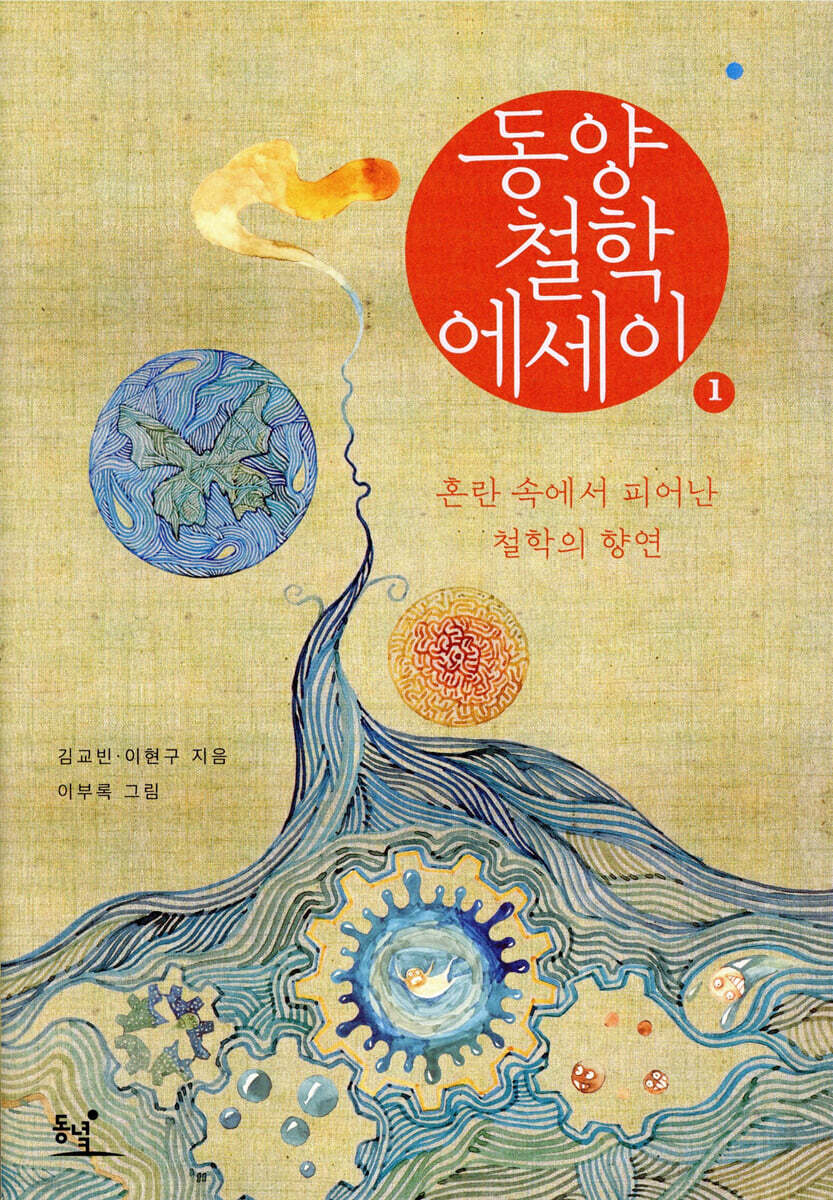
Essay on Eastern Philosophy 1
 |
Description
Book Introduction
The first volume of the classic introduction to Eastern philosophy, Essays on Eastern Philosophy.
In this revised and expanded edition, the authors introduce the major ideas of the Hundred Schools of Thought, including Confucius, Mencius, Laozi, Zhuangzi, Xunzi, Legalism, and the Book of Changes, which are deeply ingrained in our consciousness and lives but are not well known in detail, as well as the lesser-known Mozi, Mingjia, and Nongjia.
It introduces the socio-historical background that gave birth to an idea and the life of the person who played a central role in that idea.
It also explains the core arguments of the ideology and its contemporary significance, while pointing out the limitations and contradictions of the ideology from a modern perspective to avoid biased views.
In this revised and expanded edition, the authors introduce the major ideas of the Hundred Schools of Thought, including Confucius, Mencius, Laozi, Zhuangzi, Xunzi, Legalism, and the Book of Changes, which are deeply ingrained in our consciousness and lives but are not well known in detail, as well as the lesser-known Mozi, Mingjia, and Nongjia.
It introduces the socio-historical background that gave birth to an idea and the life of the person who played a central role in that idea.
It also explains the core arguments of the ideology and its contemporary significance, while pointing out the limitations and contradictions of the ideology from a modern perspective to avoid biased views.
- You can preview some of the book's contents.
Preview
index
Introducing the revised and expanded edition
At the beginning of the book
Take a look… Our Eastern Philosophy
Confucius… What does man live by?
Lao Tzu… Treasure the treasures of life
Mozi… a shield that protects the weak
Zhuangzi… Endless stories of the vast spiritual world
Mencius… the watchman of Confucianism
Sunja… the Prometheus of the East
Legalism…Organizing and utilizing people
Aristocrats… People who broke common sense
Farmhouse… The farmer's eternal friend
The protagonist… the fortune teller and the philosopher
Looking back… the remaining stories
A book worth reading more of
At the beginning of the book
Take a look… Our Eastern Philosophy
Confucius… What does man live by?
Lao Tzu… Treasure the treasures of life
Mozi… a shield that protects the weak
Zhuangzi… Endless stories of the vast spiritual world
Mencius… the watchman of Confucianism
Sunja… the Prometheus of the East
Legalism…Organizing and utilizing people
Aristocrats… People who broke common sense
Farmhouse… The farmer's eternal friend
The protagonist… the fortune teller and the philosopher
Looking back… the remaining stories
A book worth reading more of
Into the book
Mozi's surname is Mo (墨) and his given name is Ji (翟).
Confucius, Mencius, Xunzi, Laozi, and Zhuangzi are well known, but Mozi feels a bit unfamiliar.
Mozi's country of birth is unclear, and his years of birth and death are also uncertain.
It is generally assumed that he was a little later than Confucius and a little earlier than Mencius.
Mozi is also introduced very briefly in Sima Qian's Records of the Grand Historian.
This shows that Mozi's thoughts were not welcomed by the ruling class.
There is also a claim that Mozi's surname was not originally Mo.
The character 'Muk (墨)' means black, and also refers to the ink used in calligraphy.
Some scholars claim that he was called Mook-ssi because he was punished with imprisonment.
Silent punishment refers to a punishment in which the name of the crime is written on the criminal's face with ink.
Even in the Joseon Dynasty of Korea, if someone was caught stealing, they would tattoo the character 'Do (盜)' on their face.
However, at that time, the Zhou Dynasty did not punish the ruling class, but only the ruled class.
If so, then it means that Mozi was a lower class person who was ruled by punishment.
… …
Mohist thought gained immense popularity among the ruling classes, and thus formed the greatest force after Confucius.
When we see that Mencius lamented that “the world is filled with the teachings of Yang Zhu and Mozi,” we can guess that Mozi’s influence was great at the time.
Also, in books such as Han Feizi, Xun Zi, and Zhuangzi, Confucianism and Mohism are placed side by side under the name of 'Moism'.
… …
Like other thinkers of the Spring and Autumn and Warring States periods, Mozi traveled to many countries to develop his ideas.
However, most of the powerful lords did not welcome him.
This is because he came from a humble background, but fundamentally, his ideas were not about strengthening the country and its military for the benefit of the ruling class.
Mozi's ideas, which advocated for the common people, began to weaken as the momentum for unification by the Qin Dynasty grew, and after unification, as centralized despotism was strengthened, it disappeared from the stage of history.
Mohist thought began to receive renewed attention from Qing Dynasty textual scholars, and today in China it is actively studied, focusing on its similarities to socialism.
… …
What was the philosophy that united and guided the Mohist group with such powerful force? At the core of their philosophy was universal love and doctrine.
Mutual love was a demand for political equality, meaning that we should love one another, and doctrine was a demand for economic equality, meaning that we should share the benefits with one another.
But these two are not different.
When humility is achieved, doctrine follows naturally.
Mozi said that the opposite of universal love is separate love.
If universal love is indiscriminate love, then special love is discriminatory love.
So, where did Mozi derive his philosophy of universal love? As mentioned earlier, the Mohist community included many low-ranking warriors.
Some scholars say that Mozi's philosophy of indiscriminate love came from the behavior of this lower-class warrior class.
For example, let's say soldiers are fighting a war.
Especially when fighting a defensive war like the Mukga group, they surround the castle walls and fight against the enemy. If even one side of the castle falls, they will all end up dying.
Therefore, no one on our side will be unimportant, and we must love, cherish, and help one another.
The claim that universal love is the philosophization of the experience of sharing joys and sorrows in such extreme situations.
Mozi said that universal love means treating your friends as you would treat yourself, and treating your friends' parents as you would treat your own parents.
And on the other hand, if it is a discriminatory love, you cannot care for your friend as you care for yourself, and you cannot care for your friend's parents as you care for your own parents.
… …
Confucius, Mencius, Xunzi, Laozi, and Zhuangzi are well known, but Mozi feels a bit unfamiliar.
Mozi's country of birth is unclear, and his years of birth and death are also uncertain.
It is generally assumed that he was a little later than Confucius and a little earlier than Mencius.
Mozi is also introduced very briefly in Sima Qian's Records of the Grand Historian.
This shows that Mozi's thoughts were not welcomed by the ruling class.
There is also a claim that Mozi's surname was not originally Mo.
The character 'Muk (墨)' means black, and also refers to the ink used in calligraphy.
Some scholars claim that he was called Mook-ssi because he was punished with imprisonment.
Silent punishment refers to a punishment in which the name of the crime is written on the criminal's face with ink.
Even in the Joseon Dynasty of Korea, if someone was caught stealing, they would tattoo the character 'Do (盜)' on their face.
However, at that time, the Zhou Dynasty did not punish the ruling class, but only the ruled class.
If so, then it means that Mozi was a lower class person who was ruled by punishment.
… …
Mohist thought gained immense popularity among the ruling classes, and thus formed the greatest force after Confucius.
When we see that Mencius lamented that “the world is filled with the teachings of Yang Zhu and Mozi,” we can guess that Mozi’s influence was great at the time.
Also, in books such as Han Feizi, Xun Zi, and Zhuangzi, Confucianism and Mohism are placed side by side under the name of 'Moism'.
… …
Like other thinkers of the Spring and Autumn and Warring States periods, Mozi traveled to many countries to develop his ideas.
However, most of the powerful lords did not welcome him.
This is because he came from a humble background, but fundamentally, his ideas were not about strengthening the country and its military for the benefit of the ruling class.
Mozi's ideas, which advocated for the common people, began to weaken as the momentum for unification by the Qin Dynasty grew, and after unification, as centralized despotism was strengthened, it disappeared from the stage of history.
Mohist thought began to receive renewed attention from Qing Dynasty textual scholars, and today in China it is actively studied, focusing on its similarities to socialism.
… …
What was the philosophy that united and guided the Mohist group with such powerful force? At the core of their philosophy was universal love and doctrine.
Mutual love was a demand for political equality, meaning that we should love one another, and doctrine was a demand for economic equality, meaning that we should share the benefits with one another.
But these two are not different.
When humility is achieved, doctrine follows naturally.
Mozi said that the opposite of universal love is separate love.
If universal love is indiscriminate love, then special love is discriminatory love.
So, where did Mozi derive his philosophy of universal love? As mentioned earlier, the Mohist community included many low-ranking warriors.
Some scholars say that Mozi's philosophy of indiscriminate love came from the behavior of this lower-class warrior class.
For example, let's say soldiers are fighting a war.
Especially when fighting a defensive war like the Mukga group, they surround the castle walls and fight against the enemy. If even one side of the castle falls, they will all end up dying.
Therefore, no one on our side will be unimportant, and we must love, cherish, and help one another.
The claim that universal love is the philosophization of the experience of sharing joys and sorrows in such extreme situations.
Mozi said that universal love means treating your friends as you would treat yourself, and treating your friends' parents as you would treat your own parents.
And on the other hand, if it is a discriminatory love, you cannot care for your friend as you care for yourself, and you cannot care for your friend's parents as you care for your own parents.
… …
---From the text
Publisher's Review
How will we live and what will we do?
The essence of Eastern philosophy, which begins with the fundamental questions of life.
What is Eastern philosophy?
Unlike Western philosophy, which means love of wisdom, Chinese philosophy, which is generally called Eastern philosophy, is closer to Taoism in the strict sense.
Eastern philosophers, whose goal is to attain enlightenment, believed that what was needed to attain enlightenment was not wisdom but virtue through cultivation.
These ideas, which form the core of Eastern philosophy, were born during the Spring and Autumn Period and the Warring States Period, and had a profound influence on forming the framework of Chinese culture.
Why did the so-called 'Hundred Schools of Thought' and 'Hundred Schools of Thought Contend' ideologies, which still exert influence to this day, emerge during this period?
And what did they mean?
This is the core message of Volume 1 of “Essays on Eastern Philosophy.”
The Spring and Autumn Period and the Warring States Period were the most socially and politically turbulent periods in Chinese history.
In an attempt to correct the chaos of that turbulent period, several thinkers began to express their opinions.
The beginning was Confucius, who is considered one of the four greatest saints of the world along with Socrates, Jesus, and Buddha.
Confucius's thoughts have had a tremendous influence on humanity for over 2,500 years.
He is a representative of Confucianism, which led the cultural center of many East Asian countries, including our country.
The power of that idea still holds true.
Starting with him, the thinkers Lao-tzu, Mo-tzu, Zhuang-tzu, Mencius, and Xun-tzu presented their own practical philosophies, and the thoughts of the Legalists, Ming-tzu, Nong-tzu, and I Ching also exerted influence in each era.
The ultimate meaning they wanted to convey was only one thing: 'How should we live and what should we do?'
Their ideas are based on solid logic and a wealth of experience, along with a strong will to put them into practice.
This book is a must-read and a cultural resource for those who want to easily understand Eastern philosophy from a proper perspective, and to transform the space we live in together into a more livable place. It will serve as a foundation for mental training and a deeper understanding of those around us.
The revised and expanded edition of "Essays on Eastern Philosophy," a classic introduction to Eastern philosophy reborn as a series, has been published.
First published in 1993, the best-selling volume 1 of "Essays on Eastern Philosophy," which continues to be sought after by many readers even after more than 10 years, is now being republished as a series with the publication of Volume 2.
Volume 1 of "Essays on Eastern Philosophy," which was originally planned as an introductory book to Eastern philosophy for college freshmen and the general public, has gradually become a book enjoyed by middle and high school students as the age of its readers has gradually decreased, and it has become a book recommended by middle and high school teachers (e.g., recommended by the Korean Teachers and Education Workers Union, recommended by Teachers Who Create a Warm World with Books).
In line with this trend, the revised edition of Volume 1 of “Essays on Eastern Philosophy” has undergone changes in editing and design.
The reason why "Essays on Eastern Philosophy" has been widely loved by not only the general public who want to get started on Eastern philosophy (more precisely, ancient Chinese philosophy), but also middle and high school students, is because of the authors' balanced perspective and friendly "lecture style."
In the book, the authors introduce the major ideas of the Hundred Schools of Thought, including Confucius, Mencius, Laozi, Zhuangzi, Xunzi, Legalist, and the Book of Changes, which are deeply ingrained in our consciousness and lives but are not well known in detail, as well as the lesser-known Mozi, Mingjia, and Nongjia.
It introduces the socio-historical background that gave birth to an idea and the life of the person who played a central role in that idea.
It also explains the core arguments of the ideology and its contemporary significance, while pointing out the limitations and contradictions of the ideology from a modern perspective to avoid biased views.
In addition, the differences and similarities between each school of thought are discussed, such as Confucius and Mencius, Confucius and Laozi, Laozi and Zhuangzi, Confucius and Mozi, Mencius and Xu Xing (Nongjia), and Xunzi and Han Feizi (Legalist), and each school of thought is compared.
As you read each chapter, your prejudices such as "Oriental philosophy is boring and tedious" and "Eastern philosophy is mysterious and profound even if you don't know what it is" will gradually disappear, and you will come across a vivid philosophy of the "here and now," transcending 2,500 years of time.
Add to book
The chaos of the Spring and Autumn Period and the Warring States Period came from selfishness.
Selfishness inherently produces discriminatory love, and discriminatory love manifests itself in love for oneself, one's family, and one's country.
Mozi argued against war based on indiscriminate love, going against the wave of wars of aggression that arose due to the discriminatory love of the ruling class.
In fact, Mozi's opposition to war was the most realistic argument for realizing universal love.
But he felt that simply shouting against war was meaningless.
No matter how powerful a slogan is, it cannot keep up with small actions.
So the Mohist group directly participated in defensive wars against such wars and even created new weapons for defense.
Some scholars have called this aspect of the Mohist group a war contract for defensive warfare.
The main reason Mozi opposed war was that it was destructive, unproductive, and aimed at satisfying personal greed.
Mozi likened the ruling class that wages war under plausible pretexts to thieves.
He criticized that, unlike a thief who breaks into another's house and is punished, a big thief who invades another's country is praised.
He also said that if you kill one innocent person, you become a murderer, and if you kill ten people, you become a human butcher, but how can someone who starts a war and kills tens of thousands of people become a hero?
… …
Mozi formed a group to realize his dream and even fought against the strong.
But Mozi could not dream of revolution.
This point is separate from the fact that there are revolutionary elements in his thinking.
If Mohist acknowledges revolution by the oppressed classes, it would mean another war of aggression, and a war of aggression would be contrary to universal love, thus denying the most essential part of his own philosophy.
This is the internal factor that prevented Mozi's dream from coming true.
But the bigger cause seems to lie elsewhere.
Mozi's thought is not socialist, but it has many similarities with socialism.
We saw the collapse of socialist countries around 1990.
Socialism has been maintained on the basis of dedicated self-sacrifice and steadfast morality, emphasizing human social practice.
But there is another desire within human beings.
It is nothing but selfishness.
Socialism was sustained by strong organizational power and rational judgment, and experience and practice were the driving forces of that society.
But when cracks appeared in the organization and selfish desires penetrated those cracks, socialism was doomed to collapse.
Mozi also led the Mohist group into a steely formation by appealing to reason.
Of course, there was the outer shell of heaven's will, but the main driving force was the longing and dream for an ideal society, and this could be maintained by possessing both inner sincerity and outer repulsion.
In other words, the tight tension brought about strong unity.
However, the chaos of the Spring and Autumn Period and the Warring States Period could not last forever.
The end of chaos did not bring about the downfall of the ruling class, but rather strengthened it.
Mozi's philosophy, which lacked revolutionary theory, could no longer be sustained in this situation.
Moreover, there was no way that such a gap could be left open to selfish desires.
In the end, China's groundbreaking ideas from 2,500 years ago remained a dream.
(Pages 94-113)
The essence of Eastern philosophy, which begins with the fundamental questions of life.
What is Eastern philosophy?
Unlike Western philosophy, which means love of wisdom, Chinese philosophy, which is generally called Eastern philosophy, is closer to Taoism in the strict sense.
Eastern philosophers, whose goal is to attain enlightenment, believed that what was needed to attain enlightenment was not wisdom but virtue through cultivation.
These ideas, which form the core of Eastern philosophy, were born during the Spring and Autumn Period and the Warring States Period, and had a profound influence on forming the framework of Chinese culture.
Why did the so-called 'Hundred Schools of Thought' and 'Hundred Schools of Thought Contend' ideologies, which still exert influence to this day, emerge during this period?
And what did they mean?
This is the core message of Volume 1 of “Essays on Eastern Philosophy.”
The Spring and Autumn Period and the Warring States Period were the most socially and politically turbulent periods in Chinese history.
In an attempt to correct the chaos of that turbulent period, several thinkers began to express their opinions.
The beginning was Confucius, who is considered one of the four greatest saints of the world along with Socrates, Jesus, and Buddha.
Confucius's thoughts have had a tremendous influence on humanity for over 2,500 years.
He is a representative of Confucianism, which led the cultural center of many East Asian countries, including our country.
The power of that idea still holds true.
Starting with him, the thinkers Lao-tzu, Mo-tzu, Zhuang-tzu, Mencius, and Xun-tzu presented their own practical philosophies, and the thoughts of the Legalists, Ming-tzu, Nong-tzu, and I Ching also exerted influence in each era.
The ultimate meaning they wanted to convey was only one thing: 'How should we live and what should we do?'
Their ideas are based on solid logic and a wealth of experience, along with a strong will to put them into practice.
This book is a must-read and a cultural resource for those who want to easily understand Eastern philosophy from a proper perspective, and to transform the space we live in together into a more livable place. It will serve as a foundation for mental training and a deeper understanding of those around us.
The revised and expanded edition of "Essays on Eastern Philosophy," a classic introduction to Eastern philosophy reborn as a series, has been published.
First published in 1993, the best-selling volume 1 of "Essays on Eastern Philosophy," which continues to be sought after by many readers even after more than 10 years, is now being republished as a series with the publication of Volume 2.
Volume 1 of "Essays on Eastern Philosophy," which was originally planned as an introductory book to Eastern philosophy for college freshmen and the general public, has gradually become a book enjoyed by middle and high school students as the age of its readers has gradually decreased, and it has become a book recommended by middle and high school teachers (e.g., recommended by the Korean Teachers and Education Workers Union, recommended by Teachers Who Create a Warm World with Books).
In line with this trend, the revised edition of Volume 1 of “Essays on Eastern Philosophy” has undergone changes in editing and design.
The reason why "Essays on Eastern Philosophy" has been widely loved by not only the general public who want to get started on Eastern philosophy (more precisely, ancient Chinese philosophy), but also middle and high school students, is because of the authors' balanced perspective and friendly "lecture style."
In the book, the authors introduce the major ideas of the Hundred Schools of Thought, including Confucius, Mencius, Laozi, Zhuangzi, Xunzi, Legalist, and the Book of Changes, which are deeply ingrained in our consciousness and lives but are not well known in detail, as well as the lesser-known Mozi, Mingjia, and Nongjia.
It introduces the socio-historical background that gave birth to an idea and the life of the person who played a central role in that idea.
It also explains the core arguments of the ideology and its contemporary significance, while pointing out the limitations and contradictions of the ideology from a modern perspective to avoid biased views.
In addition, the differences and similarities between each school of thought are discussed, such as Confucius and Mencius, Confucius and Laozi, Laozi and Zhuangzi, Confucius and Mozi, Mencius and Xu Xing (Nongjia), and Xunzi and Han Feizi (Legalist), and each school of thought is compared.
As you read each chapter, your prejudices such as "Oriental philosophy is boring and tedious" and "Eastern philosophy is mysterious and profound even if you don't know what it is" will gradually disappear, and you will come across a vivid philosophy of the "here and now," transcending 2,500 years of time.
Add to book
The chaos of the Spring and Autumn Period and the Warring States Period came from selfishness.
Selfishness inherently produces discriminatory love, and discriminatory love manifests itself in love for oneself, one's family, and one's country.
Mozi argued against war based on indiscriminate love, going against the wave of wars of aggression that arose due to the discriminatory love of the ruling class.
In fact, Mozi's opposition to war was the most realistic argument for realizing universal love.
But he felt that simply shouting against war was meaningless.
No matter how powerful a slogan is, it cannot keep up with small actions.
So the Mohist group directly participated in defensive wars against such wars and even created new weapons for defense.
Some scholars have called this aspect of the Mohist group a war contract for defensive warfare.
The main reason Mozi opposed war was that it was destructive, unproductive, and aimed at satisfying personal greed.
Mozi likened the ruling class that wages war under plausible pretexts to thieves.
He criticized that, unlike a thief who breaks into another's house and is punished, a big thief who invades another's country is praised.
He also said that if you kill one innocent person, you become a murderer, and if you kill ten people, you become a human butcher, but how can someone who starts a war and kills tens of thousands of people become a hero?
… …
Mozi formed a group to realize his dream and even fought against the strong.
But Mozi could not dream of revolution.
This point is separate from the fact that there are revolutionary elements in his thinking.
If Mohist acknowledges revolution by the oppressed classes, it would mean another war of aggression, and a war of aggression would be contrary to universal love, thus denying the most essential part of his own philosophy.
This is the internal factor that prevented Mozi's dream from coming true.
But the bigger cause seems to lie elsewhere.
Mozi's thought is not socialist, but it has many similarities with socialism.
We saw the collapse of socialist countries around 1990.
Socialism has been maintained on the basis of dedicated self-sacrifice and steadfast morality, emphasizing human social practice.
But there is another desire within human beings.
It is nothing but selfishness.
Socialism was sustained by strong organizational power and rational judgment, and experience and practice were the driving forces of that society.
But when cracks appeared in the organization and selfish desires penetrated those cracks, socialism was doomed to collapse.
Mozi also led the Mohist group into a steely formation by appealing to reason.
Of course, there was the outer shell of heaven's will, but the main driving force was the longing and dream for an ideal society, and this could be maintained by possessing both inner sincerity and outer repulsion.
In other words, the tight tension brought about strong unity.
However, the chaos of the Spring and Autumn Period and the Warring States Period could not last forever.
The end of chaos did not bring about the downfall of the ruling class, but rather strengthened it.
Mozi's philosophy, which lacked revolutionary theory, could no longer be sustained in this situation.
Moreover, there was no way that such a gap could be left open to selfish desires.
In the end, China's groundbreaking ideas from 2,500 years ago remained a dream.
(Pages 94-113)
GOODS SPECIFICS
- Date of issue: July 15, 1993
- Page count, weight, size: 352 pages | 153*224*30mm
- ISBN13: 9788972977148
- ISBN10: 8972977144
You may also like
카테고리
korean


korean

![GQ KOREA Mark (Monthly): December [2025]](http://librairie.coreenne.fr/cdn/shop/files/8ef265dbbfbf186523ed75ba7319009d.jpg?v=1765340328&width=3840)


