

Basics for Reading Lacan
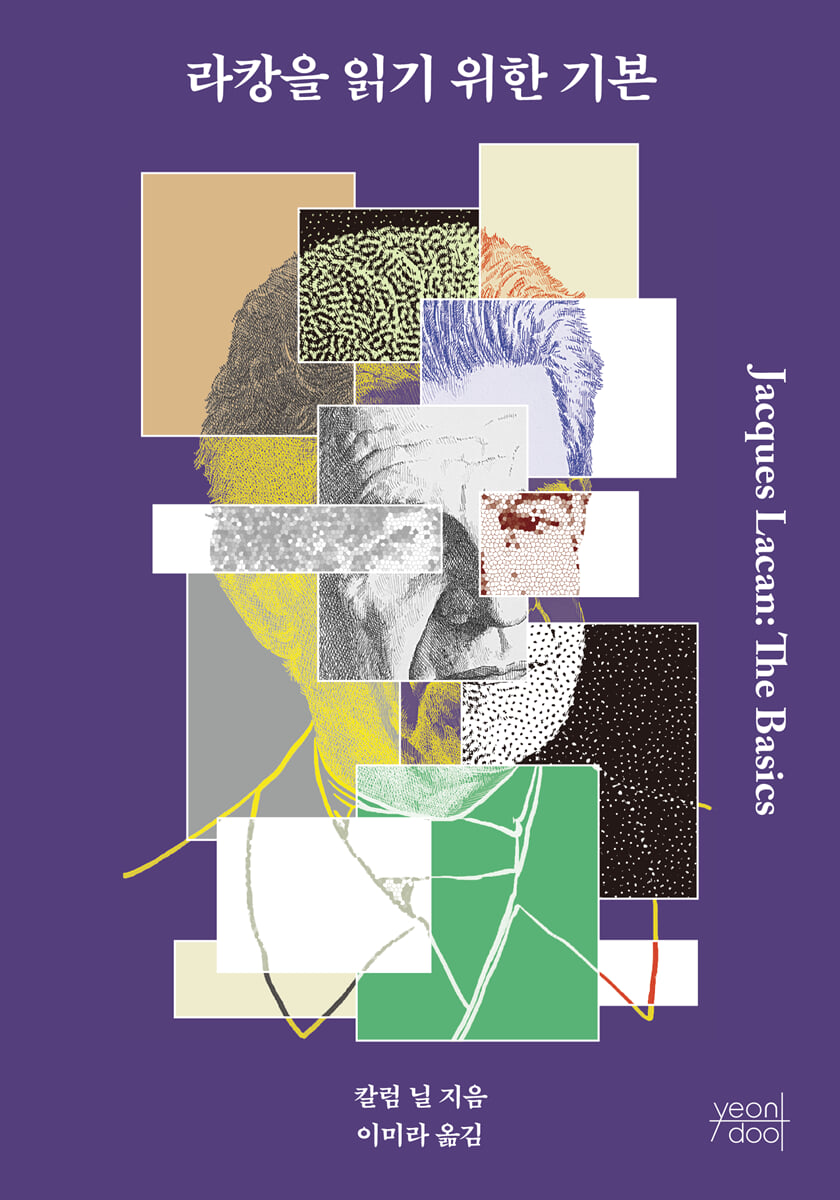 |
Description
Book Introduction
… But have you read Callum Neil’s “The Basics of Reading Lacan”?
This is an introductory book that thoroughly explains the basics of Jacques Lacan's thought.
Author Column Neil introduces Lacan's position in the psychoanalytic field and the philosophical background that influenced the formation of his thought, and then touches on important concepts in Lacan's thought, such as the mirror stage, the imaginary/symbolic/real, objet petit a, the unconscious, and sanctification.
In addition, it provides various reading materials that would be useful for readers who want to know more in-depth information.
Psychoanalysis, which originated from Freud, branched out into various branches through several successors.
The path pioneered by Lacan has particularly extended far and wide, leaving a deep mark on modern literature, film studies, political science, psychology, sociology, and philosophy.
This is why even those who are not professionally studying psychoanalysis or working in a related field can benefit from reading and understanding Lacan to understand themselves and the world around them.
As many scholars agree, Lacan's works are not easy to read and understand.
On the surface, this is due to the play on words using French, new words created by Lacan himself, and sentences written in an intentionally ambiguous manner.
In terms of content, his novel claims shake up beliefs we had never questioned before.
"The Basics of Reading Lacan" never conceals this dual difficulty, but supports the reader's steps so that he or she can approach Lacan's thought with courage.
This book, which outlines the overall flow of Lacan's thought from its inception to its influence, while never missing the subtle differences and details, will serve as a solid stepping stone for anyone seeking to understand Lacan, his work, and, above all, their relationship with the world.
This is an introductory book that thoroughly explains the basics of Jacques Lacan's thought.
Author Column Neil introduces Lacan's position in the psychoanalytic field and the philosophical background that influenced the formation of his thought, and then touches on important concepts in Lacan's thought, such as the mirror stage, the imaginary/symbolic/real, objet petit a, the unconscious, and sanctification.
In addition, it provides various reading materials that would be useful for readers who want to know more in-depth information.
Psychoanalysis, which originated from Freud, branched out into various branches through several successors.
The path pioneered by Lacan has particularly extended far and wide, leaving a deep mark on modern literature, film studies, political science, psychology, sociology, and philosophy.
This is why even those who are not professionally studying psychoanalysis or working in a related field can benefit from reading and understanding Lacan to understand themselves and the world around them.
As many scholars agree, Lacan's works are not easy to read and understand.
On the surface, this is due to the play on words using French, new words created by Lacan himself, and sentences written in an intentionally ambiguous manner.
In terms of content, his novel claims shake up beliefs we had never questioned before.
"The Basics of Reading Lacan" never conceals this dual difficulty, but supports the reader's steps so that he or she can approach Lacan's thought with courage.
This book, which outlines the overall flow of Lacan's thought from its inception to its influence, while never missing the subtle differences and details, will serve as a solid stepping stone for anyone seeking to understand Lacan, his work, and, above all, their relationship with the world.
index
To Korean readers
Chapter 1.
Who is Jacques Lacan?
Chapter 2.
philosophical context
Chapter 3.
Mirror stage
Chapter 4.
Imaginary/Symbolic/Real
Chapter 5.
Objet Petit A
Chapter 6.
unconscious
Chapter 7.
Seonghwa
Chapter 8.
So what?
Chapter 9.
So what now?
Glossary of terms
References
Acknowledgements
Translator's Note
Chapter 1.
Who is Jacques Lacan?
Chapter 2.
philosophical context
Chapter 3.
Mirror stage
Chapter 4.
Imaginary/Symbolic/Real
Chapter 5.
Objet Petit A
Chapter 6.
unconscious
Chapter 7.
Seonghwa
Chapter 8.
So what?
Chapter 9.
So what now?
Glossary of terms
References
Acknowledgements
Translator's Note
Into the book
Lacan's sin was to question and oppose one of the core orthodox tenets of psychoanalytic practice.
--- p.26
Hegel, in opposition to Descartes and Locke, argued that one's self arises in relationships with others.
Therefore, oneself cannot be understood as a starting point.
The self is always a secondary being that arises from encounters with others.
--- p.49
Lacan challenges this notion and proposes the less comforting idea that there is nothing beyond the illusion of self we perceive through the mirror.
To put it a little differently, the ideas we get through the mirror are the basis of our identity, and nothing exists more fundamentally than that.
--- p.59
The idea of a world uncontaminated by language is a fantasy.
It is a comforting fantasy in many ways.
One could even say that this goes to the heart of what the term fantasy means in psychoanalytic theory.
--- p.75
For Lacan, everything else is a substitute for the 'objet petit a'.
Lacan argues that all the empirical or even abstract things we desire (e.g. love or happiness) are substitutes for the 'objet petit a'.
And since they are substitutes for 'objet petit a', acquiring them never scratches the itch.
--- p.97~98
Associations are made, sentences open up certain possibilities, and signifiers resonate.
--- p.123
If language is a symbolic order, and men are entirely subject to the symbolic order while women are not, then there is an inevitable and fundamental discrepancy in the relationship of each sexual position to language.
The key implication from this is that there is no place where one can express the concept of sexual difference without being tainted by bias.
There is no such thing as a neutral or external position.
--- p.142
None of us are ever singular.
We are complex (in the original sense of being made up of many different parts), conflicting, contradictory, and imperfect.
--- p.154
When Lacan spoke of a 'return to Freud', one thing he was noticing was Freud's constant questioning of himself, his reconsideration of his own thinking, and his honesty in acknowledging that he did not have all the answers, that he had not produced a complete (and therefore closed) theory.
Returning to Freud, Lacan also emphasized these elements in his own research.
Therefore, to read Lacan in a Lacanian way, one must always read him as open to questioning and ready to develop.
--- p.26
Hegel, in opposition to Descartes and Locke, argued that one's self arises in relationships with others.
Therefore, oneself cannot be understood as a starting point.
The self is always a secondary being that arises from encounters with others.
--- p.49
Lacan challenges this notion and proposes the less comforting idea that there is nothing beyond the illusion of self we perceive through the mirror.
To put it a little differently, the ideas we get through the mirror are the basis of our identity, and nothing exists more fundamentally than that.
--- p.59
The idea of a world uncontaminated by language is a fantasy.
It is a comforting fantasy in many ways.
One could even say that this goes to the heart of what the term fantasy means in psychoanalytic theory.
--- p.75
For Lacan, everything else is a substitute for the 'objet petit a'.
Lacan argues that all the empirical or even abstract things we desire (e.g. love or happiness) are substitutes for the 'objet petit a'.
And since they are substitutes for 'objet petit a', acquiring them never scratches the itch.
--- p.97~98
Associations are made, sentences open up certain possibilities, and signifiers resonate.
--- p.123
If language is a symbolic order, and men are entirely subject to the symbolic order while women are not, then there is an inevitable and fundamental discrepancy in the relationship of each sexual position to language.
The key implication from this is that there is no place where one can express the concept of sexual difference without being tainted by bias.
There is no such thing as a neutral or external position.
--- p.142
None of us are ever singular.
We are complex (in the original sense of being made up of many different parts), conflicting, contradictory, and imperfect.
--- p.154
When Lacan spoke of a 'return to Freud', one thing he was noticing was Freud's constant questioning of himself, his reconsideration of his own thinking, and his honesty in acknowledging that he did not have all the answers, that he had not produced a complete (and therefore closed) theory.
Returning to Freud, Lacan also emphasized these elements in his own research.
Therefore, to read Lacan in a Lacanian way, one must always read him as open to questioning and ready to develop.
--- p.179~180
Publisher's Review
An Introduction to Lacan That Helps You Understand the Meaning of "Basics"
Lacan's notoriously difficult writings and lectures pose a dilemma for those who seek to interpret them, especially authors of introductory texts.
This is because, in the interest of preventing those who are first encountering Lacan's ideas from being frightened and running away, if we try to trim the protruding and curved parts too neatly, we are likely to end up leading beginners in the wrong direction.
In some ways, Lacan's writings are deliberately ambiguous, so attempts to explain them simply and clearly end up distorting his thoughts and intentions.
Callum Neil, author of "The Basics of Reading Lacan," consistently cautions himself against falling into such traps and introduces the basic concepts for reading Lacan.
Although often misunderstood, basics are not 'easy' or 'beginner'.
The basics are the pillars that support the world, so they should be even more strict and solid.
So setting the basics is usually tedious and painful.
The author walks this difficult path with us as a steadfast companion and guide.
The wealth of examples and analogies he presents are like well-made, functional shoes.
It's not too firm to strain your knees, nor is it too soft to prevent you from training the muscles you need to keep walking.
When giving examples and analogies, clearly state their effects and limitations.
This is why it is okay for us to trust the author and follow him.
Moving forward in imperfection and impossibility
The author, who has walked this path dozens, hundreds of times before guiding us, says that someday we too must walk it alone.
One day, we will have to read Lacan's works themselves, not introductory texts or commentaries, and in doing so, we will form our own way of understanding Lacan.
We also provide a list of various guides who can take us further afield until we can do so.
Traces of psychoanalysis, which Lacan inherited from Freud and developed independently, remain in many places in the world we live in today.
Korean cultural content is no exception.
As the author points out, the influence of psychoanalysis and Lacanian themes is clear in Oldboy and Parasite, and books that explain Lacan's works in Korean appear in the background of Squid Game.
It is up to each reader to decide whether to proceed to read Lacan's works on their own or to stop here.
However, we live in a world influenced by Lacan's ideas and perspectives.
Reading Lacan means gaining another pair of eyes to understand the relationship between oneself and the world.
You may come to understand and accept the fundamental dissonance that you cannot shake off no matter how hard you try.
Lacan, like Freud, always kept open the possibility of further development of his thinking.
The author acknowledges from the outset the impossibility of explaining Lacan's ideas in an easily understandable way.
Imira, who translated 『Basics for Reading Lacan』, also talks about the essential loss that occurs when the author, who initially ‘translated’ Lacan’s thought, retranslates it into Korean.
Properly reading and understanding Lacan begins with acknowledging and exploring this incompleteness and impossibility.
It will certainly be an amazing experience to take a step closer to understanding Lacan's thought, and further, to understanding oneself and the world, through this book, which is a layer upon layer of imperfect and impossible yet rigorous and intense attempts.
Lacan's notoriously difficult writings and lectures pose a dilemma for those who seek to interpret them, especially authors of introductory texts.
This is because, in the interest of preventing those who are first encountering Lacan's ideas from being frightened and running away, if we try to trim the protruding and curved parts too neatly, we are likely to end up leading beginners in the wrong direction.
In some ways, Lacan's writings are deliberately ambiguous, so attempts to explain them simply and clearly end up distorting his thoughts and intentions.
Callum Neil, author of "The Basics of Reading Lacan," consistently cautions himself against falling into such traps and introduces the basic concepts for reading Lacan.
Although often misunderstood, basics are not 'easy' or 'beginner'.
The basics are the pillars that support the world, so they should be even more strict and solid.
So setting the basics is usually tedious and painful.
The author walks this difficult path with us as a steadfast companion and guide.
The wealth of examples and analogies he presents are like well-made, functional shoes.
It's not too firm to strain your knees, nor is it too soft to prevent you from training the muscles you need to keep walking.
When giving examples and analogies, clearly state their effects and limitations.
This is why it is okay for us to trust the author and follow him.
Moving forward in imperfection and impossibility
The author, who has walked this path dozens, hundreds of times before guiding us, says that someday we too must walk it alone.
One day, we will have to read Lacan's works themselves, not introductory texts or commentaries, and in doing so, we will form our own way of understanding Lacan.
We also provide a list of various guides who can take us further afield until we can do so.
Traces of psychoanalysis, which Lacan inherited from Freud and developed independently, remain in many places in the world we live in today.
Korean cultural content is no exception.
As the author points out, the influence of psychoanalysis and Lacanian themes is clear in Oldboy and Parasite, and books that explain Lacan's works in Korean appear in the background of Squid Game.
It is up to each reader to decide whether to proceed to read Lacan's works on their own or to stop here.
However, we live in a world influenced by Lacan's ideas and perspectives.
Reading Lacan means gaining another pair of eyes to understand the relationship between oneself and the world.
You may come to understand and accept the fundamental dissonance that you cannot shake off no matter how hard you try.
Lacan, like Freud, always kept open the possibility of further development of his thinking.
The author acknowledges from the outset the impossibility of explaining Lacan's ideas in an easily understandable way.
Imira, who translated 『Basics for Reading Lacan』, also talks about the essential loss that occurs when the author, who initially ‘translated’ Lacan’s thought, retranslates it into Korean.
Properly reading and understanding Lacan begins with acknowledging and exploring this incompleteness and impossibility.
It will certainly be an amazing experience to take a step closer to understanding Lacan's thought, and further, to understanding oneself and the world, through this book, which is a layer upon layer of imperfect and impossible yet rigorous and intense attempts.
GOODS SPECIFICS
- Date of issue: December 1, 2025
- Page count, weight, size: 208 pages | 140*200*20mm
- ISBN13: 9791191840490
- ISBN10: 1191840492
You may also like
카테고리
korean


korean

![GQ KOREA Mark (Monthly): December [2025]](http://librairie.coreenne.fr/cdn/shop/files/8ef265dbbfbf186523ed75ba7319009d.jpg?v=1765340328&width=3840)


