

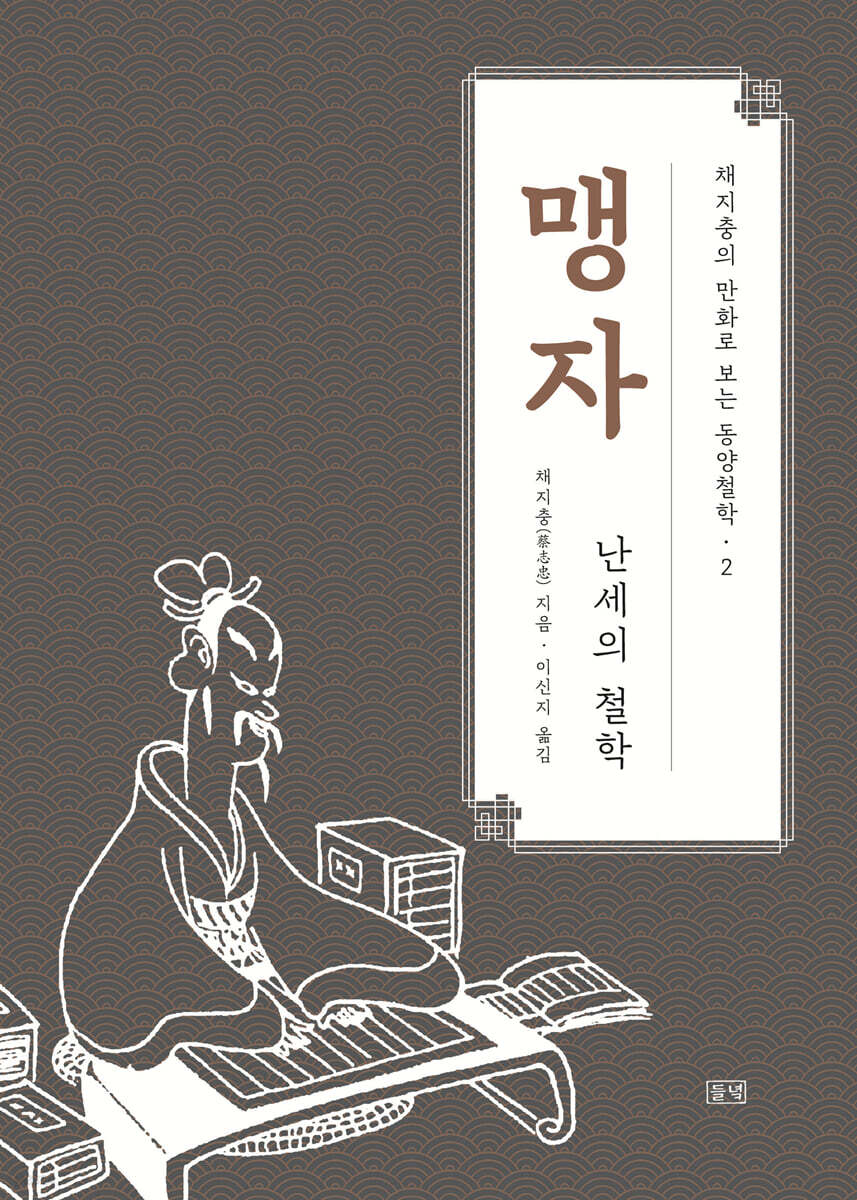
Chae Ji-chung's Cartoons on Eastern Philosophy 2: Mencius
 |
Description
Book Introduction
A comic series loved by hundreds of millions of people in 45 countries!
Approach Eastern philosophy in an easy and fun way through comics, and learn its philosophical depth!
The "Cai Zhichung's Oriental Philosophy Through Comics" series, which has sold over 40 million copies in the Greater China region and been translated into 45 languages worldwide, reaching hundreds of millions of readers, has arrived! What accounts for the global success of Cai Zhichung's comics? It's because they've made Eastern philosophy, often considered complex or profound, accessible to readers by presenting it in an easy and engaging way through comics.
Chae Ji-chung's simple yet readable drawing style beautifully expresses the message of Eastern philosophy.
Readers can learn philosophy in an easy and fun way, while also experiencing the profound depth of Eastern philosophy.
You can have both fun and learning.
Chae Ji-chung was awarded the Prince Claus Award in the Netherlands and the Golden Comics Award for Lifetime Achievement in recognition of his international contribution to re-creating Eastern philosophy in the form of comics in an easily accessible way.
Approach Eastern philosophy in an easy and fun way through comics, and learn its philosophical depth!
The "Cai Zhichung's Oriental Philosophy Through Comics" series, which has sold over 40 million copies in the Greater China region and been translated into 45 languages worldwide, reaching hundreds of millions of readers, has arrived! What accounts for the global success of Cai Zhichung's comics? It's because they've made Eastern philosophy, often considered complex or profound, accessible to readers by presenting it in an easy and engaging way through comics.
Chae Ji-chung's simple yet readable drawing style beautifully expresses the message of Eastern philosophy.
Readers can learn philosophy in an easy and fun way, while also experiencing the profound depth of Eastern philosophy.
You can have both fun and learning.
Chae Ji-chung was awarded the Prince Claus Award in the Netherlands and the Golden Comics Award for Lifetime Achievement in recognition of his international contribution to re-creating Eastern philosophy in the form of comics in an easily accessible way.
- You can preview some of the book's contents.
Preview
index
Introduction 4
The Life of Mencius, Vol. 9
King Hye of Yang, Chapter 21
Why does the king only speak of profit? - Chapter 1, Chapter 22 of the Book of King Hye of Liang
Fifty steps mock a hundred steps - Chapter 3, Chapter 25, of King Hui of Liang
Excuses - Chapter 3, Chapter 27 of the Book of King Hye of Yang
Not Doing and Not Being Able to Do - Chapter 7, Chapter 28 of King Hui of Liang
Great Courage and Small Courage - Chapter 3, Part 2, Chapter 29
Poor People - King Hui of Liang, Part 2, Chapter 5, Chapter 30
Is it right for a subject to kill his king? - Chapter 8, Chapter 31 of the Book of King Hye of Liang
Gongsun Chou Chapter 32
Don't Overdo It - Chapter 12, Part 33 of Gongsun Qiu
Subduing People with Virtue - Chapter 3, Part 34 of Gongsun Qiu
Compassion - Chapter 6, Part 35 of Gongsun Qiu
Sharing Good Deeds with Others - Chapter 8, Part 36 of Gongsun Qiu
Deungmun Gongpyeon 37
What Kind of Person Am I? - Chapter 1, Volume 38 of the Book of Deungmun
He who bends himself cannot correct others - Chapter 1, Section 39 of the Book of Changes
The Great Men - Chapter 2, Part 41 of Deungmun Gongpyeon
Chicken Thief - Chapter 8, Part 42 of the Deungmun Gongpyeon
Chapter 43
Kings and Subjects Should Follow Yao and Shun's Example - Chapter 2, Part 44 of Iru
Reflect on Yourself - Chapter 4, Part 45
The Root of the World - Chapter 5, Part 47
The End of an Unworthy Person - Chapter 8, Part 48
The Cause of All Mistakes is Yourself - Iru-pyeon, Chapter 8, Part 49
How to Make the World Peaceful - Chapter 11, Volume 50
You can read a person's heart by looking into their eyes - Iru-pyeon, Chapter 5, Part 51
How to Save the World? - Chapter 17, Volume 52
Teaching others without knowing your own shortcomings is a disease. - Iru-pyeon, Chapter 23, Part 54
The Three Unfilial Piety - Chapter 26, Part 55
Politics Must Seek Fundamental Solutions - Iru-pyeon Ha, Chapter 2, Part 56
The King and His Subjects Must Be One - Chapter 3, Part 57
Killing without any fault - Chapter 4, Part 58 of Iru-pyeon Ha
True Courtesy and Righteousness - Chapter 6, Part 59
What Not to Do - Chapter 8, Part 60
Don't Point Out Others' Faults - Chapter 9, Part 61
Avoid Excessive Actions - Iru-pyeon Ha, Chapter 10, Vol. 62
Words and actions must follow righteousness - Iru-pyeon Ha, Chapter 1, Chapter 63
Maintaining a Pure and Original Heart - Chapter 2, Part 64
We Must Learn Widely - Iru-pyeon Ha, Chapter 15, Part 65
Acting in accordance with benevolence - Chapter 19, Part 66
Confucius's Extramarital Affairs - Chapter 22, Part 67
A Bad Student is the Master's Fault - Chapter 24, Part 68
Self-cultivation is important - Iru-pyeon Ha, Chapter 25, Volume 72
The Five Unfilial Piety - Chapter 30, Part 73
Practicing the Way of Benevolence and Righteousness Becomes a Sage - Chapter 32, Part 74
The Begging Husband - Chapter 33, Part 75
Full-length novel 78
A small person can be fooled temporarily - Chapter 2, Chapter 79 of Manjangpyeon
Why Heaven Gave Birth to the People - Manjangpyeon, Part 1, Chapter 7, Chapter 80
Gojapyeon 81
Intention comes from within - Chapter 4, Section 82 of the Gojapyeon
Forsaking Life and Choosing Righteousness - Chapter 10, Part 85 of the Book of Goja
Benevolence is the heart, and righteousness is the path a person should walk - Chapter 11, Section 86 of the Book of Goja
Self-cultivation - Chapter 13, Part 87 of the Gao Zi chapter
As water overcomes fire, so humanity overcomes fire. - Chapter 18, 88 of the Book of Goja
There's a Method to Everything - Chapter 20, Part 89
True Heart 90
Give Your Heart - Chapter 1, Part 91
Upholding the Mandate of Heaven with Righteousness - Chapter 2, Part 92 of the True Heart
Realizing Itself - Chapter 10 of the True Heart, Volume 16, pp. 93-94
Things You Shouldn't Do, Things You Shouldn't Be Greedy About - Chapter 17, Part 95 of "Sincere Truth"
You Can Develop Talent Even in Difficult Environments - Chapter 18, Volume 96 of "Sincere Story"
The Three Joys of a Gentleman - Chapter 20, Part 97
Climbing a High Mountain - Chapter 24, Part 98
The Difference Between Pure Wages and Do-Cheok - Chapter 25, Part 100 of the True Truth
Chapter 28, Part 101 of The Incision and True Heart
Don't Give Up Halfway - Chapter 29, Part 102 of "Sincere Truth"
Without Respect, One Will Not Hold Office - Chapter 37, Part 103 of the True Heart
The Five Teachings of a Gentleman - Chapter 40, Part 1, Chapter 104
The Way of the World - Chapter 42, Part 105
A gentleman loves the people first, then things - Chapter 45, Part 1, Chapter 106
Invincible - Chapter 3, Part 107
True Truth Depends on One's Own Effort - Chapter 5, Part 108
Adults Don't Ride the Environment - Jinsimpyeon Ha, Chapter 6, 109
Correct Yourself First - Chapter 9, Part 110 of the True Heart
Accumulate Virtue - Chapter 10, Part 111 of the True Heart
A Man Who Respects Honor - Chapter 11, Part 112
The people are precious, the ruler is light - Jinsimpyeon Ha, Chapter 14, 113
In-jin is the person - Jinsimpyeon Ha Chapter 16 114
Cultivate Your Own Virtue and Then Guide Others - Jinsimpyeon Ha, Chapter 20, 115
Constant Effort - Chapter 21, Volume 116
The Error of Drawing Conclusions Based on a Single Source - Chapter 22, Part 117
Stick to Your Principles - Chapter 23, Part 118
The Secret to Cultivating the Mind - Chapter 25, Volume 120
The Life of Mencius, Vol. 9
King Hye of Yang, Chapter 21
Why does the king only speak of profit? - Chapter 1, Chapter 22 of the Book of King Hye of Liang
Fifty steps mock a hundred steps - Chapter 3, Chapter 25, of King Hui of Liang
Excuses - Chapter 3, Chapter 27 of the Book of King Hye of Yang
Not Doing and Not Being Able to Do - Chapter 7, Chapter 28 of King Hui of Liang
Great Courage and Small Courage - Chapter 3, Part 2, Chapter 29
Poor People - King Hui of Liang, Part 2, Chapter 5, Chapter 30
Is it right for a subject to kill his king? - Chapter 8, Chapter 31 of the Book of King Hye of Liang
Gongsun Chou Chapter 32
Don't Overdo It - Chapter 12, Part 33 of Gongsun Qiu
Subduing People with Virtue - Chapter 3, Part 34 of Gongsun Qiu
Compassion - Chapter 6, Part 35 of Gongsun Qiu
Sharing Good Deeds with Others - Chapter 8, Part 36 of Gongsun Qiu
Deungmun Gongpyeon 37
What Kind of Person Am I? - Chapter 1, Volume 38 of the Book of Deungmun
He who bends himself cannot correct others - Chapter 1, Section 39 of the Book of Changes
The Great Men - Chapter 2, Part 41 of Deungmun Gongpyeon
Chicken Thief - Chapter 8, Part 42 of the Deungmun Gongpyeon
Chapter 43
Kings and Subjects Should Follow Yao and Shun's Example - Chapter 2, Part 44 of Iru
Reflect on Yourself - Chapter 4, Part 45
The Root of the World - Chapter 5, Part 47
The End of an Unworthy Person - Chapter 8, Part 48
The Cause of All Mistakes is Yourself - Iru-pyeon, Chapter 8, Part 49
How to Make the World Peaceful - Chapter 11, Volume 50
You can read a person's heart by looking into their eyes - Iru-pyeon, Chapter 5, Part 51
How to Save the World? - Chapter 17, Volume 52
Teaching others without knowing your own shortcomings is a disease. - Iru-pyeon, Chapter 23, Part 54
The Three Unfilial Piety - Chapter 26, Part 55
Politics Must Seek Fundamental Solutions - Iru-pyeon Ha, Chapter 2, Part 56
The King and His Subjects Must Be One - Chapter 3, Part 57
Killing without any fault - Chapter 4, Part 58 of Iru-pyeon Ha
True Courtesy and Righteousness - Chapter 6, Part 59
What Not to Do - Chapter 8, Part 60
Don't Point Out Others' Faults - Chapter 9, Part 61
Avoid Excessive Actions - Iru-pyeon Ha, Chapter 10, Vol. 62
Words and actions must follow righteousness - Iru-pyeon Ha, Chapter 1, Chapter 63
Maintaining a Pure and Original Heart - Chapter 2, Part 64
We Must Learn Widely - Iru-pyeon Ha, Chapter 15, Part 65
Acting in accordance with benevolence - Chapter 19, Part 66
Confucius's Extramarital Affairs - Chapter 22, Part 67
A Bad Student is the Master's Fault - Chapter 24, Part 68
Self-cultivation is important - Iru-pyeon Ha, Chapter 25, Volume 72
The Five Unfilial Piety - Chapter 30, Part 73
Practicing the Way of Benevolence and Righteousness Becomes a Sage - Chapter 32, Part 74
The Begging Husband - Chapter 33, Part 75
Full-length novel 78
A small person can be fooled temporarily - Chapter 2, Chapter 79 of Manjangpyeon
Why Heaven Gave Birth to the People - Manjangpyeon, Part 1, Chapter 7, Chapter 80
Gojapyeon 81
Intention comes from within - Chapter 4, Section 82 of the Gojapyeon
Forsaking Life and Choosing Righteousness - Chapter 10, Part 85 of the Book of Goja
Benevolence is the heart, and righteousness is the path a person should walk - Chapter 11, Section 86 of the Book of Goja
Self-cultivation - Chapter 13, Part 87 of the Gao Zi chapter
As water overcomes fire, so humanity overcomes fire. - Chapter 18, 88 of the Book of Goja
There's a Method to Everything - Chapter 20, Part 89
True Heart 90
Give Your Heart - Chapter 1, Part 91
Upholding the Mandate of Heaven with Righteousness - Chapter 2, Part 92 of the True Heart
Realizing Itself - Chapter 10 of the True Heart, Volume 16, pp. 93-94
Things You Shouldn't Do, Things You Shouldn't Be Greedy About - Chapter 17, Part 95 of "Sincere Truth"
You Can Develop Talent Even in Difficult Environments - Chapter 18, Volume 96 of "Sincere Story"
The Three Joys of a Gentleman - Chapter 20, Part 97
Climbing a High Mountain - Chapter 24, Part 98
The Difference Between Pure Wages and Do-Cheok - Chapter 25, Part 100 of the True Truth
Chapter 28, Part 101 of The Incision and True Heart
Don't Give Up Halfway - Chapter 29, Part 102 of "Sincere Truth"
Without Respect, One Will Not Hold Office - Chapter 37, Part 103 of the True Heart
The Five Teachings of a Gentleman - Chapter 40, Part 1, Chapter 104
The Way of the World - Chapter 42, Part 105
A gentleman loves the people first, then things - Chapter 45, Part 1, Chapter 106
Invincible - Chapter 3, Part 107
True Truth Depends on One's Own Effort - Chapter 5, Part 108
Adults Don't Ride the Environment - Jinsimpyeon Ha, Chapter 6, 109
Correct Yourself First - Chapter 9, Part 110 of the True Heart
Accumulate Virtue - Chapter 10, Part 111 of the True Heart
A Man Who Respects Honor - Chapter 11, Part 112
The people are precious, the ruler is light - Jinsimpyeon Ha, Chapter 14, 113
In-jin is the person - Jinsimpyeon Ha Chapter 16 114
Cultivate Your Own Virtue and Then Guide Others - Jinsimpyeon Ha, Chapter 20, 115
Constant Effort - Chapter 21, Volume 116
The Error of Drawing Conclusions Based on a Single Source - Chapter 22, Part 117
Stick to Your Principles - Chapter 23, Part 118
The Secret to Cultivating the Mind - Chapter 25, Volume 120
Detailed image

Publisher's Review
Eastern philosophy, all its essentials, in just one hour!
An easy and fun-to-access series on Eastern philosophy that you won't find anywhere else!
When we think of Eastern philosophy, we might initially think of it as nothing more than a shadow of past values or a thing of the past.
However, many schools of thought that originated in the East, especially Confucianism and Taoism, have influenced many parts of our world.
To gain a deeper understanding of what ideas have influenced East Asians and how history has developed based on those ideas, studying Eastern philosophy is essential.
The problem is the prejudice that Eastern philosophy is difficult, abstruse, or boring.
The series “Donghak Philosophy in Chae Ji-chung’s Comics” has captivated hundreds of millions of readers worldwide, making a global contribution to overcoming such prejudices.
This is because it was created so that you can read through Eastern philosophy in just 'one hour' through funny and entertaining pictures and lines that summarize the core of the ideas.
Readers will quickly master Eastern philosophy by following the cute and witty illustrations of genius cartoonist Chae Ji-chung.
Confucianism, Taoism, Legalism, and military strategy at a glance through comics.
Learn about the lives of thinkers and the history surrounding them in a fun way!
The series “Oriental Philosophy Through Chae Ji-chung’s Comics” was created to help readers understand Confucianism, Taoism, Legalism, and even military strategy.
As readers read sequentially, they will gradually become familiar with the contents, and they will be able to compare and understand the key points of how each thought is related to another, and how the arguments of the thinkers criticize other schools of thought.
First, we explore Confucianism, which has had a substantial historical impact not only on East Asia as a whole but also on our own history.
You can examine the Analects, the Great Learning and the Doctrine of the Mean, which contain the philosophy of Confucius that runs through the very core of Confucianism, and the Mencius, which contributed greatly to passing down Confucianism to later generations after Confucius.
Next, we will examine Taoist thought, which took a different path from Confucianism and criticized it.
Readers can also gain a clear understanding of 『Laozi』, which is said to have created Taoist thought, 『Zhuangzi』, which developed Taoist thought and had a wide influence on the West, and 『Liezi』, which is relatively less well known compared to these two philosophers.
『Han Feizi』, a representative of the Legalist school, is also not to be missed, and 『The Art of War』, which contains practical strategies and tactics, can also be examined.
Readers will have the opportunity to easily examine the thoughts of Han Feizi, who was called the most realistic politician of his time, and how he criticized Confucianism for its impracticality, as well as why The Art of War, which contains Sun Tzu's thoughts on tactics and strategy, is so famous worldwide.
Philosophy is more difficult if you don't know the context of the times.
The greatest strength of this comic is that it depicts the lives of the philosophers, allowing us to see what era they lived in and how they lived.
Readers will learn both the philosophy and the history of the period, and will be able to apply it to the modern context.
An easy and fun-to-access series on Eastern philosophy that you won't find anywhere else!
When we think of Eastern philosophy, we might initially think of it as nothing more than a shadow of past values or a thing of the past.
However, many schools of thought that originated in the East, especially Confucianism and Taoism, have influenced many parts of our world.
To gain a deeper understanding of what ideas have influenced East Asians and how history has developed based on those ideas, studying Eastern philosophy is essential.
The problem is the prejudice that Eastern philosophy is difficult, abstruse, or boring.
The series “Donghak Philosophy in Chae Ji-chung’s Comics” has captivated hundreds of millions of readers worldwide, making a global contribution to overcoming such prejudices.
This is because it was created so that you can read through Eastern philosophy in just 'one hour' through funny and entertaining pictures and lines that summarize the core of the ideas.
Readers will quickly master Eastern philosophy by following the cute and witty illustrations of genius cartoonist Chae Ji-chung.
Confucianism, Taoism, Legalism, and military strategy at a glance through comics.
Learn about the lives of thinkers and the history surrounding them in a fun way!
The series “Oriental Philosophy Through Chae Ji-chung’s Comics” was created to help readers understand Confucianism, Taoism, Legalism, and even military strategy.
As readers read sequentially, they will gradually become familiar with the contents, and they will be able to compare and understand the key points of how each thought is related to another, and how the arguments of the thinkers criticize other schools of thought.
First, we explore Confucianism, which has had a substantial historical impact not only on East Asia as a whole but also on our own history.
You can examine the Analects, the Great Learning and the Doctrine of the Mean, which contain the philosophy of Confucius that runs through the very core of Confucianism, and the Mencius, which contributed greatly to passing down Confucianism to later generations after Confucius.
Next, we will examine Taoist thought, which took a different path from Confucianism and criticized it.
Readers can also gain a clear understanding of 『Laozi』, which is said to have created Taoist thought, 『Zhuangzi』, which developed Taoist thought and had a wide influence on the West, and 『Liezi』, which is relatively less well known compared to these two philosophers.
『Han Feizi』, a representative of the Legalist school, is also not to be missed, and 『The Art of War』, which contains practical strategies and tactics, can also be examined.
Readers will have the opportunity to easily examine the thoughts of Han Feizi, who was called the most realistic politician of his time, and how he criticized Confucianism for its impracticality, as well as why The Art of War, which contains Sun Tzu's thoughts on tactics and strategy, is so famous worldwide.
Philosophy is more difficult if you don't know the context of the times.
The greatest strength of this comic is that it depicts the lives of the philosophers, allowing us to see what era they lived in and how they lived.
Readers will learn both the philosophy and the history of the period, and will be able to apply it to the modern context.
GOODS SPECIFICS
- Date of issue: December 31, 2024
- Page count, weight, size: 120 pages | 214g | 150*210*12mm
- ISBN13: 9791159259098
- ISBN10: 1159259097
You may also like
카테고리
korean


korean

![GQ KOREA Mark (Monthly): December [2025]](http://librairie.coreenne.fr/cdn/shop/files/8ef265dbbfbf186523ed75ba7319009d.jpg?v=1765340328&width=3840)


