

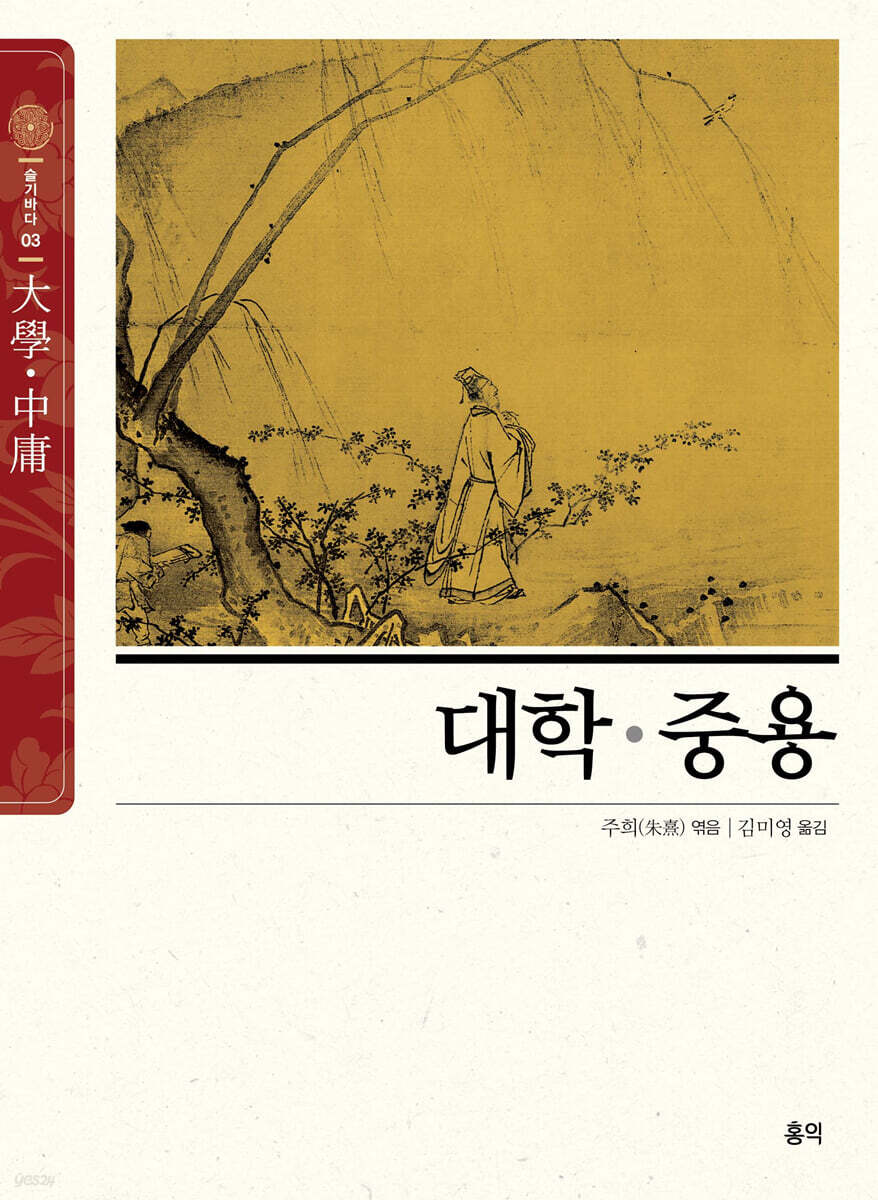
Great Learning and the Doctrine of the Mean
 |
Description
Book Introduction
To celebrate the sale of 2.5 million copies of the Oriental Classics Seulgi Bada series, we present an easy-to-read Special Edition wireless binding!
It has been 27 years since Hongik Publishing, a renowned publisher of Oriental classics, published 17 volumes of classic masterpieces, including the Analects, under the title “Oriental Classics: The Sea of Wisdom Series.”
Thanks to the support of our readers, the series has sold over 2.5 million copies.
To commemorate this and to thank our readers for their support, Hongik has changed the previous hardcover edition to a more convenient, wireless-bound edition.
This special edition features translations suited to modern readers, rich commentary, and explanations of the historical background and philosophy within the classics in simple, clear language, allowing anyone to easily understand the discourse conveyed in these classics.
We look forward to your support for this special 17-volume wireless-bound edition of Hongik's "Oriental Classics: The Sea of Wisdom Series," the best-selling book in the field of Eastern philosophy for the past 27 years, which proves its raison d'être.
It has been 27 years since Hongik Publishing, a renowned publisher of Oriental classics, published 17 volumes of classic masterpieces, including the Analects, under the title “Oriental Classics: The Sea of Wisdom Series.”
Thanks to the support of our readers, the series has sold over 2.5 million copies.
To commemorate this and to thank our readers for their support, Hongik has changed the previous hardcover edition to a more convenient, wireless-bound edition.
This special edition features translations suited to modern readers, rich commentary, and explanations of the historical background and philosophy within the classics in simple, clear language, allowing anyone to easily understand the discourse conveyed in these classics.
We look forward to your support for this special 17-volume wireless-bound edition of Hongik's "Oriental Classics: The Sea of Wisdom Series," the best-selling book in the field of Eastern philosophy for the past 27 years, which proves its raison d'être.
index
Translator's Note
Introduction to Confucian ethics, [The Great Learning] and [The Doctrine of the Mean]
[University] Table of Contents
Chapter 1: Confucius's words are explained and interpreted by Zengzi.
Chapter 1 “Illuminating Bright Virtue” [On Bright Virtue]
Chapter 2 “Renewing the People” [Regarding the New People]
Chapter 3: “Abide in the Ultimate Good” [Regarding the Ultimate Good]
Chapter 4, 'The Root and the End' [Regarding the Root and the End]
Chapter 5: “Exploring Things and Acquiring the Ultimate Knowledge” [On Exploring Things and Acquiring the Ultimate Knowledge]
Chapter 6 “Being Sincere in Your Will” [Regarding Sincerity]
Chapter 7: “Correcting the Mind and Cultivating the Body” [Regarding Correcting the Mind and Cultivating the Body]
Chapter 8: “Cultivate your body and keep your home in order” [Regarding self-cultivation and ordering your home]
Chapter 9: “Ordering the House and Governing the State” [Regarding Ordering the House and Governing the State]
Chapter 10: “Governing the Country and Bringing Peace to the World” [Regarding Governing the Country and Bringing Peace to the World]
[Doctrine of the Mean] Table of Contents
Chapter 1: The Essentials of Confucius's Teachings Explained by Zi-sa
Chapter 2: On the Moderation of the Gentleman and the Small Man
Chapter 3: Praising the Virtue of the Doctrine of the Mean
Chapter 4: Why the Doctrine of the Mean is Not Practiced
Chapter 5: The Way is not practiced because it is not clearly revealed.
Chapter 6: The Wisdom of Net Wages
Chapter 7: The Wisdom of Ordinary People
Chapter 8: On the Adherence of Anhui to the Doctrine of the Mean
Chapter 9: The Doctrine of the Mean is Difficult to Maintain
Chapter 10: On Courage
Chapter 11: The Gate to the Tao
Chapter 12: “The Tao Cannot Be Disengaged for Even a Moment”
Chapter 13: “The action of the Tao is vast, but the cause of its appearance is very profound.”
Chapter 14: The Way a Gentleman Lives
Chapter 15: The Tao Must Be Practiced From Nearby
Chapter 16: Combining Subtlety and Vastness
Chapter 17: The Vastness of Taoist Action (1)
Chapter 18: The Vastness of Taoist Action (2)
Chapter 19: The Vastness of Taoist Action (3)
Chapter 20: On Sincerity
Chapter 21 The Way of Heaven and the Way of Man
Chapter 22: On the Way of Heaven (1)
Chapter 23: On the Way of Man (1)
Chapter 24: On the Way of Heaven (2)
Chapter 25: On the Way of Man (2)
Chapter 26: On the Way of Heaven (3)
Chapter 27: On the Way of Man (3)
Chapter 28: On the Way of Man (4)
Chapter 29: On the Way of Man (5)
Chapter 30: On the Way of Heaven (4)
Chapter 31: On the Way of Heaven (5)
Chapter 32: On the Way of Heaven (6)
Chapter 33: The Essence of [The Doctrine of the Mean]
Introduction to Confucian ethics, [The Great Learning] and [The Doctrine of the Mean]
[University] Table of Contents
Chapter 1: Confucius's words are explained and interpreted by Zengzi.
Chapter 1 “Illuminating Bright Virtue” [On Bright Virtue]
Chapter 2 “Renewing the People” [Regarding the New People]
Chapter 3: “Abide in the Ultimate Good” [Regarding the Ultimate Good]
Chapter 4, 'The Root and the End' [Regarding the Root and the End]
Chapter 5: “Exploring Things and Acquiring the Ultimate Knowledge” [On Exploring Things and Acquiring the Ultimate Knowledge]
Chapter 6 “Being Sincere in Your Will” [Regarding Sincerity]
Chapter 7: “Correcting the Mind and Cultivating the Body” [Regarding Correcting the Mind and Cultivating the Body]
Chapter 8: “Cultivate your body and keep your home in order” [Regarding self-cultivation and ordering your home]
Chapter 9: “Ordering the House and Governing the State” [Regarding Ordering the House and Governing the State]
Chapter 10: “Governing the Country and Bringing Peace to the World” [Regarding Governing the Country and Bringing Peace to the World]
[Doctrine of the Mean] Table of Contents
Chapter 1: The Essentials of Confucius's Teachings Explained by Zi-sa
Chapter 2: On the Moderation of the Gentleman and the Small Man
Chapter 3: Praising the Virtue of the Doctrine of the Mean
Chapter 4: Why the Doctrine of the Mean is Not Practiced
Chapter 5: The Way is not practiced because it is not clearly revealed.
Chapter 6: The Wisdom of Net Wages
Chapter 7: The Wisdom of Ordinary People
Chapter 8: On the Adherence of Anhui to the Doctrine of the Mean
Chapter 9: The Doctrine of the Mean is Difficult to Maintain
Chapter 10: On Courage
Chapter 11: The Gate to the Tao
Chapter 12: “The Tao Cannot Be Disengaged for Even a Moment”
Chapter 13: “The action of the Tao is vast, but the cause of its appearance is very profound.”
Chapter 14: The Way a Gentleman Lives
Chapter 15: The Tao Must Be Practiced From Nearby
Chapter 16: Combining Subtlety and Vastness
Chapter 17: The Vastness of Taoist Action (1)
Chapter 18: The Vastness of Taoist Action (2)
Chapter 19: The Vastness of Taoist Action (3)
Chapter 20: On Sincerity
Chapter 21 The Way of Heaven and the Way of Man
Chapter 22: On the Way of Heaven (1)
Chapter 23: On the Way of Man (1)
Chapter 24: On the Way of Heaven (2)
Chapter 25: On the Way of Man (2)
Chapter 26: On the Way of Heaven (3)
Chapter 27: On the Way of Man (3)
Chapter 28: On the Way of Man (4)
Chapter 29: On the Way of Man (5)
Chapter 30: On the Way of Heaven (4)
Chapter 31: On the Way of Heaven (5)
Chapter 32: On the Way of Heaven (6)
Chapter 33: The Essence of [The Doctrine of the Mean]
Into the book
Jungni says.
“A gentleman follows the mean, while a mean man goes against it.”
The mean of a gentleman is to possess the virtues of a gentleman and act accordingly at the appropriate time. For a small man to go against the mean is to have the mind of a small man and act without any hesitation.
Confucius said:
“The Doctrine of the Mean is supreme! It has long been rare for people to practice it.”
Confucius said:
“I know that the Way is not being practiced.
Because the wise man goes too far, and the foolish man falls short.
I know that you do not know the Way clearly.
Because the wise go too far and the foolish don't reach it.
After things are explored, knowledge is reached.
After you have reached knowledge, your will becomes sincere.
After the will becomes sincere, the mind becomes right.
After the mind is right, the body is purified.
After the body is cleansed, the house becomes neat and tidy.
After the house is in order, the country is governed.
After the country is governed, the whole world becomes peaceful.
“A gentleman follows the mean, while a mean man goes against it.”
The mean of a gentleman is to possess the virtues of a gentleman and act accordingly at the appropriate time. For a small man to go against the mean is to have the mind of a small man and act without any hesitation.
Confucius said:
“The Doctrine of the Mean is supreme! It has long been rare for people to practice it.”
Confucius said:
“I know that the Way is not being practiced.
Because the wise man goes too far, and the foolish man falls short.
I know that you do not know the Way clearly.
Because the wise go too far and the foolish don't reach it.
After things are explored, knowledge is reached.
After you have reached knowledge, your will becomes sincere.
After the will becomes sincere, the mind becomes right.
After the mind is right, the body is purified.
After the body is cleansed, the house becomes neat and tidy.
After the house is in order, the country is governed.
After the country is governed, the whole world becomes peaceful.
---From the text
Publisher's Review
The first book of the Four Books and Three Classics that teach the way to true life
An introductory book to Neo-Confucianism that systematizes the methods of Confucian self-cultivation.
If the teachings of the 《Elementary Learning》 are mainly about learning norms and skills, the teachings of the 《Great Learning》 are about understanding and thinking about the principles of moral behavior so that one can practice morality on one's own.
Furthermore, the Doctrine of the Mean reveals the Way of the sages, that is, the Way of the Confucian sages, which continues from King Yao to King Shun and King Yu, and suggests the possibility that anyone can put it into practice.
Therefore, the Great Learning and the Doctrine of the Mean can be said to be introductory books to Neo-Confucianism that systematize the methods of Confucian self-cultivation.
The Great Learning and the Doctrine of the Mean, which deal with Confucian political philosophy and metaphysical philosophy, have been highly regarded as books that teach a truly valuable life that transcends time.
During the Joseon Dynasty, when Confucianism was dominant, this was the first book of the Four Books and Three Classics, and those who wanted to become scholars used this book to establish their own philosophy and standards for life.
An introductory book to Neo-Confucianism that systematizes the methods of Confucian self-cultivation.
If the teachings of the 《Elementary Learning》 are mainly about learning norms and skills, the teachings of the 《Great Learning》 are about understanding and thinking about the principles of moral behavior so that one can practice morality on one's own.
Furthermore, the Doctrine of the Mean reveals the Way of the sages, that is, the Way of the Confucian sages, which continues from King Yao to King Shun and King Yu, and suggests the possibility that anyone can put it into practice.
Therefore, the Great Learning and the Doctrine of the Mean can be said to be introductory books to Neo-Confucianism that systematize the methods of Confucian self-cultivation.
The Great Learning and the Doctrine of the Mean, which deal with Confucian political philosophy and metaphysical philosophy, have been highly regarded as books that teach a truly valuable life that transcends time.
During the Joseon Dynasty, when Confucianism was dominant, this was the first book of the Four Books and Three Classics, and those who wanted to become scholars used this book to establish their own philosophy and standards for life.
GOODS SPECIFICS
- Publication date: December 23, 2022
- Page count, weight, size: 228 pages | 380g | 145*205*17mm
- ISBN13: 9791191805116
- ISBN10: 1191805115
You may also like
카테고리
korean


korean

![GQ KOREA Mark (Monthly): December [2025]](http://librairie.coreenne.fr/cdn/shop/files/8ef265dbbfbf186523ed75ba7319009d.jpg?v=1765340328&width=3840)


