

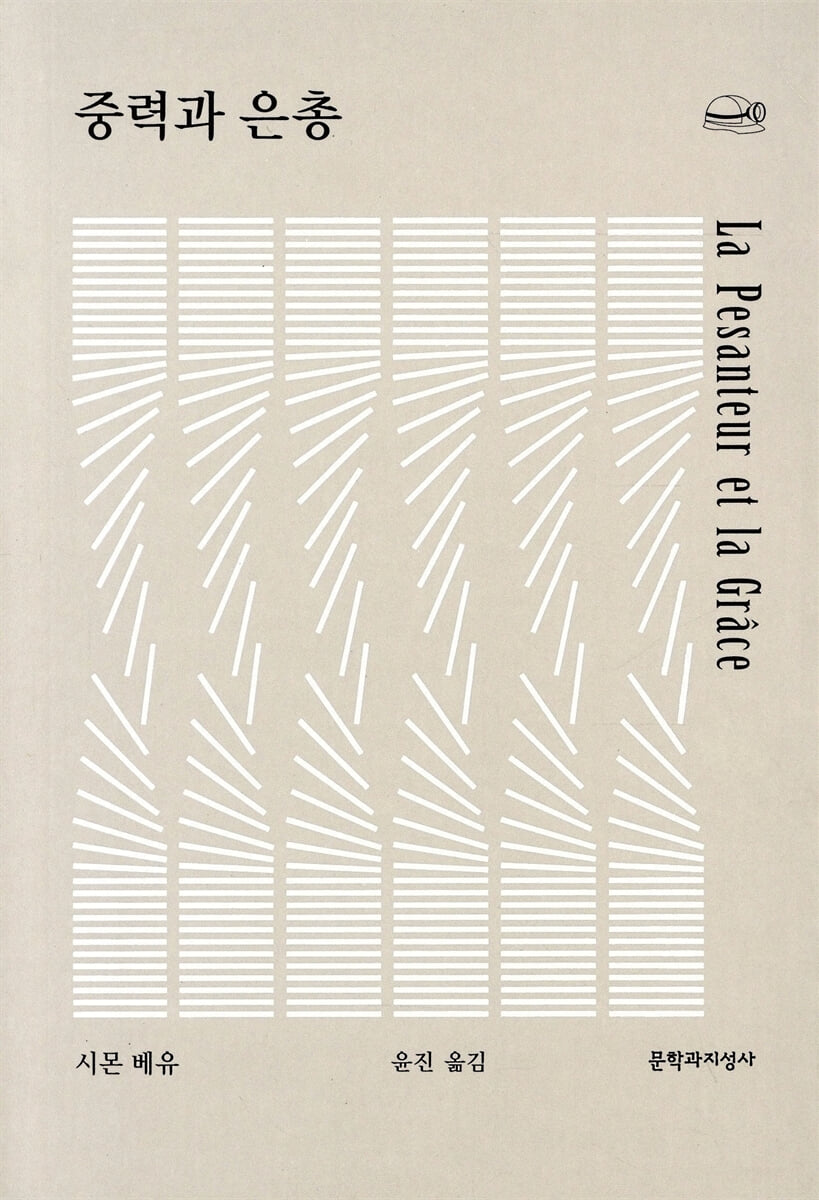
Gravity and Grace
 |
Description
Book Introduction
All natural movements of the soul
It is governed by laws similar to the laws of gravity in the material world.
Grace is the only exception.
The misfortune of humans left to the downward pull of gravity
A moment of grace, a supernatural light
A record of human exploration that delves into the fundamental conditions of life faced by all humans.
Leftist/Christian mystic, activist against war and for the weak/thinker who rejected visions of utopia and revolution and focused on 'the Passion', fanatical ascetic/patron saint of all outsiders.
The masterpiece of French philosophy teacher, labor activist, and thinker Simone Weil, whose works have been called by seemingly contradictory adjectives that are difficult to place in a straight line, 『Gravity and Grace』, has been published by Munhak-kwa-Jiseong-sa.
After Weil's death, the philosopher Gustave Thibault selected chapters from the more than ten notebooks Weil had left behind, gave each chapter a title, and published them.
This book, which begins with the Christian theme of human misery under the downward pull of gravity and salvation through grace, the supernatural light, can be said to be a kind of religious memoir that encapsulates Weil's unique theology in aphoristic sentences, as well as a record of human exploration that delves into the fundamental conditions of life that all humans face.
Weil's writings, including Gravity and Grace, were influenced by Albert Camus, André Gide, and T.
He is known to have had a strong influence on numerous writers and thinkers, including S. Eliot, Iris Murdoch, Flannery O'Connor, Anne Carson, Georges Bataille, and Giorgio Agamben.
Since the 1950s, it has evoked enthusiastic responses not only in intellectual circles but also among general readers, particularly in France and the United States.
However, given this explosive response, it has been pointed out that research on Beyu is not only lacking but also prone to misinterpretation.
This winter, three publishers will jointly publish three works by Simone Weil: Gravity and Grace (translated by Jin Yoon, Munhak-kwa-Jiseongsa), The Iliad or the Poem of Power (translated by Jong-yeong Lee, Rishioll), and Disorderly Thoughts on the Love of God (translated by Jong-yeong Lee, Saemulgyeol).
I hope that reading these three works will provide an opportunity to understand Bayou more deeply.
Gravity and Grace, published by Munhak-kwa-Jiseongsa, is a revised edition in which translator Jin Yoon meticulously revised the existing translation and added detailed annotations to the literary works and biblical quotations that appear in the book.
It is governed by laws similar to the laws of gravity in the material world.
Grace is the only exception.
The misfortune of humans left to the downward pull of gravity
A moment of grace, a supernatural light
A record of human exploration that delves into the fundamental conditions of life faced by all humans.
Leftist/Christian mystic, activist against war and for the weak/thinker who rejected visions of utopia and revolution and focused on 'the Passion', fanatical ascetic/patron saint of all outsiders.
The masterpiece of French philosophy teacher, labor activist, and thinker Simone Weil, whose works have been called by seemingly contradictory adjectives that are difficult to place in a straight line, 『Gravity and Grace』, has been published by Munhak-kwa-Jiseong-sa.
After Weil's death, the philosopher Gustave Thibault selected chapters from the more than ten notebooks Weil had left behind, gave each chapter a title, and published them.
This book, which begins with the Christian theme of human misery under the downward pull of gravity and salvation through grace, the supernatural light, can be said to be a kind of religious memoir that encapsulates Weil's unique theology in aphoristic sentences, as well as a record of human exploration that delves into the fundamental conditions of life that all humans face.
Weil's writings, including Gravity and Grace, were influenced by Albert Camus, André Gide, and T.
He is known to have had a strong influence on numerous writers and thinkers, including S. Eliot, Iris Murdoch, Flannery O'Connor, Anne Carson, Georges Bataille, and Giorgio Agamben.
Since the 1950s, it has evoked enthusiastic responses not only in intellectual circles but also among general readers, particularly in France and the United States.
However, given this explosive response, it has been pointed out that research on Beyu is not only lacking but also prone to misinterpretation.
This winter, three publishers will jointly publish three works by Simone Weil: Gravity and Grace (translated by Jin Yoon, Munhak-kwa-Jiseongsa), The Iliad or the Poem of Power (translated by Jong-yeong Lee, Rishioll), and Disorderly Thoughts on the Love of God (translated by Jong-yeong Lee, Saemulgyeol).
I hope that reading these three works will provide an opportunity to understand Bayou more deeply.
Gravity and Grace, published by Munhak-kwa-Jiseongsa, is a revised edition in which translator Jin Yoon meticulously revised the existing translation and added detailed annotations to the literary works and biblical quotations that appear in the book.
- You can preview some of the book's contents.
Preview
index
Gravity and grace | Emptiness and compensation | Accepting the emptiness | Freeing from attachment | Filling imagination | Giving up time | Desiring without an object | Self | De-creation | Disappearance | Necessity and submission | Illusion | Idolatry | Love | Evil | Misfortune | Violence | The cross | Scales and levers | Impossibility | Contradiction | The distance between necessity and goodness | Chance | The one we should love is absent | Purification of atheism | Attention and will | Taming | Intelligence and grace | Reading | The ring of Gyges | The meaning of the universe | The intermediate | Beauty | Algebra | Social stigma | The great beast | Israel | Social harmony | The mysticism of labor
Translator's Note
Translator's Note
Into the book
All natural movements of the soul are governed by laws similar to the laws of gravity in the material world.
Grace is the only exception.
---From "Gravity and Grace"
Two forces rule the universe.
Light and gravity.
---From "Gravity and Grace"
Grace fills.
But grace comes only where there is room to receive it.
That empty space is also filled by grace.
---From "Accepting the Vacancy"
We will reject the beliefs that fill the void and soothe our suffering.
Belief in immortality, belief in the futility of sin, belief in a divine providence that governs all things.
In short, it will defeat the comforts people seek from religion.
---From "Breaking Free from Obsession"
Literature and morality.
Imaginary evils are romantic and colorful.
Real evil is gloomy, monotonous, bleak, and boring.
Imaginary lines are boring, but real lines are always new, wonderful, and intoxicating.
Therefore, the 'literature of imagination' is either boring or immoral (or a mixture of the two).
If literature is to escape the dilemma of boredom and immorality, it must borrow the power of art to move somewhat toward reality.
Something only geniuses can do.
---From "Evil"
A person who suffers without sin feels guilty.
I don't feel any real guilt.
Those who suffer without sin know the true nature of the perpetrators, which they themselves do not know.
The evil felt in the innocent sufferer is in the perpetrator, but the perpetrator does not feel that evil.
A sinless person knows sin only as suffering.
In a sinner, sin is not felt.
In the sinless person, there is no sense of sinlessness.
A sinless person can feel hell.
---From "Evil"
A quote from Ivan in The Brothers Karamazov.
“Even if this great building were so magnificent, I would refuse to shed even a single tear of a child to obtain it.” I wholeheartedly agree with this statement.
If it costs the tears of a child, no motive that human intelligence can conceive of can be accepted.
But there is one exception, a reason that cannot be understood without supernatural love: when God wills it.
For that reason, I can readily accept not only the tears of a child, but even a world that is nothing but evil.
---From "Evil"
A cry of pain.
“Why?” resonates throughout the entire Iliad.
Explaining the reason for suffering is a consolation for that suffering.
Pain should not have an explanation.
That is the highest value of suffering given to the innocent.
---From "The One We Should Love Is Absent"
Since collective thought cannot exist as thought, it moves into things (symbols, machines…).
This makes a paradox possible.
That is, things now think and humans are reduced to the state of things.
---From "Algebra"
The opium of the people is not religion, but revolution.
All moral corruption, in whatever form, occurs in the absence of poetry.
Grace is the only exception.
---From "Gravity and Grace"
Two forces rule the universe.
Light and gravity.
---From "Gravity and Grace"
Grace fills.
But grace comes only where there is room to receive it.
That empty space is also filled by grace.
---From "Accepting the Vacancy"
We will reject the beliefs that fill the void and soothe our suffering.
Belief in immortality, belief in the futility of sin, belief in a divine providence that governs all things.
In short, it will defeat the comforts people seek from religion.
---From "Breaking Free from Obsession"
Literature and morality.
Imaginary evils are romantic and colorful.
Real evil is gloomy, monotonous, bleak, and boring.
Imaginary lines are boring, but real lines are always new, wonderful, and intoxicating.
Therefore, the 'literature of imagination' is either boring or immoral (or a mixture of the two).
If literature is to escape the dilemma of boredom and immorality, it must borrow the power of art to move somewhat toward reality.
Something only geniuses can do.
---From "Evil"
A person who suffers without sin feels guilty.
I don't feel any real guilt.
Those who suffer without sin know the true nature of the perpetrators, which they themselves do not know.
The evil felt in the innocent sufferer is in the perpetrator, but the perpetrator does not feel that evil.
A sinless person knows sin only as suffering.
In a sinner, sin is not felt.
In the sinless person, there is no sense of sinlessness.
A sinless person can feel hell.
---From "Evil"
A quote from Ivan in The Brothers Karamazov.
“Even if this great building were so magnificent, I would refuse to shed even a single tear of a child to obtain it.” I wholeheartedly agree with this statement.
If it costs the tears of a child, no motive that human intelligence can conceive of can be accepted.
But there is one exception, a reason that cannot be understood without supernatural love: when God wills it.
For that reason, I can readily accept not only the tears of a child, but even a world that is nothing but evil.
---From "Evil"
A cry of pain.
“Why?” resonates throughout the entire Iliad.
Explaining the reason for suffering is a consolation for that suffering.
Pain should not have an explanation.
That is the highest value of suffering given to the innocent.
---From "The One We Should Love Is Absent"
Since collective thought cannot exist as thought, it moves into things (symbols, machines…).
This makes a paradox possible.
That is, things now think and humans are reduced to the state of things.
---From "Algebra"
The opium of the people is not religion, but revolution.
All moral corruption, in whatever form, occurs in the absence of poetry.
---From "The Mysticism of Labor"
Publisher's Review
“We should prefer a real hell to a virtual paradise.”
bound by gravity or blind necessity
A look at human misery
Born in 1909 into a Jewish bourgeois family in Paris, and dying of malnutrition in a British nursing home in 1943, Simone Weil's life trajectory was quite complex, difficult to fit into a single framework.
While working as a high school philosophy teacher, he joined the socialist movement to support workers' struggles, and although he was a radical activist who went to factories and did direct labor, he insisted that communism, like fascism, was a system that oppressed humans, and that the nature of power did not change even if the weak took power. After having a spiritual experience, he devoted himself to religion, but he kept a thorough distance from the secular church, and tried to explain the mystery of faith through Greek tragedy.
He was also extremely hostile to Jewish history and Judaism, despite his participation in the resistance as a French Jew under Nazi rule.
Just as the different aspects of Bayu's life seemed difficult to converge into one, reactions to Bayu were also polarized.
Those who focused on Bayu's political side tended to focus on his writings before he was 'influenced' by religion, interpreting his later preoccupation with religion as a result of pessimism or psychological instability stemming from his wartime experiences. Those who were drawn to Bayu's religious side tended to dismiss his political experiences as a rite of passage and read his texts without any political color.
However, recently, the prevailing interpretation is that these two aspects of Beyu are not mutually exclusive but closely connected.
In particular, 『Gravity and Grace』 was initially read more by readers seeking religious meaning as it was considered a book containing important ideas of Weil's theology, but recently, it has been reinterpreted from a complex perspective centered on the ideas that Weil uniquely redefines, such as gravity, grace, necessity, chance, violence, love, evil, beauty, and de-creation.
Because this text was not completed with publication in mind during Beuy's lifetime, there are many points where it is difficult to determine how much of it is the author's intention and how much is the compiler's intervention.
Adding to this the formal characteristic of listing the chapters, even though it is composed of very concise sentences, there are times when the meaning comes across as ambiguous.
Yet, Bayu's voice resonates through the air like the voice of a prophet, powerfully drawing people in.
How does that moment of freedom from gravity come?
“Grace comes only where there is room to receive it.”
“All natural movements of the soul are governed by laws similar to the laws of gravity in the material world.
Gravity and Grace, which opens with the famous sentence, “Grace is the only exception,” tells of the misfortune of humans bound by gravity or blind necessity and the light of grace that contrasts with it.
Weil says we must reject religion for its solace in trying to explain away suffering or believing in a divine providence that governs all things.
“Explaining the reason for suffering is a consolation for that suffering.
Pain should not have an explanation.
That is the highest value of suffering given to the innocent.” Suffering must be acknowledged as ‘reality’ and accepted as such.
Likewise, he points out that revolutions that promise a world liberated from the belief in progress or blind necessity also hinder a clear view of reality and prevent humanity from confronting its limitations.
According to Weil, “necessity is by its very nature far from imagination.” “We should prefer a real hell to an imaginary paradise.”
Through suffering, Beyou demands that we pay attention to our condition.
Only by realizing that we are limited beings and emptying our ego as subjects can we create an empty space where we can accept something.
“Grace fills.
But grace comes only where there is room to receive it.” Then, a small possibility arises here.
“Man can escape the laws of the world only for a very brief, flash-like moment.
“In the moment of stillness, in the moment of contemplation, in the moment of mental emptiness, in the moment of accepting the moral emptiness, in such moments man can attain the supernatural.”
It would be difficult to accept today Weil's argument, which emphasizes facing the tragic condition of humanity without any comfort or promise of salvation, and denies the power of human agency and the possibility of actively transforming the world.
Her reasoning only makes sense in the context of a time when the rationality and progress that European society had long believed in had crumbled in the midst of an absurd war.
However, the intensity with which Beyu, who devoted all values to the search amidst the collapse of everything, may be even more urgent for us today, who live in the solid fortress of everyday life, held even more strongly by gravity.
Perhaps it is time to use Weil's ideas about the light of grace and the "brief flashes of light" that "can escape the laws of gravity," to think about the possibility of other worlds, "against Weil."
Other stories
1.
Deborah Nelson, in Tough Enough, says that Albert Camus was “a literary practitioner of Weil.”
The appearance of the priest Paneloux in Camus's 'The Plague' and the content of his sermons seem to be significant references to Weil.
In particular, we can find similar passages in Gravity and Grace in relation to the lecture that the arrival of the plague itself is seen as evidence of God's mercy, and the question of how to accept the suffering of children.
2.
Anne Carson titles her book "Decreation," a concept she centrally discusses in Gravity and Grace, and develops her thinking based on this concept.
3.
The novelist Annie Ernaux, who, like Weil, also taught high school, wrote in Time that she was annoyed that students often confused Simone Weil, the "thinker," with Simone Weil, the "politician."
Ernaux confesses that in 1974, after seeing the politician Veil struggle alone in a parliament full of men to pass a bill legalizing abortion, he decided to forgive the students for their misunderstanding.
bound by gravity or blind necessity
A look at human misery
Born in 1909 into a Jewish bourgeois family in Paris, and dying of malnutrition in a British nursing home in 1943, Simone Weil's life trajectory was quite complex, difficult to fit into a single framework.
While working as a high school philosophy teacher, he joined the socialist movement to support workers' struggles, and although he was a radical activist who went to factories and did direct labor, he insisted that communism, like fascism, was a system that oppressed humans, and that the nature of power did not change even if the weak took power. After having a spiritual experience, he devoted himself to religion, but he kept a thorough distance from the secular church, and tried to explain the mystery of faith through Greek tragedy.
He was also extremely hostile to Jewish history and Judaism, despite his participation in the resistance as a French Jew under Nazi rule.
Just as the different aspects of Bayu's life seemed difficult to converge into one, reactions to Bayu were also polarized.
Those who focused on Bayu's political side tended to focus on his writings before he was 'influenced' by religion, interpreting his later preoccupation with religion as a result of pessimism or psychological instability stemming from his wartime experiences. Those who were drawn to Bayu's religious side tended to dismiss his political experiences as a rite of passage and read his texts without any political color.
However, recently, the prevailing interpretation is that these two aspects of Beyu are not mutually exclusive but closely connected.
In particular, 『Gravity and Grace』 was initially read more by readers seeking religious meaning as it was considered a book containing important ideas of Weil's theology, but recently, it has been reinterpreted from a complex perspective centered on the ideas that Weil uniquely redefines, such as gravity, grace, necessity, chance, violence, love, evil, beauty, and de-creation.
Because this text was not completed with publication in mind during Beuy's lifetime, there are many points where it is difficult to determine how much of it is the author's intention and how much is the compiler's intervention.
Adding to this the formal characteristic of listing the chapters, even though it is composed of very concise sentences, there are times when the meaning comes across as ambiguous.
Yet, Bayu's voice resonates through the air like the voice of a prophet, powerfully drawing people in.
How does that moment of freedom from gravity come?
“Grace comes only where there is room to receive it.”
“All natural movements of the soul are governed by laws similar to the laws of gravity in the material world.
Gravity and Grace, which opens with the famous sentence, “Grace is the only exception,” tells of the misfortune of humans bound by gravity or blind necessity and the light of grace that contrasts with it.
Weil says we must reject religion for its solace in trying to explain away suffering or believing in a divine providence that governs all things.
“Explaining the reason for suffering is a consolation for that suffering.
Pain should not have an explanation.
That is the highest value of suffering given to the innocent.” Suffering must be acknowledged as ‘reality’ and accepted as such.
Likewise, he points out that revolutions that promise a world liberated from the belief in progress or blind necessity also hinder a clear view of reality and prevent humanity from confronting its limitations.
According to Weil, “necessity is by its very nature far from imagination.” “We should prefer a real hell to an imaginary paradise.”
Through suffering, Beyou demands that we pay attention to our condition.
Only by realizing that we are limited beings and emptying our ego as subjects can we create an empty space where we can accept something.
“Grace fills.
But grace comes only where there is room to receive it.” Then, a small possibility arises here.
“Man can escape the laws of the world only for a very brief, flash-like moment.
“In the moment of stillness, in the moment of contemplation, in the moment of mental emptiness, in the moment of accepting the moral emptiness, in such moments man can attain the supernatural.”
It would be difficult to accept today Weil's argument, which emphasizes facing the tragic condition of humanity without any comfort or promise of salvation, and denies the power of human agency and the possibility of actively transforming the world.
Her reasoning only makes sense in the context of a time when the rationality and progress that European society had long believed in had crumbled in the midst of an absurd war.
However, the intensity with which Beyu, who devoted all values to the search amidst the collapse of everything, may be even more urgent for us today, who live in the solid fortress of everyday life, held even more strongly by gravity.
Perhaps it is time to use Weil's ideas about the light of grace and the "brief flashes of light" that "can escape the laws of gravity," to think about the possibility of other worlds, "against Weil."
Other stories
1.
Deborah Nelson, in Tough Enough, says that Albert Camus was “a literary practitioner of Weil.”
The appearance of the priest Paneloux in Camus's 'The Plague' and the content of his sermons seem to be significant references to Weil.
In particular, we can find similar passages in Gravity and Grace in relation to the lecture that the arrival of the plague itself is seen as evidence of God's mercy, and the question of how to accept the suffering of children.
2.
Anne Carson titles her book "Decreation," a concept she centrally discusses in Gravity and Grace, and develops her thinking based on this concept.
3.
The novelist Annie Ernaux, who, like Weil, also taught high school, wrote in Time that she was annoyed that students often confused Simone Weil, the "thinker," with Simone Weil, the "politician."
Ernaux confesses that in 1974, after seeing the politician Veil struggle alone in a parliament full of men to pass a bill legalizing abortion, he decided to forgive the students for their misunderstanding.
GOODS SPECIFICS
- Publication date: November 26, 2021
- Page count, weight, size: 258 pages | 238g | 128*187*20mm
- ISBN13: 9788932039244
- ISBN10: 8932039240
You may also like
카테고리
korean


korean

![GQ KOREA Mark (Monthly): December [2025]](http://librairie.coreenne.fr/cdn/shop/files/8ef265dbbfbf186523ed75ba7319009d.jpg?v=1765340328&width=3840)


