

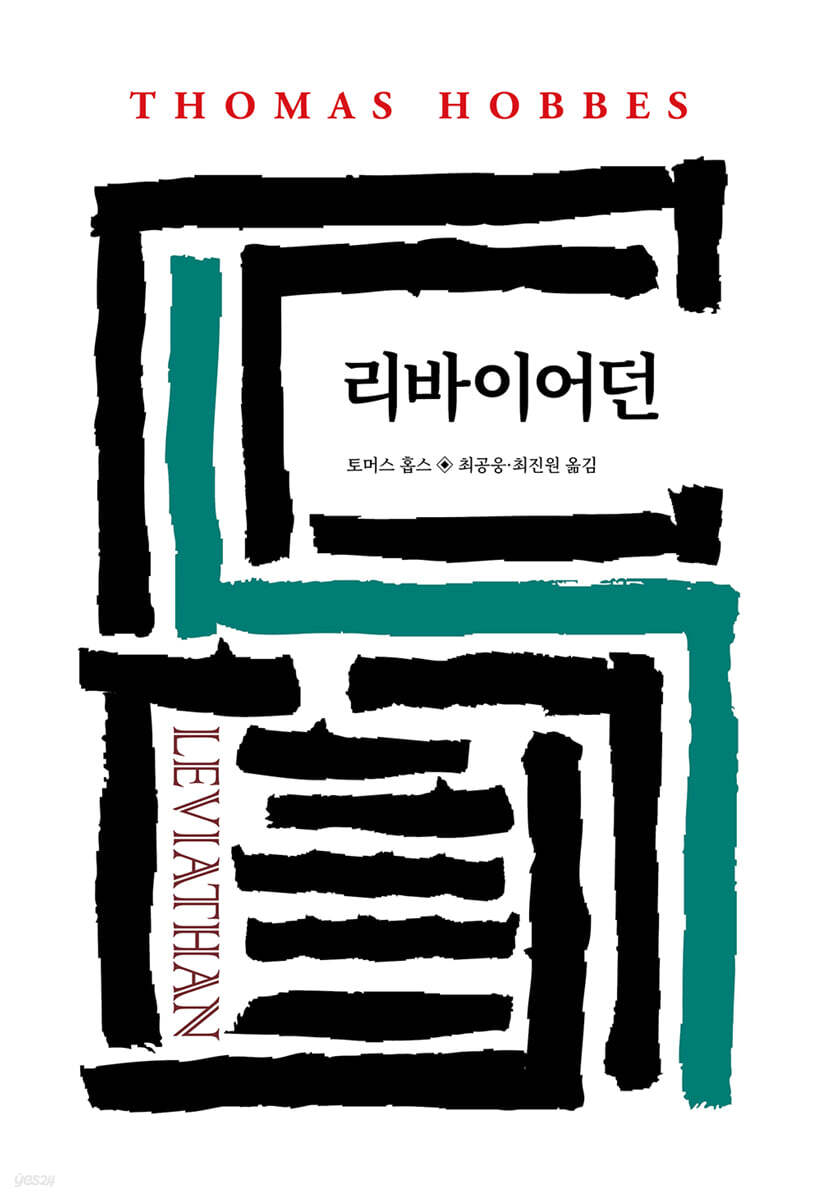
Leviathan
 |
Description
Book Introduction
Thomas Hobbes, 17th century British philosopher and political thinker!
A book of terror! A revolutionary book on world political thought!
Describe the organism by comparing the country to the giant sea monster 'Leviathan'!
An immortal classic with a powerful appeal that awakens Korean intellect today!
Leviathan: State power comes from the people.
Leviathan is a giant monster that lives forever and does not die, as described in the Book of Job in the Old Testament. It is described as a sea monster that breathes fire from its mouth and is useless against any weapon, and is the king of all the arrogant creatures who know no fear.
The national organism is explained by comparing the nation to this monster, 'Leviathan'.
The terrifying book of bans! "Leviathan" is the representative work of Thomas Hobbes (1588-1679), a political thinker during the English Revolution. Its subtitle is "The Content, Form, and Power of the Church and Civil Community."
This book, a revolutionary work in world political thought, consists of 4 parts and 47 chapters, in addition to an introduction and conclusion.
Published in 1651 during the English Revolution, it forced Hobbes, who was in exile, to return home and was attacked by royalists for writing it in favor of Cromwell.
His fundamental argument was to derive the absoluteness of political power from the inviolable natural right to self-preservation, and to subordinate religion to political power.
Part 1 describes humanity, Part 2 the Commonwealth, Part 3 the Christian Commonwealth, and Part 4 the Kingdom of Darkness, the latter two being a critique of the Church.
He argued that humans are born equal, but in the state of nature, 'all peoples are at war with all peoples', and that in order to escape this self-negation of natural rights, natural rights are limited by the natural law discovered by reason itself, and a state is established through a social contract that establishes absolute sovereignty.
A book of terror! A revolutionary book on world political thought!
Describe the organism by comparing the country to the giant sea monster 'Leviathan'!
An immortal classic with a powerful appeal that awakens Korean intellect today!
Leviathan: State power comes from the people.
Leviathan is a giant monster that lives forever and does not die, as described in the Book of Job in the Old Testament. It is described as a sea monster that breathes fire from its mouth and is useless against any weapon, and is the king of all the arrogant creatures who know no fear.
The national organism is explained by comparing the nation to this monster, 'Leviathan'.
The terrifying book of bans! "Leviathan" is the representative work of Thomas Hobbes (1588-1679), a political thinker during the English Revolution. Its subtitle is "The Content, Form, and Power of the Church and Civil Community."
This book, a revolutionary work in world political thought, consists of 4 parts and 47 chapters, in addition to an introduction and conclusion.
Published in 1651 during the English Revolution, it forced Hobbes, who was in exile, to return home and was attacked by royalists for writing it in favor of Cromwell.
His fundamental argument was to derive the absoluteness of political power from the inviolable natural right to self-preservation, and to subordinate religion to political power.
Part 1 describes humanity, Part 2 the Commonwealth, Part 3 the Christian Commonwealth, and Part 4 the Kingdom of Darkness, the latter two being a critique of the Church.
He argued that humans are born equal, but in the state of nature, 'all peoples are at war with all peoples', and that in order to escape this self-negation of natural rights, natural rights are limited by the natural law discovered by reason itself, and a state is established through a social contract that establishes absolute sovereignty.
- You can preview some of the book's contents.
Preview
index
My most respected friend
To Francis Godolphin of the Godolphin family... 13
Preface ··· 16
Part 1: About Humans
1 sense... 21
2 Imagination... 24
3. A series or sequence of images... 32
4 languages... 39
5 Reasoning and Learning... 50
6 The Inner Origins of Passion and the Language in Which It Is Expressed... 58
7 Conclusion of the Discourse... 71
8 Virtues and Their Flaws... 75
9 Topics of Knowledge... 89
10 Power? Value? Hierarchy? Honor? Eligibility... 91
11 Lifestyle... 102
12 Religions... 111
13 The Natural State of Man... 127
14 The First and Second Laws of Nature and Their Covenants... 133
15 Other Natural Laws... 147
16 Personality, Self, Personified Thing... 163
Part 2: On the Commonwealth
17 The Purpose, Creation, and Definition of the Commonwealth... 171
18 Rights of the Sovereign... 177
19 Types of Commonwealths and Succession to Sovereignty... 188
20 Patriarchal Rule and Despotic Rule... 200
21 Freedom of the People... 211
22 Political organizations and private organizations of the people... 224
23 Public Agents of Sovereignty... 239
Nutrition and Reproduction in the Commonwealth 245
25 Advice... 252
26 Civil Code... 260
27 Crimes, Exemptions, and Remission of Sins... 283
28 Punishment and Reward... 299
29 Factors Accelerating the Weakening and Dissolution of the Commonwealth... 308
30 Duties of Sovereign Representatives... 321
31 The Kingdom of God by Nature... 340
Part 3: On the Christian Commonwealth
32 Christian Political Principles... 355
33 The Bible's Compilation, Date of Composition, Intention, Authority, and Interpreters... 362
34 The Meaning of the Holy Spirit, Angels, and Spiritual Interaction in the Bible... 376
35 The Meaning of the Kingdom of God, Holiness, Consecration, and Sacraments in the Bible... 391
36 The Word of God and the Prophets... 401
37 Miracles and Their Usefulness... 419
38 The Meaning of Eternal Life, Hell, Salvation, the Afterlife, and Atonement in the Bible... 428
39 The Meaning of the Word "Church" in the Bible... 446
40 Abraham, Moses, the high priests, and... 449
Jewish Kings and Their Rights in the Kingdom of God... 449
41 The Ministry of the Blessed Savior... 462
42. Church Rights... 471
43 What is needed for humans to enter heaven... 550
Part 4: On the Kingdom of Darkness
44 Spiritual Darkness from Misinterpretations of the Bible... 569
45 Demonology and Other Relics of Pagan Religions... 599
46 The Darkness Appearing in Empty Philosophy and Fictional Legends... 623
47 The Benefits of Such Darkness and Its Beneficiaries... 645
Summary and Conclusion... 656
The Life and Thought of Thomas Hobbes
The Life and Thought of Thomas Hobbes... 669
Thomas Hobbes Chronology... 699
To Francis Godolphin of the Godolphin family... 13
Preface ··· 16
Part 1: About Humans
1 sense... 21
2 Imagination... 24
3. A series or sequence of images... 32
4 languages... 39
5 Reasoning and Learning... 50
6 The Inner Origins of Passion and the Language in Which It Is Expressed... 58
7 Conclusion of the Discourse... 71
8 Virtues and Their Flaws... 75
9 Topics of Knowledge... 89
10 Power? Value? Hierarchy? Honor? Eligibility... 91
11 Lifestyle... 102
12 Religions... 111
13 The Natural State of Man... 127
14 The First and Second Laws of Nature and Their Covenants... 133
15 Other Natural Laws... 147
16 Personality, Self, Personified Thing... 163
Part 2: On the Commonwealth
17 The Purpose, Creation, and Definition of the Commonwealth... 171
18 Rights of the Sovereign... 177
19 Types of Commonwealths and Succession to Sovereignty... 188
20 Patriarchal Rule and Despotic Rule... 200
21 Freedom of the People... 211
22 Political organizations and private organizations of the people... 224
23 Public Agents of Sovereignty... 239
Nutrition and Reproduction in the Commonwealth 245
25 Advice... 252
26 Civil Code... 260
27 Crimes, Exemptions, and Remission of Sins... 283
28 Punishment and Reward... 299
29 Factors Accelerating the Weakening and Dissolution of the Commonwealth... 308
30 Duties of Sovereign Representatives... 321
31 The Kingdom of God by Nature... 340
Part 3: On the Christian Commonwealth
32 Christian Political Principles... 355
33 The Bible's Compilation, Date of Composition, Intention, Authority, and Interpreters... 362
34 The Meaning of the Holy Spirit, Angels, and Spiritual Interaction in the Bible... 376
35 The Meaning of the Kingdom of God, Holiness, Consecration, and Sacraments in the Bible... 391
36 The Word of God and the Prophets... 401
37 Miracles and Their Usefulness... 419
38 The Meaning of Eternal Life, Hell, Salvation, the Afterlife, and Atonement in the Bible... 428
39 The Meaning of the Word "Church" in the Bible... 446
40 Abraham, Moses, the high priests, and... 449
Jewish Kings and Their Rights in the Kingdom of God... 449
41 The Ministry of the Blessed Savior... 462
42. Church Rights... 471
43 What is needed for humans to enter heaven... 550
Part 4: On the Kingdom of Darkness
44 Spiritual Darkness from Misinterpretations of the Bible... 569
45 Demonology and Other Relics of Pagan Religions... 599
46 The Darkness Appearing in Empty Philosophy and Fictional Legends... 623
47 The Benefits of Such Darkness and Its Beneficiaries... 645
Summary and Conclusion... 656
The Life and Thought of Thomas Hobbes
The Life and Thought of Thomas Hobbes... 669
Thomas Hobbes Chronology... 699
Into the book
But the most noble and beneficial of them all was the invention of 'names' or 'designations', and their combination, speech.
Through this language, humans can record their thoughts, recall past events, and express their intentions for mutual benefit and fellowship.
If there were no language, there would be no commonwealth, no society, no contract, no peace among men, just as there would be no world of lions, bears, or wolves.
--- p.39
A reputation for strength is strength.
Because it attracts people who demand protection.
Also, the reputation (popularity) of loving one's country is a strength for the same reason.
Likewise, whatever your temperament, it is also a power to have a reputation for being loved or feared by many people, or to have such a temperament.
Because it is a tool that can gain support and service from many people.
Success is power.
Because they gain a reputation as being wise or lucky, and make people fear or rely on them.
The kindness of one who already has power increases his power.
Because you can get love.
--- p.91~92
Happiness is a continuous progression of desire from one object to another, the attainment of the former being merely a path to the latter.
Because human desire is not aimed at a single moment of pleasure, but at securing the path to future desires forever.
Therefore, all human voluntary acts and natural tendencies are directed not only to obtaining a satisfactory life, but also to securing it.
The only difference is the method of achieving that goal.
The reason for the differences in methods is partly because people have different passions and partly because people have different knowledge and opinions about what causes the desired results to be achieved.
--- p.102
Therefore, we can find three main causes of conflict in human nature.
The first is competition, the second is difference, and the third is glory.
Humans invade first for profit, second for the sake of safety, and third for the sake of honor.
First, they resort to violence to gain control over others, their families, and their livestock. Second, they resort to violence in self-defense. Third, they resort to violence because of trivial expressions of belittling, whether directly directed at them—a single word, a single laugh, a disagreement—or indirectly, regardless of their relatives, friends, ethnicity, occupation, or family.
--- p.129
What is the ultimate cause, purpose, and intention of human beings, born with a love of freedom and a penchant for dominating others, to confine and oppress themselves within a commonwealth? It lies in self-preservation and, through it, the insight into a more satisfying life.
--- p.171
“I authorize this person or this body to grant me complete authority over myself.
But this is on condition that you, like me, transfer your rights to him and authorize his actions.” When this is done and a large number of people are united and joined into one person, it is called a Commonwealth, or in Latin, Civitas.
Thus the great Leviathan was born.
No, to put it more piously, under the protection of the 'immortal God', a 'mortal God' is born who guarantees our peace and defense.
By the power granted to all individuals living within the Commonwealth, the God of this earth uses his great power and might to maintain peace within the country, and to intimidate the people abroad, to unite their wills and defeat foreign enemies.
This is precisely where the essence of the Commonwealth lies.
The definition of Commonwealth is as follows:
--- p.175
Every human being is born with two magnifying glasses.
One is passion and the other is narcissism.
When viewed through this magnifying glass, small sacrifices appear as great sufferings, which leads to complaints.
But they don't know how to see through a telescope.
If we look far ahead through the telescope, that is, through the study of morality and society, we can see that a misery that cannot be avoided without such sacrifice is just around the corner.
--- p.187
Civil law and natural law are not different kinds of law, but different parts of law.
That is, one is called 'civil law' because it is written down, and the other is called 'natural law' because it exists in an unwritten form.
However, human natural rights, that is, innate freedom, can be curtailed or limited by civil law.
Rather, it can be said that the purpose of making the law itself is to restrict that right.
Because without such limitations there can be no peace.
The reason law was introduced into the world was to limit the natural freedom of individuals so that they could help and cooperate with each other without harming each other, and fight against the common enemy.
--- p.263
When a commonwealth is disintegrated not by external violence but by internal disorder, the fault lies not with man as a material, but with man as the creator and order-giver of the commonwealth.
Men, weary of plundering and murdering one another in disorder, and however much they would like to build together a strong and lasting structure, yet at the same time they lack the skill to make proper laws to regulate their actions, and the humility and patience to bear the pain of chipping away at the bulges that now stand upon them, so that without the help of a very competent architect they can only build a poor building.
Such buildings will not last beyond their own time, and will surely collapse on the heads of their descendants.
--- p.308
Therefore, we must listen very carefully to the words of anyone who calls himself a prophet.
They preach in the name of God what the path to happiness is, and they claim that following their preaching is obedience to God.
To claim to teach people the way to happiness is to claim to rule them.
In other words, he wants to rule over them and reign over them.
Since humans naturally desire to dominate others, we need to examine whether we are putting forward God with such ambition and falsehood.
Therefore, before following the words of such a person, each person must carefully examine and verify them.
However, the situation is different when a promise of obedience has already been made when the Commonwealth is established.
That is, if the prophet is a political sovereign or a person approved by a political sovereign, his words must be obeyed.
--- p.415
The maintenance of civil society depends on justice.
That definition is the power of life and death, and other lesser powers of rewards and punishments, which the sovereign of the Commonwealth has.
It depends.
Therefore, a commonwealth cannot exist where someone other than the sovereign has the power to give a reward greater than life, or to inflict a punishment greater than death.
--- p.428
What is philosophy? Philosophy is 'knowledge acquired by reasoning, which discovers the uniqueness of something from its mode of production, or arrives at the path by which it can be produced from its uniqueness, and which aims at producing the results needed by human life, as far as matter and human power allow.' Therefore, geometers discover the properties of various figures, and from those properties, by reasoning, they find out a new logic that constitutes the figures.
As a result, land and water surveying becomes possible and it is helpful for numerous other purposes.
Likewise, astronomers observe the sun and stars rising, setting, and moving across the sky to determine the cause of day and night, the change of seasons, and by this they measure time.
The same goes for other disciplines.
--- p.623
When people who lack the legal authority to oppress reason and who are not qualified to be judges of truth because they have not done sufficient research introduce absurd philosophy, what they do is suppress true philosophy.
Through the voyages of time, it has been revealed that the Earth has antipodes, and it is becoming increasingly clear that the changing of years and days is due to the movement of the Earth.
Yet, people have been punished by the church authorities for even assuming such claims, using their writings to express such opinions and to state their reasons for and against them.
But what justification is there for such punishment? Is it because such opinions are contrary to true religion? If such opinions were true, such a thing would be impossible.
Therefore, let competent people investigate whether such opinions are true or not, or let them refute those who make opposing claims.
Through this language, humans can record their thoughts, recall past events, and express their intentions for mutual benefit and fellowship.
If there were no language, there would be no commonwealth, no society, no contract, no peace among men, just as there would be no world of lions, bears, or wolves.
--- p.39
A reputation for strength is strength.
Because it attracts people who demand protection.
Also, the reputation (popularity) of loving one's country is a strength for the same reason.
Likewise, whatever your temperament, it is also a power to have a reputation for being loved or feared by many people, or to have such a temperament.
Because it is a tool that can gain support and service from many people.
Success is power.
Because they gain a reputation as being wise or lucky, and make people fear or rely on them.
The kindness of one who already has power increases his power.
Because you can get love.
--- p.91~92
Happiness is a continuous progression of desire from one object to another, the attainment of the former being merely a path to the latter.
Because human desire is not aimed at a single moment of pleasure, but at securing the path to future desires forever.
Therefore, all human voluntary acts and natural tendencies are directed not only to obtaining a satisfactory life, but also to securing it.
The only difference is the method of achieving that goal.
The reason for the differences in methods is partly because people have different passions and partly because people have different knowledge and opinions about what causes the desired results to be achieved.
--- p.102
Therefore, we can find three main causes of conflict in human nature.
The first is competition, the second is difference, and the third is glory.
Humans invade first for profit, second for the sake of safety, and third for the sake of honor.
First, they resort to violence to gain control over others, their families, and their livestock. Second, they resort to violence in self-defense. Third, they resort to violence because of trivial expressions of belittling, whether directly directed at them—a single word, a single laugh, a disagreement—or indirectly, regardless of their relatives, friends, ethnicity, occupation, or family.
--- p.129
What is the ultimate cause, purpose, and intention of human beings, born with a love of freedom and a penchant for dominating others, to confine and oppress themselves within a commonwealth? It lies in self-preservation and, through it, the insight into a more satisfying life.
--- p.171
“I authorize this person or this body to grant me complete authority over myself.
But this is on condition that you, like me, transfer your rights to him and authorize his actions.” When this is done and a large number of people are united and joined into one person, it is called a Commonwealth, or in Latin, Civitas.
Thus the great Leviathan was born.
No, to put it more piously, under the protection of the 'immortal God', a 'mortal God' is born who guarantees our peace and defense.
By the power granted to all individuals living within the Commonwealth, the God of this earth uses his great power and might to maintain peace within the country, and to intimidate the people abroad, to unite their wills and defeat foreign enemies.
This is precisely where the essence of the Commonwealth lies.
The definition of Commonwealth is as follows:
--- p.175
Every human being is born with two magnifying glasses.
One is passion and the other is narcissism.
When viewed through this magnifying glass, small sacrifices appear as great sufferings, which leads to complaints.
But they don't know how to see through a telescope.
If we look far ahead through the telescope, that is, through the study of morality and society, we can see that a misery that cannot be avoided without such sacrifice is just around the corner.
--- p.187
Civil law and natural law are not different kinds of law, but different parts of law.
That is, one is called 'civil law' because it is written down, and the other is called 'natural law' because it exists in an unwritten form.
However, human natural rights, that is, innate freedom, can be curtailed or limited by civil law.
Rather, it can be said that the purpose of making the law itself is to restrict that right.
Because without such limitations there can be no peace.
The reason law was introduced into the world was to limit the natural freedom of individuals so that they could help and cooperate with each other without harming each other, and fight against the common enemy.
--- p.263
When a commonwealth is disintegrated not by external violence but by internal disorder, the fault lies not with man as a material, but with man as the creator and order-giver of the commonwealth.
Men, weary of plundering and murdering one another in disorder, and however much they would like to build together a strong and lasting structure, yet at the same time they lack the skill to make proper laws to regulate their actions, and the humility and patience to bear the pain of chipping away at the bulges that now stand upon them, so that without the help of a very competent architect they can only build a poor building.
Such buildings will not last beyond their own time, and will surely collapse on the heads of their descendants.
--- p.308
Therefore, we must listen very carefully to the words of anyone who calls himself a prophet.
They preach in the name of God what the path to happiness is, and they claim that following their preaching is obedience to God.
To claim to teach people the way to happiness is to claim to rule them.
In other words, he wants to rule over them and reign over them.
Since humans naturally desire to dominate others, we need to examine whether we are putting forward God with such ambition and falsehood.
Therefore, before following the words of such a person, each person must carefully examine and verify them.
However, the situation is different when a promise of obedience has already been made when the Commonwealth is established.
That is, if the prophet is a political sovereign or a person approved by a political sovereign, his words must be obeyed.
--- p.415
The maintenance of civil society depends on justice.
That definition is the power of life and death, and other lesser powers of rewards and punishments, which the sovereign of the Commonwealth has.
It depends.
Therefore, a commonwealth cannot exist where someone other than the sovereign has the power to give a reward greater than life, or to inflict a punishment greater than death.
--- p.428
What is philosophy? Philosophy is 'knowledge acquired by reasoning, which discovers the uniqueness of something from its mode of production, or arrives at the path by which it can be produced from its uniqueness, and which aims at producing the results needed by human life, as far as matter and human power allow.' Therefore, geometers discover the properties of various figures, and from those properties, by reasoning, they find out a new logic that constitutes the figures.
As a result, land and water surveying becomes possible and it is helpful for numerous other purposes.
Likewise, astronomers observe the sun and stars rising, setting, and moving across the sky to determine the cause of day and night, the change of seasons, and by this they measure time.
The same goes for other disciplines.
--- p.623
When people who lack the legal authority to oppress reason and who are not qualified to be judges of truth because they have not done sufficient research introduce absurd philosophy, what they do is suppress true philosophy.
Through the voyages of time, it has been revealed that the Earth has antipodes, and it is becoming increasingly clear that the changing of years and days is due to the movement of the Earth.
Yet, people have been punished by the church authorities for even assuming such claims, using their writings to express such opinions and to state their reasons for and against them.
But what justification is there for such punishment? Is it because such opinions are contrary to true religion? If such opinions were true, such a thing would be impossible.
Therefore, let competent people investigate whether such opinions are true or not, or let them refute those who make opposing claims.
--- p.643
Publisher's Review
Leviathan and Hobbes
The 17th century in which Hobbes lived was the era of Western modern philosophy.
Many philosophers, scientists, and thinkers, including Descartes, Kepler, Galileo, Newton, and Grotius, actively exchanged knowledge.
Hobbes also used his outstanding linguistic talent to interact with the greatest intellectuals of his time.
He broadened his horizons by interacting with scientists and philosophers of the time, including learning from Bacon, meeting with Descartes, and visiting Galileo.
Hobbes, who served as secretary, tutor, cashier, and advisor to the nobleman Cavendish, visited various parts of Europe on three continental trips over a period of 20 years.
Not satisfied with merely reading Galileo's "Astronomical Dialogues," he actually visited Florence and discussed it with him.
This exchange of knowledge and research became the driving force behind the creation of Leviathan.
When Hobbes published Leviathan in 1651, when he was 63 years old, the world was shocked and the book was immediately banned.
Criticism from the Christian Church in particular grew so strong that Hobbes was banned from the court.
Hobbes's philosophy was branded as a harmful idea to the people, and those who followed it were called Hobbists and treated with hostility.
Hobbes's social contract theory
Hobbes denies the Middle Ages, when the word of God was everything in the world, and argues that absolute power must be established through contracts between individuals to guarantee individual freedom and peace.
The monster called the sovereign state, Leviathan, was the product of a contract to escape the state of "war of all against all," and this soon became the foundation of the modern social contract theory, threatening the existing order.
In other words, the only way to establish public power is to transfer one's power and strength to one person or to one body of people.
It's like everyone saying to everyone:
“On the condition that you grant to one man or to a body of men the right to govern myself, and approve all his actions, I grant to that man or body of men the right to govern myself.” When this is done, the multitude unified in one person is called a nation, and this is the birth of the great ‘Leviathan’ (sovereign state).
In this way, “Leviathan” is a book that theorizes absolutism from the perspective of social contract theory.
Hobbes's critics accuse him of seeing humans in a state of war and argue that humans were created morally by God.
But this means that they failed to see the contradiction between the old order and the modern individual.
This book had a great influence on legal and political thought.
Thomas Hobbes, 17th-century British philosopher and political thinker
Thomas Hobbes (1588-1679) was born in Westport, Wiltshire, England.
He studied scholastic philosophy at Oxford University, studied mathematics and natural science on the continent, and developed a materialistic and mechanistic worldview under the influence of Francis Bacon.
He applied the physics achievements of the Italian Galileo to political science, becoming a pioneer of so-called social physics.
Politically, he was identified as a royalist who supported the Stuart dynasty, and went into exile in France just before the Puritan Revolution, where he became friends with materialist Gassendi and philosopher Descartes.
After that, he returned to London under the Cromwell regime and did not get involved in the power struggle, but devoted himself solely to academic research.
After the Restoration of the monarchy, Hobbes's ideas were suppressed because they were considered atheistic, but he became the teacher of Charles II and spent the rest of his life under his protection.
Unlike Bacon, he accepted the deductive method modeled on geometry rather than the inductive method, and he argued that the two were essentially one and that philosophy, which is the correct reasoning of reason, was established.
Besides "Leviathan," his major works include "Principles of Philosophy," which is divided into Part 1: "On Bodies (1655)", Part 2: "On Man (1658)", and Part 3: "On the Citizen" (1642, 1647).
In addition, in "The Principles of Law" (1640), he concretized the idea that peaceful coexistence is possible when humans are subject to absolute sovereignty.
Leviathan and Modern Times
Hobbes's fundamental question about the sovereign state (Leviathan) has clear significance when considering the various challenges we face today.
As globalization advances and the framework of sovereign states weakens, how can sovereign states secure the fundamental functions they have historically shouldered—ensuring the safety and welfare of their citizens?
How would we respond to the argument that some restrictions on individual rights are unavoidable, for example, if it is to protect our lives from the fear of crime or terrorism?
In this way, "Leviathan" is a book with a powerful appeal that draws readers into the vortex of debate and awakens them in today's Korean political climate.
The 17th century in which Hobbes lived was the era of Western modern philosophy.
Many philosophers, scientists, and thinkers, including Descartes, Kepler, Galileo, Newton, and Grotius, actively exchanged knowledge.
Hobbes also used his outstanding linguistic talent to interact with the greatest intellectuals of his time.
He broadened his horizons by interacting with scientists and philosophers of the time, including learning from Bacon, meeting with Descartes, and visiting Galileo.
Hobbes, who served as secretary, tutor, cashier, and advisor to the nobleman Cavendish, visited various parts of Europe on three continental trips over a period of 20 years.
Not satisfied with merely reading Galileo's "Astronomical Dialogues," he actually visited Florence and discussed it with him.
This exchange of knowledge and research became the driving force behind the creation of Leviathan.
When Hobbes published Leviathan in 1651, when he was 63 years old, the world was shocked and the book was immediately banned.
Criticism from the Christian Church in particular grew so strong that Hobbes was banned from the court.
Hobbes's philosophy was branded as a harmful idea to the people, and those who followed it were called Hobbists and treated with hostility.
Hobbes's social contract theory
Hobbes denies the Middle Ages, when the word of God was everything in the world, and argues that absolute power must be established through contracts between individuals to guarantee individual freedom and peace.
The monster called the sovereign state, Leviathan, was the product of a contract to escape the state of "war of all against all," and this soon became the foundation of the modern social contract theory, threatening the existing order.
In other words, the only way to establish public power is to transfer one's power and strength to one person or to one body of people.
It's like everyone saying to everyone:
“On the condition that you grant to one man or to a body of men the right to govern myself, and approve all his actions, I grant to that man or body of men the right to govern myself.” When this is done, the multitude unified in one person is called a nation, and this is the birth of the great ‘Leviathan’ (sovereign state).
In this way, “Leviathan” is a book that theorizes absolutism from the perspective of social contract theory.
Hobbes's critics accuse him of seeing humans in a state of war and argue that humans were created morally by God.
But this means that they failed to see the contradiction between the old order and the modern individual.
This book had a great influence on legal and political thought.
Thomas Hobbes, 17th-century British philosopher and political thinker
Thomas Hobbes (1588-1679) was born in Westport, Wiltshire, England.
He studied scholastic philosophy at Oxford University, studied mathematics and natural science on the continent, and developed a materialistic and mechanistic worldview under the influence of Francis Bacon.
He applied the physics achievements of the Italian Galileo to political science, becoming a pioneer of so-called social physics.
Politically, he was identified as a royalist who supported the Stuart dynasty, and went into exile in France just before the Puritan Revolution, where he became friends with materialist Gassendi and philosopher Descartes.
After that, he returned to London under the Cromwell regime and did not get involved in the power struggle, but devoted himself solely to academic research.
After the Restoration of the monarchy, Hobbes's ideas were suppressed because they were considered atheistic, but he became the teacher of Charles II and spent the rest of his life under his protection.
Unlike Bacon, he accepted the deductive method modeled on geometry rather than the inductive method, and he argued that the two were essentially one and that philosophy, which is the correct reasoning of reason, was established.
Besides "Leviathan," his major works include "Principles of Philosophy," which is divided into Part 1: "On Bodies (1655)", Part 2: "On Man (1658)", and Part 3: "On the Citizen" (1642, 1647).
In addition, in "The Principles of Law" (1640), he concretized the idea that peaceful coexistence is possible when humans are subject to absolute sovereignty.
Leviathan and Modern Times
Hobbes's fundamental question about the sovereign state (Leviathan) has clear significance when considering the various challenges we face today.
As globalization advances and the framework of sovereign states weakens, how can sovereign states secure the fundamental functions they have historically shouldered—ensuring the safety and welfare of their citizens?
How would we respond to the argument that some restrictions on individual rights are unavoidable, for example, if it is to protect our lives from the fear of crime or terrorism?
In this way, "Leviathan" is a book with a powerful appeal that draws readers into the vortex of debate and awakens them in today's Korean political climate.
GOODS SPECIFICS
- Publication date: February 20, 2021
- Format: Hardcover book binding method guide
- Page count, weight, size: 720 pages | 176g | 160*230*39mm
- ISBN13: 9788949718026
- ISBN10: 8949718022
You may also like
카테고리
korean


korean

![GQ KOREA Mark (Monthly): December [2025]](http://librairie.coreenne.fr/cdn/shop/files/8ef265dbbfbf186523ed75ba7319009d.jpg?v=1765340328&width=3840)


