

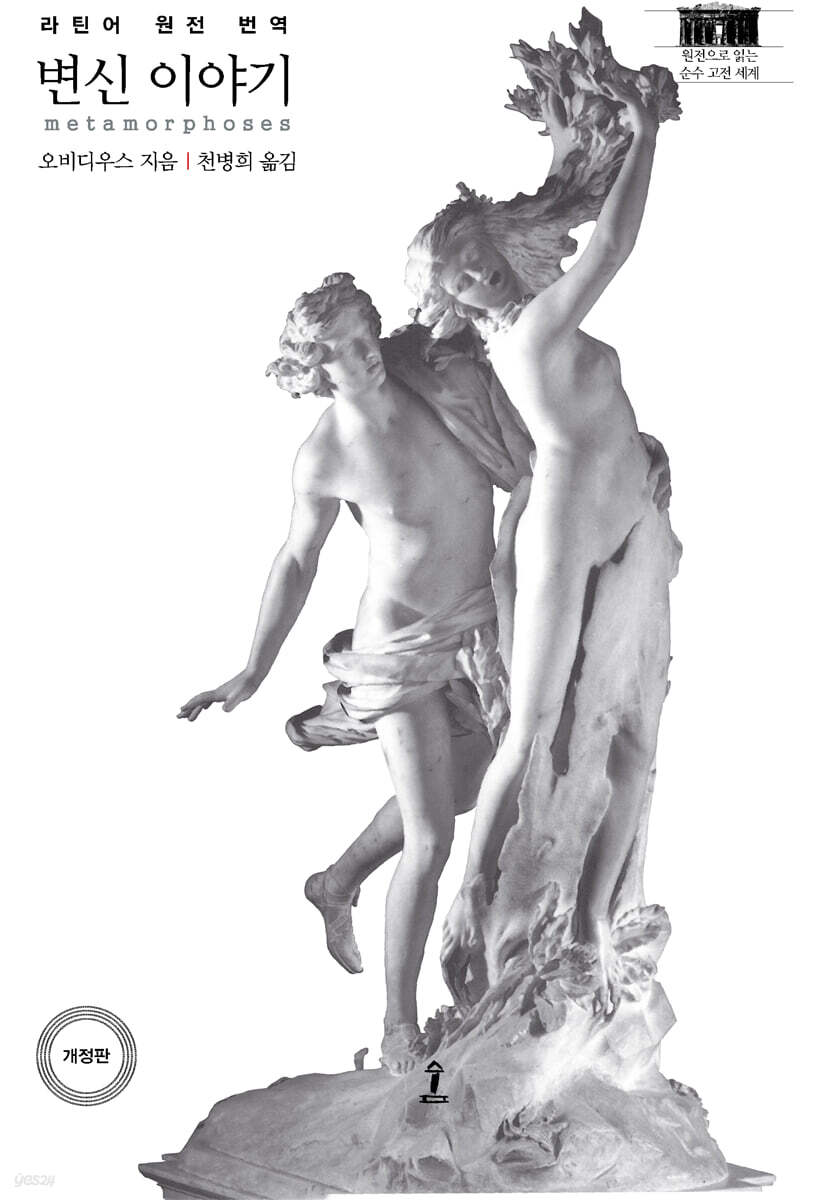
Transformation story
 |
Description
Book Introduction
A Guide to Greek Mythology
Ovid's Metamorphoses, which is the foundation of the Greco-Roman mythology that remains to this day, does not sing of a single theme like the epics of Homer or Virgil, but sings of all things that have changed through body change.
Ovid compiled the mythology of the classical era by incorporating into it a concern for the origins of humanity, a dynamic imagination, the cognitive system of ancient Western times, symbols and metaphors of human desire, and a wealth of motifs.
A revised edition of the original Latin translation of "The Metamorphoses," which has satisfied the diverse creative desires of humanity for two thousand years and has been loved by writers and artists, has been published.
This work is an epic poem in 15 volumes, containing about 250 myths and legends about the Metamorphoses, from the creation of heaven and earth to Ovid's own time.
It can be broadly divided into a section on gods (volume 1, lines 452 to volume 6, lines 420), a section on heroes (volume 6, lines 421 to volume 11, lines 193), and a section on historical figures (volume 11, lines 194 to volume 15, lines 744).
Although individual stories appear to progress chronologically, myths, unlike history, often lack clear causal relationships and are often categorized based on similarities or differences in themes, geography, or genealogy.
One of Ovid's remarkable achievements is that the stories are connected so naturally, even though the links that connect them are very loose.
Moreover, the gods and humans appearing in this work do not seem to be mythical figures, as they are realistic, vivid, and fresh, as if they are telling us an amazing story that happened recently around us.
The story of the changing protagonists seems to show the various aspects of humans at a turning point in life.
Ovid's Metamorphoses, which is the foundation of the Greco-Roman mythology that remains to this day, does not sing of a single theme like the epics of Homer or Virgil, but sings of all things that have changed through body change.
Ovid compiled the mythology of the classical era by incorporating into it a concern for the origins of humanity, a dynamic imagination, the cognitive system of ancient Western times, symbols and metaphors of human desire, and a wealth of motifs.
A revised edition of the original Latin translation of "The Metamorphoses," which has satisfied the diverse creative desires of humanity for two thousand years and has been loved by writers and artists, has been published.
This work is an epic poem in 15 volumes, containing about 250 myths and legends about the Metamorphoses, from the creation of heaven and earth to Ovid's own time.
It can be broadly divided into a section on gods (volume 1, lines 452 to volume 6, lines 420), a section on heroes (volume 6, lines 421 to volume 11, lines 193), and a section on historical figures (volume 11, lines 194 to volume 15, lines 744).
Although individual stories appear to progress chronologically, myths, unlike history, often lack clear causal relationships and are often categorized based on similarities or differences in themes, geography, or genealogy.
One of Ovid's remarkable achievements is that the stories are connected so naturally, even though the links that connect them are very loose.
Moreover, the gods and humans appearing in this work do not seem to be mythical figures, as they are realistic, vivid, and fresh, as if they are telling us an amazing story that happened recently around us.
The story of the changing protagonists seems to show the various aspects of humans at a turning point in life.
- You can preview some of the book's contents.
Preview
index
Translator's Preface_The fascinating transformations of all things in the world, read after read_17
Note_22
I Preface_24? The Birth of the Universe and Man_25? The Four Ages_29?
Gigas who challenge the gods of the sky_32? Lycaon_33? The Great Flood_38?
Deucalion and Pyrrha, the ancestors of humanity_42? Python_48? Daphne, who became a laurel tree_49
Io turned into a cow_55? Argus with a hundred eyes_58
Syrinx_61? The Insult of Epaphus_64? Phaethon's Desire to Know His Father_65
II Phaethon Driving His Father's Chariot_68? Heliades Transformed into Willow Trees_90
Quignus_91? Callisto turned into a female bear_93? Arcas_98? Coronis_100?
The Daughters of Cecrops_102? The Death of Coronis_104? The Prophecy of Ocuroe_106?
Battus the Stone_109? Aglaurus, Daughter of Cecrops_111? Goddess of Jealousy_114
The End of Aglaurus_116? The Bull That Kidnapped Europa_118
III The Fight Between Cadmus and the Serpent_122? Actaeon Sees Diana's Naked Body_129
The Burning Love of Semele_135? Tiresias, who spoke of the pleasure of love_138?
Narcissus and Echo_140? Pentheus_147?
The Turinian Sailors_151? The Punishment of Pentheus_157
IV The Daughters of Minyas_160? Pyramus and Thisbe_164
Mars and Venus, Leucothea, Clytie_169?
Salmacis and Hermaphroditus_174? The Daughters of Minyas Turned into Bats_180?
Athamas and Ino_182? Ino's Handmaids_189? Cadmus and Harmonia_190
Perseus and Atlas_192? Andromeda's Rescue_196? Medusa_202
V The Duel at Cepheus's Palace_206? Perseus's Later Deeds_216
Tyrant Pyreneus_217? The daughters of Pierus who challenged the goddess Musa_219?
The Metamorphosis of the Gods_221? Ceres and Proserpina_222?
The story of Arethusa's escape_235? Triptolemus_239?
The Daughters of Piero, Who Became Gossips in the Forest_240
VI Arachne and the Goddess's Weaving Competition_244? Niobe's Destruction_253?
The Peasants of Lycia_261? The Competition of Marsyas_265? The Shoulders of Pelops_266
The Revenge of Procne and Philomela_266? The Marriage of Boreas_279
VII Jason and Medea_284? Jason Regains Youth_292?
Pelias' Hope and Death_299? Medea's Flight_301?
Medea and Theseus_305? Minos and Aeacus_309
The Plague in Aegina_313? Cephalus and Procris_320
VIII Scylla and Nisus_332? Minotaur_339?
Daedalus and Icarus_341? Perdix_344? Calydon's Boar Hunt_345?
The Death of Althea and Meleager_356? Meleager's Sisters_360?
Achelous and Theseus_361? Philemon and Baucis_364?
Erysichthon and his daughter_370
IX The Battle of Achelous and Hercules_380? Netsus_385?
The Death of Hercules_387? The Birth of Hercules and Galantis_395?
The Metamorphosis of Drupe_398? The Sons of Iolaus and Callirhoe_401?
Bybliss_405? Epis_415
X Orpheus and Eurydice_424? List of Trees, Cyparissus_428?
The handsome Ganymede_432? Hyacinthus_433?
The Cerastae, the Propoietides_436? Pygmalion's Prayer_438?
The Madness of Murra_440? Adonis and Venus_451
Atalanta and Hippomenes_453? The Death of Adonis_460
XI The Death of Orpheus_464? Midas_468? Laomedon_474?
Peleus and Thetis_476? Daedalion_478?
The Wolf Who Trampled Peleus' Cattle_482? Kewix and Alcyone_485?
Somnus, the god of sleep_493? Aesacus_500
XII Iphigenia_506? Goddess of Rumors Pama_508? Cygnus_509?
The Transformation of Caeneus_514? The Battle of the Centaurs and the Lapiths_517?
The Last of Caeneus_528? Nestor and Hercules_532?
The Death of Achilles_534
XIII The Debate Between Ajax and Ulxes over the Armour of Achilles_540
The Fall of Troy_562? Hecuba, Polyxena, and Polydorus_564
Bird from Memnon's corpse_571? Aeneas's wanderings_573?
Acis and Galatea_581? Glaucus in Love with Scylla_588
XIV Witches Circe and Scylla_594? Aeneas leaves according to the will of fate_597?
The beloved woman Sibylla_600? Achaemenides_603?
The Adventures of Ullixes_606? Circe's Island_607
Ficus and Canens_610? Diomedes' Comrades_617? Wild Olive Tree_621
Aeneas' Ships _622? Ardea _625? The Death of Aeneas _626
Kings of Latium_628? Pomona and Vertumnus_629
Iphis and Anaxarete_633? Romulus and Hercilie_636
XV Muscelus_644? Pythagoras' Philosophy_647? Hippolytus_668?
Cypus_672? Aesculapius_676? Caesar's Deification_682
Conclusion_691
Translator's Note_692
References_702
Search_704
Map_747
Note_22
I Preface_24? The Birth of the Universe and Man_25? The Four Ages_29?
Gigas who challenge the gods of the sky_32? Lycaon_33? The Great Flood_38?
Deucalion and Pyrrha, the ancestors of humanity_42? Python_48? Daphne, who became a laurel tree_49
Io turned into a cow_55? Argus with a hundred eyes_58
Syrinx_61? The Insult of Epaphus_64? Phaethon's Desire to Know His Father_65
II Phaethon Driving His Father's Chariot_68? Heliades Transformed into Willow Trees_90
Quignus_91? Callisto turned into a female bear_93? Arcas_98? Coronis_100?
The Daughters of Cecrops_102? The Death of Coronis_104? The Prophecy of Ocuroe_106?
Battus the Stone_109? Aglaurus, Daughter of Cecrops_111? Goddess of Jealousy_114
The End of Aglaurus_116? The Bull That Kidnapped Europa_118
III The Fight Between Cadmus and the Serpent_122? Actaeon Sees Diana's Naked Body_129
The Burning Love of Semele_135? Tiresias, who spoke of the pleasure of love_138?
Narcissus and Echo_140? Pentheus_147?
The Turinian Sailors_151? The Punishment of Pentheus_157
IV The Daughters of Minyas_160? Pyramus and Thisbe_164
Mars and Venus, Leucothea, Clytie_169?
Salmacis and Hermaphroditus_174? The Daughters of Minyas Turned into Bats_180?
Athamas and Ino_182? Ino's Handmaids_189? Cadmus and Harmonia_190
Perseus and Atlas_192? Andromeda's Rescue_196? Medusa_202
V The Duel at Cepheus's Palace_206? Perseus's Later Deeds_216
Tyrant Pyreneus_217? The daughters of Pierus who challenged the goddess Musa_219?
The Metamorphosis of the Gods_221? Ceres and Proserpina_222?
The story of Arethusa's escape_235? Triptolemus_239?
The Daughters of Piero, Who Became Gossips in the Forest_240
VI Arachne and the Goddess's Weaving Competition_244? Niobe's Destruction_253?
The Peasants of Lycia_261? The Competition of Marsyas_265? The Shoulders of Pelops_266
The Revenge of Procne and Philomela_266? The Marriage of Boreas_279
VII Jason and Medea_284? Jason Regains Youth_292?
Pelias' Hope and Death_299? Medea's Flight_301?
Medea and Theseus_305? Minos and Aeacus_309
The Plague in Aegina_313? Cephalus and Procris_320
VIII Scylla and Nisus_332? Minotaur_339?
Daedalus and Icarus_341? Perdix_344? Calydon's Boar Hunt_345?
The Death of Althea and Meleager_356? Meleager's Sisters_360?
Achelous and Theseus_361? Philemon and Baucis_364?
Erysichthon and his daughter_370
IX The Battle of Achelous and Hercules_380? Netsus_385?
The Death of Hercules_387? The Birth of Hercules and Galantis_395?
The Metamorphosis of Drupe_398? The Sons of Iolaus and Callirhoe_401?
Bybliss_405? Epis_415
X Orpheus and Eurydice_424? List of Trees, Cyparissus_428?
The handsome Ganymede_432? Hyacinthus_433?
The Cerastae, the Propoietides_436? Pygmalion's Prayer_438?
The Madness of Murra_440? Adonis and Venus_451
Atalanta and Hippomenes_453? The Death of Adonis_460
XI The Death of Orpheus_464? Midas_468? Laomedon_474?
Peleus and Thetis_476? Daedalion_478?
The Wolf Who Trampled Peleus' Cattle_482? Kewix and Alcyone_485?
Somnus, the god of sleep_493? Aesacus_500
XII Iphigenia_506? Goddess of Rumors Pama_508? Cygnus_509?
The Transformation of Caeneus_514? The Battle of the Centaurs and the Lapiths_517?
The Last of Caeneus_528? Nestor and Hercules_532?
The Death of Achilles_534
XIII The Debate Between Ajax and Ulxes over the Armour of Achilles_540
The Fall of Troy_562? Hecuba, Polyxena, and Polydorus_564
Bird from Memnon's corpse_571? Aeneas's wanderings_573?
Acis and Galatea_581? Glaucus in Love with Scylla_588
XIV Witches Circe and Scylla_594? Aeneas leaves according to the will of fate_597?
The beloved woman Sibylla_600? Achaemenides_603?
The Adventures of Ullixes_606? Circe's Island_607
Ficus and Canens_610? Diomedes' Comrades_617? Wild Olive Tree_621
Aeneas' Ships _622? Ardea _625? The Death of Aeneas _626
Kings of Latium_628? Pomona and Vertumnus_629
Iphis and Anaxarete_633? Romulus and Hercilie_636
XV Muscelus_644? Pythagoras' Philosophy_647? Hippolytus_668?
Cypus_672? Aesculapius_676? Caesar's Deification_682
Conclusion_691
Translator's Note_692
References_702
Search_704
Map_747
Publisher's Review
A Guide to Greek Mythology
Ovid's Metamorphoses, which is the foundation of the Greco-Roman mythology that remains to this day, does not sing of a single theme like the epics of Homer or Virgil, but sings of all things that have changed through body change.
Ovid compiled the mythology of the classical era by incorporating into it a concern for the origins of humanity, a dynamic imagination, the cognitive system of ancient Western times, symbols and metaphors of human desire, and a wealth of motifs.
A revised edition of the original Latin translation of "The Metamorphoses," which has satisfied the diverse creative desires of humanity for two thousand years and has been loved by writers and artists, has been published.
The 12th and 13th centuries in the West, when Ovid's influence was strongest, were called the 'Age of Ovid', and in 16th-century England, writers including Chaucer, Spenser, Shakespeare, and Milton regarded Ovid as a model for a true poet, and later writers such as James Joyce and Eliot also wrote works featuring characters from 'Metamorphoses'.
Italian writers such as Dante, Boccaccio, and Tasso, German writers such as Goethe and Rilke, French writers such as Corneille, Racine, and Valéry, and even Cervantes, the first modern novelist, all cited the stories that appear in the Metamorphoses.
The Metamorphoses was written in ancient Latin verse.
In this work, Ovid achieved a fusion of classical and mythological elements of ancient Greece and Rome.
That is why it is difficult to translate completely without understanding and background knowledge of the Greek classics.
The seriousness of the mistranslations in the existing domestic version has already been pointed out several times by scholars.
It is time for our readers to delve into Greco-Roman mythology and encounter the most entertaining work of the most entertaining writer in all of Greco-Latin literature through the unedited and original Metamorphoses.
We must breathe together with the culture of humanity.
This work is an epic poem in 15 volumes, containing about 250 myths and legends about the Metamorphoses, from the creation of heaven and earth to Ovid's own time.
It can be broadly divided into a section on gods (volume 1, lines 452 to volume 6, lines 420), a section on heroes (volume 6, lines 421 to volume 11, lines 193), and a section on historical figures (volume 11, lines 194 to volume 15, lines 744).
Although individual stories appear to progress chronologically, myths, unlike history, often lack clear causal relationships and are often categorized based on similarities or differences in themes, geography, or genealogy.
One of Ovid's remarkable achievements is that the stories are connected so naturally, even though the links that connect them are very loose.
Moreover, the gods and humans appearing in this work do not seem to be mythical figures, as they are realistic, vivid, and fresh, as if they are telling us an amazing story that happened recently around us.
The story of the changing protagonists seems to show the various aspects of humans at a turning point in life.
GOODS SPECIFICS
- Date of publication: October 15, 2017
- Format: Hardcover book binding method guide
- Page count, weight, size: 752 pages | 1,198g | 153*224*40mm
- ISBN13: 9788991290808
- ISBN10: 8991290809
You may also like
카테고리
korean


korean

![GQ KOREA Mark (Monthly): December [2025]](http://librairie.coreenne.fr/cdn/shop/files/8ef265dbbfbf186523ed75ba7319009d.jpg?v=1765340328&width=3840)


