

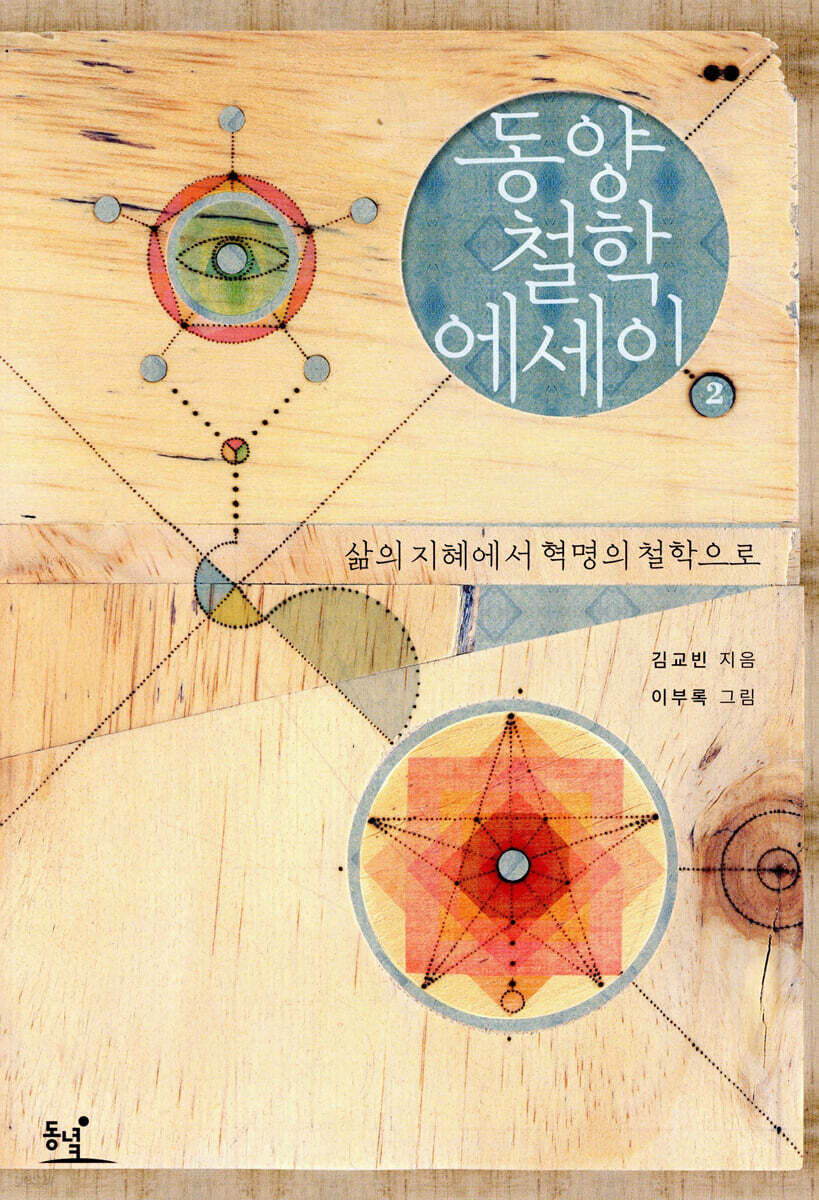
Essays on Eastern Philosophy 2
 |
Description
Book Introduction
『Essays on Eastern Philosophy』Volume 2.
The second story in “Essays on Eastern Philosophy” begins with Dong Zhongshu.
Although Dong Zhongshu played a major role in establishing the roots of Confucianism, there are not many records of his life, to the point where it is unclear when he was born or when he died.
Why did Dong Zhongshu come to be regarded by later generations as the mastermind behind the two thousand years of Confucianism's dominance? The author unravels the secret by telling the story of Dong Zhongshu's achievements in studying Confucius's Spring and Autumn Annals and Confucianism, as well as his theory of the relationship between heaven and man, which views heaven and man as one.
The second story in “Essays on Eastern Philosophy” begins with Dong Zhongshu.
Although Dong Zhongshu played a major role in establishing the roots of Confucianism, there are not many records of his life, to the point where it is unclear when he was born or when he died.
Why did Dong Zhongshu come to be regarded by later generations as the mastermind behind the two thousand years of Confucianism's dominance? The author unravels the secret by telling the story of Dong Zhongshu's achievements in studying Confucius's Spring and Autumn Annals and Confucianism, as well as his theory of the relationship between heaven and man, which views heaven and man as one.
- You can preview some of the book's contents.
Preview
index
At the beginning of the book
Dong Zhongshu and Confucianism ushered in two thousand years of monopoly.
The Seven Sages of the Bamboo Grove: Eternal Free Men Who Turned Their Backs on the World
Hye-neung - It is your heart that waves the flag.
Northern Song Dynasty scholars who developed Neo-Confucianism
Zhu Xi - Founder of the universal worldview of the Middle Ages in East Asia
Wang Su-in - A passionate thinker who embraced the principles of all things in his heart
Hwang Jong-hee - Pilbu is also responsible for the rise and fall of the world.
Damsadong - I will become someone who sheds blood for reform.
Mao Zedong - China's Eternal Red Star
A book worth reading more of
Dong Zhongshu and Confucianism ushered in two thousand years of monopoly.
The Seven Sages of the Bamboo Grove: Eternal Free Men Who Turned Their Backs on the World
Hye-neung - It is your heart that waves the flag.
Northern Song Dynasty scholars who developed Neo-Confucianism
Zhu Xi - Founder of the universal worldview of the Middle Ages in East Asia
Wang Su-in - A passionate thinker who embraced the principles of all things in his heart
Hwang Jong-hee - Pilbu is also responsible for the rise and fall of the world.
Damsadong - I will become someone who sheds blood for reform.
Mao Zedong - China's Eternal Red Star
A book worth reading more of
Into the book
After Emperor Wu accepted Dong Zhongshu's suggestion and promoted Confucianism and expelled other schools of thought, Confucianism gained authority as an orthodox school of thought with the support of the ruling power.
In particular, Emperor Wu selected experts from each of the Confucian classics, such as the Book of Songs, the Book of Documents, the Book of Changes, the Book of Rites, and the Spring and Autumn Annals, and gave them the title of Doctor.
This system, called 'Five Classics Doctor', was introduced to Korea during the Three Kingdoms period, and the title of Doctor today also comes from here.
The doctor was able to create a school, gather students, and teach them the Confucian scriptures he specialized in.
Moreover, the Han Dynasty, following Dong Zhongshu's suggestion, recommended people who had studied Confucianism and appointed them as officials.
From this point on, the link between Confucianism and politics that had lasted for two thousand years was completed.
-Pages 17-18
The lecture began and the audience listened quietly to the ambassador's words.
But then, as the wind blew, the flag hanging from the temple pole began to flutter.
One of the monks who saw this said:
“The wind is blowing and the flag is fluttering.” Then another monk took up the remark and said.
“No.
“Isn’t the wind something you can’t see? That’s the flag fluttering on its own.” The two men would not back down from their arguments, and other people who were listening nearby joined in, creating a commotion over whether it was the wind that was waving the flag or not, or the flag fluttering on its own.
Hye-neung, who had been watching the scene for a while, stepped forward as if he was frustrated.
“It is not the wind that waves the flag, nor does the flag itself flutter, but only your hearts that wave the flag.” Everyone who heard those words was surprised and fell silent for a moment.
-Pages 82-83
Joo Hee is the master of Neo-Confucianism.
However, he did not only synthesize Northern Song Neo-Confucianism.
By focusing on Neo-Confucianism and incorporating the interpretations of the classics of the Han and Tang Dynasties, the overall content was enriched. By incorporating the logic of Taoism and Buddhism, the logical system of Confucianism was completed, and the achievements of literature, history, and natural science were combined.
In this way, Juhee compiled all previous scholarship and thought into his own system of thought.
Therefore, in the flow of Chinese thought, he is the central link from which everything before him converges and everything after him begins.
-Page 158
Hwang Jong-hee began writing his masterpiece, “Myeong-i Daebangnok,” at the age of 53, and completed and published it the following year.
《Mingyi Daifanglu》 is a book that meticulously examines the causes of the shocking collapse of the Ming Dynasty by the Qing Dynasty and contains the desire to build a new society based on this, and it well reflects the ideological trend of the late Ming and early Qing dynasties that valued governance.
Hwang Jong-hee attributed the fall of the Ming Dynasty to the evils of absolute monarchy and proposed a society in which the people were the masters as an alternative.
Because of this modern consciousness, this book was banned during the Qianlong Emperor's reign.
-Pages 238-239
In particular, Emperor Wu selected experts from each of the Confucian classics, such as the Book of Songs, the Book of Documents, the Book of Changes, the Book of Rites, and the Spring and Autumn Annals, and gave them the title of Doctor.
This system, called 'Five Classics Doctor', was introduced to Korea during the Three Kingdoms period, and the title of Doctor today also comes from here.
The doctor was able to create a school, gather students, and teach them the Confucian scriptures he specialized in.
Moreover, the Han Dynasty, following Dong Zhongshu's suggestion, recommended people who had studied Confucianism and appointed them as officials.
From this point on, the link between Confucianism and politics that had lasted for two thousand years was completed.
-Pages 17-18
The lecture began and the audience listened quietly to the ambassador's words.
But then, as the wind blew, the flag hanging from the temple pole began to flutter.
One of the monks who saw this said:
“The wind is blowing and the flag is fluttering.” Then another monk took up the remark and said.
“No.
“Isn’t the wind something you can’t see? That’s the flag fluttering on its own.” The two men would not back down from their arguments, and other people who were listening nearby joined in, creating a commotion over whether it was the wind that was waving the flag or not, or the flag fluttering on its own.
Hye-neung, who had been watching the scene for a while, stepped forward as if he was frustrated.
“It is not the wind that waves the flag, nor does the flag itself flutter, but only your hearts that wave the flag.” Everyone who heard those words was surprised and fell silent for a moment.
-Pages 82-83
Joo Hee is the master of Neo-Confucianism.
However, he did not only synthesize Northern Song Neo-Confucianism.
By focusing on Neo-Confucianism and incorporating the interpretations of the classics of the Han and Tang Dynasties, the overall content was enriched. By incorporating the logic of Taoism and Buddhism, the logical system of Confucianism was completed, and the achievements of literature, history, and natural science were combined.
In this way, Juhee compiled all previous scholarship and thought into his own system of thought.
Therefore, in the flow of Chinese thought, he is the central link from which everything before him converges and everything after him begins.
-Page 158
Hwang Jong-hee began writing his masterpiece, “Myeong-i Daebangnok,” at the age of 53, and completed and published it the following year.
《Mingyi Daifanglu》 is a book that meticulously examines the causes of the shocking collapse of the Ming Dynasty by the Qing Dynasty and contains the desire to build a new society based on this, and it well reflects the ideological trend of the late Ming and early Qing dynasties that valued governance.
Hwang Jong-hee attributed the fall of the Ming Dynasty to the evils of absolute monarchy and proposed a society in which the people were the masters as an alternative.
Because of this modern consciousness, this book was banned during the Qianlong Emperor's reign.
-Pages 238-239
---From the text
Publisher's Review
The second installment of "Essays on Eastern Philosophy," returning after 21 years.
From Dong Zhongshu of the Han Dynasty to Mao Zedong of modern China,
A philosophical voyage toward the vast sea of thought and practice!
This book is the second installment of the best-selling "Essays on Eastern Philosophy," published in 1993 and a classic introductory text to Eastern philosophy for over 20 years.
If the first volume covered the Hundred Schools of Thought during the Spring and Autumn Period and the Warring States Period until Qin Shi Huang achieved unification, Volume 2 of "Essays on Eastern Philosophy" covers the thoughts of Dong Zhongshu, who created the unifying ideology of the Han Dynasty, to Mao Zedong, who built modern socialist China.
The philosophy of the Hundred Schools of Thought, which began with these fundamental questions of life, “How should we live and what should we do?”, provided us with life wisdom on how we should live in these chaotic times.
This book contains the entire flow of philosophy as a life wisdom spread by the Hundred Schools of Thought, which changed into a philosophy of revolution through Dong Zhongshu of the Han Dynasty, who opened the two thousand years of Confucianism's dominance; the Seven Sages of the Bamboo Grove, who turned their backs on corrupt political power and spent their time gathering in a bamboo grove and discussing things in a clear manner; Huineng, a monk of the Tang Dynasty who brought the flower of Zen Buddhism to China; the five Confucian scholars of the Northern Song Dynasty (Wu Zi of the Northern Song Dynasty) who developed Neo-Confucianism, which explains the principles of all things in the universe; Zhu Xi, the founder of a universal worldview in the Middle Ages in East Asia; Wang Shouren of the Ming Dynasty who founded Yangmingism, a neo-Confucian philosophy; Huang Zongxi, a practical intellectual who resisted the Qing Dynasty for decades; Tan Sidong, who devoted everything to the reform movement in the late Qing Dynasty; and Mao Zedong, a Chinese communist revolutionary.
Is Dong Zhongshu the mastermind behind the nationalization of Confucianism? Is Huineng on par with Buddha?
Zhu Xi is on par with Confucius and Mencius?
Hidden Stories of Eastern Philosophy We Never Knew
This book begins with Dongzhongshu.
Although Dong Zhongshu played a major role in establishing the roots of Confucianism, there are not many records of his life, to the point where it is unclear when he was born or when he died.
Moreover, it is certainly an unfamiliar name to us who are familiar with Confucius, Mencius, Laozi, and Zhuangzi.
The author lists Dong Zhongshu as the first person we must know after the Hundred Schools of Thought.
How did Dong Zhongshu, who neither achieved high office nor garnered the fervent support of the Confucian scholars of his time, come to be regarded by later generations as the mastermind behind the two-thousand-year dominance of Confucianism? The author unravels this mystery by recounting the Spring and Autumn Annals written by Confucius, Dong Zhongshu's achievements in Gongyang studies, and his theory of the unity of heaven and man.
Today, when we say 'Eastern philosophy', we mainly mean 'Chinese philosophy'.
There is also 'Indian philosophy' which gave birth to Hinduism and Buddhism, but this is mainly classified as a religious philosophy, and there is also Korean philosophy and Japanese philosophy, but it was mainly greatly influenced by Chinese philosophy.
This book also covers Buddhist philosophy that came from India to China in the section on Huineng.
The story of the first patriarch, Bodhidharma, and the sixth patriarch, Huineng, who brought Zen Buddhism to China, is vividly told through a wealth of anecdotes.
The Platform Sutra of the Sixth Patriarch, which contains Huineng's sermons, is a book that clearly reveals Huineng's unconventional side, as can be seen from the fact that it was given the title of "sutra" later on, even though it was not the Buddha's words.
This book shows why the words of the Buddha are the same as those of the Buddha through the dramatic life of Huineng.
The story of Zhu Xi, who changed the direction of Confucianism by incorporating the ideas of the Northern Song Dynasty and Wu Zi to complete Neo-Confucianism, is also told.
The Neo-Confucianism that Juhee completed is also called 'Zhu Xi's Learning'.
Zhu Xi's surname is Zhu Xi's surname, along with the highest honorifics such as Confucius and Mencius. Zhu Xi's learning means that Zhu Xi's entire thought is an academic system and an object of study.
However, in later generations, many ruling classes used his theory as an ideology to maintain vested interests, and Zhu Xi's teachings also showed a dark side, becoming a huge obstacle that hindered social development.
From the wisdom of life to the philosophy of revolution,
Living Eastern philosophy that anyone can easily understand
A complete introduction to Eastern philosophy, encompassing Hwang Jong-hee, Dam Sa-dong, and Mao Zedong!
The most significant feature of this book is that it examines the trajectory of the evolution of Confucianism, Buddhism, and Taoism, the philosophies we are all familiar with, from wisdom for life to a philosophy of transformation that moves the world.
Hwang Jong-hee and Dam Sa-dong may seem a bit unfamiliar, and Mao Zedong is famous as a politician, but not many people think of him as a thinker or philosopher.
Huang Zongxi, known as the 'Chinese Rousseau', was a 17th-century Confucian scholar who criticized the evils of absolute monarchy and argued that sovereignty resided in the will of the people.
In addition, Hwang Jong-hee's "Myeong-i Daebangrok" was published nearly 100 years before Rousseau's "Social Contract" and served as an excellent textbook for modern Chinese intellectuals who longed for a new society.
Dam Sa-dong was a revolutionary who opposed and criticized the Qing Dynasty and was executed for carrying out the Martial Arts Reform Movement together with Kang Youwei and others.
He was a practical intellectual who had the opportunity to go into exile, but chose death for reform.
Mao Zedong wanted to lead young people to the right path, so much so that he considered himself an “educator” rather than a “politician” or a “thinker.”
This book examines “On Contradiction” and “On Practice,” which clearly reveal Mao Zedong’s thought.
The author concludes his philosophical journey, which began with Dong Zhongshu, with Mao Zedong, China's eternal "red star."
The journey toward Eastern philosophy, which began in Volume 1 of “Essays on Eastern Philosophy,” takes a pause at Mao Zedong, who had a major influence on the creation of modern socialist China.
However, this comma is only temporary. The footsteps of Eastern philosophy, which blossomed in harsh times, are spreading to Korea, Japan, and other countries, and are transforming into a philosophy that moves the world.
This book clearly shows how Eastern philosophy, which began as a philosophy of the Hundred Schools of Thought, has evolved into a philosophy of revolution that transforms society.
Now, all that remains is to read the stories of these great thinkers and navigate their vast sea of thought and practice.
From Dong Zhongshu of the Han Dynasty to Mao Zedong of modern China,
A philosophical voyage toward the vast sea of thought and practice!
This book is the second installment of the best-selling "Essays on Eastern Philosophy," published in 1993 and a classic introductory text to Eastern philosophy for over 20 years.
If the first volume covered the Hundred Schools of Thought during the Spring and Autumn Period and the Warring States Period until Qin Shi Huang achieved unification, Volume 2 of "Essays on Eastern Philosophy" covers the thoughts of Dong Zhongshu, who created the unifying ideology of the Han Dynasty, to Mao Zedong, who built modern socialist China.
The philosophy of the Hundred Schools of Thought, which began with these fundamental questions of life, “How should we live and what should we do?”, provided us with life wisdom on how we should live in these chaotic times.
This book contains the entire flow of philosophy as a life wisdom spread by the Hundred Schools of Thought, which changed into a philosophy of revolution through Dong Zhongshu of the Han Dynasty, who opened the two thousand years of Confucianism's dominance; the Seven Sages of the Bamboo Grove, who turned their backs on corrupt political power and spent their time gathering in a bamboo grove and discussing things in a clear manner; Huineng, a monk of the Tang Dynasty who brought the flower of Zen Buddhism to China; the five Confucian scholars of the Northern Song Dynasty (Wu Zi of the Northern Song Dynasty) who developed Neo-Confucianism, which explains the principles of all things in the universe; Zhu Xi, the founder of a universal worldview in the Middle Ages in East Asia; Wang Shouren of the Ming Dynasty who founded Yangmingism, a neo-Confucian philosophy; Huang Zongxi, a practical intellectual who resisted the Qing Dynasty for decades; Tan Sidong, who devoted everything to the reform movement in the late Qing Dynasty; and Mao Zedong, a Chinese communist revolutionary.
Is Dong Zhongshu the mastermind behind the nationalization of Confucianism? Is Huineng on par with Buddha?
Zhu Xi is on par with Confucius and Mencius?
Hidden Stories of Eastern Philosophy We Never Knew
This book begins with Dongzhongshu.
Although Dong Zhongshu played a major role in establishing the roots of Confucianism, there are not many records of his life, to the point where it is unclear when he was born or when he died.
Moreover, it is certainly an unfamiliar name to us who are familiar with Confucius, Mencius, Laozi, and Zhuangzi.
The author lists Dong Zhongshu as the first person we must know after the Hundred Schools of Thought.
How did Dong Zhongshu, who neither achieved high office nor garnered the fervent support of the Confucian scholars of his time, come to be regarded by later generations as the mastermind behind the two-thousand-year dominance of Confucianism? The author unravels this mystery by recounting the Spring and Autumn Annals written by Confucius, Dong Zhongshu's achievements in Gongyang studies, and his theory of the unity of heaven and man.
Today, when we say 'Eastern philosophy', we mainly mean 'Chinese philosophy'.
There is also 'Indian philosophy' which gave birth to Hinduism and Buddhism, but this is mainly classified as a religious philosophy, and there is also Korean philosophy and Japanese philosophy, but it was mainly greatly influenced by Chinese philosophy.
This book also covers Buddhist philosophy that came from India to China in the section on Huineng.
The story of the first patriarch, Bodhidharma, and the sixth patriarch, Huineng, who brought Zen Buddhism to China, is vividly told through a wealth of anecdotes.
The Platform Sutra of the Sixth Patriarch, which contains Huineng's sermons, is a book that clearly reveals Huineng's unconventional side, as can be seen from the fact that it was given the title of "sutra" later on, even though it was not the Buddha's words.
This book shows why the words of the Buddha are the same as those of the Buddha through the dramatic life of Huineng.
The story of Zhu Xi, who changed the direction of Confucianism by incorporating the ideas of the Northern Song Dynasty and Wu Zi to complete Neo-Confucianism, is also told.
The Neo-Confucianism that Juhee completed is also called 'Zhu Xi's Learning'.
Zhu Xi's surname is Zhu Xi's surname, along with the highest honorifics such as Confucius and Mencius. Zhu Xi's learning means that Zhu Xi's entire thought is an academic system and an object of study.
However, in later generations, many ruling classes used his theory as an ideology to maintain vested interests, and Zhu Xi's teachings also showed a dark side, becoming a huge obstacle that hindered social development.
From the wisdom of life to the philosophy of revolution,
Living Eastern philosophy that anyone can easily understand
A complete introduction to Eastern philosophy, encompassing Hwang Jong-hee, Dam Sa-dong, and Mao Zedong!
The most significant feature of this book is that it examines the trajectory of the evolution of Confucianism, Buddhism, and Taoism, the philosophies we are all familiar with, from wisdom for life to a philosophy of transformation that moves the world.
Hwang Jong-hee and Dam Sa-dong may seem a bit unfamiliar, and Mao Zedong is famous as a politician, but not many people think of him as a thinker or philosopher.
Huang Zongxi, known as the 'Chinese Rousseau', was a 17th-century Confucian scholar who criticized the evils of absolute monarchy and argued that sovereignty resided in the will of the people.
In addition, Hwang Jong-hee's "Myeong-i Daebangrok" was published nearly 100 years before Rousseau's "Social Contract" and served as an excellent textbook for modern Chinese intellectuals who longed for a new society.
Dam Sa-dong was a revolutionary who opposed and criticized the Qing Dynasty and was executed for carrying out the Martial Arts Reform Movement together with Kang Youwei and others.
He was a practical intellectual who had the opportunity to go into exile, but chose death for reform.
Mao Zedong wanted to lead young people to the right path, so much so that he considered himself an “educator” rather than a “politician” or a “thinker.”
This book examines “On Contradiction” and “On Practice,” which clearly reveal Mao Zedong’s thought.
The author concludes his philosophical journey, which began with Dong Zhongshu, with Mao Zedong, China's eternal "red star."
The journey toward Eastern philosophy, which began in Volume 1 of “Essays on Eastern Philosophy,” takes a pause at Mao Zedong, who had a major influence on the creation of modern socialist China.
However, this comma is only temporary. The footsteps of Eastern philosophy, which blossomed in harsh times, are spreading to Korea, Japan, and other countries, and are transforming into a philosophy that moves the world.
This book clearly shows how Eastern philosophy, which began as a philosophy of the Hundred Schools of Thought, has evolved into a philosophy of revolution that transforms society.
Now, all that remains is to read the stories of these great thinkers and navigate their vast sea of thought and practice.
GOODS SPECIFICS
- Date of publication: May 20, 2014
- Page count, weight, size: 336 pages | 490g | 153*224*30mm
- ISBN13: 9788972977155
- ISBN10: 8972977152
You may also like
카테고리
korean


korean

![GQ KOREA Mark (Monthly): December [2025]](http://librairie.coreenne.fr/cdn/shop/files/8ef265dbbfbf186523ed75ba7319009d.jpg?v=1765340328&width=3840)


