

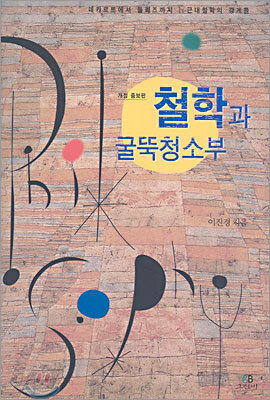
Philosophy and the Chimney Sweep
 |
Description
Book Introduction
It has already been over ten years since the first edition of "Philosophy and the Chimney Sweeper" was published.
Throughout the years, even the mountains and rivers change, this book has been consistently loved and is often referred to by its abbreviation, "Cheolgul."
The reason for this is likely because this book is not simply a summary and introductory text on modern philosophy. "Philosophy and the Chimney Sweeper" helps us understand the history of philosophy through the boundaries drawn between modern and medieval philosophy, and through the boundaries created when postmodern problem-solving sought to transcend modern philosophy.
The first edition of Philosophy and the Chimney Sweep and the expanded edition published in 2001 begin with Descartes in the field of modern philosophy and end with Foucault in the field of postmodern philosophy.
But it is true that this ending felt somewhat lacking.
Author Lee Jin-kyung is widely known as a scholar who has devoted a long time to studying the philosophy of Deleuze and Guattari, and has compiled her encounters with these philosophies into a quantitatively and qualitatively rich work called "Nomadism."
And above all, when discussing postmodern philosophy, Deleuze and Guattari occupy an important position that cannot be left out, so it was regrettable that their explanations were omitted from this book.
The revised and expanded edition of 2005 added a chapter on 'Deleuze and Guattari' titled 'Deleuze and Guattari: From the Philosophy of Difference to Nomadism', which will satisfy readers interested in the flow of philosophy from modern to post-modern philosophy, as well as readers curious about the philosophy of 'Deleuze and Guattari'.
The author uses his characteristically logical and easy-to-understand explanations to unravel the philosophical concepts and issues of Deleuze and Guattari, making this chapter an excellent guide for readers encountering their philosophy for the first time.
And the 26 newly added illustrations to the 'Deleuze and Guattari' section this time are all taken from the animation 'Ghost in the Shell' and its sequel 'Innocence', and contain questions about the distinction between humans and machines.
In addition, a supplementary essay titled “The Layout of Modern Knowledge and Nomadism” has been added to this revised and expanded edition.
In this essay, the author addresses the epistemological arrangements that frame modern knowledge in general, attempts to transcend its boundaries, and the conditions of intellectual and material production associated with them.
Through this supplement, readers will be able to grasp the true meaning of the phrase "crisis of the humanities" and the form of knowledge we will have to produce and consume in the future.
Throughout the years, even the mountains and rivers change, this book has been consistently loved and is often referred to by its abbreviation, "Cheolgul."
The reason for this is likely because this book is not simply a summary and introductory text on modern philosophy. "Philosophy and the Chimney Sweeper" helps us understand the history of philosophy through the boundaries drawn between modern and medieval philosophy, and through the boundaries created when postmodern problem-solving sought to transcend modern philosophy.
The first edition of Philosophy and the Chimney Sweep and the expanded edition published in 2001 begin with Descartes in the field of modern philosophy and end with Foucault in the field of postmodern philosophy.
But it is true that this ending felt somewhat lacking.
Author Lee Jin-kyung is widely known as a scholar who has devoted a long time to studying the philosophy of Deleuze and Guattari, and has compiled her encounters with these philosophies into a quantitatively and qualitatively rich work called "Nomadism."
And above all, when discussing postmodern philosophy, Deleuze and Guattari occupy an important position that cannot be left out, so it was regrettable that their explanations were omitted from this book.
The revised and expanded edition of 2005 added a chapter on 'Deleuze and Guattari' titled 'Deleuze and Guattari: From the Philosophy of Difference to Nomadism', which will satisfy readers interested in the flow of philosophy from modern to post-modern philosophy, as well as readers curious about the philosophy of 'Deleuze and Guattari'.
The author uses his characteristically logical and easy-to-understand explanations to unravel the philosophical concepts and issues of Deleuze and Guattari, making this chapter an excellent guide for readers encountering their philosophy for the first time.
And the 26 newly added illustrations to the 'Deleuze and Guattari' section this time are all taken from the animation 'Ghost in the Shell' and its sequel 'Innocence', and contain questions about the distinction between humans and machines.
In addition, a supplementary essay titled “The Layout of Modern Knowledge and Nomadism” has been added to this revised and expanded edition.
In this essay, the author addresses the epistemological arrangements that frame modern knowledge in general, attempts to transcend its boundaries, and the conditions of intellectual and material production associated with them.
Through this supplement, readers will be able to grasp the true meaning of the phrase "crisis of the humanities" and the form of knowledge we will have to produce and consume in the future.
- You can preview some of the book's contents.
Preview
index
introduction
1.
Postmodern 'Zeitgeist'
2.
The Boundaries of Philosophy
3.
Reading boundaries and 'problem setting'
Chapter 1: Modernity of Philosophy, Philosophy of Modernity
1.
Descartes: The Starting Point of Modern Philosophy
2.
Spinoza: A 'Modern' Philosopher Beyond Modernity
Chapter 2: Nominalism and Empiricism: The Unrest and Crisis of Modern Philosophy
1.
Nominalism and Empiricism
2.
Locke: Nominalism and Modern Philosophy
3.
Hume: The Limits of Modern Philosophy
4.
The crisis of modern philosophy
Chapter 3: Classical German Philosophy: The Reconstruction and "Development" of Modern Philosophy
1.
Kant: Reconstruction of Modern Philosophy
2.
Fichte: Modern Philosophy and the Self
3.
Hegel: Modern Philosophy at its Peak
Chapter 4: Deconstruction of Modern Philosophy: Marx, Freud, and Nietzsche
1.
Marx: Historical Materialism and Modern Philosophy
2.
Freud: Psychoanalysis and Modern Philosophy
3.
Nietzsche: Genealogy and Modern Philosophy
4.
Aspects of the Deconstruction of Modern Philosophy
Chapter 5: The 'Revolution' in Linguistics and Philosophy: Between Modernity and Postmodernity
1.
Linguistics and Philosophy
2.
Humboldt: Linguistic Kantianism
3.
Saussure's linguistic 'revolution'
4.
Wittgenstein: Language Games and Linguistic Practices
Chapter 6: Structuralism and Poststructuralism: Toward a Philosophy Beyond Modernity
1.
Structuralism and Philosophy
2.
Levi-Strauss and structuralism
3.
Lacan: The Linguistics of Psychoanalysis
4.
Althusser: Marxism and 'Structuralism'
5.
Foucault: The Philosophy of "Breaking Down Borders"
Conclusion: The Boundaries of Modern Philosophy
Search
1.
Postmodern 'Zeitgeist'
2.
The Boundaries of Philosophy
3.
Reading boundaries and 'problem setting'
Chapter 1: Modernity of Philosophy, Philosophy of Modernity
1.
Descartes: The Starting Point of Modern Philosophy
2.
Spinoza: A 'Modern' Philosopher Beyond Modernity
Chapter 2: Nominalism and Empiricism: The Unrest and Crisis of Modern Philosophy
1.
Nominalism and Empiricism
2.
Locke: Nominalism and Modern Philosophy
3.
Hume: The Limits of Modern Philosophy
4.
The crisis of modern philosophy
Chapter 3: Classical German Philosophy: The Reconstruction and "Development" of Modern Philosophy
1.
Kant: Reconstruction of Modern Philosophy
2.
Fichte: Modern Philosophy and the Self
3.
Hegel: Modern Philosophy at its Peak
Chapter 4: Deconstruction of Modern Philosophy: Marx, Freud, and Nietzsche
1.
Marx: Historical Materialism and Modern Philosophy
2.
Freud: Psychoanalysis and Modern Philosophy
3.
Nietzsche: Genealogy and Modern Philosophy
4.
Aspects of the Deconstruction of Modern Philosophy
Chapter 5: The 'Revolution' in Linguistics and Philosophy: Between Modernity and Postmodernity
1.
Linguistics and Philosophy
2.
Humboldt: Linguistic Kantianism
3.
Saussure's linguistic 'revolution'
4.
Wittgenstein: Language Games and Linguistic Practices
Chapter 6: Structuralism and Poststructuralism: Toward a Philosophy Beyond Modernity
1.
Structuralism and Philosophy
2.
Levi-Strauss and structuralism
3.
Lacan: The Linguistics of Psychoanalysis
4.
Althusser: Marxism and 'Structuralism'
5.
Foucault: The Philosophy of "Breaking Down Borders"
Conclusion: The Boundaries of Modern Philosophy
Search
Into the book
For example, when I say I am being scammed, it is impossible for me to be scammed if there is no 'me' who is being scammed.
Likewise, when I think about something, I may be wrong, as the skeptics say, or I may not be clear about what I am thinking about, but if there is no 'thinking me', how can thinking be possible at all?
The same goes for doubting.
What this means is that if there is no 'I' who doubts, then there can be no doubt.
Augustine says that the very fact that skeptics doubt proves that there is a "doubter" (the skeptic himself).
Therefore, it is said that “I think, therefore I am” is so certain that even skeptics cannot refute it.
He presents this as the 'first principle' in his philosophy.
--- p.37
However, Hume says that causality is 'a habitual judgment about the relationship between two impressions (phenomena) that are contiguous, connected in time or space.'
For example, the fact that rubbing wood causes it to catch fire is a habit that has developed from seeing such cases often.
But that's not always necessarily the case.
In the movie "Finding Fire," the main character rubs wood together as he learned, but the fire does not start.
The woman who followed him rubbed the wood and the fire was rekindled, but the conclusion that rubbing wood causes fire is not always a valid conclusion.
It's just that because it happens so often, we've developed a habit of judging that it's going to catch fire.
--- p.127
Marx dismantles the very concept of 'human'.
He says that 'human' cannot be defined as a being whose essence is love or will, like Feuerbach, nor can it be defined as a being with 'reason' and 'passion', like Descartes.
Because it merely extracts a few of the many characteristics that humans possess and declares them to be the essence of humanity.
If this is the case, then humans can be defined differently for each person.
What was truly important, Marx believed, was to understand what social characteristics actually exist in individuals and how these change.
So he puts it bluntly:
It is said that human beings are the totality of social relationships.
--- p.215
Ultimately, it becomes clear that the entity we call 'I' or 'self' does not have a single, consistent character, a unity.
Simply put, the 'subject' is divided into opposing and conflicting parts.
At the very least, it is divided into a conscious and an unconscious that cannot face each other, and a macroego and a superego that conflict and fight with each other.
If so, then we ultimately arrive at the conclusion that the subject is not a unified center, but a very heterogeneous 'complex', and not a self-evident starting point, but a 'result'.
A 'human' is created through the Oedipus complex, and a 'subject' is a result of accepting and acting on the rules demanded by the 'other' (the superego).
This outlines another path for the disintegration of the foundations of modern philosophy.
Likewise, when I think about something, I may be wrong, as the skeptics say, or I may not be clear about what I am thinking about, but if there is no 'thinking me', how can thinking be possible at all?
The same goes for doubting.
What this means is that if there is no 'I' who doubts, then there can be no doubt.
Augustine says that the very fact that skeptics doubt proves that there is a "doubter" (the skeptic himself).
Therefore, it is said that “I think, therefore I am” is so certain that even skeptics cannot refute it.
He presents this as the 'first principle' in his philosophy.
--- p.37
However, Hume says that causality is 'a habitual judgment about the relationship between two impressions (phenomena) that are contiguous, connected in time or space.'
For example, the fact that rubbing wood causes it to catch fire is a habit that has developed from seeing such cases often.
But that's not always necessarily the case.
In the movie "Finding Fire," the main character rubs wood together as he learned, but the fire does not start.
The woman who followed him rubbed the wood and the fire was rekindled, but the conclusion that rubbing wood causes fire is not always a valid conclusion.
It's just that because it happens so often, we've developed a habit of judging that it's going to catch fire.
--- p.127
Marx dismantles the very concept of 'human'.
He says that 'human' cannot be defined as a being whose essence is love or will, like Feuerbach, nor can it be defined as a being with 'reason' and 'passion', like Descartes.
Because it merely extracts a few of the many characteristics that humans possess and declares them to be the essence of humanity.
If this is the case, then humans can be defined differently for each person.
What was truly important, Marx believed, was to understand what social characteristics actually exist in individuals and how these change.
So he puts it bluntly:
It is said that human beings are the totality of social relationships.
--- p.215
Ultimately, it becomes clear that the entity we call 'I' or 'self' does not have a single, consistent character, a unity.
Simply put, the 'subject' is divided into opposing and conflicting parts.
At the very least, it is divided into a conscious and an unconscious that cannot face each other, and a macroego and a superego that conflict and fight with each other.
If so, then we ultimately arrive at the conclusion that the subject is not a unified center, but a very heterogeneous 'complex', and not a self-evident starting point, but a 'result'.
A 'human' is created through the Oedipus complex, and a 'subject' is a result of accepting and acting on the rules demanded by the 'other' (the superego).
This outlines another path for the disintegration of the foundations of modern philosophy.
--- p.235
Publisher's Review
The journey of modern philosophy from Descartes to Deleuze,
Meet the bible of philosophy introductory books that have been loved for over 25 years.
Two chimney sweeps came down after finishing their cleaning.
One person had a dirty face, and the other person had a clean face.
Who will end up washing their face? The answer is someone with a clean face.
Because when you see the other person's face, you will think that you are dirty too.
The goal of modern philosophy was to reach a state of cognition in which the subject and object of cognition are identical (this is what modern philosophy calls the 'truth').
However, if we divide the subject of perception and the object of perception, as in the example of the chimney sweep, there is no way to confirm whether what is perceived is consistent with the facts.
So does that mean truth is impossible?
Modern philosophers who sought to reach the truth could not accept this result.
The attempts of modern philosophers to find various escape routes to overcome this crisis, and the various currents and ideas of modern philosophy, can also be understood in this way.
The reason why the two incongruous words ‘philosophy’ and ‘chimney sweep’ are included in one title is because the boundaries between the inside and outside of modern philosophy can be understood through the chimney sweep’s dilemma.
The dilemma of modern philosophy,
Can subject and object never be in harmony?
This book is a history of philosophy that outlines major philosophical ideas from modern times to postmodernism.
However, it is not an introductory book that simply summarizes the thoughts of major philosophers.
As the subtitle, "The Boundaries of Modern Philosophy," suggests, this book seeks to understand the history of philosophy through the boundaries that modern philosophy created between itself and medieval philosophy, and through the boundaries that postmodern problem-solving created as it sought to transcend modern philosophy.
Furthermore, by examining the boundaries created by the conflicting thoughts of various currents and philosophers within each era, we delve into what modernity is, what post-modernity is, what it means to escape modernity, and if attempts to escape modernity are valid, what is necessary for that 'escape'—in other words, what is required to think post-modernly.
In short, this book was born out of the need to seek a new paradigm that transcends modernity at a time when a fundamental shift in thinking is required following the collapse of real socialism.
The author begins his discussion by describing the dilemma that modern philosophy, originating from Descartes, inevitably falls into by separating the subject from God and, at the same time, from the object, but being built on the dichotomy of subject and object.
This dilemma points to the difficulty that if we divide the subject of knowledge and the object of knowledge and say that truth is when the two coincide, we can never confirm or guarantee whether a certain knowledge or knowledge is true or not (this is the chimney sweep's dilemma mentioned earlier).
This dilemma does not appear in medieval philosophy, but is unique to modern philosophy.
In the Middle Ages, creationism explained questions like how the world exists and what a nation is, revelation guaranteed what the truth is, and the church and its clergy were sufficient for how to live.
Next, the author examines the tension between nominalism and modern philosophy, thereby examining how modern subjectivist philosophy wavered and fell into crisis, how German classical philosophy, which attempted to rebuild modern philosophy, ultimately brought about its demise, how Marx, Freud, and Nietzsche deconstructed modern philosophy, and how their concepts and methods were subsequently used by modern philosophers and theorists.
Then, we examine the philosophical ideas between modern and post-modern times, focusing on linguistics. We discuss the meaning and difficulties of Saussure's linguistic revolution and how Wittgenstein resolved the difficulties of structural linguistics.
Next, we examine philosophy beyond modernity, focusing on structuralism and post-structuralism, and discuss how Levi-Strauss, Lacan, Althusser, and Foucault transcend the boundaries of modern philosophy and what their respective limitations are.
Finally, the author discusses Deleuze and Guattari and organizes the flow of philosophy from modern to post-modern philosophy.
This chapter will serve as an excellent guide for readers encountering their philosophy for the first time, as it unravels the philosophical concepts and issues of Deleuze and Guattari with the author's characteristically logical and easy-to-understand explanations.
The tension between the illustrated text and the main text,
Conjuring new thoughts at different speeds and rhythms
Readers follow two stories as they read the book Philosophy and the Chimney Sweep.
That is the story of the main text and the story of the illustration text.
By juxtaposing the text of the main text with the illustrated text, which has a separate story structure, new thoughts can be triggered through the tension and harmony between the two texts.
A total of 81 illustrations and annotations are grouped into 12 groups, each of which unfolds a philosophy and consists of materials that draw their own lines of thought.
The text of the painting is about everything that came to the mind one day, everything that the mind encountered, and everything that the mind used while thinking, in short, everything that the mind uses as material.
It includes paintings, photographs, and other works on the subjects of factories, hospitals, prisons, science, religion, invasion, robbery, enemies, and friends.
Each illustration and annotation can be viewed in relation to the text, or can be viewed separately.
As I urged in the epilogue to “question the claims of this book,” readers will be able to develop their own thoughts by looking at each of the illustrations, or rather, at the objects surrounding them.
The illustrated text will serve as an excellent guide to guide readers along such a path of thought.
The author says:
“I thought that the different speeds and rhythms between the main text and the illustrated text, as well as the different styles of description, could trigger readers’ own thoughts, and thus generate more diverse thoughts and discussions.
Of course, it is not for me to judge whether the result matches the intention.
“I just hope that new lines of thought will flow out between them, and that new thoughts will overflow across the text.”
Meet the bible of philosophy introductory books that have been loved for over 25 years.
Two chimney sweeps came down after finishing their cleaning.
One person had a dirty face, and the other person had a clean face.
Who will end up washing their face? The answer is someone with a clean face.
Because when you see the other person's face, you will think that you are dirty too.
The goal of modern philosophy was to reach a state of cognition in which the subject and object of cognition are identical (this is what modern philosophy calls the 'truth').
However, if we divide the subject of perception and the object of perception, as in the example of the chimney sweep, there is no way to confirm whether what is perceived is consistent with the facts.
So does that mean truth is impossible?
Modern philosophers who sought to reach the truth could not accept this result.
The attempts of modern philosophers to find various escape routes to overcome this crisis, and the various currents and ideas of modern philosophy, can also be understood in this way.
The reason why the two incongruous words ‘philosophy’ and ‘chimney sweep’ are included in one title is because the boundaries between the inside and outside of modern philosophy can be understood through the chimney sweep’s dilemma.
The dilemma of modern philosophy,
Can subject and object never be in harmony?
This book is a history of philosophy that outlines major philosophical ideas from modern times to postmodernism.
However, it is not an introductory book that simply summarizes the thoughts of major philosophers.
As the subtitle, "The Boundaries of Modern Philosophy," suggests, this book seeks to understand the history of philosophy through the boundaries that modern philosophy created between itself and medieval philosophy, and through the boundaries that postmodern problem-solving created as it sought to transcend modern philosophy.
Furthermore, by examining the boundaries created by the conflicting thoughts of various currents and philosophers within each era, we delve into what modernity is, what post-modernity is, what it means to escape modernity, and if attempts to escape modernity are valid, what is necessary for that 'escape'—in other words, what is required to think post-modernly.
In short, this book was born out of the need to seek a new paradigm that transcends modernity at a time when a fundamental shift in thinking is required following the collapse of real socialism.
The author begins his discussion by describing the dilemma that modern philosophy, originating from Descartes, inevitably falls into by separating the subject from God and, at the same time, from the object, but being built on the dichotomy of subject and object.
This dilemma points to the difficulty that if we divide the subject of knowledge and the object of knowledge and say that truth is when the two coincide, we can never confirm or guarantee whether a certain knowledge or knowledge is true or not (this is the chimney sweep's dilemma mentioned earlier).
This dilemma does not appear in medieval philosophy, but is unique to modern philosophy.
In the Middle Ages, creationism explained questions like how the world exists and what a nation is, revelation guaranteed what the truth is, and the church and its clergy were sufficient for how to live.
Next, the author examines the tension between nominalism and modern philosophy, thereby examining how modern subjectivist philosophy wavered and fell into crisis, how German classical philosophy, which attempted to rebuild modern philosophy, ultimately brought about its demise, how Marx, Freud, and Nietzsche deconstructed modern philosophy, and how their concepts and methods were subsequently used by modern philosophers and theorists.
Then, we examine the philosophical ideas between modern and post-modern times, focusing on linguistics. We discuss the meaning and difficulties of Saussure's linguistic revolution and how Wittgenstein resolved the difficulties of structural linguistics.
Next, we examine philosophy beyond modernity, focusing on structuralism and post-structuralism, and discuss how Levi-Strauss, Lacan, Althusser, and Foucault transcend the boundaries of modern philosophy and what their respective limitations are.
Finally, the author discusses Deleuze and Guattari and organizes the flow of philosophy from modern to post-modern philosophy.
This chapter will serve as an excellent guide for readers encountering their philosophy for the first time, as it unravels the philosophical concepts and issues of Deleuze and Guattari with the author's characteristically logical and easy-to-understand explanations.
The tension between the illustrated text and the main text,
Conjuring new thoughts at different speeds and rhythms
Readers follow two stories as they read the book Philosophy and the Chimney Sweep.
That is the story of the main text and the story of the illustration text.
By juxtaposing the text of the main text with the illustrated text, which has a separate story structure, new thoughts can be triggered through the tension and harmony between the two texts.
A total of 81 illustrations and annotations are grouped into 12 groups, each of which unfolds a philosophy and consists of materials that draw their own lines of thought.
The text of the painting is about everything that came to the mind one day, everything that the mind encountered, and everything that the mind used while thinking, in short, everything that the mind uses as material.
It includes paintings, photographs, and other works on the subjects of factories, hospitals, prisons, science, religion, invasion, robbery, enemies, and friends.
Each illustration and annotation can be viewed in relation to the text, or can be viewed separately.
As I urged in the epilogue to “question the claims of this book,” readers will be able to develop their own thoughts by looking at each of the illustrations, or rather, at the objects surrounding them.
The illustrated text will serve as an excellent guide to guide readers along such a path of thought.
The author says:
“I thought that the different speeds and rhythms between the main text and the illustrated text, as well as the different styles of description, could trigger readers’ own thoughts, and thus generate more diverse thoughts and discussions.
Of course, it is not for me to judge whether the result matches the intention.
“I just hope that new lines of thought will flow out between them, and that new thoughts will overflow across the text.”
GOODS SPECIFICS
- Date of issue: February 25, 2005
- Page count, weight, size: 480 pages | 684g | 153*224*30mm
- ISBN13: 9788976829429
- ISBN10: 8976829425
You may also like
카테고리
korean


korean

![GQ KOREA Mark (Monthly): December [2025]](http://librairie.coreenne.fr/cdn/shop/files/8ef265dbbfbf186523ed75ba7319009d.jpg?v=1765340328&width=3840)


