

Classic Bookstore
 |
Description
Book Introduction
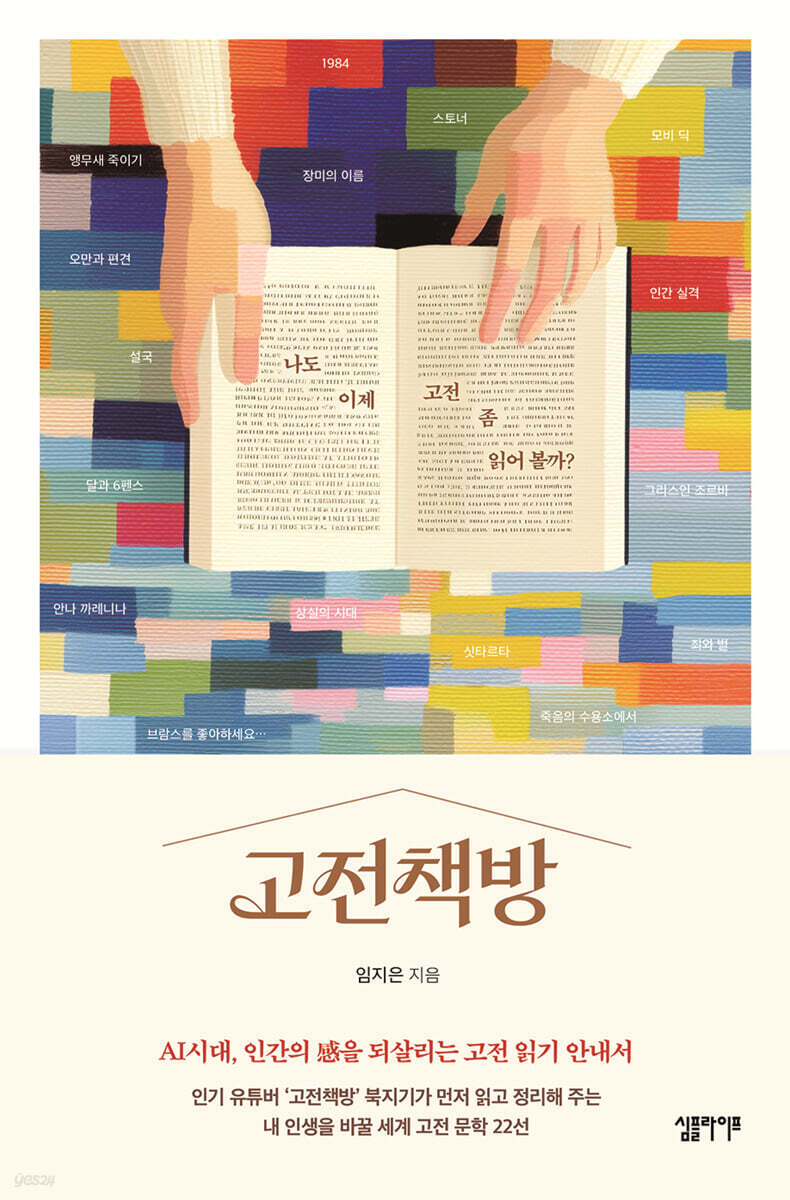
A Guide to Reading Classics to Revive Human Sensibility in the AI Age
Popular YouTuber 'Classic Bookstore' bookkeeper reads and organizes the book first
22 World Classics That Will Change Your Life
An accessible introduction to the classics for those unfamiliar with them.
An introductory book to classics that even those unfamiliar with the classics can read without difficulty, “Classic Bookstore,” has been published.
The complex plots and burdensome length of classics are compressed into about 15 minutes, and the author's unique insights are added to invite you into the world of enjoyable 'classic reading.'
The book introduces a total of 22 works, including 『1984』, which depicts the horrors of a totalitarian surveillance system, 『Wuthering Heights』, which explores the dark abyss of love, 『Moby Dick』, which depicts humans facing unexpected trials, 『Stoner』, which asks what a truly great life is, 『Man's Search for Meaning』, which deals with human dignity and the meaning of life, and 『No Longer Human』, which depicts youth who wander without being able to adapt to society, as well as 『One Hundred Years of Solitude』, 『Pride and Prejudice』, 『Zorba the Greek』, 『The Moon and Sixpence』, and 『Siddhartha』, and includes unique interpretations of the historical background, the author's life, and the core plot.
Author Lim Ji-eun, who has been running the YouTube channel 'Classic Bookstore' since 2020, has lowered the threshold for reading classics by introducing classics that deal with the conflicts and harmony of the human spirit across various eras and histories in a 'readable in 15 minutes' format.
He published this book with the warning that as contactless interactions become more commonplace and AI develops, classics will become even more important, and that if we don't read the classics, AI could take away human leadership.
Popular YouTuber 'Classic Bookstore' bookkeeper reads and organizes the book first
22 World Classics That Will Change Your Life
An accessible introduction to the classics for those unfamiliar with them.
An introductory book to classics that even those unfamiliar with the classics can read without difficulty, “Classic Bookstore,” has been published.
The complex plots and burdensome length of classics are compressed into about 15 minutes, and the author's unique insights are added to invite you into the world of enjoyable 'classic reading.'
The book introduces a total of 22 works, including 『1984』, which depicts the horrors of a totalitarian surveillance system, 『Wuthering Heights』, which explores the dark abyss of love, 『Moby Dick』, which depicts humans facing unexpected trials, 『Stoner』, which asks what a truly great life is, 『Man's Search for Meaning』, which deals with human dignity and the meaning of life, and 『No Longer Human』, which depicts youth who wander without being able to adapt to society, as well as 『One Hundred Years of Solitude』, 『Pride and Prejudice』, 『Zorba the Greek』, 『The Moon and Sixpence』, and 『Siddhartha』, and includes unique interpretations of the historical background, the author's life, and the core plot.
Author Lim Ji-eun, who has been running the YouTube channel 'Classic Bookstore' since 2020, has lowered the threshold for reading classics by introducing classics that deal with the conflicts and harmony of the human spirit across various eras and histories in a 'readable in 15 minutes' format.
He published this book with the warning that as contactless interactions become more commonplace and AI develops, classics will become even more important, and that if we don't read the classics, AI could take away human leadership.
- You can preview some of the book's contents.
Preview
index
· Author's Note: Reading classics provides a solid foundation whenever life is shaken.
1.
To you who do not know the horrors of totalitarian power: 『1984』 - George Orwell
2.
To You Who Constantly Relive Failure: Moby Dick - Herman Melville
3.
To You Facing Life's Greatest Ordeal: Man's Search for Meaning - Viktor Frankl
4.
For those who have experienced the pain of love and loss: "Norwegian Wood" - Haruki Murakami
5.
To you who always hides in loneliness: One Hundred Years of Solitude - Gabriel García Márquez
6.
To You Who Stay in Your Own Frame: Pride and Prejudice - Jane Austen
7.
To you who rushes toward your dreams: 『Don Quixote』 - Miguel de Cervantes Saavedra
8.
For those who dream of unwavering love and freedom: Doctor Zhivago - Boris Pasternak
9.
To you who asks, “Why don’t I have any true friends?”: Great Expectations - Charles Dickens
10.
To You Who Knows the Fleetingness of Love: "Snow Country" - Yasunari Kawabata
11.
For those curious about the dark side of love: Wuthering Heights - Emily Brontë
12.
To you who are imprisoned in the false belief that you are 'me': 『Crime and Punishment』 - Fyodor Dostoevsky
13.
For those who fear the changing world: The Name of the Rose - Umberto Eco
14.
To you who doesn't know that passion will eventually cool: Anna Karenina - Leo Tolstoy
15.
To you who are easily hurt and fearful of others: "No Longer Human" - Osamu Dazai
16.
For those who want to understand the perspectives of the weak: To Kill a Mockingbird - Harper Lee
17.
For those of you who are afraid to break away from what is familiar: "Do you like Brahms..." - Françoise Sagan
18.
To you who are looking for 'the one person who will completely understand me': 『My Orange Tree』- J.
M. Vasconcelos
19.
To You Who Hesitate Before Life and Love: Zorba the Greek - Nikos Kazantzakis
20.
To you who shout, "My dream is above the world's gaze!": "The Moon and Sixpence" - Somerset Maugham
21.
To the very ordinary you who lives a very ordinary life: Stoner - John Williams
22.
To you who repeatedly wanders alone: Siddhartha - Hermann Hesse
1.
To you who do not know the horrors of totalitarian power: 『1984』 - George Orwell
2.
To You Who Constantly Relive Failure: Moby Dick - Herman Melville
3.
To You Facing Life's Greatest Ordeal: Man's Search for Meaning - Viktor Frankl
4.
For those who have experienced the pain of love and loss: "Norwegian Wood" - Haruki Murakami
5.
To you who always hides in loneliness: One Hundred Years of Solitude - Gabriel García Márquez
6.
To You Who Stay in Your Own Frame: Pride and Prejudice - Jane Austen
7.
To you who rushes toward your dreams: 『Don Quixote』 - Miguel de Cervantes Saavedra
8.
For those who dream of unwavering love and freedom: Doctor Zhivago - Boris Pasternak
9.
To you who asks, “Why don’t I have any true friends?”: Great Expectations - Charles Dickens
10.
To You Who Knows the Fleetingness of Love: "Snow Country" - Yasunari Kawabata
11.
For those curious about the dark side of love: Wuthering Heights - Emily Brontë
12.
To you who are imprisoned in the false belief that you are 'me': 『Crime and Punishment』 - Fyodor Dostoevsky
13.
For those who fear the changing world: The Name of the Rose - Umberto Eco
14.
To you who doesn't know that passion will eventually cool: Anna Karenina - Leo Tolstoy
15.
To you who are easily hurt and fearful of others: "No Longer Human" - Osamu Dazai
16.
For those who want to understand the perspectives of the weak: To Kill a Mockingbird - Harper Lee
17.
For those of you who are afraid to break away from what is familiar: "Do you like Brahms..." - Françoise Sagan
18.
To you who are looking for 'the one person who will completely understand me': 『My Orange Tree』- J.
M. Vasconcelos
19.
To You Who Hesitate Before Life and Love: Zorba the Greek - Nikos Kazantzakis
20.
To you who shout, "My dream is above the world's gaze!": "The Moon and Sixpence" - Somerset Maugham
21.
To the very ordinary you who lives a very ordinary life: Stoner - John Williams
22.
To you who repeatedly wanders alone: Siddhartha - Hermann Hesse
Detailed image

Into the book
Classics are not books that should be carried around as a heavy burden, but rather books that should be read and shared frequently and kept by one's side for a long time.
Then, each moment of life will convey a different meaning.
I hope this book will be a small help in sharing the joy of encountering classics in everyday life, moving beyond the weighty interpretations and solutions that chase the right answer.
---From the author's note
George Orwell, who witnessed the birth and violent spread of totalitarianism and the beginning of the Cold War, was a writer who pondered more intensely than anyone else how far individual happiness and freedom could be reduced under the weight of the era's grand ideology.
The totalitarian society led by Big Brother in 1984 was inspired by various totalitarian regimes that existed in real life.
---From "1984 (George Orwell)"
Moby Dick depicts the fateful confrontation between the white whale Moby Dick, known for its ferocity, and Captain Ahab, who lost one of his legs to the whale.
In this work, the 'sea' symbolizes the life we must navigate, the 'white whale Moby Dick' symbolizes the unexpected trials we encounter in life, and the 'wind, sun, and waves' that guide the whaling ship symbolize fate and the power of nature that humans can never control or measure.
This work reminds us of the importance of knowing how to wisely accept and let go of the inevitable trials we encounter in life through Captain Ahab's endless obsession with Moby Dick.
---From "Moby Dick (Herman Melville)"
We are beings who can choose how we will respond to the trials of life, and we are tasked with creating our own unique destiny through those choices.
The message that we should consider "how to respond responsibly to the challenges life throws at us" rather than "what life will give us" is perhaps a precious teaching that Dr. Frankl discovered in the death camps, where humanity's greatest tragedy unfolded.
---From "Man's Search for Meaning (Viktor Frankl)"
In the preface to the book, Haruki Murakami stated, “What I wanted to portray in this book is what it means for a person to love another person.” This seems to convey the message that the pain of loss that comes to everyone can ultimately be overcome only through the willingness to love and take responsibility for someone else.
The story of love and loss depicted by Haruki Murakami begins in Kobe, Japan in the 1960s.
---From "A Time of Loss (Haruki Murakami)"
Author Boris Pasternak (1890-1960) was born in Moscow in the final years of Imperial Russia and witnessed the catastrophic upheaval of the times that followed the fall of the empire and the introduction of the socialist system.
This experience is fully reflected in his masterpiece, Doctor Zhivago.
This work was first published in Italy, not the Soviet Union, after the death of Stalin, who had been indiscriminately purging artists and writers. The following year, in 1958, Pasternak was nominated for the Nobel Prize in Literature, but ultimately refused to accept the award due to pressure from the Soviet government.
Then, each moment of life will convey a different meaning.
I hope this book will be a small help in sharing the joy of encountering classics in everyday life, moving beyond the weighty interpretations and solutions that chase the right answer.
---From the author's note
George Orwell, who witnessed the birth and violent spread of totalitarianism and the beginning of the Cold War, was a writer who pondered more intensely than anyone else how far individual happiness and freedom could be reduced under the weight of the era's grand ideology.
The totalitarian society led by Big Brother in 1984 was inspired by various totalitarian regimes that existed in real life.
---From "1984 (George Orwell)"
Moby Dick depicts the fateful confrontation between the white whale Moby Dick, known for its ferocity, and Captain Ahab, who lost one of his legs to the whale.
In this work, the 'sea' symbolizes the life we must navigate, the 'white whale Moby Dick' symbolizes the unexpected trials we encounter in life, and the 'wind, sun, and waves' that guide the whaling ship symbolize fate and the power of nature that humans can never control or measure.
This work reminds us of the importance of knowing how to wisely accept and let go of the inevitable trials we encounter in life through Captain Ahab's endless obsession with Moby Dick.
---From "Moby Dick (Herman Melville)"
We are beings who can choose how we will respond to the trials of life, and we are tasked with creating our own unique destiny through those choices.
The message that we should consider "how to respond responsibly to the challenges life throws at us" rather than "what life will give us" is perhaps a precious teaching that Dr. Frankl discovered in the death camps, where humanity's greatest tragedy unfolded.
---From "Man's Search for Meaning (Viktor Frankl)"
In the preface to the book, Haruki Murakami stated, “What I wanted to portray in this book is what it means for a person to love another person.” This seems to convey the message that the pain of loss that comes to everyone can ultimately be overcome only through the willingness to love and take responsibility for someone else.
The story of love and loss depicted by Haruki Murakami begins in Kobe, Japan in the 1960s.
---From "A Time of Loss (Haruki Murakami)"
Author Boris Pasternak (1890-1960) was born in Moscow in the final years of Imperial Russia and witnessed the catastrophic upheaval of the times that followed the fall of the empire and the introduction of the socialist system.
This experience is fully reflected in his masterpiece, Doctor Zhivago.
This work was first published in Italy, not the Soviet Union, after the death of Stalin, who had been indiscriminately purging artists and writers. The following year, in 1958, Pasternak was nominated for the Nobel Prize in Literature, but ultimately refused to accept the award due to pressure from the Soviet government.
---From "Doctor Zhivago (Boris Pasternak)"
Publisher's Review
In the AI era, why is reading the classics important?
Humans, who cannot keep up with AI's information power, must evolve in a different way.
You must be able to sense and connect individual pieces of information, and skillfully handle information with your own intuition and insight.
These capabilities will become core human competencies that differentiate us from AI in our future work and daily lives.
Classics are the best material and weapon to maximize this ability.
Classics contain conflicts, desires, loss, recovery, and love from various eras that we have never experienced.
A classic piece contains a vast amount of information, experience, knowledge, and wisdom.
Therefore, reading the classics allows us to think about the entangled complexities of life and emotions as a whole, and naturally develops the ability and insight to find meaning beyond information.
The author emphasizes that “reading classics is not simply a matter of imparting knowledge, but rather a process of acquiring the skills to think within the full context of human thought,” and emphasizes restoring “human wisdom beyond AI” by savoring the classics for as little as 15 minutes or as long as a lifetime.
Classics are the best training ground for developing the ability to interpret meaning.
Reading classics is the oldest skill that makes humans human.
In the AI era, competitiveness lies not in acquiring information, but in the ability to interpret it. Classical literature is also the best training ground for cultivating this "ability to interpret meaning."
『Classic Bookstore』 does not interpret classics academically or in a textbook-like manner.
Instead, it focuses on how to interpret 'life in this day and age' through the classics.
People with different backgrounds and experiences naturally discover universal humanity through classics, and further, they are led to regain a sense of understanding of others and the times.
The author suggests keeping classics close to us like old friends and reading them together in our daily lives, saying, “Reading classics is the oldest skill that makes humans human, and not reading classics is like putting down the weapon we need to face the AI era as humans.”
A companion for reading classics that will bring back the joy of reading.
This book breaks the stereotype that classics are heavy and difficult, and guides readers to easily enjoy them in their daily lives.
While each story is fascinating in itself, the author's in-depth interpretation has the power to make you want to pick up a book you've been putting off and read it again.
If you're currently struggling with life's greatest challenges, struggling with love and loss, or striving to achieve your dreams, I highly recommend reading this book.
You might find the courage to stand up again and meet the 'book of my life' that will make your heart beat faster than it has in a long time.
Anyone, from beginner readers encountering classics for the first time to middle-aged people seeking to rediscover their direction in life, will be able to fully immerse themselves in the joy and depth of classics.
[From 'Reader's Notes']
▶ This is the best summary of a classic I've ever seen.
▶ A magical book that makes you want to read even boring and difficult classics.
▶ The depth and insight into the book's content is remarkable.
Even though we read the same book, it can be so different.
▶ I have two minds.
I want many people to see it, and I want to keep it to myself.
▶ Thanks to the concise yet detailed content, I'm rereading a book I had been putting off.
▶ The taste of the classics becomes stronger the more you chew them, and it makes me look back on my life.
▶ How can you feel both a sense of accomplishment and happiness, as if you've read a whole book?
▶ Now that I'm in my forties, I often think that I absolutely must read the classics before I die.
▶ This is a rich content that will help not only adults but also teenagers discover the joy of reading.
▶ This is a must-read book for those who are interested in classics but find it burdensome to read them all.
▶ I am revisiting the classics I should have read during my school days, thanks to their well-organized collection.
▶ A textbook-like book on how to view and read classics
Humans, who cannot keep up with AI's information power, must evolve in a different way.
You must be able to sense and connect individual pieces of information, and skillfully handle information with your own intuition and insight.
These capabilities will become core human competencies that differentiate us from AI in our future work and daily lives.
Classics are the best material and weapon to maximize this ability.
Classics contain conflicts, desires, loss, recovery, and love from various eras that we have never experienced.
A classic piece contains a vast amount of information, experience, knowledge, and wisdom.
Therefore, reading the classics allows us to think about the entangled complexities of life and emotions as a whole, and naturally develops the ability and insight to find meaning beyond information.
The author emphasizes that “reading classics is not simply a matter of imparting knowledge, but rather a process of acquiring the skills to think within the full context of human thought,” and emphasizes restoring “human wisdom beyond AI” by savoring the classics for as little as 15 minutes or as long as a lifetime.
Classics are the best training ground for developing the ability to interpret meaning.
Reading classics is the oldest skill that makes humans human.
In the AI era, competitiveness lies not in acquiring information, but in the ability to interpret it. Classical literature is also the best training ground for cultivating this "ability to interpret meaning."
『Classic Bookstore』 does not interpret classics academically or in a textbook-like manner.
Instead, it focuses on how to interpret 'life in this day and age' through the classics.
People with different backgrounds and experiences naturally discover universal humanity through classics, and further, they are led to regain a sense of understanding of others and the times.
The author suggests keeping classics close to us like old friends and reading them together in our daily lives, saying, “Reading classics is the oldest skill that makes humans human, and not reading classics is like putting down the weapon we need to face the AI era as humans.”
A companion for reading classics that will bring back the joy of reading.
This book breaks the stereotype that classics are heavy and difficult, and guides readers to easily enjoy them in their daily lives.
While each story is fascinating in itself, the author's in-depth interpretation has the power to make you want to pick up a book you've been putting off and read it again.
If you're currently struggling with life's greatest challenges, struggling with love and loss, or striving to achieve your dreams, I highly recommend reading this book.
You might find the courage to stand up again and meet the 'book of my life' that will make your heart beat faster than it has in a long time.
Anyone, from beginner readers encountering classics for the first time to middle-aged people seeking to rediscover their direction in life, will be able to fully immerse themselves in the joy and depth of classics.
[From 'Reader's Notes']
▶ This is the best summary of a classic I've ever seen.
▶ A magical book that makes you want to read even boring and difficult classics.
▶ The depth and insight into the book's content is remarkable.
Even though we read the same book, it can be so different.
▶ I have two minds.
I want many people to see it, and I want to keep it to myself.
▶ Thanks to the concise yet detailed content, I'm rereading a book I had been putting off.
▶ The taste of the classics becomes stronger the more you chew them, and it makes me look back on my life.
▶ How can you feel both a sense of accomplishment and happiness, as if you've read a whole book?
▶ Now that I'm in my forties, I often think that I absolutely must read the classics before I die.
▶ This is a rich content that will help not only adults but also teenagers discover the joy of reading.
▶ This is a must-read book for those who are interested in classics but find it burdensome to read them all.
▶ I am revisiting the classics I should have read during my school days, thanks to their well-organized collection.
▶ A textbook-like book on how to view and read classics
GOODS SPECIFICS
- Date of issue: December 10, 2025
- Page count, weight, size: 308 pages | 440g | 135*205*20mm
- ISBN13: 9791186757994
- ISBN10: 118675799X
You may also like
카테고리
korean


korean

![GQ KOREA Mark (Monthly): December [2025]](http://librairie.coreenne.fr/cdn/shop/files/8ef265dbbfbf186523ed75ba7319009d.jpg?v=1765340328&width=3840)


