

Miogi Biography
 |
Description
Book Introduction
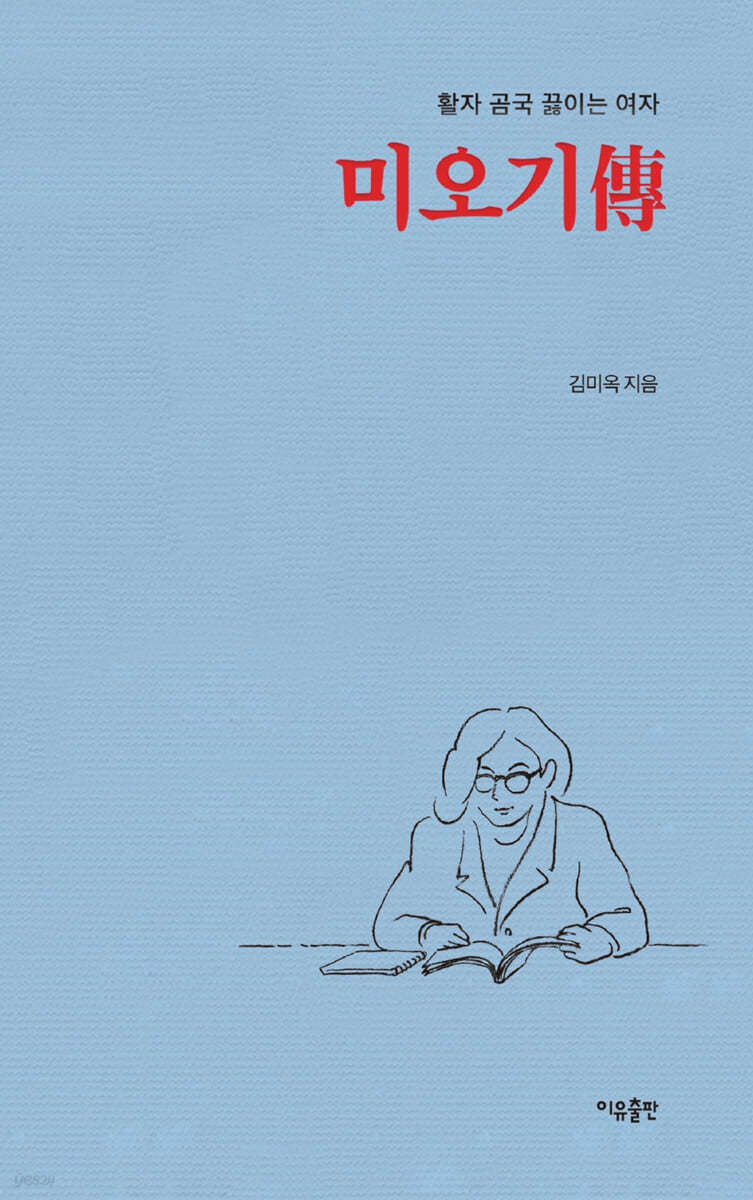
Miogi's "Bear Country Essay" is a trustworthy and reliable read. Author Kim Mi-ok, who became famous after introducing "A Book That's Too Bad to Be Unknown" on Facebook, has published a collection of essays that unravel her life. Behind the passion of the author, who reads everything he sees and calls himself a “print addict,” there is a difficult life story hidden. His life is full of bitter, spicy, and salty stories, but the sentences that unravel them are full of cheerfulness and humor. Whenever he finds it difficult to move forward, his writing, which brings back painful memories and makes them his friends, is filled with laughter and a heartbreaking pathos. It is not an immature melodrama, but a black comedy of life that has been simmered for a long time like bear soup. Readers will learn the story of how Mi-ok became 'Miogi' as she laughs and cries, going back and forth between cheerfulness and sadness like hot and cold water. |
- You can preview some of the book's contents.
Preview
index
prolog
Chapter 1: Mrs. Kim's Liberation
Mrs. Kim, a real-life expert
The taste of the first bread
My teacher Choi Sook-ja
Sleeping Beauty's Rebellion
Miryang Park clan and Gimhae Kim clan
My mother's Japanese name is Kobong Gwangja
Mr. Go Bong-gwang's investigative instincts
God's Golden Backpack
Mrs. Kim's story of liberation
Wise Language Life
There was a police station behind me.
Group B's struggles and growth story
Mother, don't lie in the afterlife.
Mom's yellow clothesline
welder mother-in-law
Chapter 2 A Bowl of Rice in the World
Miogi's splendid transformation
Soju glass in handbag
Traces of Others 1 - The Haunted Book
Where does the music go?
Where have all the old books gone?
Traces of Others 2 - Oh! My Ghost
Wasn't my love love?
The gangster boyfriend in my memories
First love in 'third person'
Where did the flowers go?
Once you're old, you'll be old again
Traces of Others 3 - Black House
The girl who walked with me to Seobu Station
A bowl of rice in the world
The fantasy I left behind
Life Theater 5-Part Series - The Great Secretary
My paternal grandmother, Jo Jo-kkan
A daughter-in-law who is not a woman
My maternal grandmother, Ms. Kang Togwiddal
Mr. Chokan and Ms. Dduggwitdal's 'Exploration'
The sorcery of the secretary
Chapter 3: Chorus of Minors
Mrs. Kim carrying a mat
Joyful Evil-Clinging Bodhisattva
A dazzling prayer life
The Princess Beauty Salon's Love Brawl
Minor's chorus
The Birth of Madame Kim
He came
Midwinter Masterpiece Reproduction Room
A cheerful evening
Manipulated dream
Kimchi stew and Mahler symphony
Wedding Dress of Tears
The noisy anniversary of a lonely soul
Fried Phoenix
The memory of a neighborhood idiot
Chapter 4: The Beauty of Extinction
A teacher for self-taught people
left-handed guitarist
Canto General
Do you know jazz?
Under the shadow of coexistence
"Je Mang Mae Ga" recited at the National Cemetery
With you 'in the style of Goya'
The road appears behind you as you walk.
Legends on a Willow Pattern Plate
The Death of a Strange Optimist
Chuncheon is very energetic
Frida Kahlo's bed
Let your left hand know
The Beauty of Extinction
Chapter 1: Mrs. Kim's Liberation
Mrs. Kim, a real-life expert
The taste of the first bread
My teacher Choi Sook-ja
Sleeping Beauty's Rebellion
Miryang Park clan and Gimhae Kim clan
My mother's Japanese name is Kobong Gwangja
Mr. Go Bong-gwang's investigative instincts
God's Golden Backpack
Mrs. Kim's story of liberation
Wise Language Life
There was a police station behind me.
Group B's struggles and growth story
Mother, don't lie in the afterlife.
Mom's yellow clothesline
welder mother-in-law
Chapter 2 A Bowl of Rice in the World
Miogi's splendid transformation
Soju glass in handbag
Traces of Others 1 - The Haunted Book
Where does the music go?
Where have all the old books gone?
Traces of Others 2 - Oh! My Ghost
Wasn't my love love?
The gangster boyfriend in my memories
First love in 'third person'
Where did the flowers go?
Once you're old, you'll be old again
Traces of Others 3 - Black House
The girl who walked with me to Seobu Station
A bowl of rice in the world
The fantasy I left behind
Life Theater 5-Part Series - The Great Secretary
My paternal grandmother, Jo Jo-kkan
A daughter-in-law who is not a woman
My maternal grandmother, Ms. Kang Togwiddal
Mr. Chokan and Ms. Dduggwitdal's 'Exploration'
The sorcery of the secretary
Chapter 3: Chorus of Minors
Mrs. Kim carrying a mat
Joyful Evil-Clinging Bodhisattva
A dazzling prayer life
The Princess Beauty Salon's Love Brawl
Minor's chorus
The Birth of Madame Kim
He came
Midwinter Masterpiece Reproduction Room
A cheerful evening
Manipulated dream
Kimchi stew and Mahler symphony
Wedding Dress of Tears
The noisy anniversary of a lonely soul
Fried Phoenix
The memory of a neighborhood idiot
Chapter 4: The Beauty of Extinction
A teacher for self-taught people
left-handed guitarist
Canto General
Do you know jazz?
Under the shadow of coexistence
"Je Mang Mae Ga" recited at the National Cemetery
With you 'in the style of Goya'
The road appears behind you as you walk.
Legends on a Willow Pattern Plate
The Death of a Strange Optimist
Chuncheon is very energetic
Frida Kahlo's bed
Let your left hand know
The Beauty of Extinction
Into the book
The indignant mother labeled her daughter an extra child, and the blame fell on me.
When I was in the 6th grade of elementary school, they didn't pay for my textbooks, and then they told me to quit school and go work at a factory to earn money.
My mother took me by the hand and took me to the confectionery factory.
When I was in the 6th grade, my homeroom teacher came to my house and argued with my mother, saying that he would adopt me and raise the child.
The neighborhood was abuzz with the confrontation between the stubborn mother, who didn't even hesitate to carry gravel at a construction site, and the stubborn teacher who had lived as a spinster for 50 years.
--- p.23
So, reading to me as a child was like God's 'golden backpack'.
God distributes backpacks filled with stones equally to those who set out on a journey, and the person who carries them to the end finds that the stones in his backpack have turned to gold, or something like that.
As I grew up, I began to learn a systematic reading method.
When I became interested in an author, I would read all of his books.
This method was quite effective, as it allowed one to not only tell whose writing style it was just by looking at the fingerprint, but also understand why the writer wrote such a piece around that time.
--- p.43
After seeing my father being grabbed by the collar by loan sharks, I decided not to hold a grudge.
I was staggering home from the market looking for my drunken father when I saw my brother with his friends.
He turned his head.
That day, I also turned my head away from my brother.
In the neighborhood, I was called 'Drunken Mr. Kim's daughter.'
My father died of a brain tumor.
I didn't even know what my illness was until after I collapsed.
Alcohol was a painkiller for my father.
--- p.84
The people I ate proudly from were poor people.
Cowardly as I was, I ate the food my rich friend bought me with a cowering face.
Why did they accept food from the poor without a twinge of conscience? Was it the confidence that they could repay it many times over?
I couldn't return it.
For me, who only looks forward and goes straight ahead, there was no face to look back at.
Now, even if I turn my head, she is not there.
She was a neighborhood friend, but she disappeared just like the neighborhood.
--- pp.122~123
I found out later that I had been sick for three days.
On the third day, the door opened and a table was brought in.
She was the woman in the room next door who got beaten up and extorted money from that bad man every day.
It was just a bowl of rice in a pot of kimchi stew, but I've never had such delicious rice in my entire life.
There was no sign of him eating and he was heard groaning.
As I was sitting blankly at the dining table, a woman who had been smoking a cigarette with the door half open left, telling me to eat alone.
It was consideration.
--- p.127
Grandma Kangtogwiddal was cold to us brothers, but I followed her around anyway.
One day, he looked at me blankly as I clung to him despite my annoyance, and said this.
“You have a steady side.
Don't trust someone who suddenly comes along and says they're good from the start.
That kind of person is the one who stabs you in the back.
“They say that a person who does not change with time is a real person.”
Grandma Chojokkan said this to me as I lay next to her on the night of her son's funeral.
“You are loyal like your father and clever like your grandmother.
“If you’re smart, life is hard.”
--- pp.154~155
The mother saw her daughter, who had come during the most difficult time in her life, as a symbol of misfortune.
I said that when a person is unhappy, there is always hope, and that was me.
The mother, who would normally have yelled at her daughter for showing off, nodded for some reason.
“I’m going to have another daughter….”
It was the best compliment a mother could ever receive.
--- pp.199~200
A cricket chirped in the flower bed.
Crickets have been chirping for a while now, but this was the first time this year for me.
As I sat on the stairs and listened to the chirping of crickets, my nose felt tingly as if I had drunk soda.
I don't even know the seasons, I don't even know who I thought I knew, I don't even know if I'm being a good person, I don't even know if I'm doing something worthwhile enough to not know, I don't know, I don't know, I don't know... and I don't even know where my house keys are!
As I was sniffling and blowing my nose with a handkerchief, a little boy who had finished studying in the reading room came up the stairs.
“Mom, did you drive drunk?”
--- p.216
I donated the money deposited into my account to a foundation that supports the underprivileged, irregular workers, foreign immigrants, and Korean writers.
The donation was not made by me, but by the representative's right hand.
There are times when you need to know your left hand too.
I still live in gratitude for those who are kind to me.
It is my job to return their good deeds to the world.
--- p.276
Living in this world was like sharpening my body with a pencil.
As I watched my body gradually shrink, I felt the time passing by.
Now, like the pencil that relied on the barrel of a ballpoint pen, my life will also disappear.
I want to write a letter with a pencil again today.
I want to carefully sharpen three pencils and write a long letter.
May the letters written with my pencil bend, unfold, fall, and finally fly up to become a rope that binds you.
May my words remember you in the next life and beyond.
I hope you know my day, how the sunlight pierces my eyes as I look up at the blue sky.
When I was in the 6th grade of elementary school, they didn't pay for my textbooks, and then they told me to quit school and go work at a factory to earn money.
My mother took me by the hand and took me to the confectionery factory.
When I was in the 6th grade, my homeroom teacher came to my house and argued with my mother, saying that he would adopt me and raise the child.
The neighborhood was abuzz with the confrontation between the stubborn mother, who didn't even hesitate to carry gravel at a construction site, and the stubborn teacher who had lived as a spinster for 50 years.
--- p.23
So, reading to me as a child was like God's 'golden backpack'.
God distributes backpacks filled with stones equally to those who set out on a journey, and the person who carries them to the end finds that the stones in his backpack have turned to gold, or something like that.
As I grew up, I began to learn a systematic reading method.
When I became interested in an author, I would read all of his books.
This method was quite effective, as it allowed one to not only tell whose writing style it was just by looking at the fingerprint, but also understand why the writer wrote such a piece around that time.
--- p.43
After seeing my father being grabbed by the collar by loan sharks, I decided not to hold a grudge.
I was staggering home from the market looking for my drunken father when I saw my brother with his friends.
He turned his head.
That day, I also turned my head away from my brother.
In the neighborhood, I was called 'Drunken Mr. Kim's daughter.'
My father died of a brain tumor.
I didn't even know what my illness was until after I collapsed.
Alcohol was a painkiller for my father.
--- p.84
The people I ate proudly from were poor people.
Cowardly as I was, I ate the food my rich friend bought me with a cowering face.
Why did they accept food from the poor without a twinge of conscience? Was it the confidence that they could repay it many times over?
I couldn't return it.
For me, who only looks forward and goes straight ahead, there was no face to look back at.
Now, even if I turn my head, she is not there.
She was a neighborhood friend, but she disappeared just like the neighborhood.
--- pp.122~123
I found out later that I had been sick for three days.
On the third day, the door opened and a table was brought in.
She was the woman in the room next door who got beaten up and extorted money from that bad man every day.
It was just a bowl of rice in a pot of kimchi stew, but I've never had such delicious rice in my entire life.
There was no sign of him eating and he was heard groaning.
As I was sitting blankly at the dining table, a woman who had been smoking a cigarette with the door half open left, telling me to eat alone.
It was consideration.
--- p.127
Grandma Kangtogwiddal was cold to us brothers, but I followed her around anyway.
One day, he looked at me blankly as I clung to him despite my annoyance, and said this.
“You have a steady side.
Don't trust someone who suddenly comes along and says they're good from the start.
That kind of person is the one who stabs you in the back.
“They say that a person who does not change with time is a real person.”
Grandma Chojokkan said this to me as I lay next to her on the night of her son's funeral.
“You are loyal like your father and clever like your grandmother.
“If you’re smart, life is hard.”
--- pp.154~155
The mother saw her daughter, who had come during the most difficult time in her life, as a symbol of misfortune.
I said that when a person is unhappy, there is always hope, and that was me.
The mother, who would normally have yelled at her daughter for showing off, nodded for some reason.
“I’m going to have another daughter….”
It was the best compliment a mother could ever receive.
--- pp.199~200
A cricket chirped in the flower bed.
Crickets have been chirping for a while now, but this was the first time this year for me.
As I sat on the stairs and listened to the chirping of crickets, my nose felt tingly as if I had drunk soda.
I don't even know the seasons, I don't even know who I thought I knew, I don't even know if I'm being a good person, I don't even know if I'm doing something worthwhile enough to not know, I don't know, I don't know, I don't know... and I don't even know where my house keys are!
As I was sniffling and blowing my nose with a handkerchief, a little boy who had finished studying in the reading room came up the stairs.
“Mom, did you drive drunk?”
--- p.216
I donated the money deposited into my account to a foundation that supports the underprivileged, irregular workers, foreign immigrants, and Korean writers.
The donation was not made by me, but by the representative's right hand.
There are times when you need to know your left hand too.
I still live in gratitude for those who are kind to me.
It is my job to return their good deeds to the world.
--- p.276
Living in this world was like sharpening my body with a pencil.
As I watched my body gradually shrink, I felt the time passing by.
Now, like the pencil that relied on the barrel of a ballpoint pen, my life will also disappear.
I want to write a letter with a pencil again today.
I want to carefully sharpen three pencils and write a long letter.
May the letters written with my pencil bend, unfold, fall, and finally fly up to become a rope that binds you.
May my words remember you in the next life and beyond.
I hope you know my day, how the sunlight pierces my eyes as I look up at the blue sky.
--- p.278
Publisher's Review
A person who has come this far by facing the world with the spirit of 'first mover'
Kim Mi-ok's life was not easy.
To a mother who was responsible for five children and an ailing husband, the youngest daughter was considered an extra child and was destined to suffer from neglect and discrimination.
But who is Kim Mi-ok? Isn't she a heroine who learned to survive among her rough-and-tumble brothers with a "first strike" mentality? As a child, she even confronted her mother, who described her prenatal dreams as ominous dreams of muddy water.
The four great civilizations arose from the muddy waters of overflowing rivers, so the dream of one's own conception must be a good dream! After marriage, when the in-laws entrusted her with preparing food for the new daughter-in-law to train her, she prepared a table full of delivery food that would break the table legs and said, "How long have you been hungry at that dog-legged table?" and made a first move at her ancestors.
As the youngest daughter of a ruined family, she had to constantly prove herself, and she overcame the world with her innate 'Torai' spirit and resilience.
Listening to his life story, one is struck by his courageous spirit, which anyone can empathize with but cannot imitate.
Even in poverty and hardship, there was salvation.
If poverty was a hardship in Kim Mi-ok's life, books were her salvation.
Even though he had to work in a factory and earn daily wages from the age of 12, he never put down his books.
He worked as a live-in tutor, splitting his time into minutes to balance work and study, while also devouring books. It was only natural that he would find salvation in his life through reading.
Even when I was extremely poor, books were food that enriched my heart.
Because I had books, my life was not miserable, and my fresh mind was not miserable.
Knowing well the fulfillment that books provide, he devoted himself to reading even after retirement, which he had put off.
I didn't want to keep the books I read to myself, so I enthusiastically introduced them on social media.
If there was a book that was shiny but didn't get a chance to be discovered, I promoted it even more passionately.
And so, at some point, he went from being a book addict to being known to the world as a book influencer.
He never put down his books, and books were his lifeline that saved him.
Giving back the power of a bowl of rice to the world
Kim Mi-ok is a strong but warm person.
He remembers and calls out to each and every person who helped him during difficult times.
His homeroom teacher, Choi Sook-ja, who tried to adopt him as her own daughter when he dropped out of school in the 6th grade and was sent to work in a factory; his friend, an accountant, who let him stay in her studio apartment when he had nowhere to go; and his roommate, Ae-sook, who prepared a meal for him when he was sick alone for three days.
These are the people who recognized Kim Mi-ok and supported her silently.
His life did not fall apart because there were people who shared a piece of their hearts and a bowl of rice during difficult times.
Now we remember their hearts and want to give them back to the world.
It is not because they are kind, but because they care for and give to the sick and struggling people around them with the thought of repaying a debt.
Whether it's a recommendation or a column, if I make money through writing, I donate it, and if a child cries, I take care of them with the thought that I will look after them until their mother comes home.
I want to be a source of strength for them because I know their pain better than anyone else.
This is also the reason why he writes tirelessly in public spaces.
Shake hands with painful memories
Even the past, which was so miserable that I didn't want to look back on, shines brightly from the other side as if it wasn't mine when I write it down.
That may be why author Kim Mi-ok began writing and sharing it on social media.
Instead of chewing over the painful past and storing it away in a warehouse of resentment, writing is like washing clothes, then drying them in a sunny place.
A piece written in the hope that sad memories will never shake me again.
This is Kim Mi-ok's writing.
Isn't it precisely this attitude that allows him to reconcile with his past and find the strength to move on? He says that living is like sharpening one's own body like a pencil, and he gently shakes hands with his past.
Looking at the pencil, I think about the beauty of extinction and promise myself, 'Even if life is cruel, I will be kind.'
This book is a calm record and confession of author Kim Mi-ok's fiercely lived life.
prolog
Whenever I found it difficult to move forward, I called upon the past and made peace with it.
When heated during the bitter and spicy time, it became mild in taste.
I found painful memories and made friends with them, like playing tag.
This is how the article 'Bear Soup', which was written after deeply soaking up my past, came out.
Many people have responded on SNS,
Thanks to you, I was able to go out into the world.
And Bear Country became a book for those addicted to type.
I would like to take this opportunity to express my gratitude once again.
Although the title of the book is 『Miogi Chronicles』, it is not written in chronological order.
In other words, it is a pointillism painting that selects and uses painful points of memory with a high pain index.
I hope that sad memories will never shake my life again.
It's a bitter writing.
As I wrote, I started to laugh, and as I laughed, I became happier.
I wanted to be a positive person.
Even if luck can't be changed, can't personality be changed?
Bad memories have a terrifying ability to survive.
But when you open your heart, you realize that it couldn't be helped.
There comes a moment when you can let go.
I hope people with painful memories read my writing.
April 2024
Kim Mi-ok
Kim Mi-ok's life was not easy.
To a mother who was responsible for five children and an ailing husband, the youngest daughter was considered an extra child and was destined to suffer from neglect and discrimination.
But who is Kim Mi-ok? Isn't she a heroine who learned to survive among her rough-and-tumble brothers with a "first strike" mentality? As a child, she even confronted her mother, who described her prenatal dreams as ominous dreams of muddy water.
The four great civilizations arose from the muddy waters of overflowing rivers, so the dream of one's own conception must be a good dream! After marriage, when the in-laws entrusted her with preparing food for the new daughter-in-law to train her, she prepared a table full of delivery food that would break the table legs and said, "How long have you been hungry at that dog-legged table?" and made a first move at her ancestors.
As the youngest daughter of a ruined family, she had to constantly prove herself, and she overcame the world with her innate 'Torai' spirit and resilience.
Listening to his life story, one is struck by his courageous spirit, which anyone can empathize with but cannot imitate.
Even in poverty and hardship, there was salvation.
If poverty was a hardship in Kim Mi-ok's life, books were her salvation.
Even though he had to work in a factory and earn daily wages from the age of 12, he never put down his books.
He worked as a live-in tutor, splitting his time into minutes to balance work and study, while also devouring books. It was only natural that he would find salvation in his life through reading.
Even when I was extremely poor, books were food that enriched my heart.
Because I had books, my life was not miserable, and my fresh mind was not miserable.
Knowing well the fulfillment that books provide, he devoted himself to reading even after retirement, which he had put off.
I didn't want to keep the books I read to myself, so I enthusiastically introduced them on social media.
If there was a book that was shiny but didn't get a chance to be discovered, I promoted it even more passionately.
And so, at some point, he went from being a book addict to being known to the world as a book influencer.
He never put down his books, and books were his lifeline that saved him.
Giving back the power of a bowl of rice to the world
Kim Mi-ok is a strong but warm person.
He remembers and calls out to each and every person who helped him during difficult times.
His homeroom teacher, Choi Sook-ja, who tried to adopt him as her own daughter when he dropped out of school in the 6th grade and was sent to work in a factory; his friend, an accountant, who let him stay in her studio apartment when he had nowhere to go; and his roommate, Ae-sook, who prepared a meal for him when he was sick alone for three days.
These are the people who recognized Kim Mi-ok and supported her silently.
His life did not fall apart because there were people who shared a piece of their hearts and a bowl of rice during difficult times.
Now we remember their hearts and want to give them back to the world.
It is not because they are kind, but because they care for and give to the sick and struggling people around them with the thought of repaying a debt.
Whether it's a recommendation or a column, if I make money through writing, I donate it, and if a child cries, I take care of them with the thought that I will look after them until their mother comes home.
I want to be a source of strength for them because I know their pain better than anyone else.
This is also the reason why he writes tirelessly in public spaces.
Shake hands with painful memories
Even the past, which was so miserable that I didn't want to look back on, shines brightly from the other side as if it wasn't mine when I write it down.
That may be why author Kim Mi-ok began writing and sharing it on social media.
Instead of chewing over the painful past and storing it away in a warehouse of resentment, writing is like washing clothes, then drying them in a sunny place.
A piece written in the hope that sad memories will never shake me again.
This is Kim Mi-ok's writing.
Isn't it precisely this attitude that allows him to reconcile with his past and find the strength to move on? He says that living is like sharpening one's own body like a pencil, and he gently shakes hands with his past.
Looking at the pencil, I think about the beauty of extinction and promise myself, 'Even if life is cruel, I will be kind.'
This book is a calm record and confession of author Kim Mi-ok's fiercely lived life.
prolog
Whenever I found it difficult to move forward, I called upon the past and made peace with it.
When heated during the bitter and spicy time, it became mild in taste.
I found painful memories and made friends with them, like playing tag.
This is how the article 'Bear Soup', which was written after deeply soaking up my past, came out.
Many people have responded on SNS,
Thanks to you, I was able to go out into the world.
And Bear Country became a book for those addicted to type.
I would like to take this opportunity to express my gratitude once again.
Although the title of the book is 『Miogi Chronicles』, it is not written in chronological order.
In other words, it is a pointillism painting that selects and uses painful points of memory with a high pain index.
I hope that sad memories will never shake my life again.
It's a bitter writing.
As I wrote, I started to laugh, and as I laughed, I became happier.
I wanted to be a positive person.
Even if luck can't be changed, can't personality be changed?
Bad memories have a terrifying ability to survive.
But when you open your heart, you realize that it couldn't be helped.
There comes a moment when you can let go.
I hope people with painful memories read my writing.
April 2024
Kim Mi-ok
GOODS SPECIFICS
- Date of issue: May 14, 2024
- Format: Hardcover book binding method guide
- Page count, weight, size: 280 pages | 472g | 128*205*20mm
- ISBN13: 9791189534509
- ISBN10: 1189534509
You may also like
카테고리
korean


korean

![GQ KOREA Mark (Monthly): December [2025]](http://librairie.coreenne.fr/cdn/shop/files/8ef265dbbfbf186523ed75ba7319009d.jpg?v=1765340328&width=3840)


