

Anyway, piano
 |
Description
Book Introduction
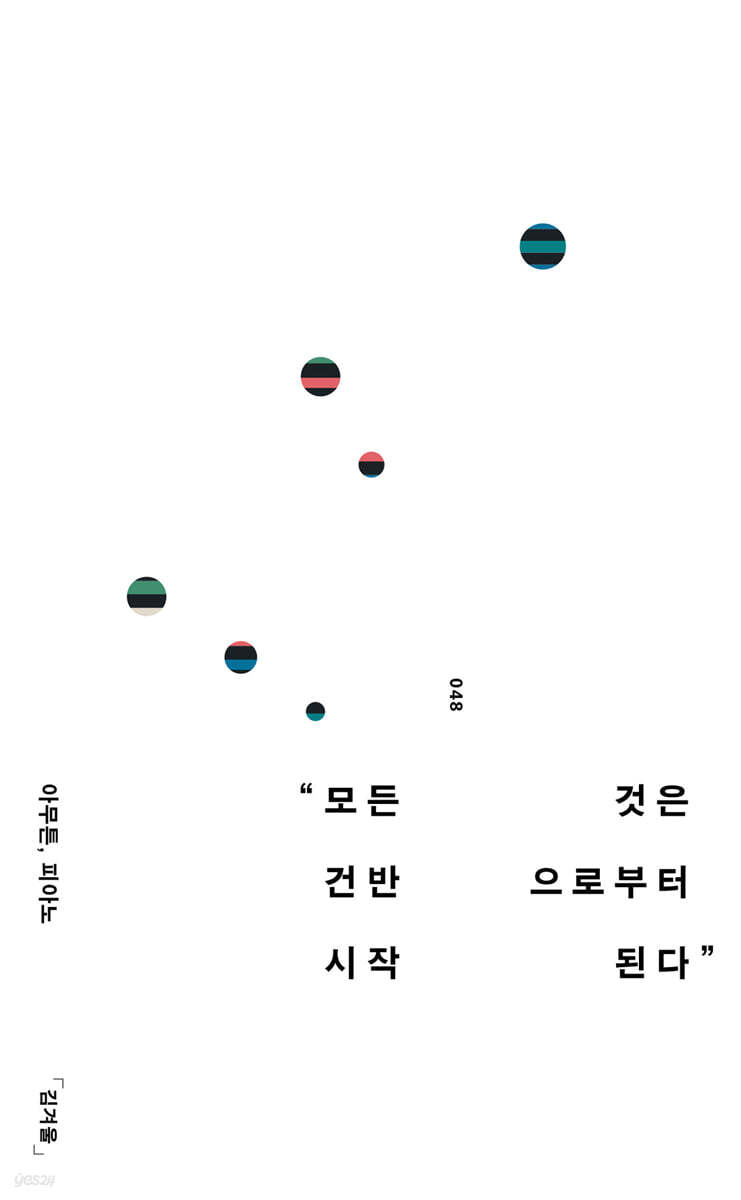
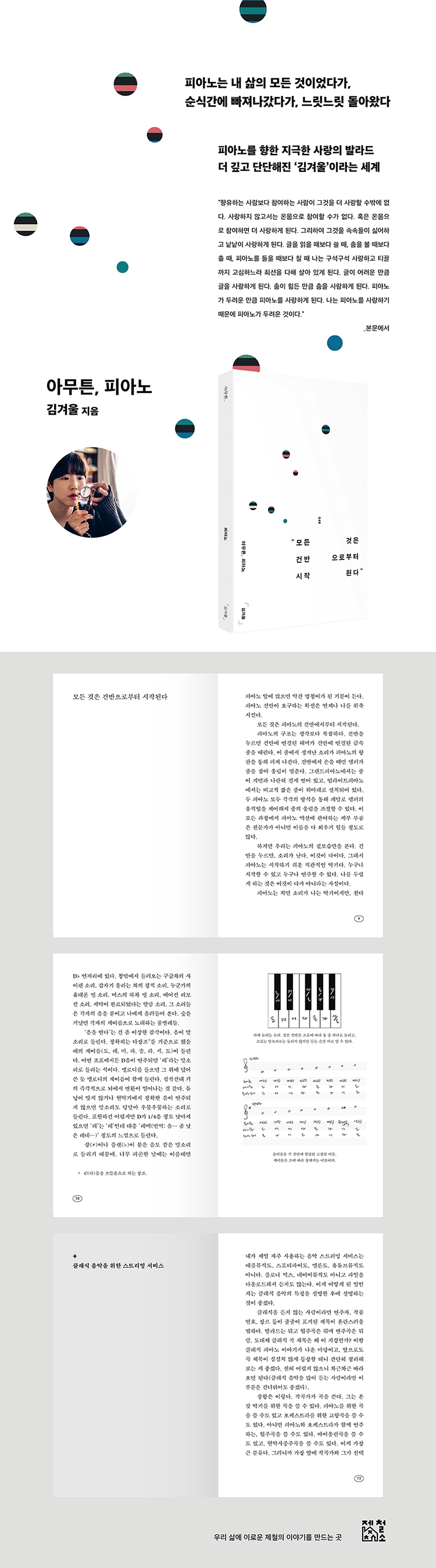
“Everything starts with the keyboard.” Anyway, Piano By learning the piano, I I became a human with an irreversible world. “Is there one thing that you enjoy thinking about?” In the forty-eighth question posed by the [Anyway Series], author Kim Gyul-wool answered, “The piano.” Not only has he published four solo books, but he also runs the YouTube channel 'Winter Bookstore' and is a DJ for MBC's 'Radio Book Club', and continues to engage in various activities centered around books. However, part of his identity is made up of the piano and countless stories related to the piano. "Anyway, Piano" is the author's ultimate ballad for the piano, and a sincere record of "hating it to the core and loving it in every detail." The story begins with the moment I first trudged into the world of the piano at the age of five, and encompasses the process by which that unfamiliar world filled my life, then suddenly receded like an ebb tide, and then surged back in, drenching my entire body. |
- You can preview some of the book's contents.
Preview
index
It all starts with the keyboard
Walk in
The body of the piano
The Soul of the Piano
Go in and find out
+ Streaming service for classical music
That's all music
trial and error
A promise that varies infinitely
When your backs overlap with mine
Music-Cardinal
+ Music used in ballet classes
Music-Reading
Listening
Epilogue
Walk in
The body of the piano
The Soul of the Piano
Go in and find out
+ Streaming service for classical music
That's all music
trial and error
A promise that varies infinitely
When your backs overlap with mine
Music-Cardinal
+ Music used in ballet classes
Music-Reading
Listening
Epilogue
Detailed image
Into the book
Those who participate in it cannot help but love it more than those who enjoy it.
You cannot participate with your whole body without loving.
Or, if you participate with your whole body, you will love it more.
So you come to hate it thoroughly and love it in detail.
When I write rather than read, when I dance rather than watch, when I play the piano rather than listen to it, I live my life to the fullest, loving every nook and cranny and worrying about every little thing.
The more difficult writing is, the more I come to love it.
The more difficult dancing is, the more you love it.
The more you fear the piano, the more you come to love it.
I love the piano, so I'm afraid of the piano.
--- From "Everything Starts from the Keyboard"
In fact, what I remember more vividly than the contest stage is what happened afterward.
We decided to play a few songs, including the ones we played at the competition, at the academy recital at the end of the year.
I was playing happily in front of the teacher while taking a lesson, when the teacher, who had been staring at me from the right, suddenly smiled.
I asked the teacher why he was laughing, but he didn't answer, but I know why he was laughing.
Because I was playing passionately and with all my might.
Using all of her little hands and feet, her whole body, making all sorts of expressions, she moved towards the piano and then away from it.
I know that because my teacher laughed and said, “That’s what it is.”
A nine-year-old child remembers playing with all his body, concentrating like a professional pianist.
--- From "Walking In"
My world is full of sound.
Since I was five, pitch has crept into my language and joined me like a wisteria.
I have lived with sound all my life, and I still hear countless sounds.
The sound becomes a note, then a note name, and stays in the brain for a while before disappearing.
It becomes a color that colors the brain for a moment and then disappears.
All of this is the legacy of the piano.
By learning the piano, I became a person with an irreversible world.
--- From "The Body of the Piano"
I feel like classical music is the last wall I have.
Even when the only house of my heart burns to the ground, the wall that alone will not burn.
When you can't lean on anything, not songs, not voices, not conversations, you can drag your tired body and collapse on it, it may not be a soft sofa, but it's a sturdy wall that will never collapse.
When I lean my head against the rough, thick wall, those who have been happy and sad before me support me with all kinds of sounds.
This wall, at least not yet, has never betrayed me.
--- From "The Infinitely Varied Promise"
I flip through the pages of Hanong's sheet music, which has been spread out so many times that it is all worn out and tattered even after being covered with tape.
This is Hanong that I have been using since before I even entered elementary school.
There was a time when I was good at this, and I've come a long way since then.
From the time I was young and couldn't even play octave exercises, even though I played arpeggios and chord exercises, to now, when I'm practicing octave repetitions in lessons.
From the days when 'legato' was written as if it were nothing special on the arpeggio exercise page to now when I have to struggle with my fingers to practice arpeggio legato.
That hand and this hand are different hands.
That child and I are different people now.
Of course, they are the same person, but it is better to think of it that way.
--- From "When Your Backs Overlap"
The similarities between music and language are so evident that it feels almost redundant to mention them.
Words, short phrases, phrases, sentences, paragraphs, and writings correspond respectively to notes, notes connected by syllables, motifs, phrases, themes, and tunes.
A book with written text corresponds to a music book with recorded musical scores.
Just as we read a book sequentially from beginning to end, we can also read sheet music sequentially, and just as we can reject reading a book in that way, we can also reject sequentiality when reading sheet music.
Music is a language without words, a language that opens up emotions instead of carrying fragmented meanings.
--- From "Reading Music"
Now I know that it's not easy to stop talking, that you have to force someone to stop talking so you can hear something, and that you have to learn to do it on your own.
Speaking is about sharing a part of myself with others, and only the silence before that can define me, and only the time spent listening can humble me.
We must not stop listening, we must be silent in order to listen, and we must speak with the power of silence.
We need to listen more closely, more carefully, more completely.
My own voice, and someone else's voice.
It was only after the isolation ended that I realized that.
You cannot participate with your whole body without loving.
Or, if you participate with your whole body, you will love it more.
So you come to hate it thoroughly and love it in detail.
When I write rather than read, when I dance rather than watch, when I play the piano rather than listen to it, I live my life to the fullest, loving every nook and cranny and worrying about every little thing.
The more difficult writing is, the more I come to love it.
The more difficult dancing is, the more you love it.
The more you fear the piano, the more you come to love it.
I love the piano, so I'm afraid of the piano.
--- From "Everything Starts from the Keyboard"
In fact, what I remember more vividly than the contest stage is what happened afterward.
We decided to play a few songs, including the ones we played at the competition, at the academy recital at the end of the year.
I was playing happily in front of the teacher while taking a lesson, when the teacher, who had been staring at me from the right, suddenly smiled.
I asked the teacher why he was laughing, but he didn't answer, but I know why he was laughing.
Because I was playing passionately and with all my might.
Using all of her little hands and feet, her whole body, making all sorts of expressions, she moved towards the piano and then away from it.
I know that because my teacher laughed and said, “That’s what it is.”
A nine-year-old child remembers playing with all his body, concentrating like a professional pianist.
--- From "Walking In"
My world is full of sound.
Since I was five, pitch has crept into my language and joined me like a wisteria.
I have lived with sound all my life, and I still hear countless sounds.
The sound becomes a note, then a note name, and stays in the brain for a while before disappearing.
It becomes a color that colors the brain for a moment and then disappears.
All of this is the legacy of the piano.
By learning the piano, I became a person with an irreversible world.
--- From "The Body of the Piano"
I feel like classical music is the last wall I have.
Even when the only house of my heart burns to the ground, the wall that alone will not burn.
When you can't lean on anything, not songs, not voices, not conversations, you can drag your tired body and collapse on it, it may not be a soft sofa, but it's a sturdy wall that will never collapse.
When I lean my head against the rough, thick wall, those who have been happy and sad before me support me with all kinds of sounds.
This wall, at least not yet, has never betrayed me.
--- From "The Infinitely Varied Promise"
I flip through the pages of Hanong's sheet music, which has been spread out so many times that it is all worn out and tattered even after being covered with tape.
This is Hanong that I have been using since before I even entered elementary school.
There was a time when I was good at this, and I've come a long way since then.
From the time I was young and couldn't even play octave exercises, even though I played arpeggios and chord exercises, to now, when I'm practicing octave repetitions in lessons.
From the days when 'legato' was written as if it were nothing special on the arpeggio exercise page to now when I have to struggle with my fingers to practice arpeggio legato.
That hand and this hand are different hands.
That child and I are different people now.
Of course, they are the same person, but it is better to think of it that way.
--- From "When Your Backs Overlap"
The similarities between music and language are so evident that it feels almost redundant to mention them.
Words, short phrases, phrases, sentences, paragraphs, and writings correspond respectively to notes, notes connected by syllables, motifs, phrases, themes, and tunes.
A book with written text corresponds to a music book with recorded musical scores.
Just as we read a book sequentially from beginning to end, we can also read sheet music sequentially, and just as we can reject reading a book in that way, we can also reject sequentiality when reading sheet music.
Music is a language without words, a language that opens up emotions instead of carrying fragmented meanings.
--- From "Reading Music"
Now I know that it's not easy to stop talking, that you have to force someone to stop talking so you can hear something, and that you have to learn to do it on your own.
Speaking is about sharing a part of myself with others, and only the silence before that can define me, and only the time spent listening can humble me.
We must not stop listening, we must be silent in order to listen, and we must speak with the power of silence.
We need to listen more closely, more carefully, more completely.
My own voice, and someone else's voice.
It was only after the isolation ended that I realized that.
--- From "Listening"
Publisher's Review
A supreme ballad for piano only
“Is there one thing that makes you happy just thinking about it?” In the forty-eighth question posed by the ‘Anyway Series’, author Kim Gyul-wool answered ‘the piano’.
Not only has he published four solo books, but he also runs the YouTube channel 'Winter Bookstore' and is a DJ for MBC's 'Radio Book Club', and has been active in various fields centered around books. However, not many people know that he is also a singer-songwriter who has released several albums.
Music, along with books, is the source that made Kim Gyul who she is today, and at the center of it all is the piano.
"Anyway, Piano" is the writer's ultimate ballad for the piano, and a sincere record of "hating it to the core and loving it in every detail."
The story begins with the moment I first trudged into the world of the piano at the age of five, and encompasses the process by which that unfamiliar world filled my life, then suddenly receded like an ebb tide, and then surged back in, drenching my entire body.
“My devotion to the piano is a loose but unbroken devotion, the kind that cannot devote four hours every day, but does not take a break for more than four months either.
“It’s been like that since I was five years old, and since I was thirteen, and since I was twenty-eight.”
The irony of life flowing over the piano keys
"Anyway, Piano" reveals a deep love for the piano while also focusing on the complex emotions behind it.
The author's connection to the piano, which he first learned at the age of five, is revealed throughout the book, but the story does not remain confined to the confines of everyday life.
Kim Gyul-woo opens the book with the following confession:
“When you press the keys, a sound is made.
That's all.
So the piano is an intuitive instrument that is easy to start with.
Anyone can start and anyone can play.
What scares me is that this isn't all.”
Just like the confession that he “fell into a hopeless unrequited love,” the piano is something that, the closer he gets to it, the further away it becomes, and the more he gets to know it, the more he becomes unaware of it.
Also, the realization that “this is not all” is a realization that can only be discovered and acquired by those who have looked into something for a long time.
So, paradoxically, the fear of the unknown world is read as a desperate love.
The cycle of starting from listening to the piano, moving on to playing, seeing, reading, and finally returning to listening again expands to the realization that “life overflows and ends like this,” like the melody of Chopin’s Ballade No. 4, which he enjoys listening to.
“After the waltz, where everything seems to have stopped, has reached its final, intense coda, and the piece is unable to accept its end, it begins again from the beginning.
“I want to stay in that moment forever, but I feel sad at the irony that for music to flow, time must also flow.”
In this way, 『Anyway, Piano』 is full of various senses and perceptions cultivated within the unique world of the piano.
The author's profound insight and sincere attitude toward books, which he has shown in his previous works, are also reflected in the piano.
So his piano stories are nothing but 'the joy of the piano', 'swimming in the piano', and 'the words of the piano'.
Through this book, readers will be able to encounter a deeper and more solid world called 'Kim Gyul-wool'.
“Is there one thing that makes you happy just thinking about it?” In the forty-eighth question posed by the ‘Anyway Series’, author Kim Gyul-wool answered ‘the piano’.
Not only has he published four solo books, but he also runs the YouTube channel 'Winter Bookstore' and is a DJ for MBC's 'Radio Book Club', and has been active in various fields centered around books. However, not many people know that he is also a singer-songwriter who has released several albums.
Music, along with books, is the source that made Kim Gyul who she is today, and at the center of it all is the piano.
"Anyway, Piano" is the writer's ultimate ballad for the piano, and a sincere record of "hating it to the core and loving it in every detail."
The story begins with the moment I first trudged into the world of the piano at the age of five, and encompasses the process by which that unfamiliar world filled my life, then suddenly receded like an ebb tide, and then surged back in, drenching my entire body.
“My devotion to the piano is a loose but unbroken devotion, the kind that cannot devote four hours every day, but does not take a break for more than four months either.
“It’s been like that since I was five years old, and since I was thirteen, and since I was twenty-eight.”
The irony of life flowing over the piano keys
"Anyway, Piano" reveals a deep love for the piano while also focusing on the complex emotions behind it.
The author's connection to the piano, which he first learned at the age of five, is revealed throughout the book, but the story does not remain confined to the confines of everyday life.
Kim Gyul-woo opens the book with the following confession:
“When you press the keys, a sound is made.
That's all.
So the piano is an intuitive instrument that is easy to start with.
Anyone can start and anyone can play.
What scares me is that this isn't all.”
Just like the confession that he “fell into a hopeless unrequited love,” the piano is something that, the closer he gets to it, the further away it becomes, and the more he gets to know it, the more he becomes unaware of it.
Also, the realization that “this is not all” is a realization that can only be discovered and acquired by those who have looked into something for a long time.
So, paradoxically, the fear of the unknown world is read as a desperate love.
The cycle of starting from listening to the piano, moving on to playing, seeing, reading, and finally returning to listening again expands to the realization that “life overflows and ends like this,” like the melody of Chopin’s Ballade No. 4, which he enjoys listening to.
“After the waltz, where everything seems to have stopped, has reached its final, intense coda, and the piece is unable to accept its end, it begins again from the beginning.
“I want to stay in that moment forever, but I feel sad at the irony that for music to flow, time must also flow.”
In this way, 『Anyway, Piano』 is full of various senses and perceptions cultivated within the unique world of the piano.
The author's profound insight and sincere attitude toward books, which he has shown in his previous works, are also reflected in the piano.
So his piano stories are nothing but 'the joy of the piano', 'swimming in the piano', and 'the words of the piano'.
Through this book, readers will be able to encounter a deeper and more solid world called 'Kim Gyul-wool'.
GOODS SPECIFICS
- Date of issue: March 31, 2022
- Page count, weight, size: 172 pages | 190g | 110*178*13mm
- ISBN13: 9791188343539
- ISBN10: 118834353X
You may also like
카테고리
korean


korean

![GQ KOREA Mark (Monthly): December [2025]](http://librairie.coreenne.fr/cdn/shop/files/8ef265dbbfbf186523ed75ba7319009d.jpg?v=1765340328&width=3840)


