

The Material Night of the Soul
 |
Description
Book Introduction
A person who writes poetry and novels, an author, introduces himself like this.
For Lee Jang-wook, writing is not a past action or a future result, but is always a ‘present progressive’ activity.
When will he, who has always existed as a writer since his name was imprinted on the readers, be unable to write anything?
Isn't that the moment when you are neither a poet nor a novelist, and only have to worry about solving the daily problem of making ends meet, the moment when you volunteer to be a traveler in an unfamiliar place?
That winter, the scenery on the train with my dorm roommate Andrei, who left St. Petersburg for Chuvash in central Russia, became a diary entry from 2004, ten years later. The night view I saw in Budapest, where I left for writing that winter, became a diary entry from 2023.
He feels bewildered by the fact that 30 years have passed by in the blink of an eye, having only gone through winter after winter, and reflects on the past, saying that finishing a book is like experiencing “a death.”
For Lee Jang-wook, writing is not a past action or a future result, but is always a ‘present progressive’ activity.
When will he, who has always existed as a writer since his name was imprinted on the readers, be unable to write anything?
Isn't that the moment when you are neither a poet nor a novelist, and only have to worry about solving the daily problem of making ends meet, the moment when you volunteer to be a traveler in an unfamiliar place?
That winter, the scenery on the train with my dorm roommate Andrei, who left St. Petersburg for Chuvash in central Russia, became a diary entry from 2004, ten years later. The night view I saw in Budapest, where I left for writing that winter, became a diary entry from 2023.
He feels bewildered by the fact that 30 years have passed by in the blink of an eye, having only gone through winter after winter, and reflects on the past, saying that finishing a book is like experiencing “a death.”
- You can preview some of the book's contents.
Preview
index
1.
That winter, weather
1-1.
Birch, diary
1-2.
White Nights, Diary
2.
Ecri, or notes
2-1.
Writing a novel in sans serif
2-2.
But still, write poetry like that
2-3.
Beauty, thought, silence
2-4.
Life, Freedom, Politics
3.
Ecri, or places
3-1.
zoo
3-2.
House of Literature
3-3.
Golden Pavilion
4.
Winter again, weather
Author's Note
That winter, weather
1-1.
Birch, diary
1-2.
White Nights, Diary
2.
Ecri, or notes
2-1.
Writing a novel in sans serif
2-2.
But still, write poetry like that
2-3.
Beauty, thought, silence
2-4.
Life, Freedom, Politics
3.
Ecri, or places
3-1.
zoo
3-2.
House of Literature
3-3.
Golden Pavilion
4.
Winter again, weather
Author's Note
Into the book
That winter, I left St. Petersburg with my dorm roommate Andrei and went on a long journey to the Chuvash region of central Russia.
The road to that small republic on the Volga was paved with snow, winter, birch trees, unfrozen rivers, and low, solid sub-zero roads.
During the two nights and three days spent on the train, and the scenery I saw from inside the old tram called Electrichka, I kept muttering, "It's cold, it's cold, it's cold," while Andrei looked out the window with a blank expression.
Birch trees led to birch trees, and snowfields led to snowfields.
There were hardly any traces of humans on the Volga River flowing faintly outside the window.
---「1-1.
From "Birch, Diary"
2007.
June 23
You must register your residence at the police station.
Short-term residents are no exception.
Capitalist Russia uses and inherits the remnants of the Soviet era in a strange way.
Go to the hotel in the city center and look for Anna.
She makes fake residence registrations for foreigners like me who stay in places other than hotels, for money.
Anna tells me to come back tomorrow at two o'clock.
I nod without saying anything.
On the way back, I stopped by the supermarket and bought some groceries.
Salad with strange spices, Marlboro Light, round Japanese rice and Korean cup ramen, Standard Vodka, etc.
I walked down the street holding a plastic bag in my hand.
It rained.
On days like this, when I'm walking aimlessly through the back alleys of the city, I feel like something is slowly weighing on my body and mind.
The rivers that flow through St. Petersburg's canals are peaceful, and the Orthodox churches retain a gentle and majestic beauty that only time can give.
But I can't help but feel my body getting colder and I can't help but hear the wind blowing in my heart.
This is not a sentimental metaphor.
It's literally a physical feeling.
---「1-2.
From "White Nights, Diary"
What is not a novel yet
I think I enjoy coming up with something that isn't yet a novel more than writing a novel itself.
For example, rather than writing about a person named Haruo, the moment when a person named Haruo suddenly opens his eyes in his mind.
The moment Haruo opens his eyes and smiles or walks around.
And then, suddenly, it disappears, leaving me feeling lonely. That kind of moment.
---「2-1.
From "Writing a Novel in Sans Serif"
A night when poetry is impossible
I guess you could say that the moment when you no longer have to write poetry is like this.
A state in which the subject and predicate of a poem are almost identical.
A state of repeating the same thing over and over again.
Or a state where the subject and predicate of a poem are almost separated.
A state of disappearing into the infinity of meaning.
A state where entropy reaches zero or, conversely, its maximum.
In other words, the state of death or liberation.
Same condition.
Therefore, poetry opposes death and liberation.
---「2-2.
But nevertheless, in "Writing Poetry"
Literature is a beach where game theory doesn't work.
A beach without an ice cream shop.
On the beach of literature, real waves crash, clouds float, and the horizon is visible.
People laugh, cry, swim, ride the waves, get lost, and wait for rescue.
This beach is not a place to spend leisure time or vacation, lying in a hammock and reading a book.
It might be closer to a stormy beach.
---「2-4.
From “Life, Freedom, Politics”
My childhood memories of the zoo begin at Changgyeongwon.
In my memory, the animals of Changgyeongwon were large, strong, and fierce.
The child could not forget the animals' gaping mouths, their teeth that could tear anything apart, and the long, thick saliva that dripped from those teeth.
Strangely enough, there were no small, cute animals in the child's memory, and this may not be because small, cute animals also had mouths, teeth, and saliva.
The child intuitively knew that they were not the soft, cute, and friendly beings of fairy tales or animations, but rather distant beings that were constantly wary of humans, hostile to them, and beyond human understanding.
---「3-1.
From "Zoo"
Most houses in poor countries are one-story houses with a roof.
These are very old houses and surprisingly sturdy, but few people would really want to live there.
Houses in small, poor countries also have second floors, but they are usually narrow and cramped.
The basement doesn't seem to be developed yet.
Many people climb up to the rooftop and look into the distance, but in reality, they are only focused on the sunset and not observing the house.
Because they would rather be part of the sunset than observe something like a house.
---「3-2.
From “House of Literature”
Aversion to a safe life.
Denial of safe culture.
Mishima is the embodiment of that spirit.
He seemed to be the kind of person who constantly pushed himself to the edge and had to make sure he was standing precariously on that edge.
Perhaps it was this over-determination of himself, coupled with the self-denial of Showa-era Japan, that made Mishima an icon of the times.
---「3-3.
From "The Golden Pavilion"
Budapest today took me back to 1994, a time when things were more sentimental and melancholic than they are now.
It feels like my trip to Russia 30 years ago isn't over yet.
At that time, I was a literary youth wandering the city muttering to myself, and now I am a middle-aged man calculating my work schedule while thinking about deadlines.
I think I'm time traveling.
That's good.
---「4.
From "Winter Again, Diary"
In other words, this book begins with a 'diary' from 2004 that recalls 1994, and ends with a 'diary' from 2023 that recalls 2004.
There are over 30 years between 1994 and 2023.
30 years? It feels awkward and bewildering.
The road to that small republic on the Volga was paved with snow, winter, birch trees, unfrozen rivers, and low, solid sub-zero roads.
During the two nights and three days spent on the train, and the scenery I saw from inside the old tram called Electrichka, I kept muttering, "It's cold, it's cold, it's cold," while Andrei looked out the window with a blank expression.
Birch trees led to birch trees, and snowfields led to snowfields.
There were hardly any traces of humans on the Volga River flowing faintly outside the window.
---「1-1.
From "Birch, Diary"
2007.
June 23
You must register your residence at the police station.
Short-term residents are no exception.
Capitalist Russia uses and inherits the remnants of the Soviet era in a strange way.
Go to the hotel in the city center and look for Anna.
She makes fake residence registrations for foreigners like me who stay in places other than hotels, for money.
Anna tells me to come back tomorrow at two o'clock.
I nod without saying anything.
On the way back, I stopped by the supermarket and bought some groceries.
Salad with strange spices, Marlboro Light, round Japanese rice and Korean cup ramen, Standard Vodka, etc.
I walked down the street holding a plastic bag in my hand.
It rained.
On days like this, when I'm walking aimlessly through the back alleys of the city, I feel like something is slowly weighing on my body and mind.
The rivers that flow through St. Petersburg's canals are peaceful, and the Orthodox churches retain a gentle and majestic beauty that only time can give.
But I can't help but feel my body getting colder and I can't help but hear the wind blowing in my heart.
This is not a sentimental metaphor.
It's literally a physical feeling.
---「1-2.
From "White Nights, Diary"
What is not a novel yet
I think I enjoy coming up with something that isn't yet a novel more than writing a novel itself.
For example, rather than writing about a person named Haruo, the moment when a person named Haruo suddenly opens his eyes in his mind.
The moment Haruo opens his eyes and smiles or walks around.
And then, suddenly, it disappears, leaving me feeling lonely. That kind of moment.
---「2-1.
From "Writing a Novel in Sans Serif"
A night when poetry is impossible
I guess you could say that the moment when you no longer have to write poetry is like this.
A state in which the subject and predicate of a poem are almost identical.
A state of repeating the same thing over and over again.
Or a state where the subject and predicate of a poem are almost separated.
A state of disappearing into the infinity of meaning.
A state where entropy reaches zero or, conversely, its maximum.
In other words, the state of death or liberation.
Same condition.
Therefore, poetry opposes death and liberation.
---「2-2.
But nevertheless, in "Writing Poetry"
Literature is a beach where game theory doesn't work.
A beach without an ice cream shop.
On the beach of literature, real waves crash, clouds float, and the horizon is visible.
People laugh, cry, swim, ride the waves, get lost, and wait for rescue.
This beach is not a place to spend leisure time or vacation, lying in a hammock and reading a book.
It might be closer to a stormy beach.
---「2-4.
From “Life, Freedom, Politics”
My childhood memories of the zoo begin at Changgyeongwon.
In my memory, the animals of Changgyeongwon were large, strong, and fierce.
The child could not forget the animals' gaping mouths, their teeth that could tear anything apart, and the long, thick saliva that dripped from those teeth.
Strangely enough, there were no small, cute animals in the child's memory, and this may not be because small, cute animals also had mouths, teeth, and saliva.
The child intuitively knew that they were not the soft, cute, and friendly beings of fairy tales or animations, but rather distant beings that were constantly wary of humans, hostile to them, and beyond human understanding.
---「3-1.
From "Zoo"
Most houses in poor countries are one-story houses with a roof.
These are very old houses and surprisingly sturdy, but few people would really want to live there.
Houses in small, poor countries also have second floors, but they are usually narrow and cramped.
The basement doesn't seem to be developed yet.
Many people climb up to the rooftop and look into the distance, but in reality, they are only focused on the sunset and not observing the house.
Because they would rather be part of the sunset than observe something like a house.
---「3-2.
From “House of Literature”
Aversion to a safe life.
Denial of safe culture.
Mishima is the embodiment of that spirit.
He seemed to be the kind of person who constantly pushed himself to the edge and had to make sure he was standing precariously on that edge.
Perhaps it was this over-determination of himself, coupled with the self-denial of Showa-era Japan, that made Mishima an icon of the times.
---「3-3.
From "The Golden Pavilion"
Budapest today took me back to 1994, a time when things were more sentimental and melancholic than they are now.
It feels like my trip to Russia 30 years ago isn't over yet.
At that time, I was a literary youth wandering the city muttering to myself, and now I am a middle-aged man calculating my work schedule while thinking about deadlines.
I think I'm time traveling.
That's good.
---「4.
From "Winter Again, Diary"
In other words, this book begins with a 'diary' from 2004 that recalls 1994, and ends with a 'diary' from 2023 that recalls 2004.
There are over 30 years between 1994 and 2023.
30 years? It feels awkward and bewildering.
---From the Author's Note
Publisher's Review
Unknown Writings on Dear Things
A world of boundless prose created by the allure of writing.
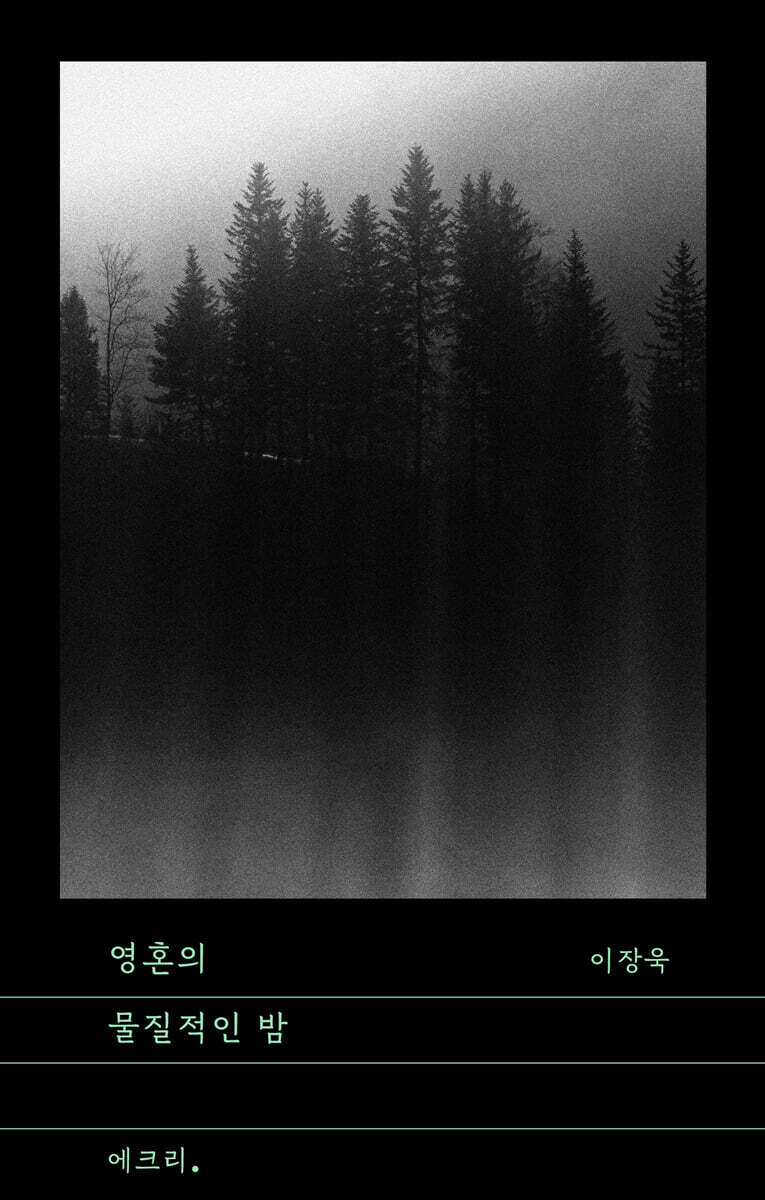
The newly launched design of Ecri is reminiscent of a 'black and white film'.
The black and white photo on the front cover looks like a still cut from a movie.
The solid lines that run back and forth are also reminiscent of film rolling in a projector, evoking analog nostalgia.
Just as the protagonist in a black-and-white film uses his expressions and actions to convey his emotions more effectively to the audience, [Moonji Ecri] also highlights only the act of 'writing' to more clearly reveal the author's thoughts.
Just as one sharpens a pencil that has been saved for a long time and presses down firmly to write, [Munji Ecri] will provide readers with a valuable opportunity to encounter the personal and intimate realms of writers that they have only encountered through literary works.
Munhak-kwa-Jiseongsa's prose series [Munji Ecri] is making its debut with a new design.
The prose series [Munji Ecri], which organizes and plans the thoughts of literary writers who have developed a unique style with their own writing style to suit the tastes of contemporary readers, has introduced the works of writers who are enthusiastically supported by literary readers, including literary critics Kim Hyeon and Lee Gwang-ho, poets Kim Hye-sun, Kim So-yeon, and Shin Hae-wook, and novelist Baek Min-seok.
Ecrit is a French word meaning something written or something that (he/she) writes.
This series, which emphasizes the act of writing, aims to express the diverse spectrum of each writer in the most free manner possible.
Poet, novelist, critic, and traveler
Your Haruo, Our Lee Jang-wook
“I came here and couldn’t write a single poem or novel.
The sentences didn't come to me.
Maybe I knew it in advance.
For me, travel has not become poetry or narrative.
“Travel is always for the passer-by, and what the passer-by can see is only what the passer-by wants to see.”
―「2007.
7. 6.」
A person who writes poetry and novels, an author, introduces himself like this.
For Lee Jang-wook, writing is not a past action or a future result, but is always a ‘present progressive’ activity.
When will he, who has always existed as a writer since his name was imprinted on the readers, be unable to write anything?
Isn't that the moment when you are neither a poet nor a novelist, and only have to worry about solving the daily problem of making ends meet, the moment when you volunteer to be a traveler in an unfamiliar place?
That winter, the scenery on the train with my dorm roommate Andrei, who left St. Petersburg for Chuvash in central Russia, became a diary entry from 2004, ten years later. The night view I saw in Budapest, where I left for writing that winter, became a diary entry from 2023.
He feels bewildered by the fact that 30 years have passed by in the blink of an eye, having only gone through winter after winter, and reflects on the past, saying that finishing a book is like experiencing “a death.”
Anyone who admired Lee Jang-wook's writing would have experienced the author's unique world of lyricism, crossing the line between reality and fantasy.
Some will be captivated by his linguistic expanses and poetic imagination, while others will be held breath by the stories told by the characters in his novels.
Beloved for his clean, sharp sentences and the dense stories behind them, author Lee Jang-wook constantly explores life and death in the world we live in, without leaving any question marks in his writing.
Like 'Kwak' ('The King of Confessions', 'The King of Confessions', Changbi, 2010), who suddenly appeared and confessed his story, Lee Jang-wook's 'Confession' reminds us once again that our daily lives are full of trivial secrets.
Lee Jang-wook's winter diary, which seems to slowly rewind past memories, instantly transcends the time gap between past and present, transporting readers to a 19th-century window or to Russia in the late 1990s, when even the bitter cold did not freeze.
Lee Jang-wook, who says that the only way to show courtesy to the city he has stopped in is to walk around like a dog all day, will not wake up the passengers sleeping on the night train while he alone rolls the large wheel of writing.
As always, he approaches gently and shows us the 19th century he experienced, Russia in the 1990s, and Budapest in 2023 as if the secrets were not secrets.
“I think I like coming up with something that isn’t a novel yet more than writing a novel itself.
For example, rather than writing about a person named Haruo, the moment when a person named Haruo suddenly opens his eyes in his mind.
The moment Haruo opens his eyes and smiles or walks around.
“Then, suddenly, it disappears, leaving me feeling lonely.”
―From “What is not yet a novel”
A person who shows a cross-section of the world by showing only half of what he knows.
Lee Jang-wook's writing is somewhat secretive yet open, and while it speaks constantly, it is not chatty but simple and clear.
It slowly seeps in like Haruo in “More than Half Haruo” (Everything That Is Not a Giraffe, Moonji Publishing, 2015), who hovers around like an old friend or colleague and then disappears without a sound.
This collection of essays, "The Material Night of the Soul," is about taking the Trans-Siberian Railway, passing through the Changgyeongwon of my childhood, and walking without rest, wherever my feet take me, until I reach the House of Literature.
Because it focuses solely on the act of 'writing', it does not stick to one topic or follow a narrative structure.
Chapter 1, written in 2004 and 2007 and set in a Russian winter, recalls the period immediately following the fall of the Soviet Union.
Chapter 2 is a collection of notes written between 2005 and 2015, containing fragmentary reflections on poetry, fiction, philosophy, and freedom.
Chapter 3 contains long essays on the topics of 'Zoo', 'House of Literature', and 'Golden Pavilion'.
And Chapter 4 returns to the present time and contains the scenery of Budapest.
Here, there are poets who run bare-chested into the white snow, novelists who gaze at the drops of saliva falling from animals' mouths, critics who meet Lenin in a chocolate museum, and travelers who walk like dogs all day and then enjoy a drink at a Chinese restaurant.
This book, which shows half of Lee Jang-wook's life as a poet, novelist, critic, and traveler, will take anyone who wants to feel the dry wind with their damp body anywhere.
A world of boundless prose created by the allure of writing.
The newly launched design of Ecri is reminiscent of a 'black and white film'.
The black and white photo on the front cover looks like a still cut from a movie.
The solid lines that run back and forth are also reminiscent of film rolling in a projector, evoking analog nostalgia.
Just as the protagonist in a black-and-white film uses his expressions and actions to convey his emotions more effectively to the audience, [Moonji Ecri] also highlights only the act of 'writing' to more clearly reveal the author's thoughts.
Just as one sharpens a pencil that has been saved for a long time and presses down firmly to write, [Munji Ecri] will provide readers with a valuable opportunity to encounter the personal and intimate realms of writers that they have only encountered through literary works.
Munhak-kwa-Jiseongsa's prose series [Munji Ecri] is making its debut with a new design.
The prose series [Munji Ecri], which organizes and plans the thoughts of literary writers who have developed a unique style with their own writing style to suit the tastes of contemporary readers, has introduced the works of writers who are enthusiastically supported by literary readers, including literary critics Kim Hyeon and Lee Gwang-ho, poets Kim Hye-sun, Kim So-yeon, and Shin Hae-wook, and novelist Baek Min-seok.
Ecrit is a French word meaning something written or something that (he/she) writes.
This series, which emphasizes the act of writing, aims to express the diverse spectrum of each writer in the most free manner possible.
Poet, novelist, critic, and traveler
Your Haruo, Our Lee Jang-wook
“I came here and couldn’t write a single poem or novel.
The sentences didn't come to me.
Maybe I knew it in advance.
For me, travel has not become poetry or narrative.
“Travel is always for the passer-by, and what the passer-by can see is only what the passer-by wants to see.”
―「2007.
7. 6.」
A person who writes poetry and novels, an author, introduces himself like this.
For Lee Jang-wook, writing is not a past action or a future result, but is always a ‘present progressive’ activity.
When will he, who has always existed as a writer since his name was imprinted on the readers, be unable to write anything?
Isn't that the moment when you are neither a poet nor a novelist, and only have to worry about solving the daily problem of making ends meet, the moment when you volunteer to be a traveler in an unfamiliar place?
That winter, the scenery on the train with my dorm roommate Andrei, who left St. Petersburg for Chuvash in central Russia, became a diary entry from 2004, ten years later. The night view I saw in Budapest, where I left for writing that winter, became a diary entry from 2023.
He feels bewildered by the fact that 30 years have passed by in the blink of an eye, having only gone through winter after winter, and reflects on the past, saying that finishing a book is like experiencing “a death.”
Anyone who admired Lee Jang-wook's writing would have experienced the author's unique world of lyricism, crossing the line between reality and fantasy.
Some will be captivated by his linguistic expanses and poetic imagination, while others will be held breath by the stories told by the characters in his novels.
Beloved for his clean, sharp sentences and the dense stories behind them, author Lee Jang-wook constantly explores life and death in the world we live in, without leaving any question marks in his writing.
Like 'Kwak' ('The King of Confessions', 'The King of Confessions', Changbi, 2010), who suddenly appeared and confessed his story, Lee Jang-wook's 'Confession' reminds us once again that our daily lives are full of trivial secrets.
Lee Jang-wook's winter diary, which seems to slowly rewind past memories, instantly transcends the time gap between past and present, transporting readers to a 19th-century window or to Russia in the late 1990s, when even the bitter cold did not freeze.
Lee Jang-wook, who says that the only way to show courtesy to the city he has stopped in is to walk around like a dog all day, will not wake up the passengers sleeping on the night train while he alone rolls the large wheel of writing.
As always, he approaches gently and shows us the 19th century he experienced, Russia in the 1990s, and Budapest in 2023 as if the secrets were not secrets.
“I think I like coming up with something that isn’t a novel yet more than writing a novel itself.
For example, rather than writing about a person named Haruo, the moment when a person named Haruo suddenly opens his eyes in his mind.
The moment Haruo opens his eyes and smiles or walks around.
“Then, suddenly, it disappears, leaving me feeling lonely.”
―From “What is not yet a novel”
A person who shows a cross-section of the world by showing only half of what he knows.
Lee Jang-wook's writing is somewhat secretive yet open, and while it speaks constantly, it is not chatty but simple and clear.
It slowly seeps in like Haruo in “More than Half Haruo” (Everything That Is Not a Giraffe, Moonji Publishing, 2015), who hovers around like an old friend or colleague and then disappears without a sound.
This collection of essays, "The Material Night of the Soul," is about taking the Trans-Siberian Railway, passing through the Changgyeongwon of my childhood, and walking without rest, wherever my feet take me, until I reach the House of Literature.
Because it focuses solely on the act of 'writing', it does not stick to one topic or follow a narrative structure.
Chapter 1, written in 2004 and 2007 and set in a Russian winter, recalls the period immediately following the fall of the Soviet Union.
Chapter 2 is a collection of notes written between 2005 and 2015, containing fragmentary reflections on poetry, fiction, philosophy, and freedom.
Chapter 3 contains long essays on the topics of 'Zoo', 'House of Literature', and 'Golden Pavilion'.
And Chapter 4 returns to the present time and contains the scenery of Budapest.
Here, there are poets who run bare-chested into the white snow, novelists who gaze at the drops of saliva falling from animals' mouths, critics who meet Lenin in a chocolate museum, and travelers who walk like dogs all day and then enjoy a drink at a Chinese restaurant.
This book, which shows half of Lee Jang-wook's life as a poet, novelist, critic, and traveler, will take anyone who wants to feel the dry wind with their damp body anywhere.
GOODS SPECIFICS
- Date of issue: September 25, 2023
- Page count, weight, size: 196 pages | 208g | 120*188*20mm
- ISBN13: 9788932042138
- ISBN10: 8932042136
You may also like
카테고리
korean


korean

![GQ KOREA Mark (Monthly): December [2025]](http://librairie.coreenne.fr/cdn/shop/files/8ef265dbbfbf186523ed75ba7319009d.jpg?v=1765340328&width=3840)


