![Comics Now: Issue 28 [2025]](http://librairie.coreenne.fr/cdn/shop/files/17ce80b2cef11f4282a14ecae65d5372.jpg?v=1765326029&width=3840)

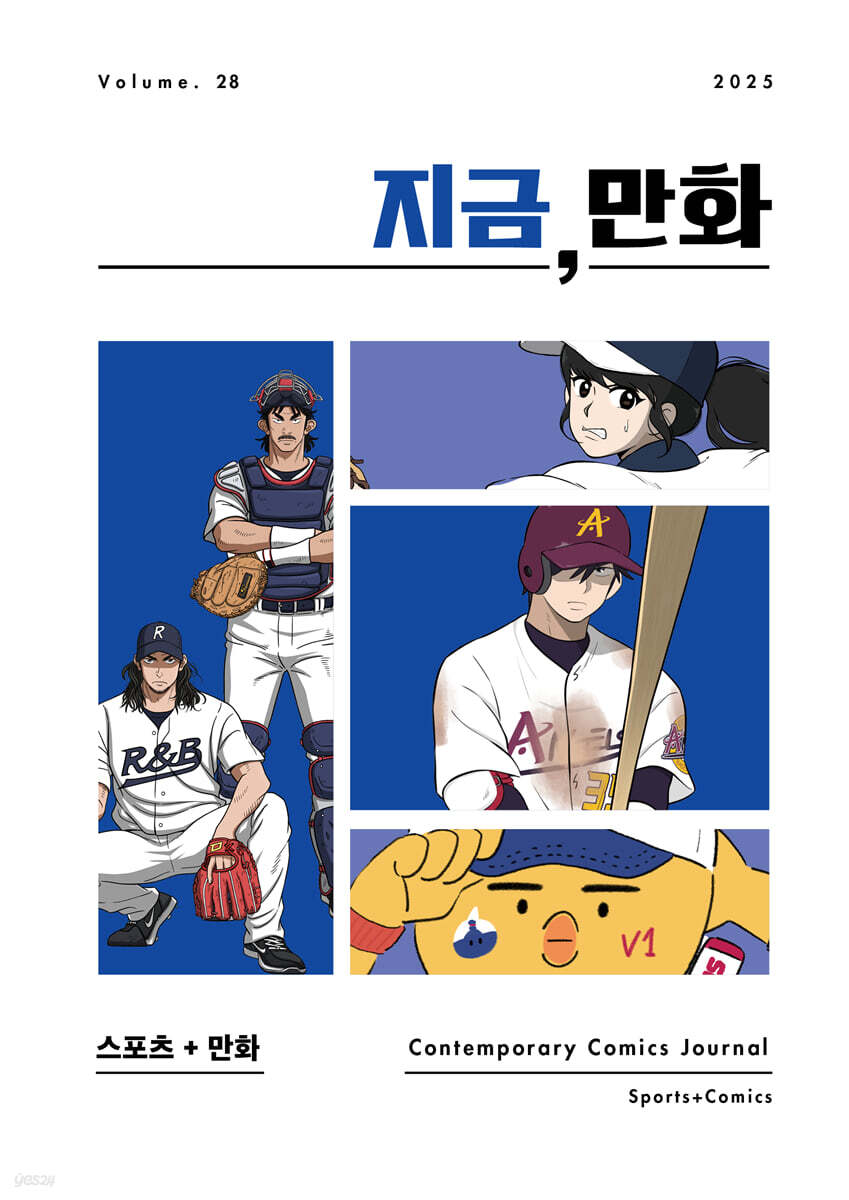
Now, Comics: Issue 28 [2025]
 |
Description
Book Introduction
Unraveling 'Sports + Comics' through Comic Criticism!
The only critical journal that interprets the intersection of sports and comics through comic criticism!
《Now, Comics》 has established itself as Korea's only comics criticism magazine since its first issue in 2018.
Not only academics and researchers in the webtoon and cartoon department, but also webtoon platform and agency workers, related industry workers, aspiring artists, and students are welcoming the cartoon critique magazine, “Now, Cartoon.”
As there are virtually no media outlets that candidly examine the hottest issues happening in the Korean comics and webtoons world, provide sharp critiques of related works, and even deliver vivid interviews, the number of people who want to read comics and webtoons through "Now, Comics" is steadily increasing.
《Now, Comics》 #28, 2025, explores sports comics that teach us not only how to have fun through sports, but also how to become a better person through perseverance and growth.
The beginning of our country's rise to international recognition as a developing country around the time of the Korean War was through sports.
In various international sports competitions, including the Olympics, the entire nation cheered and cried over the rankings and medals.
The people welcomed the victory by waving the Taegeukgi, believing that it was a victory for the Republic of Korea.
This atmosphere is also closely related to the government's intention to use and promote sports politically in the 1980s.
The first full-fledged sports comics in Korea appeared in 1962 with Baek San's "Victory Baseball Team," followed by Jo Won-gi's "Red Bat" in 1963 and "Golden Arm" in 1964.
After that, Lee Woo-jung's "Baseball King", Lee Du-ho's "Stormy Ground", Lee Sang-moo's "Friendship Mound" and "The Boy Who Doesn't Cry", and Jang Tae-san's "Sky Wrestler" were released.
As such, sports comics reached their heyday in the 1980s with the publication of diverse and high-quality works.
Works such as Heo Yeong-man's "Shaman Spider," "Mantis," "Hit the Home Run," "Run Towards the Sun," and "Hit the Fastball," and Lee Hyeon-se's "The Fearsome Foreign Baseball Team" and "Hell's Ring" are still considered masterpieces today.
Sports comics of the 1990s shifted from games centered around genius players to team players who relied on tactics and strategy.
Team-oriented sports comics like Slam Dunk break away from the hellish training of the past and present a more scientific approach to positioning and game management.
Such changes led readers to more unique and diverse characters and story compositions.
This trend continued into the 2000s, with the emergence of engaging manga that utilized various variables in game management, such as Kuroko's Basketball and Haikyuu!!
In addition, webtoons based on non-mainstream sports such as kendo, aerobics, and games are attracting attention.
In this way, the formula of sports comics has been modified and applied over time.
After the golden age of Korean sports comics, it continued with data management and various comic experiments since the 2000s.
Sports comics that inspire readers have always clearly shown 'what was lost, how they responded, and under what rules and circumstances', allowing readers to accept the reasons for victory.
Ultimately, the essence of sports comics is not the game itself, but the process of overcoming human limitations that moves us.
Although it may appear new in a different language and format, it is meaningful in that it conveys passion and hope to both new and old generations.
The only critical journal that interprets the intersection of sports and comics through comic criticism!
《Now, Comics》 has established itself as Korea's only comics criticism magazine since its first issue in 2018.
Not only academics and researchers in the webtoon and cartoon department, but also webtoon platform and agency workers, related industry workers, aspiring artists, and students are welcoming the cartoon critique magazine, “Now, Cartoon.”
As there are virtually no media outlets that candidly examine the hottest issues happening in the Korean comics and webtoons world, provide sharp critiques of related works, and even deliver vivid interviews, the number of people who want to read comics and webtoons through "Now, Comics" is steadily increasing.
《Now, Comics》 #28, 2025, explores sports comics that teach us not only how to have fun through sports, but also how to become a better person through perseverance and growth.
The beginning of our country's rise to international recognition as a developing country around the time of the Korean War was through sports.
In various international sports competitions, including the Olympics, the entire nation cheered and cried over the rankings and medals.
The people welcomed the victory by waving the Taegeukgi, believing that it was a victory for the Republic of Korea.
This atmosphere is also closely related to the government's intention to use and promote sports politically in the 1980s.
The first full-fledged sports comics in Korea appeared in 1962 with Baek San's "Victory Baseball Team," followed by Jo Won-gi's "Red Bat" in 1963 and "Golden Arm" in 1964.
After that, Lee Woo-jung's "Baseball King", Lee Du-ho's "Stormy Ground", Lee Sang-moo's "Friendship Mound" and "The Boy Who Doesn't Cry", and Jang Tae-san's "Sky Wrestler" were released.
As such, sports comics reached their heyday in the 1980s with the publication of diverse and high-quality works.
Works such as Heo Yeong-man's "Shaman Spider," "Mantis," "Hit the Home Run," "Run Towards the Sun," and "Hit the Fastball," and Lee Hyeon-se's "The Fearsome Foreign Baseball Team" and "Hell's Ring" are still considered masterpieces today.
Sports comics of the 1990s shifted from games centered around genius players to team players who relied on tactics and strategy.
Team-oriented sports comics like Slam Dunk break away from the hellish training of the past and present a more scientific approach to positioning and game management.
Such changes led readers to more unique and diverse characters and story compositions.
This trend continued into the 2000s, with the emergence of engaging manga that utilized various variables in game management, such as Kuroko's Basketball and Haikyuu!!
In addition, webtoons based on non-mainstream sports such as kendo, aerobics, and games are attracting attention.
In this way, the formula of sports comics has been modified and applied over time.
After the golden age of Korean sports comics, it continued with data management and various comic experiments since the 2000s.
Sports comics that inspire readers have always clearly shown 'what was lost, how they responded, and under what rules and circumstances', allowing readers to accept the reasons for victory.
Ultimately, the essence of sports comics is not the game itself, but the process of overcoming human limitations that moves us.
Although it may appear new in a different language and format, it is meaningful in that it conveys passion and hope to both new and old generations.
index
■ Cover Story
▷ Sports Comics Clichés: From Deficiency to Design
: Jo Han-gi (Academic Research Professor, Kyung Hee University, Comics and Film Critic)
▷ History of sports comics, their characteristics and trends
Baek Geon-woo (comic critic)
▷ From existing sports comics to 'discovering' new sports comics
Moon Jong-pil (comic critic)
How will sports comics bridge the gap between webtoons and reality?
Kim Seon-jun (comic critic)
■ Interview
▷ The path of comics pioneered with thirst and anxiety, walking with laughter.
: Cartoonist Kang Do-ha
■ Critic
▷ What are the sports comics of the 1980s and their heroic narratives?
Park Se-hyeon (President of the Korean Cartoon and Webtoon Critics Association)
▷ Sports and comics, mirroring each other
From generational memories to digital fandom, the "stadium" continues to expand.
Kim Min-su (CBS Nocut News reporter)
▷ What is more valuable than victory?
Questions Raised by Unpopular Sports Webtoons
The Evolution of the Underdog Narrative: A Self-Portrait of Our Times in Unpopular Sports Webtoons
: Lim Jae-hwan (Professor, Cheonggang Cultural Industries College)
▷ The destiny of growth
The romanticism or desire for sports that grows through violence
: Lee Yong-geon (comic critic)
■ Interview
▷ Drawing my baseball and the baseball I want to draw, all of it
: Cartoonist Hwang Ji-seong
■ Issue
In the Age of "0s and 1s," Where Does Creativity Lie?
Copyright Issues After Generative AI and Redefining Creativity
Park Hyeon-ju (Attorney at the Korea Copyright Commission)
▷ Self-regulation: A fundamental way to solve recurring problems
Hong Nan-ji (Professor, Cartoon Content School, Cheonggang University of Cultural Industries, Cartoon Critic)
■ Essay
▷ Commemorating the first anniversary of the passing of cartoon critic Son Sang-ik
Greetings from Director Son Sang-ik. How are we doing?
Park Seok-hwan (2nd batch researcher at the Korea Cartoon and Culture Research Institute, cartoon critic)
▷ Current Status of Overseas Copyright Infringement of Comics and Webtoons and Countermeasures
: Kim Seong-ju (Attorney at Deoksu Law Firm)
■ Comics for these times: Comics I'd like to recommend to my foreign friends
▷ The moment of revelation, the footsteps that were trampled upon the eyes
Saisa's "Footsteps Trampled in the Snow"
Oh Hyuk-jin (comic critic)
▷ The Pope I Met on the Streets of Seoul
The Faith and Humor of Korean Webtoons
Lee Seom and Pan Mi-son's "Please Stop Our Pope"
Lee Jin-hee (comic critic)
▷ Carving my own traces
Baek Won-dal's "An Old Man's Dream"
: Kim Hyun-ji (Professor, Department of Cartoon and Webtoon, Seoil University)
▷ Goodbye, my baby
Jo Tol-bok's "Foster Family!"
Park So-hae (novelist)
▷ Two webtoons that meet Korea
"The Tiger Comes In", "The Store Where Memories Come Back"
: Kim Kyung-min (Assistant Professor, Department of Art and Webtoon, Paichai University)
■ Relay Interview
▷ The healing that comics and animation provide is truly delicious!
: Actor Park Jun-myeon
■ I'm going to meet you now
▷ In search of literary quality and humanism through comics
: Cartoonist Kim Hyeong-bae (edited by cartoonist Kim Jong-ok)
■ Webtoon VS Movie
▷ Crossing the line between the limits of motherhood and the limits of the medium
Webtoon "Invasion" vs. Movie "Invasion"
Park Soo-min (screenwriter, comic critic)
Zombie Daughter, a laughter virus that spread across the screen
Webtoon "Zombie Daughter" vs. Movie "Zombie Daughter"
: Kim Seong-hun (comic critic)
■ Famous lines and scenes from life in comics
▷ A pinch of fantasy, the power to endure loss
Fujimoto Tatsuki's "Hello, Eri"
: Seol Ji-hyung (Professor of Digital Cartoon and Animation, Sangmyung University)
▷ The first step of the Korean comics wave in North America
Collaboration between an American novelist, publisher, and Korean cartoonist
Inarae Lee's Maximum Ride
: Gonamu (former CEO of Factstory, author of the original novel "Those Who Read the Heart of Evil")
■ Critics' picks!
▷ What did we see the moment we shouted “Donden”?
Manripo's "Donden"
: Hwang Yun-hee (comic critic)
■ Comic News Inside
■ New Release Report
▷ Sports Comics Clichés: From Deficiency to Design
: Jo Han-gi (Academic Research Professor, Kyung Hee University, Comics and Film Critic)
▷ History of sports comics, their characteristics and trends
Baek Geon-woo (comic critic)
▷ From existing sports comics to 'discovering' new sports comics
Moon Jong-pil (comic critic)
How will sports comics bridge the gap between webtoons and reality?
Kim Seon-jun (comic critic)
■ Interview
▷ The path of comics pioneered with thirst and anxiety, walking with laughter.
: Cartoonist Kang Do-ha
■ Critic
▷ What are the sports comics of the 1980s and their heroic narratives?
Park Se-hyeon (President of the Korean Cartoon and Webtoon Critics Association)
▷ Sports and comics, mirroring each other
From generational memories to digital fandom, the "stadium" continues to expand.
Kim Min-su (CBS Nocut News reporter)
▷ What is more valuable than victory?
Questions Raised by Unpopular Sports Webtoons
The Evolution of the Underdog Narrative: A Self-Portrait of Our Times in Unpopular Sports Webtoons
: Lim Jae-hwan (Professor, Cheonggang Cultural Industries College)
▷ The destiny of growth
The romanticism or desire for sports that grows through violence
: Lee Yong-geon (comic critic)
■ Interview
▷ Drawing my baseball and the baseball I want to draw, all of it
: Cartoonist Hwang Ji-seong
■ Issue
In the Age of "0s and 1s," Where Does Creativity Lie?
Copyright Issues After Generative AI and Redefining Creativity
Park Hyeon-ju (Attorney at the Korea Copyright Commission)
▷ Self-regulation: A fundamental way to solve recurring problems
Hong Nan-ji (Professor, Cartoon Content School, Cheonggang University of Cultural Industries, Cartoon Critic)
■ Essay
▷ Commemorating the first anniversary of the passing of cartoon critic Son Sang-ik
Greetings from Director Son Sang-ik. How are we doing?
Park Seok-hwan (2nd batch researcher at the Korea Cartoon and Culture Research Institute, cartoon critic)
▷ Current Status of Overseas Copyright Infringement of Comics and Webtoons and Countermeasures
: Kim Seong-ju (Attorney at Deoksu Law Firm)
■ Comics for these times: Comics I'd like to recommend to my foreign friends
▷ The moment of revelation, the footsteps that were trampled upon the eyes
Saisa's "Footsteps Trampled in the Snow"
Oh Hyuk-jin (comic critic)
▷ The Pope I Met on the Streets of Seoul
The Faith and Humor of Korean Webtoons
Lee Seom and Pan Mi-son's "Please Stop Our Pope"
Lee Jin-hee (comic critic)
▷ Carving my own traces
Baek Won-dal's "An Old Man's Dream"
: Kim Hyun-ji (Professor, Department of Cartoon and Webtoon, Seoil University)
▷ Goodbye, my baby
Jo Tol-bok's "Foster Family!"
Park So-hae (novelist)
▷ Two webtoons that meet Korea
"The Tiger Comes In", "The Store Where Memories Come Back"
: Kim Kyung-min (Assistant Professor, Department of Art and Webtoon, Paichai University)
■ Relay Interview
▷ The healing that comics and animation provide is truly delicious!
: Actor Park Jun-myeon
■ I'm going to meet you now
▷ In search of literary quality and humanism through comics
: Cartoonist Kim Hyeong-bae (edited by cartoonist Kim Jong-ok)
■ Webtoon VS Movie
▷ Crossing the line between the limits of motherhood and the limits of the medium
Webtoon "Invasion" vs. Movie "Invasion"
Park Soo-min (screenwriter, comic critic)
Zombie Daughter, a laughter virus that spread across the screen
Webtoon "Zombie Daughter" vs. Movie "Zombie Daughter"
: Kim Seong-hun (comic critic)
■ Famous lines and scenes from life in comics
▷ A pinch of fantasy, the power to endure loss
Fujimoto Tatsuki's "Hello, Eri"
: Seol Ji-hyung (Professor of Digital Cartoon and Animation, Sangmyung University)
▷ The first step of the Korean comics wave in North America
Collaboration between an American novelist, publisher, and Korean cartoonist
Inarae Lee's Maximum Ride
: Gonamu (former CEO of Factstory, author of the original novel "Those Who Read the Heart of Evil")
■ Critics' picks!
▷ What did we see the moment we shouted “Donden”?
Manripo's "Donden"
: Hwang Yun-hee (comic critic)
■ Comic News Inside
■ New Release Report
Detailed image
.jpg)
Publisher's Review
□ What are some clichés in sports comics?
□ How are sports comics and heroic epics related?
□ What are some unpopular sports webtoons?
□ In the golden age of generative AI, what will happen to copyright protection?
□ How will self-regulation of webtoons be achieved?
In an era of tens of millions of professional baseball fans, where are sports comics and webtoons headed?
The fun and meaning of sports seen through comics and webtoons, not just at the stadium.
The growing interest in sports today could be seen as an optimistic sign for the growth of sports webtoons.
However, the outlook for other sports markets, excluding domestic professional baseball and soccer, and the US professional sports market, which is supported by overwhelming capital, is by no means optimistic.
The 2024 Paris Olympics have hit an all-time low in domestic viewership, and various indicators, including Google Trends, reveal a decline in global interest.
Nowadays, people do not equate the national team's victory with their own victory.
It's not just a problem for the Olympics and national team games.
There is too much content to capture the public's attention to spend a long time watching live sports matches.
I find myself searching for more content that will give me that instant, reliable dopamine hit I crave.
This may be the reason why the so-called MZ generation watches and plays more e-sports, which guarantee fun in shorter matches, than physical sports, which are difficult to get into and boring.
In that respect, there is a need to capture readers' attention with webtoons that cover a wider range of subjects.
If the webtoon is one that can showcase the author's unique story and direction, it will deliver a fresher and more engaging entertainment.
It is also advisable to add variations to typical characters and relationships, or to turn to female sports webtoons such as “Heart-pounding”.
Given the growing interest of women in sports, it is time for works aimed at female readers.
If sports webtoons with more diverse and vivid weapons like this emerge and are supported by readers' interest and response, the popularity of sports comics and webtoons will return.
What is the present and future of sports webtoons, and which ones should you read?
The 'Cover Story' of the 28th issue of the comics and webtoon critique magazine "Now, Comics" examines the history of sports comics and webtoons, and explores the genre's unique characteristics, trends, and clichés to anticipate its future.
In 'Critic', we analyzed the heroic narratives in works from the golden age of sports comics in the 1980s.
We also examine it from various angles, from the perspective of unpopular sports webtoon criticism and growth narrative.
In 'Interview', we met with cartoonist Kang Do-ha, who recently returned with '19-NINETEEN', and heard about his 40-year career in cartooning and his plans for the future.
We also heard about the process, difficulties, and prospects of working on a sports webtoon with Hwang Ji-seong, a former baseball player and professional cartoonist.
In 'This Kind of Comics for This Time', we meet a curation of comic recommendations from celebrities under the theme of 'Comics I'd Recommend to My Foreign Friends', and introduce various comics/webtoons through 'Famous Lines/Scenes from Life in Comics' and 'Webtoons vs. Movies'.
Additionally, in the 'Critics' Picks!' corner, comic critics provide in-depth critiques of works selected by them.
This year's newly established 'Relay Interview' heard about actor Park Jun-myeon's connection to comics after appearing in 'Sister's Farm Delivery' and 'The Tyrant's Chef', and 'I'm Going to Meet You Now' visited veteran cartoonist Kim Hyung-bae to hear vividly about his journey to find literary value in comics.
《Now, Comics》No. 28 = Sports + Comics
ㆍWhat are the representative works of Korean sports comics from each era?
Sports comics first appeared in Korea in earnest in 1962 with Baek San's "Victory Baseball Team," followed by Lee Woo-jeong's "Baseball King," Lee Du-ho's "Stormy Ground," and Lee Sang-moo's "Friendship Mound" and "Run! Last Place" which gained popularity.
Afterwards, the golden age of sports comics began with works such as Heo Yeong-man's "The Irregular Boxer" and "Shaman Spider", Park Bong-seong's "Son of God", and Lee Hyeon-se's "The Terror of the Foreign Baseball Team" and "Hell's Ring".
In the 1990s, as the market for comics magazines and books expanded and the popularity of soccer soared, the number of soccer comics increased, such as Jeon Se-hoon's "Shooting" and Jo Jae-ho's "Runaway Locomotive" and "Vamos."
After that, with the advent of webtoons, comics featuring non-mainstream sports such as golf, volleyball, and cycling appeared, and unique sports comics appeared that emphasized team play between various characters or told stories with unique perspectives.
ㆍWhat are some clichés in sports comics?
Sports comics of the 1960s established the basic cliche of special training, challenge, and victory.
At the same time, it laid the foundations of the genre by combining social reality, national aspirations, and the ethics of friendship.
The flow of Korean sports comics that continued into their heyday in the 1970s and 1980s further developed these characteristics.
However, Lee Hyun-se's "The Fearsome Alien Team" changed this formula.
It follows the same formula of hellish training, physical deprivation, and dramatic battle, but the protagonist Oh Hye-seong's choice is not about the team's victory, but rather about personal feelings (thumbs up).
Asceticism becomes obsession, injuries turn into ruin, and sports become a place that exposes the cracks in life. "The Fearful Foreigner" pushes the cliché to its limits, ultimately revealing the paradox of overturning it.
Sports comics, which emphasized the will of genius players, later gave way to webtoons in the 1990s and 2000s, focusing on team strategies and tactics for victory while captivating readers with diverse characters and unique stories.
ㆍHow are sports comics and heroic epics depicted?
Oh Hye-seong (Seol Kkachi), the representative protagonist of Lee Hyeon-se, overcomes severe physical pain to escape his unfortunate family history and pursues his single-minded love for a woman named Eom Ji.
In sports comics such as “The Fearsome Alien Team,” Oh Hye-seong was an incompetent being abandoned in the strict capitalist competitive structure of sports.
Heo Young-man's Lee Kang-to was a good citizen who struggled to survive in the poverty and upheaval of modern history, while trying not to lose his smile and hope.
Park Bong-seong's strongest hit is portrayed as an unrivaled iron man with sports talent, a brilliant mind, and business acumen, driven by a single-minded desire to turn back his bad luck and seek revenge for betrayal.
These are heroes who make us feel compassion and admiration for those who had to endure and survive the dark 1980s.
These three protagonists overcome challenges and hardships, and through the process, provide readers with a spark of hope and dreams.
□ How are sports comics and heroic epics related?
□ What are some unpopular sports webtoons?
□ In the golden age of generative AI, what will happen to copyright protection?
□ How will self-regulation of webtoons be achieved?
In an era of tens of millions of professional baseball fans, where are sports comics and webtoons headed?
The fun and meaning of sports seen through comics and webtoons, not just at the stadium.
The growing interest in sports today could be seen as an optimistic sign for the growth of sports webtoons.
However, the outlook for other sports markets, excluding domestic professional baseball and soccer, and the US professional sports market, which is supported by overwhelming capital, is by no means optimistic.
The 2024 Paris Olympics have hit an all-time low in domestic viewership, and various indicators, including Google Trends, reveal a decline in global interest.
Nowadays, people do not equate the national team's victory with their own victory.
It's not just a problem for the Olympics and national team games.
There is too much content to capture the public's attention to spend a long time watching live sports matches.
I find myself searching for more content that will give me that instant, reliable dopamine hit I crave.
This may be the reason why the so-called MZ generation watches and plays more e-sports, which guarantee fun in shorter matches, than physical sports, which are difficult to get into and boring.
In that respect, there is a need to capture readers' attention with webtoons that cover a wider range of subjects.
If the webtoon is one that can showcase the author's unique story and direction, it will deliver a fresher and more engaging entertainment.
It is also advisable to add variations to typical characters and relationships, or to turn to female sports webtoons such as “Heart-pounding”.
Given the growing interest of women in sports, it is time for works aimed at female readers.
If sports webtoons with more diverse and vivid weapons like this emerge and are supported by readers' interest and response, the popularity of sports comics and webtoons will return.
What is the present and future of sports webtoons, and which ones should you read?
The 'Cover Story' of the 28th issue of the comics and webtoon critique magazine "Now, Comics" examines the history of sports comics and webtoons, and explores the genre's unique characteristics, trends, and clichés to anticipate its future.
In 'Critic', we analyzed the heroic narratives in works from the golden age of sports comics in the 1980s.
We also examine it from various angles, from the perspective of unpopular sports webtoon criticism and growth narrative.
In 'Interview', we met with cartoonist Kang Do-ha, who recently returned with '19-NINETEEN', and heard about his 40-year career in cartooning and his plans for the future.
We also heard about the process, difficulties, and prospects of working on a sports webtoon with Hwang Ji-seong, a former baseball player and professional cartoonist.
In 'This Kind of Comics for This Time', we meet a curation of comic recommendations from celebrities under the theme of 'Comics I'd Recommend to My Foreign Friends', and introduce various comics/webtoons through 'Famous Lines/Scenes from Life in Comics' and 'Webtoons vs. Movies'.
Additionally, in the 'Critics' Picks!' corner, comic critics provide in-depth critiques of works selected by them.
This year's newly established 'Relay Interview' heard about actor Park Jun-myeon's connection to comics after appearing in 'Sister's Farm Delivery' and 'The Tyrant's Chef', and 'I'm Going to Meet You Now' visited veteran cartoonist Kim Hyung-bae to hear vividly about his journey to find literary value in comics.
《Now, Comics》No. 28 = Sports + Comics
ㆍWhat are the representative works of Korean sports comics from each era?
Sports comics first appeared in Korea in earnest in 1962 with Baek San's "Victory Baseball Team," followed by Lee Woo-jeong's "Baseball King," Lee Du-ho's "Stormy Ground," and Lee Sang-moo's "Friendship Mound" and "Run! Last Place" which gained popularity.
Afterwards, the golden age of sports comics began with works such as Heo Yeong-man's "The Irregular Boxer" and "Shaman Spider", Park Bong-seong's "Son of God", and Lee Hyeon-se's "The Terror of the Foreign Baseball Team" and "Hell's Ring".
In the 1990s, as the market for comics magazines and books expanded and the popularity of soccer soared, the number of soccer comics increased, such as Jeon Se-hoon's "Shooting" and Jo Jae-ho's "Runaway Locomotive" and "Vamos."
After that, with the advent of webtoons, comics featuring non-mainstream sports such as golf, volleyball, and cycling appeared, and unique sports comics appeared that emphasized team play between various characters or told stories with unique perspectives.
ㆍWhat are some clichés in sports comics?
Sports comics of the 1960s established the basic cliche of special training, challenge, and victory.
At the same time, it laid the foundations of the genre by combining social reality, national aspirations, and the ethics of friendship.
The flow of Korean sports comics that continued into their heyday in the 1970s and 1980s further developed these characteristics.
However, Lee Hyun-se's "The Fearsome Alien Team" changed this formula.
It follows the same formula of hellish training, physical deprivation, and dramatic battle, but the protagonist Oh Hye-seong's choice is not about the team's victory, but rather about personal feelings (thumbs up).
Asceticism becomes obsession, injuries turn into ruin, and sports become a place that exposes the cracks in life. "The Fearful Foreigner" pushes the cliché to its limits, ultimately revealing the paradox of overturning it.
Sports comics, which emphasized the will of genius players, later gave way to webtoons in the 1990s and 2000s, focusing on team strategies and tactics for victory while captivating readers with diverse characters and unique stories.
ㆍHow are sports comics and heroic epics depicted?
Oh Hye-seong (Seol Kkachi), the representative protagonist of Lee Hyeon-se, overcomes severe physical pain to escape his unfortunate family history and pursues his single-minded love for a woman named Eom Ji.
In sports comics such as “The Fearsome Alien Team,” Oh Hye-seong was an incompetent being abandoned in the strict capitalist competitive structure of sports.
Heo Young-man's Lee Kang-to was a good citizen who struggled to survive in the poverty and upheaval of modern history, while trying not to lose his smile and hope.
Park Bong-seong's strongest hit is portrayed as an unrivaled iron man with sports talent, a brilliant mind, and business acumen, driven by a single-minded desire to turn back his bad luck and seek revenge for betrayal.
These are heroes who make us feel compassion and admiration for those who had to endure and survive the dark 1980s.
These three protagonists overcome challenges and hardships, and through the process, provide readers with a spark of hope and dreams.
GOODS SPECIFICS
- Date of issue: November 25, 2025
- Page count, weight, size: 212 pages | 458g | 170*240*11mm
- ISBN13: 9788968182990
- ISBN10: 896818299X
You may also like
카테고리
korean


korean

![GQ KOREA Mark (Monthly): December [2025]](http://librairie.coreenne.fr/cdn/shop/files/8ef265dbbfbf186523ed75ba7319009d.jpg?v=1765340328&width=3840)


